作者: admin

  • REID RULES!

    REID RULES!

    Jamaica College has established a formidable position at the ISSA/GraceKennedy Boys’ and Girls’ Athletics Championship, surging to a 16-point advantage with 54 points after eight finals on Wednesday’s competition. The prestigious national event at Jamaica’s National Stadium witnessed exceptional performances across multiple track and field disciplines.

    St Jago High currently occupies second place with 38 points, followed closely by Calabar High in third with 36 points. Defending champions Kingston College sit in fourth position with 31 points, while Wolmer’s Boys’ complete the top five with 25 points.

    The sprint events delivered spectacular results, with Riquelme Reid of Excelsior High blazing to victory in the Class One 100m with an impressive 10.12 seconds (1.2 m/s). St George’s College’s Tyreece Foreman claimed silver in 10.21 seconds, while Romario Finnigan of Edwin Allen secured bronze in 10.22 seconds.

    Wolmer’s Boys’ achieved a remarkable quinella in the Class Three 100m through Ajani Lumley (10.71) and Joshua McWilliams (10.81), earning a crucial 16-point haul. The Class Two event saw Kai Kelly deliver a jaw-dropping performance of 10.28 seconds (0.6 m/s), narrowly missing Sachin Dennis’s 2018 record of 10.20 seconds.

    Field events produced equally impressive results, with Kingston College’s Odane Noble capturing the first championship final by winning the Boys’ Class Two long jump with a leap of 7.18 meters. The middle-distance events witnessed record-breaking performances, including Julius Itubo of KC smashing the Class Three 1500m mark by over four seconds with a time of 4:00.76.

    Anticipation builds for Thursday’s 400m finals, with Jamaica College’s Makaelan Woods entering as favorite after posting the fastest qualifying time of 46.39 seconds. The event promises to be one of the most competitive in recent years, featuring seven athletes who have broken the 47-second barrier during preliminary rounds.


  • Last lifeline

    Last lifeline

    Jamaica’s national football team confronts a pivotal moment in their World Cup qualifying campaign as they prepare to face New Caledonia in the intercontinental playoff semi-finals. The match, scheduled for 10:00 PM at Guadalajara Stadium in Mexico, represents the Reggae Boyz’s opportunity to redeem themselves after missing qualification last November.

    Under new technical leadership headed by Rudolph Speid, the 27-man squad arrives without injury concerns following their final training session on Wednesday. The team features significant roster changes, with 14 players who weren’t part of former coach Steve McClaren’s final selection now included.

    Captain Andre Blake emphasized the team’s determination to secure Jamaica’s first World Cup appearance since 1998. “Everybody knows what’s at stake,” Blake stated. “We have a chance, the football is round, and we’re looking forward to it. Sometimes we as Jamaicans tend to operate better when our backs are against the wall.”

    Their opponents, world 150th-ranked New Caledonia, approach the match as underdogs seeking their first World Cup qualification. The Oceania team benefited from the tournament’s expansion to 48 teams, finishing behind favorites New Zealand in their region. However, they enter the match with limited recent competitive experience, having played only three games in the past year.

    New Caledonian midfielder Angelo Fulgini embraced their underdog status: “We have nothing to lose. If we go through, it will be an unbelievable achievement; if we fall short, nobody will bat an eyelid. We have to go to Mexico under no pressure and with no fear.”

    The winner will advance to face DR Congo in the final playoff on Tuesday, with Jamaica holding a mixed record against Oceanic opponents—two wins and two losses in their four previous meetings.

  • More than just teachers

    More than just teachers

    At the LASCO/Ministry of Education’s 2025 Principal and Teacher of the Year Awards Ceremony in New Kingston, three exceptional educators were celebrated for their transformative impact on Jamaica’s educational landscape, demonstrating that true nation-building originates within the classroom.

    Orville Richards, Principal of the Year from St Mary Technical High School, has spearheaded a remarkable institutional transformation. With over 23 years in education and expertise in information technology and accounting, Richards has elevated the school from a ‘satisfactory’ to a ‘good’ rating in the National Education Inspectorate’s 2024 rankings. His vision extends beyond academic metrics, focusing on establishing Jamaica’s premier technical and vocational education institution. Under his leadership, the school has implemented significant infrastructure upgrades, integrated advanced ICT systems, and mandated that all Grade 11 students complete external certifications and skills training before graduation.

    Mathematics educator Dorette Rhoden Henry, Teacher of the Year from DeCarteret College, brings three decades of teaching experience to her innovative methodology. As head of the information technology department, she begins each academic relationship by understanding her students’ backgrounds and individual learning styles. Rhoden Henry demystifies mathematics by demonstrating its practical applications in daily life, using creative examples like illustrating the importance of zeros through lunch money calculations to make abstract concepts tangible and relevant.

    Gavin DeRizzo, TVET Teacher of Year from Vauxhall High School, teaches building technology construction and technical drawing with a focus on Jamaica’s development needs. He connects classroom instruction to the country’s construction boom and climate resilience requirements, emphasizing how these skills enable home ownership—a fundamental Jamaican aspiration. DeRizzo intentionally incorporates practical examples to demonstrate real-world applications of theoretical knowledge.

    The three educators collectively represent a shift toward holistic education that balances academic excellence with practical skills development. Their approaches reflect Jamaica’s growing emphasis on technical and vocational training pathways that address labor market demands and improve school-to-work transitions. Beyond their individual achievements, these teachers embody the philosophy that education serves as both an instructional process and a transformative force for unlocking human potential and national development.

  • Jamaicans urged to step up in tree recovery effort

    Jamaicans urged to step up in tree recovery effort

    Jamaican Prime Minister Andrew Holness has issued a compelling nationwide appeal for volunteers to participate in an extensive reforestation campaign, responding to the severe environmental damage caused by Hurricane Melissa in October. The urgent call to action came during Wednesday’s official launch of the Reforestation, Ecological Enhancement and Landscape Framework (RE-LEAF) program at Lowe River Primary and Infant School in Trelawny.

    The ambitious first phase of this ecological restoration project, scheduled from January to June 2026, targets the planting of 300,000 seedlings with a strategic inclusion of 30,000 fruit trees to simultaneously address food security concerns. Minister of Water, Environment, and Climate Change Matthew Samuda reported that over 2,000 volunteers have already registered through the dedicated portal established on the Forestry Department’s website.

    Holness emphasized the critical timeline for implementation, stating, “We want to do it very quickly,” while announcing parallel infrastructure developments including new nursery facilities in western Jamaica to support the massive seedling requirement. The prime minister specifically encouraged citizens to plant fruit trees alongside ornamental varieties, highlighting the government’s strategic approach to ecological diversity.

    The initiative has been designed with scientific input from forestry experts who discovered that areas with monoculture vegetation suffered disproportionately greater damage during the hurricane compared to zones with diverse tree populations. This finding has directly influenced the program’s emphasis on introducing varied species in previously uniform planting areas.

    Minister Samuda underscored the necessity of collective participation, noting that achieving the 300,000-tree target will require engagement from churches, service clubs, and educational institutions across Jamaica. The launch ceremony itself began symbolically with the planting of 1,000 seedlings, representing the initial step toward the larger goal.

    Governor General Sir Patrick Allen praised the comprehensive nature of the RE-LEAF program, describing it as “a truly holistic approach” that connects environmental restoration with multiple benefits including enhanced food security, improved public health, social development, biodiversity conservation, and disaster risk reduction.

    Prime Minister Holness further elaborated that the restoration efforts would extend beyond traditional forests to include mangrove ecosystems, emphasizing that national resilience requires decentralized responsibility. “Resilience is not just a feature of the Government,” he asserted. “Every institution in the society and every individual must be resilient.”

  • NSWMA to do one-time cleaning of MoBay South Gully

    NSWMA to do one-time cleaning of MoBay South Gully

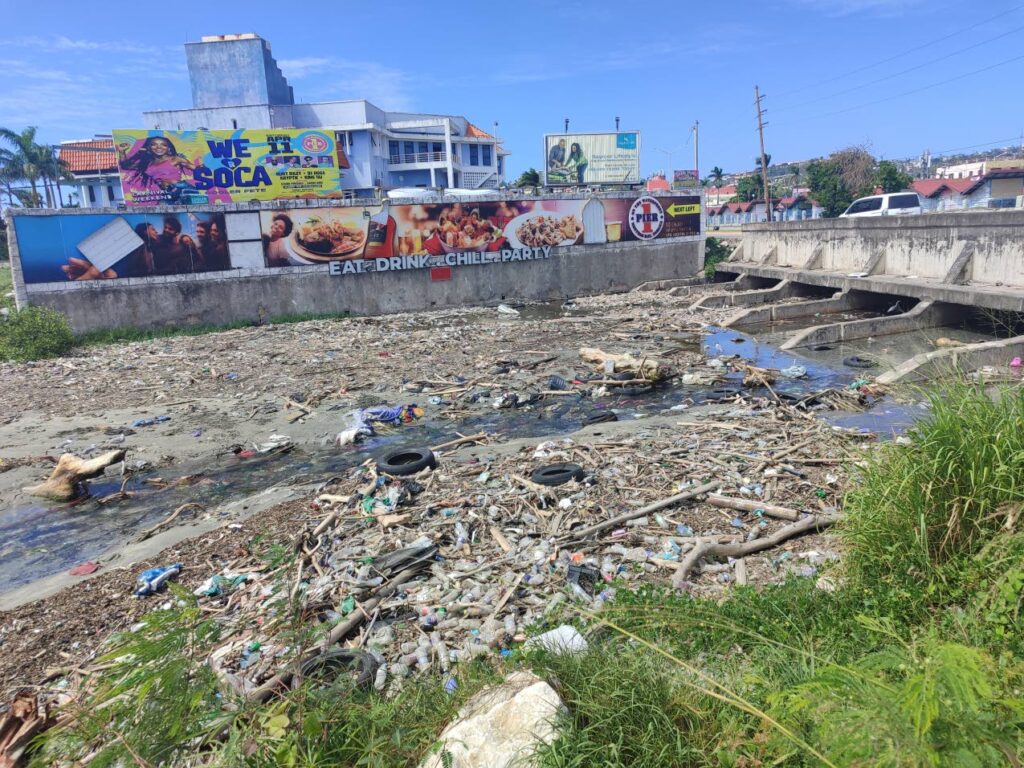
    Jamaican authorities have initiated a comprehensive environmental cleanup operation targeting Montego Bay’s critical South Gully waterway, a vital drainage channel that plays a crucial role in preventing urban flooding. The National Solid Waste Management Authority (NSWMA) has incorporated this significant project into its specialized Debris Management Programme established in response to Hurricane Melissa’s devastating impact last October.

    The cleanup operation, scheduled for March 31, will concentrate on the gully’s outlet where substantial waste accumulation has occurred, including significant plastic pollution that ultimately reaches the Caribbean Sea. NSWMA Community Relations Manager Sharnon Williams emphasized the initiative addresses both environmental and public health concerns, noting the visible waste buildup directly affects local fisherfolk and marine ecosystems.

    ‘The hurricane caused substantial damage, and the resulting waste accumulation heading into the sea demanded immediate attention,’ Williams stated. ‘We’re addressing multiple concerns including public health implications, environmental damage, and potential negative effects on tourism.’

    The operation will employ a collaborative approach utilizing specialized equipment including newly acquired tipper trucks and excavators, alongside local fisherfolk and volunteers who will remove debris inaccessible to machinery. Williams stressed that environmental protection remains paramount throughout the process, with the NSWMA working closely with the National Environment and Planning Agency (NEPA) to ensure approved methodologies that minimize ecological impact, particularly to the sea floor.

    Local environmental advocates including Montego Bay Marine Park Executive Director Hugh Shim have welcomed the initiative while expressing concerns about long-term solutions. Shim emphasized that without changed behaviors regarding waste disposal, the problem will inevitably recur, urging greater public responsibility for garbage management.

    The cleanup represents part of broader recovery efforts following the Category 5 hurricane that struck Jamaica last fall, with the Debris Management Programme specifically designed to address waste management challenges in severely affected parishes. Successful completion of the project is expected to restore both ecological function and aesthetic quality to the area, supporting both environmental health and local economic activities dependent on marine resources.

  • TEF presses ahead with nicer Negril

    TEF presses ahead with nicer Negril

    NEGRIL, Jamaica — A significant infrastructural enhancement is underway in the renowned resort town of Negril, spearheaded by the Tourism Enhancement Fund (TEF) in collaboration with the Negril Destination Assurance Council (DAC). The centerpiece of this initiative is an approved $18.7-million project to install solar-powered street lighting along Norman Manley Boulevard, a critical step toward improving public safety and nocturnal aesthetics for residents and international visitors alike.

    The project’s initial phase will serve as a proof-of-concept, focusing on a particularly dark one-kilometer stretch from the roundabout. Thirty solar lamps will be installed in this corridor, with groundwork for the lamp posts already commenced. Dr. Carey Wallace, TEF Executive Director, confirmed that the contractor expects delivery of the solar units by the end of the month, anticipating visible progress within weeks. The long-term vision is to extend this solar lighting network across the entire resort town, creating a well-lit, secure, and attractive environment.

    In a parallel development, the DAC has submitted a formal request to the TEF to replace the local police’s fleet of all-terrain vehicles (ATVs), essential for beach patrols. These vehicles have suffered from premature deterioration due to the harsh marine environment, with saltwater exposure limiting their lifespan to approximately three years. Dr. Wallace acknowledged the request is under active review, with a focus on procuring more durable equipment to ensure better value for money. The proposal is slated for deliberation by the TEF board in April.

    Furthermore, the status of the separate $20-million Negril roundabout beautification project was addressed. Funded by the Tourism Product Development Company (TPDCo), the project began in June 2025 but has faced delays due to labour shortages, pushing its completion beyond the initial target of the 2025 winter tourist season into 2026. Wade Mars, TPDCo Executive Director, reported the project is approximately 85% complete, with ongoing stonework to be followed by landscaping. However, no definitive timeline for final completion was provided, with Mars stating he would need to consult the project manager for further details.

  • From coastlines to crops…

    From coastlines to crops…

    Jamaica’s groundbreaking climate adaptation initiative, the Government of Jamaica/Adaptation Fund Programme, concluded with celebratory ceremonies marking its transformative achievements. Launched in November 2012 with $10 million financing through the Planning Institute of Jamaica (PIOJ), the comprehensive program successfully enhanced climate resilience across multiple sectors through three strategically designed components.

    The multifaceted approach targeted coastal protection in northeastern Jamaica, improved water and land management in vulnerable farming communities, and strengthened institutional capacity at national and local levels. Implementation involved collaboration with key agencies including the National Environment and Planning Agency, National Works Agency, Disaster Preparedness Office, Rural Agricultural Development Authority (RADA), Forestry Department, and Social Development Commission.

    Professor Dale Webber, Jamaica’s Special Envoy for Climate Change, declared the initiative a pioneering model for small island developing states (SIDS) during his keynote address. He emphasized that while scientifically grounded, the program’s success derived from tangible, visible outcomes that delivered immediate community benefits. “What has been achieved here is not just theoretical—it was practical, visible, and continues to be impactful,” Webber stated while representing portfolio minister Matthew Samuda.

    The program’s documented accomplishments include coastline stabilization protecting critical infrastructure and community assets, support for fisheries and coastal livelihoods adapting to changing marine ecosystems, and advanced reforestation improving land management practices. Capacity-building initiatives trained shelter managers and deployed a Climate Risk Atlas enabling evidence-based planning at local levels, with particular attention to gender-inclusive resilience strategies.

    Notable success stories emerged from participating communities. The Forestry Department’s private forestry program coordinator Shawnette Russell-Clennon reported significant reforestation progress with over 20,000 fruit and lumber trees planted, particularly aiding recovery from Hurricane Melissa’s devastation in October 2025. Fishermen from St Mary received climate-resilient equipment and training, including boat upgrades and emergency ramps for extreme weather conditions.

    Agricultural communities experienced substantial improvements through RADA’s technical advice and farmer peer schools. Jasmine Hyde, RADA’s zonal director for St Ann and St Mary, reported enhanced productivity, improved irrigation systems, and better land management minimizing landslides. Professor Webber concluded by calling for accelerated international climate finance processing, noting Jamaica has demonstrated institutional capacity and implementation expertise but requires expanded funding to scale successful interventions.

  • Sprint domination

    Sprint domination

    In a display of sheer athletic dominance, Wolmer’s Girls’ sprinter Natrece East delivered a career-defining performance at the ISSA/GraceKennedy Boys’ and Girls’ Athletics Championships. Competing in the Class 2 Girls’ 100-meter final on Wednesday at Kingston’s National Stadium, East not only secured victory but did so in spectacular fashion, leaving her competitors trailing significantly behind her. Her record-shattering time of 11.21 seconds established a new personal best and underscored her emergence as a formidable talent in Jamaican track and field. The championship, widely regarded as the pinnacle of high school athletics in the region, witnessed one of its most impressive sprint performances in recent history as East powered through the finish line with a commanding lead. Her technical execution from the starting blocks through the acceleration phase demonstrated a level of prowess that signals significant potential for future international competitions. The victory adds another prestigious title to Wolmer’s Girls’ athletic legacy and positions East as a rising star to watch in the sport.

  • Champs 100 years ago

    Champs 100 years ago

    The 116th edition of Jamaica’s premier high school athletics championship, known as Champs, continues its legacy as a global sporting phenomenon in 2026. The competition’s rich history traces back to 1910, but the 1926 edition stands as a particularly remarkable chapter in its storied existence.

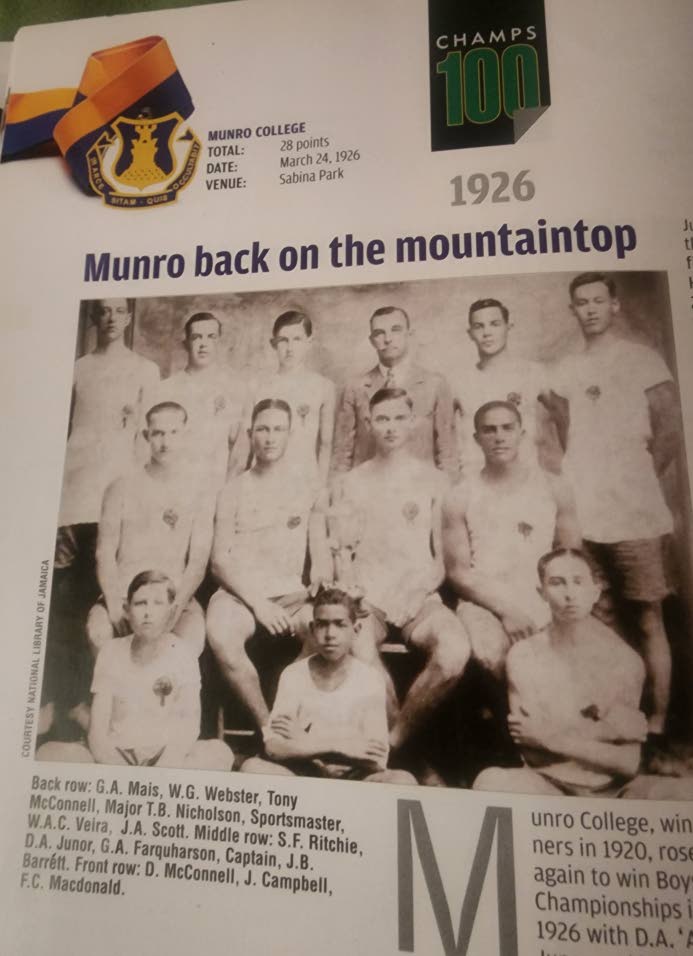
    Amid global turbulence in 1926—including the UK General Strike, Emperor Hirohito’s ascension in Japan, and technological breakthroughs like John Logie Baird’s mechanical television demonstration—Jamaican school athletics witnessed its own historic moments. Munro College spectacularly reclaimed the championship title they first won in 1920, finishing with 28 points ahead of rivals Wolmer’s Boys’ (25.5 points) and Jamaica College (21 points).

    The competition saw extraordinary individual performances, particularly from Munro’s DA ‘Alty’ Junor, who dominated four events: the 100-yard dash (10.35 seconds), 220-yard sprint (24 seconds), long jump, and 120-yard hurdles. Historical accounts from the Champs 100 book describe Junor’s hurdles victory as so decisive that competitors were only reaching the tenth hurdle as he crossed the finish line.

    Technical innovations emerged during the games, with starter Dr. F L Aris abandoning traditional starting commands due to numerous false starts in the 100-yard final. His solution—simply positioning runners and firing the gun—proved effective.

    The 1926 championship also featured Beckford and Smith High School (now St Jago High) making their debut appearance, though they failed to register any points. Another notable achievement came from H W Myers, who set a new Class One high jump record of 5 feet 11 inches, simultaneously establishing a Jamaican national record.

    Junor further demonstrated his athletic versatility by placing second in the pole vault to a teammate, cementing his reputation as Munro’s most accomplished all-round sportsman, with additional excellence in football and cricket. The era’s communication limitations were highlighted by the coach’s triumphant telegram proclaiming ‘We shall probably win’—a prediction that proved decisively accurate.

  • IMC impacting future

    IMC impacting future

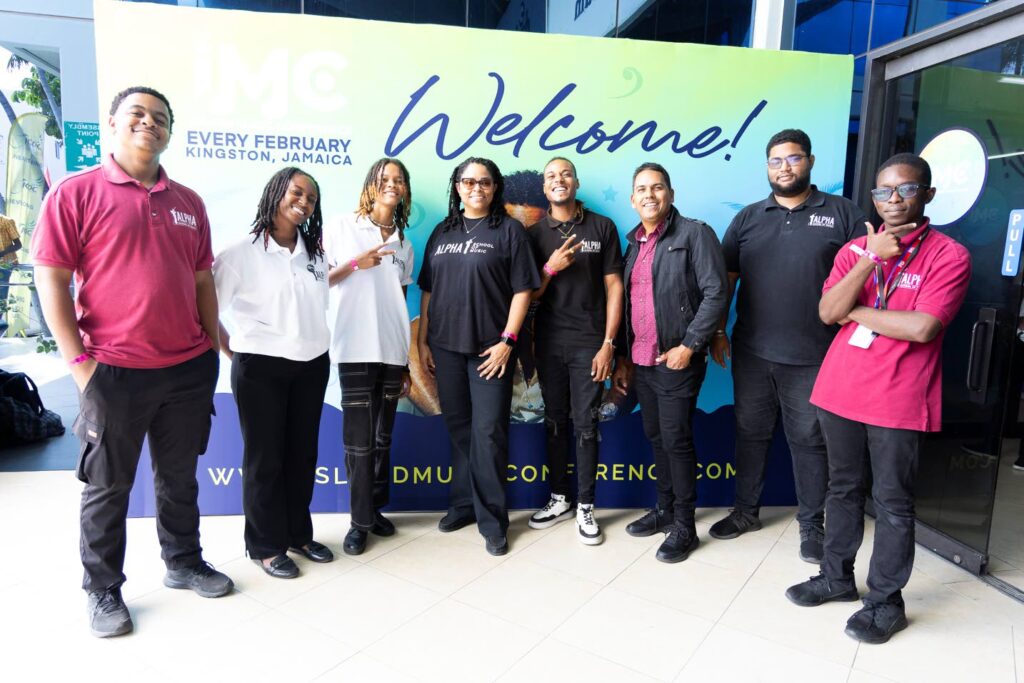
    Months following their participation in the prestigious 2026 Island Music Conference held in New Kingston, students from the Alpha School of Music report transformative experiences that are fundamentally reshaping their professional aspirations and comprehension of the modern music landscape. The event, which unfolded from February 24 to 27, served as a major convergence for artists, producers, record executives, and digital media specialists from across the Caribbean and international scenes.

    With strategic sponsorship from Pepsi-Cola Jamaica, eight selected Alpha students received unparalleled access to expert-led sessions, networking opportunities with top-tier industry professionals, and direct interactions with iconic figures including international recording artist and conference chairman, Orville ‘Shaggy’ Burrell.

    Jonathan ‘Kxngdrumz’ White, a student attendee, highlighted the immense value of understanding the commercial mechanics behind the art. “Attendance was synonymous with acquiring critical knowledge about the music industry’s infrastructure,” White reflected. “It provided a rare chance to learn from its foremost architects and gain a clearer picture of its business dynamics.” He particularly emphasized the enlightenment gained from sessions on digital streaming platforms, noting a presentation by Yomi Desalu on Apple Music’s operations as exceptionally impactful for understanding global artist positioning.

    The conference’s environment facilitated meaningful dialogues beyond formal schedules. White described the significance of conversing with artists previously only encountered through social media, stating these exchanges offered genuine insights into the industry’s realities.

    Fellow student Jada Gourzong identified the discourse on artificial intelligence as a pivotal takeaway, profoundly altering her perception of music’s future trajectory. “The extensive AI discussion radically shifted my perspective on the industry’s direction,” Gourzong explained. “Its rapid evolution necessitates that we, as artists, begin adapting swiftly.” She elaborated on AI’s potential not as a replacement for human creativity, but as a collaborative tool to enhance writing, production, and sonic development.

    Dr. Joshua Chamberlain, Special Projects Manager at Alpha School of Music, underscored the conference’s role in professional maturation. “As our students evolve from scholars to practitioners, engaging with international experts solidifies their industry comprehension and uncovers their potential niches,” Chamberlain noted.

    The experience, generously supported by Pepsi, has endowed students with a refined strategic vision. Gourzong concluded that the conference provided a clearer roadmap for her career, helping to identify her unique place within the ever-changing music industry.