作者: admin

  • Two charged over Oistins Bay Garden slaying remanded

    Two charged over Oistins Bay Garden slaying remanded

    A deadly shooting that rocked the popular Oistins Bay Garden area left one person dead and multiple others injured, and two men accused in connection with the violence have been ordered held in custody following their initial court appearance.

    Eighteen-year-old Jaheim Canute Collins, a resident of Inch Marlow, Silver Sands, and 29-year-old Shane Anthony Burke — who previously went by the name Shane Anthony Greene and resides in Ashby Land, Lodge Road — appeared before acting Magistrate Gayle Scott at the Oistins Magistrates’ Court this week. The pair face a string of serious criminal charges stemming from the April 6 shooting that claimed the life of Raul Clarke, and under local court procedure, they were not required to enter formal pleas to the murder charge during this initial hearing.

    Beyond the murder count, the two men are also accused of intentional unlawful wounding against Roger Belcon and Krystal Blagrove, with the charges specifying the alleged intent to maim, disfigure or permanently disable the two victims. Additional accusations include reckless conduct that put three other bystanders — Reco Scantlebury, Akeem Carter and Jakeri Kinch — at immediate risk of death or severe bodily harm, possession and use of a firearm without a valid legal license, and colluding with other unnamed individuals to carry out violent acts that endangered everyone present at the bay garden during the incident.

    From the defendant’s dock both before and after the full list of charges was read aloud in court, each of the accused repeatedly maintained their innocence and stated they had no connection to the shooting. Burke told the court directly, “My name get call on a murder charge and I ain’t murder nobody.” Following Burke’s statement, Collins pushed back against the allegations as well, saying, “Police see me and put a murder charge on me. I ain’t know nothing about this.”

    After hearing the charges and the accused’s statements, acting Magistrate Scott explained that all charges before the court are indictable offenses, which fall outside the routine trial jurisdiction of the lower magistrates’ court. Under local law, lower courts lack the authority to grant bail in murder cases or offenses involving unlicensed firearms. Scott ruled that the pair would be held in official custody until their next scheduled hearing on June 25, noting that the men’s legal representation could file a separate bail application directly with the High Court if they wish to seek release ahead of trial.

  • SCSA president-elect calls for unity amid challenge to election results

    SCSA president-elect calls for unity amid challenge to election results

    One of Saint Lucia’s longest-standing public sector worker organizations is currently grappling with an unprecedented internal crisis, after a legal challenge to the results of its late April leadership election derailed a scheduled leadership transition and brought the union’s core operations to a halt.

    The controversy unfolded immediately after results were finalized for the April 29 vote, and the incumbent outgoing president delivered a formal concession speech acknowledging the victory of the opposition slate led by Nickson Barry. Just under three weeks after the election, on May 18, 2026, losing candidates from the defeated team took formal legal action: they submitted a lawyer’s letter and filed an injunction against both the Saint Lucia Civil Service Association (SCSA) and its independent Elections Commission, claiming that unspecified irregularities had marred the electoral process.

    The dispute moved to the Saint Lucia High Court for an initial hearing three days later, on May 21. According to president-elect Barry, legal representatives for the challenging slate requested an extended adjournment to complete preparation of their case. The court granted the request, pushing the full substantive hearing to June 15, 2026, and formally advised the SCSA to delay its planned delegates conference pending a court ruling.

    This scheduling order has had cascading consequences for the union. Under the SCSA’s constitution, the newly elected executive body was scheduled to be formally sworn into office on May 27. That inauguration has now been canceled indefinitely, leaving the organization unable to advance any of its routine business. In remarks to SCSA members, Barry confirmed that the union’s daily operations have effectively come to a standstill amid the leadership vacuum.

    Barry emphasized that the legal challenge is a historic turning point for the organization, marking the first time such a major dispute has erupted in its 75 years of existence. He described the current moment as among the darkest periods in the union’s history, warning that the challenge poses a long-term risk to member confidence in the SCSA’s internal governance framework. “They seek to erode the level of trust we place in our procedures and processes,” Barry told members, noting that the damage to institutional credibility could outlast the court case itself.

    Despite the widespread uncertainty hanging over the organization, the president-elect used his address to lay out his policy agenda for when he eventually takes office. Barry has made a public commitment to strengthening and modernizing the SCSA’s internal systems, with a core focus on better serving the needs and interests of the union’s full membership. He also issued a direct appeal to all SCSA members to maintain unity and solidarity throughout the ongoing legal process, framing solidarity as key to navigating the crisis.

    Barry has not shied away from the severity of the current impasse, but he has maintained steady optimism about the final outcome. “I believe justice will prevail, and our union will move forward to achieve great things,” he said, adding that members must not allow the internal dispute to distract from the union’s core collective mission and ongoing advocacy work for civil service employees.

    Barry repeatedly affirmed that he and the rest of his elected leadership slate stand ready to assume office as soon as the legal process concludes. “I remain ready to work with the team of elected officers to deliver a stronger, united and modern SCSA that benefits us all,” he stated.

    With the critical High Court hearing still weeks away, the leadership of the SCSA remains in limbo. Even so, Barry expressed unshakable confidence in the organization’s ability to overcome this unprecedented challenge. Closing his address to members, he declared: “The SCSA will rise above this challenge. Together we shall. Together we must. Together we will.”

  • Zabaneh: Join NBC or Find Your Own Electric Buses

    Zabaneh: Join NBC or Find Your Own Electric Buses

    May 28, 2026 — Belize’s government-led electric bus pilot initiative has drawn to a close without a single member of the Belize Bus Association (BBA) having the opportunity to test or operate the new electric vehicles. Now, the association is pushing for a seat at the table in the project’s next phase, but their request comes after the pilot program has already concluded, leaving their demand facing an uncertain outcome.

    Shortly before Minister of Transport Dr. Louis Zabaneh spoke to reporters on Wednesday, the BBA released an official letter laying out their position. The association is calling for the pilot electric buses to be rotated onto routes currently managed by BBA operators, arguing that a genuine nationwide transition to electric public transit cannot happen if independent operators are locked out of hands-on testing of the new technology.

    The BBA’s letter emphasizes that asking independent bus operators to commit to large-scale investments in electric vehicles, and make long-term strategic decisions about the future of their businesses, without first gaining direct experience operating the buses, is an unrealistic expectation. The association stresses that it is not seeking any form of preferential treatment, but rather demanding equal and meaningful inclusion in the government’s electric bus rollout plans.

    Minister Zabaneh pushed back on the request in his remarks to local outlet News 5, confirming that the pilot initiative has been fully completed, and no additional electric buses will be allocated through that specific program. He outlined only two available paths forward for BBA members who want to integrate electric buses into their operations: either merge their operations into the state-run National Bus Company (NBC), or organize independently as a private entity and purchase their own electric buses directly.

    Zabaneh clarified that while the Ministry of Transport is willing to share all data and lessons learned from the completed pilot program with independent operators, the electric buses already owned by the NBC are reserved exclusively for use on NBC-managed routes. “They would have to, as independent operators, organise, form a company and procure e-buses,” the minister explained.

    The minister also noted that growing numbers of BBA members have already chosen to join the NBC, drawn by the advantages of operating under the national entity. Just recently, three additional independent operators made the decision to align with the NBC. “I am pleased to share with you that the last operator from the south that did not join has now joined, and two operators from the north have now applied to join the National Bus Company,” Zabaneh announced.

  • ‘Donald Trump’ Buffalo Spared from Eid Sacrifice After Going Viral

    ‘Donald Trump’ Buffalo Spared from Eid Sacrifice After Going Viral

    In a surprising turn of events sparked by viral social media attention, a rare albino buffalo with a unique golden tuft of fur – nicknamed “Donald Trump” for its striking resemblance to the former U.S. president’s signature hairstyle – has been granted a last-minute reprieve from ritual slaughter ahead of Eid al-Adha in Bangladesh.

    The buffalo, which lives on a small family farm in Narayanganj, just outside Bangladesh’s capital Dhaka, was originally purchased to be sacrificed as part of the Islamic holiday’s traditional rituals. But everything changed when photos and clips of the unusual animal, whose golden locks are regularly combed and groomed by its owners, began circulating across digital platforms across the South Asian nation.

    As the content spread, the buffalo quickly became a nationwide internet sensation. Curious tourists and animal lovers began traveling from across the country to visit the farm, turning the little-known animal into an unexpected local celebrity. Ziauddin Mridha, the buffalo’s original owner, shared that the unusual nickname was coined by his younger brother, who immediately noticed the similarity between the animal’s distinctive fur and the famous politician’s hairstyle. Mridha added that the albino buffalo has a uniquely gentle temperament and requires constant specialized care, including regular baths and multiple daily feedings to stay healthy.

    Facing a groundswell of public interest, Bangladeshi authorities intervened to stop the planned sacrifice. Home Minister Salahuddin Ahmed issued an official order to spare the animal’s life, and the buyer who had purchased the buffalo for the ritual has already received a full refund. A spokesperson for the home ministry explained the decision was rooted in two key factors: widespread public affection for the buffalo and tangible security concerns, as the growing influx of visitors to the small farm created unmanageable crowd control risks.

    Moving forward, the rare albino buffalo will be relocated to Bangladesh’s National Zoo in Dhaka, where it will join more than 2,000 animals from 191 different species and remain on permanent public display for visitors from across the country to enjoy.

  • WATCH: Education Minister provides update on the ongoing construction of the new Five Islands Primary School

    WATCH: Education Minister provides update on the ongoing construction of the new Five Islands Primary School

    A critical infrastructure project aimed at transforming primary education in Antigua and Barbuda is moving forward on a consistent trajectory, according to an official update from Daryll Matthew, the nation’s Minister for Education, Science and Technology. This new campus development at Five Islands stands as one of the government’s most substantial long-term investments in the future of the country’s education sector. When construction wraps up, the cutting-edge facility will deliver both students and teaching staff a secure, welcoming learning space outfitted with modern amenities. Every design element of the building has been crafted to elevate the quality of teaching practices and student learning outcomes. For those seeking a closer look at the most recent construction milestones and a breakdown of upcoming phases for this high-priority national initiative, additional details are available in a published video update.

  • Ellerton win key game as Premier League season winds down

    Ellerton win key game as Premier League season winds down

    On a tense Wednesday night at the Wildey Technical Centre, the penultimate round of the Barbados Football Association Premier League delivered a dramatic result that reshaped the final league table standings, as Ellerton claimed a thrilling 2-1 victory over Brittons Hill United to climb temporarily into third place.

    Fresh off an upset blowout win against Paradise just seven days prior, the St George-based outfit continued its strong late-season form by taking down another top-three contender in what proved to be a tightly contested match from kickoff to full time. The deadlock was finally broken in the 62nd minute, when Marco St Hill found the back of the net to put Ellerton ahead, giving his side the momentum heading into the final quarter of play. However, Brittons Hill responded quickly, with T’shane Lorde notching an equalizer just 11 minutes later to level the scoreline, setting up a tense final stretch that would decide three crucial league points.

    As the clock ticked down toward full time, Ellerton captain Shakille Belle stepped up to convert an 88th-minute penalty, slotting the ball home to secure what would prove to be a game-winning goal for his side.

    With both Ellerton and Brittons Hill having now completed their full 18-match regular season schedules, the table offers a clear snapshot of where things stand heading into the final day of competition. Defending runners-up Brittons Hill currently sit second in the overall standings with 35 points, trailing already-crowned champions Weymouth Wales. Weymouth Wales locked in its fifth consecutive league title last week, holding a five-point lead over second place at 40 points with one remaining fixture left to play.

    After the Wednesday win, Ellerton climbed to 34 points in third place, but its final position for the season remains far from settled. Thursday’s concluding fixture between fourth-placed Kickstart Rush and fifth-placed Paradise will decide where all three sides end the campaign. Both teams currently enter the match on 33 points, with Kickstart Rush holding a narrow one-goal advantage in goal difference (38 to Paradise’s 37), while Ellerton only has a goal difference of 15. Even a share of the points between the two sides would see both jump above Ellerton in the standings, dropping the St George club to at least fourth.

    A win for either Kickstart Rush or Paradise would push the victor to 36 points, which would not only bump Ellerton down but also knock current second-placed Brittons Hill to third. In that scenario, the loser of the Thursday showdown would take fifth place, while Ellerton would slot into fourth.

    The season will wrap up with a 9 p.m. nightcap on Thursday that sees newly crowned champions Weymouth Wales face off against Eyre’s Meatshop Pride of Gall Hill. A win for Weymouth Wales would extend their already dominant lead at the top of the table, while a shock upset victory for Gall Hill would lift the Christ Church-based side into sixth place, jumping ahead of UWI Blackbirds. Both sides currently enter the final match level on 19 points.

  • Chickenpox Alert at Sangre Grande Hospital Campus

    Chickenpox Alert at Sangre Grande Hospital Campus

    A small cluster of suspected and probable varicella, more commonly known as chickenpox, cases have been confirmed among healthcare personnel at the Sangre Grande Hospital Campus by Trinidad and Tobago’s Ministry of Health. In an official statement released to the public on Thursday, the ministry outlined that the Eastern Regional Health Authority (ERHA) has already taken proactive control of the incident and rolled out a comprehensive suite of public health interventions to stop the virus from spreading further.

  • DPSU and prime minister to discuss outstanding concerns at Dominica State College

    DPSU and prime minister to discuss outstanding concerns at Dominica State College

    A high-stakes meeting between leadership of the Dominica Public Service Union (DPSU) and Prime Minister Roosevelt Skerrit has been scheduled for the first week of June 2026, aimed at addressing a pile of unresolved grievances that have impacted faculty and non-academic staff at Dominica State College for years.

    What many do not realize is that the problems set to be discussed are not new. According to official statements from the DPSU, a portion of the complaints stretch back to the chaotic period during and after Hurricane Maria made landfall, a devastating storm that inflicted widespread damage across Dominica’s infrastructure and disrupted public institutions. Other concerns, however, predated the catastrophic hurricane, meaning college staff have waited years for meaningful action on their demands.

    The planned sit-down with the prime minister comes after a series of closed-door consultations between DPSU leaders and college employees. During those sessions, staff made clear their growing frustration over the prolonged delays in addressing outstanding issues, with many even pushing for organized protest action to draw attention to their unmet needs. Union leadership has emphasized that the core goal of the upcoming meeting is to move past stalled negotiations and deliver tangible solutions for the long-troubled public tertiary institution.

    Among the top priorities on the meeting agenda is what the union calls chronically insufficient government funding allocated to the college. Another key issue is the extended vacancy in the institution’s top leadership role, with no permanent president appointed after months of delay. Unfinished repairs to campus buildings and facilities, many of which were damaged during Hurricane Maria, will also be a central topic of discussion.

    Additional grievances that will be put forward include multiple vacant full-time staff positions that have yet to be filled, and ongoing delays rolling out formal recommendations from a completed job evaluation and classification exercise meant to update staff roles and compensation structures. Talks will also extend beyond immediate staff concerns to cover broader systemic changes, including plans to strengthen the college’s governance framework and improve its day-to-day operational efficiency.

    The meeting marks a critical turning point for staff at Dominica State College, who have waited years for the government to address their cumulative concerns, after inaction pushed the situation to a potential breaking point.

  • Belize Rewriting “Decades-Old” Labour Laws

    Belize Rewriting “Decades-Old” Labour Laws

    On May 28, 2026, the government of Belize announced a comprehensive overhaul of the nation’s decades-old Labour Act, a move driven by rapid shifts in the country’s employment landscape and growing systemic gaps in the existing labor framework. According to Tanya Santos, Chief Executive Officer of Belize’s Ministry of Labour, the current legislation has not kept pace with the evolution of work, leaving critical modern employment scenarios unaddressed.

    The rise of non-traditional work arrangements, such as remote work and the fast-expanding domestic call center industry, has exposed major gaps in the outdated law, Santos explained. What was fit for the labor market of generations ago fails to reflect the realities of how Belizeans work today, with new industries and employment models emerging far faster than existing regulations have been able to adapt.

    Beyond updating rules for modern work structures, the review process is also targeting pressing economic and demographic challenges that are weighing on Belize’s development. Santos highlighted that skilled labor shortages, exacerbated by outmigration of local workers, have created costly delays for major public projects across the country. As a concrete example, she pointed to the ongoing construction of the San Pedro hospital, which has fallen behind schedule due to the lack of available qualified local workers to complete the project.

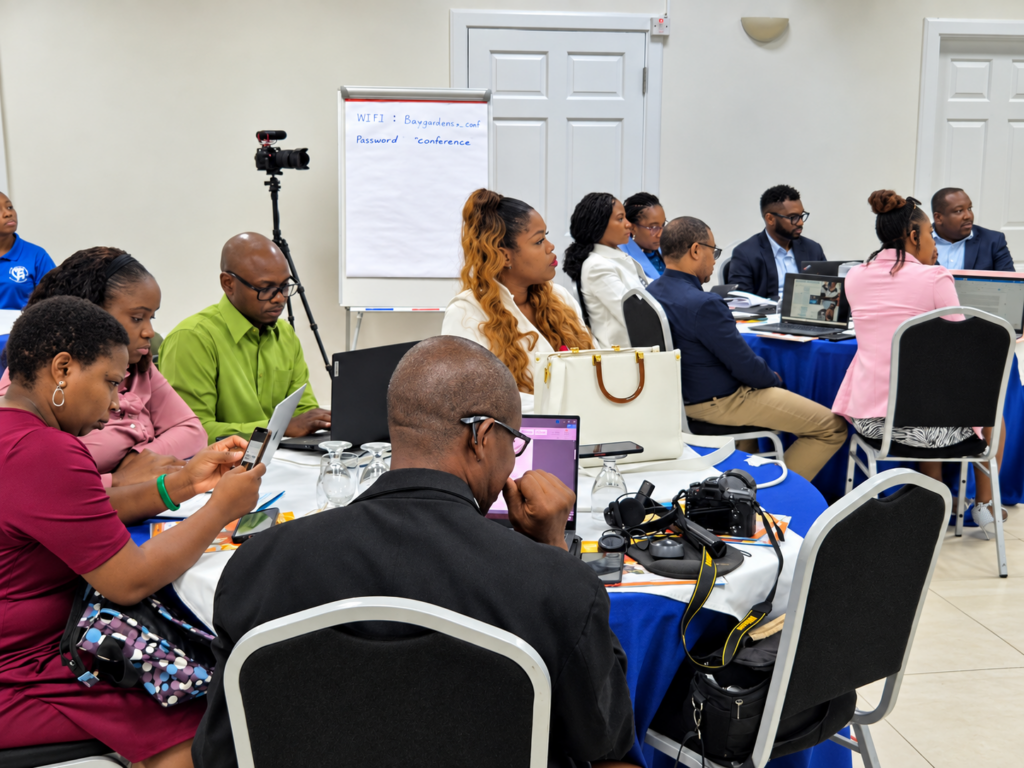
    To ensure the revised legislation balances the needs of all stakeholders, the Ministry of Labour has launched cross-sector consultations bringing together a diverse range of groups. Union representatives, leadership from the Belize Chamber of Commerce, and stakeholders from key sectors including tourism have gathered to negotiate core labor issues that will be integrated into the new law. Key topics under discussion include fair minimum wage standards, improved job security protections, updated workplace safety regulations, and manageable cost burdens for small and large employers alike.

    Santos emphasized that updating the outdated labor framework is a long-overdue step for Belize, noting that “it is always a perfect time to update your legislation” to better serve the evolving needs of the nation’s workers and economy.

  • CDEMA targets communication gaps ahead of hurricane season

    CDEMA targets communication gaps ahead of hurricane season

    As the 2026 Atlantic hurricane season approaches, set to officially begin on June 1, the Caribbean’s top disaster management body has outlined sweeping upgrades to regional response frameworks, shaped directly by hard-won lessons from last year’s Hurricane Melissa. The Caribbean Disaster Emergency Management Agency (CDEMA) used its annual pre-season regional press conference to emphasize that closing critical coordination gaps and reinforcing fragile communication systems will be the cornerstone of this year’s disaster preparedness push, with officials confirming the first 14 days after a storm strike remain the highest-risk window for life-threatening response failures.

    CDEMA Executive Director Elizabeth Riley explained that a full post-event review of the 2025 Hurricane Melissa response, completed in March 2026, identified a series of operational weak points spanning cross-border coordination, logistics management, emergency communications, rapid damage assessment, relief distribution, and the handover process from immediate emergency response to long-term recovery. While Riley emphasized that the region’s core coordination mechanisms held up well during the critical early activation phase of the Regional Response Mechanism during Melissa, she noted that consistent operational bottlenecks emerged during the transition between response and recovery, concentrated in the first two weeks after a disaster makes landfall.

    “Our after-action review confirmed that the most significant operational constraints consistently arise within that initial 14-day window, particularly as we shift from urgent life-saving response to early recovery planning,” Riley said. The storm also underscored the critical value of pre-positioning emergency supplies at strategic regional hubs, including the shared CDEMA-World Food Program logistics facility in Barbados, while highlighting the urgent need to strengthen cross-border transportation arrangements and streamline regional supply chain coordination, she added.

    Riley also highlighted the underrecognized but indispensable role that private sector entities play during large-scale emergency responses, particularly in providing last-mile transport and warehousing capacity that government and regional bodies often lack. One of the most pressing priorities to emerge from the post-Melissa review, she said, is the need for more reliable, regionally harmonized emergency communication systems and resilient information management infrastructure. While digital and telecommunications systems performed as designed during Melissa’s response, siloed information sharing between different agencies and sectors created unnecessary coordination delays and confusion.

    “Our shared goal is to build a more integrated regional data system and standardized cross-sector information sharing protocols that will enable faster, more accurate decision-making when disasters strike, and we are working closely with our partner organizations to deliver that,” Riley added.

    In a major update ahead of the season, Riley confirmed that multiple specialized regional response teams are already fully trained and on standby, following months of large-scale training exercises across Caribbean island nations. As of the press conference, 168 personnel have been pre-vetted and are ready for rapid deployment through the CARICOM Disaster Relief Unit, while 60 trained specialists are available to support urban search and rescue operations in storm-damaged urban areas. A further 38 experts are prepared to join rapid needs assessment teams immediately after a strike, 12 personnel are trained to backstop the CARICOM Operational Support Team, more than 100 medical professionals are ready to deploy to field medical facilities, and more than 75 power grid technicians from regional energy association CARILEC are available to support critical power restoration efforts. The roster also includes trained emergency telecommunications staff and dedicated mental health and psychosocial support teams to assist affected communities in the aftermath of a storm.

    Riley noted that these numbers are expected to grow in the coming weeks as additional training and orientation sessions wrap up, adding that expanding the regional roster of trained technical specialists was a key lesson from 2024 regional response efforts, when demand for skilled personnel outstripped available supply.

    “At CDEMA, everything we do centers on people: protecting the safety of our families, the security of our communities, the stability of livelihoods, and the long-term resilience of our member states,” Riley said. “Every plan we develop, every preparedness exercise we run, and every partnership we build is oriented toward one core mission: saving lives and reducing economic and human loss when hazards strike.”