
Haiti’s national government and the United Nations Development Programme (UNDP) have advanced a new suite of peacebuilding initiatives aimed at curbing gang violence, strengthening state presence and advancing long-term stability across the country’s most vulnerable regions. During a high-level meeting held on April 30, 2026, Haiti’s Minister of Planning and External Cooperation Sandra Paulemon convened with a UNDP Governance Unit delegation led by unit head Djenanne Félix Désir and Peacebuilding Fund (PBF) project coordinator Juviny Jacques, where the three PBF-funded projects were formally presented for government alignment.
作者: admin
-

FLASH : Resumption of flights between Haiti and the Dom. Republic temporarily suspended
Just weeks after the foreign affairs delegations of Haiti and the Dominican Republic announced a landmark deal to restore cross-border air connectivity between the two Caribbean nations, the planned May 1, 2026 resumption of commercial flights has been put on an indefinite hold. The delay comes as officials from both countries work to wrap up negotiations on a comprehensive new cross-border travel protocol, a framework designed to govern all passenger and cargo movement between Haitian and Dominican airports. The original April 17 agreement between the two ministries of foreign affairs had set May 1 as the official launch date for restored air links, specifically connecting Cap-Haïtien International Airport with multiple airports across the Dominican Republic.
In an official statement released on May 1, the Dominican Republic’s Civil Aviation Authority (Junta de Aviación Civil) confirmed the postponement, noting that the full reopening of shared airspace will now take place sometime in May 2026, though no revised firm date has been set. The authority clarified that the delay is not rooted in diplomatic friction or disagreement, but rather in the need to finalize all components of the new regulatory protocol, which outlines binding operating standards across three critical areas: public health, immigration screening, and general passenger and cargo security.
Work on the framework is currently advancing steadily through joint coordination between relevant regulatory agencies from both Haiti and the Dominican Republic. The overarching goal of the collaborative process is to ensure that when flights do resume, operations launch under the safest possible conditions for all travelers, airline staff, and border officials. The Haitian government has reaffirmed its full commitment to the reopening project, emphasizing that it continues to work in close lockstep with Dominican authorities to deliver a resumption of air services that is rapid, gradual, and fully secure, with a core focus on restoring connectivity through Cap-Haïtien International Airport.
Both national governments have reiterated their shared commitment to reopening the shared airspace, noting that open lines of communication and ongoing bilateral dialogue remain in place, guided by the longstanding principles of mutual respect and good neighborliness between the two neighboring nations. The Haitian Ministry of Foreign Affairs has also committed to providing timely public updates as new developments emerge, ensuring that travelers, airline operators, and local communities stay informed of changes to the timeline for restored air connectivity.
-
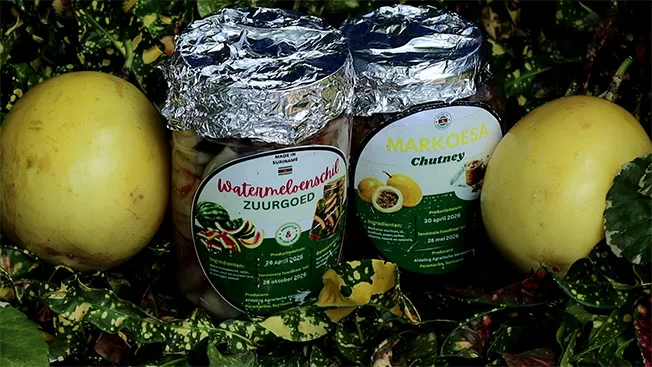
Chutney en zuurgoed van vruchtenschillen zorgen voor extra inkomstenkansen
At Suriname’s ongoing Agrarian Trade Fair hosted at the KKF building, the nation’s Ministry of Agriculture, Livestock and Fisheries (LVV) is showcasing a creative new approach to sustainable food production: turning commonly discarded fruit peels into marketable, delicious edible products. Two standout innovations drawing crowds of visitors are tangy passion fruit peel chutney and pickled watermelon rind, part of the ministry’s broader push to eliminate food waste and unlock added value across the local agricultural supply chain.
Speaking at the event, LVV Minister Mike Noersalim emphasized that the project’s core mission is to cut unnecessary food waste by making use of every part of harvested crops. “No product goes to waste here, and we are working aggressively to build new revenue streams by adding value to locally grown produce,” Noersalim stated. To scale this model, the ministry has committed to supporting interested local entrepreneurs through a range of targeted programs, with two key policy goals: boosting domestic agricultural production and reducing Suriname’s long-standing reliance on imported food goods.
The passion fruit chutney concept originated from the Agricultural Marketing and Processing division of the Directorate of Agricultural Research, Marketing and Processing. Junior researcher Romana Matdalim explained that commercial processors have traditionally thrown away passion fruit peels as a valueless byproduct. She and her team developed the idea to repurpose the discarded peels into a unique flavor product, a development she says the team is deeply proud of. The same innovative philosophy applies to the pickled watermelon rind on display, which has surprised fair attendees who sampled the item; many visitors reported mistaking the tangy pickled rind for papaya before learning its true origin.
Wikash Ghisaidoobe, lead researcher for the Agricultural Processing division, noted that the initiative has already drawn overwhelmingly positive feedback from fair guests, with dozens asking for full recipes to replicate the products at home. Ghisaidoobe highlighted that the LVV’s zero-waste model opens new economic opportunities for both emerging young entrepreneurs and established local business owners, turning agricultural waste into an additional source of steady income.
By integrating byproduct processing into the full food supply chain, the project adds tangible economic value while advancing more sustainable agricultural practices across the country, Ghisaidoobe explained. “This approach lets us use our harvested fruit more responsibly, and moves us one step closer to achieving our goal of becoming the regional food hub for the Caribbean,” he added.
Beyond the zero-waste product showcase, Minister Noersalim announced a new capacity-building initiative for Suriname’s agricultural sector: two LVV officials will travel to Indonesia in the coming weeks to complete specialized training on full-supply-chain processing for breadfruit, known locally as bredebon. According to President Jennifer Simons’ prior policy guidance, breadfruit is one of the key local crops targeted for large-scale production expansion. Minister Noersalim noted that international demand for Suriname’s breadfruit already outpaces current supply, with major demand coming from regional markets including Barbados.
The 2026 Agrarian Trade Fair opened earlier this month and will remain open to the public through Sunday, giving agricultural stakeholders and consumers more time to explore the new sustainable innovations on display.
-

SLTA touts benefits from IShowSpeed’s visit
In a groundbreaking move to boost its global tourism profile, the Saint Lucia Tourism Authority (SLTA) has partnered with one of the world’s biggest digital content creators, IShowSpeed, for a branded stop on the influencer’s ongoing Caribbean tour. The high-impact collaboration is already being hailed as one of the most successful destination marketing initiatives the island nation has launched in recent years.
Known officially as Darren Jason Watkins Jr., IShowSpeed is a Cincinnati-born American YouTube giant and live streamer whose audience spans the globe. Boasting more than 53 million subscribers on YouTube alone, and millions of additional followers across Instagram, TikTok, X and other major social platforms, he ranks among the most influential digital creators working today. Famous for his high-octane, unpredictable on-stream energy, he draws massive, engaged viewership for every broadcast he publishes.
IShowSpeed touched down in Saint Lucia late Monday, fresh off a promotional stop in neighboring Barbados. The SLTA hosted the creator in the coastal town of Soufrière for his first full day on the island, before he traveled to the island’s northern region the following day to go live for his global audience. What followed was a multi-hour broadcast that captured the attention of millions of viewers around the world.
During the live stream, IShowSpeed connected with a wide range of local Saint Lucian personalities, from renowned steel pan musician Chaz and former international cricket captain Daren Sammy to content creator Ezra D Fun Machine and beloved local figure Umpa. He also stopped to interact with local artisans at the island’s arcade, interact with local schoolchildren, and meet members of the general public. Beyond highlighting Saint Lucia’s people and culture, the stream also showcased the island’s most iconic natural and cultural attractions, including the powdery shores of Reduit Beach, the historic Pigeon Island, the bustling Castries Market, the central Derek Walcott Square, and the world-famous Pitons, Saint Lucia’s signature volcanic twin peaks.
SLTA CEO Louis Lewis explained in a post-event statement that the partnership with IShowSpeed was intentionally designed to advance the authority’s core strategic goal: dramatically expanding global awareness of Saint Lucia as a top Caribbean travel destination. Lewis emphasized that the collaboration delivered unprecedented access to audiences that traditional tourism marketing campaigns rarely reach, with a return on investment that outpaced nearly all recent initiatives the SLTA has run.
Preliminary estimates put the campaign’s return on investment at an extraordinary 77-to-1 ratio, meaning the value of the global exposure Saint Lucia gained from the stream was 77 times greater than the total amount the authority invested in the partnership. That figure, Lewis noted, is one of the highest ROI marks the SLTA has recorded for any marketing campaign in recent memory.
Lewis added that IShowSpeed’s on-island itinerary was carefully crafted to align with the SLTA’s modern, people-first approach to destination marketing. Instead of focusing solely on luxury resorts and postcard-perfect beaches, the stream highlighted every layer of Saint Lucian life: from the island’s rich local culture and deep history to its world-renowned culinary scene, one-of-a-kind heritage, and vibrant entertainment sector. Most importantly, Lewis said, the broadcast put the warmth and hospitality of the Saint Lucian people front and center, showcasing their adventurous spirit, genuine kindness, and strong sense of community to millions of global viewers.
Early viewership data confirms the overwhelming success of the campaign: the SLTA recorded more than 4.4 million unique viewers for IShowSpeed’s live broadcast from the island. The content resonated particularly strongly with the country’s most valuable source markets, including the United States, Canada, the United Kingdom, and major European tourism markets such as France and Germany. The stream also sparked intense engagement among the large Saint Lucian diaspora spread across North America, Europe and other regions.
Beyond raw viewership, the performance metrics for the campaign exceeded all internal expectations. Audience sentiment analysis of comments, shares and reactions to the stream found overwhelmingly positive responses from viewers. More than 4 million people interacted with content from the tour, clicking through to learn more about Saint Lucia or sharing the stream and related content with their own social networks, a level of organic engagement that Lewis described as phenomenal.
Looking ahead, the SLTA leadership expects the collaboration with IShowSpeed to translate into sustained growth in visitor arrivals to Saint Lucia over the coming months and years. Lewis noted that the campaign delivered a massive boost to the island’s global visibility, and the SLTA’s next step will be to build on that momentum with additional targeted marketing campaigns to convert viewer interest into actual bookings.
Lewis closed by thanking all the stakeholders who made the partnership a success, including the in-house SLTA team, local volunteers, partner organizations such as the Soufriere Regional Development Foundation, local creative professionals, and the Saint Lucian police force that supported the event.
-
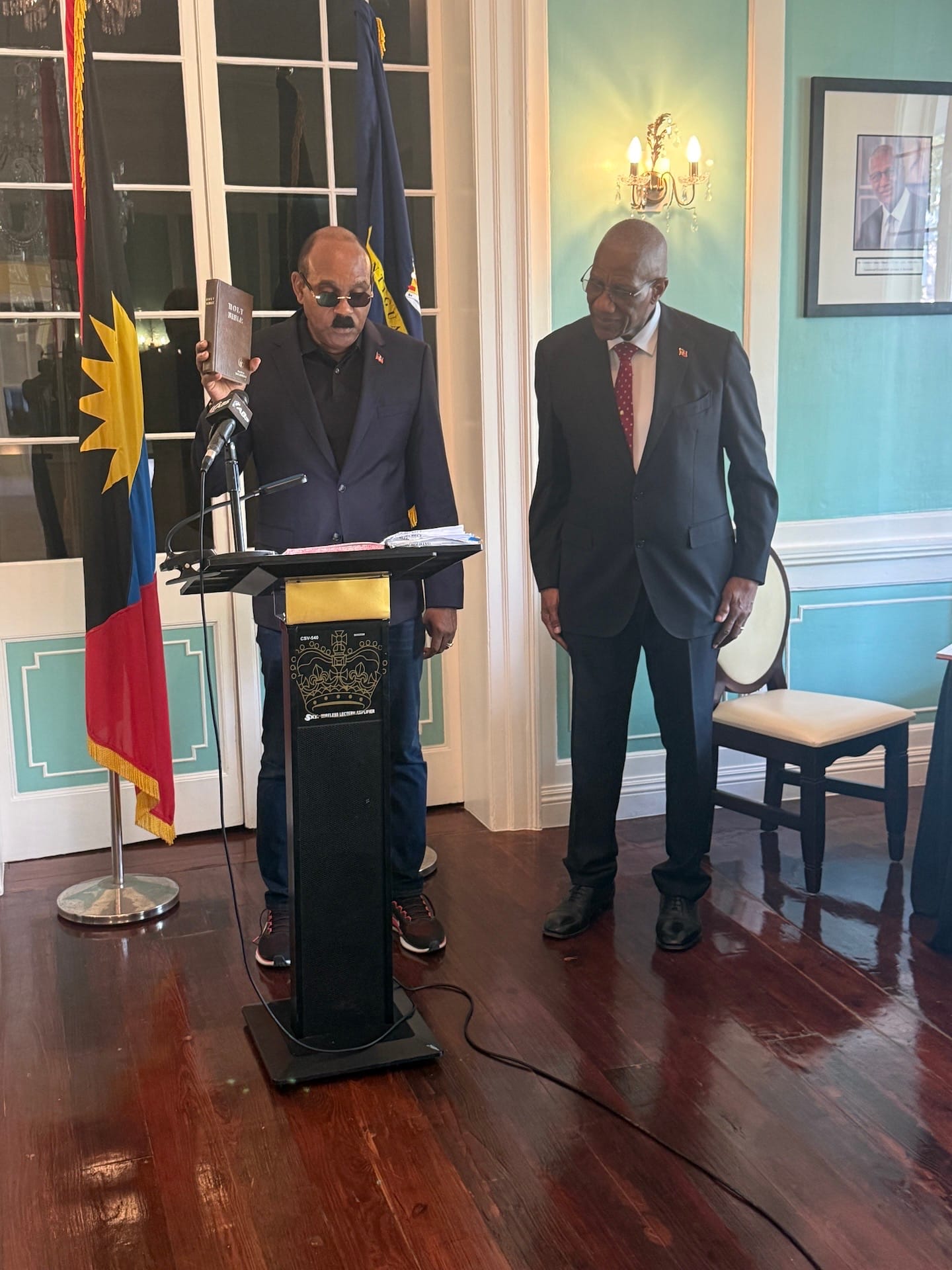
Correct Oath Administered After Swearing-In Error Involving Prime Minister and Attorney General
ST. JOHN’S, Antigua and Barbuda — The Office of the Governor General has issued a public correction following an administrative error during the recent swearing-in ceremony for the country’s new Prime Minister and Attorney General.
In a formal press release, officials confirmed that an obsolete version of the Oath of Allegiance, which previously required loyalty to the British Crown, was mistakenly administered during the initial ceremonial proceedings. The error comes after the island nation implemented a landmark update to its oath requirements via the Oaths Act 2025, which officially entered into force on January 1, 2026. The legislative change was crafted to align the national oath with Antigua and Barbuda’s evolving constitutional identity as an independent sovereign state.
Under the updated legal requirements laid out in Schedule 1 of the new Act, all senior public officials must now swear or affirm a revised oath. The mandated text reads: “I, [Name], [swear by Almighty God] [solemnly and sincerely, declare and affirm] that I will faithfully bear true allegiance to the State of Antigua and Barbuda, its Constitution and laws.”
The Governor General’s Office noted that it has already updated official state records to reflect the legally required updated oath, correcting the administrative mistake. The office also emphasized its ongoing commitment to upholding the highest constitutional standards for all government proceedings, and expressed regret over any public confusion that resulted from the inadvertent error.
-

ABLP, AT&LU to Mark 75th Labour Day with Thanksgiving Service on Sunday
A landmark milestone in the history of Antigua and Barbuda’s labour movement is set to be marked with a special inter-group observance, as two of the nation’s key labour-focused institutions join forces to organize a commemoration. The Antigua and Barbuda Trades and Labour Union (AT&LU) has announced a partnership with the Antigua and Barbuda Labour Party (ABLP) to host a Service of Thanksgiving celebrating the 75th anniversary of the country’s formal observance of Labour Day.
The commemorative gathering has been scheduled to take place on Sunday, May 3, 2026, kicking off at 10:00 a.m. local time at the Gracefield Moravian Church, located in the Cedar Grove neighborhood of St John’s, the nation’s capital.
Event organizers have emphasized that the ecumenical service is far more than a ceremonial gathering; it is a core component of broader anniversary activities designed to honor the decades-long, transformative contributions of the domestic labour movement. The observance will shine a spotlight on the central role that organized workers and union leaders have played in pushing for expanded workers’ rights across every sector of the Antigua and Barbuda economy, and in driving the inclusive national development that has shaped the modern country over generations.
For Antigua and Barbuda, Labour Day carries profound historical weight. It is a permanent tribute to the early struggles and hard-won achievements of the trade union pioneers and ordinary working people who organized, advocated, and fought to build the fairer, more equitable society that exists in the nation today. Without the efforts of these early movement members, many of the workplace protections and social gains that citizens now take for granted would not have been possible.
To ensure that this milestone anniversary is a community-wide celebration, organizers have issued an open invitation to all members of the Antigua and Barbuda public to attend the Service of Thanksgiving, encouraging residents to join in reflecting on the labour movement’s legacy and giving thanks for the progress it has delivered.
-

Fitzpatrick Wins UWI Games Tennis Playoff Opener for Five Islands
COOLIDGE, ANTIGUA – Beneath the blazing Caribbean sky, the sharp crack of tennis balls bouncing off asphalt reverberates across the courts at the decommissioned army base. For the University of the West Indies Five Islands campus, this sound carries far more meaning than just the start of a tournament: it signals the opening of a historic new chapter for the institution’s young athletic program.\n\nThe first day of playoff action to select the campus’ squad for the 2026 UWI Games got off to a blistering start, with rising local talent Shahein Fitzpatrick setting an early benchmark with a commanding straight-sets win over opponent Dillon. Fitzpatrick secured the first set with a decisive 6-2 scoreline, then held off a late comeback push from Dillon to take the second set 7-5, locking in an early statement win that has put him in pole position for a spot on the travelling team.\n\nThis year’s playoffs carry extra weight for the Five Islands campus: it will mark the institution’s first-ever appearance at the UWI Games, a prestigious biennial multi-sport celebration that brings together all UWI campuses across the Caribbean region. More than just competition, the event fosters shared regional pride and cross-campus connection, with the 2026 iteration set to be hosted in Trinidad and Tobago. For the young Antigua-based campus, tennis is leading the way as the first program to compete on this regional stage.\n\nFitzpatrick’s path to this moment has been rooted in local community and educational opportunity across Antigua. Raised in the coastal village of All Saints, he cut his teeth in local community sports and academics, progressing through J.T. Ambrose Primary School, All Saints Secondary School, and Antigua State College before enrolling at UWI Five Islands. His journey has been defined by consistent discipline and a drive to seize every opportunity that comes his way, a work ethic that extends far beyond the tennis court.\n\nIn 2023, Fitzpatrick demonstrated this versatility by leading UWI Five Islands to its first-ever external intercollegiate debating trophy at the SDG Tournament, where he also took home the honor of Best Speaker. The achievement stands as a testament to the support he has received from campus mentors, the positive learning environment at Five Islands, and his own personal ambition.\n\n“Being part of this growth journey with UWI is something I’m incredibly grateful for,” Fitzpatrick shared in a post-match interview. “My ultimate goal is to represent both my campus and my country, and I’m putting all my focus into that preparation. It’s on us as students to take advantage of everything UWI has to offer – we all have the talent and ability to succeed, we just need the chance to grow and shine.”\n\nPlayoff action will resume this coming Sunday at 10:00 a.m., with Dillon facing off against Jarique, the final contender in the qualifying group. The following Monday at 9:00 a.m., Fitzpatrick will take on Jarique in the final qualifying match to determine the squad’s representative.\n\nFor UWI Five Islands, this tournament is about much more than crowning a champion. It is a reflection of a new generation of Caribbean students shaped by accessible education, personal discipline, and equal opportunity. This isn’t just the campus’ first time participating in a regional UWI Games – it’s the first step in a long legacy of growth and excellence to come.
-
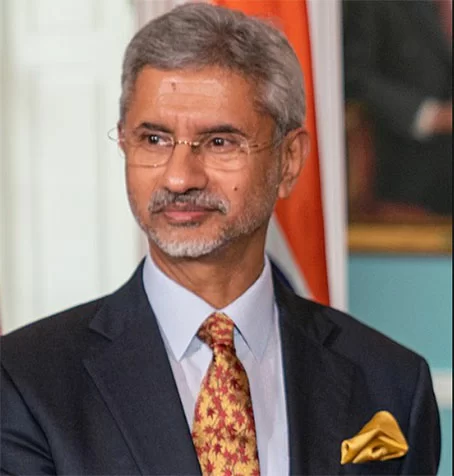
Officieel bezoek Indiase minister markeert 50 jaar banden met Suriname
In a landmark diplomatic development set to deepen bilateral ties between two historically connected nations, India’s External Affairs Minister Subrahmanyam Jaishankar will embark on an official four-day visit to Suriname from May 5 to May 8, at the invitation of Suriname’s Minister of Foreign Affairs, International Trade and Cooperation (BIS) Melvin Bouva. This visit comes as both countries prepare to celebrate 50 years of formal diplomatic relations, and it marks the first time that an incumbent Indian foreign minister has traveled to Suriname for an official visit.
At the core of the visit’s agenda is the ninth session of the Suriname-India Joint Commission meeting, scheduled to take place on May 6. Established as a permanent coordination and consultation platform, the commission has long served as a cornerstone for advancing cooperation across economic, scientific, technical and cultural domains between the two nations. During this year’s gathering, participating officials will review the progress of ongoing joint projects, negotiate new agreements to expand collaborative frameworks, and discuss a wide range of priority topics including bilateral trade, social and economic development, and key multilateral global issues.
Beyond the commission meeting, Jaishankar’s itinerary includes high-level bilateral meetings with Suriname’s President and the Speaker of the National Assembly, to align strategic priorities and strengthen people-to-people and government-to-government connections. To mark the golden jubilee of diplomatic relations, a special public lecture followed by a curated historical exhibition highlighting the deep historical and cultural links between Suriname and India will also be hosted during the visit.
One key tangible outcome of the visit will be the formal ceremonial handover of the Markoesa Processing Project, an Indian-backed initiative that sets up a dedicated production line for processing passion fruit (locally called markoesa) in Suriname. The project is designed to boost value addition within Suriname’s agro-processing sector and empower small and medium-sized enterprises (SMEs) across the country, supporting inclusive economic growth.
India has emerged as a key strategic partner for Suriname across multiple sectors, and collaboration between the two nations extends across various multilateral international forums. Beyond strategic and economic alignment, the bilateral relationship is rooted in centuries-old historical and cultural ties, particularly linked to the Indian diaspora community that has shaped Suriname’s social and cultural landscape for generations. Minister Bouva has expressed strong confidence that Jaishankar’s visit will inject new momentum into bilateral cooperation, delivering long-term sustainable development and shared mutual benefits for the people of both nations.
-
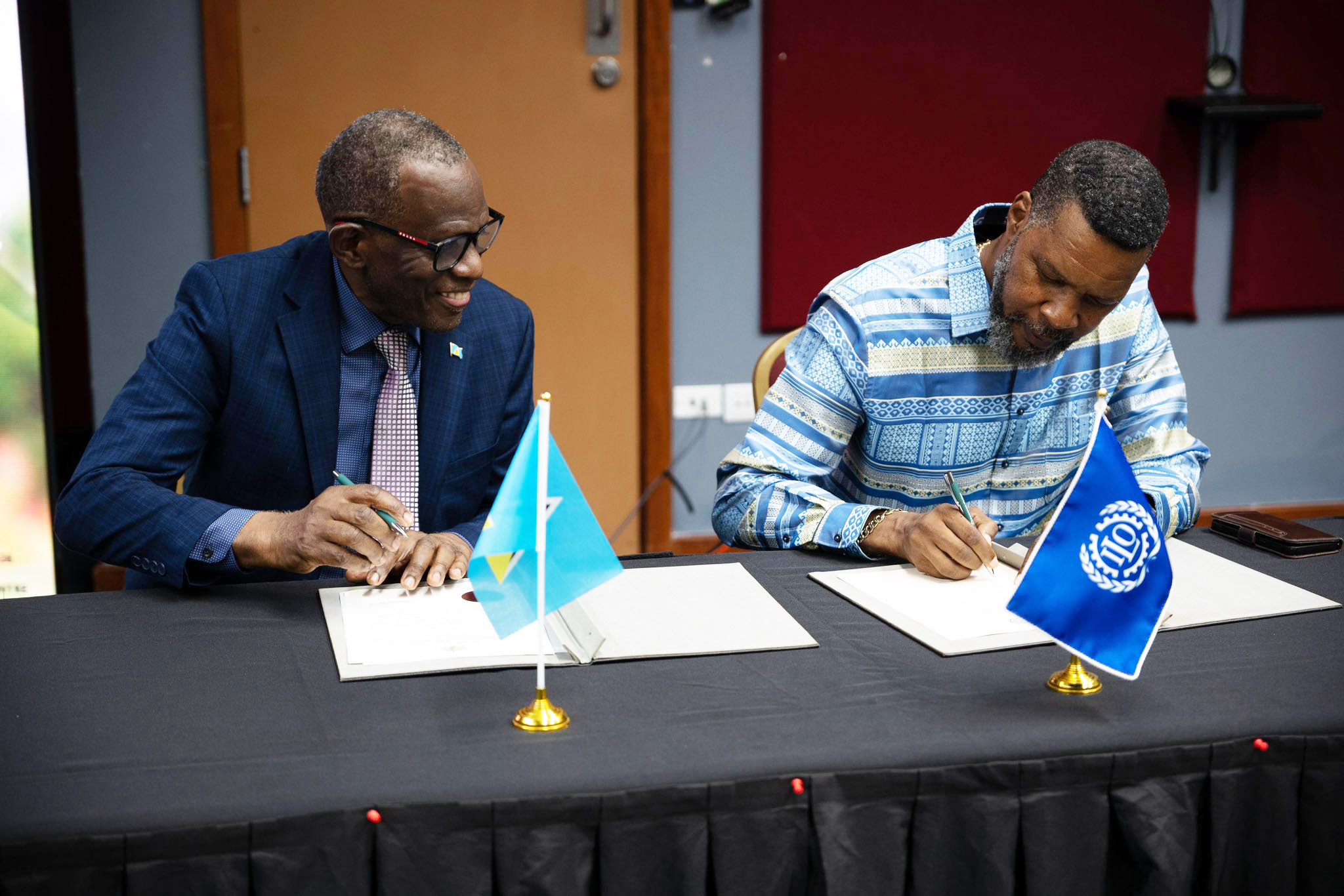
Gov’t moves to strengthen labour dialogue with signing of ILO Convention
In a landmark move to reshape the island nation’s labour governance framework, the Government of Saint Lucia has formalized its commitment to inclusive industrial relations by ratifying International Labour Organisation (ILO) Convention No. 144. The historic signing, carried out by Prime Minister Philip J. Pierre on behalf of the administration on April 29, clears the path for the creation of a new National Tripartite Advisory Committee designed to strengthen collaborative dialogue between three core labour stakeholders: government bodies, organized workers, and business employers.
The newly established committee will draw representatives from three key groups: Saint Lucia’s Department of Labour, the Saint Lucia Trade Union Federation, and the Saint Lucia Employers Federation. Its core mandate is to create a structured, formal space for collaborative consultation on a full spectrum of labour issues and national workplace policy development. Key topics for discussion will range from wage setting and statutory working conditions to core labour rights, worker protection frameworks, and other pressing workplace-related matters that impact all segments of the national labour force.
For working people across Saint Lucia, the committee is projected to deliver a far more substantial, formal voice in national-level labour policy debates, ensuring that grassroots worker concerns are centered in decision-making. For employer groups, the new body provides an official platform to articulate industry challenges, share on-the-ground insights, and contribute directly to policies that support sustainable business expansion, enhanced national productivity, and expanded job creation across all sectors of the economy.
From the government’s perspective, the reform is expected to improve the quality of national labour policymaking by embedding regular, direct input from stakeholders who are most immediately affected by labour regulations and decisions.
ILO Convention No. 144 stands as a foundational international labour standard, with a core mission of advancing tripartite social dialogue between the three key stakeholder groups. The agreement calls on ratifying nations to maintain consistent, effective consultation processes on matters tied to international labour standards, broader social justice goals, and inclusive workplace development.
Senior government officials note that the signing of the convention underscores the Pierre administration’s long-stated priority of centered consultation and inclusive governance. Per an official government statement, the creation of the National Tripartite Advisory Committee marks a meaningful step forward in building a more collaborative national labour ecosystem, one that delivers balanced progress across worker protections, employer competitiveness, and national economic development objectives.
-

RGPF: Advisory regarding fires
Over a 72-hour period, the tri-island nation of Grenada has seen five separate fire incidents responded to by the Royal Grenada Police Force (RGPF), prompting public safety officials to issue a series of urgent reminders and warnings to local residents. The five blazes, which broke out across the territory, covered a range of fire types: two structural fires in residential dwellings, one fire in a commercial storage space, one uncontrolled rubbish blaze, and one spreading bush fire.
To help the public understand the heightened risk of fire outbreaks across the island at this time, RGPF officials have outlined the most common root causes of each category of fire incident. Residential home fires are frequently traced back to preventable issues including outdated or damaged electrical wiring that causes faults, cooking fires left unwatched in kitchens, incorrect candle use when power outages occur, and malfunctioning household appliances. Storage shed fires, meanwhile, often develop from improper storage of flammable materials, unseen fuel leaks, or hot ash from discarded smoking materials that ignite surrounding debris.
Uncontrolled rubbish fires most often start when members of the public burn waste carelessly without proper safeguards, or when stray sparks, magnified heat from sunlight through discarded glass, or reactive chemicals trigger accidental ignition. For bush fires, the highest risk comes when prolonged dry conditions combine with human activity: common causes include unregulated land clearing through burning, campfires left unattended, and improperly discarded cigarette butts, though lightning strikes can also spark blazes under dry conditions.
In response to the recent uptick in incidents, the RGPF has reinforced key fire safety guidance that all Grenada residents are required to follow. First, officials have reminded the public that the Ministry of Agriculture suspended the issuance of all new open burn permits starting April 26, 2023, meaning all outdoor burning is currently prohibited across the country.
Under Section 7 of Grenada’s Agricultural Fires Act, any individual who sets fire to any land, or assists another person in doing so, without a valid licence issued under the Act (outside the exemptions outlined in Section 5 of the legislation) is criminally liable. Convicted offenders face a fine of $500 and up to three months of imprisonment. The RGPF also added that anyone caught conducting unauthorised open burning can face additional penalties under Sections 146 and 147 of the Criminal Code, as laid out in Chapter 72A of Volume 4 of the 2010 Continuous Revised Edition of the Laws of Grenada.
Beyond the ban on open burning, public safety officials have shared core preventative rules to reduce fire risk: never leave any open flame or cooking fire unattended; always fully extinguish any flames or hot materials before leaving an area; and keep all sheds, storage rooms and outdoor work areas clear of excess accumulations of flammable materials that can fuel a rapid spread of fire.
Finally, the RGPF has urged residents to remain vigilant and report any sign of smoke or unplanned fire immediately. To contact the Grenada Fire Department for emergency response, residents can call 911, 435 7270, or 405-6881. Officials stressed that early reporting of small blazes allows firefighting teams to deploy rapidly, contain the fire before it spreads, and prevent a small incident from becoming a catastrophic disaster that threatens homes, lives and natural areas.
This official advisory was issued by the Office of the Commissioner of Police of Grenada.