作者: admin

  • Barbuda Airport to Extend Operating Hours with New Apron Lighting

    Barbuda Airport to Extend Operating Hours with New Apron Lighting

    The Barbuda International Airport is poised to significantly expand its operational capabilities through the installation of advanced apron lighting infrastructure. This strategic enhancement will permit scheduled flights to continue until 9:30 PM, effectively eliminating the current restriction that forces the airport to cease all operations at sunset.

    According to Maurice Merchant, Director General of Communications in the Prime Minister’s Office, this decision resulted from high-level Cabinet discussions involving airport authorities and representatives from the PLH development project. The existing illumination system, described as ‘sunset lights,’ has historically limited aviation activities to daylight hours, creating logistical challenges for the island.

    The Antigua and Barbuda Airport Authority is collaborating directly on this infrastructure project, which represents a critical component of broader developmental initiatives linked to PLH’s investments on the island. The extended operational window is anticipated to yield substantial benefits across multiple sectors including inter-island transportation, tourism expansion, and emergency medical response capabilities.

    Officials emphasize that enhanced nighttime accessibility will be particularly valuable during peak travel seasons and for after-hours emergency situations. While specific completion timelines remain under development, authorities confirm that installation works will commence imminently, marking a new chapter in Barbuda’s connectivity and economic development.


  • Agro-Industrial Park at Diamonds to Launch Immediately, Cabinet Says

    Agro-Industrial Park at Diamonds to Launch Immediately, Cabinet Says

    The government of Antigua and Barbuda has issued an immediate directive to commence construction on the Diamonds Estate Agro-Industrial Park, declaring the initiative a critical component of the nation’s strategy to enhance food security and economic stability. The urgent mandate was delivered by Maurice Merchant, Director General of Communications in the Prime Minister’s Office, during a recent Cabinet briefing.

    Emphasizing the administration’s serious commitment, Merchant stated that the Gaston Browne government views food security as an utmost national priority. This sense of urgency has been magnified by recent global disruptions to shipping lanes and international supply chains, exposing vulnerabilities in the nation’s food import dependency.

    The planned Agro-Industrial Park is designed to tackle deep-rooted structural deficiencies within the domestic agricultural sector. Key challenges targeted include significant post-harvest losses, a lack of value-added processing capabilities, and overall supply chain inefficiencies. The facility will concentrate on cultivating priority crops such as cassava, sweet potatoes, tomatoes, peppers, onions, and various legumes.

    Implementation will emphasize the adoption of advanced agricultural technologies, including modern irrigation systems for efficient water use, mechanization, and sophisticated post-harvest management techniques. A core objective is to boost local processing and value-addition, enabling domestically grown produce to displace a substantial portion of food imports while simultaneously creating improved market pathways for local farmers.

    This project is not standalone but rather a pivotal element of a broader governmental strategy. This comprehensive plan includes initiatives to ramp up local production volumes, supply essential equipment to farmers, and reduce duties and taxes on crucial agricultural inputs. Further operational details regarding implementation and access for farmers and agri-businesses are anticipated to be released as project work gets underway.

  • Antigua and Barbuda Government Orders Bi-Weekly Reports on Price Reductions

    Antigua and Barbuda Government Orders Bi-Weekly Reports on Price Reductions

    The government of Antigua and Barbuda has implemented stringent monitoring measures to ensure recent fiscal relief measures are effectively reaching consumers. The Cabinet has mandated the Prices and Consumer Affairs Division to submit comprehensive reports every two weeks detailing retailer compliance with tax and duty reductions.

    This decisive action follows concerning reports of inconsistent adherence among retailers to cost-of-living relief initiatives. Maurice Merchant, Director General of Communications in the Prime Minister’s Office, confirmed that inspection teams have been actively monitoring supermarkets and retail establishments nationwide, with findings indicating varied levels of cooperation.

    “While major supermarket chains have shown partial compliance, numerous suppliers and retailers have exhibited reluctance in providing essential invoicing and pricing documentation,” Merchant stated during the weekly Cabinet briefing. He emphasized that such documentation is legally required to verify whether tax and duty reductions are being properly reflected in consumer pricing.

    The government has clarified that the fundamental objective of these policy measures is to guarantee that consumers directly benefit from initiatives designed to alleviate cost-of-living pressures. “The benefits must pass on to the consumers,” Merchant asserted, noting that reducing taxes and duties specifically targets relief from imported inflation.

    This enhanced reporting mechanism constitutes part of broader governmental efforts to strengthen oversight capabilities, improve regulatory enforcement, and ensure market transparency as amendments to existing price control legislation are being prepared. The bi-weekly reporting schedule represents an unprecedented level of scrutiny over retail pricing practices in the nation’s recent economic history.

  • Five years on, no answers in Stephanie Thomas’ murder

    Five years on, no answers in Stephanie Thomas’ murder

    Five years after the grim discovery of a decomposed female body at Pigeon Point in Gros Islet, Saint Lucia, the grieving family of 22-year-old Stephanie Thomas continues their agonizing wait for justice. The case, initially investigated in January 2021, remains officially active with law enforcement yet to make any arrests in connection with the young woman’s death.

    The emotional toll on Thomas’s family has been devastating. Her father, Robertson Henry, described the past five years as “an emotional roller coaster” that has tested his sanity. “I try to remain sane by constantly occupying myself with work, but the memory and the pain never goes away,” Henry revealed in an interview with St. Lucia Times. “The images of her decomposed body serve as a constant reminder of the brutality and nastiness of the murderer.”

    Despite public appeals from police officials during the initial investigation phase, the case has encountered significant forensic challenges. According to police sources, the advanced state of decomposition of Thomas’s body has prevented pathologists from determining the exact cause of death, creating a substantial obstacle in the investigation.

    Superintendent George Nicholas, who heads Crime Management in the Royal Saint Lucia Police Force, had previously assured the public that investigators were pursuing all possible leads. While one individual has been questioned multiple times in connection with the death, the absence of conclusive evidence has prevented any arrests.

    The tragedy occurred during a particularly violent year in Saint Lucia, with Thomas’s death being one of 75 homicides recorded in 2021. Her father maintains that even if the killer is eventually brought to justice, it cannot fully compensate for the loss of his daughter, who was “taken away from us way too soon.”

  • Jamaican national charged with capital murder in Biscombe killing

    Jamaican national charged with capital murder in Biscombe killing

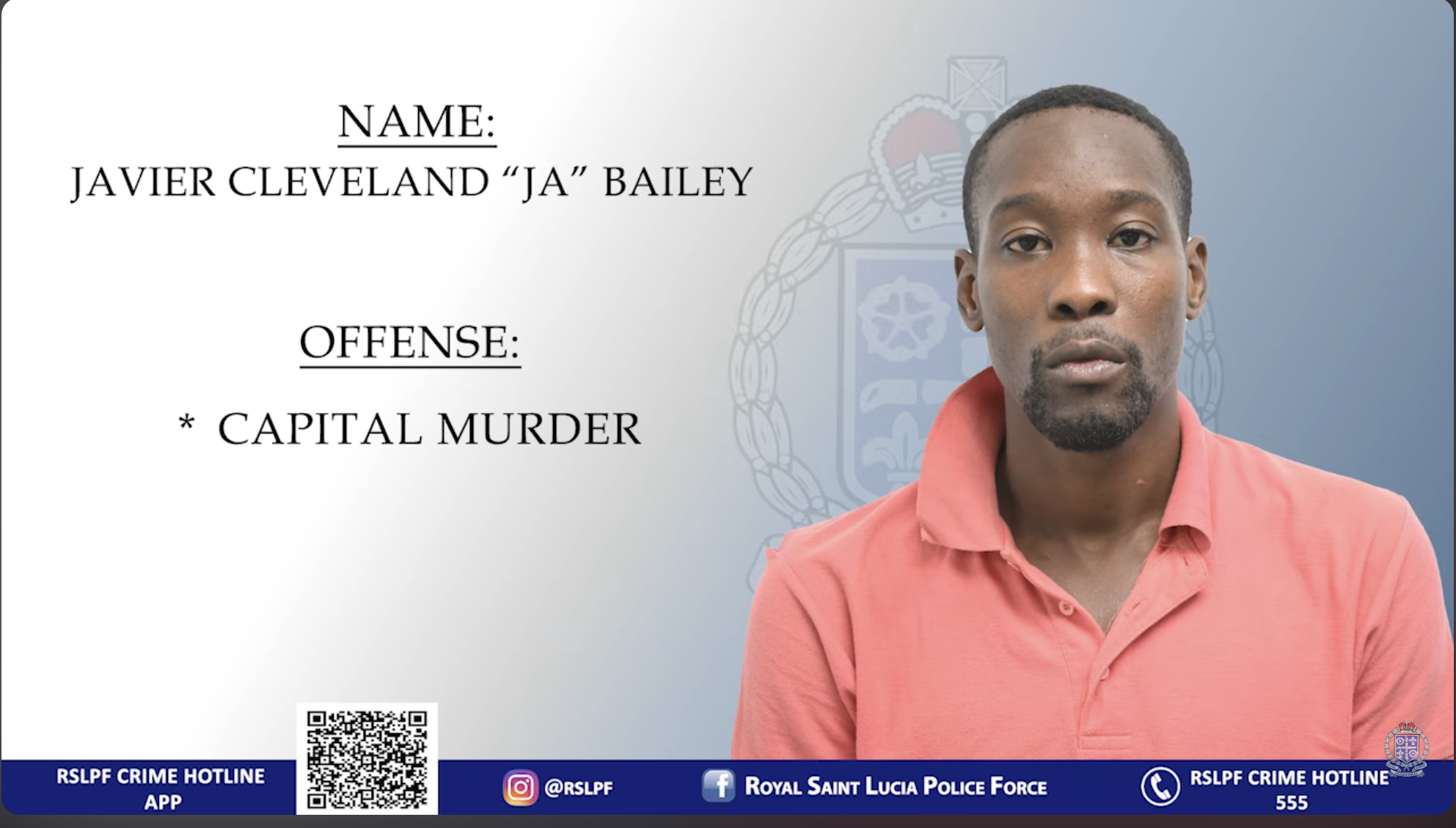
    Saint Lucian authorities have formally brought capital murder charges against Javier Cleveland Bailey, a Jamaican national, for the January 19th fatal shooting of 27-year-old security guard Cresean Biscombe. The incident occurred during an apparent robbery attempt at a Castries supermarket where Biscombe was employed.

    The Royal Saint Lucia Police Force confirmed Bailey’s arrest came following an intensive investigation into the La Clery homicide. Court documents show prosecutors presented their case before the First District Court on January 28th, where the presiding judge ordered Bailey remanded into custody pending trial proceedings.

    Law enforcement officials have revealed their investigation remains active, with at least one additional suspect currently detained for questioning. Police indicate multiple individuals may have participated in the attempted robbery that resulted in Biscombe’s death. Authorities are continuing investigative operations to identify and locate other potential accomplices.

    The case has drawn attention to workplace safety concerns for security personnel and highlighted ongoing efforts to combat violent crime in commercial establishments. The judicial process will proceed under Saint Lucia’s legal framework for capital offenses, which carries significant penalties upon conviction.

  • A CCJ delegation concludes Suriname visit discuss the country’s accession to the Caribbean Court of Justice

    A CCJ delegation concludes Suriname visit discuss the country’s accession to the Caribbean Court of Justice

    PARAMARIBO, SURINAME – In a landmark development for Caribbean judicial cooperation, the Caribbean Court of Justice (CCJ) has advanced a groundbreaking proposal to establish a specialized Civil Law Chamber specifically designed to accommodate Suriname’s unique legal system. The initiative emerged during a high-level delegation visit from January 20-24, 2026, at the invitation of Suriname’s Court of Justice President, Honourable Mr. Justice Iwan Rasoelbaks.

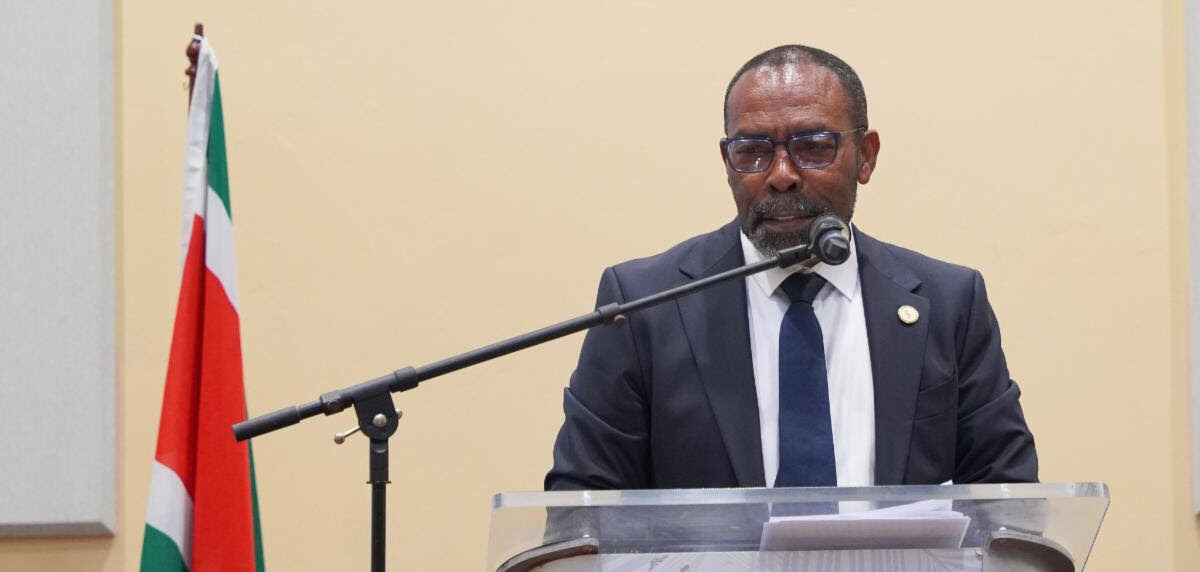
    The centerpiece of the visit was the Congress on Modernizing the Judiciary held at the Torarica Resort on January 22, where CCJ President Honourable Mr. Justice Winston Anderson addressed Surinamese judicial officials, lawmakers, and legal stakeholders. Justice Anderson presented a comprehensive vision for Suriname’s potential integration into the CCJ’s Appellate Jurisdiction, emphasizing that such a move would significantly enhance the nation’s judicial sovereignty while strengthening regional institutions.

    The proposed Civil Law Chamber represents an innovative structural adaptation within the CCJ framework. Recognizing that Suriname operates under a civil law tradition – contrasting with the common law systems predominant in most Caribbean Community (CARICOM) member states – the chamber would operate with judges specializing in civil law jurisprudence. All proceedings would follow civil law procedures conducted entirely in Dutch, with all legal filings, evidence, and correspondence processed in Suriname’s official language.

    The CCJ delegation, which included Justice Peter Jamadar, former CCJ President Sir Dennis Byron, and Registrar Gabrielle Figore-Jones, also conducted a courtesy meeting with Her Excellency Jennifer Geerlings-Simons, President of Suriname. Discussions focused on broader judicial reform initiatives and the CCJ’s supportive role in Suriname’s ongoing modernization efforts.

    The Court expressed strong commitment to continuing collaboration with Surinamese authorities, aligning with its foundational mission to promote equitable access to justice, reinforce regional unity, and uphold the rule of law throughout the Caribbean community.

  • Chikungunya-uitbraak: 134 bevestigde besmettingen, één overlijden gemeld

    Chikungunya-uitbraak: 134 bevestigde besmettingen, één overlijden gemeld

    Suriname’s Health Minister André Misiekaba has delivered an urgent address to the National Assembly regarding the escalating chikungunya outbreak, confirming 134 laboratory-verified infections across a broad demographic spectrum from 11-month-old infants to 85-year-old seniors. The ministry reported one fatality currently under investigation by the Bureau of Public Health (BOG), involving a patient with significant pre-existing medical conditions.

    A multidisciplinary task force led by Maureen van Dijk is coordinating response efforts with support from health ministry experts, BOG, Medical Mission, and Regional Health Service. Dr. Hedwig Goede has been appointed to manage risk communication and community engagement strategies.

    Infection clusters have been identified in three districts: Paramaribo, Commewijne, and most recently Nickerie. Minister Misiekaba highlighted that international health metrics suggest approximately 1,000 unreported infections may exist for each confirmed death, though he clarified this assessment aims to promote vigilance rather than incite panic.

    High-risk populations include elderly citizens, young children, chronically ill individuals (particularly those with diabetes or heart conditions), and late-term pregnant women. Current treatment protocols emphasize acetaminophen for pain and fever management, coupled with rest, proper nutrition, and hydration. Chronically ill patients experiencing persistent symptoms beyond 7-10 days are advised to seek immediate medical attention.

    Government initiatives include targeted elimination of mosquito breeding sites in high-transmission zones, with expansion planned progressively. Collaborative efforts with district commissioners in Nickerie focus on waste collection and public greenery maintenance. Insecticide spraying operations await delivery of necessary supplies, after which aerial and ground deployments will commence.

    All district commissioners have received operational briefings, while PAHO/WHO channels are disseminating clinical guidance to healthcare providers. Minister Misiekaba emphasized collective responsibility: “Government cannot solve this alone. Society must contribute to bringing this outbreak under control” through eliminating stagnant water, covering water containers, using mosquito repellent, wearing protective clothing, and sleeping under nets.

  • St Kitts Travel Tuesdays return with nonstop flights and round-trip fares from USD 288  – WIC News

    St Kitts Travel Tuesdays return with nonstop flights and round-trip fares from USD 288  – WIC News

    The St. Kitts Tourism Authority has strategically relaunched its ‘Travel Tuesdays’ promotion, offering competitively priced nonstop flights to enhance accessibility to the dual-island nation. Effective January 27, 2026, and continuing every Tuesday, the initiative provides round-trip fares beginning at just $288 USD on key regional and international routes.

    Tourism officials emphasize that direct air connectivity serves as a critical catalyst for visitor growth, particularly during peak travel seasons when passengers prioritize efficiency and convenience. The promotion specifically targets both Caribbean regional travelers and visitors from the United States, positioning St. Kitts as an easily accessible destination.

    Multiple airline partners are participating with limited-time offers: WINair offers a $288 round-trip between Bridgetown, Barbados and St. Kitts (February 7-14); American Airlines provides a $299 fare from New York’s JFK International (February 21-28); Caribbean Airlines connects Antigua and St. Kitts for $299 (April 20-27); and WINair’s additional $316 option links Dominica to St. Kitts (February 9-15).

    The intentionally restricted booking windows are designed to create urgency and accelerate decision-making among potential visitors. Through its official social media channels, the Tourism Authority encouraged immediate action, stating: ‘If you’ve been awaiting the optimal moment to plan your next journey, this is it. Nonstop flights significantly enhance accessibility to St. Kitts.’

    Industry stakeholders confirm that such targeted promotional mechanisms effectively convert traveler interest into confirmed bookings, supporting overall tourism growth and economic development for the destination.

  • Cabinet to Address Rising Barbuda Ferry and Flight Costs Next Week

    Cabinet to Address Rising Barbuda Ferry and Flight Costs Next Week

    The Antigua and Barbuda Cabinet has formally recognized mounting public discontent regarding the deteriorating state of inter-island transportation, specifically highlighting spiraling ferry expenses and a concerning contraction in flight availability. This pressing societal issue, which directly impacts the mobility and economic vitality of Barbuda’s residents, was formally tabled during the government’s weekly briefing session. However, a definitive deliberation and the formulation of potential countermeasures have been strategically postponed until the ministerial body’s subsequent convocation scheduled for the following week.

    Maurice Merchant, the Director General of Communications within the Prime Minister’s Office, provided official commentary on the deferral. He confirmed that while the Cabinet is acutely aware of the grievances articulated by the populace, the agenda of the most recent assembly did not permit a thorough examination of the subject. Merchant assured stakeholders and concerned citizens that the matter retains a high priority on the governmental docket and is slated for comprehensive review imminently.

    The core of the public’s consternation revolves around a tripartite challenge: exorbitant and rising ferry fares, a significant reduction in reliable air service operators, and profound reliability deficits plaguing the existing transportation infrastructure. This precarious situation generates severe impediments for Barbudans, adversely affecting daily commutes, access to employment opportunities, and the operational capacity of local enterprises. Particular inquiries have been directed toward understanding the rationale behind the temporary suspension of certain air carriers and the long-term strategy for ensuring stable and affordable connectivity.

    While the government’s spokesperson abstained from speculating on prospective solutions or policy interventions, he emphatically guaranteed that the Cabinet intends to confront these logistical and economic challenges directly. The national community now anticipates substantive announcements and a clear, actionable plan from the administration subsequent to the conclusion of the next high-level meeting.

  • Spanish solidarity against oil blockade to Cuba

    Spanish solidarity against oil blockade to Cuba

    A Madrid-based political organization has issued a vehement condemnation of United States foreign policy toward Cuba, characterizing recent measures to restrict oil shipments to the island nation as a “new genocidal campaign launched by US imperialism.” The group, identified as the Madrid Coordinating Committee, asserts that this economic blockade poses a direct threat to Cuba’s fundamental energy infrastructure and civilian supply chains.

    In an official statement, the committee presented a sweeping indictment of Washington’s long-standing approach to Havana, framing Cuba’s persistent economic challenges not as internal failures but as direct consequences of “ongoing criminal aggression by Washington against the Cuban people.” The language employed suggests a pattern of deliberate economic warfare rather than mere political disagreement.

    The organization further escalated its rhetoric by describing the petroleum restrictions as “irrefutable proof of state terrorism practiced by imperialists” against Cuba. This accusation expands beyond economic concerns to include historical grievances, specifically referencing alleged acts of “piracy they have continued to perpetrate in the Caribbean Sea for years,” including the controversial killing of fishermen in international waters.

    A central theme emerged regarding Cuba’s symbolic role in global politics. The committee argued that these aggressive measures ultimately aim “to completely silence the example of anti-capitalist struggle that the Cuban Revolution offers to all the peoples of the world.” This perspective positions Cuba not merely as a nation under pressure but as a ideological battleground.

    Concluding its statement, the group offered a defiant characterization of Cuba’s resilience, labeling it “living proof that it is possible to successfully confront US imperialism, the cruelest and most powerful in history, by fighting for socialism and overcoming capitalist barbarism.” This framing presents the US-Cuba conflict as a fundamental clash between competing economic and political systems on the world stage.