作者: admin

  • Woman’s decomposing body found in guard booth

    Woman’s decomposing body found in guard booth

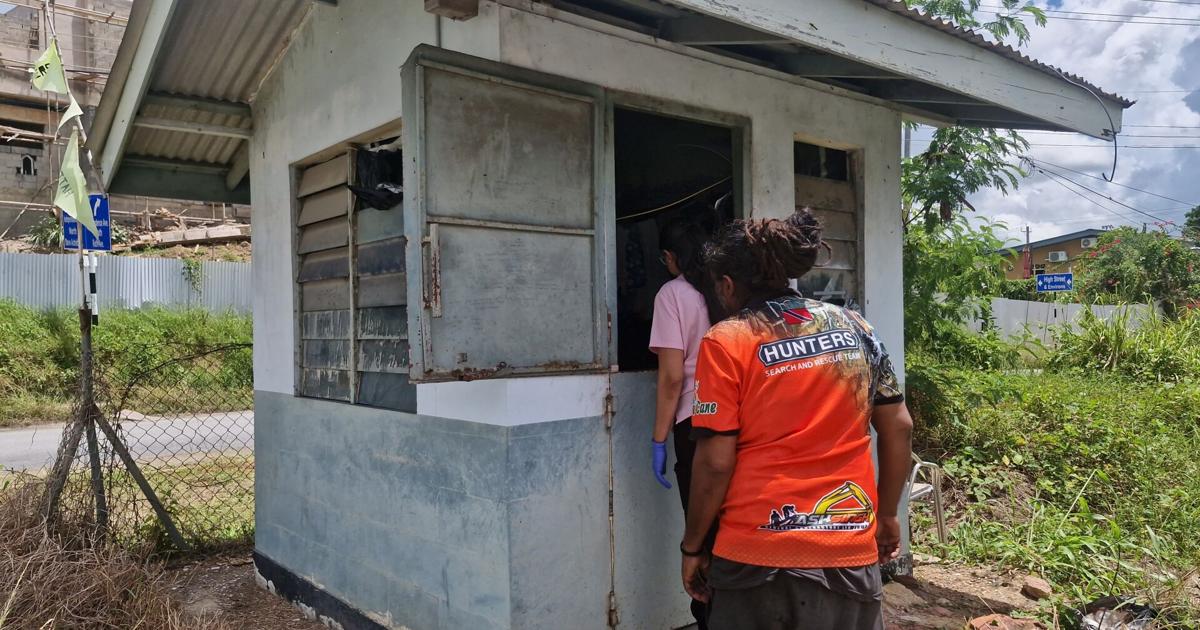
    A grim discovery was made in San Fernando on Thursday morning, when a volunteer search and rescue team stumbled across the decomposed remains of an elderly woman who appears to have been living in a derelict guard booth. The Hunters Search and Rescue Team (HSRT), a community-focused volunteer group operating in the area, made the find just after 9 a.m. while traveling through the neighborhood near Steve Achaiba Street and Lady Hailes Avenue.

    Kesraj Sooknanan, a long-serving HSRT member, told reporters that the team first noticed an unusual odor while driving through the largely vacant compound that once housed the Hatters Steel Orchestra. Following the scent, the group tracked it to a small, locked wooden guard booth on the property. They found the structure was bolted from the inside, and upon prying open the door, they made the grim discovery: the woman’s remains were lying on a thin mattress inside the cramped space, already in an advanced state of decomposition.

    Immediately after the discovery, the HSRT alerted local law enforcement, who cordoned off the area and launched a preliminary investigation. Forensic officers and uniformed police documented the scene, where they found clear signs the booth had been used as long-term shelter: clothing hung from strung lines across the ceiling, personal items were scattered across the floor, and a makeshift cooking area complete with a gas cylinder had been set up on the outer compound. Among the woman’s belongings, investigators found a document with the name “Marcia Thomas Singh” printed on it, but police have emphasized that the identity of the deceased has not yet been officially confirmed pending forensic confirmation.

    Local community members have shared what little they knew of the woman, who appears to have been unhoused and living in the area for some time. Residents of nearby Embacadere said they did not know her full name, but recognized her as a regular visitor to the community’s public standpipe, where she would collect water for daily use. They described her as a quiet, reserved person who kept to herself. Ravi Ramrattan, another HSRT member who runs an auto-electrical repair garage a short distance from the abandoned booth, added that he frequently saw the woman near the intersection of Independence Avenue and Rushworth Street. Ramrattan noted the woman was always neatly dressed and well-groomed, and estimated she was in her 60s at the time of her death.

    A district medical examiner attended the scene to examine the remains, and has ordered the body to be moved to the city morgue, where a full post-mortem examination will be carried out to determine the exact cause and time of death. Police are now appealing to the public for any information that could help identify the woman or locate her next of kin. Anyone with details is asked to contact emergency services via the national emergency lines 555, 999, 911, the San Fernando Police Station directly at 652-1771, or the Hunters Search and Rescue Team at 799-1453.
  • PNM alderman escorted out of heated borough meeting

    PNM alderman escorted out of heated borough meeting

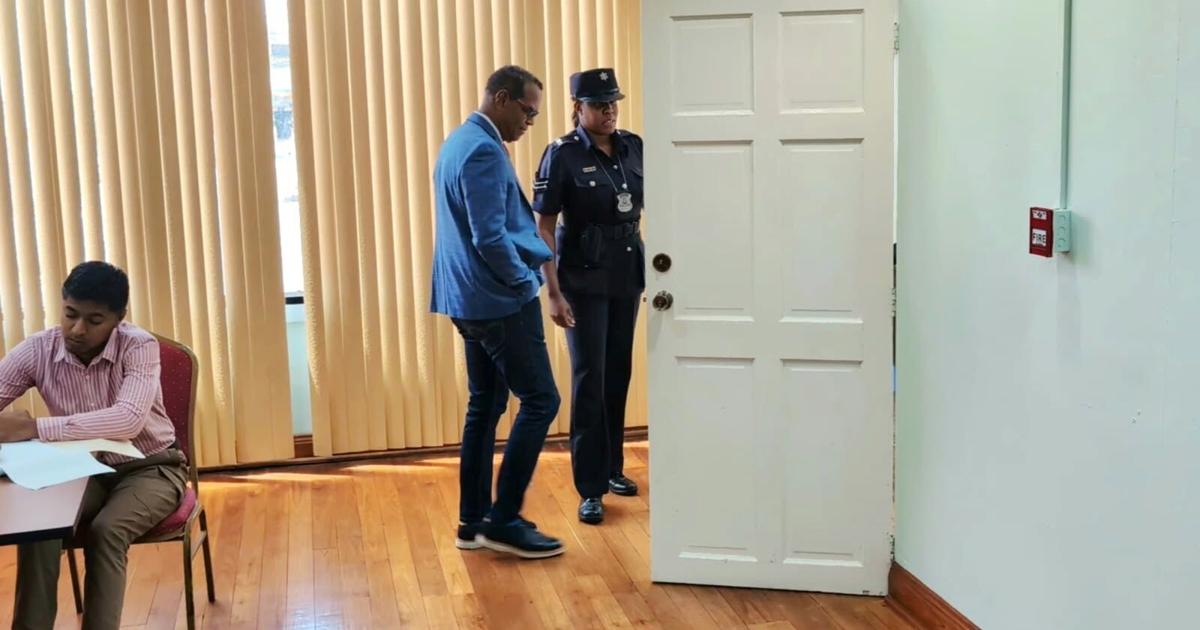
    Tensions boiled over into open confrontation at a second special statutory gathering of the Siparia Borough Corporation on Wednesday, culminating in Mayor Doonath Mayrhoo ordering municipal police to escort People’s National Movement (PNM) alderman Christopher Encinas out of the council chamber.

    The latest clash comes on the heels of a chaotic meeting one week prior that devolved into shouting matches and verbal insults, ending with a walkout by Encinas, former United National Congress alderman Victor Roberts and other PNM representatives. The PNM now holds a controlling majority on the borough council following three key developments: Roberts crossing the floor to join the party, Siparia West/Fyzabad councillor Jason Ali also switching allegiance, and the recent death of sitting councillor Romona Victor.

    In post-meeting media interviews, both top figures traded accusations of improper power grabs, with each side blaming the other for attempting to take unauthorized control of the local government body’s operations.

    Mayrhoo explained to reporters that Wednesday’s special meeting had been convened specifically to approve a budget virement needed to cover recently mandated salary increases for daily-rated workers set by the Ministry of Rural Development and Local Government, with additional financial and public governance items also added to the official agenda. According to the mayor, all required legislative items on the agenda were ultimately approved by the body.

    The core point of contention centered on Encinas’ invocation of Standing Order 8(3), which holds that any decisions made without a valid quorum are legally null and void. While Mayrhoo acknowledged the general validity of this rule, he pushed back on Encinas’ application of it to last week’s meeting, confirming that a quorum was in place when chairmen for the four standing council committees were elected during that gathering.

    Following the election of standing committee leaders, Mayrhoo noted he had exercised his mayoral authority to appoint chairmen for all of the corporation’s ad hoc committees, circulating the full list of appointments to every council member as part of this week’s public agenda. Under local governance rules, he emphasized, the mayor holds the exclusive power to fill leadership roles on committees that do not fall under the standing committee structure.

    “The PNM secured all four standing committee chairmans through a democratic election aligned with the Standing Orders, and I fully respected that outcome, as those elections are guaranteed by regulation,” Mayrhoo stated. “I followed all legal requirements for that process, and the council elected four PNM members to those roles. I had no objections whatsoever, because they were well within their rights. The problem only arose when I exercised my own clear legal authority to appoint chairmen to non-standing ad hoc committees, which the rules grant directly to this office.”

    Addressing the decision to remove Encinas from the chamber, Mayrhoo clarified that the alderman had already been given time to speak, but repeatedly attempted to interrupt proceedings and challenge the chair’s authority while another councillor waited to speak. “Encinas was being openly disrespectful to the chair, and his allotted speaking time had already expired,” the mayor explained. “I did not suspend him permanently. I simply asked him to step outside for five minutes to cool off, and requested municipal police to escort him out to maintain order.”

    Mayrhoo further alleged that the PNM caucus is intentionally working to engineer quorum failures and derail the corporation’s core public services to consolidate power. “This administration will not allow the PNM to hijack this local government body,” he said. “If we need to resolve this through the courts, or if the PNM chooses to take legal action, we are fully prepared to defend our position.”

    For his part, Encinas pushed back with a starkly different account of the conflict. He argued that the entire previous statutory meeting was legally invalidated when PNM members walked out, which he claims left the body without a quorum, meaning all decisions taken at that gathering – including the standing committee elections – are null and void.

    “We expected the mayor to call an entirely new meeting to address all committee leadership appointments, as required by the rules,” Encinas said. “Our reading of the standing orders is clear: if a meeting ends without a quorum, the entire meeting and all decisions made during it are invalid. The mayor simply refused to acknowledge that basic rule.”

    Encinas claimed that instead of opening the committee leadership process up for debate, Mayrhoo tabled a pre-arranged list of ad hoc committee chairmen and refused to allow any council member to raise questions, challenge the selections or debate the appointments. “When we attempted to raise our concerns, invoke Standing Order 8(3) and open a debate on the legality of the appointments, the mayor refused to allow any discussion at all,” Encinas said. “He simply unilaterally declared the appointments valid, but in our view, none of these committees are legal because the entire foundational meeting that led to them was invalid. The only correct step was to hold a new special statutory meeting to reconsider all committee appointments, including the standing committees.”

    Encinas confirmed that when he attempted to formally raise his objection, the mayor ordered him removed from the chamber. “The mayor had police escort me out. I complied peacefully, because I recognize that the mayor holds the procedural authority to maintain order in the chamber, so I followed his direction,” he said. Encinas also categorically rejected Mayrhoo’s claim that the PNM caucus is intentionally avoiding meetings or trying to obstruct the corporation’s work.

  • SKNYPA to submit youth empowerment position paper as Government considers recommendations from Silver Jubilee debate

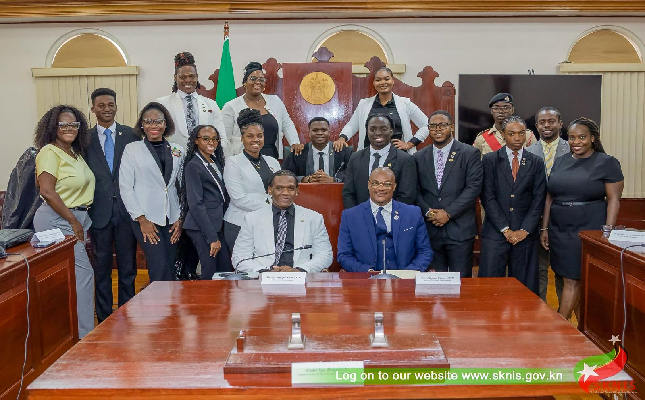
    SKNYPA to submit youth empowerment position paper as Government considers recommendations from Silver Jubilee debate

    As the St. Kitts National Youth Parliament Association (SKNYPA) marks its 25th year of fostering civic engagement and youth leadership, the organization is moving forward with concrete plans to shape national youth policy, preparing to submit a comprehensive position paper full of actionable proposals to the country’s government.

    The milestone Silver Jubilee parliamentary sitting was held on September 8, 2026, inside St. Kitts’ official National Assembly Chambers in Basseterre. In a unique format that blended youth leadership with experienced political oversight, elected youth parliamentarians took up seats on the government benches, while sitting incumbent Members of Parliament stepped into the role of the opposition. Hasani McDonald led the session as Speaker, supported by Clerk Szczesnyque Smith and Deputy Clerk Tahjaun Walters.

    Jalen Monzac, SKNYPA’s President, served as the youth government’s Prime Minister for the sitting. When opening the resolution calling for fundamental systemic changes to expand youth empowerment and inclusive development across the Federation of St. Kitts and Nevis, Monzac officially announced the upcoming position paper during the closing adjournment. Unlike many closed parliamentary proceedings, the debate’s core focus was directly shaped by public input: residents voted on priorities via popular social media platforms, and additional feedback was collected through one-on-one public interviews. Monzac’s formal presentation integrated these community perspectives, analysis of the national budget, and evidence from successful youth development programs across the Caribbean region.

    In remarks to the Assembly, Monzac outlined the group’s core vision, stating: “We want a Federation where our qualifications can lead to work; where our work can support a home; where public services respect our time; and where asking for help leads to care.”

    The position paper will carry 12 distinct proposals spanning a wide range of pressing youth issues. Key priority areas include expanded employment opportunities and apprenticeship programs, increased support for youth-led entrepreneurship, public service modernization, integration of artificial intelligence tools to expand youth access to opportunity, affordable youth housing, improved access to Crown land for young people, regional-aligned rent control policies, increased funding for youth community groups and dedicated safe youth spaces, and expanded access to mental health care. Additional institutional proposals include a full national human resource audit, strengthened capacity and services for the national Job Centre, and 24/7 access to counselling and psychosocial support for young people.

    Responding to the resolution during the debate, Acting Prime Minister Dr. Geoffrey Hanley, who led the opposition’s response to Monzac’s opening address, committed that the government would conduct a thorough review of all proposals, with an explicit goal of advancing viable recommendations into policy. Hanley was joined on the opposition benches by prominent sitting politicians including Hon. Konris Maynard, Hon. Shawn Richards, Senator Dr. Joyelle Clarke, Hon. Eric Evelyn, and Senator Isalean Phillips. The youth government’s front bench included Deputy Prime Minister Desean Newman, Leader of Government Business Mauriel Knight, Senior Minister Naomi Francis, and seven additional youth cabinet ministers.

    Following the debate, participating parliamentarians from both sides congratulated SKNYPA on 25 years of advancing nation-building and civic education for young St. Kittians, praising the depth of research, breadth of coverage, and quality of analysis showcased by the youth participants in the sitting.

    ders from across sectors attended the historic sitting, including Attorney General Hon. Garth Wilkin, representatives from local political parties and electoral candidates, envoys from the Embassy of the Republic of China (Taiwan), senior government officials, SKNYPA alumni, family members of participating youth, and general public observers. SKNYPA publicly thanked the National Assembly for its longstanding support of the organization, including continued access to the official Chambers, and local sponsor Toucan Sounds, which provided the event’s sound system free of charge.

  • Kingsmen keep hopes of crown alive

    Kingsmen keep hopes of crown alive

    On September 17, 2026, the Caribbean Premier League (CPL) hosted one of its most dramatic knockout matches of the season at Bridgetown’s iconic Kensington Oval, where the Jamaica Kingsmen delivered a statement nine-wicket win over the Barbados Tridents in the tournament Eliminator to keep their championship dreams alive. The historic result was headlined by a record-breaking innings from 21-year-old Jamaican opener Maaz Sadaqat, who became the youngest centurion in the league’s 13-year history with a blistering 112 runs that put the Tridents out of contention from the first over.

    It was a nightmare start for the home side Tridents, who lost top-order batters Brandon King and Kevlon Anderson inside their first two overs. By the end of the third over, the Tridents were reeling at 2 wickets for just 2 runs, and two more wickets fell before the completion of the powerplay, leaving the side stranded at 24 runs for the loss of four wickets. As the home crowd fell silent, the Kingsmen’s bowling attack pressed their advantage, sniffing an early end to the Tridents’ tournament run.

    All of Barbados’ hopes fell on the shoulders of South African star Quinton de Kock, the tournament’s leading run-scorer who had pulled the Tridents out of multiple dangerous situations throughout the 2026 season. The odds got even longer for the Tridents when all-rounder Sherfane Rutherford was clean bowled by a spectacular delivery from Kingsmen pacer Saim Ayub, leaving de Kock with little support to rebuild the innings. Sticking to his signature calm, patient approach, de Kock built a game-saving partnership with Tridents captain and veteran Chris Green. The pair put together a 114-run stand, scoring 95 runs in the back half of the innings to drag the Tridents to a final total of 144 runs for 6 wickets. De Kock fell on the final ball of the innings, finishing with an impressive 71 runs, while Green remained unbeaten on 57, giving the Tridents a modest but defendable total to carry into their chase of the Kingsmen.

    Buoyed by their strong bowling performance, the Kingsmen’s opening pair of Sadaqat and Kirk McKenzie got off to a flying start in their run chase, immediately quashing any momentum the Tridents had built through their late-innings recovery. Sadaqat dominated the strike from the first over, powering the Kingsmen to 79 unbeaten runs without loss by the end of the powerplay. The young batter reached his first half-century of the CPL season in just 22 balls, leaving Tridents captain Green unable to slow the innings down despite multiple bowling changes. Spin that had dismantled the Tridents’ top order earlier in the match was hit to all corners of Kensington Oval by Sadaqat, while McKenzie played a steady supporting role, giving the in-form opener all the strike opportunity he needed.

    Sadaqat reached his first-ever T20 century in 44 balls – exactly twice the number of deliveries he needed to reach his half-century – with a strike rate that kept the Tridents’ bowers on the back foot throughout. He finally fell when Daniel Sams tricked him into a miscue on a slower ball, with Sadasqat hitting a sky-high catch that Sams held himself. The young star received a warm round of applause from the home crowd as he walked off the pitch. With the Kingsmen needing just one run to win with 35 overs remaining, Kevlon Anderson bowled a accidental wide, eliminating the Tridents from the tournament and wrapping up a disappointing night for the home side. McKenzie remained unbeaten on 22 runs as the Kingsmen cruised to the nine-wicket win.

    The Jamaica Kingsmen will now advance to Qualifier 2, where they will face the loser of the match between the Amazon Warriors and the Guyana Falcons for a spot in the 2026 CPL Grand Final, scheduled to take place this coming Sunday.

  • Een broeierige donderdag met een verfrissende bui

    Een broeierige donderdag met een verfrissende bui

    A warm, sticky weather pattern is set to unfold across the Netherlands this Thursday, starting from the earliest hours of the morning, according to the latest local weather update published September 17.

    When dawn breaks on Thursday, initial temperatures will already hover between 23 and 29 degrees Celsius. What makes the conditions feel more oppressive than the numbers suggest is the unusually high atmospheric humidity, which pushes perceived temperatures well above the actual readings shown on thermometers.

    As the day progresses into midday and afternoon, the heat will ramp up dramatically. Depending on the region across the country, maximum actual temperatures will surge to between 33 and 39 degrees Celsius. When combined with the persistent high humidity, it will feel as hot as 40 degrees Celsius or even higher in many areas. Skies are expected to be partly cloudy through most of the day.

    There is one potential refreshing break in the hot conditions, however. Forecasters note a considerable chance of rain showers or thunderstorms developing through the afternoon and early evening. These storms could bring heavy downpours that are intense in localized areas. Winds will blow from the east to northeast, and they will remain mostly calm for the duration of the event.

    Once the sun sets and the day moves into evening and overnight, temperatures will gradually cool down to a range between 23 and 27 degrees Celsius. High humidity will remain in place, leaving the evening warm and somewhat stuffy for most of the country.

  • UN chief warns of global uncertainty as world leaders prepare for General Assembly

    UN chief warns of global uncertainty as world leaders prepare for General Assembly

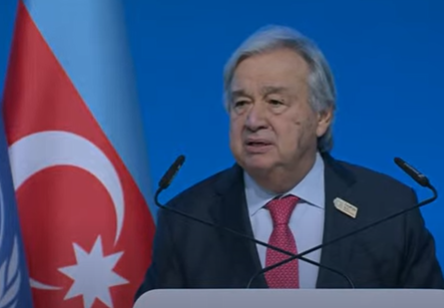
    Ahead of the high-level week of the 81st United Nations General Assembly, which will bring global leaders together in downtown Manhattan, United Nations Secretary-General António Guterres has framed the gathering against a backdrop of seismic shifts in global power dynamics and rapidly escalating systemic uncertainty. With Guterres set to step down from his post at the end of 2026, he used a pre-General Assembly press conference at UN Headquarters on September 16 to argue that the changing global landscape demands adaptation from the United Nations, while emphasizing that organizational reform must never come at the cost of core founding principles. Instead, he argued, these values must be defended with renewed conviction. “The United Nations is not just a platform, it is a promise,” Guterres told reporters. “So my message to leaders comes down to this: Keep your promises. Live up to the UN Charter. Be true to the ideals you pledged to uphold. Defend international law. Protect human rights. Invest in sustainable and inclusive development. And push for peace. Now more than ever.”

    Calls for sweeping UN institutional reform have gained momentum in recent years, coming from a diverse coalition of stakeholders ranging from vulnerable small island developing states to major powers including the United States. But as leaders prepare to convene, the full attention of the international community remains anchored to the escalating, ongoing conflict roiling the Middle East – a crisis Guterres identified as the most urgent priority ahead of the General Assembly’s debates. “De-escalation must be priority one, priority two and priority three,” he stressed, calling on all warring parties to immediately halt all operations that target or harm civilian populations, and to clear all barriers to unimpeded, safe access for humanitarian aid workers and supply convoys.

    Guterres also issued a clear call for international law to be upheld in critical strategic waterways: he demanded that navigational rights and freedoms be fully restored and respected around the Strait of Hormuz and Bab al-Mandab, global chokepoints that carry a large share of the world’s seaborne trade. He reiterated that the only viable path out of escalating regional tension runs through “de-escalation, diplomacy and dialogue.”

    Turning specifically to the long-simmering Israeli-Palestinian conflict, the Secretary-General urged the international community to not turn away from the catastrophic humanitarian suffering of Palestinian communities in Gaza and the Israeli-occupied West Bank. He insisted any finalized peace plan for Gaza must be implemented in full, with no restrictions on the entry and distribution of life-saving humanitarian aid. He also called for an immediate end to what he termed the “creeping annexation” of West Bank territory, stressing that a lasting, just peace across the Middle East can never be achieved without the full implementation of a two-state solution.

    Guterres also addressed the ongoing full-scale Russian invasion of Ukraine, noting that the conflict is now entering its fifth year, with unthinkable civilian toll and cascading negative impacts on the global economy and food security that extend far beyond Eastern Europe. “It is time for an immediate ceasefire as a first step towards a just, lasting and comprehensive peace – in line with the UN Charter, international law, and relevant UN resolutions,” he said.

    Shifting focus to emerging transnational challenges that will dominate General Assembly agenda items next week, Guterres turned to the rapid, unregulated advancement of artificial intelligence, calling for urgent global action to address growing risks associated with the technology. He acknowledged that AI holds unprecedented transformative potential: it can speed progress toward the UN’s sustainable development goals, expand access to quality education, strengthen global public health systems, and boost communities’ ability to adapt to the impacts of climate change. But he also highlighted that even leading AI developers are increasingly sounding the alarm that the technology is advancing far faster than global regulators’ and societies’ understanding of its catastrophic potential risks.

    “We cannot afford to ignore concerns that have been raised, especially by those on the frontlines of the development of AI,” Guterres said. He emphasized that national governments bear the primary responsibility for protecting their citizens from AI-related harms, noting that meaningful risk mitigation requires far more than vague good intentions from global policymakers. To address this gap, the United Nations has already established the Independent International Scientific Panel on AI, a global body that brings together leading scientific expertise from across the world to ensure AI governance policy is rooted in robust empirical evidence. Guterres confirmed that AI will be a central topic in his bilateral and multilateral discussions with world leaders during high-level week, and that the UN is actively working to advance practical, actionable policy frameworks for safe AI development in the coming weeks.

    Guterres argued that the international community must build a shared global consensus on how to advance the safe, secure, and responsible development of AI, including establishing clear frameworks for when more powerful AI systems require stricter safeguards or additional regulatory intervention to mitigate systemic risks. “This requires genuine international cooperation and a coordinated global effort,” he said, acknowledging deep geopolitical divides around AI governance but warning that these splits must not be allowed to derail urgent work to improve global AI safety.

    Climate change, another longstanding core priority for the UN, was also flagged as a key issue for the upcoming General Assembly, with Guterres implicitly tying the need for cross-border cooperation on AI to the larger demand for collective action on slowing global temperature rise and supporting vulnerable developing states.

  • BRICS Pay: kan het nieuwe betaalsysteem de macht van SWIFT en de dollar uitdagen? (1)

    BRICS Pay: kan het nieuwe betaalsysteem de macht van SWIFT en de dollar uitdagen? (1)

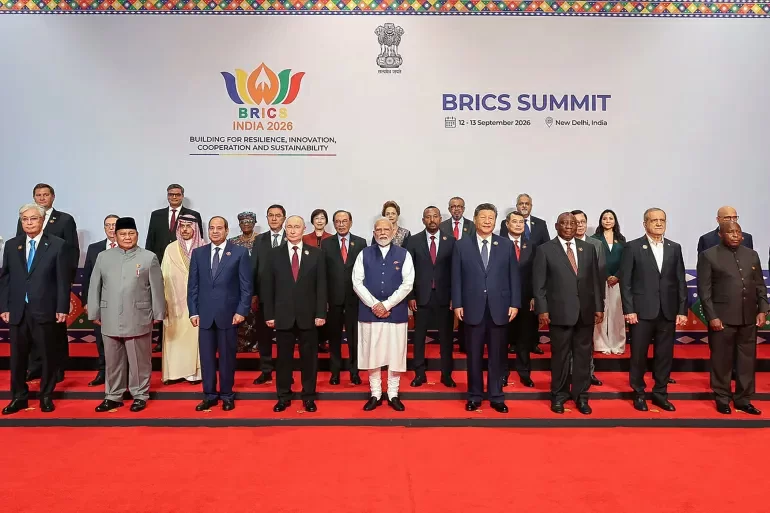
    The global competition for influence over the international financial system has entered a new phase, as the expanding BRICS bloc advances an initiative to streamline intra-bloc cross-border payments and reduce reliance on Western-dominated financial infrastructure. During the 18th BRICS Summit held in New Delhi on 12 and 13 September, bloc leaders formally backed further development of local currency trade mechanisms and cross-border payment systems, highlighting the strategic role of BRICS Pay, a project led by the BRICS Business Council. First proposed in 2018, BRICS Pay is designed as a digital payment and settlement ecosystem that connects existing national payment systems across member states, aiming to make cross-border transactions faster, more affordable, and less vulnerable to external geopolitical pressure. Contrary to widespread speculation, the initiative is not positioned as an immediate full replacement for the SWIFT global financial messaging network, or major Western card networks like Visa and Mastercard; instead, it operates as a complementary alternative infrastructure that works alongside existing global systems. There are also no current plans to launch a single centralized BRICS payment system or a common BRICS currency, a distinction that reflects the divergent economic and geopolitical priorities across the bloc’s 11 current members.

    To understand the urgency behind BRICS Pay, one must look at the shifting geopolitical landscape of recent years, which has turned financial infrastructure into a core tool of international statecraft. Western sanctions imposed after Russia’s 2022 invasion of Ukraine cut off major Russian financial institutions from the SWIFT network, exposing the profound risks emerging economies face when critical components of their international financial infrastructure are controlled by external powers. For Russia, the exclusion made clear how dependent even large economies are on systems outside their sovereign control, and Moscow has since become a leading advocate for alternative payment arrangements and expanded use of national currencies in intra-bloc trade. But the push for alternatives extends far beyond Russia: many emerging market economies across BRICS have growing concerns over the concentration of control over global financial infrastructure in a small group of Western nations and institutions.

    A common misconception about BRICS is that it acts as a unified geopolitical and economic bloc with a single shared financial agenda. In reality, member states hold widely divergent interests, shaped by their unique trade relationships, existing financial systems, currency policies, and diplomatic ties to Western powers and the U.S. dollar. For example, India maintains deep economic and strategic ties with both Western nations and fellow BRICS members, while Brazil’s policy priorities differ sharply from Russia’s, and China already operates a robust cross-border payment infrastructure of its own. This diversity rules out a fully centralized, one-size-fits-all BRICS payment system in the near term. Instead, the bloc is pursuing a more pragmatic model: an interoperable network that links existing independent national payment systems, rather than building an entirely new centralized system from scratch.

    Manoj Kewalramani, chair of the Geostrategy Programme at Indian think tank Takshashila Institution, framed the initiative to Al Jazeera as an iterative exploration of tools to reduce the vulnerability of intra-BRICS trade and financial ties, rather than a direct challenge to the existing global order. At its core, the development of BRICS Pay touches on a fundamental geopolitical question: who controls the infrastructure that underpins global trade and international financial transactions?

    How does BRICS Pay work in practice? The core premise is that each member state retains its existing domestic payment infrastructure, while BRICS Pay builds the technical bridges to enable these separate systems to communicate with one another, via tools like QR codes, digital wallets, and mobile applications. For consumers, this could mean a traveler from India visiting Brazil would be able to use their existing Indian payment infrastructure directly, rather than relying on international card networks or traditional cross-border payment services. The same model applies to business and banking transactions: an Indian firm trading with a Chinese partner could settle transactions directly in their respective national currencies via connected domestic systems, arranged through agreements between their financial institutions.

    Andrey Mikhaylishin, CEO of BRICS Pay, pointed to existing cutting-edge national systems as the building blocks for the network, including India’s Unified Payments Interface (UPI) and RuPay, Russia’s Mir card network and Fast Payment System. Currently, these advanced national systems operate in isolation: an Indian payment app does not work automatically in China, a Brazilian domestic network cannot connect seamlessly to Russian banks, and China’s infrastructure does not natively interoperate with India’s. BRICS Pay’s core mission is to close these gaps.

    Many member states already operate world-class national payment systems that can serve as a foundation for the expanded network:
    – India’s UPI is one of the most advanced instant payment systems globally, enabling fast person-to-person and business-to-consumer transactions directly from bank accounts. While it dominates domestic retail payments and has been rolled out in a small number of partner countries, its role in facilitating large-scale international trade remains limited for now.
    – Brazil’s Pix is another wildly popular instant payment system that has rapidly become a core part of the country’s domestic payment ecosystem. Like UPI, its main gap is the lack of established international interoperability. A successful domestic system does not automatically translate to a functional global payment network.
    – China’s Cross-Border Interbank Payment System (CIPS) is a dedicated infrastructure for cross-border renminbi payments. It is important to note that CIPS does not fill the exact same role as SWIFT: CIPS handles the processing and settlement of cross-border renminbi transactions, while SWIFT is primarily a secure messaging network that allows financial institutions to exchange payment instructions and transaction information.

    This distinction is critical for anyone comparing BRICS Pay to SWIFT. The Society for Worldwide Interbank Financial Telecommunication (SWIFT) is not a global settlement system that moves money between accounts itself. Instead, it is a standardized, secure messaging network used by more than 11,000 financial institutions worldwide to exchange transaction information. Its massive scale, built up over decades of operation, creates a self-reinforcing network effect: the more institutions that join SWIFT, the more valuable the network becomes for every user. Beyond technology, SWIFT represents a decades-old global framework of trust, standardized rules, regulation, and financial relationships that cannot be easily replaced overnight.

    In their joint declaration from the New Delhi summit, BRICS leaders emphasized the need to prioritize national sovereign priorities, noting that no universal solution exists for all member states. BRICS Pay is also open to use by friendly non-BRICS countries, expanding its potential reach over time. For now, the initiative remains a work in progress, focused on incremental connection of existing systems rather than a sudden overhaul of the global financial order.

  • Column: Schoenmaker blijf bij je leest

    Column: Schoenmaker blijf bij je leest

    A landmark legal change approved one week ago is set to reshape international football opportunities for both players and the South American nation of Suriname. The amendment formally allows professional footballers with Surinamese heritage to represent the country at international competitions while retaining their Dutch nationality, unlocking a deep pool of untapped talent for Suriname’s national squad.

    This regulatory shift delivers mutual benefits for players and the Suriname Football Association alike. For eligible athletes, the rule change removes the long-standing barrier of being forced to give up Dutch citizenship to play internationally, opening up a new path to earn senior caps, raise their profiles among top global club scouts, and continue competitive football at the international level even if they do not earn a call-up to the Netherlands’ iconic Oranje national team. In an era of deepening sports globalization, the change also aligns with new scouting realities: unlike decades past when the Netherlands was seen as the only gateway for Surinamese-born talent to access European opportunities, social media now allows scouts from top clubs across the continent to identify and evaluate talent playing anywhere in the world, making international caps for Suriname just as valuable for a player’s career.

    The timing of the amendment’s passage could not be more critical. Suriname is set to kick off its Concacaf Nations League campaign later this month, and the rule change means the national team can now field a squad made up primarily of professional players, a marked shift from previous rosters that relied more heavily on domestic amateur and semi-professional talent. The full squad has already been announced, and football fans across Suriname are currently counting down to the first match.

    Still, the road ahead presents significant challenges. Team officials face a tight timeline to get the newly assembled squad, most of whom have not played any official warm-up matches together, into peak competitive form. Some observers have argued that local players, who have already been training and competing together in regional domestic leagues, should start the opening matches to address this lack of cohesion. However, this proposal has been ruled out: recent regional competitive assessments confirm that Suriname’s domestic club leagues do not meet the required competitive standard to prepare players for Concacaf League A, the top tier of the regional competition.

    Even with the addition of a full complement of professional players, earning a spot out of the group stage in League A will be an enormous uphill challenge. Amateurs are no longer viable options for the roster when the national association has set the clear goal of advancing past the group stage. National team leadership has emphasized that lessons learned from Suriname’s 2026 FIFA World Cup qualifying campaign will be integrated into this new tournament cycle, and as the ultimate decision-maker, the head coach is tasked with pulling every lever available to hit the team’s performance goals. The Surinamese football community has expressed confidence that the coach will field the strongest possible squad, and has called for giving him the benefit of the doubt through the early stages of the campaign.

    In a closing reflection on the public debate surrounding the legal amendment, opinion writer Mireille Hoepel noted that over the course of the legislative process, many people without professional expertise in sports policy or international football law offered unsolicited, strongly held opinions on the bill, often positioning themselves as uninvited advocates for Dutch national interests. While constructive public criticism is appropriate, Hoepel argued that this pattern of overreach into fields outside one’s own professional expertise is disappointing. She emphasized that members of every profession would deliver better collective outcomes by focusing on improving their own work rather than expending energy criticizing and interfering in work done by trained experts in other fields, closing with the classic reminder: “Let the cobbler stick to his last.”

  • Braganza kreeg duizenden hectares terwijl bedrijfsplan financiële onzekerheid vermeldt

    Braganza kreeg duizenden hectares terwijl bedrijfsplan financiële onzekerheid vermeldt

    In January 2026, Suriname’s Ministry of Agriculture, Livestock and Fisheries (LVV) awarded a conditional 20-year lease for nearly 9,400 hectares of state-owned land in the Para region to Braganza Marketing Group, clearing the way for the firm to develop a large-scale commercial agricultural project on the site. A portion of the already deforested land is currently being worked on by Mennonite farmers recruited by Braganza to move to Suriname for the initiative. But newly public documents from the project’s founding raise serious questions about whether Braganza ever proved it had the financial capacity to meet the strict development requirements tied to the lease agreement. The project was approved in large part based on Braganza’s 10-year business plan covering 2022 to 2031, whose final version was published in May 2023. In that document, the company itself explicitly acknowledged that its financial standing and cash flow were major weaknesses at the time the plan was drafted, noting its overall financial position remained uncertain when the proposal was submitted for government review. It remains unclear whether Braganza has addressed these financial vulnerabilities and shored up its capital position between the publication of the business plan and the January 2026 approval of the land lease. According to Braganza’s own accounting, all early operations up to the approval date were funded by its founding partners, and the company had not yet finalized key funding streams including first-revenue generation, external bank lending, outside investor commitments, government subsidies, and additional state support. At the same time, the business plan notes that there was strong interest from international investors looking to deploy direct capital into Suriname’s agricultural sector, with planned investments covering row crop production, cattle rearing, and dairy processing. Braganza outlined its overarching funding strategy in the plan around two core pillars: equity contributions from existing shareholders and commercial bank lending. What remains unconfirmed to date is what level of financial due diligence LVV conducted on Braganza prior to the ministry’s January 13, 2026 decision to hand over such a large tract of public land for 20 years of commercial development. The terms of the lease agreement impose significant mandatory development requirements on Braganza: the firm must bring a minimum of 10% of the total 9,366.72 hectares under active cultivation every year, which equals roughly 937 hectares of new development annually. The company’s own business plan actually called for a far faster rollout of development than the lease’s minimum requirements. Braganza initially projected that it would have 5,000 hectares in active production after its first full year of operations, targeting annual output of 11,250 tons of soybeans and 25,000 tons of corn. It aimed to have 10,000 hectares in production by the end of the fifth year of the project. Achieving that aggressive timeline requires massive upfront investment in land preparation, agricultural machinery, road and utility infrastructure, on-site storage, processing facilities, and transport logistics. Beyond financial questions, Braganza itself openly acknowledges in its business plan that Suriname currently lacks the full supporting infrastructure needed to sustain large-scale commercial soy and corn production. The document notes that large volumes of required production inputs are either entirely unavailable or only available in insufficient quantities within the country, meaning many key raw materials would need to be imported to keep the project running. The lease agreement grants LVV full authority to conduct regular inspections, ongoing monitoring, and periodic evaluations of the project’s progress. It also explicitly states that the lease will automatically terminate if Braganza fails to meet its mandatory annual cultivation requirements. However, based on all publicly available documents related to the approval, there is no public record of what financial guarantees Braganza submitted to LVV when the lease was signed in January, nor any confirmation that the ministry completed a formal pre-approval verification to confirm the company held enough capital to actually meet its mandatory development obligations over the course of the lease.

  • “Criterio Compartido” (Shared Views): The President returns to the radio to engage with the people

    “Criterio Compartido” (Shared Views): The President returns to the radio to engage with the people

    Cuban President and First Party Secretary Miguel Díaz-Canel Bermúdez has announced the upcoming launch of his new radio talk program, *Criterio Compartido* (Shared Views), set to air on Cuba’s iconic Radio Rebelde starting next week. The program, co-hosted by 2026 National Radio Award-winning journalist Bárbara Betancourt Abreu, draws inspiration from respected media figure Dr. Zeneida Costales, and is built around five core missions that center direct engagement between the island nation’s leader and its citizens.

    Unlike traditional top-down political broadcasts, *Criterio Compartido* is designed as an open, inclusive space focused on participatory governance and transparency. Its core mandate is to candidly address the everyday challenges, pressing concerns, and collective aspirations of Cuban people, creating a structured forum for ongoing social dialogue that acts as a direct, unfiltered bridge between the presidency and the general public. Betancourt Abreu emphasized this core mission in her remarks, noting that the program will prioritize genuine listening: “Yes, he listens to me. He is the president who listens to what I think.”

    A key defining feature of the new show is its commitment to centering ordinary Cubans as the main protagonists of the conversation. Everyday working people, often referred to as the unsung heroes who build the nation through their daily labor, will be given regular airtime to share their experiences and perspectives. The program will also serve as a formal platform for accountability, creating space for citizen oversight of government work and helping build public consensus around key policy issues, grounded in systematic public opinion research and direct public participation.

    In his announcement shared September 17, 2026, Díaz-Canel reflected on his long personal and professional connection to radio broadcasting, stretching back to his childhood days participating in a children’s program in Santa Clara, to his earlier experience hosting versions of *Criterio Compartido* and another program called *Alta Tensión* in Holguín. “The best way to learn is to listen to the people,” the president stated, reaffirming his administration’s commitment to ongoing, open dialogue with the Cuban public.

    The program will carry a deeply personal touch for the Cuban leader: its opening theme is the well-known track *Canto Arena* by iconic Cuban musician Silvio Rodríguez, performed by Díaz-Canel’s own children, Miguel and Jenny, who are members of the popular Cuban folk group De Cuba. Starting next week, the program will be available to all Cuban radio listeners, with organizers framing it as a promising new effort to foster open, transformative public conversation across the country.