作者: admin

  • NDP senator exposes untruths of Gonsalves’ reinstatement claim

    NDP senator exposes untruths of Gonsalves’ reinstatement claim

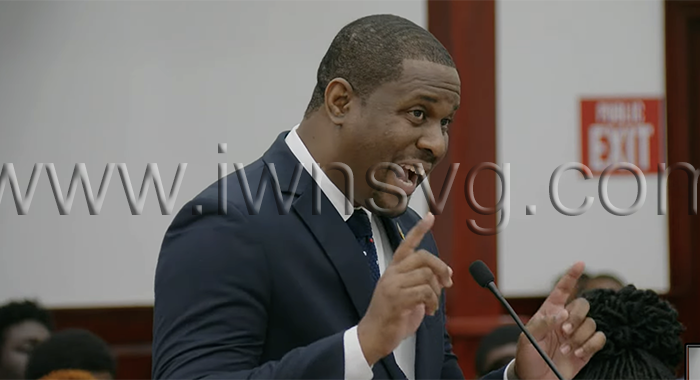
    In a spirited parliamentary address, Government Senator Jemarlie John systematically dismantled Opposition Leader Ralph Gonsalves’ assertion that the current New Democratic Party administration was merely continuing the Unity Labour Party’s policy regarding reinstatement of public sector workers terminated under the 2021 COVID-19 vaccine mandate.

    The senator, leveraging his legal expertise and position as deputy speaker, presented compelling evidence from media archives demonstrating the ULP government’s consistent opposition to worker reinstatement. John referenced an August 2022 iWitness News report where Gonsalves explicitly argued that reinstating unvaccinated employees would constitute an admission that the original mandate was unlawful.

    John emphasized the fundamental constitutional rights at stake, stating, ‘People have certain God-given rights, including religious liberty. And it is good to know that retribution still comes for those who trample underfoot our God-given rights and freedoms.’

    The historical context reveals hundreds of public sector workers were dismissed in November 2021 for non-compliance with the vaccine mandate. While the High Court initially ruled these terminations unconstitutional in March 2023, the Court of Appeal overturned this decision in February 2025. The matter now awaits hearing before the Privy Council, the nation’s highest court.

    John highlighted the stark policy contrast between the parties: ‘The ULP administration did not reinstate a single worker terminated under the vaccine mandate law. Not one!’ He attributed the NDP’s landslide electoral victory (14-1) partly to this distinction, noting the former administration’s refusal to acknowledge wrongdoing.

    The senator further critiqued the previous government’s exemption process, arguing that alternative arrangements that became possible post-COVID could have been implemented during the pandemic. ‘This law was never about public health in the first place,’ John concluded, characterizing the situation as a ‘manmade disaster’ entirely avoidable through different policy choices.

  • Lovell Congratulates Mottley on Third Term Victory in Barbados

    Lovell Congratulates Mottley on Third Term Victory in Barbados

    In a notable display of political civility, prominent opposition figure Harold Lovell has formally recognized Prime Minister Mia Amor Mottley’s resounding electoral triumph in Barbados, securing her unprecedented third consecutive term in office. The congratulatory message, disseminated through official channels, emphasized the democratic mandate overwhelmingly granted by the Barbadian populace.

    Lovell’s statement underscored how the electoral outcome represents both a clear expression of public will and a reaffirmation of confidence in Mottley’s governance approach. ‘The people of Barbados have spoken clearly, reaffirming their confidence in her visionary leadership and commitment to national development,’ he articulated in his public address.

    Revealing a previously unpublicized historical connection, Lovell highlighted their shared professional lineage, noting both legal professionals were called to the Bar at London’s prestigious Middle Temple, Inns of Court nearly four decades ago. ‘We share the unique honour of this distinction,’ Lovell remarked. ‘Since then, she has distinguished herself through a remarkable journey of leadership and service to her country and the wider Caribbean.’

    The opposition politician’s gesture signals cross-party acknowledgment of Mottley’s political achievements and the national development trajectory under her administration. Lovell concluded his message with aspirations for continued progress under her leadership, expressing hopes for her ‘continued success in advancing Barbados and the wider Caribbean region.’

  • Thousands of Trademarks, Almost No Patents: IP Filings Across CARICOM

    Thousands of Trademarks, Almost No Patents: IP Filings Across CARICOM

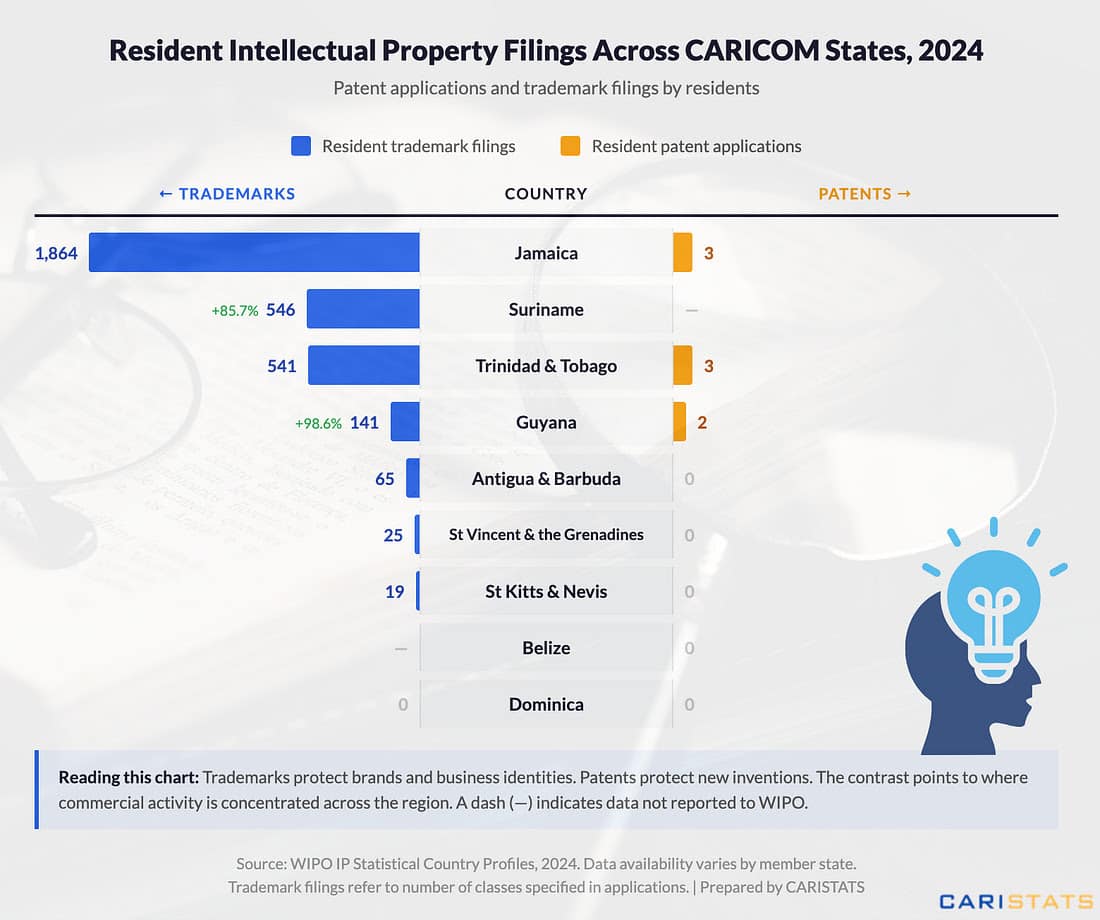
    A stark intellectual property (IP) imbalance is emerging across the Caribbean Community (CARICOM), revealing a regional economic strategy heavily skewed towards branding over foundational innovation. Recent analyses of regional IP filings indicate a marketplace bustling with trademark applications for goods and services, yet one that is critically deficient in the patents that signal technological advancement and homegrown research.

    Statistical data paints a concerning picture: while thousands of trademarks are registered annually by both local entrepreneurs and international corporations seeking market presence, the number of patents filed by CARICOM nationals remains exceptionally low. This trend suggests that the region’s economic players are prioritizing immediate commercial identity and consumer market protection over long-term investments in research and development (R&D) and complex technological invention.

    Experts point to multiple structural factors driving this disparity. The process of securing a patent is notoriously more arduous, expensive, and time-consuming than registering a trademark, posing a significant barrier for individual inventors and small and medium-sized enterprises (SMEs) within CARICOM member states. Furthermore, a comparative lack of robust national and regional infrastructure for scientific R&D, coupled with brain drain in STEM fields, creates an environment where groundbreaking inventions are less likely to originate.

    The implications of this IP dichotomy are profound for the future economic resilience of the Caribbean. A heavy reliance on trademarks indicates an economy focused on commerce and distribution, potentially leaving it vulnerable as a net consumer—rather than a producer—of high-value, patented technology. This pattern could hinder sustainable development, limit competitiveness in global knowledge-based industries, and perpetuate dependency on foreign innovation and imports.

    To counter this trend, policy analysts are urging CARICOM governments and regional bodies to implement decisive measures. Proposed solutions include enhancing financial and technical support for local inventors, reforming patent registration procedures to reduce bureaucratic hurdles, and forging stronger collaborations between academia and industry to stimulate a culture of homegrown technological creation and protectable invention.

  • Bramble rejects Gonsalves’ claim that SVG’s diplomats would become passport salespeople

    Bramble rejects Gonsalves’ claim that SVG’s diplomats would become passport salespeople

    A heated political debate has erupted in St. Vincent and the Grenadines following the newly elected government’s proposal to integrate economic diplomacy with its planned Citizenship by Investment (CBI) programme. The controversy began when Opposition Leader Ralph Gonsalves characterized the initiative as transforming diplomatic personnel into “roving passport salespersons” during Tuesday’s parliamentary budget debate.

    Foreign Minister Fitz Bramble issued a stern rebuke to his predecessor’s comments, expressing profound disappointment in the veteran politician’s characterization of the government’s foreign policy repositioning. The exchange represents the first major parliamentary confrontation since the New Democratic Party’s landslide victory in November’s general election, where they secured 14 of 15 parliamentary seats.

    Prime Minister Godwin Friday’s EC$1.9 billion budget, presented Monday, outlines a strategic shift from traditional diplomacy toward “economic statecraft” – using diplomatic channels to advance growth, investment, and fiscal resilience. The administration frames this approach as essential for addressing the economic vulnerabilities of a small island developing state, particularly the high costs of climate resilience and limitations of traditional debt financing.

    The government’s proposed CBI programme, scheduled for mid-2026 launch, explicitly distances itself from what Friday termed “revenue-at-all-costs” models. Instead, it positions itself as a “sovereign capital mobilisation strategy” with stringent integrity safeguards, including mandated investment floors, residency requirements, multi-layered background screening, and continuous due diligence throughout the citizenship lifecycle.

    All CBI proceeds would be channeled through the legislatively established St. Vincent and the Grenadines Investment Fund (SVGIF), with strict protocols directing resources toward climate-resilient infrastructure, social development, and debt reduction rather than recurrent spending.

    Gonsalves, however, maintained his longstanding opposition to CBI programmes, comparing their economic impact to “cocaine addiction” for nations that become dependent on this revenue stream. The former prime minister warned of impending regulatory crackdowns from major Western nations and potential balance of payments crises within the Eastern Caribbean Currency Union.

    The opposition leader advocated for regional collaboration with international financial institutions to develop adjustment packages anticipating what he believes is the inevitable decline of CBI programmes across the Caribbean.

  • DEA announces restructuring of personnel in the Dominican Republic

    DEA announces restructuring of personnel in the Dominican Republic

    ARLINGTON, Virginia – The U.S. Drug Enforcement Administration has initiated a significant operational reshuffle of its personnel stationed in the Dominican Republic following allegations of professional misconduct currently under federal investigation. This strategic repositioning emerges from an internal agency review aimed at preserving operational integrity while maintaining bilateral counter-narcotics cooperation.

    In an official communiqué, the DEA characterized the move as a precautionary administrative measure designed to strengthen supervisory protocols and accountability mechanisms. The agency explicitly clarified that this reorganization does not constitute a reduction of its operational footprint in the Caribbean nation, but rather represents a structural realignment under enhanced compliance standards.

    Personnel previously deployed to the Santo Domingo field office are being temporarily reassigned during the ongoing investigation. The DEA emphasized that this transitional phase will not impair collaborative anti-drug initiatives with Dominican authorities, noting that Administrator Anne Milgram has personally coordinated with the U.S. Ambassador to ensure an orderly transition process.

    The agency highlighted the Dominican Republic’s critical geopolitical significance as a Caribbean logistics hub and praised the longstanding partnership with the country’s National Directorate for Drug Control (DNCD). This collaboration has produced substantial results in recent years, including major cocaine seizures and the disruption of transnational criminal syndicates operating in the region.

    The DEA concluded its statement by affirming that the investigated conduct represents isolated incidents rather than institutional practice, reiterating its commitment to professional standards, transparency, and the rule of law in all international operations.

  • Residents propose development plan for Union Island

    Residents propose development plan for Union Island

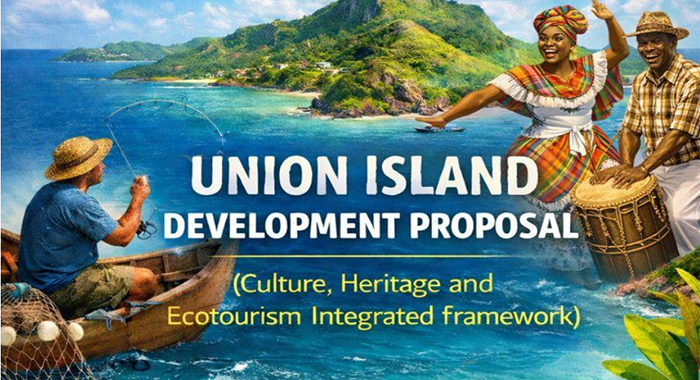
    In the aftermath of Hurricane Beryl’s catastrophic impact on July 1, 2024, the resilient community of Union Island has collaboratively developed a comprehensive development proposal for submission to the St. Vincent and the Grenadines government. This groundbreaking document, crafted through extensive community engagement, outlines a strategic framework for systematic reconstruction and holistic development following the near-total destruction of the island’s infrastructure.

    The Union Island Development Proposal represents a paradigm shift in disaster recovery planning, incorporating insights from over 100 local residents and diaspora members through an inclusive consultative process. This community-driven approach ensures that proposed interventions directly address local needs and priorities, effectively countering the shortcomings frequently observed in conventional development frameworks.

    Beyond immediate recovery efforts, the proposal highlights Union Island’s significant untapped potential in cultural, environmental, and marine assets. The document notes the island’s distinctive heritage, established festivals, and ecotourism sites remain substantially underdeveloped despite their considerable appeal. Particularly noteworthy are the Maroon dances, cultural expressions originating from Union Island that regularly feature at local, regional, and international events as representative of SVG’s traditional culture.

    The proposal acknowledges the island’s documented history of producing internationally recognized athletes, artists, and professionals, while emphasizing its strong cross-boundary relationships with southern islands including Grenada and Trinidad, rooted in shared history and tradition.

    Despite these assets, the document identifies current tourism as predominantly seasonal and concentrated within yachting and transit segments, resulting in limited and uneven economic benefits for local communities. Additionally, the proposal underscores Union Island’s geographical vulnerability to climate change impacts and historical neglect.

    The catastrophic damage from Hurricane Beryl, which destroyed approximately 95% of the island’s housing stock, presents both unprecedented challenges and a critical opportunity to implement a structured ‘build back better’ approach. This reconstruction philosophy would be grounded in Union Island’s unique cultural identity while aligning with national priorities for sustainable development, economic productivity, resilience, and long-term independence.

    The comprehensive proposal not only addresses Union Island’s specific needs but also provides a replicable model for other Grenadines islands and communities throughout St. Vincent and the Grenadines, potentially transforming disaster response methodology throughout the region.

  • Flow Champions Youth Digital Safety and Empowers Students with Necessary Online Skills

    Flow Champions Youth Digital Safety and Empowers Students with Necessary Online Skills

    In a significant move to promote digital citizenship, telecommunications leader Flow marked Safer Internet Day 2026 with an educational initiative across Caribbean schools. The program, aligned with the global theme ‘Smart tech, safe choices, exploring the safe and responsible use of AI,’ engaged students at Clare Hall Secondary School and All Saints Secondary School through interactive workshops.

    Flow Ambassador Lisa Abraham spearheaded the youth-focused presentations, facilitating dynamic discussions on critical digital age topics. The curriculum addressed pressing concerns including artificial intelligence ethics, cybersecurity protocols, combating misinformation, and personal data protection strategies. Using real-world scenarios and open dialogue, the sessions empowered students with practical knowledge for navigating online environments responsibly.

    The student-centered approach fostered critical thinking about digital decision-making, encouraging participants to reflect on their online behaviors. Educators and school administrators joined the conversations, creating a collaborative learning environment that emphasized collective responsibility for internet safety.

    This initiative forms part of Flow’s broader commitment to community engagement and digital literacy. As the Caribbean’s premier telecommunications provider, Flow delivers comprehensive mobile, broadband, television, and digital services to residential and commercial customers throughout the region.

    Parent company C&W Communications supports this mission with extensive technological infrastructure, including the Caribbean’s most advanced submarine fiber network. The organization provides cutting-edge solutions across more than twenty markets, offering consumer entertainment services and business-grade cloud technology, data hosting, and managed network solutions to government and corporate clients.

  • Speaker delays ruling as Leacock-Gonsalves ‘movie’ replays in Parliament

    Speaker delays ruling as Leacock-Gonsalves ‘movie’ replays in Parliament

    A contentious atmosphere enveloped the parliamentary session on Thursday as Speaker Ronnia Durham-Balcombe deferred her ruling on a point of order raised by Opposition Leader Ralph Gonsalves. The dispute originated from a remark made by Deputy Prime Minister St. Clair Leacock during the 2026 Budget debate, which Gonsalves deemed unparliamentary and demanded retraction.

    Gonsalves asserted that upon entering the chamber, he overheard Leacock making a derogatory comment directed at him. He promptly raised a point of order, urging the Deputy Prime Minister to apologize. “I am sure in your reading that that is not Parliamentary language to refer to someone,” Gonsalves addressed the Speaker. “I think he would wish to do ‘mea culpa’ and say that I am sorry about that and move on.”

    While Speaker Durham-Balcombe acknowledged some merit in Gonsalves’ objection, characterizing the comment as an epithet, Leacock declined to apologize or retract his statement. Instead, he referenced previous parliamentary exchanges, stating, “The last time this movie played, my response was ‘the imps’ appear.” This defiance prompted Gonsalves to threaten leaving the session, declaring Parliament “a complete joke.”

    The tension was compounded by an earlier procedural conflict where Gonsalves raised another point of order against Minister Laverne Gibson-Velox for reading her speech verbatim, contrary to Standing Orders 33(9). The Speaker overruled this objection, revealing she had granted the minister special permission to read her presentation.

    Speaker Durham-Balcombe subsequently admonished Gonsalves for his conduct, stating his reactions were “above and beyond” and warning that his behavior breached parliamentary decorum. She indicated she would delay her ruling on the initial point of order, exercising her authority to deliberate further.

    Gonsalves defended his actions, emphasizing his commitment to maintaining parliamentary standards and expressing concern over perceived leniency toward government members. The session concluded with unresolved tensions, scheduled to resume Friday morning with Prime Minister Godwin Friday expected to conclude debate on the EC$1.9 million fiscal package.

  • SVG’s age of consent to increase

    SVG’s age of consent to increase

    The government of St. Vincent and the Grenadines has initiated a significant legal reform to increase the nation’s age of consent, addressing a longstanding disparity in its legislation. Currently, the law sets the age of consent at 15 for females but provides no defined legal age for males, a discrepancy now slated for modernization.

    The landmark announcement emerged during parliamentary debates on the 2026 national budget. Laverne Gibson-Velox, Minister of Family and Gender Affairs, Persons with Disabilities and Labour, publicly commended the government’s decision. Articulating the rationale behind the reform, Minister Gibson-Velox stated, ‘If you can’t vote and you can’t pay NIS (National Insurance Services), you’re not ready for adult activity or childbearing. Your education and your values are more important at this stage.’

    This legislative shift fulfills a call to action made nearly a year ago by Godwin Friday, who was then the Leader of the Opposition and is now the Prime Minister. During prior parliamentary sessions focused on amending penalties for sex crimes, Friday emphasized the urgent need for this change, describing the issue as a ‘blight’ and a ‘scourge on our society.’ He highlighted the prevalence of preventable tragedies affecting young girls and expressed hope that stricter penalties would catalyze a serious national discussion.

    While the exact new age has not yet been specified, the move signifies a proactive step toward aligning the country’s legal framework with contemporary standards of child protection and gender equality. The current statute imposes harsher penalties for sexual activity with females under the age of 13, but the absence of a male consent age has been a notable gap. The reform is positioned as the beginning of a broader effort to enhance societal well-being and safeguard the nation’s youth.

  • Gonsalves doubts VAT-free shopping generated $28m in sales

    Gonsalves doubts VAT-free shopping generated $28m in sales

    A significant political dispute has erupted in St. Vincent and the Grenadines regarding the economic impact of the nation’s inaugural VAT-Free Shopping Day. Opposition Leader Ralph Gonsalves has vehemently contested Prime Minister Godwin Friday’s declaration that the December 19, 2025 event generated EC$28 million in sales, dismissing the initiative as merely a political “gimmick” with minimal substantive benefits for working citizens.

    During Monday’s 2026 Budget Address before Parliament, Prime Minister Friday, who also serves as Finance Minister, announced that the Inland Revenue Department had documented substantial consumer activity totaling EC$28 million during the tax-free shopping event. The Prime Minister characterized the initiative as “successful and well-received” while emphasizing its “tangible benefits to consumers and the wider economy.”

    However, Gonsalves delivered a forceful rebuttal during his response to the Budget Speech on Tuesday, challenging the veracity of the reported figures. The Opposition Leader declared his intention to personally confront the Comptroller of Inland Revenue regarding the EC$28 million turnover claim, stating he would “contest it vehemently.” Gonsalves criticized the program’s restrictive framework, noting specific exemptions including vehicle purchases and restaurant/hotel dining that limited the initiative’s practical impact.

    Employing detailed fiscal analysis, Gonsalves presented alternative calculations based on historical VAT collection data. He referenced his party’s previous administration projections of EC$159 million in VAT revenue for 2025, with actual 2024 collections reaching EC$130.2 million. Through mathematical extrapolation, Gonsalves determined that average daily turnover would approximate EC$4 million under normal circumstances—far below the government’s reported EC$28 million figure.

    The Opposition Leader further questioned the methodology behind the revenue assessment, suggesting that consumer spending patterns likely shifted substantially in the days surrounding the VAT-free event rather than representing genuine economic stimulation. He cited Barbados’ experience with similar initiatives, noting that country reported losses of BDS$3 million despite having triple the population and fewer purchasing restrictions.

    This fiscal debate occurs within the broader context of the New Democratic Party’s first budget presentation since ending the Unity Labour Party’s 27-year governance period on November 27. Parliament continues deliberations on the proposed EC$1.9 billion budget amid these contentious economic claims.