作者: admin

  • Eighth edition of “Dominicans at the Capitol” concludes successfully in Washington

    Eighth edition of “Dominicans at the Capitol” concludes successfully in Washington

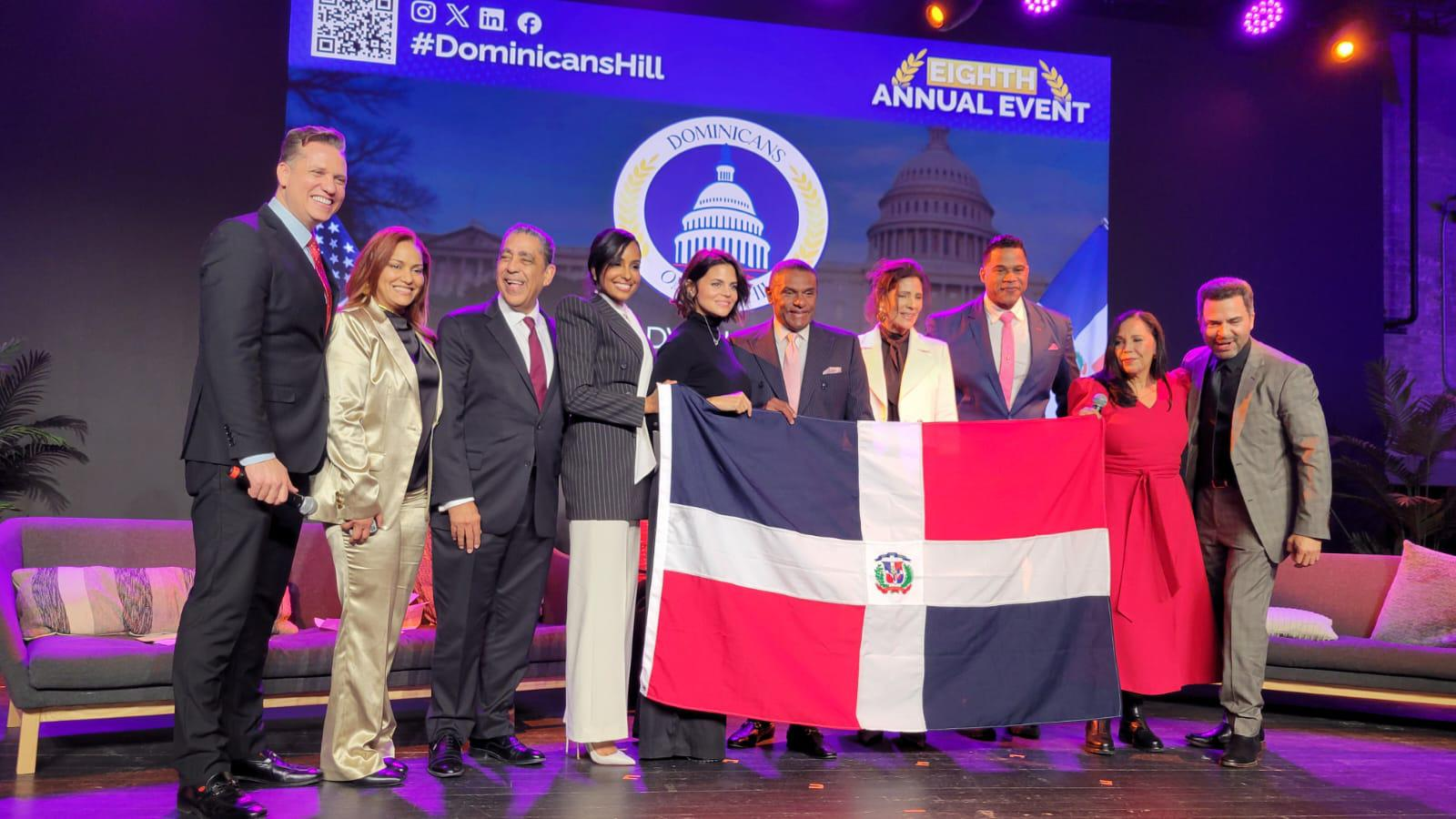
    WASHINGTON, D.C. – In a powerful demonstration of civic engagement, over 700 members of the Dominican American community converged at the U.S. Capitol and Capital Turnaround for the eighth annual Dominicans on the Hill conference. The gathering, orchestrated during Dominican Heritage Month, has emerged as a significant national platform for political dialogue and community advancement.

    Founded by Congressman Adriano Espaillat, the initiative has transformed into a cornerstone event that bridges lawmakers, academics, community leaders, and young professionals. This year’s conference, backed by businesses, public institutions, and academic research centers, adopted the thematic focus ‘Promoting Public Policies and Opportunities in Health.’

    The 2026 edition facilitated critical discussions on healthcare equity, innovation in medical services, and leadership development within the Dominican-American demographic. Participants examined pressing challenges including reproductive health services, aging with dignity, artificial intelligence’s impact on healthcare systems, and strategic biomedical supply chain considerations affecting both the United States and the Dominican Republic.

    Notably, the inclusion of digital influencers expanded the conference’s reach, fostering broader public engagement. The event simultaneously laid foundational work for developing a National Agenda for Dominicans in the United States, signaling a coordinated approach to addressing community needs through policy advocacy and strategic planning.

  • Regering staat achter hervorming rechterlijke macht; benadrukt constitutionele zorgvuldigheid

    Regering staat achter hervorming rechterlijke macht; benadrukt constitutionele zorgvuldigheid

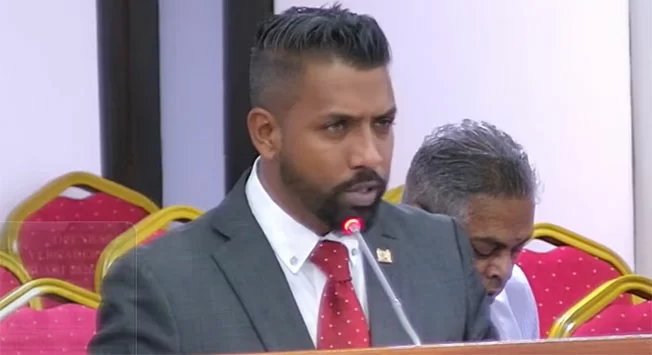
    Suriname’s government has expressed cautious support for proposed judicial reforms while emphasizing the need for constitutional alignment and practical implementation. Justice Minister Harish Monorath addressed the National Assembly on Thursday, outlining the administration’s careful approach to restructuring the judicial system.

    Minister Monorath characterized the proposed legislation as touching upon fundamental aspects of state governance rather than routine policy adjustments. “These reforms reach the core of our constitutional structure,” Monorath stated, emphasizing that any changes must be continuously evaluated against constitutional principles, separation of powers doctrine, and practical executability.

    Regarding the establishment of a third judicial instance, the minister acknowledged the importance of enhanced legal development and protection while highlighting critical considerations. “We must thoroughly examine personnel capacity, financial implications, and organizational structure,” Monorath explained, noting that new judicial bodies create permanent state burdens and require sufficient qualified personnel.

    The proposal to establish a college of prosecutors-general received similar scrutiny. Monorath stressed the necessity for clear demarcation of authority and responsibility within the Public Prosecutor’s Office, which occupies a unique position within the state apparatus. Structural changes must not create ambiguity regarding hierarchy, accountability, or command relationships.

    Monorath emphasized the crucial balance between reform and institutional stability, noting that judicial stability remains essential for legal certainty and citizen/investor confidence. The minister underscored that legislation must be both legally sound and administratively workable.

    The government consequently adopted a prudent approach: supporting judicial modernization and strengthening while prioritizing constitutional consistency, financial viability, and practical implementation. According to Monorath, all modifications should contribute to a stronger, more transparent, and independent legal system rather than responding to incidental events or temporary tensions.

    Following the minister’s address, VHP parliamentarians Krishna Mathoera and Mahinder Jogi criticized what they characterized as the government’s passive stance toward initiative laws. They emphasized shared responsibility that cannot be delegated, noting that the executive branch ultimately implements adopted legislation. The assembly adjourned after the minister’s responses, with sponsors expected to present amendments based on discussions during the second round.

  • Who is unfamiliar with cancer?

    Who is unfamiliar with cancer?

    In the pediatric oncology ward of Cuba’s National Institute of Oncology and Radiobiology (INOR), life unfolds with heartbreaking fragility and extraordinary resilience. Here, children play amidst their battles with cancer, while medical professionals wage a daily war against both disease and scarcity. Dr. Mariuska Forteza Sáez, head of INOR’s Pediatric Oncology Department, leads a team that consistently achieves survival rates comparable to developed nations despite severe medication shortages and equipment limitations.

    The Cuban healthcare system faces unprecedented challenges in cancer treatment due to the longstanding US economic blockade. With one cancer death occurring every 20 minutes and 50,000 new cases diagnosed annually, the nation’s medical professionals must constantly adapt treatment protocols when first-line chemotherapy drugs are unavailable. Doctors frequently modify regimens, sometimes using less effective or more toxic alternatives when essential medications remain inaccessible.

    Dr. Luis Martínez Rodríguez, INOR’s director, emphasizes that while 40% of cancers could be prevented through lifestyle changes, the current economic situation has significantly reduced clinical research capabilities. From over 30 clinical trials, the institution now maintains only the most critical studies due to reagent shortages.

    Remarkably, Cuba has developed significant biotechnological capabilities despite these constraints. Dr. Elías Gracia Medina notes that 40% of the country’s cancer drugs are manufactured domestically, building on pioneering work that began with Cuba’s first monoclonal antibody development in the 1980s. The Center for Molecular Immunology (CIM) has become a leader in therapeutic vaccines and antibodies.

    The human impact extends beyond medication shortages. Patients struggle with transportation to hospitals, nutritional challenges, and even power outages affecting medical equipment. Dr. Carlos Alberto Martínez Blanco condemns the sanctions as ‘inhumane and genocidal measures’ that attack fundamental rights to life and healthcare.

    Through telemedicine collaborations with leading centers in Canada, Spain, Mexico, Russia, Japan, and China, Cuban oncology maintains its international connections. The nation’s healthcare professionals continue their sovereign commitment to treat patients, demonstrating that human determination can overcome even the most severe material limitations in the fight against cancer.

  • Material aid sent by Mexico arrives in Havana

    Material aid sent by Mexico arrives in Havana

    In a significant demonstration of international solidarity, Mexican Navy vessels Papaloapan and Isla Holbox docked at Havana’s port on Thursday morning carrying substantial humanitarian aid for the Cuban people. The shipment, comprising essential food supplies, toiletries, and cleaning products, represents the Mexican government’s concrete response to Cuba’s ongoing economic challenges.

    Cuban President Miguel Díaz-Canal Bermúdez publicly acknowledged the gesture via social media, characterizing the assistance as emblematic of “the solidarity, friendship, and exemplary history of sovereignty and respect for the rights of others that distinguish Mexico.” His statement underscored the deep historical ties between the two nations.

    Betsy Díaz Velázquez, Cuba’s Minister of Domestic Trade, personally oversaw the reception of the aid and expressed profound gratitude to Mexican President Claudia Sheinbaum, the Mexican government, and its citizens. “We feel accompanied by Mexico, by its humanity, its solidarity, and its brotherhood,” she stated during the arrival ceremony.

    The minister specifically recognized the coordinated efforts of multiple Mexican institutions including the Ministry of the Navy, the Ministry of Foreign Affairs, the Embassy, and the Office of the Presidency in facilitating the complex logistical operation. She emphasized the particular importance of this assistance given the “intensified attempt to suffocate us” through tightened U.S. economic sanctions.

    This humanitarian delivery occurs against the backdrop of strengthened U.S. restrictions under the economic blockade, which Cuban officials describe as increasingly detrimental to civilian welfare. The Mexican government’s aid shipment not addresses immediate material needs but also serves as a diplomatic statement reinforcing Mexico’s independent foreign policy and commitment to South-South cooperation.

    The distribution mechanisms for the received supplies will be managed through Cuba’s domestic trade networks, ensuring the aid reaches populations most affected by current economic pressures.

  • Column: Wanneer een wet klopt, maar moreel ontspoort

    Column: Wanneer een wet klopt, maar moreel ontspoort

    A controversial compensation law passed in November 2024 has placed Suriname’s Prosecutor General among the highest-paid public officials in the nation, earning a staggering net monthly salary exceeding SRD 1 million (approximately USD 27,000). The legislation, championed by Asis Gajadien (VHP) and Geneviévre Jordan (ABOP) and enacted under President Chan Santokhi’s administration, has sparked widespread criticism for its timing and provisions.

    The Judicial Position Act establishes that the Prosecutor General’s base compensation reaches 95% of the presidential salary. However, this figure represents merely the foundation for additional benefits rather than a true cap. The law’s critical feature is its definition of ‘compensation’ as an aggregate of base salary, allowances, and reimbursements.

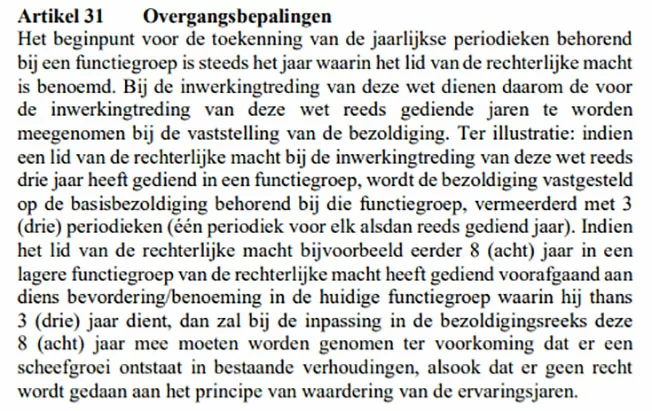
    Article 31 further compounds this structure by granting annual 5% increments based not on years served in current position, but on total tenure within the judicial system. For the current Prosecutor General—with six years in role but over forty years in judicial service—this translates to exponential salary growth rather than measured experience recognition.

    Beyond these provisions, tax-free allowances can reach 150-170% of base compensation, creating a system where officials technically remain under the 95% threshold while substantially exceeding it in practice. This design emerges as particularly controversial given its implementation during nationwide austerity measures that saw subsidy reductions, tax increases, and repeated government calls for public sacrifice.

    The disparity has drawn sharp criticism from Assembly Member Poetini Atompai (NPS), who has demanded full governmental transparency regarding the judicial compensation structure and its burden on national finances. He rightly questions the proportionality, reasonableness, and executive accountability in this arrangement.

    Critics argue that the Dutch ‘Balkenende norm’—which establishes the prime minister’s salary as the absolute maximum for public officials—offers a more transparent alternative that prevents creative legislative constructions. The current system, while legally sound, represents a failure of legislative responsibility when laws become mathematically clever but socially indigestible.

    In a nation where nurses, teachers, and pensioners face genuine economic hardship, this judicial compensation model threatens to erode public trust in the justice system. The law requires immediate revision to prevent the moral derailment of Suriname’s judicial institutions and restore faith in governmental fairness.

  • LVV doet aangifte wegens onbevoegde beheersdaden op terreinen in Tibiti

    LVV doet aangifte wegens onbevoegde beheersdaden op terreinen in Tibiti

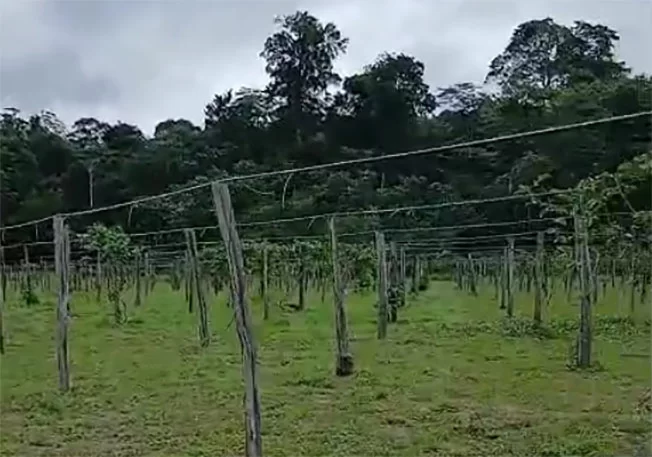
    The Ministry of Agriculture, Livestock, and Fisheries (LVV) in Suriname has initiated legal proceedings against unauthorized occupation of state-owned lands in the Tibiti region of Para district. The contested forestry territories were officially allocated to the ministry for agricultural purposes by the government in March 2023.

    During an inspection at kilometer 99 in the Tibiti area, ministry officials encountered workers who claimed to be operating under instructions from two individuals identified as R.M. and K.J. The workers asserted they had received authorization from the son of former LVV Minister Parmanand Sewdien, though the legal validity of such permission remains unclear.

    Through a formal legal notice delivered by attorney Deepak Jairam, the ministry has demanded the immediate evacuation of the premises from K.J. The document emphasizes that no authorization has been granted to any parties for activities on these parcels, except to a company responsible for installing an irrigation system for an official agricultural project.

    LVV Minister Mike Noersalim confirmed to Starnieuws that significant investments have been made on the property, including equipment, a drip irrigation system, and solar panels valued at approximately €40,000. The Dutch company that executed and delivered these projects has reportedly not yet received payment. Additionally, the site contains a cultivated passion fruit (markoesa) plantation.

    The ministry has indicated that if evidence emerges of damage to state property, additional charges for destruction and/or theft will be filed. This incident has reignited concerns regarding the management and supervision of state lands designated for agricultural development. Local police have documented the case and are conducting an investigation into the matter.

  • APNU excludes WIN from Region Four council committees- Manickchand

    APNU excludes WIN from Region Four council committees- Manickchand

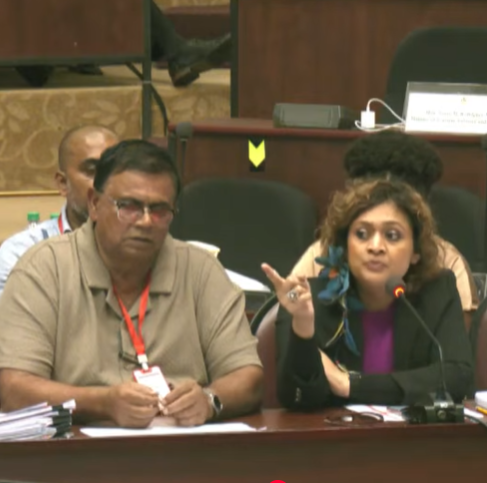
    In a significant political development within Guyana’s Region Four (Demerara-Mahaica) governance structure, the A Partnership for National Unity (APNU) has excluded its coalition partner We Invest in Nationhood (WIN) from representation on crucial council committees. Local Government and Regional Development Minister Priya Manickchand disclosed this exclusion during Thursday’s parliamentary session while addressing budgetary estimates.

    The revelation emerged when WIN councillor Tabita Sarabo-Halley questioned why only APNU and People’s Progressive Party Civic representatives were appointed to sectoral committees. Minister Manickchand clarified that APNU’s Chief Whip failed to submit any WIN nominations when invited to propose committee members. ‘I’m advised that in this particular instance, no names were submitted from your collection. The APNU Chief Whip failed to submit any names from WIN when they were asked to submit names,’ she stated.

    The minister speculated that APNU might have determined WIN lacked sufficient capacity or expertise, though she emphasized that the two parties must resolve the matter internally. This exclusion marks a notable fracture in the opposition alliance, particularly significant since APNU unexpectedly lost its historical control of Region Four in last September’s elections, securing only nine seats compared to PPPC’s seventeen and WIN’s eight seats.

    APNU parliamentarian Ganesh Mahipaul attempted to secure a commitment for parliamentary-style proportionality in committee formations but was unsuccessful. Minister Manickchand maintained that appointments must follow legal guidelines rather than political proportionality models, noting that committee members are conventionally selected based on expertise and ability to serve regional interests, with the exception of procurement committees which fall under the National Procurement and Tender Administration Board’s jurisdiction.

  • Ultimatum Rosebel loopt af; president zet in op oplossing via overleg

    Ultimatum Rosebel loopt af; president zet in op oplossing via overleg

    A critical deadline looms in Suriname’s mining conflict as police have issued a Friday 8:00 AM ultimatum for gold miners to vacate the contested territory between New Koffiekamp’s border and the Royal Hill mine, including the Redi Bergi area. The confrontation between artisanal miners and multinational Zijin Rosebel Gold Mines has reached a pivotal moment following recent violent clashes that resulted in one fatality and the destruction of heavy machinery.

    President Jennifer Simons, speaking during the reopening of the NDP’s Social Services Bureau, emphasized diplomatic resolution over forceful measures. “If proper agreements are reached, harsh intervention becomes unnecessary,” Simons stated, acknowledging the complex historical dimensions of the land dispute. The President highlighted the economic stakes for Suriname, which holds a 30% stake in Zijin’s operations. “The government must enable Zijin to operate—when production halts, the entire nation suffers financial losses,” she explained.

    The escalating tensions follow an incident within Zijin’s concession area that claimed the life of a small-scale miner and prompted the company to withdraw its staff. Security forces have struggled to maintain order as miners, who assert their activities are legal, refuse to abandon the site. President Simons called for equitable solutions that address all stakeholders: “We must develop solutions for all parties to move forward peacefully. Gold seekers require designated areas rather than operating dangerously near active mining zones, while respecting the historical claims of local communities.”

  • Gangs : Recruitment of children up 200% over one year

    Gangs : Recruitment of children up 200% over one year

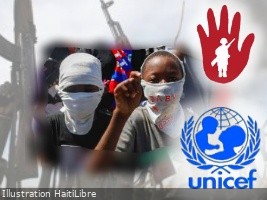
    Haiti is confronting an alarming escalation in the exploitation of minors by armed factions, with UNICEF revealing a staggering 200% increase in child recruitment throughout 2025. This disturbing trend emerges against the backdrop of International Red Hand Day, observed annually on February 12th, which aims to combat the conscription of children into armed conflicts.

    The humanitarian landscape in Haiti remains dire, with over 1.4 million internally displaced persons—more than half being children—enduring extreme poverty and multifaceted crises. UNICEF Executive Director Catherine Russell emphasized the non-negotiable nature of children’s rights, stating: ‘Every child must be protected. Those recruited must be released and supported to heal, return to learning, and rebuild their futures.’

    Children are typically coerced into joining armed groups through direct threats against themselves or family members, economic desperation, or as a means of survival after family separation. This recruitment constitutes a severe violation of international law and exposes minors to combat injuries, sexual and psychological abuse, arbitrary detention, and educational disruption.

    Since the January 2024 Handover Protocol implementation, UNICEF and child protection agencies have verified and assisted over 500 children associated with armed groups through specialized reintegration services. These efforts are coordinated with Haiti’s Ministry of Social Affairs, Justice Ministry, Education Ministry, and humanitarian partners.

    Support mechanisms include psychosocial assistance, health service referrals, temporary learning spaces, family tracing, and the PREJEUNES program which focuses on vulnerability reduction and social inclusion for at-risk youth. UNICEF urges national authorities to strengthen child protection systems, ensure service access, and enhance community-based prevention networks with confidential reporting pathways.

    The organization simultaneously appeals to donor governments and private sector entities for increased funding, noting critical support programs remain significantly under-resourced. Russell concluded: ‘These children must not be treated as perpetrators but provided reintegration services and protected from additional risks, stigma, or retaliation.’

  • Minister Clarke addresses vending standards and urban management in Basseterre

    Minister Clarke addresses vending standards and urban management in Basseterre

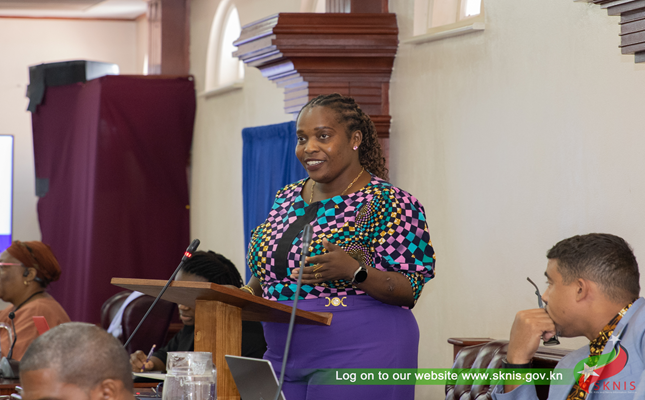
    BASSETERRE, Saint Kitts – February 12, 2026 – Minister of Sustainable Development, Environment, Climate Action and Constituency Empowerment, Senator Dr. Joyelle Clarke, has formally addressed mounting concerns regarding vending operations throughout urban Basseterre during her parliamentary address on Thursday.

    The Minister acknowledged the economic significance of street vending for numerous families while emphasizing the necessity of compliance with established legal frameworks and public health standards. Dr. Clarke identified specific areas of concern where vending activities have recently expanded, including Fort Street, the Pond Road Agro Strip, Buckley’s, and sections of the bypass corridor.

    Official clarification was provided regarding the designated purpose of the Pond Road Agro Strip, which was specifically established for agricultural producers and food processors rather than general commercial enterprises. Minister Clarke expressed particular concern about the unauthorized construction of permanent structures and highlighted the significant traffic hazards created by roadside vending operations.

    The Ministry announced plans for immediate direct engagement with vendors operating in these areas, requiring those outside approved guidelines to either regularize their status or relocate to designated vending zones. Dr. Clarke simultaneously disclosed ongoing efforts to develop structured vending zones within the capital to expand legitimate commercial opportunities.

    ‘Our approach balances livelihood protection with public safety standards,’ Minister Clarke affirmed. ‘We are committed to protecting both vendors’ rights to earn a living and consumers’ right to safe business environments.’

    The Ministry will continue its engagement through public consultation sessions and direct dialogue as part of a comprehensive strategy to enhance urban planning, strengthen public safety protocols, and maintain commercial order throughout Basseterre.