A new analysis from the International Labour Organization (ILO) has sounded the alarm over the 2026-2027 El Niño event, projecting that it will put widespread pressure on employment and household stability across the Caribbean, with three key economic sectors facing the gravest risks. El Niño, a recurring natural climate cycle defined by anomalous warming of surface waters in the central and eastern Pacific, is known to reshape global weather systems, triggering extreme events ranging from severe drought and record heatwaves to intense flooding across different parts of the world. For the Caribbean, the ILO forecasts that the upcoming 2026-2027 cycle will bring prolonged drought, depleted water reserves, and extreme heat events that will hit core industries particularly hard. Agriculture, which supports smallholder and commercial production of staple crops including maize, beans, and wheat alongside high-value exports like coffee and sugarcane, commercial fisheries, and the tourism sector that forms the backbone of many Caribbean national economies are identified as the most exposed to climate disruption from the event. In its policy brief focused on projected labor market impacts across Latin America and the Caribbean, the ILO lays out a cascade of interconnected risks that extend far beyond immediate weather disruption. The extreme conditions brought by El Niño are expected to cut overall employment levels, push down worker incomes, and degrade already poor working conditions, with disproportionate harm falling on three groups: informal sector workers, rural communities, and people who earn a living through outdoor labor. The report outlines multiple secondary threats that amplify harm for vulnerable populations: El Niño-driven disruptions to food production will worsen existing food insecurity, push up prices for both food and energy, reduce overall workplace productivity, and increase the likelihood that households pushed into poverty will turn to child labor to make ends meet. Additional long-term labor market impacts include widespread loss of rural incomes, increased flows of climate-driven labor migration, a further expansion of informal work that offers little to no protections, and dangerous levels of heat stress that threaten the health and safety of outdoor workers. Fabio Bertranou, ILO Deputy Regional Director for Latin America and the Caribbean, emphasized that the upcoming El Niño event presents an unprecedented challenge to maintaining employment and decent work across the region. Bertranou noted that the final scale of harm will be determined by how well national governments prepare: strong, responsive labor market institutions, robust social protection frameworks, and inclusive social dialogue are critical to shielding the most vulnerable workers from harm. The ILO’s report also highlights a key structural vulnerability that makes Caribbean workers particularly at risk: the region’s already high rates of informal employment mean that the majority of workers lack access to social protection coverage and other formal support systems that help households absorb and recover from climate-related economic shocks. Even with these stark projections, the ILO stresses that the worst outcomes are not inevitable. National governments can drastically reduce risk by taking targeted preemptive action: expanding and strengthening social protection coverage for all workers, investing in climate-resilient infrastructure that can withstand extreme weather, updating occupational safety and health standards to address heat-related risks, expanding accessible early warning systems to help communities and businesses prepare, and fostering ongoing social dialogue between governments, employers, and worker representatives. The organization is calling on regional policymakers to reframe El Niño not as a one-off weather event, but as a systemic threat that can reshape regional economies, labor markets, and employment outcomes for years. Addressing this threat requires coordinated, cross-sector action to protect workers and preserve livelihoods across the Caribbean ahead of the predicted event, the report concludes.
作者: admin
-

International airport on track for 2028 completion; more than 400 Dominicans employed
Dominica’s flagship infrastructure initiative — the construction of its new international airport — is progressing according to schedule and is set to open to the public in the second quarter of 2028, government officials confirmed during the recent 2026/2027 national budget presentation. Touted as the single largest infrastructure investment in the island nation’s modern history, the project has already hit key construction milestones that put it firmly on track to meet its delivery timeline.
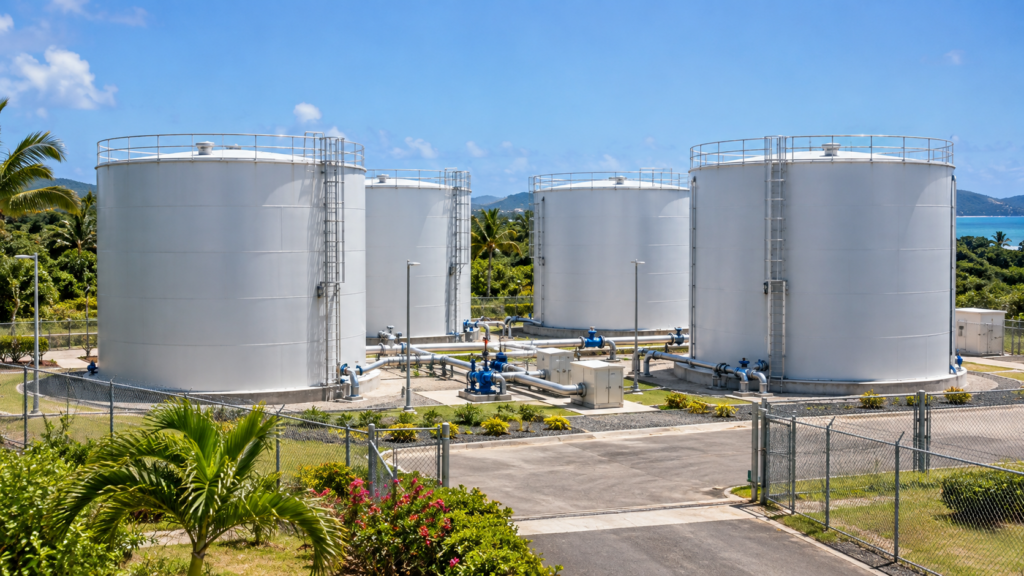
As of the latest government update released on August 4, core construction work has advanced significantly across multiple project sites. Preliminary infrastructure works including earthworks and culvert installation are roughly 78 percent finished, while construction of the airport’s critical runway and connecting taxiway system has surpassed the 60 percent completion threshold. Work is also ongoing on other key airport facilities, including the main cargo handling terminal, air traffic control tower, aviation fuel storage farm, and dedicated aircraft rescue and firefighting facility, according to Dr. Irving McIntyre, Dominica’s Minister of Finance.
In his address to the nation during the budget presentation, McIntyre emphasized that the transformative project carries far greater importance than just expanding the country’s air travel capacity. Positioned as the cornerstone of Dominica’s long-term national development strategy, the new airport is expected to reshape the island’s economic trajectory by opening up increased direct international air access, boosting longer-term tourist arrivals, and expanding opportunities for local exports across multiple key sectors. Beyond travel and tourism, the government anticipates the facility will unlock new growth opportunities for Dominica’s agriculture, fisheries, ground transportation, construction, hospitality, and creative industries, creating sustained economic benefits for local communities.
A key social and economic benefit already emerging from the project is widespread local employment, McIntyre revealed. Currently, more than 400 Dominican nationals hold direct construction roles on the project site, giving local workers the chance to build hands-on expertise in a range of high-demand technical fields. These include heavy civil construction techniques, land surveying, heavy machinery operation, and skilled concrete and steel work. Government officials note that these marketable skills will continue to benefit workers and the broader national economy for decades after the airport’s construction is completed, supporting future infrastructure projects across the country.
To keep the project progressing on schedule, the Dominican government has earmarked an additional EC$250 million in funding for the international airport in the 2026/2027 fiscal year, cementing the administration’s commitment to delivering the transformative infrastructure project on time and on budget.
-

Chevrier confident ahead of CAC medal round
Following a dramatic closing day of preliminary competition Wednesday, Saint Lucia’s top sailor Luc Chevrier has secured his spot in the medal round of the ILCA 7 men’s Laser Radial event at the Central American and Caribbean Games, putting him one step away from a chance at the region’s top podium prize.
The 27-year-old Olympian will hit the water off Punta Salinas for two decisive final races this Friday, with all previous preliminary standings wiped out as the top five remaining competitors fight for gold, silver and bronze.
Chevrier entered the 10-race preliminary series as one to watch, and delivered consistent results across the opening contests. He notched a second-place finish, two fourths, a third, and claimed his fifth victory in the series’ ninth race, a performance that pushed him into the overall lead halfway through the final day of qualifying. His steady sailing through the first nine heats kept him firmly in contention for a top spot heading into the last preliminary race.
Disaster almost struck in the 10th and final preliminary heat, however. A stray clear plastic bag became caught underneath Chevrier’s hull, creating drag that slowed his boat throughout the race. The 27-year-old had no idea of the issue until after he crossed the finish line, where he ended up placing ninth. Despite the setback, he held on to secure his place in the final five-boat medal fleet.
After all preliminary results were calculated, Chevrier finished with 18 net points, just two points behind Puerto Rico’s Pedro Fernandez Gamboa, who notched his second win of the series in Race 10 to claim the top preliminary spot with 16 net points. Bermuda’s Sebastian Kempe sits just one point behind Chevrier at 19 points, while Joshua Higgins of the Cayman Islands rounded out the top five with 40 points.
For Chevrier, the advancement comes with added motivation: he already owns a bronze medal from the 2023 regional championships, and is eager to improve on that result in this year’s event. Speaking with local outlet St Lucia Times ahead of the final, he made clear he has high hopes for his performance on Friday.
With all previous standings discarded for the medal round, every sailor starts from zero, leaving the door open for any of the top five to take gold. Chevrier says he is ready to put the last-race mishap behind him, and if conditions cooperate and he executes his plan, he will be in a strong position to challenge for the top prize.
-

Ex-premier Sheikh Hasina kondigt terugkeer naar Bangladesh aan ondanks doodstraf
In a dramatic announcement that sends ripples across South Asian geopolitics, 78-year-old ousted Bangladeshi prime minister Sheikh Hasina has confirmed she intends to return to her home country in December 2026, after two years of exile in India — even as a death sentence hangs over her head for charges of crimes against humanity.
Hasina shared her decision in a pre-recorded video address to an event hosted by the South Asia Foreign Correspondents’ Club, where she appeared alongside her son Sajeeb Wazed Joy and other senior leaders of her party, the Awami League. In defiant remarks, the long-serving former leader framed her planned return as a matter of democratic duty to the Bangladeshi people. “I can be detained, I can be sent to prison. But fear must not dictate my obligation to the people,” she stated, adding that the exact date of her arrival has not yet been finalized. Hasina also used the platform to call for an immediate end to the current government’s ban on the Awami League, which has been in place since she was ousted from power.
The path to Hasina’s planned return traces back to the 2024 mass political upheaval that removed her from office. After weeks of student-led pro-democracy protests that were met with brutal violent crackdowns, a popular revolution unseated Hasina’s government, forcing her to flee the country by helicopter for neighboring India, where she has remained in exile ever since. In her absence, Bangladeshi courts have convicted her on multiple grave charges, including inciting mass violence, ordering extrajudicial killings, and failing to prevent crimes against humanity, resulting in a mandatory death sentence.
Hasina’s announcement comes at a delicate moment for bilateral relations between Bangladesh and India. The current Bangladeshi government, led by Prime Minister Tarique Rahman, has repeatedly formally requested India extradite Hasina to face her sentence, but New Delhi has maintained that the case is proceeding through its domestic legal channels, and has declined to comment publicly on Hasina’s return plans. Recent diplomatic shifts have seen relations between Dhaka and New Delhi improve, with Rahman receiving an official invitation to attend the upcoming BRICS summit in September, marking a key step in the new government’s international outreach. Notably, India’s Ministry of External Affairs moved quickly to distance itself from Hasina’s announcement just ahead of her address, with a spokesperson clarifying that the Indian government has no involvement in Hasina’s return plans and does not endorse any views expressed at the event.
Bangladesh has remained in a state of political and social flux since the 2024 revolution. Rahman’s new administration has prioritized stabilizing domestic governance and rebuilding strained international partnerships, but underlying political tensions between rival factions and ongoing debates over human rights standards continue to challenge efforts to unify the country. Beyond the political turmoil, Bangladesh also grapples with the persistent, escalating impacts of climate change, including more frequent and severe flooding and cyclone events that have deepened the nation’s structural vulnerability. To address these growing climate risks, the current government has expanded investments in disaster risk management systems and strengthened international collaboration to reduce the human and economic toll of extreme weather events.
-

Blackmoore urges public to stop spreading false information in search for missing Portsmouth teen
As the widespread search for a missing 16-year-old Portsmouth teenager enters its second week, top Dominican security officials are sounding an urgent alarm over harmful misinformation spreading on social media that is derailing official investigation efforts. Minister for National Security Rayburn Blackmoore has issued a public appeal calling on social media users and community members to halt the circulation of unvetted, false information related to the disappearance of Jerbiah Kaysia Paul, who has been missing for more than a week.
Paul was last seen leaving her family home in Portsmouth at approximately 8:30 p.m. local time on Friday, July 24, 2026, and has not had any contact with her loved ones since that evening. In an official public statement addressing the case, Blackmoore confirmed that the Ministry of National Security has mobilized full resources to support local law enforcement, with the core priority of locating the missing teen safely and returning her to her family.
Against the backdrop of growing public concern over the case, Blackmoore emphasized that unfounded claims and unconfirmed details circulating across social platforms are actively damaging the investigation. He went further to note that some of the false content being shared appears to be a deliberate effort to slow down and obstruct police work, complicating what is already a sensitive, complex missing person case.
“Every report of a missing person is peculiar. We have peculiar circumstances in every report of a missing person, and those circumstances will inform the methodology of the investigation,” Blackmoore explained in his address. While urging anyone with credible, first-hand information about Paul’s whereabouts to contact law enforcement immediately to aid the search, he doubled down on his warning to social media users, stressing that bogus information undermines every step of the investigation.
The missing teen’s mother, Jacinta Paul, recently shared an emotional public video appeal as the search entered its ninth consecutive day. Opening her statement by thanking the hundreds of community members, volunteers, and officials who have supported search efforts over the past week, she asked anyone who knows anything about her daughter’s disappearance to step forward with information.
“Today marks nine days since she’s gone missing,” Jacinta Paul said. “I just want to reach out and tell the people who have been searching, contributing and praying that we are thankful. We are grateful for your prayers, your contribution, your visits and your check-ups. I am very thankful for this.”
Dominican police have released a basic physical description of Jerbiah Kaysia Paul to help the public identify her: she stands roughly 5 feet 3 inches tall, has brown skin, and was last seen wearing a blue blouse when she left her home on July 24.
-

Government backs honey industry with new $1.5 million investment and branding initiative
The Commonwealth of Dominica is taking bold steps to grow its burgeoning beekeeping sector, with plans to develop an official national honey brand as a centerpiece of its agricultural modernization agenda. As part of this initiative, the island’s government has earmarked an additional EC$1.5 million to scale up operations, funding the installation of hundreds of new beehives and ramping up domestic honey production.
This new injection of capital builds on prior investments already rolled out across the country. To date, the administration has distributed 600 pre-assembled beehives, specialized beekeeping equipment, and full protective gear to apiarists working in every region of Dominica. Speaking during the official tabling of the 2026-2027 national budget, Minister of Finance Dr. Irving McIntyre confirmed that these earlier strategic investments have already doubled the nation’s total registered hive population, putting the industry on a strong growth trajectory.
The latest EC$1.5 million allocation will advance two key priorities: rolling out hundreds of additional beehives to meet growing demand from new and existing beekeepers, and laying the groundwork for a nationally recognized Dominican honey brand that will highlight the island’s unique natural biodiversity. This investment forms a core plank of the current administration’s broader agricultural transformation strategy, which aims to shift Dominica’s farming sector away from its historical focus on raw commodity exports toward a modern, value-driven economy centered on local processing, intentional branding, and export of high-value finished goods.
Beyond expansion of the beekeeping and honey sectors, the government is also moving forward with plans to construct a new multipurpose agro-processing facility that will support a wide range of local agricultural producers. The purpose-built facility will be designed to process popular local crops including root vegetables and a wide variety of tropical fruits, and will include dedicated business incubation space for small and medium enterprises producing everything from honey and artisanal sauces to homemade jams and jellies, as well as local herbs and spices.
Administration officials argue that expanding domestic agro-processing capacity will deliver dual benefits for Dominica’s agricultural community: it will cut down on costly post-harvest losses that currently cut into producer profits, while opening up new higher-earning opportunities for local farmers and small business owners to capture more value from goods grown right on the island.