作者: admin

  • Rotary Club of Antigua Donates Sewing Machines and Laptops to Salvation Army Women’s Programme

    Rotary Club of Antigua Donates Sewing Machines and Laptops to Salvation Army Women’s Programme

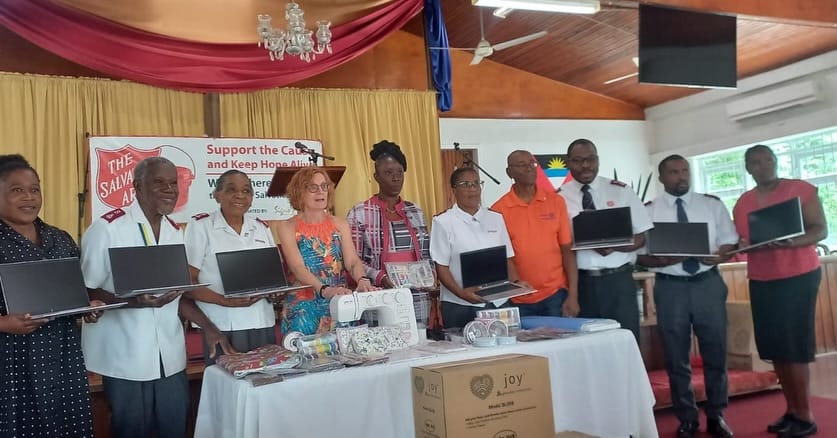
    A significant donation of vocational equipment has been delivered to The Salvation Army’s Women’s Action Group Programme, marking a milestone in a 15-year collaborative effort between international Rotary clubs. The contribution, made possible through the sustained partnership of the Rotary Club of Antigua, the Bellvue Breakfast Rotary Club, and the Rotary Club of Kirkland Downtown, is designed to transform vocational training and economic prospects for participating women.

    The newly provided equipment will substantially upgrade the program’s instructional capabilities, enabling enhanced hands-on learning experiences. This infrastructure boost supports creative skill development and establishes stronger pathways toward economic self-sufficiency for women in the program. The donation represents more than material support—it embodies Rotary’s enduring commitment to international cooperation and community-driven development initiatives.

    Representatives from the Rotary Club of Antigua emphasized that their contribution highlights the organization’s dedicated focus on women’s empowerment and sustainable community growth. ‘This donation reflects our core belief in supporting initiatives that foster lasting change within families and communities,’ a spokesperson noted.

    The Salvation Army’s program provides comprehensive training and support services specifically designed to equip women with practical, marketable skills. This enhanced technical capacity will directly improve participants’ ability to develop sustainable livelihoods and achieve greater economic independence, creating ripple effects that benefit entire communities.

  • LETTER: To the Family Court from a concern father

    LETTER: To the Family Court from a concern father

    The Antigua Family Court system faces mounting scrutiny as concerns emerge regarding unintended consequences of judicial interventions in familial disputes. While established with the noble objective of protecting children’s welfare, recent observations suggest that certain proceedings may inadvertently compromise the very interests they aim to safeguard.

    Legal intervention proves indispensable when parents default on financial or caregiving responsibilities. The court’s authority ensures children receive essential support that negligent parents might otherwise withhold. However, a troubling pattern emerges when personal conflicts between former partners escalate into legal battles.

    In numerous instances, previously cooperative parents who voluntarily exceeded their obligations have reduced support to court-mandated minimums following formal proceedings. This phenomenon frequently transforms collaborative parenting into transactional compliance, often with detrimental effects on children’s wellbeing.

    One illustrative case involves a father who comprehensively funded his child’s private education until confronted with additional support demands through the court system. Following the judicial order, he meticulously adhered to the specified amount while the mother struggled to meet her allocated contributions. Consequently, the child faced educational disruption and material hardship when withdrawn from private school—a outcome neither parent intended but both enabled through adversarial litigation.

    This case exemplifies systemic challenges where rigid financial determinations overlook complex familial dynamics. When judicial processes prioritize mathematical calculations over holistic child welfare, children often become collateral damage in adult conflicts.

    The fundamental question emerges: how can legal frameworks ensure accountability without discouraging voluntary parental excellence? The system must distinguish between genuinely negligent parents requiring enforcement and responsible parents whose efforts might be undermined by procedural rigidity.

    Family Court jurisprudence must evolve beyond mere financial arbitration to consider psychological impacts and long-term developmental consequences. Decisions should reinforce positive parental behaviors rather than inadvertently penalizing them. This requires judicial discretion that recognizes extraordinary parental effort while maintaining enforcement mechanisms against true delinquency.

    Ultimately, the metric for successful intervention must be measurable improvement in children’s lives—not merely technical compliance with court orders. When proceedings result in educational interruption, diminished stability, or emotional distress, the system must undergo critical evaluation.

    A child-centric approach would prioritize mediation over litigation, preserve existing supportive arrangements, and consider psychological impacts alongside financial needs. Such reforms would better serve Antigua’s families while upholding the court’s foundational mission to protect vulnerable children.

  • Nevis cruise season intensifies as 19 vessels scheduled to arrive between February-April 2026 – WIC News

    Nevis cruise season intensifies as 19 vessels scheduled to arrive between February-April 2026 – WIC News

    The Caribbean island of Nevis is poised for a significant economic boost as its tourism ministry reveals an intensive cruise schedule for the latter half of the 2025-2026 season. Between February 24 and April 19, 2026, the island will welcome 19 cruise vessels carrying thousands of visitors, marking a substantial increase from the season’s first phase that ran from November 2025 through February 2026.

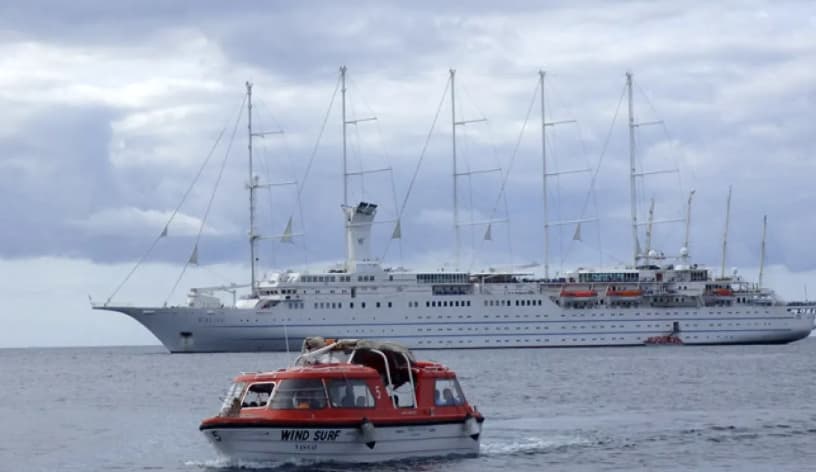
    The influx begins with Le Ponant’s arrival on February 24, followed closely by Sea Dream I and Club Med II in subsequent days. The schedule features multiple return visits from prominent cruise lines including Wind Surf, Emerald Sakara, and repeated calls from Club Med II throughout March and April.

    This cruise tourism expansion underscores Nevis’s growing reputation as a premier Caribbean destination, offering diverse attractions from the golden sands of Pinney’s Beach with its iconic Sunshine’s beach bar to the serene hiking trails of Nevis Peak. Cultural and historical sites including Alexander Hamilton’s birthplace and the island’s botanical gardens provide additional draws for visitors.

    Local businesses across the tourism sector—including tour operators, restaurateurs, retail vendors, hoteliers, and transportation services—stand to benefit significantly from the increased visitor numbers. The concentrated arrival pattern demonstrates cruise lines’ confidence in Nevis’s infrastructure and appeal as a destination capable of handling multiple ship calls within short timeframes.

    The scheduled arrivals represent a strategic achievement for Nevis’s tourism authorities, who have successfully positioned the island as an attractive port of call despite competition from larger Caribbean destinations.

  • RO  wil via liba krutu vaart brengen in grenswet Suriname–Frans-Guyana

    RO wil via liba krutu vaart brengen in grenswet Suriname–Frans-Guyana

    The Ministry of Regional Development has committed to facilitating the resolution of the long-standing border demarcation issue between Suriname and French Guiana. This initiative aims to reinvigorate the stalled border legislation process that was temporarily suspended following protests in November 2025.

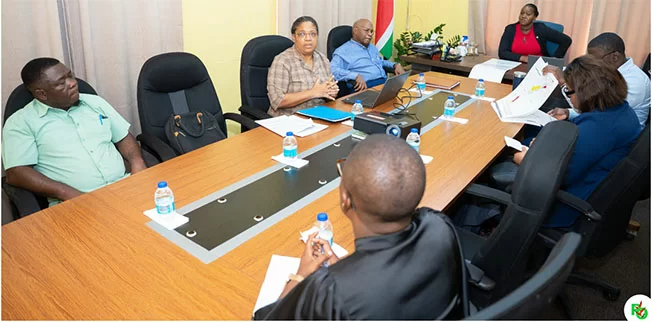
    During high-level consultations between the National Border Commission and Minister Miquella Huur alongside her executive team, Commission Chairman Harold Kolader emphasized the critical urgency of finalizing border determinations to enable eventual adoption of the border law. The previous suspension occurred after the Aucaan community submitted a formal petition raising specific concerns about the legislative proposal.

    The resolution strategy centers on implementing liba krutu – traditional community assemblies where the Ministry can directly engage with indigenous and tribal authorities along the Marowijne and Lawa rivers. These dialogues will be supplemented with informational videos to enhance outreach to remote villages. The Ministry assumes responsibility for organizing these consultations and managing all community communications.

    Kolader further stressed the necessity of a targeted public awareness campaign to clarify both the content and significance of the border legislation. He noted that French Guiana has expressed willingness to collaboratively establish the definitive border alignment in accordance with mutual agreements. Through these renewed consultation efforts and educational initiatives, Suriname anticipates revitalizing progress toward finalizing this crucial international boundary legislation.

  • Understanding the Cuban embargo

    Understanding the Cuban embargo

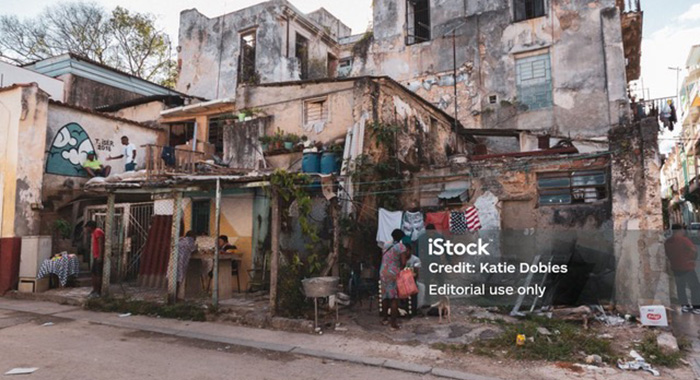
    A persistent narrative among many Vincentian commentators—encompassing politicians, community activists, and the general public—attributes Cuba’s enduring economic hardships, including widespread poverty, food insecurity, and substandard housing, primarily to the longstanding United States economic embargo, colloquially termed ‘el bloqueo’ by Cubans.

    While this comprehensive framework of economic, commercial, and financial sanctions was initially implemented in the early 1960s, it has not entirely isolated Cuba from global trade. The nation has consistently engaged in international commerce throughout its history. Current economic constraints are more intricately linked to the cessation of aid from its former patron, Russia, decades of detrimental collectivist economic policies, flawed political governance, and a significant ‘brain drain’ of its most skilled and productive citizens—a challenge also familiar to St. Vincent and the Grenadines.

    As the most protracted trade embargo in modern history, it continues to attract significant international scrutiny, though its foundational causes are frequently minimized or omitted in contemporary discourse. The embargo’s origins are deeply rooted in the illegal nationalization of American-owned assets by the Cuban government following the 1959 revolution. Under Fidel Castro, the state seized oil refineries, sugar mills, and utilities, predominantly without compensating their U.S. owners. This action remains a pivotal legal impediment; the U.S. Department of State asserts that resolving approximately $7 to $8 billion in certified claims for confiscated property is a prerequisite for any full lifting of the sanctions.

    The Cold War geopolitical landscape provided a second critical justification. The U.S. aimed to isolate the Castro regime to curtail the proliferation of Soviet influence and communist ideology in the Western Hemisphere. This strategic concern was dramatically amplified in 1962 during the Cuban Missile Crisis, triggered by the discovery of Soviet nuclear missiles stationed merely 90 miles from Florida. This event prompted President John F. Kennedy to escalate a partial trade ban into a full embargo, a measure deemed essential for hemispheric security.

    In subsequent decades, the embargo’s rationale evolved to emphasize catalyzing political reform to liberate the Cuban populace from communist rule. Landmark legislation, including the Cuban Democracy Act (1992) and the Helms-Burton Act (1996), codified the sanctions into U.S. law. These acts stipulate that the embargo can only be rescinded upon Cuba meeting specific democratic conditions, such as legalizing political opposition, conducting free and fair elections, releasing political prisoners, and guaranteeing freedoms of the press and association.

    Further complicating the relationship, the United States has designated Cuba as a state sponsor of terrorism on multiple occasions (1982–2015 and again from 2021 to present). More recent U.S. concerns, which critics now emphasize, center on Cuba’s sustained support for the Nicolás Maduro regime in Venezuela—a government accused of electoral fraud, harboring U.S. fugitives, and maintaining alliances with U.S. adversaries like Russia, China, and Iran.

    Domestic U.S. politics, particularly within the influential Cuban-American community in Florida, also play a substantial role in perpetuating the policy. This constituency, often holding a hardline stance against the Cuban government, represents a sensitive political consideration for both major American political parties. Projecting into early 2026 under a hypothetical second Trump administration, the policy has intensified into a ‘total pressure’ campaign, featuring an oil blockade designed to further cripple the island’s tourism and energy sectors. The ultimate question remains whether such escalating pressure will inspire the Cuban people to reclaim their nation from its Marxist leadership.

  • Authorities arrest three men for stoning vehicles on Autovía del Este

    Authorities arrest three men for stoning vehicles on Autovía del Este

    LA ROMANA – In a coordinated pre-dawn operation, joint security forces have apprehended three individuals allegedly involved in a dangerous highway robbery scheme targeting motorists along the Autovía del Este. The arrests occurred approximately at 1:00 a.m. on Wednesday near kilometer 5 in the Villa Caoba sector following numerous complaints from drivers.

    The suspects have been identified as Julio Laureano Santana, Julio A. Aquino Solano, and Yufreisi Martínez Sánchez. According to official reports, the individuals employed a hazardous method of throwing stones and blunt objects at moving vehicles to force drivers to stop, subsequently attempting to rob them under threatening circumstances.

    Law enforcement officials conducted thorough searches during the apprehension, resulting in the seizure of multiple bladed weapons believed to be instrumental in the alleged criminal operations. The successful operation was conducted through collaboration between the Military and Police Commission of the Ministry of Public Works (COMIPOL) and units of the National Police.

    Disturbing video evidence circulating on social media platforms has corroborated victim accounts, showing one driver documenting damage to his vehicle sustained during such an attack. These visual records have amplified public concern about the safety of this vital transportation corridor.

    Following their detention, the suspects were transferred to the National Police facility in Villa Hermosa, where they remain in custody awaiting formal processing by the Public Prosecutor’s Office for appropriate legal action.

    Hostos Rizik, Director of RD Vial, confirmed that COMIPOL has implemented reinforced permanent patrols along the Autovía del Este to combat criminal activity and ensure roadway security. Rizik emphasized that operations will continue to be intensified, issuing a stern warning that perpetrators engaging in such practices will face arrest and prosecution.

    Authorities have encouraged citizens to maintain vigilance and promptly report any suspicious activities, particularly during early morning hours when such incidents appear to be most prevalent.

  • U.S. attorneys general file brief supporting Haitian TPS holders

    U.S. attorneys general file brief supporting Haitian TPS holders

    A coalition comprising 17 state attorneys general has launched a significant legal defense in support of Haitian immigrants facing the potential termination of their Temporary Protected Status (TPS). The group, spearheaded by New York Attorney General Letitia James, submitted an amicus curiae brief to the U.S. Court of Appeals for the District of Columbia Circuit on Monday, urging judicial rejection of the Department of Homeland Security’s attempt to dismantle the humanitarian program.

    The legal action comes as a response to the federal government’s appeal seeking to overturn a lower court ruling that currently blocks DHS from revoking TPS protections for approximately 350,000 Haitian nationals. This preliminary injunction remains in effect while litigation continues through the judicial system.

    In their comprehensive filing, the coalition presents a multifaceted argument against termination, emphasizing that revoking TPS would inflict severe damage on public safety infrastructure, overwhelm healthcare systems, and disrupt local economies across multiple states. The attorneys general further contend that such action would forcibly separate families who have established deep roots in American communities over many years of lawful residence and employment.

    The legal brief highlights the extensive contributions of Haitian TPS holders to American society and emphasizes the destabilizing effect that mass deportation would have on both receiving communities and Haiti itself. The coalition warns that abrupt termination would create humanitarian crises at both ends of the migration chain, affecting employers, community institutions, and family networks that have become interdependent over the decade-long duration of the protected status.

    The case represents one of the most significant immigration policy battles currently unfolding in the federal judiciary, testing the limits of executive authority in immigration enforcement matters.

  • Maroon Warriors Head to Grenada – Afy Fletcher Set For Homecoming Series

    Maroon Warriors Head to Grenada – Afy Fletcher Set For Homecoming Series

    ST. GEORGE’S, Grenada – Cricket enthusiasts across the Caribbean are eagerly anticipating a landmark sporting event as the West Indies Women’s team prepares to face Sri Lanka in a home series hosted in Grenada. This tournament holds special significance as it marks the triumphant homecoming of Grenadian cricket legend Afy Fletcher, who will represent the regional team on her native soil for only the second time in her illustrious career.

    The 38-year-old leg-spinner from La Fillette, St. Andrew, stands as one of Grenada’s most accomplished athletes and a cornerstone of West Indies’ bowling arsenal. Her remarkable journey includes multiple ICC World Cup appearances and pivotal contributions to the team’s celebrated T20 World Cup victory in 2016. Fletcher’s career exemplifies extraordinary resilience, having temporarily stepped away from international cricket following the birth of her son Audee before making a triumphant return to elite competition.

    Her recent achievements underscore her enduring excellence: selection to the 2024 Women’s T20 World Cup Team of the Tournament and reaching the milestone of 100 ODI wickets against Thailand in April 2024. With 111 wickets from 89 ODI appearances and nearing the century mark in both T20 appearances and wickets, Fletcher has established herself as arguably the greatest cricketer—male or female—to emerge from the Spice Isle.

    In an emotional statement ahead of the series, Fletcher expressed: ‘Representing West Indies on the world stage is always an honor, but performing before my home crowd carries profound meaning. I hope every young Grenadian watching will recognize that dreams are achievable regardless of origin. This series transcends cricket—it’s about demonstrating that Grenada produces champions.’

    Grenada’s Minister of Sport, Hon. Delma Thomas, characterized the event as both a homecoming and a celebration of national excellence: ‘Afy embodies the potential of every Grenadian child who dares to dream. Her presence on home soil represents the pinnacle of what dedication and resilience can achieve.’

    The minister extended gratitude to Cricket West Indies for selecting Grenada as the host venue and welcomed the Sri Lankan team, wishing them a competitive and enjoyable tour.

    Cricket West Indies has issued a rallying cry for full support from Grenadian spectators, educational institutions, cricket clubs, and the broader sporting community to create an electrifying atmosphere for the home team. Local media representatives are invited to cover all matches, training sessions, and official team activities throughout what promises to be a fiercely competitive series.

  • They reaffirm that Cuba is not a producer, warehouse, or transit territory for drugs

    They reaffirm that Cuba is not a producer, warehouse, or transit territory for drugs

    In a definitive demonstration of its uncompromising stance against narcotics, Cuban authorities unveiled substantial achievements from their 2025 counter-narcotics operations, intercepting 1,941 kilograms of illicit substances primarily through maritime interdictions. The comprehensive review was presented during a high-level press briefing on Tuesday, featuring key officials from the nation’s security apparatus.

    Justice Minister Rosabel Gamón Verde articulated Cuba’s strategic positioning, emphasizing that while the island nation faces geographical vulnerabilities within Caribbean trafficking corridors, it maintains neither production facilities nor transit infrastructure for international drug operations. The minister underscored the government’s unwavering political commitment to treating drug trafficking as a paramount national security concern, employing a multifaceted strategy that integrates prevention initiatives, regulatory controls, and direct law enforcement engagement.

    Following constitutional reforms in 2019, Cuba has systematically strengthened its legal framework, enhancing criminal penalties and administrative sanctions to reflect its zero-tolerance doctrine. The National Drug Commission, now expanded to include thirteen governmental agencies with recent additions from Agriculture, Culture, Tourism, and Labor ministries, has intensified preventive operations across educational institutions, workplaces, and community networks.

    Colonel Juan Carlos Poey Guerra, commanding officer of the Ministry of Interior’s Specialized Anti-Drug Agency, revealed that 53 separate maritime dumping incidents accounted for the majority of seizures, with traffickers jettisoning narcotics to evade international pursuit. These operations yielded substantial quantities of marijuana, cocaine, and hashish that subsequently washed ashore. Domestically, authorities confiscated approximately 76 kilograms of drugs destined for local consumption, noting concerning proliferation of synthetic compounds including 46 identified cannabinoid variants.

    The aerial trafficking dimension witnessed significant enforcement successes, with 31 attempted operations neutralized during 2025 resulting in 27 kilograms of intercepted narcotics—primarily cocaine and methamphetamine originating from eleven nations, with the United States identified as the predominant source. Cumulative efforts across 2024-2025 thwarted 75 aerial smuggling attempts, preventing over 100 kilograms from reaching destinations.

    First Colonel Ivey Daniel Carvallo Pérez, representing the Border Guard Troops Directorate, highlighted the formidable surveillance challenges posed by Cuba’s extensive 5,700-kilometer coastline and complex maritime geography. The nation maintains persistent monitoring through integrated naval, ground, and aerial assets, coordinating efforts across military, customs, and interior ministries with substantial civilian participation.

    International cooperation remains a cornerstone of Cuba’s anti-trafficking architecture, with ongoing intelligence exchanges through 37 international contact points and bilateral partnerships with regional neighbors including Jamaica, Mexico, and the United States. Officials noted these efforts persist despite severe economic constraints and resource limitations imposed by external sanctions.

    Colonel Poey Guerra reaffirmed Cuba’s conditional openness to enhanced collaboration with United States authorities, predicated on mutual respect and non-interference in sovereign affairs. While current exchanges remain limited to operational communications between coast guard entities, Cuban officials emphasized their role as a strategic “maritime barrier” protecting neighboring nations from drug flows, asserting that national security priorities remain guided by domestic institutions and popular will rather than external agendas.

  • St. Kitts-Nevis-Anguilla National Bank Limited Celebrates 55 Years of Banking Under the Theme: “55 Years Together- Your Vision, Our Purpose”

    St. Kitts-Nevis-Anguilla National Bank Limited Celebrates 55 Years of Banking Under the Theme: “55 Years Together- Your Vision, Our Purpose”

    BASSETERRE, St. Kitts – February 16, 2026 marks a significant milestone for St. Kitts-Nevis-Anguilla National Bank Limited as it commemorates 55 years of dedicated financial service under the unifying theme “55 Years Together – Your Vision, Our Purpose.” Since its establishment in 1971, the institution has transformed from a visionary project into the Eastern Caribbean’s premier locally owned financial entity, fundamentally supporting the region’s economic and social advancement.

    The Bank’s 55th anniversary celebration honors decades of sustained progress and strategic growth. By harmonizing customer aspirations with corporate objectives, National Bank has solidified its position as an indispensable partner in the nation’s financial ecosystem, consistently reinforcing its operational foundations to maintain stakeholder and public confidence.

    A comprehensive series of events has been organized to celebrate this landmark achievement:

    • A Thanksgiving Church Service initiated the celebrations on February 8, 2026, at Rivers of Living Water Christian Centre, setting a tone of gratitude and reflection

    • Customer Appreciation Day will feature special tokens of gratitude distributed across all branches in St. Kitts and Nevis, acknowledging longstanding client support

    • The Sir Edmund Lawrence Scholarship Program launches as a flagship educational initiative honoring the Bank’s founding visionary, designed to foster youth development through academic support

    • A Community Beautification Project aims to enhance one of Basseterre’s most historically significant landmarks, demonstrating the Bank’s commitment to environmental preservation

    • A Banquet and Awards Ceremony will recognize exemplary employees and stakeholders whose contributions have shaped the Bank’s success story since its inception

    With assets exceeding $3 billion, deposits surpassing $2 billion, and a loan portfolio over $1 billion, National Bank reaffirms its commitment to St. Kitts and Nevis’ sustainable development. Publicly traded on the Eastern Caribbean Securities Exchange with over 5,000 shareholders—including the Government of St. Kitts and Nevis as majority stakeholder—the institution continues to provide comprehensive financial solutions supporting personal aspirations, business expansion, and community progress.