作者: admin

  • U.S. Ambassador meets Dominican Defense Minister to discuss security and stability

    U.S. Ambassador meets Dominican Defense Minister to discuss security and stability

    SANTO DOMINGO – In a significant diplomatic engagement, Dominican Defense Minister Carlos Antonio Fernández Onofre hosted U.S. Ambassador to the Dominican Republic Leah Francis Campos at Ministry of Defense headquarters. The high-level meeting served to reinforce the robust partnership and collaborative spirit between the two nations.

    During extensive discussions, both officials addressed critical matters of mutual concern with particular emphasis on enhancing security cooperation frameworks. The dialogue focused on advancing bilateral defense coordination and developing strategic initiatives to address regional security challenges.

    Key agenda items included evaluating current cooperation mechanisms and exploring new joint ventures aimed at strengthening hemispheric stability. Both parties emphasized the necessity of maintaining coordinated approaches to security policy and defense strategy development.

    The engagement represents a continued commitment from both governments to work in concert toward promoting peace, supporting development initiatives, and ensuring regional security through strengthened diplomatic and defense channels.

  • From Zero Maternal Deaths to Water Security: Dr Terrance Drew Details Key Developments  – WIC News

    From Zero Maternal Deaths to Water Security: Dr Terrance Drew Details Key Developments  – WIC News

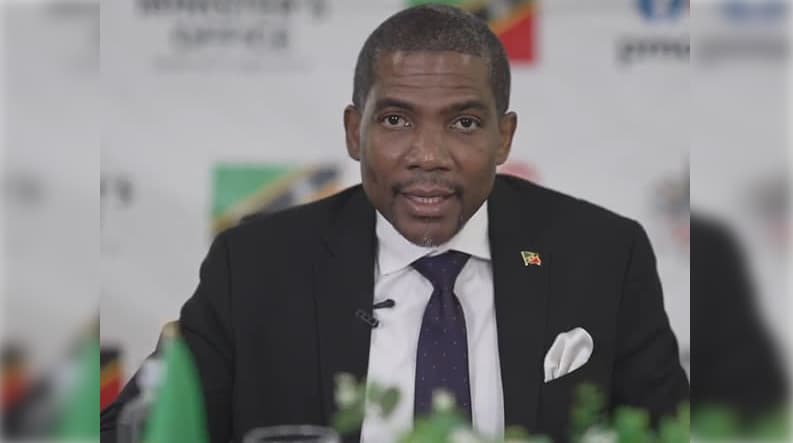
    In a landmark address during the ‘Their Own Table’ roundtable conference, Prime Minister Dr. Terrance Drew of St Kitts and Nevis unveiled transformative national achievements across healthcare, water security, and public infrastructure. The federation celebrated zero maternal deaths throughout 2025—a historic milestone attributed to systemic healthcare reforms rather than statistical anomaly.

    Dr. Drew detailed the implementation of a coordinated pregnancy monitoring system that tracks expectant mothers across both public and private healthcare providers. This initiative designates nurses and midwives as patient stewards who ensure follow-up care for high-risk pregnancies, particularly when appointments are missed. Complementing this effort, the government established a dedicated financial support fund to assist women requiring specialized care.

    Healthcare advancements continue with the near-completion (95-96%) of the nation’s first MRI facility. This highly specialized infrastructure required local builders to adapt to stringent technical standards. Once operational, the facility will eliminate the need for overseas diagnostic travel for advanced medical imaging.

    Beyond healthcare, the Prime Minister highlighted water security as a cornerstone of national resilience. The government’s first publicly owned desalination plant, representing an investment of EC$50-60 million, already produces two million gallons of potable water daily. Scheduled for official commissioning shortly, the plant forms part of a comprehensive water strategy including new well development and ongoing drilling operations. Dr. Drew emphasized the heavily subsidized nature of water services and urged citizens to maintain bill payments to support infrastructure reinvestment.

    In a significant land acquisition, the government secured 77.23 acres of prime Frigate Bay real estate—including the golf course, clubhouse, and operating company—through the Citizenship by Investment program using fewer than 800 units. The development plan prioritizes residential and commercial lots for young citizens, with a portion overlooking Half Moon Bay designated for high-value development including luxury villas and potential hotel investment.

    The Prime Minister concluded by affirming the federation’s positive trajectory and promising additional advancements in the near future.

  • Government Advances Water Security as Trinidad and Tobago Firm Begins Local Drilling Program

    Government Advances Water Security as Trinidad and Tobago Firm Begins Local Drilling Program

    The Federation of Saint Kitts and Nevis is making significant strides in its comprehensive water security initiative through a dual approach of exploratory drilling and desalination technology. Prime Minister Dr. Terrance Drew confirmed that a Trinidad and Tobago-based firm has commenced exploratory drilling operations across approximately ten identified sites, with current activities focused in the Saddlers area.

    This drilling program represents a critical component of the government’s multi-layered strategy to ensure uninterrupted potable water access nationwide. The initiative complements the newly constructed publicly-owned desalination facility, which is already producing two million gallons of fresh water daily ahead of its formal commissioning scheduled for February 24.

    Prime Minister Drew emphasized his administration’s commitment to eliminating water insecurity, stating unequivocally that the government “does not intend to ever return to a situation where communities experience inconsistent water supply.” The $60 million investment in water infrastructure, encompassing desalination, well development, and system upgrades, forms a cornerstone of the broader Sustainable Island State Agenda.

    The Prime Minister also addressed the financial sustainability of water services, clarifying that while the government heavily subsidizes water costs, consumer payments are essential for system maintenance and improvement. “Revenues collected are reinvested directly into enhancing our water infrastructure—the government does not profit from these payments,” Dr. Drew explained.

    This integrated approach demonstrates the administration’s dedication to building resilient infrastructure and implementing sustainable resource management practices that will benefit both current and future generations.

  • Prime Minister Drew Continues Strategic CARICOM Consultations with Visits to The Bahamas, Jamaica, Guyana and Suriname

    Prime Minister Drew Continues Strategic CARICOM Consultations with Visits to The Bahamas, Jamaica, Guyana and Suriname

    In a significant diplomatic initiative, Saint Kitts and Nevis Prime Minister Dr. Terrance Drew, serving as current Chair of the Caribbean Community (CARICOM), is embarking on a crucial tour of four member nations ahead of the organization’s 50th Regular Meeting of Conference Heads. The high-level consultations will include official visits to The Bahamas, Jamaica, Guyana, and Suriname commencing February 18, 2026.

    During a recent media roundtable, Prime Minister Drew emphasized the critical importance of in-person diplomacy amid growing global complexities. “This is not time for a Zoom meeting. This is serious business,” Dr. Drew stated. “This is the time for leaders to sit in a room, close the door, and have frank, eyeball-to-eyeball, face-to-face discussions ahead of the 50th Regular Meeting.”

    The Prime Minister clarified his role as consensus-builder rather than policy director, noting: “I am not the Prime Minister of CARICOM, nor the President of CARICOM. I am Chair at this time to seek to coordinate and bring consensus among the Heads that form CARICOM.”

    This diplomatic offensive represents a deliberately orchestrated strategy to align regional positions on pressing issues including regional security architecture, escalating geopolitical tensions, economic stabilization measures, climate adaptation frameworks, and enhancing the Caribbean’s collective international representation. The bilateral engagements are designed to ensure productive outcomes when CARICOM leaders convene in St. Kitts from February 24-27, 2026.

    The Saint Kitts and Nevis government has positioned the upcoming 50th Regular Meeting as a pivotal moment for Caribbean solidarity, strategic reorientation, and collaborative progress amid increasingly complex global challenges.

  • Jaar van het Vuurpaard: Kan het Chinese Nieuwjaarsfestival de economie stimuleren?

    Jaar van het Vuurpaard: Kan het Chinese Nieuwjaarsfestival de economie stimuleren?

    China commenced its most significant cultural celebration on Tuesday as approximately 1.4 billion people welcomed the Lunar New Year, marking the beginning of the Year of the Fire Horse. This rare astrological combination—occurring only once every six decades—signals a period brimming with optimism, dynamic energy, and unexpected opportunities, according to traditional Chinese zodiac interpretations.

    The Spring Festival, renowned for triggering the planet’s largest annual human migration known as Chunyun, witnesses hundreds of millions traversing the nation for family reunions. This mass movement coincides with a substantial economic stimulus for the world’s second-largest economy, traditionally export-dependent but now increasingly focused on domestic consumption.

    Extended festivities spanning nine days—one day longer than typical—feature elaborate traditions including thorough home cleaning, decorative displays of red lanterns and prosperity symbols, elaborate family banquets, and the customary exchange of red envelopes containing monetary gifts symbolizing luck and blessings. The celebrations will culminate in the Lantern Festival, characterized by spectacular fireworks, vibrant dragon and lion dances, and bustling markets across urban and rural landscapes.

    Economically, the festival generates unprecedented consumption spikes across retail sectors including food, festive commodities, entertainment, and tourism. Government projections indicate a record-breaking 9.5 billion passenger journeys during the 40-day festive period, supplemented by state-issued consumer vouchers exceeding 360 million yuan (approximately $52 million) to further stimulate domestic spending. This aligns with China’s broader five-year plan to boost household expenditure, currently constrained by high savings rates approaching one-third of income.

    Technological advancements took center stage during the annual Lunar New Year’s Eve gala, where humanoid robots delivered a groundbreaking collaborative martial arts demonstration, showcasing Beijing’s rapid progress in robotics and artificial intelligence.

    The celebrations transcend national borders, with distinct cultural observances throughout East and Southeast Asia. Vietnam celebrates Tết Nguyên Đán with family gatherings and traditional foods like bánh chưng, while South Korea observes Seollal with ancestral rites and tteokguk soup. Multicultural societies including Singapore and Malaysia recognize the festival with official holidays, while diaspora communities in major global cities like San Francisco, London, and Sydney host large-scale parades, dragon boat races, and pyrotechnic displays.

    Adding contemporary cultural resonance, the Year of the Horse acquired an unexpected mascotte through linguistic coincidence: Draco Malfoy, the notorious antagonist from the Harry Potter franchise. The Mandarin transliteration of his name—”马耳福” (Mǎ ěr fú)—incorporates the character for “horse” (马) and concludes with “blessing” (福), creating an auspicious connection embraced by popular culture.

  • International experts validate Dominican Republic’s advances in hunger reduction

    International experts validate Dominican Republic’s advances in hunger reduction

    SANTO DOMINGO – The Dominican Republic’s comprehensive approach to combating food insecurity has garnered international recognition from one of the world’s foremost authorities on hunger eradication. Brazilian economist José Graziano da Silva, former Director-General of the UN Food and Agriculture Organization (FAO), delivered a keynote address at the National Palace this Wednesday with President Luis Abinader and Vice President Raquel Peña in attendance.

    Graziano, a globally respected figure in food security policy, specifically praised the nation’s innovative school feeding program as a replicable model demonstrating significant social and economic benefits. He highlighted the program’s strategic design of sourcing provisions through public procurement from local producers and family farms, which simultaneously addresses child nutrition and stimulates rural economic development.

    Emphasizing the necessity of building equitable and sustainable food systems, Graziano issued a cautionary note on the dangers of rising global consumption of ultra-processed foods, advocating instead for diets rich in fresh, locally-sourced products. His visit, spanning from February 16 to 22, is aimed at bolstering the country’s national strategy to eliminate hunger entirely.

    Providing concrete evidence of progress, Minister of the Presidency José Ignacio Paliza announced a landmark achievement: the national undernourishment rate has plummeted to a historic low of 3.6% in 2025. This figure places the Dominican Republic below the regional average and positions it firmly on course to be removed from the global hunger map before the 2028 deadline.

    Minister Paliza detailed the multi-faceted policies driving this success, which include robust economic growth, a substantial 20% increase in the private-sector minimum wage, and the expansion of key social programs. The ‘Supérate’ initiative, particularly its ‘Aliméntate’ card component, now supports approximately 1.5 million households. Furthermore, the network of Economic Dining Halls has seen a dramatic expansion from 35 to 134 locations across the country.
    A critical statistic underpinning this success is that 90.6% of all food consumed domestically is produced locally. The national School Feeding Program, a cornerstone of the strategy, ensures that over two million students receive 70% of their daily nutritional requirements, cementing food security as a pillar of national development.

  • Dominican Republic ranks second in Latin America for tourist arrivals in 2025

    Dominican Republic ranks second in Latin America for tourist arrivals in 2025

    The Dominican Republic has solidified its status as a tourism powerhouse, achieving the position of Latin America’s second most visited destination in 2025 according to the latest UN Tourism rankings. With an impressive 11.6 million international visitors recorded throughout the year, the Caribbean nation trails only Mexico in regional tourism popularity.

    UN Tourism data reveals that Latin America experienced robust recovery and growth in international arrivals throughout 2025, outperforming many other global regions. This resurgence underscores tourism’s critical function as an economic catalyst across Latin American nations, fueled by exceptional natural landscapes, rich cultural heritage, diverse culinary offerings, and continuously developing tourism infrastructure.

    The Dominican Republic’s tourism sector serves as a fundamental component of national economic strategy, driving substantial foreign exchange earnings and supporting widespread employment. The country’s consistent performance highlights its successful positioning within the competitive global tourism market.

    The regional ranking for 2025 places Mexico at the forefront, followed by the Dominican Republic, Brazil, Colombia, Chile, Argentina, Peru, Guatemala, Costa Rica, and Panama. This distinguished list demonstrates Latin America’s ascending prominence within international tourism circuits, with these ten nations collectively attracting millions of visitors and significantly contributing to regional economic development.

  • Abinader appoints Andrés Modesto Cruz Cruz as new director of the National Police

    Abinader appoints Andrés Modesto Cruz Cruz as new director of the National Police

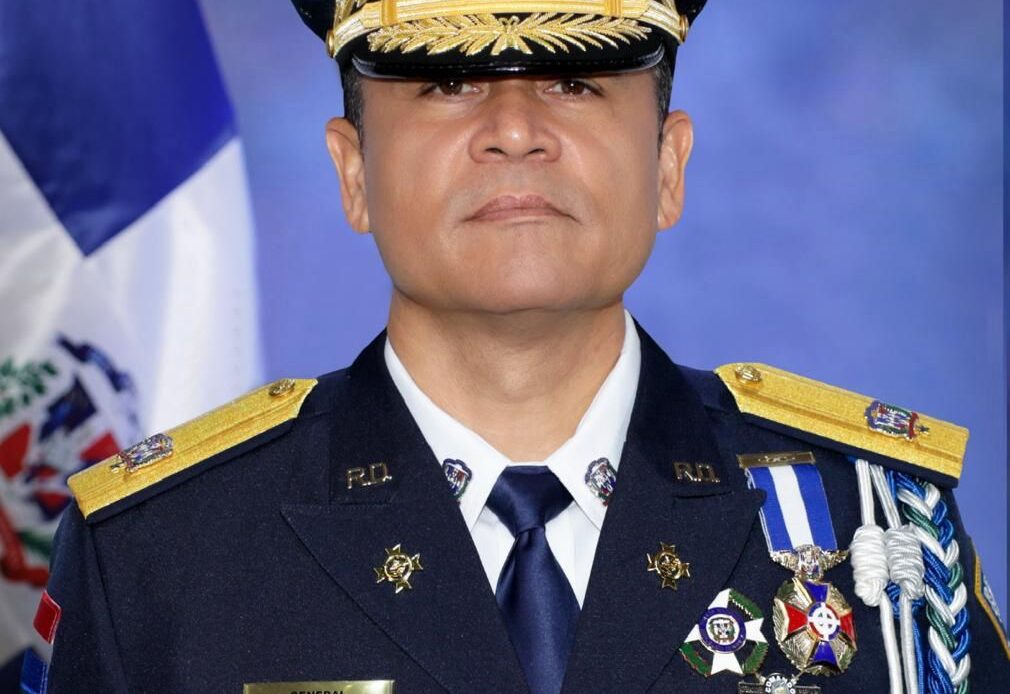
    SANTO DOMINGO – In a significant leadership overhaul of the nation’s law enforcement apparatus, President Luis Abinader has enacted Decree No. 111-26, orchestrating a high-level transition within the Dominican National Police. The presidential mandate elevates Andrés Modesto Cruz Cruz to the rank of Major General and instates him as the institution’s new Director General.

    The executive decision, grounded in the constitutional authority vested in Articles 255 and 256 of the Constitution and further empowered by Law No. 590-16 (the Organic Law of the National Police), facilitates the President’s prerogative to designate the force’s commander from its active general officers. The decree simultaneously nullifies the preceding Article 1 of Decree No. 557-23. In a corresponding move, the outgoing police chief, Ramón Antonio Guzmán Peralta, was honorably retired upon the conclusion of his tenure and subsequently appointed as a Presidential Advisor on police matters.

    Major General Cruz Cruz ascends to this pivotal role equipped with a distinguished and multifaceted career in institutional command, oversight, and internal regulatory functions. His immediate prior position was Inspector General of the National Police (2023–2026). His extensive resume includes key leadership posts such as Director of Internal Affairs, Southern Regional Director, liaison officer coordinating between the Ministry of Defense and the National Police, and Director of Internal Control.

    Academically, Cruz Cruz is a qualified engineer, an alumnus of the Pedro Henríquez Ureña National University (UNPHU). He further holds a master’s degree in Defense and National Security from the esteemed Higher Institute for Defense “General Juan Pablo Duarte y Díez.” His professional expertise has been honed through specialized international training programs in transformational leadership, criminal investigation, crisis management, energy security, dignitary protection, and international cooperation, with certifications obtained from institutions in the United States, Israel, and Colombia.

    His decorated service has been acknowledged with numerous national honors, including the prestigious Medal of Merit for Public Servants (First Category), alongside distinguished accolades from both the Armed Forces and the National Police, celebrating his unwavering dedication and contributions to fortifying national institutions.

  • BTL Retirees See Breakthrough as Talks Advance on Long‑Overdue Severance

    BTL Retirees See Breakthrough as Talks Advance on Long‑Overdue Severance

    BELIZE CITY – A protracted struggle for justice by former Belize Telemedia Limited (BTL) employees reached a pivotal turning point this week following a decisive court ruling and sustained public demonstrations. The Belize Communication Workers for Justice (BCWJ), representing hundreds of retirees, has successfully compelled the telecommunications giant and government labor officials to commit to long-overdue severance payments.

    The breakthrough emerged from a critical two-hour negotiation session mediated by the Labour Department. Organizer Emily Turner characterized the talks as “very good [and] fruitful,” highlighting a significant concession from BTL: the company has formally agreed to disburse severance packages to 564 identified former employees. This commitment follows a landmark ruling from the Caribbean Court of Justice (CCJ) which affirmed the retirees’ legal entitlement to these benefits.

    While major progress was achieved, several procedural and financial details remain unresolved. Both parties are now scrutinizing historical employment data from 2005 to 2025 to finalize exact payment calculations, including contentious interest payments. A tight timeline has been established, with BTL expected to present a formal proposal by Thursday. The BCWJ intends to consult its membership over the weekend ahead of a conclusive meeting scheduled for next week.

    Despite this victory on severance, the BCWJ’s advocacy campaign is far from concluded. The group has identified new concerns regarding potential income tax deductions from the promised payments and is mounting opposition to the proposed corporate consolidation of BTL and Speednet. Turner emphasized demands for “total transparency” and “proper due diligence” in the merger process.

    In a poignant revelation, Turner expressed profound disappointment with the Communications Workers Union (CWU), the very institution historically built by BTL employees, for its conspicuous absence throughout the fight. This perceived abandonment has galvanized the BCWJ to evolve into a broader movement. The group announced plans to form a general workers union aimed at advocating for labor rights across multiple sectors in Belize, signaling a permanent expansion of their activist mandate.

  • Belize Modernizes Transport with Unified Bus System

    Belize Modernizes Transport with Unified Bus System

    In a landmark move to transform its outdated public transit network, Belize has officially launched the National Bus Company—a comprehensive $49.7 million modernization initiative that unifies private operators, government agencies, and international partners under a single, consolidated system.

    The ambitious project, announced Monday by the Ministry of Transport, represents the most significant overhaul of Belize’s transportation infrastructure in decades. For years, commuters have endured overcrowded buses, aging fleets, and safety concerns stemming from fragmented operations among 31 independent bus companies that dominated routes since the 1980s.

    Transport Minister Dr. Louis Zabaneh spearheaded the consolidation effort, presenting a vision to stakeholders that addresses perennial issues including mechanical failures, dilapidated vehicles, and dangerous highway racing between competing operators. ‘The relief mentioned this morning is that we won’t have to race again like we did before,’ Zabaneh noted, highlighting how the new system will rationalize routes and eliminate competitive pressures that compromised safety.

    The equity structure positions the Government of Belize with 45.76% ownership ($22.7 million in terminal assets), while 17 participating operators contribute 39.15% ($19.4 million) in shares. The remaining equity involves international partnerships.

    A cornerstone of the modernization includes transitioning to electric buses starting September, with each unit costing between $325,000-$400,000. The initiative also features newly designed terminals in Belize City and Orange Walk Town that promise enhanced passenger comfort and operational efficiency.

    Dr. Gilroy Middleton of the implementation committee emphasized the human impact: ‘People are tired of riding preschool buses where your feet don’t fit. We’re looking at reliability, comfort, and raising standards.’

    The transformation follows extensive consultations beginning May 2025, overcoming initial skepticism through what CEO Chester Williams described as ‘building trust’ with operators who had expressed dissatisfaction with previous administration attempts.