作者: admin

  • More than 3,000 guns, 56 tonnes of drugs seized in Interpol-led operation

    More than 3,000 guns, 56 tonnes of drugs seized in Interpol-led operation

    A sweeping cross-border law enforcement initiative led by the International Criminal Police Organization (Interpol) and backed by the Organization of American States (OAS) has delivered landmark results against transnational organized crime, with authorities across 20 nations in Central America, South America and the Caribbean removing thousands of illegal firearms and tens of tons of contraband drugs from circulation. Christened Operation Orca XI, the coordinated crackdown ran from October 15 to November 30, 2025, with Interpol managing global operational coordination and the OAS working to deepen regional collaborative ties. Financial backing for the initiative was provided by the European Union, enabling unified action against interconnected criminal networks operating across the Americas.

    The operation aligns with core security priorities advanced by the OAS under the Inter-American Convention against the Illicit Manufacturing of and Trafficking in Firearms, Ammunition, Explosives, and Other Related Materials (CIFTA). This framework has recently renewed its focus on targeted criminal investigations into the origin, illegal diversion and trafficking of illegal weapons and related materials, framed as a critical strategy to dismantle transnational criminal groups at their root.

    By the close of the operation, participating law enforcement agencies had recorded 8,701 arrests on charges ranging from weapons possession and drug trafficking to a range of other felony offenses. In addition to the 3,308 seized illegal firearms, authorities confiscated close to 200,000 rounds of unregulated ammunition, $256,025 in untraced cash, and 210 vehicles linked to criminal operations.

    OAS officials emphasized that illicit firearms trafficking in the Western Hemisphere is deeply intertwined with nearly every other form of transnational criminal activity, including drug trafficking, human trafficking, migrant smuggling and cybercrime. Organized criminal syndicates and street gangs that oversee these operations routinely repurpose the same smuggling routes to move multiple types of illicit goods, creating interconnected networks that challenge individual nations’ law enforcement capacities.

    These overlapping criminal links were clearly reflected in the scale of drug seizures from Operation Orca XI. Contraband confiscated included 6.9 metric tons of cocaine, 659,403 harvested coca plants, 9.3 tons of cocaine base paste, 38.5 tons of marijuana, 2 tons of methamphetamine, and 11 kilograms of ketamine.

    OAS Secretary General Albert R. Ramdin framed the operation as a clear demonstration of the power of coordinated hemispheric action. “This is what success looks like when hemispheric coordination and world-class technical and operational capacity join forces: thousands of firearms off the streets, drugs seized and safer communities,” Ramdin said. “Operation Orca XI proves that international cooperation and information sharing get results—and our security frameworks must continue delivering. The OAS stands ready to continue supporting member states with partners like Interpol for the benefit of the Americas.”

    Interpol Secretary General Valdecy Urquiza echoed that assessment, calling Orca XI a watershed milestone in global efforts to counter organized criminal networks. “Interpol’s commitment remains to support law enforcement agencies with the intelligence, tools and coordination they need to stay ahead of these evolving threats,” Urquiza said.

    The operation was planned and executed in close partnership with the Commission of Central American, Mexican, Caribbean, and Colombian Police Chiefs and Directors. The 20 participating nations were Argentina, Belize, Bolivia, Brazil, Chile, Colombia, Costa Rica, the Dominican Republic, Ecuador, El Salvador, Guyana, Guatemala, Honduras, Mexico, Nicaragua, Panama, Paraguay, Peru, Suriname, and Uruguay, uniting a broad cross-section of the Americas to confront shared security threats.

  • Traffic chaos in Punta Cana: traffic jams surpass those in the capital

    Traffic chaos in Punta Cana: traffic jams surpass those in the capital

    One of the Dominican Republic’s sitting legislators has issued a urgent public call for national intervention to address a spiraling traffic crisis that has rendered daily life unsustainable in the country’s premier tourist destination, Punta Cana. Senator Rafael Barón Duluc, who represents the province of La Altagracia and has operated a local office in the Verón-Punta Cana district for more than a decade, revealed that growing gridlock has gotten so severe that he and his team are actively considering relocating their operations out of the region’s central Downtown area. In stark comments highlighting the severity of the situation, Duluc compared the area’s congestion to that of the Dominican capital — and found Punta Cana faring far worse, noting that persistent traffic snarls regularly stretch for multiple kilometers across key corridors. The senator laid out the tangible impact of the crisis on tourism, one of the Dominican Republic’s core economic drivers: what was once a 10-minute quick trip between Punta Cana International Airport and local area hotels now takes an average of 40 minutes, with wait times climbing as high as a full hour during peak commuting hours or periods of high travel volume. Duluc also pointed to already visible private-sector responses that underscore how critical the problem has become: local private industry was forced to fund and build a new overpass not just as a convenience, but as an absolute necessity to keep premium tourist zones accessible. The gridlock is no longer confined to residential neighborhoods, he explained, it has spread deep into the country’s most valuable tourism corridors. The legislator also publicly defended prominent industry figure Frank Rainieri, whose recent comments about the traffic crisis went viral online and drew widespread backlash. According to Duluc, Rainieri’s remarks were prudent, measured, and rooted in unvarnished truth about the area’s infrastructure failures. In closing, Duluc emphasized that the growing gridlock in Punta Cana is not an isolated provincial problem — it is a national issue that demands immediate attention from national leadership, rooted in longstanding systemic urban planning failures that have not been addressed. To drive that point home, he urged national officials to launch an on-the-ground assessment: fly a drone over the area during peak rush hour, he suggested, and policy makers will see first-hand the scope of the crisis that local residents and business leaders face every day.

  • WATCH: Mandeville restaurant and bar gutted by fire

    WATCH: Mandeville restaurant and bar gutted by fire

    MANCHESTER, Jamaica — A destructive overnight fire ripped through two commercial properties on Mandeville’s Ward Avenue on Saturday, leaving two local entrepreneurs facing combined losses topping $20 million and disrupting utility service for dozens of nearby businesses.

    Emergency dispatchers at the Mandeville Fire Station got the alert at approximately 4:15 a.m., confirming that two adjacent establishments — Newsman Fry Chicken, a quick-service fried chicken restaurant, and No Traction Chill Spot, a local neighborhood bar — were engulfed in flames.

    Responding crews worked quickly to corral the spread of the fire, completing full cooling-down operations and extinguishing the blaze entirely just after 6 a.m. In initial assessments released after the fire was put out, the Jamaica Fire Department pegged total property and asset losses at roughly $20 million.

    Adeka Miller, the owner of Newsman Fry Chicken, told reporters his eatery had only been open to the public for one month before the fire hit. He estimated his personal losses alone come out to around $10 million.

    Miller explained he first got word of the emergency around 4:25 a.m., when a caller notified him flames were erupting from the bar next door to his restaurant. When he arrived on scene, he initially thought only the bar had been completely destroyed, with his restaurant suffering only partial external damage. A closer look inside confirmed the entire restaurant had been gutted.

    “I lost everything. I would say about $10 million, including equipment, stock and cash, was in there; it is a great loss, a great blow,” Miller said. The new restaurant employed four local workers, leaving their employment status uncertain in the wake of the disaster.

    As of Saturday, officials have not confirmed a cause for the fire, with active investigations still ongoing to pinpoint what sparked the blaze.

  • Causion promotes Antigua in ‘Feels Like I’m Dreaming’ set for June release

    Causion promotes Antigua in ‘Feels Like I’m Dreaming’ set for June release

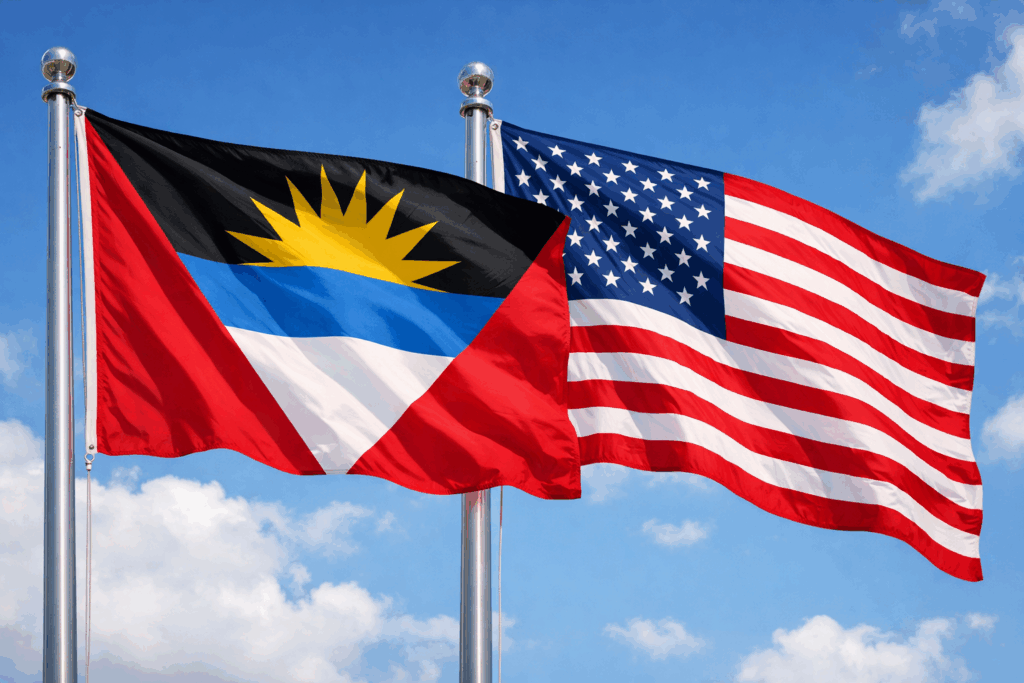
    Longtime Antiguan reggae artist Causion has returned to his Caribbean homeland to shoot a new music video for his upcoming single, *Feels Like I’m Dreaming* — a heartfelt track crafted to shine a global spotlight on the beauty and culture of Antigua and Barbuda. Co-written and co-produced alongside Maurice Gregory, who is best known for his work as keyboardist for iconic reggae group Third World, the new track is scheduled for a June release. The upcoming music visual is backed and produced by Elite Island Resorts, a leading firm that markets the twin-island nation’s world-class tourism offerings to travelers around the globe. For Causion, this collaboration marks his fifth project dedicated to boosting the country’s leisure sector — Antigua and Barbuda’s largest source of foreign exchange.

    Now based in South Florida after decades of living and working in the United States, Causion, whose legal name is Gregory Bailey, has never strayed far from his roots, making regular return trips to his home country and leaning into his role as a passionate advocate for its growth. Unlike paid promotional campaigns that feel scripted, the artist emphasizes that his work is rooted in unfiltered patriotism, not a paid gig.

    “I’m not a spokesperson hired to sell an idea — I’m an Antiguan who genuinely loves his home,” Causion explained in an interview with Observer Online. “Working with Elite Island Resorts has allowed me to do something rare: use music to tell an authentic story about a place, and watch that story reach people across the world who then book a flight and come experience it themselves.” That organic connection, he argues, is far more than traditional marketing: “That’s not marketing. That’s music doing what it’s always done — moving people. And when it moves them all the way to Antigua, that’s deeply satisfying.”

    The new single follows four previous successful collaborative projects between Causion and Elite Island Resorts: *Antigua Me Come From*, *Caribbean Vacation*, *Sunny Day*, and *Tropical State of Mind*, all of which have helped draw international attention to the island’s appeal. Early tourism data reflects the growing momentum of Antigua and Barbuda’s travel sector: official figures from the Antigua Tourism Authority show that more than 1.5 million international visitors vacationed in the country in 2025, and first-quarter 2026 numbers continued that upward trend. Authority CEO Colin James reported that the nation welcomed 110,832 stay-over visitors between January and March 2026, marking record-breaking arrival numbers for all three months of the quarter.

    While soca remains the most popular musical genre in Antigua, Causion’s sound was shaped by a childhood spent listening to legendary reggae acts including Third World and Culture. That early influence opened professional doors later in his career: he has toured across Europe and the United States alongside Third World, performing alongside collaborator Maurice Gregory. Causion’s contributions to his homeland have not gone unrecognized: he holds the official title of Antigua’s Reggae Ambassador, and in 2024, he was awarded the Commander of The Most Precious Order of Princely Heritage (CH), the country’s fourth-highest national honor for outstanding service.

  • Tower Band to launch mixtape at Supa Heavy Wednesdays

    Tower Band to launch mixtape at Supa Heavy Wednesdays

    Since bursting onto Jamaica’s live music landscape in 2015, Tower Band has steadily built a reputation as a must-see act, cutting their teeth backing some of the biggest names in reggae and dancehall over the past eight years. Now, the ensemble, celebrated for its high-octane stage presence, dynamic showmanship, and one-of-a-kind take on reimagining dancehall through a full live-band setup, is gearing up to unveil its highly anticipated new project, *Dancehall Future*, at the popular Supa Heavy Wednesdays event series on June 3. The launch will take place at Jangas Soundbar and Grill, located in the heart of New Kingston.

    In an exclusive interview with Observer Online earlier this week, bandleader and drummer Andre “Kryss Ras” Barnes promised attendees an unforgettable evening of entertainment. “You can expect a night of nonstop energy, live performances, and pure fun,” he said. “It’s going to be a night packed with incredible music, thoughtful lyrics, and guest appearances from some amazing artists. We’re going to bring the house down.”

    The 16-track mixtape will see its full official release right on the night of the launch event, and features a stacked lineup of collaborative tracks with some of dancehall’s most prominent current names, including Charly Black, Rytikal, 10Tik and Yaksta. The project is co-produced by Rayon “Prof” Smith and Barnes, with mixing work completed by DJ West of Jamaica’s leading Zip FM radio station.

    Smith shared that the tracklist spans a wide range of lyrical themes to resonate with diverse listeners. “The songs on the mixtape cover everything from romantic matters of the heart to uplifting anthems and motivational, inspirational messages that we hope connect with people across generations,” he explained.

    *Dancehall Future* is backed by two local Jamaican partners: Winchester Xavier Associates Jamaica Limited and Stage Sound Solution, and will be distributed via Tower Band’s own in-house imprint, Tower Music Group.

    For Barnes, what sets Tower Band apart from other contemporary musical acts in the region is its unwavering focus on elevating live dancehall performance, a niche he says the group has carved out uniquely for itself among current generation ensembles. “We are first and foremost a dancehall performing band,” he emphasized. “We’re the only band of our generation that centers dancehall music as our core identity, and our goal is to grow into an undeniable, formidable force that leaves a lasting impact on this generation of fans. We take our craft seriously, and our top priority is making sure every song we create and perform connects deeply with audiences. That’s what we’re all about.”

  • Federations and importers oppose limiting the flow of motorcycle imports

    Federations and importers oppose limiting the flow of motorcycle imports

    A public debate over road safety in the Dominican Republic has intensified after national newspaper Listin Diario proposed a radical five-year suspension on all new and used motorcycle imports as a strategy to cut sky-high traffic accident fatalities linked to two-wheeled vehicles. But the plan has drawn fierce pushback from key stakeholders across the motorcycle sector, who argue the policy targets the wrong group and would trigger unnecessary economic harm.

    The proposal, titled “No More Motorcycles in 5 Years”, frames an import ban as a necessary measure to rein in rising traffic deaths — official data shows the country records nearly 2,000 annual fatalities from motorcycle crashes. Importers, however, say cutting off imports would devastate livelihoods without addressing the root of the road safety crisis.

    Aurelina de la Paz, general manager of a motorcycle import firm operating in the National District, has worked in the sector since 2000, and warned that restricting imports would put thousands of jobs at risk. Her business sells around 50 motorcycles per month, and she noted the policy would wipe out income for workers across imports, sales, repair and servicing. “We do recognize that many motorcyclists exhibit aggressive behavior on our roads, but the solution to this public safety issue is not to destroy an entire industry that supports so many households,” de la Paz explained. “We need targeted measures that fix the problem without putting people out of work.”

    Leading motorcycle rider associations echo this criticism, saying the import ban does nothing to address systemic gaps in regulation, identification and traffic education that are the real causes of frequent crashes. Óscar Almánzar, president of the National Federation of Motorcycle Riders (Fenamoto), which counts 78,000 registered members across the country, explained that current gaps in vehicle registration and rider identification are far more pressing than import volumes. He pointed out that unregistered informal riders — including app-based motorcycle taxi drivers, food and grocery delivery couriers, and unlicensed young riders — are not properly tracked by authorities, making it impossible to enforce traffic laws consistently.

    Almánzar emphasized that the country’s tax authority, the General Directorate of Internal Revenue (DGII), must first implement a universal system to issue license plates and register every motorcycle entering the country through customs, ensuring all riders keep their documentation and registration up to date. He also pushed back on the common misconception that formal motoconcho (motorcycle taxi) drivers are the primary cause of accidents, noting that statistics paint a different picture. While motorcycles are involved in 7 out of 10 traffic crashes in the capital, Almánzar claimed that formal motoconcho drivers are the least likely group to be involved in fatal incidents even during peak travel seasons like December and Holy Week. “All the blame gets dumped on motoconcho drivers, but the data shows the problem comes from unregulated, unregistered riders,” he said.

    Instead of an import ban, Fenamoto has proposed creating a dedicated Motorcyclist Assistance Center that would provide mandatory traffic education, guidance on regulatory compliance, and support for registered riders. The federation already enforces its own internal penalties, including expulsion from the association for riders who commit serious violations.

    Regional association leaders have backed this position, echoing that formal registered motoconcho drivers are not the source of the crisis. Raúl Ortiz, president of the Pantoja Motoconcho Drivers Association (Asomopa), which represents 3,000 drivers across Los Alcarrizos, Pantoja, and Palmarejo Villa Linda, confirmed that all of his member drivers are fully registered and compliant with regulations. While he does not dispute the national figure of nearly 2,000 annual motorcycle accident deaths, he noted that fatalities among formal motoconcho drivers remain far lower than among unregistered riders.

    Braulio Cuevas, president of the Quitasueño Mototaxi Association (Asomoquita), which represents 120 drivers in the Quitasueño region, added that most serious incidents involve inexperienced unlicensed young riders who have not received formal training or regulation. He called on national transport authorities to partner with existing federations to separate formally registered hardworking motoconcho drivers from unregulated riders, rather than punishing the entire industry.

    Stakeholders across the sector also agree that the National Institute of Traffic and Land Transportation (Intrant) must expand mandatory traffic education across all rider groups, with a focus on enforcing licensing requirements, mandatory helmet use, and universal owner identification. They have called for a pilot regulatory program to be launched first in Greater Santo Domingo and the National District to test targeted reforms before rolling them out nationwide, arguing that evidence-based regulation will cut fatalities far more effectively than a blanket import ban that only harms working people.

  • Sri Lanka’s top monk suspended over alleged child sex abuse

    Sri Lanka’s top monk suspended over alleged child sex abuse

    COLOMBO, Sri Lanka – On Saturday, the same day Sri Lanka marked the sacred Buddhist holiday of Vesak commemorating the Buddha’s birth, enlightenment and death, the island nation’s top Buddhist governing body made an unprecedented disciplinary move: it suspended a high-ranking monk facing charges of sexually assaulting an 11-year-old girl, a case that has sent shockwaves through this deeply religiously conservative South Asian country.

    At 71 years old, Pallegama Hemarathana held one of the most revered positions in Sri Lankan Buddhism: chief custodian of the Jaya Sri Maha Bodhi sacred ficus in Anuradhapura, a site located roughly 200 kilometers north of the capital Colombo. This ancient tree is believed to have grown from a cutting of the original Bodhi Tree, the very ficus under which the Buddha achieved enlightenment, drawing tens of thousands of devout pilgrims and worshippers from across the country every year.

    Following the allegations against Hemarathana, the Malwatte Chapter Council of Monks formalized its disciplinary decision in an official public statement, confirming that the monk would remain stripped of all his official duties and titles pending the outcome of ongoing criminal proceedings against him.

    Law enforcement first took Hemarathana into custody on May 9, over claims that he assaulted the 11-year-old victim at the Jaya Sri Maha Bodhi temple compound in 2022. Since his arrest, the monk has been released on bail, though a court has imposed a formal travel ban barring him from leaving Sri Lanka for the duration of his trial.

    What makes this case particularly notable is Hemarathana’s senior status: while a string of child abuse allegations involving Sri Lankan Buddhist clergy have emerged in recent years, he is the highest-ranking monk ever to face such criminal charges. The case also draws renewed attention to gaps in religious institutional accountability on the island: in an unrelated, separate narcotics case, 22 Buddhist clergy arrested back in April for possession of 110 kilograms of cannabis remain in custody awaiting trial, but have not faced any disciplinary suspension from the national Buddhist hierarchy.

  • Glittering Osaka edges Jovic to prolong French Open run

    Glittering Osaka edges Jovic to prolong French Open run

    PARIS, France — Four-time Grand Slam champion Naomi Osaka extended her landmark run at the 2024 French Open on Saturday, outlasting 18-year-old American prodigy Iva Jovic in a gripping three-set third-round battle that ended 7-6 (7/5), 6-7 (3/7), 6-4 on Court Suzanne Lenglen. The result pushes Osaka into the fourth round of Roland Garros for the first time in her career, marking a new career high at the clay-court major for the 16th-seeded Japanese star.

  • Montoconcho regulations: the outstanding debt that authorities are still evading

    Montoconcho regulations: the outstanding debt that authorities are still evading

    A recent minor traffic collision outside Santo Domingo’s Centro de los Héroes Metro station has pulled back the curtain on a growing, months-long mobility crisis plaguing the Dominican capital, exposing deep institutional gridlock over the regulation of informal motorcycle taxi (locally known as motoconcho) stands.

    The incident unfolded when a motorcycle taxi driver traveling against the flow of traffic scraped a passing truck, sending the rider falling onto hot pavement. Within seconds, dozens of fellow drivers surrounded the vehicle, blocking the main thoroughfare in front of the busy transit hub and snarling traffic for passing commuters. While the collision caused no severe injuries or harm to the truck driver, it amplified longstanding questions from frequent station users: why is an unpermitted motorcycle taxi stand operating directly adjacent to an official “No Passengers” sign here?

    Local residents confirm the informal stand’s appearance dates back to the inauguration of the city’s new Independence Corridor project. When existing public transport service disappeared from the corridor following the project’s completion, more than 10 drivers affiliated with local motoconcho associations MOHUDA and UNIMODIN gradually occupied a long stretch of curb space in front of the Metro station. To date, no local authority has intervened to remove the stand, which disrupts both pedestrian and vehicle movement on a daily basis. This unregulated encroachment is not an isolated incident: recent data from the Dominican Republic’s General Directorate of Internal Taxes (DGII) shows motorcycles have come to dominate the capital’s vehicle fleet. As of February 2026, the National District hosts roughly 841,647 registered motorcycles, with the national total hitting 3,954,053 by April 2026. Shockingly, 2025 data from the National Institute of Transit and Land Transportation (INTRANT) reveals only just over 11,000 of these motorcycle operators hold valid legal driving licenses.

    To uncover who authorized this informal stand – and hundreds like it across the capital – reporters submitted three freedom of information requests to the Mayor’s Office of the National District and INTRANT, asking for public records of all permitted and registered motorcycle taxi stands in the capital. Under Dominican Law 63-17 on Mobility, Land Transport, Transit and Road Safety, the two institutions share formal responsibility for regulating motorcycle transport: Article 75 of the law states that motorcycle services are to be overseen by INTRANT in coordination with local municipalities, requiring joint authorization and an operating license for all motoconcho stands, plus a municipal registry of all permitted sites.

    What followed was a clear case of bureaucratic buck-passing. A senior source within the National District Mayor’s Office confirmed no such registry exists, after the agency’s Public Information Access Office refused to fulfill the request and redirected all responsibility to INTRANT. After a 14-working-day delay, INTRANT responded with just four lines of text, asserting that under current law, registration of motorcycle taxi stands falls exclusively to local municipalities. This directly contradicts a 2025 response INTRANT gave to an identical request for records of motoconcho stands in Greater Santo Domingo. At that time, the agency claimed the information was still in internal review and data collection, rather than shifting full responsibility to the city government.

    Even more striking, INTRANT’s own 2025 annual public report contradicts both agencies’ claims of having no active records. The report explicitly details the work of INTRANT’s Motorcycle Operating License Department, noting that the agency processed hundreds of applications to register new motorcycle taxi stands, update existing stands’ rosters, and conducted a full census of more than 200 motoconcho operating zones across multiple provinces including the National District in 2025. The report also mentions that INTRANT provided compensation and safety training to motoconcho operators displaced by new Metro and Cable Car construction in Los Alcarrizos.

    While the current system is mired in chaos, policy experts and existing planning documents outline a clear path forward to formalize the service. A past national motorcycle registration initiative launched in 2021 and discontinued in 2022 offers a tested framework for identifying and registering the country’s massive unregulated motorcycle fleet. The official Sustainable Urban Mobility Plan for Greater Santo Domingo also proposes a practical solution that does not require eliminating the popular informal service: instead of eradicating motoconchos, urban mobility specialists recommend integrating them into the formal public transit network as last-mile feeder services. Under this plan, designated, clearly marked intermodal transfer zones would be established near mass transit stations like Centro de los Héroes, physically delimiting operating space to prevent spontaneous encroachment on sidewalks and traffic lanes, reduce congestion, and protect pedestrian safety.

    This model has already proven successful across Latin America. Technical road safety reports endorsed by the Spanish Road Association highlight Brazil’s regulatory framework for motorcycle taxi services, which combines clear administrative requirements and direct institutional oversight to deliver smoother, safer traffic flow. The crisis of unregulated motoconcho stands in Santo Domingo ultimately presents an opportunity to turn systemic chaos into a efficient, integrated mobility model – but progress will first require an end to institutional buck-passing and a commitment to fulfilling the shared regulatory mandates set out in national law.

  • The dollar closes May with key movements: here’s how it impacts your wallet

    The dollar closes May with key movements: here’s how it impacts your wallet

    The Central Bank of the Dominican Republic has published its official weighted-average exchange rates for the United States dollar, effective through June 1 following the close of business on May 29, 2026. Per the central bank’s official announcement, the reference buying rate for US dollars stands at 57.83 Dominican pesos (RD$) per dollar, while the official selling rate is set at RD$58.70.

    This benchmark rate is calculated as a weighted average of all spot market transactions conducted across the Dominican foreign exchange market, covering cash trades, interbank transfers, and check-based transactions. Notably, the calculation excludes activity related to financial derivatives, which the central bank does not count toward core spot market exchange rate benchmarks.

    The established rates follow a long-standing regulatory framework set by a 2003 Monetary Board resolution, which mandates that the official spot market purchase rate be used for the daily revaluation of foreign currency-denominated assets and liabilities across the country’s financial system. Under this rule, all commercial companies and financial institutions are required to adjust their balance sheets to align with this daily reference rate, a mechanism designed to support overall transparency and stability in the Dominican economic system.

    Movements in the dollar-peso exchange rate carry direct, widespread impacts for multiple segments of the Dominican economy. For importers and domestic consumers, a higher dollar valuation directly pushes up the cost of cross-border purchases, ranging from staple food goods to imported consumer technology and fuel, which in turn shapes household monthly budget planning.

    However, the exchange rate shift creates uneven outcomes for different groups of Dominican citizens. For households that receive remittances from family members working abroad, a stronger dollar delivers a tangible financial benefit: each US dollar sent from overseas converts to a larger amount of Dominican pesos, increasing the purchasing power of remittance receipts for local consumption.

    As the month of May 2026 draws to a close, the performance of the dollar against the Dominican peso continues to act as a key barometer for both national and global economic conditions. Its fluctuations directly shape the daily financial decisions of Dominican citizens, from personal consumption plans to long-term investment choices, making close monitoring of exchange rate evolution a critical step to prepare for potential economic challenges in the second half of 2026.