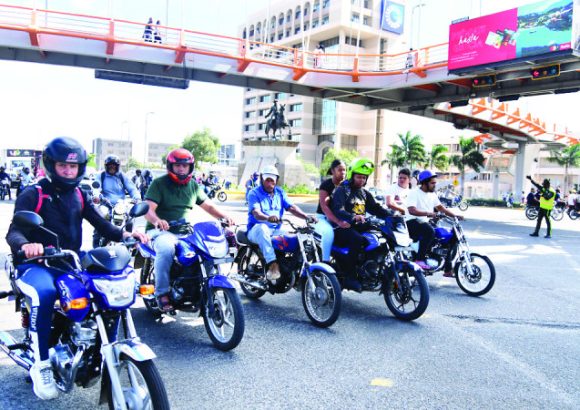
A public debate over road safety in the Dominican Republic has intensified after national newspaper Listin Diario proposed a radical five-year suspension on all new and used motorcycle imports as a strategy to cut sky-high traffic accident fatalities linked to two-wheeled vehicles. But the plan has drawn fierce pushback from key stakeholders across the motorcycle sector, who argue the policy targets the wrong group and would trigger unnecessary economic harm.
The proposal, titled “No More Motorcycles in 5 Years”, frames an import ban as a necessary measure to rein in rising traffic deaths — official data shows the country records nearly 2,000 annual fatalities from motorcycle crashes. Importers, however, say cutting off imports would devastate livelihoods without addressing the root of the road safety crisis.
Aurelina de la Paz, general manager of a motorcycle import firm operating in the National District, has worked in the sector since 2000, and warned that restricting imports would put thousands of jobs at risk. Her business sells around 50 motorcycles per month, and she noted the policy would wipe out income for workers across imports, sales, repair and servicing. “We do recognize that many motorcyclists exhibit aggressive behavior on our roads, but the solution to this public safety issue is not to destroy an entire industry that supports so many households,” de la Paz explained. “We need targeted measures that fix the problem without putting people out of work.”
Leading motorcycle rider associations echo this criticism, saying the import ban does nothing to address systemic gaps in regulation, identification and traffic education that are the real causes of frequent crashes. Óscar Almánzar, president of the National Federation of Motorcycle Riders (Fenamoto), which counts 78,000 registered members across the country, explained that current gaps in vehicle registration and rider identification are far more pressing than import volumes. He pointed out that unregistered informal riders — including app-based motorcycle taxi drivers, food and grocery delivery couriers, and unlicensed young riders — are not properly tracked by authorities, making it impossible to enforce traffic laws consistently.
Almánzar emphasized that the country’s tax authority, the General Directorate of Internal Revenue (DGII), must first implement a universal system to issue license plates and register every motorcycle entering the country through customs, ensuring all riders keep their documentation and registration up to date. He also pushed back on the common misconception that formal motoconcho (motorcycle taxi) drivers are the primary cause of accidents, noting that statistics paint a different picture. While motorcycles are involved in 7 out of 10 traffic crashes in the capital, Almánzar claimed that formal motoconcho drivers are the least likely group to be involved in fatal incidents even during peak travel seasons like December and Holy Week. “All the blame gets dumped on motoconcho drivers, but the data shows the problem comes from unregulated, unregistered riders,” he said.
Instead of an import ban, Fenamoto has proposed creating a dedicated Motorcyclist Assistance Center that would provide mandatory traffic education, guidance on regulatory compliance, and support for registered riders. The federation already enforces its own internal penalties, including expulsion from the association for riders who commit serious violations.
Regional association leaders have backed this position, echoing that formal registered motoconcho drivers are not the source of the crisis. Raúl Ortiz, president of the Pantoja Motoconcho Drivers Association (Asomopa), which represents 3,000 drivers across Los Alcarrizos, Pantoja, and Palmarejo Villa Linda, confirmed that all of his member drivers are fully registered and compliant with regulations. While he does not dispute the national figure of nearly 2,000 annual motorcycle accident deaths, he noted that fatalities among formal motoconcho drivers remain far lower than among unregistered riders.
Braulio Cuevas, president of the Quitasueño Mototaxi Association (Asomoquita), which represents 120 drivers in the Quitasueño region, added that most serious incidents involve inexperienced unlicensed young riders who have not received formal training or regulation. He called on national transport authorities to partner with existing federations to separate formally registered hardworking motoconcho drivers from unregulated riders, rather than punishing the entire industry.
Stakeholders across the sector also agree that the National Institute of Traffic and Land Transportation (Intrant) must expand mandatory traffic education across all rider groups, with a focus on enforcing licensing requirements, mandatory helmet use, and universal owner identification. They have called for a pilot regulatory program to be launched first in Greater Santo Domingo and the National District to test targeted reforms before rolling them out nationwide, arguing that evidence-based regulation will cut fatalities far more effectively than a blanket import ban that only harms working people.