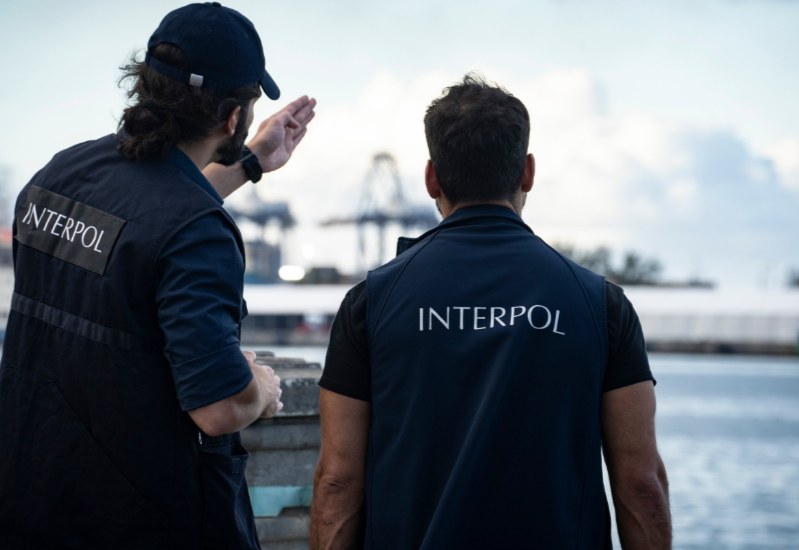
A sweeping cross-border law enforcement initiative led by the International Criminal Police Organization (Interpol) and backed by the Organization of American States (OAS) has delivered landmark results against transnational organized crime, with authorities across 20 nations in Central America, South America and the Caribbean removing thousands of illegal firearms and tens of tons of contraband drugs from circulation. Christened Operation Orca XI, the coordinated crackdown ran from October 15 to November 30, 2025, with Interpol managing global operational coordination and the OAS working to deepen regional collaborative ties. Financial backing for the initiative was provided by the European Union, enabling unified action against interconnected criminal networks operating across the Americas.
The operation aligns with core security priorities advanced by the OAS under the Inter-American Convention against the Illicit Manufacturing of and Trafficking in Firearms, Ammunition, Explosives, and Other Related Materials (CIFTA). This framework has recently renewed its focus on targeted criminal investigations into the origin, illegal diversion and trafficking of illegal weapons and related materials, framed as a critical strategy to dismantle transnational criminal groups at their root.
By the close of the operation, participating law enforcement agencies had recorded 8,701 arrests on charges ranging from weapons possession and drug trafficking to a range of other felony offenses. In addition to the 3,308 seized illegal firearms, authorities confiscated close to 200,000 rounds of unregulated ammunition, $256,025 in untraced cash, and 210 vehicles linked to criminal operations.
OAS officials emphasized that illicit firearms trafficking in the Western Hemisphere is deeply intertwined with nearly every other form of transnational criminal activity, including drug trafficking, human trafficking, migrant smuggling and cybercrime. Organized criminal syndicates and street gangs that oversee these operations routinely repurpose the same smuggling routes to move multiple types of illicit goods, creating interconnected networks that challenge individual nations’ law enforcement capacities.
These overlapping criminal links were clearly reflected in the scale of drug seizures from Operation Orca XI. Contraband confiscated included 6.9 metric tons of cocaine, 659,403 harvested coca plants, 9.3 tons of cocaine base paste, 38.5 tons of marijuana, 2 tons of methamphetamine, and 11 kilograms of ketamine.
OAS Secretary General Albert R. Ramdin framed the operation as a clear demonstration of the power of coordinated hemispheric action. “This is what success looks like when hemispheric coordination and world-class technical and operational capacity join forces: thousands of firearms off the streets, drugs seized and safer communities,” Ramdin said. “Operation Orca XI proves that international cooperation and information sharing get results—and our security frameworks must continue delivering. The OAS stands ready to continue supporting member states with partners like Interpol for the benefit of the Americas.”
Interpol Secretary General Valdecy Urquiza echoed that assessment, calling Orca XI a watershed milestone in global efforts to counter organized criminal networks. “Interpol’s commitment remains to support law enforcement agencies with the intelligence, tools and coordination they need to stay ahead of these evolving threats,” Urquiza said.
The operation was planned and executed in close partnership with the Commission of Central American, Mexican, Caribbean, and Colombian Police Chiefs and Directors. The 20 participating nations were Argentina, Belize, Bolivia, Brazil, Chile, Colombia, Costa Rica, the Dominican Republic, Ecuador, El Salvador, Guyana, Guatemala, Honduras, Mexico, Nicaragua, Panama, Paraguay, Peru, Suriname, and Uruguay, uniting a broad cross-section of the Americas to confront shared security threats.