作者: admin

  • Magnitude 3.7 Earthquake Recorded Northeast of Antigua

    Magnitude 3.7 Earthquake Recorded Northeast of Antigua

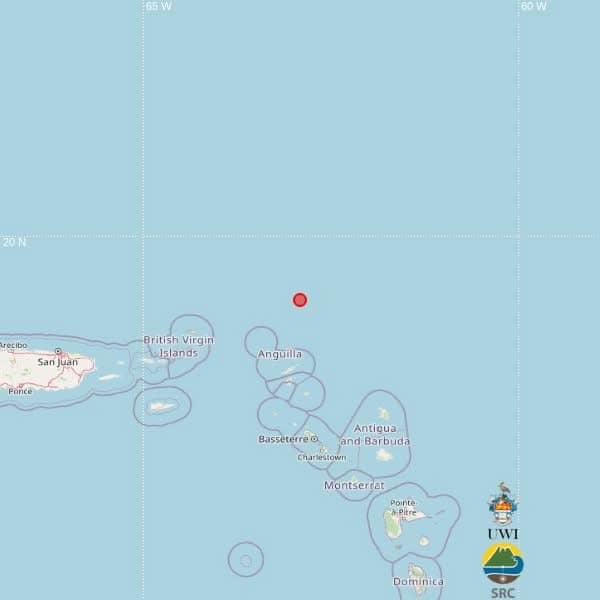
    A magnitude 3.7 earthquake has been detected in the waters north of several Eastern Caribbean island nations, according to an initial alert from The University of the West Indies Seismic Research Centre (SRC).

    The seismic event was registered at 9:05 p.m. local time on Sunday, with automated systems placing its depth at 10 kilometres below the ocean surface. The calculated epicentre falls at geographic coordinates 19.15 degrees north latitude and 62.91 degrees west longitude, placing the tremor hundreds of kilometres from multiple populated island centers.

    Per the preliminary geographic calculations, the quake sits roughly 255 kilometres northwest of St. John’s, the capital of Antigua and Barbuda; 206 kilometres north of Basseterre, the capital of St. Kitts and Nevis; and 273 kilometres north-northwest of Brades, the administrative center of Montserrat.

    The SRC emphasized in its announcement that the current epicentre and magnitude data were generated entirely by automated computer algorithms. Before the data is finalized, it will undergo manual review and potential adjustment by expert seismic analysts, meaning the published location details are not yet confirmed as final.

  • Part of the Croix Périsse (Haiti) road has been reopened

    Part of the Croix Périsse (Haiti) road has been reopened

    In a significant step toward reclaiming territory from armed gangs, Haiti’s national police force (PNH) announced Wednesday that it has successfully reopened a portion of the key Croix Périsse road following a targeted security operation that strengthened law enforcement control across the Carrefour Marchand district.

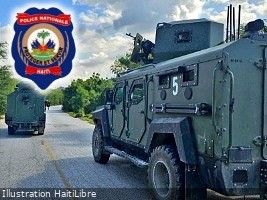
    The operation, which mobilized multiple elite PNH units supported by armored vehicles, relied on sustained patrols and round-the-clock surveillance to secure the zone and block armed factions from moving personnel and supplies through the area. After securing the perimeter around Carrefour Marchand, officers re-established a permanent presence at key checkpoints in the region, marking a return of state authority to an area long contested by violent groups.

    As part of the clearing operation, police have fully dismantled all unauthorized barricades erected by armed actors between the night of May 22 and 23 in the Kokorat San Ras Yo neighborhood and surrounding areas. To date, two major roadblocks blocking access along Croix Périsse have been completely removed, restoring limited passage for local residents and critical supply convoys.

    Law enforcement teams have also retaken full control of the Rigaud sub-district, and are now advancing toward Point Rouge, a strategic intersection that has long served as a base of operations for armed criminal groups. PNH forces remain fully mobilized in the region, with plans to continue the operation to clear remaining large barricades constructed from heavy tree trunks and consolidate permanent security control over newly recaptured areas.

  • FLASH : Pope Leo XIV warns of the risks of Artificial Intelligence

    FLASH : Pope Leo XIV warns of the risks of Artificial Intelligence

    In a landmark move marking his first major teaching document as pontiff, Pope Leo XIV has published an 82-page encyclical titled *Magnifica Humanitas* (Magnificent Humanity), focused entirely on assessing the growing threats posed by unregulated artificial intelligence development. Dated May 25, 2026, the text, subtitled “On Safeguarding the Human Person in the Time of Artificial Intelligence,” caps years of collaborative theological and ethical reflection within the Catholic Church on advancing digital technology.

    The pontiff’s warning builds on earlier institutional efforts to frame ethical guardrails for AI: dating back to 2020, the Holy See partnered with major technology firms and global academic bodies to launch the Rome Appeal for an Ethics of AI, a public initiative calling for AI innovation centered on respect for inherent human dignity. In this new encyclical, Pope Leo XIV expands that framework to detail five pressing risk areas that demand global attention.

    First, the encyclical highlights widespread economic and labor disruption, warning that unchecked AI deployment could lead to a rapid contraction of available human employment. The Pope specifically criticizes the dominant business model of big tech, which he says prioritizes short-term profit maximization over the fundamental dignity of work and workers.

    Second, the pontiff takes a firm stance against the development of autonomous lethal weapons, commonly referred to as killer robots, including self-operating armed drones. He stresses that any decision to use lethal force must remain under the direct, intentional control of human actors, rejecting the normalization of automated warfare.

    Third, Pope Leo XIV addresses the unique risks posed by generative AI, warning that its ability to mimic human interaction, emotion, and identity risks eroding the line between authentic human connection and digital simulation. He reminds readers that every human person’s individuality—marked by their unique face and voice—is inherently sacred, a status that unregulated generative AI threatens to trivialize.

    Fourth, the encyclical calls out the heavy environmental toll of the AI boom, denouncing the ecological destruction caused by the unregulated scramble to extract rare earth elements and critical minerals required to power AI infrastructure and modern electronics.

    Finally, the document emphasizes that children and young people are uniquely vulnerable to harm from unregulated AI, citing elevated risks of online manipulation, exposure to violent content, and digital exploitation. To counter these threats, the Vatican pushes for widespread investment in accessible digital literacy education, designed to help young people build the critical thinking skills needed to navigate digital spaces safely.

    The full text of *Magnifica Humanitas* is available for public download as an English-language PDF through official Vatican-related channels.
  • Straatverlichting langs weg naar Matta officieel in gebruik genomen

    Straatverlichting langs weg naar Matta officieel in gebruik genomen

    In a major milestone for infrastructure and community development in Suriname, the critical road connecting Zanderij to the village of Matta officially received permanent street lighting starting Saturday, marking the completion of a project aimed at addressing longstanding public safety concerns and unlocking growth in the inland region.

    The initiative, delivered in partnership between the Surinamese government and Energiebedrijven Suriname (EBS), the country’s national energy utility, was designed to respond directly to requests raised by local communities in the Para district years ago. Speaking at the official activation ceremony on behalf of President Jennifer Simons, Minister of Health, Welfare and Labor André Misiekaba emphasized that the project delivers on a core campaign commitment of the administration to expand critical basic services across Suriname’s inland territories. “This project demonstrates our government’s consistent pledge to invest in infrastructure that improves daily life and creates opportunities for communities outside the capital,” Misiekaba stated during the event.

    EBS Director Leo Brunswijk outlined that road safety was the central driver behind the street lighting installation. For decades, the high-traffic route between Zanderij and Matta has been notoriously dangerous for motorists, pedestrians, and commercial drivers after dark, with frequent collisions and security incidents reported after sunset. Brunswijk added that the project is far more than a standalone safety upgrade: it forms a core part of a broader national strategy to expand reliable, accessible electricity access to underserved communities across Suriname. Work is already underway to extend the national power grid further to reach additional rural settlements in the Para district, bringing basic energy services to households that have long operated off-grid or relied on unstable, expensive private power generation.

    Para District Commissioner Patrick Kensenhuis hailed the street lighting activation as a transformative step forward for the entire region. Kensenhuis noted that safer travel along the route will not only improve quality of life for local residents but also support growing tourism and small business activity in the area, which has long been held back by the lack of after-dark infrastructure. For local residents who have campaigned for this upgrade for years, the official switch-on has been met with widespread enthusiasm. Community members report that they have long avoided travel along the route after dark, and now expect the new lighting to cut down on road accidents and reduce crime along the highway, creating a safer environment for everyone who uses the road.

  • Two men deported from St Kitts charged with Steer Town, St Ann fatal gun attack

    Two men deported from St Kitts charged with Steer Town, St Ann fatal gun attack

    Three years after a fatal home invasion shooting left one young man dead in Steer Town, St Ann, Jamaica, the two primary suspects have finally faced formal charges following their deportation from neighboring St Kitts and Nevis.

    The accused individuals, identified as 31-year-old Chevon Brown, a lifeguard also known by the alias ‘Balla’, and 37-year-old Kemar Matthews, also called ‘Bibbi’, both share a home address in Ocho Rios, St Ann. Their charges are directly linked to the February 8, 2023 killing of 20-year-old Kimani Lettman, a Steer Town resident.

    According to official reports from the St Ann’s Bay Police Division, the violent incident unfolded shortly after 2:30 a.m. that Wednesday. Lettman and a companion were inside a private residence when multiple armed suspects forced entry into the home. The attackers immediately opened fire on the two occupants before escaping the area on foot.

    Emergency responders were called to the scene immediately after the shooting. Both injured men were rushed to a local medical facility for treatment, where Lettman was pronounced dead. The second victim received care for non-life-threatening injuries and was released from hospital shortly after treatment.

    As investigators launched a full probe into the fatal attack, they quickly uncovered evidence that Brown and Matthews had fled Jamaica for St Kitts and Nevis shortly after the shooting to avoid arrest. Cross-border law enforcement cooperation led to the pair being taken into custody in St Kitts, and they were formally deported back to Jamaica last Thursday, May 21, 2026.

    Upon their arrival in Jamaica, the two men were taken directly into police custody. They have since been formally charged with a total of five criminal offences: murder, wounding with intent, possession of a prohibited firearm, unauthorized possession of ammunition, and burglary. Judicial authorities confirm that a court date for the pair is currently being finalized, and no further details on bail or upcoming proceedings have been released to the public as of press time.

  • PM Says 25 Air Peace Passengers Will Travel to Antigua From Barbados on LIAT

    PM Says 25 Air Peace Passengers Will Travel to Antigua From Barbados on LIAT

    As public health authorities across the Caribbean ramp up vigilance amid growing Ebola concerns in several regions of Africa, the government of Antigua and Barbuda has enacted a series of enhanced safety protocols for travelers arriving on the newly launched Air Peace direct service from Nigeria, Prime Minister Gaston Browne has confirmed. Even with these heightened precautions, approximately 25 passengers bound for the twin-island nation will still complete their journey, though their route will be adjusted to accommodate public health screening requirements.

    In an interview aired on local outlet Pointe FM this past Saturday, Browne outlined the modified travel arrangement: the incoming Air Peace flight from Lagos, Nigeria’s largest city, will divert from its original planned landing at Antigua’s V.C. Bird International Airport and instead touch down first in neighboring Barbados. From there, passengers with final destinations in Antigua and Barbuda will be transported onward to Antigua via regional carrier LIAT.

    “Even though they’re landing in Barbados, about 25 of them will come here,” Browne confirmed, clarifying that the routing change is a purely precautionary measure designed to streamline public health checks rather than a full ban on entry. To mitigate any potential risk of imported Ebola cases, national health authorities will conduct rigorous screening for all passengers upon their arrival in Antigua, building on protocols that were first widely deployed during the height of the COVID-19 pandemic.

    Browne noted that the government has already reinstated the full enhanced public health framework used during the global COVID crisis, including the return of infrared thermal scanners that enable rapid, non-contact temperature checks to identify potential fever, a common early symptom of Ebola. As an additional layer of precaution, the nation’s Infectious Disease Centre has been reactivated to stand ready for any potential cases.

    “If any of them were to take ill while they’re here, we can easily isolate them and of course do the necessary contact tracing,” Browne explained, emphasizing that the reactivated facility gives authorities the infrastructure to respond quickly and contain any potential outbreak before it can spread to local communities.

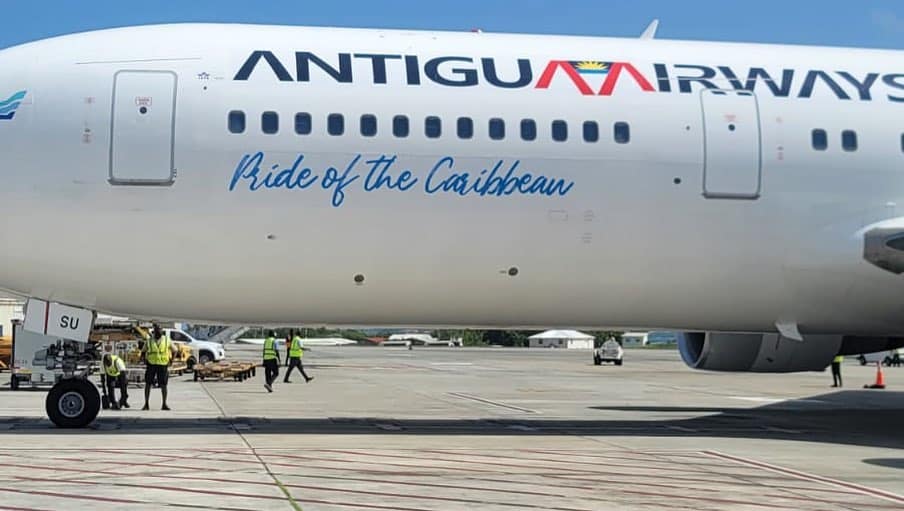
    The prime minister added that this unusually cautious approach stems not only from the current Ebola outbreak concerns in parts of Africa but also from a challenging past experience involving migrant arrivals on flights operated by Antigua Airways from Cameroon via Nigeria in 2022 and 2023. “We got burnt there, so we’ve been a little cautious,” he said, noting that the prior incident left the government determined to avoid repeating missteps in border health management.

  • Confucius Institute official promotes study opportunities in China

    Confucius Institute official promotes study opportunities in China

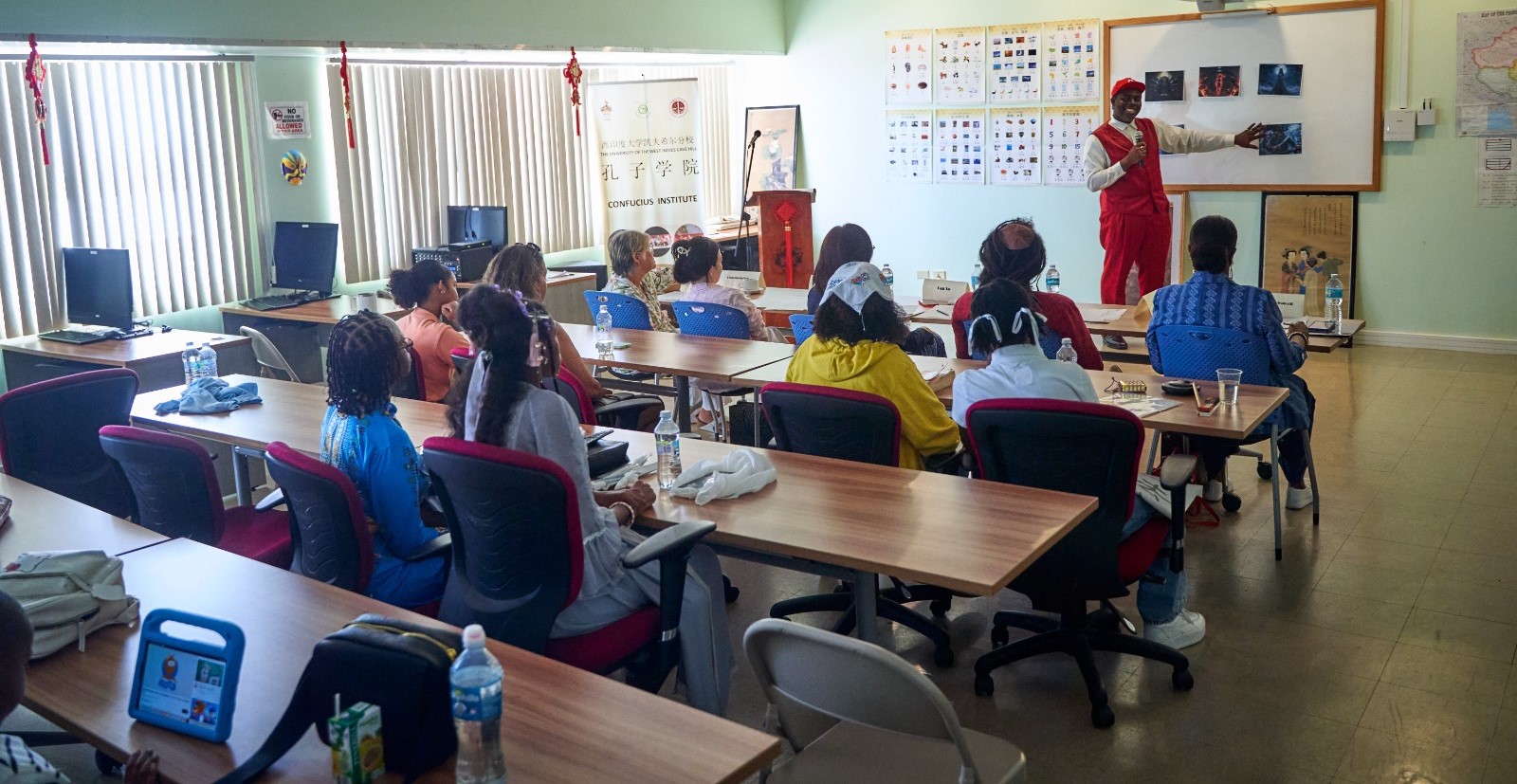
    On the sidelines of the 2026 China Bridge Chinese Proficiency Competition held Saturday, the director of Barbados’ Confucius Institute has issued a warm invitation to local students, urging them to leverage bilateral cultural and educational exchange programs to pursue life-changing academic opportunities in China.

    Dr. Ché Corbin, who leads the Confucius Institute hosted at the University of the West Indies (UWI) Cave Hill Campus, shared details with local outlet Barbados TODAY about the annual competition, which has become a cornerstone of Chinese language promotion and cultural exchange across Barbados. Designed to give young language learners a stage to demonstrate their linguistic skills, connect with like-minded peers, and deepen their engagement with Chinese culture, the 2026 contest divided participants into three distinct divisions aligned with their education levels: primary school, secondary school, and tertiary students from UWI.

    Top performers from each Barbadian division earn the highly coveted prize of an all-expenses-paid trip to Beijing to compete in the contest’s global final round. In a special provision for young primary school competitors, the institute even covers the full cost of airfare and travel for one parent to accompany their child on the international trip, a benefit that has drawn widespread enthusiasm from participating families.

    During this year’s national round, contestants were evaluated on two core segments: self-introductions and open-topic speeches, which allowed judges to assess both their command of the Chinese language and their public speaking confidence. Corbin noted that the event has seen explosive growth in local interest in recent years, with so many students eager to take part that organizers were forced to implement participation caps to keep the competition manageable.

    Currently, the Confucius Institute delivers on-site Chinese language courses to students at multiple primary and secondary institutions across Barbados, including well-known campuses such as Charles F. Broome Memorial Primary, St George Primary, St Stephen’s Primary, The Alleyne School and Ellerslie School. Looking ahead, Corbin announced that the institute is moving forward with plans to expand access to language learning by adding new weekend sessions, which will open up slots for additional learners including adults and parents who have expressed interest in picking up the language themselves.

    Drawing from his own two-decade-long journey with Chinese language and culture, Corbin shared that learning the language opened unprecedented academic and professional doors for him personally. Two decades ago, he began studying Chinese, and eventually earned a full scholarship to study traditional Chinese medicine at a university in China, an experience that shaped his career. He urged current Barbadian students to follow the same path, noting that China offers world-class educational opportunities that can transform young people’s futures. “It’s one of the best places to be a student,” he emphasized.

  • China Ships 15,000 Tonnes of Rice to Cuba

    China Ships 15,000 Tonnes of Rice to Cuba

    As Cuba grapples with deepening food scarcity and a catastrophic energy crisis worsened by decades of tightened U.S. economic restrictions, the first shipment of a major Chinese food aid package has arrived in the capital Havana. The 15,000 tonnes of rice delivered this week marks the opening installment of a 60,000-tonne total food assistance commitment from China, the largest single food aid package China has extended to Cuba in recent years.

    Chinese Ambassador to Cuba Hua Xin emphasized during the arrival that the delivery is far more than a material assistance gesture: it embodies the long-standing solidarity and reciprocal support that have defined bilateral relations between Beijing and Havana for decades.

    Cuba’s current crisis stems largely from the stringent U.S. economic blockade that has cut off the island nation from most global trade and critical supply chains for decades. The situation has deteriorated sharply in recent months, pushing the country’s already fragile energy infrastructure to a breaking point. According to reporting from Spanish newspaper El País, Cuba’s national power grid has suffered total collapses seven times over the past 18 months, with two major outages recorded in March 2026 alone. Some communities have been left without power for up to 24 hours at a time, crippling food production, distribution, and basic public services.

    A brief reprieve came in late March, when a Russian oil tanker delivered more than 700,000 barrels of crude to the island with rare U.S. approval, cutting the country’s energy deficit by nearly half. But the relief was short-lived: the supplementary supplies were exhausted within weeks, and by May 2026, the crisis had worsened again, leaving fuel for power generation and transportation in critically short supply.

    Betsy Díaz, Cuba’s Minister of Domestic Trade, confirmed that despite ongoing fuel shortages that complicate ground transportation, national authorities are prioritizing the rapid distribution of the newly arrived Chinese rice to vulnerable populations across the island.

    The food and energy crises have unfolded alongside a new wave of political tensions between Cuba and the United States. This week, thousands of Cuban demonstrators gathered outside the U.S. Embassy in Havana to express support for former Cuban president Raúl Castro, after U.S. authorities announced criminal charges against him linked to the 1996 downing of two civilian planes operated by a U.S.-based Cuban exile group.

  • Antigua Airways Controversy Influencing Government’s Approach to Air Peace Flights, PM Says

    Antigua Airways Controversy Influencing Government’s Approach to Air Peace Flights, PM Says

    Against a backdrop of lingering public health concerns over Ebola in parts of Africa and hard-learned lessons from a past migrant controversy, the government of Antigua and Barbuda is moving forward with extreme caution on the proposed new Air Peace passenger service connecting Nigeria to the Caribbean, Prime Minister Gaston Browne has confirmed. Speaking during an interview with local outlet Pointe FM on Saturday, Browne outlined that the administration is holding a “very conservative position” on the planned route originating from Lagos, a direct response to the major complications the nation faced during the ill-fated Antigua Airways operation that unfolded between late 2022 and early 2023.

    The prime minister made clear that the previous incident left lasting impacts on the country’s policy approach: “We got burnt there, so we’ve been a little cautious.” He detailed how the 2022-2023 crisis unfolded: Antigua Airways marketed flights as bringing tourists to the Caribbean nation, but in reality, most passengers were conflict migrants from Cameroon who transited through Nigeria on their way to Antigua, with the ultimate goal of reaching the United States illegally.

    In response to the crisis, Antigua and Barbuda’s government made the decision to suspend the Antigua Airways flights, in large part to avoid any perception that the nation was enabling human trafficking. “We didn’t want anybody to think, even erroneously, that we were facilitating any form of trafficking of people,” Browne emphasized. The fallout extended far beyond the initial landing of the flights, he added: roughly 600 migrants refused voluntary repatriation to Africa, and many began attempting to travel onward illegally by small boat to the United States, creating prolonged enforcement and humanitarian challenges for the small island nation.

    Despite the cautious approach to the new Air Peace route, Browne stressed that Antigua and Barbuda remains deeply committed to building stronger air connectivity between Africa and the Caribbean. The nation has long been a pioneer in establishing the “air bridge” between the two regions, he noted, and that core commitment has not changed. That said, the recent resurgence of Ebola concerns in parts of Africa has added an extra layer of urgency to the government’s need for precautionary measures.

    In practical terms, the cautious approach means the inaugural scheduled Air Peace flight will likely not land in Antigua as originally planned. Instead, the service will fly directly to Barbados first, with passengers bound for Antigua transported onward to the country via regional carrier LIAT. To mitigate public health risks, the government is already moving to reinstate enhanced screening protocols at Antiguan airports, including the return of infrared thermal scanners and alignment with strict international public health standards. The nation’s Infectious Disease Centre has also been reactivated as a preventative measure to monitor and respond to any potential health threats linked to incoming travel.

  • Antigua and Barbuda Festivals Commission Issues Public Apology to Ms. Jamona Samuel

    Antigua and Barbuda Festivals Commission Issues Public Apology to Ms. Jamona Samuel

    A administrative misstep tied to the 2026 Queen of Carnival competition has prompted the Antigua and Barbuda Festivals Commission to issue a public, unreserved apology to Jamona Samuel, a hopeful contestant who was incorrectly notified of her selection.

    The error unfolded after the conclusion of the competition’s initial screening round. In a slip-up that has since sparked regret among commission leadership, an official congratulatory letter was incorrectly dispatched to Samuel, falsely confirming her spot as a contestant in the upcoming 2026 pageant. The commission has openly acknowledged the miscommunication, and expressed deep remorse for the letdown and emotional harm the mistake inflicted on Samuel.

    In a statement released to the public, the commission emphasized that it fully recognizes what the Queen of Carnival platform means to emerging young leaders across the nation. Officials noted that every candidate who puts their name forward pours significant time, energy and personal commitment into preparing for the screening process, and all participants deserve to be treated with consistent professionalism and care. The commission admitted that the incident involving Samuel fell far short of the standards that applicants have every right to expect from the organizing body.

    Taking full ownership of the administrative failure, the commission reiterated its heartfelt apology to Samuel for the negative impact the error has had on her experience as an applicant. Moving forward, the organization has pledged to implement sweeping improvements to its internal communication protocols and operational workflows. These changes are designed to boost accuracy, streamline efficiency, and reinforce accountability across all stages of the competition planning and execution process.

    The commission closed its statement by thanking Samuel for bringing the error to its attention, and extended a final apology for the inconvenience and distress the miscommunication caused.