作者: admin

  • Antigua’s Unruly Union Wins Caribana Barbuda Classic Horse Race

    Antigua’s Unruly Union Wins Caribana Barbuda Classic Horse Race

    One of the Caribbean’s most anticipated annual sporting showdowns wrapped up with a thrilling victory for Antigua at the 26th Caribana Barbuda Classic Horse Racing Competition, held at Barbuda’s iconic Coronation Park. In the marquee match-up between the two neighboring islands that served as a centerpiece event for 2026 Caribana celebrations, local favorite Unruly Union delivered a dominant, crowd-pleasing performance to secure the top prize.

    Ridden with precision and strategic skill by Antiguan jockey Junior “Ritical” Walters, Unruly Union held off challengers across the track to cross the finish line first. The winning colt is owned by Dr. Baba Thwaites and conditioned for competition by veteran trainer Devon O’Garo, whose preparation paid off in the high-stakes feature race.

    Organized annually by the Barbuda Turf Club in partnership with State Insurance Company Limited, this year’s event stretched across seven competitive races and drew a packed crowd of racing enthusiasts and casual spectators alike. For locals and returning visitors, the Caribana Barbuda Classic is far more than a single-day competition: it is one of Barbuda’s most cherished long-standing sporting traditions, drawing crowds year after year to celebrate equestrian talent across the region.

    Sunday’s victory for Unruly Union capped off a memorable edition of the race, adding a new exciting chapter to the event’s 26-year history. As has become the norm, the competition once again solidified its status as one of the unmissable highlights of the broader Caribana festival, drawing attention to equestrian sport across the Eastern Caribbean.

  • Falcons Crowned Champions, Eagles 2 Secure Second Place, Momentum Claims Men’s Title

    Falcons Crowned Champions, Eagles 2 Secure Second Place, Momentum Claims Men’s Title

    Antigua and Barbuda’s grassroots volleyball landscape is undergoing a transformative shift, driven by the Chargers Volleyball organization, whose youth development system has claimed three of the top positions in the country’s national Development Division competitions. This unprecedented sweep stands as a powerful validation of the program’s years-long commitment to structured training, disciplined growth, and intentional investment in young athletic talent.

    In the women’s division, the Chargers-affiliated Falcons team claimed the coveted national championship title after wrapping up an entirely undefeated season, while a second Chargers development squad, Eagles 2, secured a solid second-place finish. The 1-2 finish cements Chargers Volleyball’s status as the undisputed leading force in female youth volleyball development across the nation.

    For the men’s division, the organization’s Momentum team matched the Falcons’ perfect season record, storming to a first-place victory to claim the men’s Development Division crown. The win underscores the rapidly expanding depth, competitive edge, and technical progress of the Chargers organization’s male youth development pipeline.

    Program leaders emphasize that these three top finishes are not a stroke of luck, but the outcome of years of collective effort that extended far beyond the court. Countless extra training hours, one-on-one mentorship, creative community fundraising to overcome logistical barriers, and steadfast emotional support have formed the foundation of the program’s success. Coaches, parent volunteers, community supporters, and the young athletes themselves all persisted through setbacks to bring the program to this milestone.

    For Chargers Volleyball, this achievement means far more than collecting trophies or climbing league standings. It marks the realization of a founding vision to grow volleyball from the ground up in Antigua and Barbuda.

    Rosemarie Simon, head coach of the Chargers female program, spoke to the depth of commitment her young athletes demonstrated throughout the 2024 season. “What fans see on match day is just the final chapter of a very long journey,” Simon explained. “These young women pushed through grueling training sessions, made personal sacrifices, lifted each other up through losses, and grew stronger mentally and emotionally every single week. Both Falcons and Eagles 2 earned these results through discipline, teamwork, and heart. This is concrete proof that investing in intentional youth development delivers results.”

    Simon also highlighted the critical role that family and community support played in the program’s success. “Our parents have been absolutely phenomenal,” she said. “Their constant encouragement, help with transportation to practices and games, personal sacrifices, and unwavering belief in what we’re building made this possible. We’ve worked hard to build a family culture here at Chargers, and every single person has a share in this success.”

    Meanwhile, Frank Schwartz, head coach of the Chargers men’s program, attributed Momentum’s championship run to the team’s culture of persistence and personal accountability. “Momentum’s title didn’t happen overnight — it came from consistent hard work every single week,” Schwartz said. “These young men bought into our development process completely. They showed up to every training session ready to push, accepted feedback to improve their game, and held each other accountable to get better. What makes me most proud isn’t the trophy itself — it’s the growth I’ve seen in their character, confidence, and self-discipline over the course of the season.”

    Schwartz added that these results are just the first step in the organization’s long-term goals, pointing to the growing strength of its development pipeline as a sign of bigger things to come for Antigua and Barbuda volleyball. “This is only the beginning,” he noted. “Chargers Volleyball is building a sustainable system where young athletes can develop properly at their own pace, instead of rushing talent before it’s ready. If we keep investing in our youth, the future of volleyball in this country is incredibly bright.”

    Across Antigua and Barbuda’s tight-knit volleyball community, the Chargers organization’s success has earned growing recognition as one of the most active and impactful youth sports development programs in the nation. From new beginners learning basic fundamentals to competitive athletes fighting for national titles, Chargers Volleyball continues to prove that when young people are given consistent structure, genuine encouragement, and equal opportunity, extraordinary outcomes are possible.

    As the 2024 Development Division season comes to a close with Falcons at the top of the women’s podium, Eagles 2 in second, and Momentum leading the men’s division, one fact has become impossible to ignore: Chargers Volleyball is not just building competitive volleyball teams. It is building a lasting legacy for the future of the sport in Antigua and Barbuda.

  • Vigil for recovery of little Angelo’s body

    Vigil for recovery of little Angelo’s body

    A somber, resolute gathering of community activists and concerned locals unfolded on San Fernando’s Harris Promenade yesterday, centered on a single urgent plea: bring home the body of two-year-old Angelo Tobias Plaza and deliver justice for his untimely death. The toddler went missing two weeks prior in Goodwood, Tobago, and his suspected murder has sent waves of shock and grief across the entire nation of Trinidad and Tobago. Participants held high a banner emblazoned with Angelo’s photo and the words “Justice for Baby Angelo. We are praying for you,” before lighting candles, offering hymns, and saying prayers for both the recovery of the child’s remains and comfort for his devastated family, as official investigations into his killing continue.

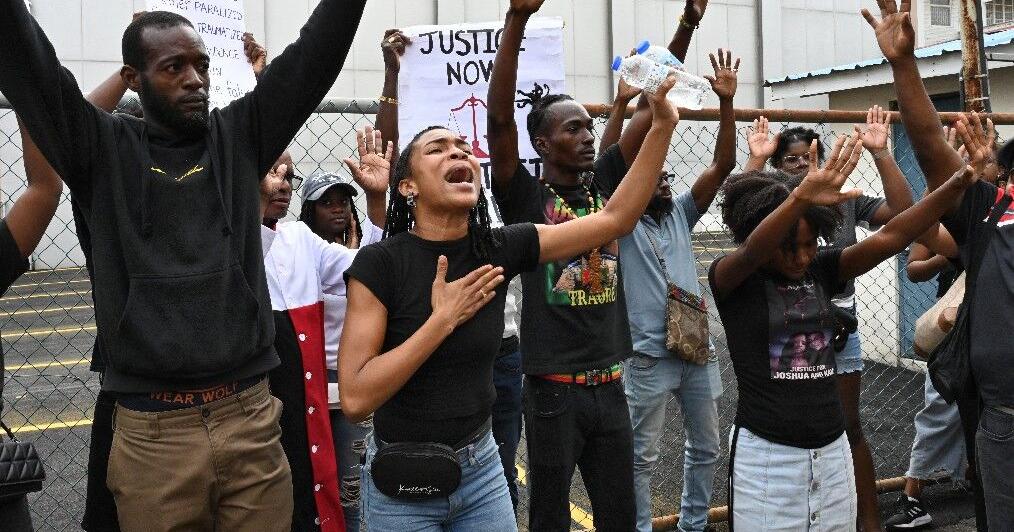
    Speaking for the assembled group, organizer Kevin Lalchan — a veteran activist who has previously led vigils for other high-profile local tragedies, including the 2019 pipeline deaths of four divers working for Paria Fuel Trading Company and the 2023 killing of teenager Mariah Seenath — said that both divine help and persistent public pressure are needed to bring the case to a close. “We want closure. We want justice. We want baby Angelo’s body to be found so that he may get his final rites,” Lalchan told attendees. He also expressed public solidarity with a separate protest gathering that took place yesterday in Port of Spain, organized to demand answers for Kaia Sealy, a woman shot by police on January 20 in an incident that left her husband Joshua Samaroo dead. Sealy currently faces charges of manslaughter and three counts of aggravated assault with a firearm. “Justice must be served for each and every one. While fellow citizens are burning their fire in Port of Spain, I decided to burn my fire in San Fernando. But I stand and support those who are rallying for justice for Joshua and Kaia,” Lalchan said.

    Lalchan used the vigil to shine a light on a growing crisis of vulnerable community members across the country, arguing that Angelo’s killing exposes a critical gap in child protection that demands urgent systemic and social action. “It grieves me to know that we as a nation cannot protect our women, children and elderly folks. Who shall stand for the innocent when they are being slaughtered? Where are the voices Trinidad and Tobago? Where is the national outrage, concern and interest? Today we stand here tugging at your conscience,” he added. Reviving the long-held community principle that “it takes a village to raise a child,” Lalchan emphasized that every sector of society — from individual families and local schools to regional communities and national law enforcement — shares responsibility for keeping children safe. “We must be prepared to go the distance to protect our beloveds,” he said.

    The group issued a formal call for state agencies and law enforcement bodies to adopt more proactive intervention strategies when children are identified as being at risk of harm, noting that early, decisive action could stop countless future tragedies before they occur. Quinlan Achat, a community advocate who goes by the public name Empress Q, reinforced this call, stressing that Angelo’s death is far from an isolated incident in Trinidad and Tobago. “This is not a one-off incident; every day, teenagers and babies are missing. This is so tragic. It shows that families do not have the support or community. My heart grieves. We are citizens, and who else will stand up for justice? I think of the 300 or 500 families that grieve due to gun violence every year in this country, and we multiply that over the last ten years. We represent the most high Jah, and the most high nah sleep,” Achat said.

    goThe San Fernando gathering was framed by attendees as both a demand for accountability and a collective act of healing for a nation shaken by the young child’s death, which has already sparked widespread national outrage and sorrow. As of yesterday, Angelo’s stepfather, Shannon Miller of Goodwood, Tobago, has been formally charged with the toddler’s murder and is scheduled to make his first court appearance this week.

  • Marchers must seek permission before protesting, warn police

    Marchers must seek permission before protesting, warn police

    On a recent day in Port of Spain, a group of demonstrators assembled outside the city’s Police Administration Building to voice public support for local figure Kaia Sealy, in a move that bypassed established regulatory procedures for public demonstrations. Senior law enforcement official Senior Superintendent Raymond Thom later confirmed that no formal notification or approval application had been submitted to the Commissioner of Police ahead of the gathering, a required step under current regional regulations.

    Trinidad and Tobago currently operates under a declared state of emergency, which brings with it adjusted public order rules that grant expanded authority to law enforcement agencies. When reached for comment on the demonstration, Deputy Commissioner of Police Suzette Martin clarified that small, non-disruptive groups of people gathering in public do not automatically violate existing legislation. Even so, Martin stressed that formal advance approval remains a mandatory legal step for any organized public gathering of this nature.

    In an official media statement released later the same day, the Trinidad and Tobago Police Service (TTPS) laid out its formal position on the incident and the broader regulatory framework governing protest activity under the ongoing state of emergency. The TTPS confirmed that while peaceful protest is not explicitly banned by the current state of emergency declaration, all public assemblies are required to adhere fully to the provisions laid out in the Emergency Powers Regulations 2026.

    Acknowledging the demonstrators’ presence outside the Police Administration Building, the statement detailed the law enforcement response to the unauthorized gathering: “In this instance, officers engaged the individuals present and issued clear, lawful instructions in accordance with the Emergency Powers Regulations. The decision to disperse the gathering was based on assessed concerns relating to public safety and the maintenance of public order.”

    The TTPS underlined that it carries a binding statutory obligation to protect public safety and uphold civic order across the country. “Where any gathering presents a potential risk to either, officers are duly empowered to take appropriate and proportionate action, including the lawful dispersal of such assemblies,” the statement added.

    The official release also walked the public through the full scope of powers granted to police under the current emergency regulations, noting that the legislation grants law enforcement broad latitude to regulate, restrict, or break up public assemblies when conditions demand such action. Per the regulations, the Commissioner of Police holds the authority to limit individual association and communication, block public access to specific geographic areas, and designate sensitive sites as “protected places.” Unauthorized entry into these protected zones counts as a criminal offense, and police are legally permitted to search or remove any unauthorised individuals from these locations.

    Further provisions of the regulations expand police powers to stop, search, detain, and arrest individuals without requiring a prior warrant, as long as officers hold reasonable suspicion that the individual’s actions could put public safety at risk. The TTPS also noted that public speech, organizing work, or advocacy connected to unapproved protests can be classified as criminal offenses if those activities are judged to influence public opinion in a way that undermines public safety.

    The TTPS reiterated that all protest activity, especially demonstrations held near police facilities and other sensitive infrastructure, must be carried out in full compliance with existing public order laws and state of emergency rules. It also issued a formal warning about the consequences of violating the Emergency Powers Regulations: breaches can result in fines reaching $100,000 and prison sentences of up to five years.

    The current regulatory framework governing the state of emergency is formally established under the Emergency Powers Regulations, 2026 (Legal Notice No. 40 of 2026), which was enacted to support the ongoing state of emergency declaration currently in effect across the country.

  • Adhin: commissievergaderingen DNA in principe openbaar, tenzij geheimhouding nodig is

    Adhin: commissievergaderingen DNA in principe openbaar, tenzij geheimhouding nodig is

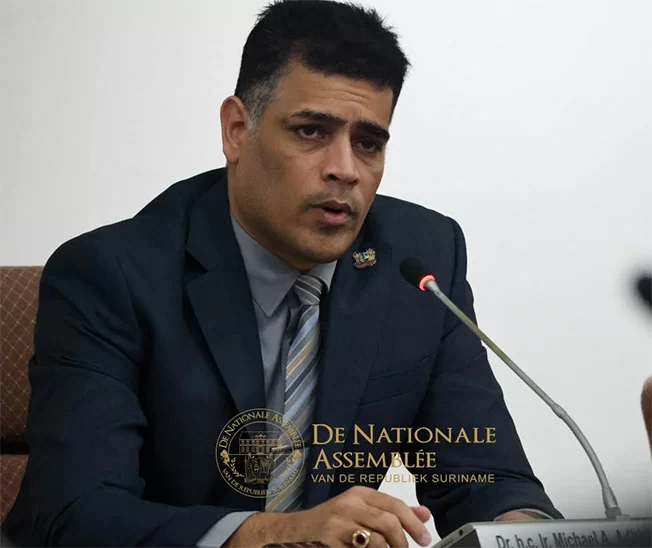
    A new push for greater parliamentary transparency is underway in Suriname, where National Assembly Speaker Ashwin Adhin has reaffirmed that all commission meetings of the legislature will be open to the public by default, with secrecy only imposed when explicitly mandated.

    Adhin outlined the new framework in an interview with local outlet Starnieuws, emphasizing that public access to parliamentary work is a constitutional starting point for Suriname’s democratic process, and that greater transparency toward the general public remains a key priority to strengthen. To advance this goal, Adhin confirmed that party leaders and internal parliamentary administrative bodies are currently holding discussions to remove barriers holding back broader public access to commission meetings. He added that commission chairmen are being prepared for the new operating model, and he will personally oversee high-stakes sessions when necessary to ensure compliance with the new open access rules.

    The renewed discussion on parliamentary openness comes on the heels of recent high-profile hearings over the legislation on the indictment and prosecution of elected political officials. Former minister Bronto Somohardjo publicly requested an open public hearing for his case, a request that was granted, while closed-door hearings were held earlier for two other former government officials, Riad Nurmohamed and Gillmore Hoefdraad. The discrepancy in access for these high-stakes proceedings sparked renewed public debate about the rules governing parliamentary meeting openness.

    To clarify the legal foundation for the new default of open access, Adhin cited Article 82 of Suriname’s Constitution, which explicitly states that all meetings of the National Assembly are public, with closed-door sessions only allowed in exceptional cases formally approved by the body. He also referenced the National Assembly’s Rules of Procedure to back the new framework: Article 26 of the rules states that preliminary investigations conducted by parliamentary commissions are not automatically confidential, and secrecy is only required when explicitly ordered by the full National Assembly, the national government, or a special general committee. Article 28 of the rules further explicitly allows commissions to hold open public meetings when coordinated with the Speaker’s office.

    Adhin stressed that clarifying the legal foundation of open access is critical for future cases, particularly to set clear expectations for future requests for secrecy, as well as for legal representatives and all parties involved in parliamentary proceedings. He reaffirmed that the core principle guiding Suriname’s legislature should be that as much parliamentary work as possible is conducted in public view.

    Practical implementation of the expanded open meeting policy will begin this week, with working groups drafting detailed procedural guidelines starting Tuesday. This is not the first time Suriname’s National Assembly has experimented with public commission meetings: the first pilot of open sessions launched in October 2016 during the speakership of Jennifer Simons, giving the public direct insight into how legislation is drafted and how the parliament operates. During the tenure of former Speaker Marinus Bee, the legislature launched an evaluation of the open meeting program to identify areas for improvement ahead of a broader rollout.

  • SRDF and NIC present Summit in Sneakers

    SRDF and NIC present Summit in Sneakers

    Two prominent Saint Lucian organizations, the Soufriere Regional Development Foundation (SRDF) and the National Insurance Corporation (NIC), have partnered to roll out an exciting new corporate team event, Summit in Sneakers, scheduled to coincide with National Sneaker Day 2026. While National Sneaker Day is officially marked on June 24, the collaborative hiking challenge will take place on June 28, leading participants up the iconic Gros Piton Nature Trail.

    This initiative merges two core organizational priorities: NIC’s commitment to expanding its national wellness platform for workers, and SRDF’s long-standing role as the steward of the protected Gros Piton Nature Trail, one of the Caribbean nation’s most famous natural landmarks. The event’s core mission is to encourage corporate groups to step away from their desks, connect through physical activity, and experience the beauty of the region’s mountain landscape first-hand.

    Lovely Saint-Aimé Joseph, SRDF’s Corporate Communications and Marketing Manager, emphasized the unique value of the outdoor challenge in modern work culture. “In today’s hyper-connected, fast-paced work environment, meaningful opportunities for team building outside the four walls of an office are growing rarer and more valuable,” she explained. “Unlike conventional conference room workshops or internal meetings, Summit in Sneakers creates an immersive space that fosters mutual encouragement, builds personal resilience, sparks shared joy, and delivers a tangible sense of collective achievement that no indoor event can replicate.”

    Structured as a competitive team challenge, the event is open to corporate teams, non-profit organizations, and public sector institutions across the country. Each participating team will consist of 10 members, who will tackle the trail that includes four strategically placed checkpoints. Teams earn points for completing challenges at each stop, and the squad with the highest cumulative point total across all checkpoints will claim the title of Summit in Sneakers challenge winner.

    To prioritize participant safety and minimize environmental impact on the protected trail, the event organizers have implemented a pre-registration requirement and timed wave departure system. This structured approach ensures the trail does not become overcrowded, and every team has space to enjoy a steady, comfortable pace from the trailhead to the summit.

    On the morning of the event, participants will have access to pre-hike warm-up sessions led by trained instructors, full safety briefings to prepare them for the terrain, and organized guided departures for each wave. Along the route, designated team photo spots are set up to capture memories, and all finishers at the summit will get the chance to pose with a custom branded event frame and receive an official certificate of participation. The hike will kick off sharp at 7:00 a.m. from the Gros Piton Nature Trail trailhead in Soufriere.

  • Analyse: 1 jaar ‘Simons-Suriname’: slecht huwelijksseizoen

    Analyse: 1 jaar ‘Simons-Suriname’: slecht huwelijksseizoen

    On May 25, exactly one year has passed since the last general elections that brought the Simons-led coalition government to power in Suriname. Veteran fiscal-financial analyst Robby Makka, who has delivered annual economic and fiscal (ecofin) assessments from macro, meso, and micro perspectives for over 12 years, has released his annual evaluation of the administration’s first 12 months in office, pulling together data, official documents, policy reports, recent developments, and stakeholder feedback to build his analysis.

    This year’s review comes amid the regular cycle of International Monetary Fund (IMF) assessments, which typically take place in March with follow-up visits scheduled for May or June. Makka centers much of his analysis on this ongoing IMF engagement, framing his assessment around six core benchmarks aligned with the six parties that make up Suriname’s current ruling coalition. Echoing the government’s own framing of a rapid policy review, Makka argues that fiscal and economic policy must remain fully sovereign across all three levels of analysis, warning that instead of benefiting from broad-based oil-driven growth, Suriname faces the looming threat of the resource curse known as the “oil curse.”

    In his initial quick scan of the administration’s performance, Makka criticizes President Simons for declining to hold a national press conference by the first anniversary of the election to address the coalition’s policy mandate, governing agreement, pressing fiscal and economic challenges, and the recently released IMF assessment. Instead of prioritizing this critical domestic accountability moment, the president has prioritized overseas official visits to the Dominican Republic and Brazil. While a press conference was scheduled for 9:30 a.m. on the anniversary, Makka points out that it is led solely by the government’s own fiscal spokesperson, a format he rejects as insufficient.

    Makka pushes back against the spokesperson’s framing of the current economic landscape as “moderate,” noting that official forecasts predict 3.4% economic growth this year, a metric that demands far more transparent and comprehensive public discussion. He argues the entire six-party coalition should have appeared before the public to present a data-driven, fact-checked annual evaluation of its performance, and calls on President Simons to immediately order full annual progress reports from the President’s Cabinet, Vice President’s Cabinet, and all 17 government ministries.

    Digging into an independent review of the administration’s foundational policy work, Makka argues that the 2025–2030 governing agreement *Samen naar fundamentele verandering* (Together for Fundamental Change), struck between the six coalition parties, has largely proven to be performative, designed more for public presentation than for delivering tangible systemic change. While coalition negotiators moved quickly to finalize the power-sharing agreement, Makka says the administration has failed to deliver a unified Simons economic and fiscal plan, produce a cohesive cross-coalition policy framework, or even draft its own national budget. Instead, the government is still operating on a budget approved by the previous Santokhi administration.

    Worsening this institutional gridlock, the key 2026 financial memorandum, the core policy document for the national budget, has still not been submitted to the National Assembly (DNA) for oversight, even with the year already half over. Suriname’s Planning Bureau has not been empowered to carry out rigorous, independent policy modeling, reliable economic projections, or fully developed scenario planning, Makka says.

    Most notably, the most recent IMF report is unsparing in its criticism of the Simons administration’s first year of fiscal and economic governance. The global financial body cites major constraints including implementation delays, weak oversight mechanisms, critical data gaps, fragile institutional systems, and a severe shortage of qualified technical experts. The IMF concludes that policy implementation “is not yet complete due to limitations in institutional capacity, delayed secondary legislation, and limited political engagement”—with Makka emphasizing that the emphasis on “limited political engagement” is particularly telling. These gaps leave Suriname exposed to widespread budget errors and growing systemic financial risks, the analyst warns.

    Suriname’s Accountability Act is currently stuck in legislative processing in the National Assembly for what Makka describes as questionable political reasons. Minister Adelien Wijnerman has publicly cited the lack of a five-year financial plan, a consolidated budget memorandum, formal budget rules, and primary expenditure ceilings as core reasons for the delay.

    Makka questions what tangible progress has been delivered since the president’s October 1, 2025, address to the nation, arguing that the bar for policy performance was set far too low, and needs to be raised through more robust planning, programming, and project implementation. One year in office cannot erase the country’s long-standing economic and fiscal challenges, he notes, and the delay to the Accountability Act has only raised more pressing questions about the administration’s commitment to reform. Makka concludes that after 12 months in power, President Simons has not demonstrated effective leadership or managerial capacity, lacks a clear policy agenda, and has failed to deliver meaningful change at every level from local community outcomes to national strategic direction.

    Calling on President Simons to take more active ownership of the country’s fiscal and economic trajectory—what Makka frames as “ecofin motherhood”—the analyst says the administration must move past planning to full implementation, institutionalize reform processes, strengthen technical fiscal teams, establish sovereign savings and macroeconomic stabilization funds, accelerate anti-corruption efforts, and most importantly, abandon plans to delay the passage of the Accountability Act.

    In his concluding assessment, Makka notes that despite having six coalition parties, a full network of economic and fiscal institutions, and hundreds of qualified technical fiscal professionals, the Simons administration has yet to deliver any meaningful policy progress. “There has been one year of economic and fiscal stagnation. The ‘enemy of the Simons administration’ is inertia,” he writes. He stresses that this assessment is not malicious criticism, but a conclusion drawn from 50 years of Suriname’s post-independence statehood and 160 years of parliamentary democracy. The country still lacks a required medium-term fiscal report and a multi-year financial framework, even as qualified technical fiscal experts are pushed out or removed from their positions, he adds.

    Makka lays out clear recommendations for the administration’s second year in office: the government should immediately deepen engagement with experienced fiscal and financial experts, carry out a cabinet reshuffle if necessary, and formally re-engage the IMF for full technical support if required. His closing advice to the administration centers on four core demands: change yourself, change your practices, change your governing style, and build a cohesive, coherent Simons-specific national strategy.

    Bringing together the findings of stalled implementation, growing financial risks, and the absence of long-term fiscal planning, Makka sums up his assessment of the Simons administration’s first year: “1 year of Simons is a bad honeymoon.”

  • PNM HYPOCRISY, says PADARATH

    PNM HYPOCRISY, says PADARATH

    A heated political dispute has erupted over recent hiring practices at Trinidad and Tobago’s Water and Sewerage Authority (WASA), with the ruling administration pushing back hard against opposition accusations that the agency has operated an illegitimate “employment racket” to recruit bloggers for political propaganda.

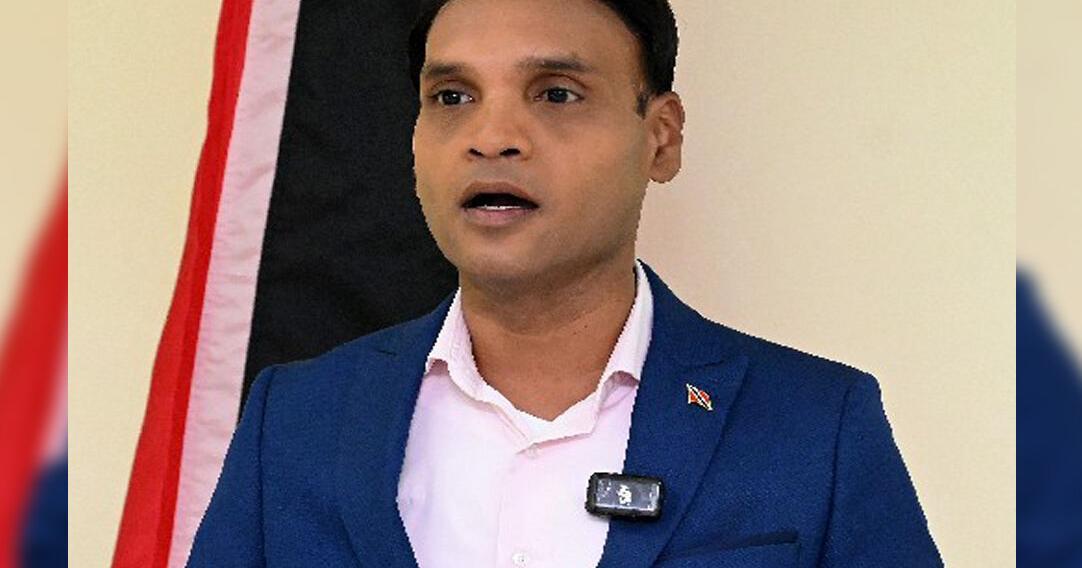
    Public Utilities Minister Barry Padarath, the top government official overseeing WASA, has dismissed the opposition’s claims outright, saying he is fully satisfied with the hiring information the authority has provided to his office, and he has no intention of yielding to political pressure from the opposition People’s National Movement (PNM).

    The controversy traces back to hiring carried out after the United National Congress (UNC) took power following the April 28 general election last year. According to reporting from the Guardian newspaper, 416 new employees were hired by WASA in the period after the election, and nine of those new hires are social media influencers – a detail that sparked intense scrutiny from opposition leaders.

    In a televised interview with TV6, Padarath pushed back against the narrative that the hiring was improper. He clarified that WASA had confirmed to him that the newly hired influencers are working on short-term contracts, and he stressed that all candidates went through the authority’s official hiring procedures. “These persons are eligible for employment just like anybody else,” Padarath said, adding that once applicants completed the required vetting and approval process through WASA’s internal human resources protocols, he sees no reason to block their appointments.

    Padarath also noted that his role as line minister does not include involvement in the state-owned agency’s daily operational decisions. “I do not sit in the HR division or the finance division or the procurement division of WASA and therefore the company continues to operate,” he explained. The minister reiterated that he trusts the information WASA has submitted to his office, calling the opposition’s claim that the bloggers were hired for improper purposes disingenuous and absurd. “It is most ridiculous to suggest that the individuals were hired for anything other than the job specifications within their remit or job titles,” he said.

    Padarath went a step further, accusing the PNM of blatant hypocrisy in raising the issue. He revealed that he is currently compiling information on popular bloggers and online influencers that he claims received sole-sourced government contracts from the previous PNM administration to spread harsh criticism and vitriol against the UNC and other political opponents. “So, spare me the hypocrisy,” Padarath added, repeating his refusal to “dance to the tune of the PNM” regardless of where their political allies are positioned within the public service.

    For his part, PNM Opposition Chief Whip Marvin Gonzales has doubled down on his allegations, framing the hiring as a costly public scandal that misuses taxpayer funds. Gonzales wrote in a recent social media post that he first raised the alarm about the WASA hiring scheme two months prior, when he submitted parliamentary questions to expose what he calls the “employment racket”.

    Gonzales claimed that the recruited bloggers have no role in improving the country’s troubled water and sewerage services. Instead, he alleges their core task is to use social media to malign, defame, and damage the reputations of anyone who criticizes the ruling UNC government. The opposition MP said that after he first exposed the scheme, ruling party supporters launched coordinated personal attacks against him in an attempt to intimidate him into dropping the issue.

    He added that subsequent media investigations have confirmed the scope of the alleged scandal, which he claims will cost Trinidad and Tobago taxpayers roughly $80 million every year. Gonzales argues that this public funding is not being used to upgrade critical water infrastructure or improve service delivery for residents, but rather to build a centralized propaganda machine that spreads gossip, online defamation, and personal attacks against political opponents of the UNC.

    Gonzales said he would not be silenced by the backlash, writing: “As for me, they can continue to spill their poisonous bile on social media. I will not be distracted by them. I will strengthen my resolve to fight them with TRUTH as my buckler and righteousness as my breastplate.”

  • PSA rejects CPO proposal

    PSA rejects CPO proposal

    Long-running negotiations over years of unpaid salary arrears for public sector workers and retirees in Trinidad and Tobago have entered a new phase, with the country’s leading public service union rejecting a revised government offer and preparing to table a fresh counter-proposal this week.

    The Public Services Association (PSA), which represents employees across the Civil Service, Statutory Authorities and the Tobago House of Assembly, has been negotiating backlogged salary adjustments for two multi-year periods: 2014 through 2016, and 2017 through 2019. In a major breakthrough for workers, the union secured a 10% total salary increase by December 2025, alongside a landmark consolidation of the Cost of Living Allowance (COLA) and back-adjusted payments owed to retirees. In its official bulletin to members dated May 23, 2026, PSA President Felisha Thomas framed this earlier agreement as a critical win, noting it represented a stark improvement over the previous administration’s offer of just 4% total increase with no COLA consolidation, delivering tangible financial gains for working households across the public sector.

    The current dispute centers on the payment structure for the accumulated arrears, which the government values at an estimated $3.8 billion. In January 2026, the Chief Personnel Officer (CPO), the government’s lead negotiator for public sector pay, put forward an initial proposal: 40% of arrears paid in cash split across three fiscal years, with the remaining 60% issued through non-cash arrangements. The non-cash options included offsets against existing mortgage or rental debts owed to the state-run Housing Development Corporation and Trinidad and Tobago Mortgage Bank, settlement of outstanding personal tax bills, $3,500-worth of executive medical coverage, tuition fee offsets for state-owned higher education institutions, tax exemptions for new and roll-on/roll-off vehicle purchases, and conversion of cash entitlements into additional paid leave. The PSA rejected this initial offer, and put forward an 80% cash counter-proposal at the time, with the remaining 20% held as deferred payment via interest-bearing government bonds. The union also added supplementary demands including full settlement of outstanding debts to public sector medical plans, priority access to state housing, and expanded access to residential and agricultural land across both Trinidad and Tobago.

    During a negotiation session held the Friday before the bulletin’s release, CPO Dr. Daryl Dindial resubmitted a proposal substantially identical to the January framework, adding only a new carveout for retirees: only those with arrears accumulated through 2018 would receive full cash payment, while all later arrears for retirees would be issued via non-cash arrangements. The PSA rejected this revised offer immediately. Union negotiators have continued informal talks with the CPO, floating a range of alternative flexible arrangements, including allowing workers to apply arrears toward existing mortgage obligations, convert cash to extra leave, receive temporary income tax relief, access supermarket and fuel credits, or put arrears toward future pension entitlements.

    Throughout the talks, the PSA has held firm on two core demands: all retirees must receive 100% of their outstanding arrears as full cash payment, and all cash disbursements must be completed no later than March 31, 2027. On Monday, May 25, 2026, the union will submit a formal revised counter-proposal to the CPO, calling for a new structure of 60% of arrears paid in immediate cash, and 40% held as deferred cash, backed by equity stakes in state-owned publicly traded assets on acceptable terms.

    In her message to members, President Thomas reaffirmed the union’s commitment to securing the best possible outcome, recalling the organization’s earlier work to force a better deal than the previous administration’s “shameless and disrespectful 4%” offer, and to protect the COLA consolidation the union won. On the government side, CPO Dr. Dindial has characterized the original 40% cash / 60% non-cash proposal as the administration’s “best and final offer,” and gave the PSA a four-week window to respond to the terms.

  • UNC councillor critical in hospital

    UNC councillor critical in hospital

    A long-serving local government official in Trinidad is fighting for his life in intensive care, following a suspected suicide attempt at his home over the weekend.

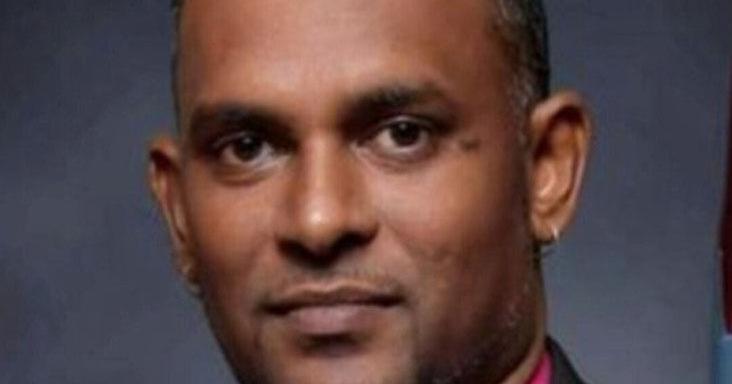
    Anil Baliram, who has represented the Freeport/Chickland district for at least 16 years, experienced the medical emergency at his Couva residence early Sunday morning. The Couva Police Station received an urgent distress call just after 8 a.m., and law enforcement officers immediately dispatched to the property to respond.

    Before emergency transport, a family member and emergency medical services paramedics administered life-saving cardiopulmonary resuscitation to stabilize Baliram. He was first rushed to the Couva District Health Facility for urgent initial care, before being transferred to the Intensive Care Unit at the San Fernando General Hospital, where he remains listed in critical condition as of the latest updates. Law enforcement sources have confirmed that investigators are working on the theory that Baliram attempted suicide following the incident.

    Khadijah Ameen, Trinidad’s Minister of Rural Development and Local Government, released an official statement addressing the tragedy in the days following the incident, expressing widespread shock and concern across local government circles. Ameen, who also leads the political opposition United National Congress (UNC), noted that Baliram is one of the UNC’s longest-tenured local government representatives, serving on the Couva/Tabaquite/Talparo Regional Corporation.

    “Today, I received the deeply troubling news surrounding the reported incident involving Anil Baliram,” Ameen wrote in her statement. “My thoughts and prayers are with Councillor Baliram, his loved ones, colleagues, and all those affected by this painful and distressing situation. Many of our councillors have expressed shock and concern, with his colleagues at the Couva Corporation especially distressed by the news. We continue to pray for his strength, healing, and speedy recovery.”

    Ameen used the moment to draw public attention to the often unspoken burdens carried by public servants, who work daily on the frontlines of community service. “Incidents such as this remind us of the emotional, mental, and social pressures many individuals silently carry,” she said. “I urge the national community to approach this matter with compassion, sensitivity, and responsibility, particularly on social media, while medical professionals and the relevant authorities continue their work.”

    She emphasized the critical need for open dialogue and accessible support for people struggling with mental health challenges across the country. “As a nation, we must continue encouraging support systems, empathy, dialogue, and intervention for those facing personal struggles or emotional distress. Seeking help must never be viewed as weakness,” Ameen added. “On behalf of the Ministry of Rural Development and Local Government, I extend sincere prayers and support during this difficult time.”

    As of Tuesday, attempts by local media to reach additional leadership at the Couva/Tabaquite/Talparo Regional Corporation, including chairman Ryan Rampersad and vice-chairman Henry Awong, for comment have not received a response.

    Local health authorities remind any member of the public experiencing suicidal thoughts or who has a loved one in crisis that free 24/7 support is available through the national suicide prevention hotline at 800-COPE (2673).