作者: admin

  • The Woman Who Refused to “Accept “No”’: Belize Honours Madame Gwen Liz

    The Woman Who Refused to “Accept “No”’: Belize Honours Madame Gwen Liz

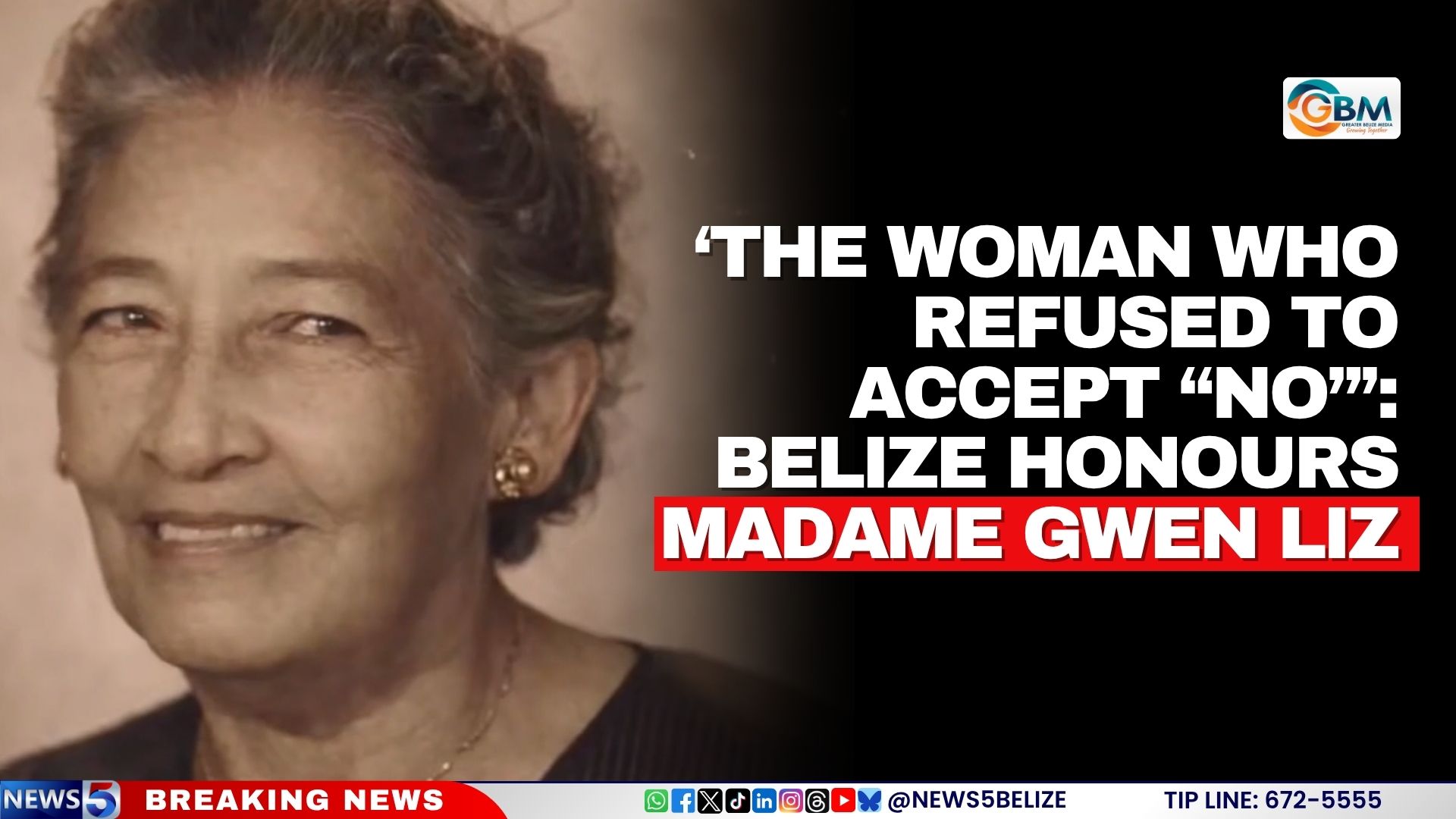
    On September 18, 2026, Belize paid one of its highest honors to a trailblazing leader who spent decades breaking gender barriers and expanding opportunity for marginalized communities across the nation. At the annual Tribute to Belizean Patriots ceremony, held along the waterfront near the iconic Swing Bridge in Belize City, Gwendolyn “Madame Liz” Lizarraga was posthumously named a National Hero of Belize, recognizing her lifelong work advancing women’s rights, shaping public education and housing policy, and proving that determined advocacy can overcome systemic exclusion. The award was accepted by Lizarraga’s grandson, Victor Lizarraga, on behalf of her family, as hundreds gathered to honor her legacy more than 50 years after her death.

    Born in the small Belizean village of Maskall in 1901, Lizarraga rose to prominence at a time when Belizean society actively barred women from positions of political, economic and social power. Refusing to accept the limited roles assigned to women, she built a career as a successful businesswoman before turning her attention to collective advocacy, joining with other gender equality activists to form the United Women’s Group. Through the organization, Lizarraga led campaigns for equal pay for working women, coordinated support systems for low-income and vulnerable families, and pushed for policies that would help women gain long-term economic independence. A firm believer in financial empowerment as a foundation for gender equity, she co-founded the United Women’s Credit Union, which encouraged women to save even small amounts of money to build their own financial security and invest in their families.

    Lizarraga made history in 1961, when she became the first woman ever elected to Belize’s House of Representatives, and went on to make history again as the country’s first female Cabinet minister. She served three consecutive terms in office, holding leadership portfolios across education, housing and social services—sectors where she saw the greatest need for systemic change. During her time in government, Lizarraga spearheaded expansions to teacher training programs and opened new access to secondary and vocational education for Belizean young people. Two major public secondary schools in the country, Gwen Lizarraga High School and Edward P. Yorke High School, trace their origins to the education infrastructure she championed, opening pathways to opportunity for generations of Belizean children that did not exist before her tenure.

    One of the most iconic moments of Lizarraga’s advocacy came early in her work, when government officials turned down a request from a group of Belizean women seeking access to land, telling them outright that no land was available for their group. Lizarraga refused to accept that answer, continuing to organize and push until the women secured the land they sought—a moment that has come to define her legacy of relentless commitment to equity. Addressing the crowd at the 2026 tribute ceremony, Prime Minister John Briceño praised Lizarraga’s lifelong impact, noting that her life serves as a powerful testament to how determined, principled leadership can transform entire nations. “Her life stands as a testament to the transformative power of determined leadership and remains an inspiration to generations of Belizeans,” Briceño told attendees, ahead of the screening of a commemorative tribute video honoring Lizarraga’s life and work.

    Lizarraga passed away in 1975, but her contributions to Belize’s national development, its democratic institutions, and the global movement for women’s empowerment have continued to shape the country decades later. Thursday’s induction as a National Hero cements her place as one of Belize’s most influential public figures, a reminder of how one person’s refusal to accept injustice can create lasting change for millions.

  • Beckles: Reparations movement in ‘final phase’

    Beckles: Reparations movement in ‘final phase’

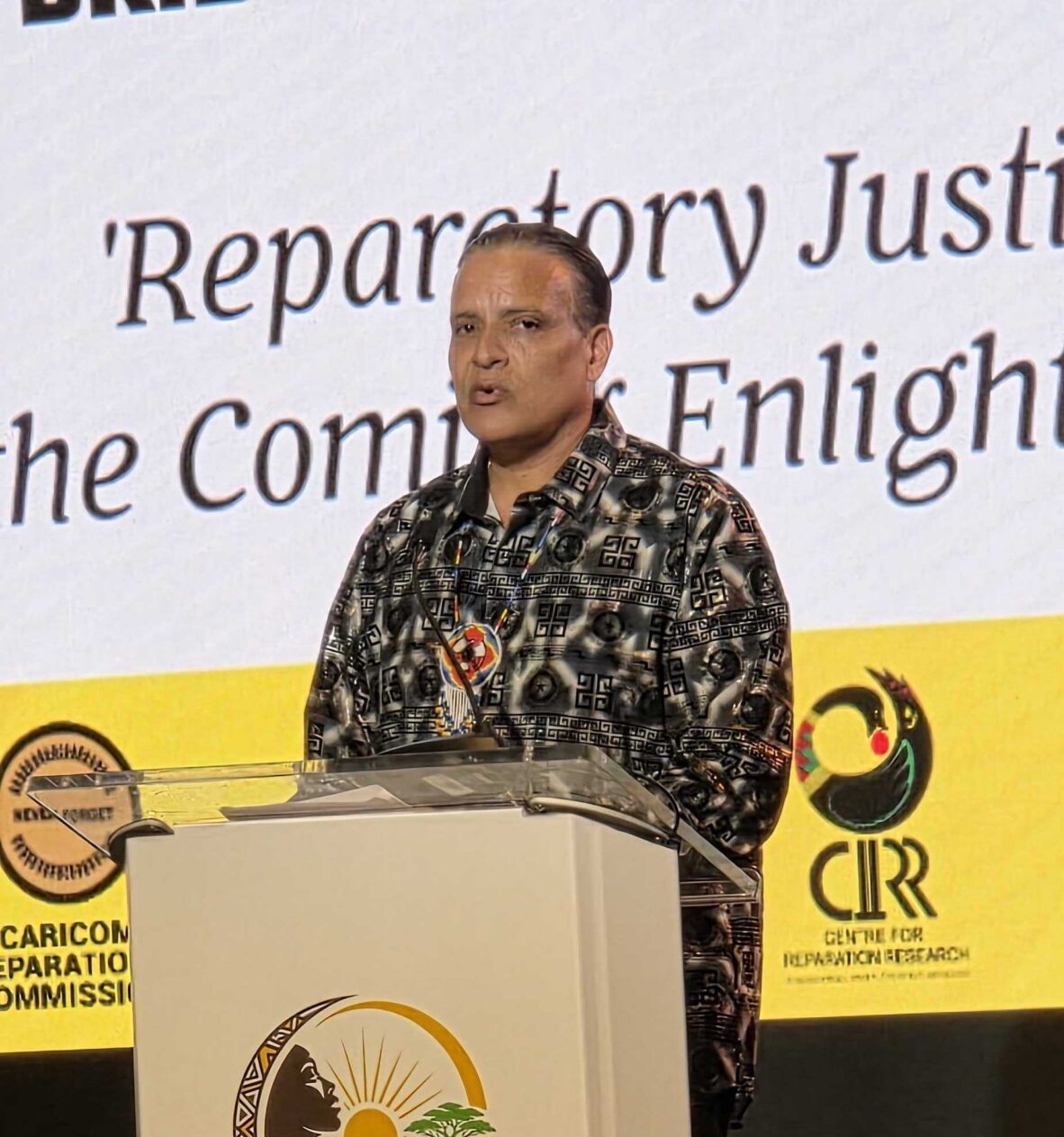
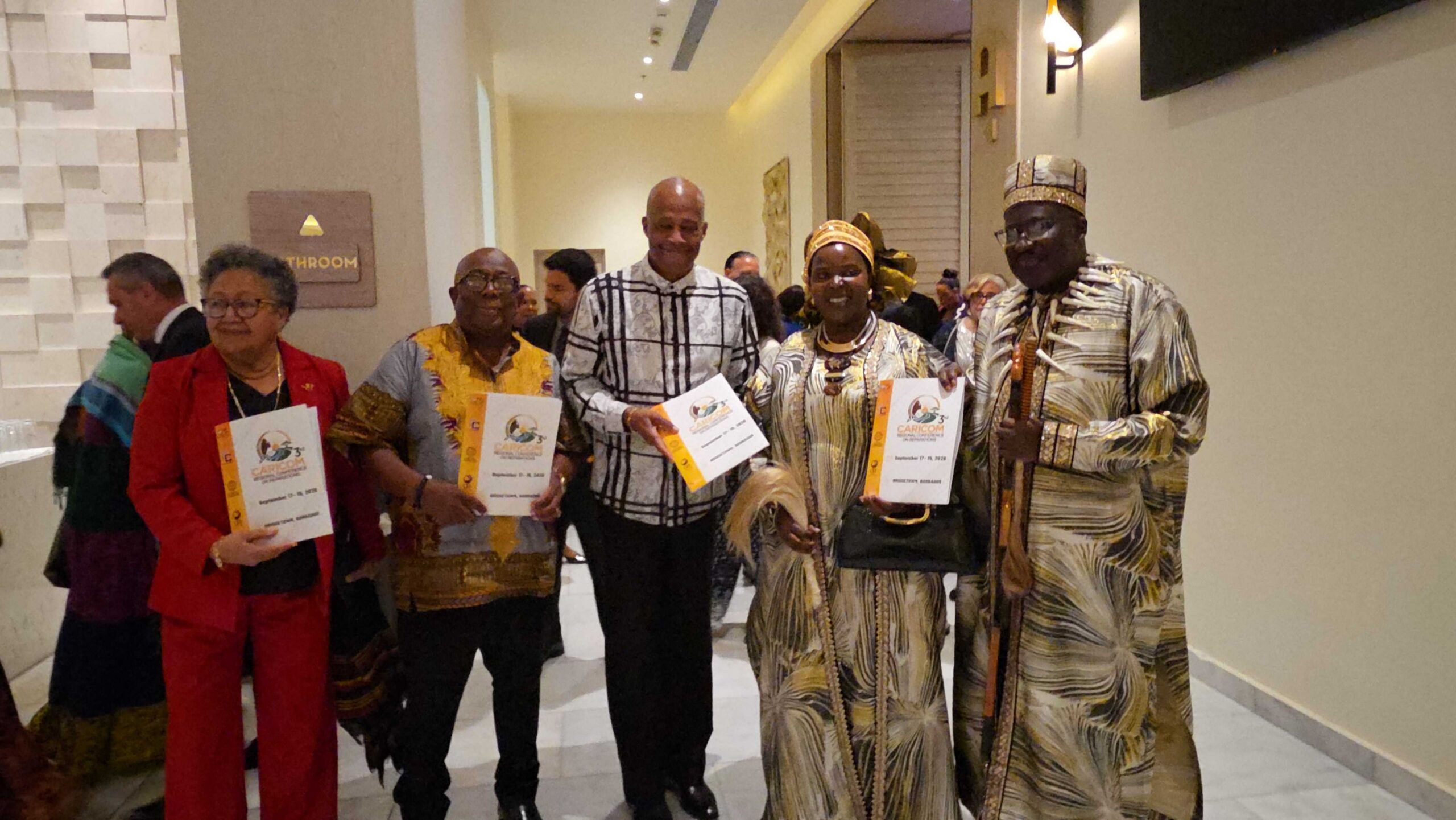
    On Thursday evening, at the opening of the Third CARICOM Regional Conference on Reparations hosted at the Wyndham Grand Sam Lord’s Castle, Professor Sir Hilary Beckles, chair of the CARICOM Reparations Commission, made a landmark announcement: the Caribbean’s decades-long movement for reparatory justice has reached its final stage, with the current generation fully committed to securing what they frame as full and irreversible justice for centuries of systemic harm.

    A leading historian of Caribbean slavery and colonialism, Beckles framed the current push for reparations not as a narrow regional grievance over historical injustice, but as a global moral imperative that will shape the future of equity and human rights for all peoples. He contextualized the modern campaign as the fifth major “eruption” of reparations organizing across Caribbean history, tracing earlier waves of resistance back to the era of chattel slavery itself.

    Previous efforts, from enslaved people demanding compensation for stolen labor to post-Emancipation petitions for land redistribution, were either violently suppressed or allowed to fade into inaction over generations, Beckles explained. But this moment marks a permanent shift, he told assembled delegates. “This century is going to be the century of impartial justice,” he said. “Historically the reparations debate crescendoed, declined, crescendoed and declined. We are now in the fifth wave, and our position is this is it. There will be no other rise and fall. This is the final eruption of this movement, and we are not going to retreat and let it go into a slumber for the next generation.”

    Beckles grounded the regional claim for reparations in the unique and unprecedented harm European colonial powers inflicted on the Caribbean. He emphasized that chattel slavery, the legal system that classified human beings as transferable non-human property, was invented in the Caribbean as an economic tool of mass extraction. “It was the first time in human history that an ethnic group of people, racially identified, were classified in law as property, as non-human,” he noted. “No other race on this planet has ever been classified in law as non-human property, chattel, and real estate.”

    Citing demographic data from two major former slaveholding colonies, Barbados and Jamaica, Beckles argued that the system amounted to deliberate genocide. Over the centuries of slavery, more than 600,000 enslaved Africans were trafficked to Barbados, but by the formal abolition of slavery in 1834, only 83,000 remained alive—a survival rate of less than 20 percent. In Jamaica, the toll was equally staggering: 1.5 million trafficked Africans left a population of just 300,000 at Emancipation. “How do you reduce 600,000 people over 200 years to 83,000? That is also a definition of genocide,” Beckles said. “So we need to understand it was not only chattel slavery, but genocide. Why? Because it was opportunity — you burn it up, you use it, and you replace it.”

    He also detailed the systematic eradication of the Caribbean’s Indigenous populations, noting that by the time British forces claimed Barbados in 1655, earlier Spanish and Portuguese raids had already depopulated the island’s entire network of Indigenous villages.

    The revised 10-point reparations plan unveiled at the conference is the product of 10 years of public consultation, academic analysis, and empirical review. One of the most significant updates, Beckles explained, is the explicit centering of the gender-specific violence and exploitation endured by enslaved Black women. “Chattel slavery was an institution that was built on the existence of Black women,” he said. “The laws of slavery were built around and framed around centering the Black woman as the seed of slavery. It was her womb that was enslaved. It was the enslavement of the Black woman that enabled slavery to go from generation to generation because the laws were clear: only an enslaved woman can give birth to a slave child.”

    This system of reproductive exploitation created a persistent demographic shift: Barbados became the first society in the Western Hemisphere where women outnumbered men, a majority status that has endured for more than 300 years. “We can no longer speak about slavery in generic, neutral terms,” Beckles argued. “The experiences of Black women were fundamentally different from those of men.”

    Beyond addressing historical atrocities, the updated plan reframes the reparations movement through a universal moral lens rooted in the African philosophy of Ubuntu—”I am because we are.” Beckles stressed that the Caribbean’s fight for reparations carries a broader global responsibility: to entrench global equity and prevent the systematic degradation of any marginalized group in the future. “We have a higher responsibility to the world,” he said. “We are not struggling for reparatory justice only because of our personal ethnic situation; we have a duty to humanity. Justice for us, security for humanity — that is the framework.”

    Beckles pointed to a recent United Nations General Assembly resolution as proof that the global community has already validated the historical and moral case for reparations. On March 25, 123 UN member states voted in favor of a resolution classifying the transatlantic slave trade as the “gravest crime against humanity.” For Beckles, this vote means the foundational work has been completed, and it is time for formal negotiations with European powers that built their wealth on Caribbean slavery. “The case for reparatory justice has been made,” he declared. “The United Nations is the court; they have said the case is made, the guilt is clear, the responsibility is clear. Let the negotiations begin.”

    Following Beckles’ opening address, Jasmine Mickens, director of the Global Africa Reparations and Restitution Fund and master of ceremonies for the conference, praised the CARICOM campaign as the most significant political movement of the 21st century. “Movements require both political imagination and unapologetic intellectual leadership, which Professor Beckles has always provided,” Mickens said. “Reparations is a conversation about the imagination of new worlds. It is a project of both preserving memory, but also deciding whose version of the future do we want to live in.”

  • Non-oil economy in shambles; too much reliance on oil for economic growth- APNU

    Non-oil economy in shambles; too much reliance on oil for economic growth- APNU

    On Friday, 18 September 2026, Guyana’s main opposition bloc A Partnership for National Unity (APNU) publicly called on the ruling People’s Progressive Party Civic (PPPC)-led administration to disclose full details surrounding its revised 2026 national economic growth projections, following the release of the Finance Ministry’s mid-year economic assessment.

    In a prepared statement delivered by APNU’s parliamentary leader Dr. Terrence Campbell, the opposition emphasized that the significant downward adjustments to non-oil sector growth forecasts included in the updated report require rigorous public scrutiny of the core assumptions that underpinned the government’s original 2026 national budget.

    The mid-year report cut the full-year 2026 non-oil sector growth projection from 10.8% to 10.2%, with far steeper reductions across key primary industries. The combined agriculture, forestry and fishing forecast was slashed from 7.6% growth to just 2.9%: other crop production projections fell from 9.8% to 2.1%, while sugar output growth was revised down from 67.9% to 18.1%. Manufacturing growth expectations were trimmed from 12.9% to 10.7%, and bauxite mining growth was cut in half from 19.3% to 10.2%. Dr. Campbell clarified that these adjustments are reduced growth forecasts, not cuts to government spending allocations for the sectors.

    Notably, the mid-year report actually raised the overall 2026 gross domestic product (GDP) growth projection from 16.2% to 20.8%, driven by a faster-than-expected expansion in the country’s booming oil sector, which also pushed construction sector growth forecasts up from 25.4% to 27.6%. But Dr. Campbell argued that the government cannot use strong oil-fueled aggregate growth to mask underperformance in critical non-oil segments of the economy.

    “Stronger oil-led growth must not obscure weaker expectations for important non-oil activities. Government owes Parliament and citizens an explanation of the missed assumptions, implementation constraints and corrective actions, with clear deadlines,” he stated in his address.

    Dr. Campbell, a long-standing Guyanese urban business leader, pointed out that the national economy grew 33.3% year-on-year in the first half of 2026, but the petroleum, gas and related support services sector accounted for 78.9% of real GDP during the period – up from 74.4% in the first half of 2025. Crude oil alone generated 92.9% of Guyana’s total merchandise export earnings in the first six months of the year. He stressed that the growing concentration of the national economy in oil is a critical structural risk, noting that output and export gains do not automatically translate into higher incomes for households or additional stable revenue for government coffers.

    The most alarming trend, he added, is that the agriculture, forestry and fishing sector actually contracted by 0.5% year-on-year in the first half of 2026. Output of other crops fell 6.4% overall, with cole crops (including broccoli, cabbage, cauliflower and kale) dropping 19.1%, spices declining 17.7%, beans and cereals falling 5.7%, and vegetables down 4.2%. Even gains in sugar, rice, livestock, forestry and fishing were not enough to offset these declines to pull the combined sector into positive territory. Dr. Campbell framed the contraction as an urgent warning about national food production, not just a minor statistical anomaly.

    The opposition leader pushed back on the mid-year report’s attribution of widespread crop losses to prolonged, above-average rainfall, noting the report also warns of upcoming heat stress from El Niño later in 2026. He argued that while adverse weather explains poor output, it does not excuse a lack of proactive preparedness by the government. “Weather is an explanation; it is not a substitute for preparedness. Government must show how its agricultural investments protect farms against both flooding and drought,” he said.

    While the government’s report outlines planned interventions including drainage infrastructure upgrades, shade house development and farmer support programs, APNU is questioning whether these measures are sufficient in scale, timing and long-term maintenance. The opposition has formally called for fully funded, region-specific agricultural recovery plans that address critical gaps: reliable drainage and irrigation systems, expanded water storage capacity, improved agricultural extension services, accessible affordable credit for smallholder farmers, cold storage infrastructure, expanded agro-processing capacity and better market access for domestic producers. Dr. Campbell added that these plans should include public, measurable targets for production growth, farmer income increases and improved food affordability for all Guyanese households.

  • Indigenous chief presses for stronger role in reparations movement

    Indigenous chief presses for stronger role in reparations movement

    At the opening of the third international reparations conference hosted under the Caribbean Community (CARICOM) initiative, a top Caribbean indigenous leader has issued a urgent call: indigenous communities must occupy a core, central role in the region’s fight for reparations for colonial crimes, rather than being sidelined as an afterthought in political and public relations processes.

    Delivering the address on behalf of Ricardo Bharath Hernandez, chair of the Caribbean Organisation of Indigenous Peoples (COIP), Damon Gerard Corrie—Taíno Chief, leader of the Barbados Chapter of the United Confederation of Taíno People, and co-president of the Caribbean Amerindian Development Organisation—brought the collective demands of the region’s original inhabitants to the gathering. The conference itself forms a key part of CARICOM’s long-running campaign to secure reparations for two interconnected crimes of colonialism: the transatlantic trafficking and enslavement of African peoples, and the systematic genocide of the Caribbean’s native populations that followed European invasion in the 15th and 16th centuries.

    Corrie framed the push for historical reparatory justice as a unified struggle, linking the experiences of indigenous survivors and the descendants of enslaved Africans. He opened his remarks by acknowledging the ancestral nature of the land hosting the conference, paying homage to indigenous ancestors who built the Caribbean’s first thriving civilizations before European arrival.

    The devastating toll of European conquest cannot be overstated, Corrie emphasized. Invasion brought systemic violence, forced displacement, chattel enslavement, widespread disease, and the complete destruction of indigenous political and social structures, triggering catastrophic population collapse across the Caribbean and neighboring Guyana. While indigenous communities and their descendants survived centuries of oppression, many continue to face systemic marginalization today: insecure land tenure, lack of formal recognition for customary territorial claims, exclusion from consultation for extractive industry projects on traditional lands, and unequal access to basic public services. In Guyana, these struggles remain particularly acute, tied directly to ongoing conflicts over mining access and control of ancestral territories.

    Corrie paid tribute to the traditional indigenous chiefs, or Kaikhs, who led centuries of resistance against colonial violence, pushing back against efforts to erase the realities of the atrocities that accompanied European contact. He linked historical genocide to the intergenerational trauma that continues to shape indigenous communities today. “Many of our peoples were utterly destroyed in genocidal warmongering launched by Christopher Columbus and the European colonizers who followed him,” Corrie said. “The unimaginable horrors our ancestors suffered throughout the centuries still linger in us. We are their descendants, carrying unresolved intergenerational trauma. Standing together with our African brothers and sisters, we unite in demanding reparatory justice, for we are all the living evidence of the greatest crime in recorded human history.”

    The conference’s focus on reparatory justice must act as a active call to action, not just symbolic rhetoric, Corrie argued. While he praised CARICOM for its consistent political and financial support for the CARICOM Reparations Commission (CRC) since the body was established in 2013—positioning the regional bloc on the right side of history, he noted—he issued a sharp caution to national governments: indigenous leaders must not be reduced to window dressing for public relations campaigns.

    “Reparations must start in the territories of the indigenous survivors,” Corrie stressed. “Please do not merely invite us into the process as a public relations afterthought.”

    Corrie also challenged widespread historical misconceptions about indigenous enslavement, pointing out that Amerindian peoples were not only the first populations subjected to chattel slavery in the Western Hemisphere, but also among the last. He highlighted the system of forced indigenous labor on European rubber plantations in the Amazon’s Putumayo province, which continued well into the 20th century, only ending in 1926.

    Despite the existence of international frameworks designed to protect indigenous rights, Corrie noted that indigenous voices across the Caribbean remain systematically suppressed, leaving communities marginalized and disproportionately landless. He called on CARICOM member states to fully implement International Labour Convention 169 and the 2007 American Declaration on the Rights of Indigenous Peoples as mandatory minimum standards for governance of indigenous affairs.

    “Survivors of these crimes against humanity remain traumatized, often landless, and are the most marginalized social group within the region,” Corrie said. “We submit that despite international declarations, the indigenous voice remains largely ignored, and more often than we want to believe, aggressively suppressed.”

    As CARICOM prepares to relaunch its revised 10-point reparations plan, Corrie called for a dedicated indigenous peoples development program to be fully integrated into every level of the regional strategy. Such investment, he said, is essential to address centuries of systemic neglect and create conditions for indigenous communities to thrive. He also appealed to regional governments to launch public education and advocacy campaigns to build broad public support for the reparations cause across Caribbean society.

    “We call on CARICOM governments, who are charged with the responsibility to initiate reparatory justice programmes, to educate, motivate, and inspire the people of our collective and united Caribbean civilisation,” Corrie said. “We must ensure that present and future generations realise the full benefit from the human efforts being made on their behalf.”

    To contextualize the ongoing struggle, the Taíno—an Arawakan-speaking indigenous group—migrated to the Caribbean from northern South America more than 2,000 years ago. By the time of European contact, Taíno communities were the dominant population across the Greater Antilles, the Bahamas, and parts of the northern Lesser Antilles, building settled, complex societies centered on cassava cultivation, fishing, trade, craft production, and traditional chiefly governance.

    Barbados, the host of this year’s conference, sits at the eastern edge of the historical indigenous Caribbean world. Archaeological evidence documents successive waves of Amerindian settlement across the island, from Chancery Lane in Christ Church to Heywoods in St Peter, with remains of Saladoid, Troumassoid, and later Suazoid cultural traditions. Historians and archaeologists note that pre-colonial Barbados had its own distinct, evolving cultural patterns, so the island cannot be simplified as solely a “Taíno island.” By the time English settlers colonized Barbados in 1627, no indigenous population remained on the island.

  • Nearly $1 Million to Strengthen Belize’s Conservation

    Nearly $1 Million to Strengthen Belize’s Conservation

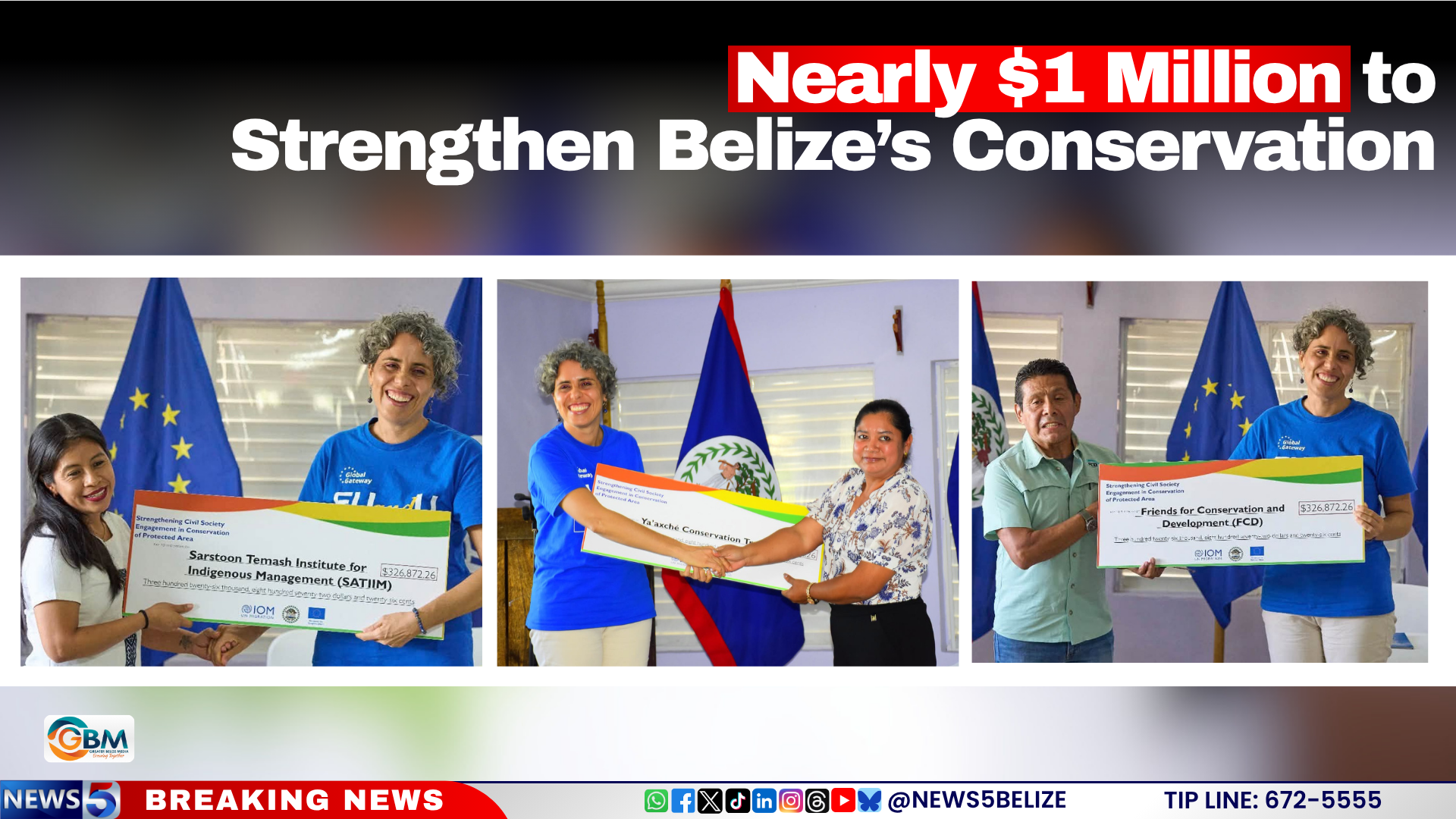
    In a major push to safeguard ecologically critical border landscapes, three leading Belizean conservation groups will split a combined $980,617 in grant funding to scale up forest protection, regulatory enforcement, and community-centered conservation work across some of the country’s most at-risk border regions.

    The multi-donor initiative draws support from the Government of Belize, the European Union, and the International Organization for Migration, with the full amount allocated directly to the Ya’axché Conservation Trust, Friends for Conservation and Development (FCD), and the Sarstoon Temash Institute for Indigenous Management (SATIIM) – three organizations with long track records of on-the-ground conservation work in Belize.

    Each grantee will target a distinct high-priority landscape aligned with its core expertise. For Ya’axché Conservation Trust, the funding will support a targeted transboundary conservation project in the Maya Golden Landscape of southern Belize. The initiative’s key priorities include expanding skills training for park rangers to improve operational effectiveness, streamlining cross-agency coordination for conservation enforcement, and removing barriers to deeper local community engagement in long-term landscape protection.

    FCD, meanwhile, will center its work on the ecologically rich Chiquibul National Park, where the grant will enable the organization to strengthen patrol operations, biodiversity monitoring, digital surveillance, and enforcement activity along a 43.5-kilometer section of the park’s western border. In a statement following the grant announcement, FCD Executive Director Rafael Manzanero expressed gratitude for the funding partnership, noting that the targeted program fills a critical gap by supporting civil society-led conservation action. “This unique programme seeks to empower conservation and environmental civil society like FCD. We are grateful for that,” Manzanero said.

    The third project, led entirely by SATIIM, takes an Indigenous-centered approach to border conservation and security. The organization will train local community members to serve as biocultural guardians, an innovative model that integrates generations of traditional Indigenous ecological knowledge with modern biodiversity conservation practices to protect both natural ecosystems and cultural heritage along the border.

    Beyond the individual projects, this new round of grants fits into a broader regional strategy led by the EU and IOM to boost institutional and community capacity across Belize’s southern and western border zones. Unlike many top-down conservation initiatives, the program channels funding and decision-making power directly to local organizations and community groups that work daily to defend Belize’s irreplaceable forest ecosystems, natural heritage, and Indigenous cultural landscapes against encroachment and environmental degradation.

  • Antigua and Barbuda Falcons book first CPL final spot

    Antigua and Barbuda Falcons book first CPL final spot

    In a stunning display of dominance at Bridgetown’s Kensington Oval on Thursday, the Antigua and Barbuda Falcons wrote their name into Caribbean Premier League (CPL) history, becoming the first side to punch their ticket to this year’s T20 tournament final with a comprehensive nine-wicket victory over the Guyana Amazon Warriors. A tournament breakout for the relatively new franchise, the win was anchored by two standout performances from Player-of-the-Match Shadab Khan, who tore through the Warriors’ batting lineup, and all-rounder Rahkeem Cornwall, who turned a modest run chase into a highlight-reel demolition with a blistering innings.

    Sent in to bat first by the Falcons, the Guyana Amazon Warriors got off to a shaky start, posting 36 for one at the conclusion of the mandatory powerplay, with opener Mavendra Dindyal back in the pavilion for 11 runs. By the end of the seventh over, the Warriors had steadied the ship to reach 40 without further loss, and it looked as though they might build a competitive total. What followed instead was one of the most dramatic collapses in recent CPL history: the side lost eight wickets for just nine runs, crashing to 49 for nine in the 11th over before being bowled out all out for 76 in the 15th over. Only a late 27-run last-wicket stand between fast bowlers Romario Shepherd and Shamar Joseph saved the Warriors from an even more embarrassing low score. Glenn Phillips and Shai Hope topped the Warriors’ batting chart with just 16 runs apiece.

    For the Falcons, the bowling attack was led by spin, with Shadab Khan claiming an incredible four wickets for only 16 runs, while Sufyan Moqim matched his wicket haul, finishing with four for 14 from his own allocation. The devastating spin attack left the Warriors’ batting lineup completely unable to cope with the pressure on a good batting wicket.

    Chasing a tiny target of 77 to secure their place in the final, the Falcons did not waste any time. Opening batter Rahkeem Cornwall put on a six-hitting clinic, blasting an unbeaten 49 from only 16 deliveries, including six maximums and three boundaries. Fellow opener Evin Lewis chipped in with an unbeaten 23 from 13 balls, and the Falcons reached their required total in just the sixth over of their reply, finishing at 77 for one to seal the lopsided win.

    Speaking after the match, Falcons captain Moeen Ali admitted he had harbored quiet doubts heading into the qualifier, after his side had almost a week off from competitive play. “I’m very happy that we’ve made it to the final with that sort of performance,” Ali said. “It would’ve been amazing if it was in the final. But I was a bit apprehensive, obviously. We haven’t played for seven, eight days and you’re not sure exactly what you’re going to get from the guys, but we were amazing.”

    Shadab Khan echoed his captain’s praise for the bowling unit, noting: “I thought the bowlers did an amazing job on a good wicket actually. Then the spinners in the middle just ripped through them.”

    Sunday’s final will mark the first time the Antigua and Barbuda Falcons franchise has reached the title decider, and Ali says the side is motivated to bring the trophy home for their passionate fanbase back in the twin islands. “A big part of it is to make them happy and proud of us. If we can have one more big push, because the support we got in Antigua was actually amazing for us. They have an amazing passion for the game and they really want us to do well. We feel like part of the family and it’s amazing to have that feeling.”

    For the Guyana Amazon Warriors, the campaign is not over yet. They will get a second chance at qualification when they face the Jamaica Kingsmen in the second qualifier on Friday, with the winner earning the second spot in Sunday’s final. Warriors captain Imran Tahir says his side is focused on redeeming themselves for their supporters, who traveled in large numbers from Guyana and the United States to watch the match. “I think only the promise is that we’re going to come back and we won’t let them down,” Tahir said. “I’m just really sorry, you know, they come in massive numbers from the USA and Guyana. So you know, we have to put in a very big performance for them.”

  • Kalinago artisans showcase traditional arts and crafts at Prevo Cinemall (with pictures)

    Kalinago artisans showcase traditional arts and crafts at Prevo Cinemall (with pictures)

    A vivid celebration of centuries-old indigenous creativity touched down in Dominica’s capital Roseau this week, as Kalinago artisans gathered for a two-day showcase of traditional handcrafts hosted at Prevo Cinemall. Held September 17–18, 2026, the exhibition is a collaborative effort between Prevo Cinemall, the Kalinago Council, and independent craftspeople and vendors based in the Kalinago Territory. The core mission of the initiative is to create a accessible, local platform for Kalinago makers to elevate their work, connect with domestic shoppers, and boost sales of their authentic handmade goods within Dominica.

    This cultural showcase forms a key closing event for Kalinago Week 2026, a 9-day celebration running from September 11 to 19 anchored by the theme “Honouring Our Past. Celebrating Our Culture. Building Our Future.” The annual observance brings focus to the unique identity, history, and ongoing contributions of the Kalinago people, the indigenous community that has inhabited Dominica for generations.

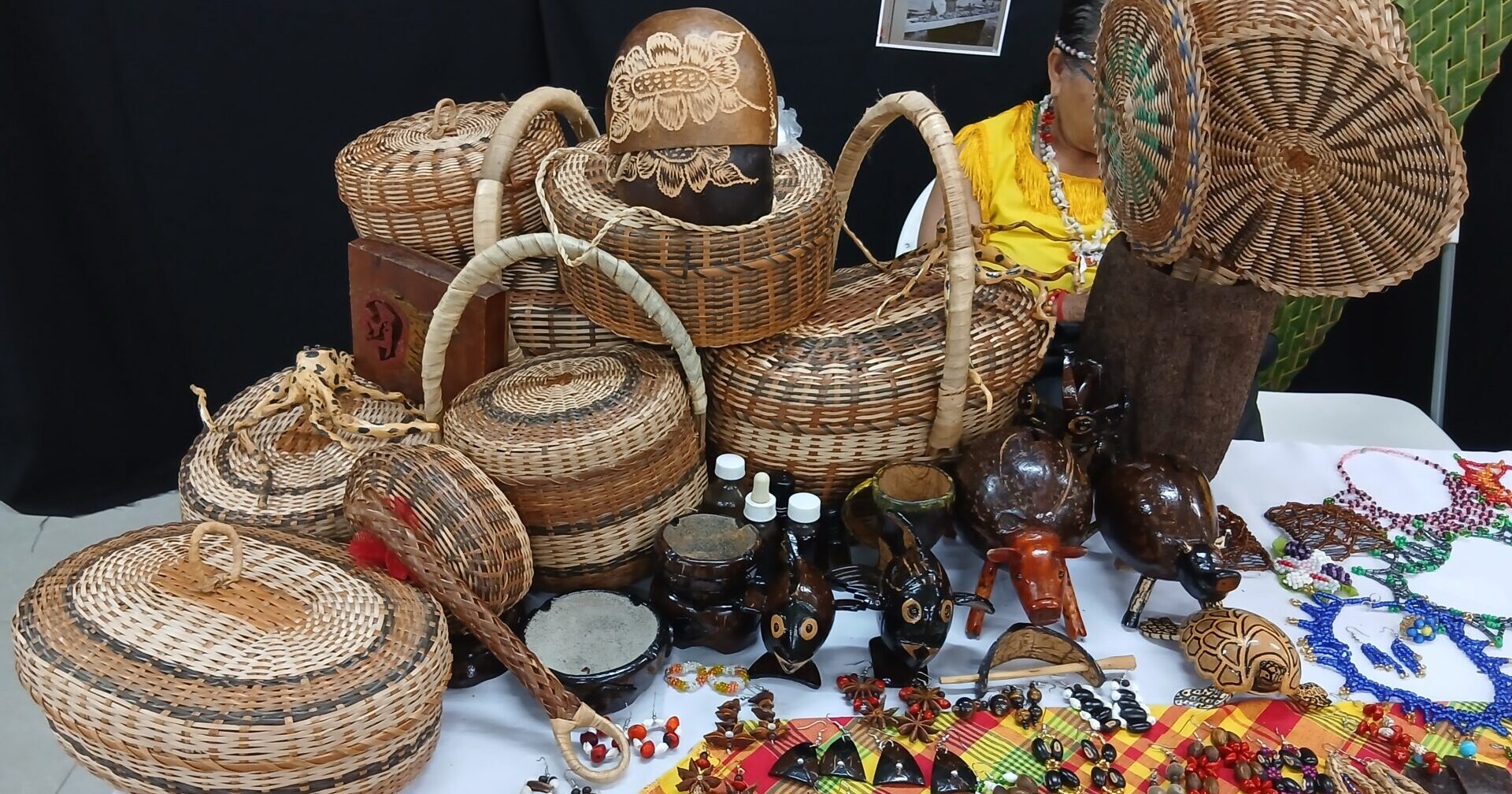
    Attendees who turned out for the exhibition were treated to a diverse array of handcrafted goods, each piece reflecting centuries of Kalinago tradition, specialized skill, and irreplaceable cultural heritage. Artisans displayed a wide range of creations, from handwoven bags and straw hats to intricately designed necklaces, each work demonstrating the meticulous craftsmanship and intergenerational indigenous knowledge that has been preserved and passed down through Kalinago communities for hundreds of years.

    In addition to showcasing emerging and established makers, the exhibition also paid special tribute to the decades-long contributions of one of the Kalinago Territory’s most revered creative voices. Veteran Kalinago artist Faustulus Frederick was honored with the Prevo Cinemall Cultural Heritage Award in recognition of his lifelong work advancing Kalinago art, documenting indigenous history, and preserving both Kalinago culture and the broader national heritage of Dominica. Frederick brings a unique historical context to his work: he previously served as Kalinago Chief from 1975 to 1978, a tenure that overlapped with Dominica’s critical transition to full national independence.

    Organizers emphasized that beyond driving sales for local artisans, the exhibition fills a larger cultural role: it brings much-needed public attention to the quality and cultural significance of Kalinago-made arts and crafts, while fostering direct connections between makers and local consumers who want to support indigenous cultural preservation through their purchases.

  • Braganza geeft geen duidelijkheid over US$150 per hectare

    Braganza geeft geen duidelijkheid over US$150 per hectare

    A Suriname-based agricultural development project has been thrown into transparency controversy after Braganza Marketing Group, a key project partner, confirmed that binding financial agreements exist with Mennonite cooperative entities but declined to release details of those obligations. This leaves unresolved questions over how the widely reported $150-per-hectare figure cited by Mennonite representatives fits into the project’s overall financial structure.

    Local media outlet Starnieuws directly questioned Braganza’s director Lionel Blokland on the $150-per-hectare claim, asking whether the company – or any of its affiliated entities, directors, shareholders, or intermediaries – receives that sum, or any per-hectare payment, from Mennonite project partners.

    Blokland responded that Braganza does not sell land in connection with the three large-scale agricultural projects that the company has signed framework agreements for with Suriname’s Ministry of Agriculture, Livestock and Fisheries (LVV). However, he did explicitly confirm that the company has entered into formal agreements over investments and mutual financial obligations with the Mennonite limited liability corporations (nv’s) participating in the projects. When pressed for specifics on the nature of these obligations and the total monetary amounts involved, Blokland stated that the company would not release any further details.

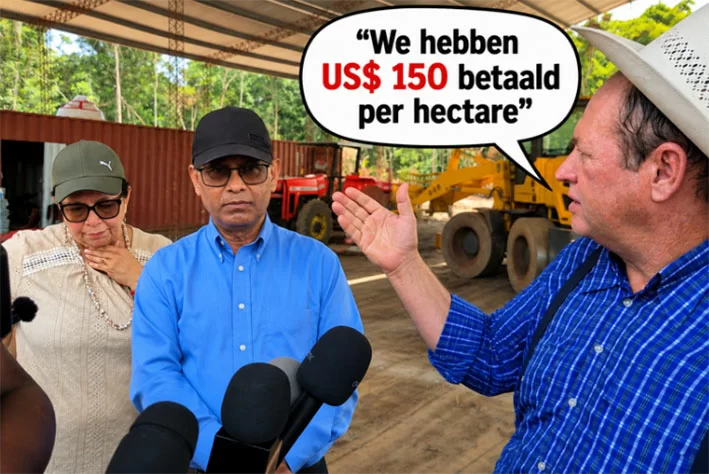
    The $150-per-hectare figure entered public discourse after Belizean Mennonite representative Peter Petersen mentioned the per-hectare payment during a recent parliamentary site visit to the project area. Braganza had previously suggested the figure might refer to an internal financial contribution arranged among Mennonite families themselves. In his latest comments, Blokland reiterated that Braganza plays no role in these internal Mennonite financial arrangements, saying that such agreements are strictly an internal matter for the Mennonite nv’s and their communities. “As Braganza, we stand completely outside of these internal arrangements,” Blokland stated.

    At the same time, Blokland acknowledged that Braganza does maintain oversight involvement in project delivery through its chairmanship of the boards of commissioners of the participating Mennonite nv’s, meaning the company retains a direct hand in matters affecting the successful execution of the agricultural projects.

    The confirmation of binding financial agreements between Braganza and the Mennonite entities confirms that some formal financial arrangement exists, but its exact terms – including whether per-hectare payments are part of the broader structure – remain unconfirmed. Braganza has justified its refusal to disclose details by citing the confidential nature of the framework agreements it signed. The company did note that all framework agreements and other cooperation-related documents have been submitted to LVV, and according to Blokland, Braganza has no objection if the ministry chooses to make the documents publicly available.

  • Dominica releases third Health-Climatic Bulletin for September to November

    Dominica releases third Health-Climatic Bulletin for September to November

    Dominica’s Ministry of Health, Wellness and Social Services has partnered with the Dominica Meteorological Service to release the third edition of its joint Health-Climatic Bulletin, a public document covering the three-month period from September through November 2026. Designed as a proactive resource for community preparedness, the bulletin integrates up-to-date climate data, epidemiological reports, and public health guidance to help residents understand and prepare for emerging climate-linked health threats.

    The bulletin’s core climate outlook projects below-average rainfall across the island with a high degree of scientific confidence, but officials emphasize that the risk of flash flooding remains unusually elevated. Forecasters estimate between 5 and 9 intense excessive rainfall events are possible throughout the quarter, creating persistent flood-related hazards. Additionally, average temperatures are expected to run higher than historical averages, with a moderate probability of extreme heat events that can carry negative health impacts for vulnerable populations.

    Beyond climate projections, the bulletin outlines key ongoing climate-sensitive disease risks. For the period between May and July 2026, 121 suspected cases of dengue were reported, of which 3 have been confirmed via laboratory testing. Leptospirosis also remains a public health priority: 4 suspected cases and 2 confirmed cases were recorded in the same period. On a positive note, the rollout of domestic real-time PCR testing for leptospirosis has significantly improved Dominica’s capacity for early detection and rapid response to outbreaks of the disease. Another persistent environmental health threat is incoming Saharan dust, which exacerbates respiratory conditions such as asthma and creates elevated risk for people living with pre-existing respiratory illnesses.

    To support residents in taking proactive steps to protect their health, the bulletin includes tailored, actionable guidance for reducing risk across multiple health categories. Guidance covers respiratory and gastrointestinal illnesses, vector-borne diseases like dengue, heat-related illness, and non-communicable conditions. It also addresses mental health and general well-being, emphasizing the importance of adaptive action as weather and environmental conditions shift throughout the quarter. The full bulletin is available for public access online.

  • PNCR to lease headquarters land for hotel construction

    PNCR to lease headquarters land for hotel construction

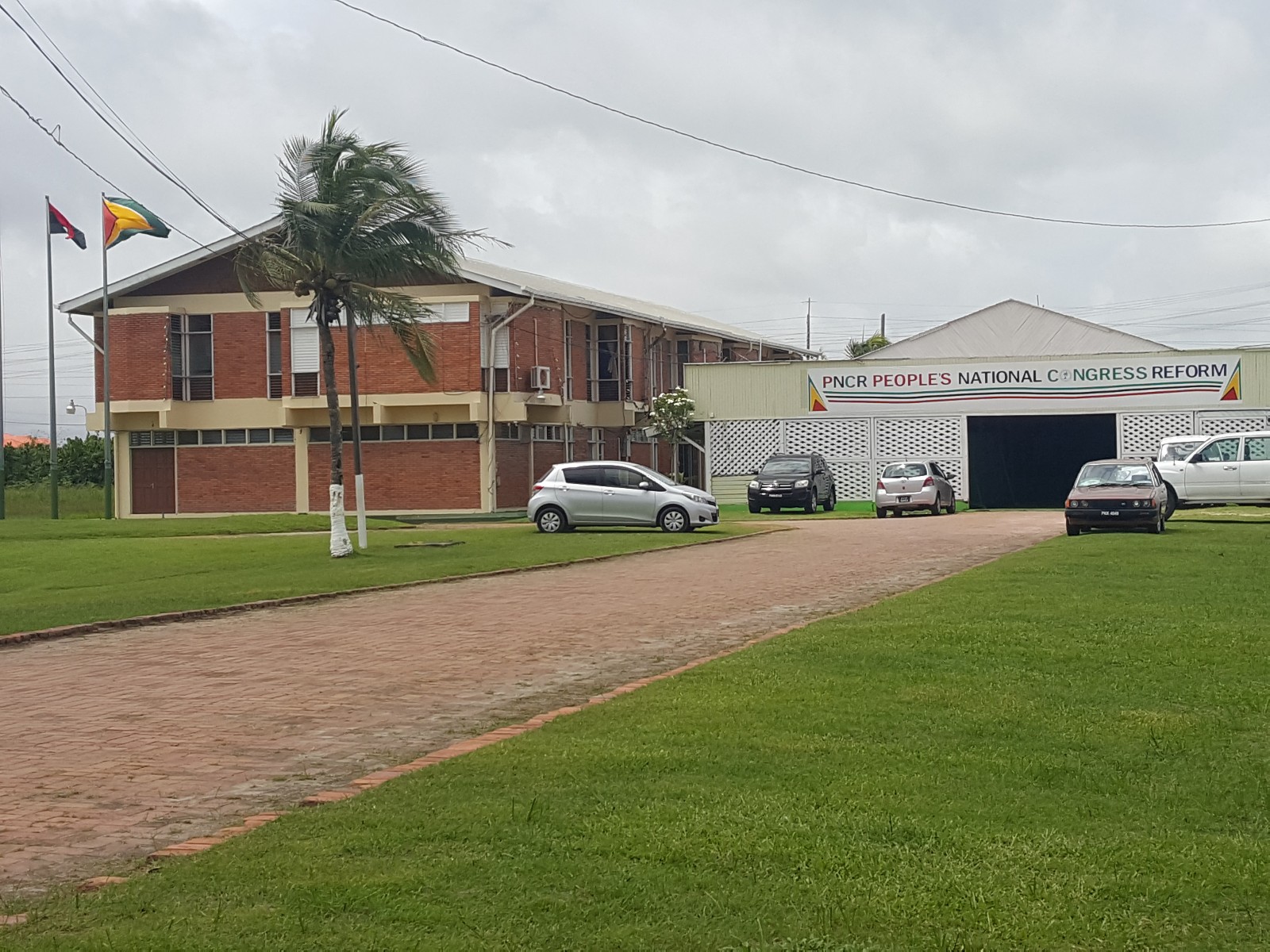
    In a recent address addressing swirling public speculation, senior officials from Guyana’s main opposition-aligned political party, the People’s National Congress Reform (PNCR), have confirmed plans to lease out the northern portion of the large Sophia plot that houses the party’s Congress Place headquarters, while forcefully pushing back against false claims that the historic property is up for sale.

    According to insider sources familiar with the plan, the leased parcel will be developed into a commercial hotel, a core component of a broader strategy led by the PNCR’s fully owned business subsidiary, Maikwak Limited, to generate sustainable income from the party’s existing real estate assets. Insiders note that the long-term lease structure is designed to deliver a consistent, predictable revenue stream to support the party’s ongoing operations and activities.

    PNCR General Secretary Sherwin Benjamin issued a blunt, categorical denial in response to social media criticism and online rumors that the party was moving to offload its iconic property. “Let me say categorically and vehemently that the People’s National Congress Reform has not sold Congress Place,” Benjamin stated, emphasizing that the party has no intention of selling the headquarters either now or at any point in the future.

    Benjamin further clarified that the move aligns with earlier announcements from PNCR leader Aubrey Norton, who previously confirmed the party had activated its business arm Maikwak to manage and monetize party-owned assets. He appealed to long-time party members and supporters to trust that current party leadership is acting with full transparency and in the best interest of the 70-year-old organization, which was founded by the late Guyanese political figure Forbes Burnham.

    “I want to say to our members and supporters that you have to have faith in the leadership of this party. We have nothing to hide. We have been dealing with our membership in an upfront manner, and so let us put aside the fears and the apprehension that we are selling Burnham’s party,” Benjamin added.

    Addressing questions about why the party’s General Council, its second-highest decision-making body between national party congresses, has not convened since Guyana’s general and regional elections one year prior, Benjamin confirmed the body will hold a formal meeting before the end of 2026. He explained that scheduling challenges and logistical hurdles to gather members from across the country had delayed the meeting, but all decisions already approved by the party’s central executive will be formally presented for debate and ratification at the upcoming General Council session. Benjamin also noted that rank-and-file party members have been kept updated on all major decisions made by executive leadership in the interim.

    The PNCR has a long history of leveraging its underutilized real estate holdings to generate income: over the past 35 years, the party has leased out other portions of its Sophia land, a downtown property on Croal Street that previously housed the Vanceram facility, and a Smyth Street plot that once hosted the party’s printery operations.

    Benjamin also used the announcement to push back against internal and external criticism of party leader Aubrey Norton, who has faced repeated backlash over allegations he sidelined dissident party members and led the A Partnership for National Unity (APNU) alliance — of which PNCR is the leading member — into its worst electoral performance in history. In a forceful rebuke of critics, Benjamin called on loyal party members to end public infighting, noting that undermining the party’s leadership only weakens the organization as a whole.

    “Each one of us has a responsibility to this great party to ensure its success, and we’re doing that at the level of our leadership. Beating a leader or beating leadership is beating the party. Let’s stop this nonsense,” he said.

    The 2026 general and regional elections marked a major shakeup for Guyana’s opposition landscape. The newly formed We Invest in Nationhood (WIN) party, founded by a billionaire former gold exporter and foreign exchange dealer, displaced APNU as the country’s largest opposition bloc, securing 16 of the 29 total opposition seats in parliament. APNU won just 12 seats, with the remaining one seat going to the small Forward Guyana Movement.