作者: admin

  • Guyana Defence Force Troops to join Saint Kitts and Nevis Independence 43 Parade

    Guyana Defence Force Troops to join Saint Kitts and Nevis Independence 43 Parade

    As the Federation of Saint Kitts and Nevis prepares to mark its 43rd anniversary of independence, a special contingent of soldiers from the Guyana Defence Force (GDF) has arrived in Basseterre to take part in the milestone celebrations, marking another step forward in deepening bilateral security cooperation between the two Caribbean nations.

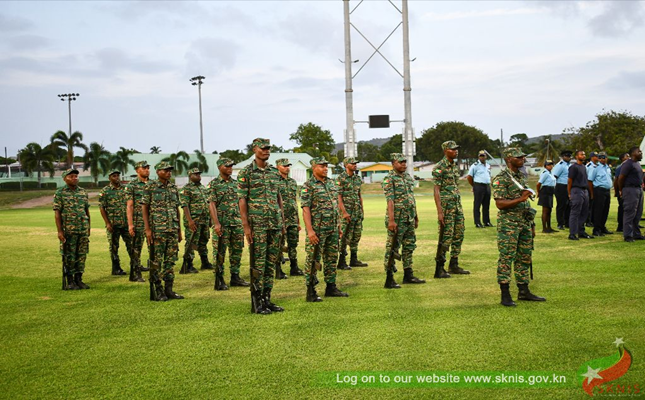
    Led by Lieutenant Darick Griffith, the GDF contingent touched down in Saint Kitts on September 16, 2026, and has since been preparing alongside their local counterparts for the main ceremonial Independence Parade scheduled for September 19. During the parade, the visiting troops will march alongside armed and unarmed units of the St. Kitts-Nevis Defence Force (SKNDF) in a show of regional solidarity.

    Major Kayode Sutton, Acting Commander of the SKNDF, extended a warm official welcome to the GDF delegation. He highlighted that the upcoming joint participation in the parade is made possible by a Memorandum of Understanding (MOU) focused on Non-Lethal Defence and Security Cooperation, which was signed between the two defense forces in April 2025. This agreement laid the groundwork for expanded collaborative engagements between the two military institutions.

    “Having the Guyana Defence Force join us for this year’s independence celebrations is a truly meaningful moment,” Major Sutton shared in a statement. “The relationship between Guyana and Saint Kitts and Nevis will only emerge stronger from this exchange.”

    Public anticipation for the parade has been building, with local residents traditionally showing great enthusiasm for the participation of visiting military contingents in the annual celebrations. Rehearsals held at Warner Park on Thursday demonstrated just how well integrated the GDF contingent has become with their local counterparts.

    “The seamless coordination we saw during rehearsals shows just how aligned our training programs are,” Major Sutton explained. “The drill procedures we follow here in Saint Kitts and Nevis are identical to those used by the GDF in Guyana.” He added that the visiting contingent is eager to take the parade route at 6 p.m. on Saturday at Warner Park, and that he looks forward to a high-profile, successful ceremony.

    The MOU, which was negotiated under the leadership of Saint Kitts and Nevis Prime Minister and Minister of National Security, the Honourable Dr. Terrance Drew, opens the door to a wide range of collaborative activities beyond ceremonial parades. These include joint training exercises, personnel exchange programs, technology sharing, mentorship initiatives, and other capacity-building efforts. In addition to the defense forces, other Saint Kitts and Nevis national security agencies, including law enforcement units and border protection teams, will also benefit from the cooperation framework established by the agreement.

    During their stay in the Federation, GDF soldiers will take part in a series of routine joint engagements with SKNDF personnel before returning to Guyana early next week. This year’s 43rd Independence Anniversary celebrations are being held under the unifying theme “One People, One Vision, Endless Possibility, Independence 43.”


  • Premier of Nevis, the Honourable Mark A. G. Brantley Address on the Occasion of Independence 43

    Premier of Nevis, the Honourable Mark A. G. Brantley Address on the Occasion of Independence 43

    On September 19, 2026, as the Federation of St. Kitts and Nevis marked the 43rd anniversary of its independence from colonial rule, Nevis Premier and Leader of the Opposition Mark A. G. Brantley delivered a reflective, forward-looking address to the nation’s citizens, residents and friends.

    Opening his remarks, Brantley framed the day not only as a celebration but a tribute to the generations of people who built the nation’s freedom: from the struggles of enslaved people to the sacrifice of independence leaders who secured the right to self-governance. “Today is the anniversary of our people’s remarkable journey from colonialism to political freedom, a sacred journey of resilience and sacrifice, a journey of pride and success,” he said.

    This year’s independence theme, “One People, One Vision, Endless Possibility: Independence 43,” is more than a celebratory slogan, Brantley emphasized. It is a call to action. While the federation is home to people with diverse backgrounds, experiences and views, he argued that intentional national unity is the only path to overcoming shared challenges and unlocking the country’s full potential.

    Brantley reminded the public that independence is not a static historical achievement to be inherited, but a living project that each generation must build upon. True independence, he argued, rests on core values: discipline, diligence, mutual responsibility, and collective commitment to nation-building. He called on all members of society to set aside division, anger and hostility, and join in the incremental, intergenerational work of strengthening the federation, writing a new national chapter defined by unity, peace and mutual understanding.

    Against the backdrop of traditional independence celebrations—including public displays of national symbols, parades and cultural showcases—Brantley challenged citizens to move beyond passive or performative patriotism. True love of country, he said, is demonstrated through active civic engagement, community service and accountable participation in national life. It requires committing to a collective purpose greater than individual self-interest, following the example of forebears who fought for freedom not for their own gain, but for future generations. True patriotism fosters hope and optimism rather than fear and cynicism, rooted in the belief that the work of today will build a brighter future for tomorrow’s citizens, Brantley added.

    Reflecting on 43 years of self-governance, Brantley highlighted progress and achievement across nearly every sector of national life, from sports and academia to business, agriculture, culture and innovation. He outlined four core pillars of the nation’s 43-year legacy: consistent celebration of nationhood with pride and dignity; a national flag that unites citizens through shared identity and belonging; unwavering commitment to the rule of law and democratic governance; and the steady building of a nation bound by one people, one vision, one shared destiny.

    The nation’s 43-year journey has not been without hardship, Brantley acknowledged. St. Kitts and Nevis has endured natural disasters, global public health crises, economic downturns and persistent social challenges. Through every trial, however, the country’s resilience has been its defining strength. “Our nation has, at times, bent but never broken, we have never surrendered, we have always persevered and prevailed,” he said.

    Looking ahead, Brantley stressed that the future is not guaranteed, and independence carries responsibilities as well as benefits. It falls to all current citizens to protect the nation’s founding values, cultivate prosperity, and build a stronger St. Kitts and Nevis for coming generations. He issued a targeted call to action across all segments of society: urging young people to step forward as innovative creators; calling on civil society to serve as an active bridge between communities and government; encouraging local communities to organize around shared purpose rather than division; and challenging leaders to prioritize honorable, humble, and integrity-driven service over political office-seeking.

    Brantley closed by calling on the nation to reaffirm its commitment to the core ideals of independence: dignity, equality, unity, and dedicated service. He asked that this year’s anniversary serve as a turning point, where the nation chooses construction over destruction, progress over retreat, and inclusion over exclusion. “May this Independence Day be more than just a date on the calendar or a single moment in our history, but may it be for all of us, a living promise of shared responsibility and continuous commitment to the development and prosperity of our country,” he said. He ended with a blessing for all residents and families, and a benediction for the ongoing prosperity of the Federation of St. Kitts and Nevis.

  • Trinidad en Tobago beëindigt noodtoestand na maanden van massale arrestaties

    Trinidad en Tobago beëindigt noodtoestand na maanden van massale arrestaties

    On September 17, the twin-island Caribbean nation of Trinidad and Tobago formally brought to a close an extended state of emergency that granted police and national security forces extraordinary powers of arrest and preventative detention without immediate criminal charge. The end of the exceptional measure comes as the country’s government moves to replace temporary emergency powers with a permanent legal framework designed to sustain targeted security crackdowns on gang activity, illegal arms trafficking and organized crime.

    Prime Minister Kamla Persad-Bissessar announced to parliament one day prior that the state of emergency would not be extended for another term, noting that the original security threats that justified the extraordinary measure had decreased significantly. Under the government’s new plan, temporary emergency powers will be superseded by a permanent legislative regime that includes explicit safeguards for civilian rights, judicial oversight and parliamentary accountability, according to the prime minister.

    This new approach has been formalized in the Special Operations Bill 2026, which was tabled in parliament on September 16. The draft legislation outlines the creation of designated special police districts where law enforcement agencies can, when necessary, carry out joint operations with military forces. It also sets binding requirements for human rights protections, rules governing use of force, de-escalation protocols, and mandatory regular reporting to the executive and legislative branches. As of mid-September, the bill has only completed its first reading in parliament.

    The end of the state of emergency caps a six-month intensive national security operation. Official government data released this month shows that 5,802 people were arrested during the operation, and 3,552 of those detainees have been formally charged – a charge rate of approximately 61 percent of all arrestees. Authorities also report that 318 illegal firearms and more than 6,400 rounds of ammunition were seized during the security sweeps. Minor discrepancies exist in arrest numbers from different government sources: Minister of National Security Roger Alexander reported to parliament 5,767 police arrests across 13,108 operations, while the national government’s higher total includes additional actions carried out by broader national security agencies.

    Persad-Bissessar emphasized that the six-month operation has driven a reduction in criminal activity across all police districts, and committed to releasing a full public report on the operation to boost transparency. The government has stressed that lifting the state of emergency does not signal an end to its campaign against organized crime, drug trafficking and illegal weapons.

    However, the extraordinary powers granted under the state of emergency have faced sharp criticism from legal advocates and human rights groups, who have specifically raised objections to long-term detentions without criminal charge and poor conditions of detainment for some suspects. Attorney Criston Williams told the Associated Press that some detainees were brought to meet their legal counsel blindfolded and restrained, with attorney-client conversations monitored by armed security officials. Williams expects numerous detainees to file legal claims against the state, and has called for a formal investigation by the Inter-American Commission on Human Rights (IACHR).

    The IACHR had previously raised public concerns about the extended use of states of emergency across the Caribbean, noting that such exceptional measures must adhere to the core principles of legality, necessity, proportionality and temporality. In June, the commission pointed out that Trinidad and Tobago had already operated under states of emergency for more than 100 days since December 2024.

    One high-profile case that has drawn widespread attention involves businessman Dominic Hadeed and his wife, who were detained on suspicion of involvement in an alleged plot to assassinate the prime minister and other senior government officials. The pair have never been formally charged, and their challenge to their preventative detention is currently before the Judicial Committee of the Privy Council, the region’s highest appellate court.

    The end of the state of emergency has already resulted in tangible changes for detainees held under preventative detention orders. According to the country’s prison service, 395 people have been released after their detention orders were revoked, out of a total of 569 revoked orders processed so far. A total of 174 people remain in custody, but prison officials confirm that these detainees are being held in connection with other separate criminal cases, not solely under the now-expired emergency powers. Even so, the legal status of dozens of other arrestees remains unclear, and debates over the necessity and proportionality of the emergency measures are expected to continue both in the courtroom and in parliament.

    The emergency measures were originally introduced to address a severe national violent crime crisis. In 2024, police recorded a national record 624 homicides across the country, which has a total population of approximately 1.4 million. That number dropped to 369 homicides in 2025, and 255 homicides have been recorded so far in 2026, compared to 268 in the same period in 2025.

    The government points to this downward trend as evidence that its hardline security approach has delivered results. Critics, however, argue that falling crime rates alone do not prove that the extraordinary emergency powers were the cause of the reduction, while the large volume of arrests and detentions without charge raise serious questions about the protection of civil liberties.

    Over the coming weeks, political attention will shift to parliamentary debate over the Special Operations Bill 2026. The draft legislation will define what extraordinary powers security forces will retain outside of a formal state of emergency, and what oversight mechanisms will be embedded to govern their use. The end of the state of emergency does not mark the conclusion of Trinidad and Tobago’s aggressive national security strategy, but rather the start of a new phase: the country is seeking to convert the extraordinary powers of recent months into a permanent legal framework, even as the legal fallout from thousands of arrests remains to be resolved.

  • HH the Amir sends congratulations to Governor-General of Saint Kitts and Nevis

    HH the Amir sends congratulations to Governor-General of Saint Kitts and Nevis

    In a formal diplomatic gesture released on September 19, 2026, His Highness Sheikh Tamim bin Hamad Al-Thani, the Amir of Qatar, has extended official congratulations to Marcella Althea Liburd, Governor-General of the Federation of Saint Kitts and Nevis, to mark the Caribbean nation’s annual Independence Day celebration.

    The message, transmitted via official cable through Qatar News Agency from Qatar’s capital Doha, reaffirms the ongoing commitment to peaceful bilateral engagement between the two sovereign states. Diplomatic exchanges of this nature are a standard cornerstone of international statecraft, serving to reinforce mutual respect and people-to-people connections between Qatar and Saint Kitts and Nevis.

    This announcement comes alongside other concurrent Qatari public news items covering national participation in the upcoming Asian Games and regional Gulf Cup football tournaments, highlighting the country’s active engagement across diplomatic, sporting, and regional spheres in this period.

  • Major MCC Investment Targets Education and Energy in Belize

    Major MCC Investment Targets Education and Energy in Belize

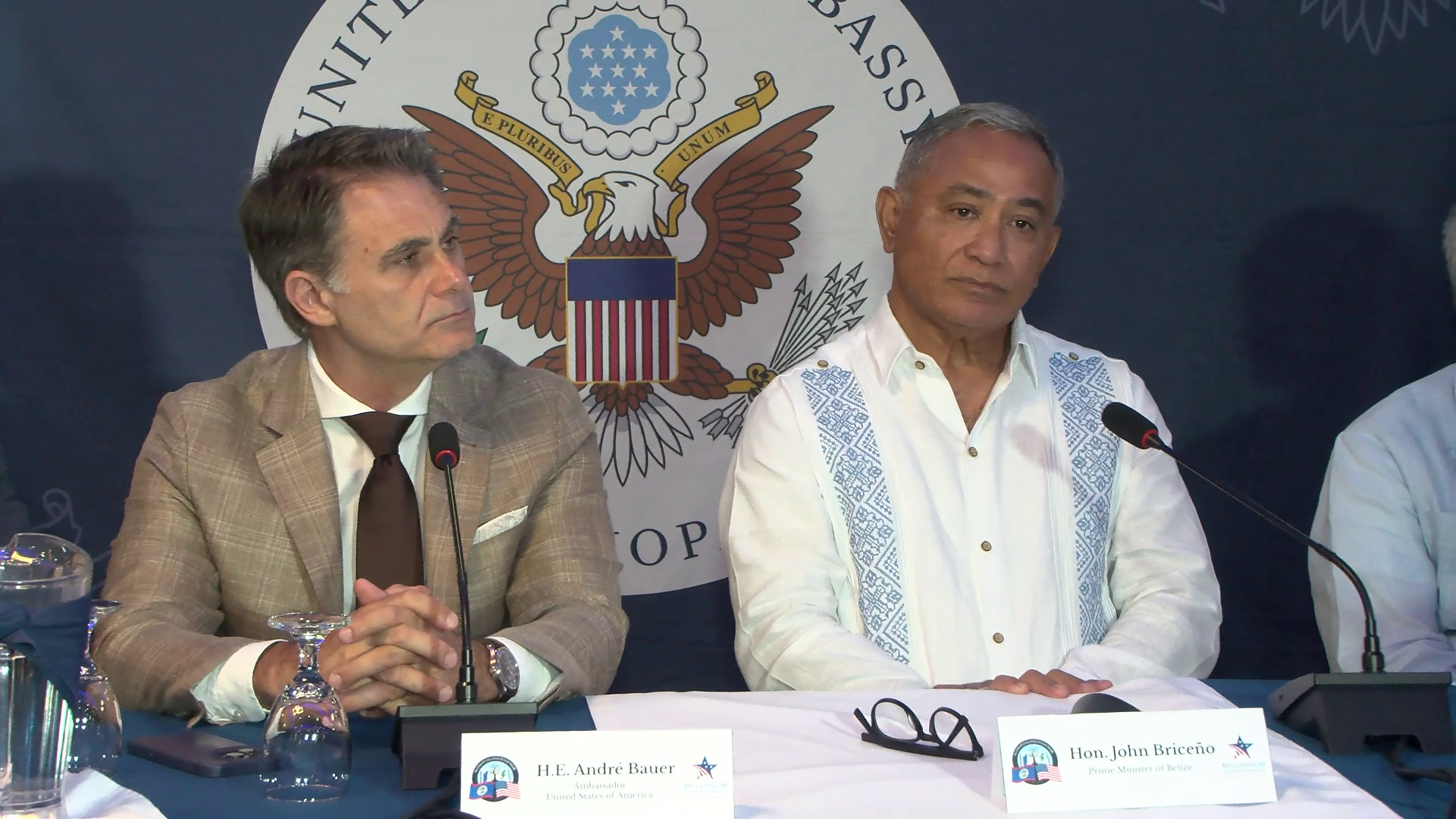
    After years of negotiation, revision, and stakeholder debate, one of the largest development grant initiatives in Belize’s modern history has officially entered its implementation phase. On September 18, 2026, the Government of Belize and the United States government, through the U.S. Millennium Challenge Corporation (MCC), formally launched the five-year Belize Compact, a combined $180 million investment pairing a $125 million U.S. grant with $55 million in counterpart funding from Belize’s national government. The initiative will target two high-priority sectors for the Central American nation: upgrading secondary and technical vocational education, and modernizing national energy infrastructure including expanded electricity transmission to the popular coastal destination Ambergris Caye.

    Dr. Marcia Bouloy, executive director of MCA-Belize, the local entity tasked with overseeing the compact’s rollout, emphasized that the program’s value extends far beyond its total monetary commitment. “The U.S. 125 million Belize Compact represents a significant investment in our country, but its importance extends beyond its dollar value. At its heart, this compact is an investment in people, opportunity, and Belize’s future,” Bouloy said in remarks at the launch event.

    Belize Prime Minister John Briceño clarified for local residents the structure of the funding, noting that the $125 million MCC commitment is a no-repayment grant. Briceño outlined the core goals of the education portion of the compact, explaining that the investment will add new resources, technical support, and targeted infrastructure to strengthen secondary schooling and vocational training programs. “Our goal must be to ensure that Belizeans leave the education system with strong literacy and numeracy skills, critical thinking abilities, technical competencies, and the confidence to adapt to a changing world of work,” Briceño stated.

    Addressing widespread public concern over recent widespread blackouts that have disrupted daily life and business operations across the country, the prime minister expressed confidence that the energy sector upgrades will resolve persistent reliability issues. “I know Belizeans are looking at me skeptically, especially after the blackouts that we’ve been having over the past few weeks. I don’t think we’re going to be having blackouts after this,” he said.

    U.S. Ambassador to Belize Andre Bauer echoed the cross-cutting goals of the compact, framing the investment as a catalyst for long-term inclusive growth rather than a narrow infrastructure project. He noted that upgraded education will equip a new generation of Belizean workers with the in-demand 21st century skills that global employers seek, while more reliable energy infrastructure will create a stable operating environment for both domestic and foreign businesses. “We’ll support key reforms that make Belize an even more attractive place where people wanna invest and build and hire,” Bauer added.

    MCC officials outlined that the success of the five-year initiative will not be measured by spending totals, but by tangible improvements to education outcomes, energy reliability, and broad-based economic opportunity for Belizean communities. Jason Small, acting vice president of compact operations at MCC, framed the partnership as a mutually beneficial effort to unlock shared prosperity between the United States and Belize. “MCC is proud to mark this historic day in our partnership with Belize, where together we will unlock growth and create mutual prosperity for our two nations. And five years from now, we will celebrate the completion of this compact just in time to celebrate the 50th anniversary of Belize’s independence,” Small said.

    With the official launch complete, the five-year countdown to deliver tangible results from the $180 million investment is now underway. Project leaders and government officials expect the reforms and infrastructure updates to create lasting ripple effects across Belize’s economy, supporting local business growth, attracting new foreign direct investment, and expanding long-term opportunity for all Belizeans.

  • Will Significant US Investment Test Belize’s Diplomatic Balance?

    Will Significant US Investment Test Belize’s Diplomatic Balance?

    As the five-year Millennium Challenge Compact between the United States and Belize officially gets underway, a $125 million U.S. grant has ignited public and geopolitical debate over whether the substantial investment will force Belize to compromise its long-standing diplomatic balance. Over the past several years, Washington has already pushed Belize to align with U.S. priorities on a range of contentious issues, from regional migration management and cross-border security to Belize’s diplomatic and economic ties with Cuba. Observers warn that shifting U.S. policy priorities over the five-year term of the compact could leave Belize facing untenable pressure to make diplomatic choices that run counter to its own national interests.

    Prime Minister John Briceño has moved to reassure the public and international observers that the agreement contains no hidden conditions that would jeopardize Belize’s sovereignty. Speaking to local media, Briceño emphasized that the only requirements attached to the grant are that Belize deliver on the development goals outlined in the compact, maintain full financial accountability for every dollar disbursed, and uphold its long-standing commitments to democratic governance. Briceño noted that democratic norms including freedom of speech and independent media, which the compact references, are already core planks of the country’s national development plans, Plan Belize and Plan Belize 2.0. He added that the opportunity to secure this transformative grant is one that many small developing nations around the world would jump at, saying that the grant comes with no unstated political demands that would force Belize to choose between its relationships.

    U.S. Ambassador to Belize H.E. Andre Bauer echoed Briceño’s reassurances, rejecting outright any suggestion that the investment is a quid pro quo for political concessions from Belize. Bauer framed the compact as just the latest chapter in the deep, long-standing bilateral partnership between the two countries, noting that U.S. cooperation with the territory predates Belize’s formal independence. He explained that the compact is part of a broader shift by the Trump administration to re-prioritize development funding for the Western Hemisphere, calling Belize one of the United States’ most reliable regional partners. Bauer added that the United States is already Belize’s largest import partner and the top source of international tourists to the country, noting that “a safer Belize is a safer America.”

    To demonstrate its ownership of the development initiative, Belize has committed $55 million of its own funds to the compact program, a contribution that came after additional energy sector projects were added to the original agreement to close a resulting funding gap. Local political commentator Shane Williams has raised ongoing questions about the compact, pointing to past high-pressure requests from Washington that have put Belize in difficult positions, from the rehousing of a convicted terrorist to demands that Belize serve as a safe third country for asylum seekers. Williams questioned whether Belize’s response to future similar requests over the next five years could affect the continued implementation and funding of the compact, leaving the small Caribbean nation in a vulnerable negotiating position.

  • Unequal Constituencies Fuel Fresh Redistricting Court Battle

    Unequal Constituencies Fuel Fresh Redistricting Court Battle

    Across Belize, decades of unaddressed electoral boundary adjustments have created a stark reality: not every citizen’s vote carries equal political weight in national legislative elections. That gap in representation has now sparked a fresh legal showdown, with a prominent social activist taking the country’s Elections and Boundaries Commission to court to demand transparency around a long-promised redistricting reform that remains incomplete years after it was first pledged.

    Redistricting, the process of redrawing electoral constituency boundaries to reflect population shifts, is designed to ensure fair representation for all voters in Belize’s House of Representatives. In current practice, some constituencies hold exponentially more registered voters than others, meaning a single vote in a less populated district carries far more legislative influence than a vote in a crowded, growing district. This imbalance undermines the core democratic principle of one person, one vote.

    The reform effort has been tied to repeated public commitments from the administration of Prime Minister John Briceño. Early in the government’s first term, officials promised to complete the full redistricting process before the end of the term. When Briceño’s party won a decisive second term in March 2025, the administration renewed that pledge. Initially, Briceño set an internal target of completing the work by the end of 2025, with a public deadline of December 2026. But the 2025 target passed with no visible progress, and as September 2026 draws to a close, only three months remain before the official deadline – with no public update on how far the process has come.

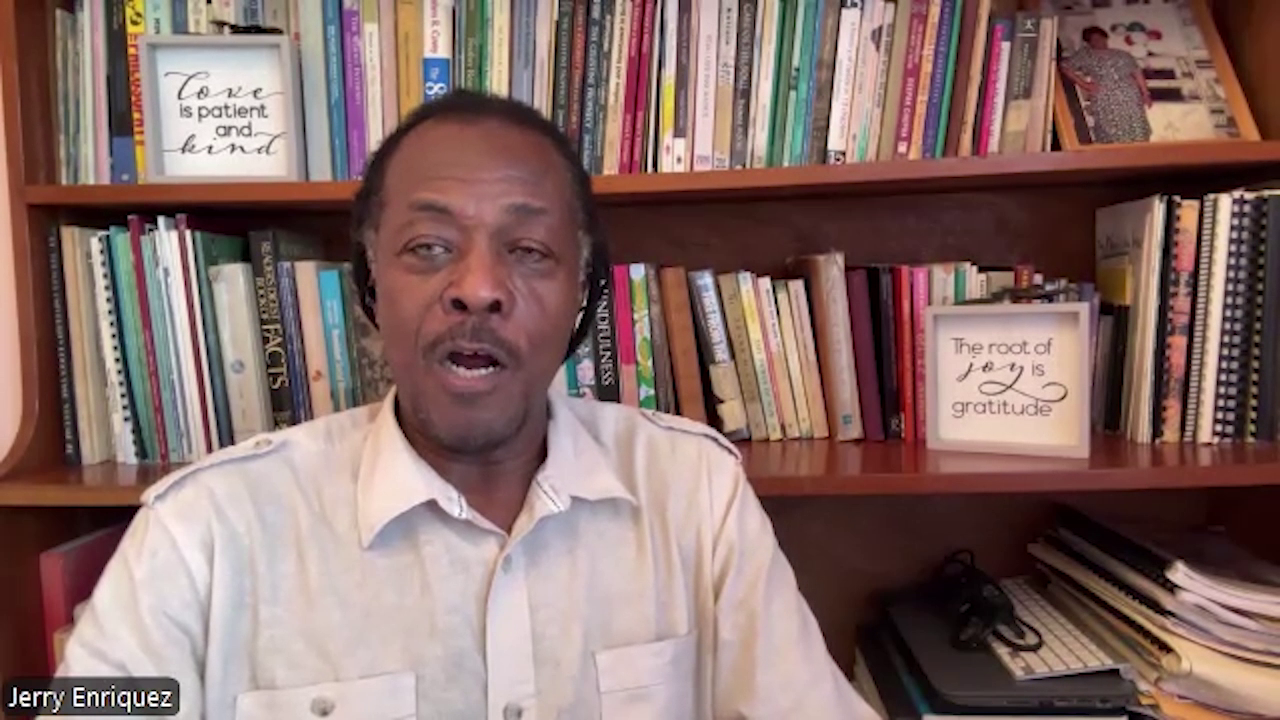
    That lack of transparency pushed social activist Jeremy Enriquez, who has spent months rallying public support for the reform and pressing the government to keep its promise, to escalate his efforts. First, Enriquez filed a formal Freedom of Information Act (FOIA) request with the Elections and Boundaries Commission, asking for a clear breakdown of progress on the redistricting process. Instead of a public update, Enriquez said the commission rejected his request on two grounds: first, that the request asked for too much information, and second, that the commission is not legally required to disclose details of the process under Belize’s FOIA.

    “Belize’s people have a right to know what is happening with a process that will shape the future of our democracy,” Enriquez said in comments to local outlet News Five. “The Elections and Boundaries Commission is a public body funded by taxpayer dollars, making decisions that affect every citizen across the country. The very least they owe us is transparency about how this critical work is progressing.”

    Enriquez has now filed suit against both the commission and Belize’s Attorney General, asking the courts to issue a clear ruling on whether public bodies including the Elections and Boundaries Commission are required to fulfill FOIA requests for information on government processes. The upcoming court decision will set a key precedent for government transparency in Belize, but it will not automatically resolve the core question on the minds of reform advocates: whether the Briceño administration can actually complete the full redistricting process before the December 2026 deadline, after years of delays that have left unequal representation unaddressed.

  • Jerry Enriquez Sacrifices Time and Money for Reform

    Jerry Enriquez Sacrifices Time and Money for Reform

    In a push to overhaul Belize’s political landscape and enforce greater government accountability, social activist Jeremy Enriquez has committed extensive personal time and financial resources to a high-stakes legal battle against the Belizean government, a fight he says is critical to delivering long-overdue change for ordinary citizens.

    The ongoing redistricting lawsuit has carried significant personal toll for Enriquez, who acknowledges that the energy and money poured into the legal process could have been directed toward other personal and professional opportunities both in Belize and abroad. Despite these heavy sacrifices, he has remained unwavering in his commitment to see the challenge through, emphasizing that the core goal of his fight is to build a fairer, more responsive democracy that serves all Belizean people.

    For decades, Enriquez argues, successive political administrations from across the partisan divide have taken the Belizean public for granted, abusing public trust and misappropriating public funds while operating with little effective oversight. Rather than pursuing political avenues that he argues have been corrupted by entrenched power, he turned to the courts as the legitimate venue to resolve the long-standing inequities in the country’s political system.

    Enriquez paid tribute to his legal team, crediting their unwavering support, specialized expertise, and relentless determination for allowing the case to progress as far as it has. He noted that without the committed backing of his cross-border legal team, the challenge would not have reached its current stage, adding that legal professionals on the team have not collected payment for their work — all court costs are absorbed directly by the team, leaving Enriquez to bear only the heavy personal toll of dedicating himself full-time to the cause. Members of his family, he confirmed, have witnessed firsthand how much personal investment the fight has required.

    At its core, the lawsuit centers on redistricting reform, a change Enriquez says is foundational to creating a more equitable political system that prevents ruling parties from abusing power and sidelining ordinary voters. He says that putting an end to what he calls the “foolishness of leaders lording it over people” will ultimately strengthen Belize’s democratic institutions, making them work for every citizen rather than just political elites.

    This report is adapted from a transcript of an evening television news broadcast.

  • A United Front for Belizean Sovereignty at Sarstoon

    A United Front for Belizean Sovereignty at Sarstoon

    In a rare display of unified action during Belize’s annual September national celebrations, once-divided civilian and national security groups have set aside past differences to stand together in defense of the country’s territorial sovereignty along the contested Sarstoon River border.

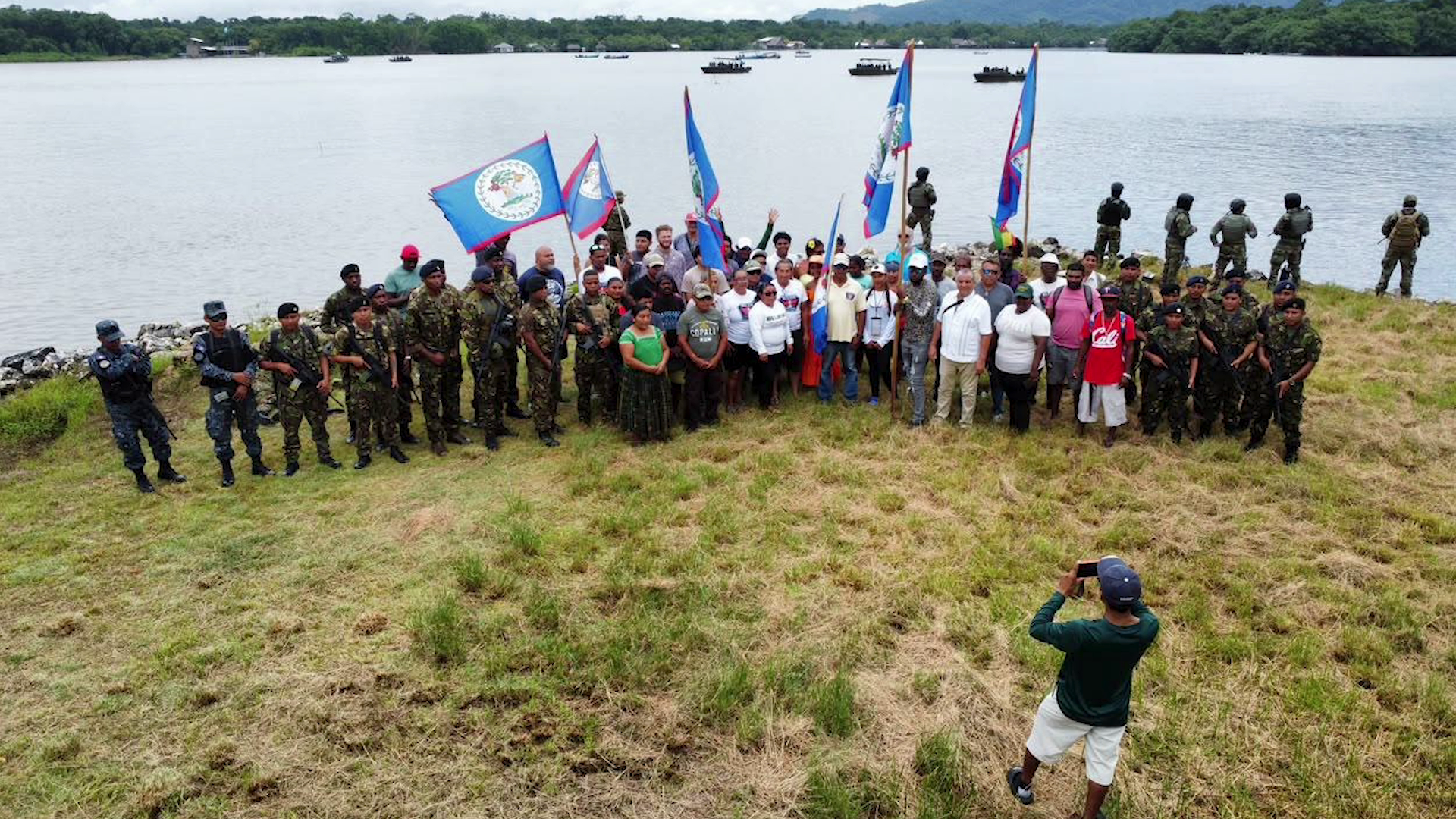
    The collaborative effort, which brought together the Belize Territorial Volunteers (BTV), a civilian activist group focused on territorial claims, and the Belize Coast Guard, with additional logistical and operational backing from the Belize Defense Force, culminated in a flag-planting expedition at the southern border, a long-running annual event to assert Belize’s territorial sovereignty.

    Weeks of coordinated planning between leadership from all three groups laid the groundwork for the smooth, incident-free mission, according to Belize Coast Guard Commandant Rear Admiral Gregory Soberanis. In comments following the expedition, Soberanis emphasized that open, direct dialogue between the civilian and military stakeholders was the key to the operation’s success. “This was an initiative where members of the BTV sat with members of the Belize Defense Force and the Belize Coast Guard and planned how we were going to execute,” Soberanis explained. “And it was executed in the manner that we had planned and so we are proud that we were able to pull it off with no incidents.”

    The joint mission comes amid rising tensions along the Sarstoon, where Guatemalan civilian and government vessels have increasingly increased their presence in the contested waterway. When asked by reporters whether this new model of civilian-military cooperation would become standard operating procedure for future expeditions, given the shifting and more confrontational posture from Guatemalan actors, Soberanis declined to commit to a long-term plan. Instead, he noted that authorities would take a flexible, year-by-year approach to future operations. “Every year we just will not forecast. We don’t want to presume anything,” Soberanis said. “We’ll take it year by year and then we’ll see how things unfold. And based on how things unfold as we reach a time like this year, we plan accordingly for how we are going to execute.”

    Despite the heavy presence of Guatemalan vessels and civilians along the river during this year’s expedition, the unified Belizean team successfully reached the Forward Operating Base at the border and raised the Belizean national flag, completing their core objective of reinforcing the country’s long-held territorial claim. This successful cross-group collaboration marks a notable shift in how Belize is approaching its ongoing border dispute, demonstrating a unified front both domestically and to international observers.

    This report is adapted from a transcript of an evening television newscast originally published online.

  • Belize’s Security Forces Carry Flame of Freedom in Inaugural Run

    Belize’s Security Forces Carry Flame of Freedom in Inaugural Run

    As Belize prepares to mark a major national milestone – 45 years of full independence – the country’s combined security forces launched a powerful new patriotic tradition on September 18, 2026, completing an inaugural 45-mile symbolic torch run that honors the nation’s hard-won sovereignty.

    Organized and led by the Belize Coast Guard, with participation from the Belize Defense Force (BDF) and Belize Police Department, the event brought together 60 uniformed service members to walk the full distance along the George Price Highway. The 45-mile route was intentionally selected to match 45 years of independent nationhood, with a single lit torch carried the entire journey to represent the enduring flame of Belizean freedom.

    The run kicked off at Cotton Tree Village, led by initial teams from the Belize Coast Guard. When the procession reached the Hand Monument on the outskirts of Belize City, service members from the BDF and Belize Police Department joined the remaining stretch – a closing segment officially named the People’s Mile, to recognize the public that the security forces serve. The entire distance was completed in staggered intervals by rotating running teams, an organizational structure that put inter-service collaboration at the center of the event.

    In remarks ahead of the run, Belize Coast Guard Commandant Rear Admiral Gregory Soberanis explained the core inspiration behind the new initiative. He emphasized that the event grew out of the security community’s deep respect for Belize’s sovereignty, democratic governance, and individual liberty. Standing alongside his fellow service members, Soberanis framed the participants as heirs to a legacy forged by the generations of leaders and citizens who fought for and secured Belize’s independence decades ago. “We are proud to be a part of that legacy, warriors who continue to defend the sovereignty of this nation,” he said.

    Lieutenant Commander Jasmine Bellini, Belize Coast Guard’s Commander Training, outlined the cross-agency coordination that made the event possible. “The good thing is it’s a team effort, so they have different officers within the coast guard responsible for different things, reaching out to our brothers and sisters in arms,” Bellini explained. She noted that while the majority of the 45-mile route was covered by rotating Coast Guard teams, the final People’s Mile brought all three security branches together in a show of unified commitment to the nation. Overall, Bellini called the coordinated initiative a very positive experience for all participants.

    Throughout the entire run, the single lit torch remained the central symbolic focus. Soberanis clarified that the flame represents more than just past independence: it stands for the ongoing duty of Belize’s security forces to protect the freedoms that all citizens enjoy. “The torch symbolizes our liberty, and we want Belize to know that as a member of the security forces, we stand ready to defend the liberties, and that torch must always be kept lit in our hearts, in our lives, on a day-to-day basis, that Belize is free, Belize is sovereign, and Belize remains democratic,” he said.

    The event concluded at the Flag Monument in central Belize City, where all participating service members gathered for a formal closing ceremony. Participants joined together to raise the Belizean national flag, sang the national anthem in unison, and paid public tribute to all those whose service and sacrifice over the past 45 years has helped safeguard the nation’s independence. The inaugural torch run is expected to become a recurring patriotic tradition leading up to Belize’s annual Independence Day celebrations. The report was filed by Britney Gordon for News Five, based on a transcript of the outlet’s evening television broadcast.