作者: admin

  • Canadian Man Died From Fall, Police Say

    Canadian Man Died From Fall, Police Say

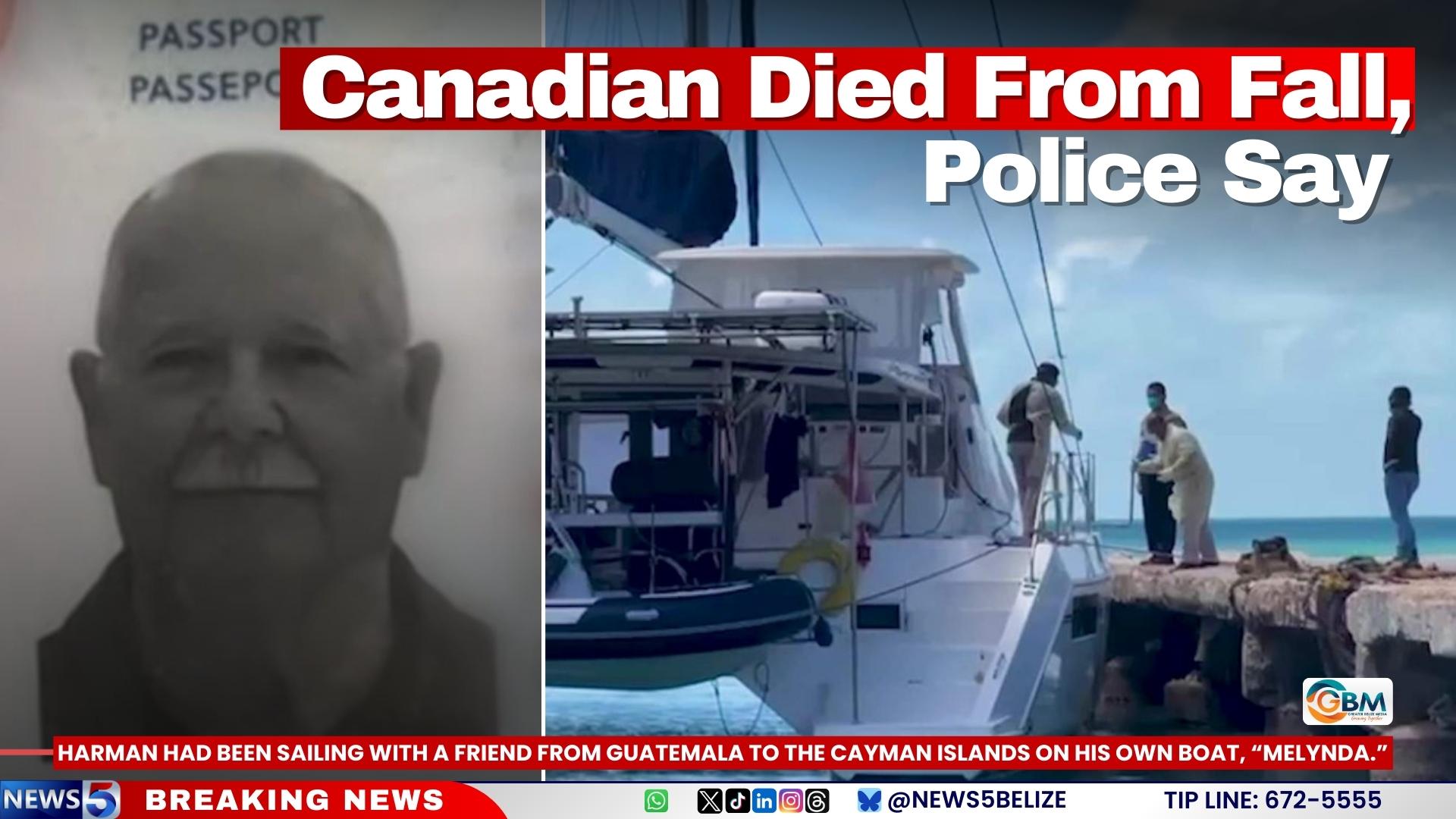
    Belizean authorities have concluded their investigation into the death of Canadian sailor Thomas David Harman, determining the 72-year-old died from injuries sustained in an accidental fall aboard his catamaran. The incident occurred during a maritime voyage from Guatemala to the Cayman Islands earlier this month.

    According to Assistant Superintendent of Police Stacy Smith, forensic pathologists established that Harman succumbed to blunt force trauma consistent with falling from height while aboard his vessel, named ‘Melynda.’ The investigation was initiated after the Canadian’s body was discovered on March 11 aboard the drifting catamaran approximately sixty miles offshore, following the rescue of Harman’s wife by a passing cruise ship.

    Initial reports had indicated the victim suffered cardiac arrest, but evidence including blood stains aboard the vessel prompted a comprehensive forensic examination. ASP Smith clarified that while Belizean authorities processed the scene and collected evidence, jurisdictional limitations prevent further action from Belizean authorities since the incident occurred in international waters.

    ‘The conclusion of the pathologist is that he fell from a height, and the circumstances are such that he was on board a boat,’ Smith stated during a press briefing. She further noted that speculation about whether others were present during the incident remained unconfirmed, stating ‘I don’t know if the assumption would be somebody would’ve been up on the sail with him because that is the suggestion that has been given.’

    All investigative materials and evidence have been prepared for transfer to Canadian authorities, who may pursue additional inquiries under their jurisdiction. The case highlights the complex jurisdictional challenges involved in international maritime incidents.


  • Straughn signals relief measures ahead of Budget presentation

    Straughn signals relief measures ahead of Budget presentation

    Barbados Finance Minister Ryan Straughn has indicated that citizens may receive economic relief measures addressing concerns raised during recent elections and global uncertainties. The announcement comes as Straughn prepares to deliver his inaugural Financial Statement and Budgetary Proposals to Parliament this afternoon.

    Speaking to journalists upon arriving at Parliament Buildings, Minister Straughn revealed his administration has recalibrated fiscal policies in response to the rapidly changing geopolitical landscape and constituent feedback. “Barbadians can expect some relief from the concerns they’ve expressed, not only during the election period but particularly regarding the geopolitical challenges we currently face,” Straughn stated.

    The Finance Minister emphasized his confidence in the government’s responsive approach, noting: “Given the short notice of these global developments, we’ve successfully reformulated our strategy. I believe Barbadians will conclude this address assured that their government has demonstrated both flexibility and responsibility in addressing their pressing concerns.”

    This budget presentation marks a significant milestone in Straughn’s career, representing his first official fiscal address as substantive Minister of Finance. Reflecting on his journey, he expressed particular pride in assuming this role after eight years of extensive work on Barbados’ economic programs. “I feel profoundly honored to serve in this capacity, having previously contributed to Barbados’ economic development both nationally and within my constituency,” Straughn remarked.

    The Minister stressed that maintaining national discipline remains crucial for sustaining the country’s developmental trajectory. He called for continued collective effort, stating: “Our ability to transform Barbados into the nation we envision depends entirely on our sustained cooperation and the disciplined approach we know we can achieve together.”

    During this afternoon’s session in the House of Assembly, Straughn is expected to detail the government’s comprehensive fiscal strategy and economic priorities for the upcoming fiscal year, potentially including targeted measures to alleviate economic pressures on Barbadian households and businesses.

  • Guyana’s outdated credit union legislation flagged for modernisation

    Guyana’s outdated credit union legislation flagged for modernisation

    In a landmark gathering at the Four Points by Sheraton on Heroes Highway, Caribbean credit union officials launched their premier Caribbean Development Education (CaribDe) training program in Guyana for the first time, delivering a powerful appeal for legislative modernization. The event spotlighted Guyana’s outdated 1948 Cooperative Societies Act as a regional anomaly requiring immediate reform.

    CaribDe Programme Director Melvin Edwards emphasized the critical inadequacies of the nearly 80-year-old legislation, noting its complete absence of provisions addressing contemporary financial challenges. “An almost 80-year-old piece of legislation cannot be relevant to the present day,” Edwards stated, highlighting the act’s failure to incorporate modern standards against money laundering, terrorism financing, proliferation risks, International Financial Reporting Standards (IFRS), and credit union prudential management protocols.

    Edwards formally urged Labour Minister Keoma Griffith to collaborate with local and regional credit union movements to overhaul Guyana’s cooperative framework, pointing out that most Caribbean nations have already updated their legislation. The Caribbean credit union sector represents a substantial economic force, serving 2.8 million members across the region with accumulated assets of US$3.5 billion.

    In response, Minister Griffith revealed that Guyana has been receiving technical assistance from the International Labour Organisation (ILO) to conduct an extensive review of the Cooperative Societies Act. The objectives include strengthening legal provisions, improving governance structures, and ensuring greater accountability. Griffith confirmed that Guyana is examining Jamaica’s cooperatives legislation among other models to inform their modernization efforts.

    The minister concurrently acknowledged concerning governance issues within segments of Guyana’s cooperative sector, noting that some societies “have operated in ways that have undermined public confidence and weakened the effectiveness of the movement.”

    The event also addressed internal divisions within Guyana’s credit union leadership. Edwards made a direct public appeal to Secretary of the Guyana Cooperative Credit Union League Colin Beaton and Chairman of Guyana Public Service Cooperative Credit Union Ltd Trevor Benn to resolve their differences before the Caribbean Confederation of Credit Unions’ 2026 Annual International Convention in Barbados this June. Both leaders indicated ongoing efforts to resolve what Beaton termed “little teething issues,” with Benn emphasizing his organization’s commitment to improvement and membership growth.

  • Farmers brace for uncertain sugar crop

    Farmers brace for uncertain sugar crop

    Barbados’ historic sugar industry commences its 2026 harvesting season Tuesday amid profound structural challenges and growing uncertainty about its future viability. The Portvale Sugar Factory will begin accepting cane at daybreak, launching an agricultural tradition that veteran farmers warn stands at a precarious crossroads.

    Richard Mayers, manager of Edgecumbe Plantation with 47 years of industry experience, embodies the sector’s concerning trajectory. “This crop season marks my 46th harvest,” Mayers revealed to Barbados TODAY. “The industry now faces its most critical juncture in decades.”

    The current crisis stems from the collapse of a government-backed restructuring initiative announced in January 2024. The proposed cooperative ownership model would have allocated 55% ownership to Co-op Energy, 20% to workers, and 25% retained by government for public offering. Two entities were established: Agricultural Business Company Ltd to manage farms and Barbados Energy and Sugar Company Inc to oversee milling operations.

    This transition stalled dramatically when the Memorandum of Understanding between Co-op Energy and the state-owned Barbados Agricultural Management Company (BAMC) terminated last August. Government officials cited Co-op Energy’s failure to raise $16.5 million in equity financing, while the cooperative disputed this characterization, demanding audited financial records before releasing member funds.

    The breakdown halted what was promoted as a historic shift toward worker ownership, leaving farmers represented by Barbados Sugar Industries Limited (BSIL) hoping for alternative investment. BSIL Chairman Mark Sealy cautioned that traditional growers cannot shoulder the financial burden of recapitalizing essential infrastructure.

    Mayers emphasized the industry’s broader agricultural significance: “There’s nothing to replace sugar cane across our vast acreages. As plantations abandon cane, land returns to bush. We need cane for crop rotation with non-sugar alternatives.”

    Compounding structural problems, production forecasts appear bleak. Early projections suggest yields could fall 20,000 tonnes below 2025 levels, largely due to severe drought conditions during July-September 2025. Mayers estimates the Portvale factory requires at least 100,000 tonnes annually for viability, while BSIL farmers initially anticipated only 66,000 tonnes before drought impacts.

    Despite these challenges, harvesting commenced Monday on Mayers’ St. Philip farm as part of his meticulous preparation strategy. “I start early to identify equipment issues before the busy season,” he explained, noting trailers were being filled for Tuesday’s official mill opening.

    The industry’s future now depends on critical decisions that extend beyond individual plantations. “We at Edgecumbe play our part but cannot save the industry alone,” Mayers stressed. “Everyone must step forward. I hope to reach 50 years in sugar, but survival depends on choices made within the next three years.”

  • Caribbean Development Bank collaborates with 2X Global to promote gender-focused investment in the Caribbean

    Caribbean Development Bank collaborates with 2X Global to promote gender-focused investment in the Caribbean

    The Caribbean Development Bank (CDB) has forged a strategic alliance with 2X Global Limited to revolutionize investment practices across the region through gender-focused methodologies. This groundbreaking partnership will produce a specialized Gender Lens Investing Acceleration Toolbox, specifically engineered to address the unique financial challenges faced by women entrepreneurs in Caribbean nations.

    Funded by a US$350,000 technical assistance grant from the Bank’s Special Development Fund, this initiative represents a significant advancement in the Caribbean GEMS (Gender Equality for Market Sustainability) program. The collaboration aims to dismantle systemic barriers that have historically limited financing opportunities for women-owned businesses, despite their educational and professional advancements.

    The comprehensive toolkit will incorporate practical instruments, customizable templates, and expert advisory frameworks aligned with international 2X Global standards. Beyond resource development, the project will document region-specific case studies and facilitate certification processes for five Caribbean companies or funds, creating reproducible models for gender-responsive investing.

    Scheduled for announcement coinciding with International Women’s Day observances, the initiative additionally features a cutting-edge Digital Academy and regional training platform. These digital resources will provide specialized education for investors, financial institutions, and policymakers seeking to implement gender lens investment criteria throughout Caribbean markets.

    Lisa Harding, Division Chief of CDB’s Private Sector Division, emphasized the transformative potential: “Through Caribbean GEMS, we’re positioning women entrepreneurs at the center of economic transformation, enabling enterprise scaling, innovation, and resilience building.”

    2X Global CEO Jessica Espinoza echoed this sentiment, stating: “This partnership expansion allows us to strengthen the gender lens investing ecosystem and ensure women-led enterprises access crucial growth capital.”

    The collaboration builds upon CDB’s 2023 integration into the 2X Global network, amplifying the Bank’s commitment to women’s economic empowerment through targeted investment strategies that complement existing initiatives like the SheTrades Caribbean Regional Hub.

  • NIC temporarily closes three offices after staff call in sick

    NIC temporarily closes three offices after staff call in sick

    Multiple offices of Saint Lucia’s National Insurance Corporation (NIC) experienced operational disruptions on Monday, March 16, as a significant number of employees called in sick, forcing temporary closures. The NIC confirmed the shutdown of its Vieux Fort, Soufrière, and Blue Coral Mall locations in Castries due to critically reduced staffing levels. While the Castries Waterfront and Rodney Bay offices remained accessible, all cash transaction services were suspended at the Waterfront branch.

    According to sources familiar with the matter, this coordinated sickout is directly connected to stalled wage negotiations between the NIC management and the National Workers Union (NWU). The labor dispute reached an impasse in January, prompting intervention from the Labour Commissioner who subsequently issued independent recommendations for resolution.

    While the NWU has accepted these recommendations, the NIC has not, creating further tension. The matter has now been escalated to the Minister of Labour, a development that some staff perceive as unnecessarily prolonging the negotiation process. A source close to the situation insisted that the absences constituted a genuine health-related workforce issue rather than an organized strike.

    In response to the service interruptions, the NIC advised employers and the public to utilize alternative service channels. These include submitting mandatory C3 forms electronically via the Smart Submit online portal, processing payments through direct bank deposits, or using the physical document deposit box located in the lobby of the Castries Waterfront office.

    The Corporation issued a formal apology for any inconvenience caused and expressed gratitude for the public’s patience during the operational adjustments. It reaffirmed its commitment to restoring uninterrupted service delivery to the citizens of Saint Lucia and promised to provide further updates as the situation develops.

  • Three-Year-Old Drowns; Police Say He Walked Alone for a Mile

    Three-Year-Old Drowns; Police Say He Walked Alone for a Mile

    A devastating incident unfolded in Punta Gorda on Sunday when three-year-old Asher Mejia tragically drowned after wandering approximately one mile from his residence unsupervised. The tragedy occurred near St Peter Claver R.C. School, where the child was ultimately discovered in the ocean.

    According to police reports, the sequence of events began around 11:00 a.m. when Mejia departed from his home. His parents initially presumed he had accompanied siblings to a local store, but concern mounted when the siblings returned without the toddler. This realization triggered an immediate search effort throughout the community.

    The search concluded tragically when Mejia was located in the sea. A bystander attempted emergency resuscitation through CPR before law enforcement personnel arrived on scene. The child was urgently transported to a medical facility, where he was subsequently pronounced deceased.

    Assistant Superintendent of Police Stacy Smith revealed disturbing details during the investigation, noting that the child’s extensive journey through urban areas presented multiple opportunities for intervention. “This suggests that there was for a considerable period of time this child walking on the street, and that for me presented an opportunity for persons to have intercepted him and done the needful,” Smith stated.

    Further investigation uncovered that Mejia had previously been reported missing just three days earlier after similar wandering behavior. Authorities noted that in this final incident, the parents delayed reporting the child missing, operating under the assumption he might repeat his previous behavior.

    The case has now been referred to the Office of the Director of Public Prosecutions, which will determine whether negligence charges are warranted. Police have collected comprehensive statements from involved parties as the community mourns this preventable tragedy.

  • BimPay launch delayed for extra testing

    BimPay launch delayed for extra testing

    The Central Bank of Barbados has announced a strategic delay in the nationwide implementation of its revolutionary digital payment system, BimPay. Originally scheduled for March 31, the launch has been rescheduled for June 12 to accommodate comprehensive interoperability testing across all participating financial entities.

    Central Bank Governor Dr. Kevin Greenidge confirmed the timeline adjustment during a press briefing at the Courtney Blackman Grand Salle, emphasizing that the decision emerged from collaborative consultations with commercial banks, credit unions, the Accountant General’s Department, and the Barbados Stock Exchange. “After careful assessment and consensus among all stakeholders, we determined that June 12 provides the necessary window to complete all testing protocols and guarantee optimal system performance,” Dr. Greenidge stated.

    BimPay represents a monumental upgrade from the existing Barbados Automated Clearing House (BASHI), introducing 24/7 transaction processing capabilities alongside innovative features including instant interbank transfers, QR code payment functionality, and a digital wallet accessible to both banked and unbanked populations. Governor Greenidge clarified that the postponement does not reflect any deficiencies in the central bank’s infrastructure but rather the necessity for seamless integration across all participating institutions.

    “The core system is fully developed and secure,” Dr. Greenidge affirmed. “What remains is the critical final phase where each institution must connect to the new national payment rail and undergo rigorous testing before processing live transactions.”

    The central bank has established stringent monitoring mechanisms and binding milestones to ensure adherence to the revised timeline. Deputy Governor Michelle Doyle, serving as executive project sponsor, expressed confidence in the revised launch date, citing structured support systems and information-sharing frameworks designed to facilitate institutional readiness.

    Notably, existing electronic payment services will continue uninterrupted during the transition period, with BASHI remaining operational until the June 12 cutover. The project remains within budgetary constraints, fully funded by the Central Bank to strengthen national financial infrastructure.

    Beyond domestic convenience, BimPay is envisioned as the foundational platform for future integration with the Caribbean Payment System (CPACS), potentially revolutionizing regional trade by enabling direct transactions in national currencies and reducing dependency on US dollar intermediation.

    Governor Greenidge concluded with a reaffirmation of commitment to system integrity: “Our primary mandate is safeguarding financial system stability. This measured approach ensures we launch not merely on time, but with absolute confidence in system reliability.”

  • Economist Warns US/Israel War on Iran Could Force Budget Revisions

    Economist Warns US/Israel War on Iran Could Force Budget Revisions

    BELMOPAN, BELIZE – March 16, 2026 – Belize’s recently unveiled national budget for fiscal year 2026/2027 faces potential revisions as geopolitical tensions create economic instability. Prime Minister John Briceño’s $1.9 billion spending plan, presented just last week, now confronts unforeseen challenges stemming from the escalating US/Israel military engagement with Iran.

    Prominent economist Dr. Phillip Castillo issued a stark warning that the conflict necessitates immediate financial reassessment. “Any projected figure mentioned by the Prime Minister has to be revised in light of the Iran war,” Castillo stated in an exclusive interview with News 5.

    The crisis centers on rapidly escalating fuel prices, which have already triggered increases at gasoline pumps nationwide. This creates a paradoxical situation for Belizean policymakers, as fuel taxes represent one of the government’s most significant revenue streams. While higher prices temporarily boost tax collections, they simultaneously threaten broader economic stability.

    Prime Minister Briceño previously emphasized the government’s dependency on tax revenue to fund public services. “There is so much that we want to do and the only way we can provide goods and services to our people is by collecting taxes,” he noted, referencing recently expanded free education programs in government high schools as an example of increased public expenditure.

    However, Castillo cautions that the short-term tax benefits mask deeper economic vulnerabilities. “Fuel is by far one of the largest revenue sources to any government in Belize,” he explained. “When fuel prices go up, governments benefit because tax intake increases. But as those prices work their way through the economy, the broader macroeconomy is impacted.”

    Economists warn that Belize’s import-dependent economy remains particularly susceptible to global energy market fluctuations. The ongoing conflict threatens to trigger ripple effects across multiple sectors including GDP growth, inflation rates, employment figures, and trade balances. With no resolution to international tensions in sight, financial experts urge proactive budget adjustments to address an increasingly volatile global economic landscape.

  • Petra Baptiste debuts Kai Baptiste collection at Paris Fashion Week

    Petra Baptiste debuts Kai Baptiste collection at Paris Fashion Week

    Saint Lucian designer Petra Baptiste achieved a remarkable milestone as her brand Kai Baptiste made its spectacular debut at Paris Fashion Week’s World Fashion Expo on March 7. The showcase, featuring ten meticulously crafted pieces, demonstrated Baptiste’s exceptional artistry in blending Caribbean cultural motifs with avant-garde fashion design.

    The collection presented at Les Salons Hoche featured innovative full-body designs characterized by intricate tailoring techniques. Fabrics underwent elaborate processes including etching, precision cutting, strategic tucking, artistic twisting, and distinctive fastening methods to create patterns deeply rooted in Caribbean heritage. Each costume served as a vibrant narrative of Baptiste’s cultural background and design philosophy.

    A significant achievement for the emerging designer came with the inclusion of her work in Getty Images’ prestigious archives, ensuring global accessibility to her artistic vision. “This recognition means the story behind my work – my culture, my heritage, and my passion for costume design – will continue to be seen and shared worldwide,” Baptiste expressed regarding this honor.

    The collection’s thematic foundation drew inspiration from multiple Caribbean elements including ocean imagery, traditional carnival celebrations, Saint Lucia’s flower festivals, and macramé craftsmanship. This artistic direction reflects Baptiste’s personal commitment to showcasing Caribbean culture authentically, a mission she has maintained since leaving Saint Lucia over two decades ago.

    Following an overwhelmingly positive reception, Baptiste anticipates accelerated growth for her brand. Initial plans for gradual development have been reconsidered due to the enthusiastic response, with potential new projects and collaborations now appearing on the horizon. The designer remains committed to using fashion as a medium for cultural storytelling and regional representation, treating costume design as both liberation and celebration of her Caribbean roots.