
The United Progressive Party (UPP), the main opposition political force in Antigua and Barbuda, has officially called a general gathering of its dues-paying financial members, scheduled to take place on June 10. The official announcement of the meeting was made in a public notice signed by Jamale Pringle, the party’s current political leader. Per the details outlined in the notice, the session is set to kick off at 7 p.m. local time at the Antigua and Barbuda Workers’ Union headquarters, located on Lower Newgate Street. The invitation extended by the party opens the meeting to all financial members representing every constituency branch of the UPP across the country. In the notice, party leadership emphasized that every attending member’s input and participation is highly valued, as the organization continues to advance its core activities and deepen its outreach to its base of supporters across the nation. Notably, no specific agenda items were disclosed to the general public in the released notice. This closed-door membership gathering comes as the UPP carries out a series of internal organizational efforts and pre-planning work ahead of upcoming political activities on the country’s political calendar, as the opposition prepares for future electoral and legislative engagements.
作者: admin
-
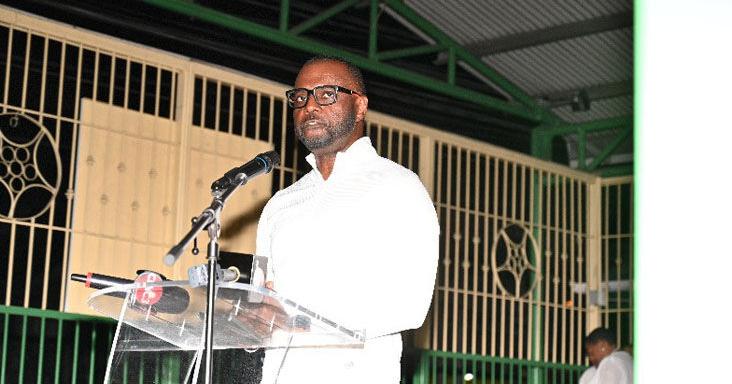
Gonzales: PNM ready to fight SoE in court
Trinidad and Tobago’s main opposition party, the People’s National Movement (PNM), is gearing up to take legal action against any planned extension of the country’s ongoing state of emergency, a senior party figure has confirmed. Marvin Gonzales, former national security minister and the Member of Parliament for Arouca/Lopinot, laid out the opposition’s plans during a public party gathering held in San Juan’s Croisée district on Wednesday evening.
Gonzales told attendees that the PNM has already put together a full legal team, ready to submit a constitutional motion to the courts if the ruling United National Congress (UNC) government moves forward with its reported plan to seek parliamentary approval for another extension of the emergency measures. According to Gonzales, the administration has already publicly indicated it will return to parliament to extend the state of emergency, prompting the opposition’s pre-emptive legal preparations.
“Tonight, we serve formal notice to the government: we have assembled our legal team, which stands ready to file a constitutional motion to bring an end to this unlawful and unconstitutional state of emergency in Trinidad and Tobago,” Gonzales stated to assembled supporters.
The core of the opposition’s argument centers on claims that the current use of emergency powers violates core constitutional rights and freedoms guaranteed to Trinidad and Tobago’s citizens. Gonzales emphasized that the PNM is seeking a definitive judicial ruling on whether the ongoing extension of emergency measures aligns with the country’s constitution, pointing to a landmark legal precedent set in neighboring Jamaica as supporting evidence for the PNM’s case.
In 2023, a three-judge panel in Jamaica ruled that a series of state of emergency proclamations issued in late 2022 were invalid, on the grounds that the measures violated the constitutional principle of separation of powers. The ruling rejected the Jamaican government’s use of rolling states of emergency as a long-term crime-fighting tool, a position Gonzales says applies equally to the situation in Trinidad and Tobago.
“Enough is enough. This was already tested in Jamaica, and the Jamaican courts ruled that you cannot use repeated, rolling states of emergency to control crime and lawlessness,” Gonzales said. He added that the PNM was pursuing the legal challenge “standing in defence of democracy” and “standing in defence of the people of Trinidad and Tobago.”
Beyond the constitutional argument, Gonzales leveled a sharp accusation against the ruling government: he claimed that the state of emergency is not being used to curb rising criminal activity as the administration has claimed, but rather to suppress political opposition and silence dissenting voices across the country.
“Today in Trinidad and Tobago, the state of emergency and its associated regulations are not being used to protect you. They were never intended to protect the people of this country,” Gonzales said. “They have always been intended to be weaponized to suppress the population, so that the government can act with impunity in every corner of this nation.”
Gonzales also questioned the foundational justifications the government has used to bring in and extend previous states of emergency. He noted that the administration has repeatedly justified the measures by citing alleged threats against senior law enforcement leaders, sitting members of parliament, and judicial officials. However, he claimed that to date, not a single person has been arrested or charged in connection with any of these alleged threats.
“They lied to the people of Trinidad and Tobago when they claimed there were threats against senior law enforcement officers and members of parliament,” Gonzales said. “Today, not one person has been arrested for these so-called threats against senior officials. Not one person has been arrested or charged for any purported threat against members of the Judiciary or members of the government.”
-

Trio to face court in worker abuse case
A high-profile case alleging years of systematic abuse, captivity and torture of a 42-year-old domestic worker in southern Trinidad is set for a critical court hearing on Monday, with three defendants – a local businesswoman, her 18-year-old son and a third accused man – scheduled to answer a raft of criminal charges before the Siparia Magistrates’ Court.
The three accused have been identified as Fareeda Balgobin, her adult son Joshua Benny, and Rohit Sitahal. All charges stem from alleged offenses that investigators say occurred between June 2019 and April 11, 2026, according to official statements from the Trinidad and Tobago Police Service (TTPS).
The victim, named by police sources as Sabita Basdeo, a mother of two, managed to escape her captors on April 11 and made her way directly to the Barrackpore Police Station to file an official report. When she arrived, officers observed visible, fresh injuries across her face and hands, which she told investigators were the result of prolonged abuse at the hands of the three accused. Basdeo told detectives she had been held against her will, forced to work unpaid domestic labor, and repeatedly tortured at a residential property in Penal. Her allegations include being beaten, burned with hot objects, and having her head slammed repeatedly into walls; she also claims that the accused threatened to kill her if she ever attempted to escape. Captivity is alleged to have been enforced continuously from September 2025 up to her escape in April.
Official charge documents show Balgobin faces the most severe and extensive list of charges, including one count of kidnapping, one count of false imprisonment, one count of throwing a noxious substance, two counts of inflicting grievous bodily harm, one count of assault occasioning actual bodily harm, one count of choking, and three additional related criminal offenses. Benny faces five charges: one count of kidnapping, one count of throwing a noxious substance, two counts of inflicting grievous bodily harm, and one additional related charge. Sitahal is facing four charges: one count of throwing a noxious substance, two counts of inflicting grievous bodily harm, and one additional related charge.
Following Basdeo’s report, the TTPS launched a full criminal investigation, which was assigned to PC Lee Lum and overseen by a team of senior law enforcement officials including Senior Superintendent Simon, W/Supt Bridgelal, ASP Chulhan, Insp Ramdial, Insp Nandlal and Insp Maharaj. Legal guidance for the investigation was provided by ASP Phillip, and formal charging instructions were issued on June 3 by Supt Bridgelal with assistance from Sgt Bassarath.
Both Balgobin and Benny have been held in police custody since April 20, after Homeland Security Minister Roger Alexander signed preventative detention orders for the pair in accordance with Paragraph 2 of the Schedule to the Emergency Powers Regulations of 2026. The detention orders name Balgobin as a resident of multiple addresses in Penal’s San Francique district, and allege that she is a confirmed member of an organized Informal Crime Group (ICG) operating across the Penal region. Investigative intelligence linked to the detention order names the group as being responsible for a pattern of serious criminal activity including kidnapping, false imprisonment, forced labor, grievous sexual assault, serious indecency, and attempted murder. Authorities also confirmed that the group had made explicit threats to kill witnesses in the case to prevent prosecution.
The case has been marred by suspicious interference: just four days after Basdeo’s escape, on April 15, one of Balgobin’s unoccupied residential properties was damaged in a fire. No people were present at the property at the time of the blaze, and no injuries were reported. But responding officers found evidence that the fire was intentional arson: a broken bedroom window and forensic confirmation that a Molotov cocktail had been thrown at the building. No additional suspects have been named in connection with the arson to date.
Monday’s court appearance marks the first public procedural step in a case that has shone a spotlight on the risks of abuse and exploitation faced by domestic workers in Trinidad and Tobago, and tested the country’s emergency preventative detention powers for organized criminal groups.
-

Phillip questions ‘differing’ police response to protests
Trinidadian social and political activist Alyssa Phillip has ignited a public debate over law enforcement impartiality after leveling accusations of inconsistent policing against the Trinidad and Tobago Police Service (TTPS) in recent days. Her claims, shared across multiple social media posts between Wednesday and this weekend, center on starkly different police responses to separate public gatherings held in the same area on the same day, laying bare growing public concerns over unequal application of the law in the country’s protest space.
The core of Phillip’s critique stems from a peaceful unity walk organized by the Peace Foundation TT on Piccadilly Street in Port of Spain, which was halted by police before it could get underway. She opened her series of posts with the cryptic line: “Monkey really know which tree to climb,” a direct reference to what she frames as the TTPS’ selective enforcement against groups aligned with the opposition protest movement. During the planned walk, Phillip says, popular social media influencer and recording artist Mouttxt, born Nicholas Mouttet, was barred from speaking to reporters by on-scene officers, who cited a lack of official permission for public address. Just moments earlier, however, Fuad Abu Bakr – a prominent local businessman and leader of the political party New National Vision – conducted an on-camera interview in the exact same area without any pushback or intervention from police.
Phillip went on to contrast the TTPS’ aggressive response to the peace walk with another event that same day: a PNM (People’s National Movement) candlelight vigil held in San Juan, where no police orders to disperse or crowd control measures were implemented at all. “They run home everybody that came to the peaceful walk like dogs…go home!” she wrote in a passionate on-platform statement, emphasizing that the contrast could not be ignored. Crucially, Phillip clarified that she was not arguing any gathering should have been broken up; rather, her goal is to highlight that unequal treatment is being meted out to citizens based on their political ties and public standing. “All citizens have a right to speak out regardless of political affiliation or public profile,” she maintained.
Beyond the selective treatment of gatherings, Phillip also addressed a separate recent incident involving the arrest of a young man who has attended multiple events tied to the protest movement she helps coordinate. Some online actors have attempted to tie allegedly inflammatory comments made by the young man to the broader movement, but Phillip rejected that broad brush characterization. She identified herself, her mother Camille Caresquero, and Mariah Walcott as the lead organizers of the “19 Bullets, 19 Protests” campaign, which advocates for greater government accountability, transparency, and judicial reform. The arrested man’s personal views do not reflect the positions of the campaign’s organizers, supporters, or core demands, she stressed.
While she acknowledged that every person holds a right to their own individual opinions, Phillip added that she regretted the young man had chosen to frame his views in a way that was neither respectful nor responsible. She reaffirmed that the “19 Bullets, 19 Protests” movement remains strictly committed to peaceful, lawful advocacy, and that the actions of one individual will not distract supporters from the core issues that brought them together.
Phillip also expanded her critique to broader, systemic issues of unequal enforcement of public order laws across Trinidad and Tobago. She noted that many citizens have long observed offensive, abusive, racial, and inflammatory comments directed at political leaders and public figures on social media that have not resulted in any enforcement action, reinforcing public perceptions that different standards apply to different groups based on their connections. Phillip stressed she is not endorsing that harmful rhetoric, but argued that the double standard in enforcement cannot be overlooked.
In a direct rebuke of the TTPS’ approach to protest management, Phillip said: “The TTPS would better serve the public by leading with empathy and understanding rather than ego and defensiveness.”
Looking ahead, Phillip used her social media reach to promote the movement’s next action: “Protest #18,” a nationwide stay-at-home protest scheduled for today. She encouraged the general public to review educational materials about the movement’s goals shared online, including explanatory videos and social media content accessible via scannable QR codes. For members of the public who are unable to stay home and must report to work on the day of the action, Phillip urged them to wear white clothing and share photos of their participation on social media using the hashtag #Protest18.
This public statement comes just one week after Phillip and her mother were arrested during a protest held outside the Office of the Director of Public Prosecutions (DPP). The pair appeared before Magistrate Indira Ramnarine Misir-Gosine at the Port of Spain Magistrates’ Court this Monday, where both pleaded not guilty to the two charges stemming from the demonstration.
-

Teen rises above tragedy
Nine years ago, when Lauralee Basdeo was just four years old, her life changed forever when armed criminals gunned down her father in a shooting in central Trinidad. Left without a primary caregiver after the tragedy, the young girl was taken in and raised by extended family members, who gave her a home and stability through her early childhood.
But hardship would strike again for Basdeo, now 13. Over the past few years, nearly all of the adoptive family members who raised her have passed away from illness, leaving her with just one other surviving blood relative: her mother, Laura Singh. Reuniting to live with Singh once more, Basdeo has faced a steep, uphill climb to build a stable future for herself against stacked odds.
Yet far from being broken by her cumulative losses, the teenager has channeled her grit into pursuing her passions and excelling across multiple areas of her life. Today, as a student at Holy Faith Convent in Couva — her first-choice secondary school, an achievement she earned despite the upheaval and grief that marked her exam preparation period — Basdeo is an active multi-sport athlete and talented musician, carving out a reputation for her skill and determination across Trinidad’s local community.
An avid footballer, cricketer and competitive 5K runner, Basdeo’s talent on the cricket pitch recently caught the attention of professional Trinidadian cricketer Nicholas Pooran, who awarded her a full scholarship to train at his elite batting academy. Beyond sports, she is also a skilled tassa drummer, sharing the stage with world record-holding pannist Joshua Regrello for a performance at a local mall last year. This year, she was invited back to perform for shoppers again on Indian Arrival Day at Gulf City Mall in La Romaine, showcasing her talent to hundreds of attendees.
Speaking to local outlet *Trinidad Express* last week, Singh described her daughter as a paragon of resilience, even in the face of uncertainty about the future. “Even in the midst of everything, she is resilient. She does not give up,” Singh said. “She lost her father so young, she lost her grandparents. If I pass away she has no one, nobody to take care of her. But God sent good people in our lives. We want to show people that you can become something even in these situations. She passed for her first-choice school which is an accomplishment by itself; it was a big achievement. We did not see that coming with all the deaths and writing an exam and passing for your first choice despite everything that we went through.”
Singh added that while Basdeo lacks a large, stable extended family to rely on, the teenager’s obvious drive and natural talent have drawn support from countless community members who have stepped in to nurture her growth. “It feels like when you lose in some areas, God gives you and supplies…She is still able to achieve good things. We want people to know you should not give up in life. Whatever you may be facing, study your work, put God first and keep pressing on. Keep pushing,” she said.
For Basdeo herself, her journey has been one of turning pain into purpose, and she has a clear message of hope for other young people navigating hardship of their own. “Every moment offers a chance for a fresh start and a new direction. Don’t let past hardships define your future. Instead, let them be lessons that guide you toward better decisions. Keep striving, keep being a boss, and never give up on your dreams. Most importantly, keep your faith in God, and don’t let anyone else’s opinions or negativity dim your spark,” she said.
-

Spirit over self
On the annual feast of Corpus Christi, top Roman Catholic religious leader Archbishop Charles Jason Gordon used his keynote address to the faithful to issue a urgent call for deep moral and spiritual transformation across Trinidad and Tobago, arguing that a fundamental shift in national values is required to address growing systemic inequity.
Gordon spoke to a congregation of hundreds of worshippers who gathered at Port of Spain’s Cathedral of the Immaculate Conception, undeterred by overcast conditions and light, intermittent rain that marked the day’s events. Though turnout for the traditional street procession and Holy Eucharist remained robust, attendees noted the crowd was noticeably smaller than in pre-event years.
After the indoor service, participants embarked on the customary procession through central Port of Spain, starting and ending at Independence Square, and winding through Henry Street, Park Street, Piccadilly Street, Duke Street and Nelson Street. Uniformed schoolchildren from multiple local educational institutions joined the march, alongside senior public figures including Government Ministers Kennedy Swaratsingh and Saddam Hosein, and Police Commissioner Allister Guevarro, who attended in civilian attire. Three formal benediction stops were held along the route, at the Cathedral of the Immaculate Conception and Rosary Church among other locations.
In his homily, Gordon drew a provocative parallel between the ancient Israelites’ 40-year journey through the desert after their exodus from Egypt and Trinidad and Tobago’s own path as an independent nation. He noted that the country has been abundantly blessed with abundant natural resources and unprecedented developmental opportunities, but has consistently failed to leverage these advantages for collective national benefit. “We have become a nation that has wanted only the material stuff, wanted only to feed off of the sensational stuff, wanted only what is glamorous,” he told the gathered congregation.
Gordon pulled no punches in criticizing what he labeled a rising national culture of materialism and entrenched self-interest. Rather than directing the country’s resource wealth toward lifting all citizens, he argued, powerful and private individuals have prioritized accumulating personal gain, leaving vulnerable communities behind. “Everybody trying to eat a food,” he remarked, adding that many wealthy and privileged Trinidadians hoard far more resources than they need for basic comfort and security, leaving growing shares of the population trapped in poverty and destitution.
Rooting his appeal in scripture, Gordon reflected on passages from the Book of Deuteronomy and the First Epistle to the Corinthians, reviving the ancient biblical call to be one’s “brother’s keeper”. Referencing the story of Cain and Abel, he told worshippers the answer to the age-old question of responsibility for community welfare is unambiguous: “Yes, I am my brother’s keeper. I am my sister’s keeper.”
For Gordon, authentic devotion to the Holy Eucharist is inextricably linked to active service to low-income and vulnerable communities. Care for the poor is not an optional add-on to faith, but a core requirement of religious life, he emphasized. He also noted that Corpus Christi has long held traditional cultural meaning as a day for planting crops, framing the holiday as an ideal moment to plant deeper roots of faith and spiritual commitment across the nation. “Today is also the day when the seed of faith is planted deeper,” he said, urging worshippers to open their hearts to divine influence to allow moral conviction to take stronger root.
Seminarian Jameke Brown echoed Gordon’s message of faith-driven social change during a stop on Nelson Street, telling attendees that Catholics are called to transform national and local life through living out their core beliefs. “We are called to partake of God’s body and blood so we can transform our country,” Brown said. “We can transform our communities; we can transform this community. Jesus left two commandments for us: love the Lord your God with all your heart, all your mind, all your soul and all your strength. The second commandment is to love your neighbour as yourself.”
Brown added that a posture of gratitude is the foundation of a deep, lasting relationship with God. “The secret of coming to love God, as I have come to understand it, firstly, is by having a heart of gratitude. Despite our situations, there is always something to be grateful for,” he told attendees.
-

Chief Magistrate recuses himself from all cases involving Jomo Thomas
A dramatic shift in judicial procedure has unfolded at the Kingstown Magistrate’s Court in St. Vincent and the Grenadines, after Chief Magistrate Colin John made the unusual decision to step away from every legal matter that features defense attorney Jomo Thomas as part of the legal team. The unprecedented recusal was triggered by a controversial social media post that John claims was published by Thomas on Facebook.
The announcement was made publicly in open court on Monday, during a scheduled hearing for 35-year-old Okeeno Fergus, a resident of Lowmans Windward who is currently facing two firearms-related charges. Fergus stands accused of illegally possessing a Smith and Wesson M&P Shield 9mm pistol and eight live rounds of 9mm ammunition on May 17 at his Lowmans Windward residence, in violation of the country’s Firearms Act.
When Fergus was first arraigned before Chief Magistrate John on May 18, he entered a not guilty plea to both charges, appearing in court with a white medical dressing covering a wound on his forehead. John granted Fergus bail set at 15,000 Eastern Caribbean dollars, conditional on one surety, required the defendant to comply with regular police reporting conditions, and adjourned the initial proceeding for June 1. When Fergus returned for Monday’s hearing, the forehead wound had healed enough that he no longer required the dressing.
Beyond the Fergus firearms case, John also confirmed his recusal from a separate high-profile drug trafficking matter in which Thomas serves as defense counsel. That case involves 36-year-old Sebastian Audain (also known as Bush) of Lowmans Bay and 36-year-old Alvin Cyrus of Largo Height, who are charged with possession of 22.9 pounds of cocaine.
Following John’s announcement, the Chief Magistrate adjourned Fergus’ firearms case to the next business day, to be heard by a different judicial officer at the same Kingstown courthouse. When the case moved to Senior Magistrate Tammika McKenzie’s courtroom on Tuesday, McKenzie initially requested clarification from Thomas on why the matter had been reassigned to her docket. Thomas confirmed that Chief Magistrate John had issued a blanket recusal from all cases where he represented a client.
In a surprising procedural outcome, Senior Magistrate McKenzie adjourned Fergus’ case all the way to February 2027, a multi-year delay that marks an unusual timeline for a routine firearms hearing. This case is not the first time Thomas has represented Fergus in legal proceedings: court records show that in 2022, a High Court judge ordered the state and police Corporal Mohammed Lavia to pay financial compensation to Fergus after Lavia shot Fergus in the leg during an incident in Owia, with Thomas serving as Fergus’ legal representative in that civil claim.
-
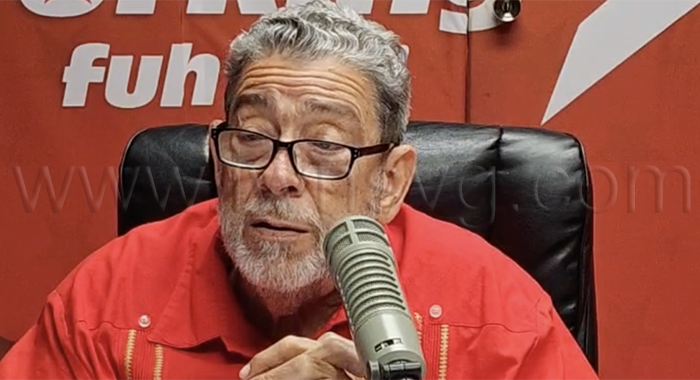
Gonsalves says ULP will make swift political comeback
KINGSTOWN, St. Vincent – Just months after suffering a landslide electoral defeat that ended a quarter-century of incumbency, the leader of St. Vincent and the Grenadines’ main opposition Unity Labour Party (ULP) Ralph Gonsalves is already positioning his party for a rapid return to national office, citing a burgeoning governance crisis that has eroded public trust in the ruling New Democratic Party (NDP) administration.
In a wide-ranging interview broadcast on local radio, the former prime minister outlined what he frames as an undeniable “Labour resurgence” across the country, fueled by growing public discontent with the NDP’s first term in office. Gonsalves argued that the current government has overseen a rapid deterioration of national conditions that touches every sector of Vincentian life, from economic stability and public safety to core government administration.
He accused the sitting administration of operating on unresponsive “autopilot”, claiming its leaders fail to grasp the full scope of the crises they have allowed to unfold, and lack the strategic vision to address the complex challenges facing the small island nation. “The present administration has no knowledge of how to proceed” on key issues impacting ordinary Vincentians, Gonsalves told radio listeners.
The ULP leader highlighted a recent well-attended national council meeting that drew large participation from public sector workers, including teachers and police personnel, as proof of the growing momentum behind the opposition. He described the turnout as a demonstration of “the might and influence of the labour family”, noting that the display of grassroots support has left the current NDP government “dazed and frightened”.
Gonsalves went further, claiming that even long-time staunch supporters of the NDP now privately predict the current administration will be limited to a single term, with some suggesting it could collapse and leave office ahead of the end of its scheduled mandate. He called on the ruling party to take accountability for its missteps, saying, “Grown men and women need to stand up when they’ve made mistakes and say ‘I made a mistake.’”
For Vincentians disillusioned with the current government, Gonsalves asserted, “The only option available is the Unity Labour Party.” He added that growing numbers of citizens are reaching out directly to party headquarters and contacting him personally for guidance, a trend he says reflects eroding confidence in the NDP. Reaffirming the ULP’s deep roots in Vincentian politics, he said the party is ready to provide the decisive, competent leadership that is currently missing from national governance.
Addressing the everyday concerns of working people, Gonsalves gave a direct assurance: “Labour has your back.” He urged ULP supporters to remain united, arguing that the ruling government’s attempts at “fear-mongering” and intimidation of civil servants who align with the opposition will ultimately fail. As public frustration grows, he noted, “people are getting less afraid” to openly associate with the Unity Labour Party, blunting the administration’s efforts to slow the opposition’s growing momentum.
While Gonsalves remains actively engaged in regional and international affairs through his longstanding work with regional organizations, he made clear that his top priority right now is advancing the local resurgence of the ULP. Though he stopped short of predicting an exact timeline for a return to power, admitting he cannot know who will hold the prime minister’s office 12 months from now, he said mounting disarray within the NDP administration makes a swift ULP comeback far more likely than not.
The ULP was ousted from power in a historic November 2025 election, losing by a lopsided 14-1 margin after 25 consecutive years leading the country. That defeat marked one of the most dramatic electoral upsets in Vincentian politics since 1989, when the NDP won all 15 parliamentary seats in another historic landslide.
-
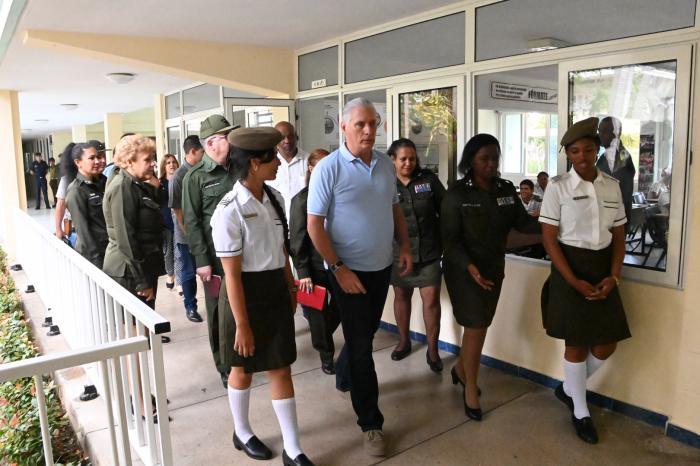
Hermanos Martínez Tamayo Pre-University Institute: A Distinctive, Innovative, and Demanding Educational Model
On Thursday, June 5, 2026, Cuban President and First Secretary of the Central Committee of the Communist Party Miguel Díaz-Canel Bermúdez undertook an official visit to the unique Hermanos Martínez Tamayo Vocational Pre-University Institute, operated by the country’s Ministry of the Interior (Minint) in Havana’s Playa municipality. He was joined on the visit by Lázaro Alberto Álvarez Casas, Minint Minister, Army Corps General and member of the Communist Party Political Bureau.
The visit came at the direct request of a student from the institute, who raised the invitation during a previous public event where the two leaders crossed paths. During an open, heartfelt exchange with students, graduates, faculty and institutional leadership, Díaz-Canel offered high praise for the institute’s educational framework, labeling it a “distinct, innovative, and demanding educational model” that aligns with the revolutionary vision first laid out by Fidel Castro during the development of the Battle of Ideas initiative.
Díaz-Canel told attendees he was particularly impressed by the institute’s ability to maintain its high standards of operation for decades, including through the ongoing challenging period that has strained educational systems across Cuba. He noted that the Ministry of the Interior, already widely recognized by the Cuban people for its critical public service, has extra reason to take pride in hosting such an exceptional educational institution.
Commenting on the institute’s well-maintained, orderly and welcoming campus, the president emphasized that holistic education extends far beyond textbook curriculum. Physical environments that nurture and inspire the spirit, he explained, are a core component of meaningful learning that prepares young people for public life.
Throughout the conversation, which preceded a guided tour of the institute’s classrooms and research laboratories, Díaz-Canel stressed the ongoing importance of fostering critical thinking, revolutionary commitment, and well-rounded personal development to prepare young Cubans to contribute to the country’s socialist construction project as engaged, responsible citizens. After hearing personal accounts from students, professional insights from graduates, and reflections from teaching staff, the president noted that the visit offered a critical morale boost amid the country’s current complex context, which has been shaped by persistent external aggression from the United States. “Talking with you, seeing your willingness, your commitment, your training, and the way you express yourselves, also reaffirms the feelings of appreciation one has for this institution. This strengthens us greatly and also gives us a lot of energy,” he stressed.
Díaz-Canel extended an invitation to students to join the Community Youth Network, a new grassroots initiative that organizes Cuban youth for neighborhood-focused public service work. He also urged attendees to prioritize rigorous study, deep exploration of history and science, and independent inquiry, explaining that these practices build the knowledge and critical perspective needed to make thoughtful, informed decisions that benefit the nation. The conversation also included open discussion of the severe economic and social strain placed on Cuba by the United States’ long-running suffocating embargo policy.
In comments to reporters following the visit, institute director Colonel Vivian Sabuquet Larrondo outlined the institution’s 22-year legacy of public service. As the only pre-university of its kind in Cuba, the school holds a unique mission: training the next generation of Minint officers and personnel, while also preparing graduates who choose to pursue civilian higher education. To date, more than 4,000 young people have graduated from the program, many of whom now serve in the Ministry of the Interior.
Sabuquet Larrondo explained that the institute delivers a fully holistic education that integrates patriotic formation, military preparation, physical education, cultural programming, athletic opportunities, and cutting-edge instruction in technology and scientific development. Students enter the institution between the ages of 14 and 15, graduate at 17, and learn from a faculty of highly experienced educators who bring strong professional expertise and a deep commitment to core revolutionary values. Beyond academics, the school instills foundational life skills including disciplined coexistence, strong work ethic, solidarity, humanism, and patriotism, with ongoing support from students’ family members. “I think the most important thing is the contribution we have made, not only to the Ministry of the Interior, but also to society,” Sabuquet Larrondo noted.
-

Cuba resumes production of cytostatic drugs
Against a backdrop of crippling economic constraints and a steadily tightening U.S. economic, commercial, and financial blockade, Cuba has marked a major milestone in protecting public health: the full restart of production at the AICA Laboratories cytostatic drug facility, following a targeted expansion investment designed to boost domestic output of critical cancer treatments.
The reopening event, held on June 5, 2026, brought together senior leaders from Cuba’s biopharmaceutical sector and public health system, including BioCubaFarma president Mayda Mauri Pérez, who hosted Minister of Public Health José Angel Portal Miranda during an official tour of the upgraded facility. The visit underscored the close cross-sector collaboration between the national biopharmaceutical industry, the Ministry of Public Health (Minsap), and the Cuban government – a partnership that officials say was instrumental to completing the expansion and restart despite the country’s ongoing external pressures.
Per an official update shared to BioCubaFarma’s Facebook page, the production restart is being carried out as a gradual, carefully monitored process. Each stage of manufacturing will be brought online incrementally, a deliberate approach chosen to guarantee consistent technological stability and adherence to Cuba’s strict quality standards for pharmaceutical products.
Following the expansion, the upgraded plant is now positioned to supply 16 different cytostatic (cancer-fighting) medications to Cuba’s National Program for the Care of Cancer Patients. Production scheduling has been structured to prioritize the drugs classified as most clinically critical, aligned with needs assessments coordinated directly with Minsap.
Speaking during the reopening ceremony, Portal Miranda emphasized that even amid widespread economic limitations, the facility’s return to operation represents a critical step forward in securing consistent access to life-saving cancer treatments for the Cuban people. Mayda Mauri Pérez echoed this sentiment, noting that the intersectoral alliance between the biopharmaceutical and public health sectors has emerged as an essential bulwark protecting drug access for Cubans, even as the U.S. blockade has intensified in recent years.
The event also included participation from practicing Cuban oncologists, who held working discussions with facility leadership to align production priorities with real-time clinical needs on the ground. This direct input ensures that output from the plant will directly address the most pressing care demands facing patients across the country.
Far from being an isolated infrastructure milestone, the restart of the AICA Laboratories plant stands as a clear illustration of the coordinated mission that unites Cuba’s biotechnology sector and public health system: to guarantee access to essential medications for all citizens, regardless of external pressures. For a country grappling with externally induced supply shortages, every treatment produced at this expanded facility represents more than just medicine – it is a testament to Cuban public health sovereignty, a source of hope for thousands of patients and families, and a reaffirmation of the state’s longstanding commitment to the universal right to health.