作者: admin

  • Government to Take Over Sir Luther Wynter Pre-School as Early Childhood Education Network Expands

    Government to Take Over Sir Luther Wynter Pre-School as Early Childhood Education Network Expands

    In a significant push to strengthen the island nation’s early childhood education infrastructure, the Jamaican government has announced plans to take over operations of the Sir Luther Wynter Pre-School, a move that forms a core part of its broader national initiative to expand access to high-quality early learning opportunities across the country.

    The takeover, confirmed by senior education officials in recent statements, marks a key milestone in the government’s multi-year strategy to formalize and upgrade early childhood education services, which have long been identified as a critical foundation for long-term educational success and national development. Currently, many small community-run pre-services across Jamaica operate with limited public funding, inadequate facilities, and uneven teaching standards, gaps the government aims to address through a gradual integration of independent and community pre-schools into the national public education network.

    Sir Luther Wynter Pre-School, located in the Kingston and St. Andrew region, has served local working-class families for decades, providing early care and learning for children aged three to five. Under the new arrangement, the facility will be fully incorporated into the public early childhood education system, bringing increased government funding, facility upgrades, standardized teacher training, and regulated curriculum alignment with national education standards. Education ministry representatives note that the transition will be completed in a phased manner to minimize disruption to current students and their families, with existing teaching staff invited to undergo certification to retain their positions under the new public structure.

    This expansion of the early childhood education network aligns with the government’s broader education reform agenda, which prioritizes closing achievement gaps by investing in the earliest stages of learning. Research from global education bodies consistently shows that access to quality early childhood education improves long-term academic outcomes, reduces high school dropout rates, and supports better social and economic mobility for marginalized communities. Jamaican education officials say the takeover of Sir Luther Wynter Pre-School is just the first of several planned integrations of community pre-schools into the public network over the next two years, with a target of bringing 90% of all early childhood learners into regulated, publicly supported facilities by 2027.

    Local parents and education advocates have broadly welcomed the move, noting that the acquisition will bring more affordable, reliable early learning options for families in the area. While some have raised questions about transition timelines and staffing changes, officials have committed to ongoing community engagement to address concerns throughout the handover process.


  • Government Takes Charge of Fort James Redevelopment Plan

    Government Takes Charge of Fort James Redevelopment Plan

    After months of stalled negotiations and public pressure over the underused historic Fort James site, local government officials announced this week that they are stepping in to take full ownership of the long-delayed redevelopment plan for the property.

    The 42-acre riverfront site, which housed a decommissioned 19th-century military fort and later a closed paper manufacturing plant, has sat largely unused for nearly 15 years. Previous private development partnerships fell apart over financing gaps, conflicting zoning demands, and disagreements over how to preserve the site’s historic artifacts while delivering public amenities.

    Under the new government-led framework, the project will prioritize mixed-income housing, public green space, a heritage center celebrating the fort’s military and industrial history, and new small business commercial spaces. Officials project the redevelopment will unlock an estimated $250 million in local economic activity, create more than 1,200 construction jobs, and deliver more than 800 permanent positions once completed.

    Local community leaders have largely welcomed the move, noting that public control will ensure the project serves broad public needs rather than just private profit. Government planners have announced a 60-day public comment period to gather input from local residents on final design and amenity plans before breaking ground, which is scheduled for the second quarter of next year.

  • Antigua and Barbuda Considers Public Register for Parents Who Ignore Child Support Orders

    Antigua and Barbuda Considers Public Register for Parents Who Ignore Child Support Orders

    The government of Antigua and Barbuda has given formal approval to a transformative digital initiative designed to overhaul the broken system of collecting and distributing court-ordered child maintenance payments, a move crafted to address a years-long crisis that has left thousands of vulnerable children and their caregivers in financial precarity.

    The green light for the project, headlined by the custom-built Main Collect mobile and web application, was announced publicly by Director General of Communications Maurice Merchant during a press briefing held immediately after Friday’s Cabinet meeting. Merchant detailed that the digital platform was built to streamline electronic transactions for child support and bring greater transparency and oversight to legally mandated financial obligations for parents.

    Cabinet members based their decision on a detailed presentation delivered by senior Family Court officials, including Registrar Francis Crown and Crown Counsel Alicia Asker, alongside the local software development team that spent months building the tailored system. The presentation laid bare the deep-rooted administrative and enforcement challenges that have long plagued the island nation’s existing child maintenance framework, leaving court staff struggling to track payments and pursue non-compliant parents.

    Official data shared with the Cabinet put the number of men with active court-ordered child maintenance obligations at between 1,500 and 2,500. Widespread non-payment among this group has created cascading financial hardship for single mothers, legal guardians and the children who rely on these monthly payments to cover basic needs from housing to education and healthcare.

    According to the project timeline, the Main Collect application is on track to launch full operations across Antigua and Barbuda within six months. The platform has already secured formal approval from the Eastern Caribbean Supreme Court, and regional planners have set a long-term goal to roll the system out to all 11 member states of the Organisation of Eastern Caribbean States (OECS) to standardize child maintenance processes across the region.

    Unlike the outdated manual processing system currently in place, the new digital tool will allow paying parents to submit child maintenance funds electronically from any smartphone, tablet or computer. Recipients will be able to securely log into the system to track incoming payments, confirm deposits and check for outstanding balances in real time, eliminating the long wait times and information gaps that have been common under the current system. For court and enforcement officials, the platform will provide instant access to up-to-date compliance data, making it far faster to identify and pursue persistent defaulters.

    In a nod to the complexity of the non-payment crisis, Merchant emphasized that Cabinet officials do not see digital modernization as a silver bullet for chronic non-compliance. Alongside approving the new platform, the body held in-depth discussions on complementary enforcement measures that will be paired with the technological upgrade to increase compliance rates.

    Under active consideration are a series of policy changes: targeted legislative amendments that would increase the severity of penalties for parents who consistently refuse to meet their obligations, the creation of a public central register that names persistent delinquent payers, and expanded formal partnerships with local employers to enable automatic salary deductions for non-compliant individuals, cutting through the delays that have long derailed enforcement efforts.

  • Man Hospitalized After Stabbing During Dispute Over Wallet

    Man Hospitalized After Stabbing During Dispute Over Wallet

    A routine moment inside a downtown mobile phone outlet turned into a violent tragedy this week, after a dispute over a misplaced wallet left a young man hospitalized with serious stab wounds on St. Mary’s Street.

    According to initial law enforcement accounts, the victim was waiting inside the store when his wallet slipped from his pocket unnoticed onto the tiled floor. Moments later, another customer entering the retail location spotted the fallen item and picked it up, reportedly claiming it for themselves.

    Tensions flared when the victim noticed his wallet was missing and confronted the other patron, demanding the property be returned. Investigators say the thief refused to hand over the full wallet, instead pulling out the cash inside before attempting to exit the building.

    Refusing to let the suspect leave with his money and identification, the victim followed the individual out onto the public sidewalk. What began as a heated verbal argument quickly escalated into physical violence: during the chaotic confrontation, the suspect pulled a pair of scissors from their belongings and stabbed the young man multiple times. Immediately after the attack, the suspect fled the scene on foot, leaving the injured victim behind.

    First responders were called to the location within minutes and transported the victim to a nearby regional hospital, where he remains in care as of the latest updates. Law enforcement has launched a full investigation into the incident, and is currently reviewing store security footage and interviewing witnesses to identify and locate the fleeing suspect.

  • Eastern Caribbean labs link up for faster outbreak response

    Eastern Caribbean labs link up for faster outbreak response

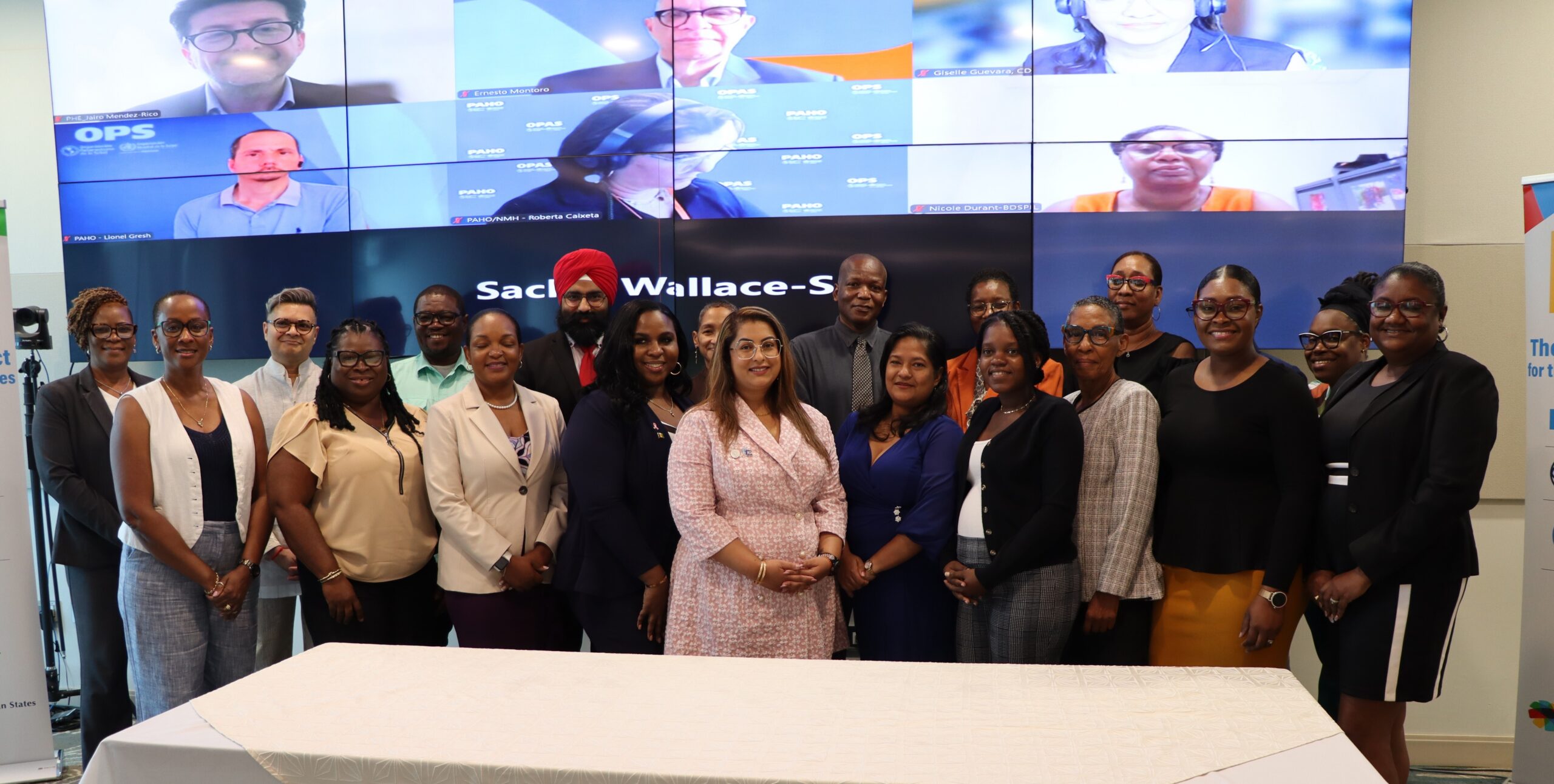
    A regional initiative to boost infectious disease monitoring, early outbreak detection and rapid public health response across the Eastern Caribbean is now underway, after the Pan American Health Organization (PAHO) concluded a targeted stakeholder consultation focused on building tier-based compliant laboratory networks. The multi-day gathering, hosted at Saint Lucia’s Harbour Club Hotel, brought together a diverse cohort of laboratory specialists, public health practitioners, sub-regional reference laboratory leaders and global health partner representatives from across the island bloc.

    The core goal of the consultation was to align regional stakeholders on the infrastructure, policy and operational requirements for building a tier-based laboratory network that meets the binding standards of the International Health Regulations (IHR) and aligns with global universal health coverage (UHC) goals. Unlike a centralized model, a tier-based system connects diagnostic facilities across multiple levels of care: from community-based testing sites at local polyclinics, to national reference laboratories, up to specialized regional reference centers. This interconnected structure is designed to cut wait times for diagnostic results, expand equitable access to testing, and deliver more consistent, reliable data to trigger faster outbreak responses.

    Vishwanath Partapsingh, PAHO’s advisor for health systems and services, outlined the dual core objectives of the regional consultation in opening remarks. “First, we wanted to open a collaborative dialogue with member states to build shared understanding of the core principles of tier-based laboratory networks, outline the tangible benefits these systems deliver, map existing national laboratory capacity across the region, and outline actionable next steps for each country to advance their own systems,” Partapsingh explained. “Second, we aimed to assess current progress countries have already made toward aligning their laboratory infrastructure with IHR requirements, and create space for cross-national experience sharing. Countries across the Eastern Caribbean are at different stages of developing these networks, so there is tremendous value in allowing nations to learn from one another’s successes and challenges.”

    For host nation Saint Lucia, the timing of the consultation proved particularly opportune, according to Dr. Glensford Joseph, the country’s Medical Officer of Health. Joseph noted that the gathering created a critical space for collaboration with other member states of the Organization of Eastern Caribbean States (OECS) to strengthen regional and national laboratory services collectively.

    “This consultation gives us a unique opportunity to conduct a full review of our current national laboratory framework, identify unaddressed gaps and challenges, and lay the groundwork to build a far more robust diagnostic system that serves communities across every level of care,” Joseph said. “Right now, we are preparing to expand routine laboratory services out to the community level, particularly in our island’s polyclinics, so this guidance could not have come at a better time as we shift to a tier-based approach.”

    Joseph added that Saint Lucia’s Ministry of Health prioritizes this regional collaboration because it helps national policymakers refine existing frameworks and actionable roadmaps to strengthen laboratory systems, work that directly advances both UHC goals and national outbreak preparedness efforts.

    “A strong, tiered laboratory network enables the decentralization of diagnostic services, meaning community members can access the testing they need close to home, which is a critical pillar of rolling out our national universal health coverage package,” Joseph emphasized. “Beyond improving access to routine care, strengthening this network is also central to boosting our national disease surveillance capacity. Laboratory diagnosis is the foundation of confirming outbreak-causing pathogens, enabling faster clinical management for patients and allowing public health teams to bring outbreaks under control far more quickly.”

    Looking ahead, PAHO expects that the outcomes of this consultation will drive measurable progress in rolling out tier-based laboratory systems across multiple Eastern Caribbean nations, including Saint Lucia, Grenada, and St. Vincent and the Grenadines, ultimately improving health outcomes and security for communities across the sub-region.

  • Alfred beats Jefferson-Wooden in Diamond League opener

    Alfred beats Jefferson-Wooden in Diamond League opener

    On a warm Thursday evening at Rome’s iconic Stadio Olimpico, Saint Lucian sprint star Julien Alfred delivered a thrilling performance to secure gold in the women’s 200m at the Golden Gala Pietro Mennea Wanda Diamond League meeting, outpacing the sport’s reigning world champion to claim a statement win ahead of the busy 2026 athletics season.

    Just one week ahead of her 25th birthday, Alfred crossed the finish line with a winning time of 21.93 seconds, boosted by a favorable 1.3 meters per second tailwind. Her challenger, American sprinter Melissa Jefferson-Wooden — who swept both the 100m and 200m world championship titles at the 2025 World Athletics Championships in Tokyo — got off to a strong start out of the starting blocks but could not match Alfred’s late-race pace, ultimately finishing second with a time of 22.17 seconds.

    Thursday’s race marked Alfred’s first Diamond League appearance of the 2026 season, a promising opening for the sprinter who already holds back-to-back 100m Diamond League titles. Even with an uncharacteristically wobbly start that put her briefly behind Jefferson-Wooden, Alfred dug deep over the final straight to pull ahead for the win. Her result at the Golden Gala marks the sixth-fastest 200m time of her professional career, and she already holds the world’s leading 200m time for 2026, having clocked an impressive 21.86 seconds at a meet back in April.

    For Jefferson-Wooden, the Rome race was her first competition of the season after a nine-month break from competitive racing. Notably, the American spent part of that time off on her honeymoon, fittingly, in Alfred’s home country of Saint Lucia.

    Fans will not have to wait long for a rematch between the two elite sprinters: the pair is already scheduled to face off again in the women’s 100m at the Prefontaine Classic, set to take place on July 4 in what is shaping up to be another high-stakes showdown between two of the world’s top female sprinters.

  • Dominica’s Gregor Nassief denied US visa weeks after historic CHTA election

    Dominica’s Gregor Nassief denied US visa weeks after historic CHTA election

    Weeks after securing a historic landmark win as the first Dominican-born, Dominican-based leader to head the Caribbean Hotel and Tourism Association (CHTA), prominent regional tourism executive Gregor Nassief has announced that he and his wife have been denied U.S. visa renewals following their application interview last Friday. This unexpected setback arrives at a critical moment, coming directly on the heels of Nassief’s election as President-elect during the Caribbean Travel Marketplace hosted by Antigua and Barbuda.

    Nassief’s election was widely celebrated across Dominica, marking a breakthrough achievement for the small island nation known as the Nature Isle. It also represented a milestone for the Organisation of Eastern Caribbean States (OECS), placing a Dominican citizen at the helm of one of the Caribbean’s most powerful and influential tourism industry bodies for the first time in the association’s history.

    In a Thursday interview with journalist Shermain Bique-Charles, Nassief outlined his deep concerns that the visa rejection carries cascading consequences that stretch far beyond his personal circumstances, impacting Caribbean tourism representation and regional interests on the global stage. “This is much bigger than me,” he emphasized.

    As the incoming CHTA president, Nassief is tasked with representing the Caribbean tourism sector at a wide range of high-stakes international engagements, including global conferences, investment summits, airline negotiations, trade exhibitions, and cross-border policy dialogues. A large majority of these critical events are held in the United States, which stands as the single largest source market for Caribbean tourism.

    Nassief warned that travel restrictions barring senior regional tourism leaders from entering the U.S. directly undermine the Caribbean’s ability to advocate for its policy priorities and sustain essential working relationships with key tourism stakeholders. One of his most pressing worries centers on regional airlift access, a long-standing core challenge for Caribbean tourism destinations.

    The entire Caribbean tourism ecosystem is deeply dependent on reliable air connectivity to drive visitor arrivals, and the majority of major airlines, travel conglomerates, and key industry partners that shape regional air service are based in the United States. Nassief explained that if regional tourism leaders cannot travel freely to attend in-person meetings and negotiations, it will weaken ongoing efforts to expand flight routes, improve connectivity, and strengthen mutually beneficial tourism partnerships.

    These risks are particularly acute for small island developing states like Dominica, where tourism functions as a central pillar of national economic growth and employment. Beyond the tourism sector, Nassief pointed out that the visa denial highlights broader systemic challenges for Caribbean entrepreneurs and business leaders who rely on U.S. travel to pursue commercial activities, secure foreign investment, and participate in professional industry events. The U.S. remains one of Dominica’s most important tourism and trading partners, making unimpeded access to the country critical for multiple sectors of the island’s economy.

    Prior to the visa denial, Nassief’s ascension to the CHTA presidency was a source of enormous national pride for Dominica, reflecting the island’s growing influence in regional tourism governance. A long-standing leading voice for Caribbean tourism, Nassief has spent decades advancing sustainable tourism development, climate resilience, environmental protection, and cross-regional collaboration. He previously led the Dominica Hotel and Tourism Association, served as Deputy Chairman of the Discover Dominica Authority, and played a key role in shaping the island’s national tourism strategy and international brand.

    His election to the top CHTA post was widely viewed as a well-earned recognition of both his decades of personal contributions to the sector and Dominica’s emergence as a respected, influential voice in Caribbean tourism. Today, industry observers across the region are raising questions about the wider implications of growing travel barriers for Caribbean leaders, business executives, and tourism representatives seeking entry to the United States.

    For Nassief, the core priority remains the future of the Caribbean tourism industry and the region’s ability to engage meaningfully with its key international partners. As Caribbean destinations continue to grapple with global economic volatility, rising operational costs, and growing competition from other global leisure destinations, he argues that maintaining strong, open international connections is more critical than ever. His core takeaway is unambiguous: travel barriers that impact regional leaders do not only affect the individuals involved — they ultimately ripple through tourism, trade, and investment, weakening the Caribbean’s collective voice on the global stage. For many in Dominica, the situation is a striking, disappointing turn of events: just weeks after one of the nation’s most accomplished tourism leaders achieved one of the highest honors in Caribbean tourism governance, he now faces restrictions that threaten to limit his ability to fully deliver in his new role.

  • Government reinforces customs surcharge relief measure to help reduce cost-of-living burden on consumers

    Government reinforces customs surcharge relief measure to help reduce cost-of-living burden on consumers

    BASSETERRE, Saint Kitts – In a proactive push to shield local households and businesses from the global wave of soaring living costs, the Government of Saint Kitts and Nevis has publicly reaffirmed its ongoing customs relief measures, highlighted by a full waiver of bunker and shipper surcharges from customs duty and tax calculations.

    Unveiled as a core component of the administration’s broader economic relief package rolled out in April 2026, the policy is intentionally structured to mitigate the ripple effects of spiking international fuel and freight expenses on the price of imported goods, which form a large share of everyday purchases for people across the island federation.

    Under current rules, customs duties and taxes are calculated based on the CIF (Cost, Insurance, Freight) value of imported shipments. By excluding bunker and shipper surcharges – extra fees tied to sea and air transportation – from this valuation, the government has cut unnecessary tax liabilities that would otherwise be passed down to end consumers. This step directly addresses the reality that recent transportation cost hikes stem almost entirely from external economic forces outside the federation’s control: volatile global fuel markets and persistent international supply chain disruptions that have driven up living costs across nearly every region of the world.

    Officials note that by reducing the overall tax burden on imported products, the waiver delivers immediate relief to local importers, creating clear incentives for these businesses to pass their savings along to shoppers at the point of sale. The customs surcharge exemption is not a standalone policy; it is one piece of a coordinated, multi-pronged strategy to soften the blow of international economic shocks, stabilize domestic prices, and cushion both household budgets and local business operations against global volatility.

    Additional temporary relief measures currently in effect include a 50 percent cut to the excise tax on gasoline, a reduction in the Customs Service Charge on gasoline from 6 percent to 3 percent, and the full removal of Value Added Tax (VAT) on eligible alternative energy equipment. All of these targeted interventions are designed to deliver tangible, immediate relief to working families and business owners while bolstering the nation’s long-term economic resilience to external shocks.

    All economic relief measures outlined by the government are scheduled to remain in effect through July 31, 2026. This public reminder comes as the administration continues to monitor global economic trends and adjusts its policy responses to protect the well-being of all citizens and residents of Saint Kitts and Nevis.

  • Police Probe Violent Attack on Crew Members Near Heritage Quay

    Police Probe Violent Attack on Crew Members Near Heritage Quay

    The Royal Police Force of Antigua and Barbuda has launched an urgent manhunt for a group of male suspects connected to a violent early-morning attack and robbery that left two visiting vessel crew members hospitalized and injured. The violent incident unfolded at approximately 1:20 a.m. local time on Thursday, June 4, along Popeshead Street, a central thoroughfare located near the popular Heritage Quay cruise ship dock where the two victims were based.

    Preliminary investigative updates from the police’s Office of Strategic Communications outline that the two crew members were returning to their berthed vessel on foot when they were suddenly ambushed by the group of unidentified attackers. Both men sustained multiple wounds in the unprovoked assault. The first victim suffered cuts and bruises to the face and head, and received emergency medical care directly at the scene of the attack. The second victim was far more seriously injured, with deep lacerations across his head and arm, and was urgently transferred to the main public care facility, Sir Lester Bird Medical Centre, for ongoing treatment. As of the latest police update, the second victim remains in serious but stable condition, with medical teams monitoring his progress closely.

    In addition to the physical harm inflicted on the two crew members, the attackers stole a backpack belonging to the victims that contained critical personal identification documents as well as a small sum of cash.

    Senior police administration has publicly condemned the unprovoked, senseless act of violence, emphasizing the force’s unwavering commitment to protecting both local residents and the international visitors that drive Antigua and Barbuda’s key tourism economy. Law enforcement officials are now appealing to members of the public who may have witnessed the attack, or hold any information that could help identify and locate the suspects, to come forward and assist with the investigation. Tipsters can reach the local Criminal Investigations Department directly at 462-3913 or 462-3914, or submit anonymous information via the independent Crimestoppers hotline at 800-TIPS (8477).

  • Government welcomes Antioch Baptist Church’s leadership in critical Recycling Project

    Government welcomes Antioch Baptist Church’s leadership in critical Recycling Project

    On World Environment Day, June 5, 2026, Saint Kitts and Nevis took a meaningful step forward in its national push for environmental sustainability, as a landmark partnership between the government’s Department of Environment, the Taiwan Technical Mission, and Antioch Baptist Church delivered the first community-managed official recycling bin to the Lime Kiln Commercial Development area.

    A small celebratory ceremony marked the launch of the new facility, which breaks new ground as the first recycling initiative led by a faith-based organization in the federation’s nationwide sustainability program. Department of Environment Director Derionne Edmeade opened the event by praising church leadership for their proactive approach, noting that Pastor Lincoln D. Connor and the congregation reached out voluntarily to join the project, rather than waiting for government outreach.

    Edmeade emphasized the ripple effect of the church’s action, saying, “It gives me great pleasure to really thank the leadership of the Antioch Baptist Church for taking this bold step, this leadership role so that other churches and different organisations may follow as they continue to lead this part of the church community.”

    Speaking at the ceremony, Resident Ambassador of the Republic of China (Taiwan) His Excellency Edward Tao highlighted the long-standing collaboration between Taiwan and the Saint Kitts and Nevis government on environmental projects, noting that the partnership for this recycling initiative has been five years in the making. Tao expressed enthusiasm for the project’s expansion into a new, underserved community, and recognized the work of Joyce Chang, the Taiwan Technical Mission’s lead representative on the program. As a symbolic gesture of the partnership, Tao presented Ian Richards, Antioch Baptist Church’s ceremony representative, with reusable shopping bags crafted from recycled materials sourced from the federation.

    In his remarks on behalf of Pastor Connor, the church board, and the full congregation, Richards shared that the idea to join the initiative emerged organically several weeks prior, and the team saw profound meaning in its launch aligning with World Environment Day. Echoing comments Pastor Connor delivered to the congregation on June 3, Richards noted that the biblical call for humanity to steward the Earth places a clear responsibility on all people to protect natural resources.

    This is not the first environmental action from the church community. Richards noted that young congregants designed and installed a community water conservation project years earlier, and young men involved in the church’s Turn Around Agenda program regularly lead local coastal clean-up and protection efforts. “We are familiar with the importance of protecting the environment,” he said.

    To maximize public benefit, the new recycling bin is positioned just outside the church’s perimeter fence, giving the community 24-hour access to the facility. Department officials have issued clear guidance for use: community members are asked to compress and bag accepted recyclable materials including plastic bottles, aluminum cans, soft metals, and cardboard before depositing them. Organic waste, food scraps, and general household garbage are strictly prohibited to avoid contaminating the recycling stream.

    The launch of Antioch Baptist Church’s recycling bin marks the first of several planned expansions for the national project. The Department of Environment confirmed it will soon add three additional public recycling bins across the country: one near Fraites Bakery in Molineux, a second at the Dr. Denzil L. Douglas Secondary School in Saddlers, and a third in Sandy Point, extending sustainable waste management access to more communities across Saint Kitts and Nevis.