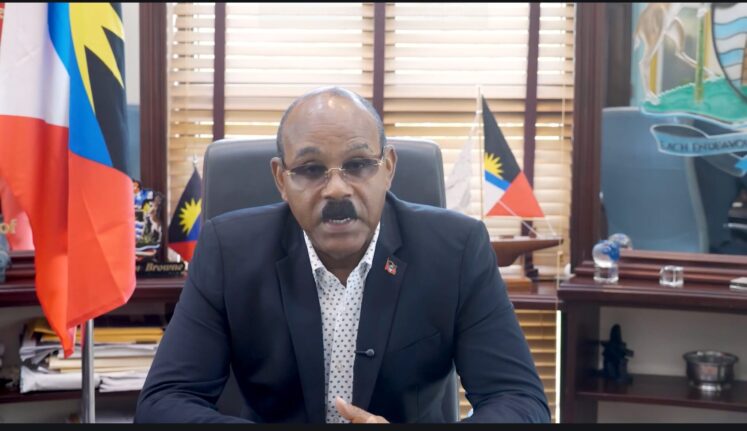
As Antigua and Barbuda prepares to mark its 2026 Centenarian Week, Prime Minister Gaston Browne has issued a heartfelt tribute to the nation’s residents who have reached 100 years of age or more, describing them as irreplaceable “living treasures” whose decades of sacrifice, quiet resilience and steady contribution laid the foundation for the modern country the population enjoys today. In his official message for the national observance, Browne pointed out that the collective life experience of the country’s centenarians adds up to more than 800 years of shared history. These individuals have borne witness to every major challenge, milestone and turning point that has defined Antigua and Barbuda’s journey of national development, from early struggles to key achievements that moved the country forward. “Today, we come together to celebrate remarkable people who have demonstrated extraordinary resilience over an entire century of life,” Browne stated. Beyond their long lifespans, the prime minister emphasized that centenarians personify core values that hold the nation together: hard-won wisdom, unshakable faith, steadfast perseverance, and an unwavering dedication to their families and local communities. Browne extended his sincere gratitude to these elders for their ongoing role in nation-building, noting that for generations, their efforts have strengthened both their own family units and the broader communities across the twin islands. In addition to his tribute, the prime minister made a formal pledge that the government will maintain and expand targeted support for the country’s older population. He stressed that it is a core national obligation to ensure all of Antigua and Barbuda’s centenarians can spend their later years in dignity, surrounded by respect, comfort and the love of their families and fellow citizens. Browne also used the occasion to call on all younger Antigua and Barbudans to set aside time during Centenarian Week to listen to the life stories and insights that centenarians have to share. He noted that the annual observance is far more than a celebration of long life: it is a chance to honor lives that have left a permanent, positive impact on every generation that followed. Closing his message, Browne conveyed congratulations and deep appreciation to every centenarian across the country on behalf of both the government and the people of Antigua and Barbuda, closing with a wish for continued good health, lasting happiness and peaceful days ahead.
作者: admin
-
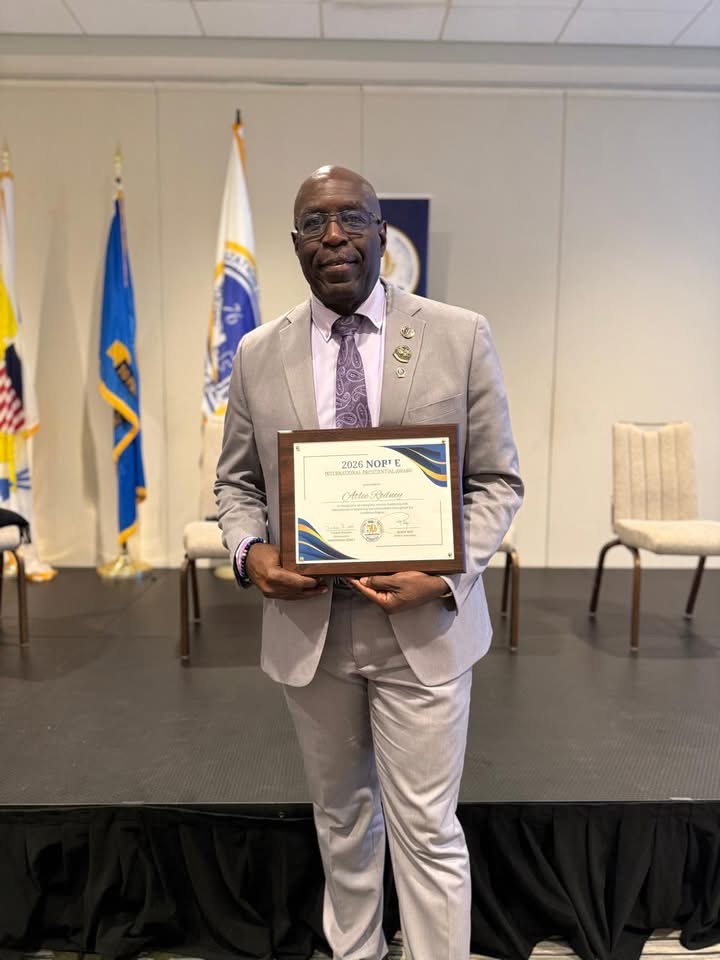
Former Police Commissioner Atlee Rodney Honoured with International Law Enforcement Award
A veteran Caribbean law enforcement leader has earned one of the most prestigious international honors in Black law enforcement, capping a more than 40-year career marked by cross-regional collaboration and public service commitment. On June 5, 2026, former Royal Police Force of Antigua and Barbuda Commissioner Atlee Rodney received the National Organization of Black Law Enforcement Executives (NOBLE) International Presidential Award during the 2026 NOBLE International Training Summit held in St. Thomas, U.S. Virgin Islands. The award was formally presented by NOBLE president and retired police chief Renee Hall, who highlighted Rodney’s decades of transformative contributions to law enforcement across the Caribbean. The 2026 award coincides with NOBLE’s 50th anniversary as a leading global organization for Black law enforcement professionals. In her remarks during the presentation ceremony, Hall emphasized that this year’s recognition placed special focus on elevating international partnerships and honoring the work of outstanding law enforcement leaders outside the United States. Hall told assembled summit attendees that NOBLE International took immense pride in honoring Rodney, whose legacy of visionary leadership, dedicated mentorship, community-centered service, and commitment to regional cooperation has left an indelible mark on public safety practitioners and local communities throughout the Caribbean and beyond. Trebor Randle, chair of NOBLE’s International Affairs committee, who attended the ceremony, added context to the honor, noting that the award was granted in direct acknowledgment of Rodney’s extraordinary leadership and unwavering dedication to advancing law enforcement standards across the entire Caribbean region over a 40-plus year career of exemplary public service. Rodney’s career in law enforcement has stretched across key leadership roles at both national and regional levels. Beyond his tenure as Commissioner of Police for Antigua and Barbuda, he has served as president of the Caribbean Association of Commissioners of Police (ACCP) and as a regional director on the board of the International Association of Chiefs of Police (IACP). He currently holds the position of Deputy Executive Director at the Regional Security System (RSS) Headquarters, where he continues to shape regional security strategy. In his acceptance remarks, Rodney expressed deep humility at receiving the honor from the globally respected law enforcement organization, extending sincere gratitude to NOBLE for the recognition. He offered special praise to his family, lifelong mentors, and all the individuals and partner organizations that have supported his work throughout his law enforcement career, and reaffirmed his commitment to continuing efforts to strengthen safety and security across the Caribbean region. Current Antigua and Barbuda Police Commissioner Everton Jeffers also extended official congratulations to Rodney following the ceremony, noting that the international honor is a source of collective pride for the entire Royal Police Force of Antigua and Barbuda, and a testament to Rodney’s decades of dedicated service to the nation and the broader Caribbean community.
-
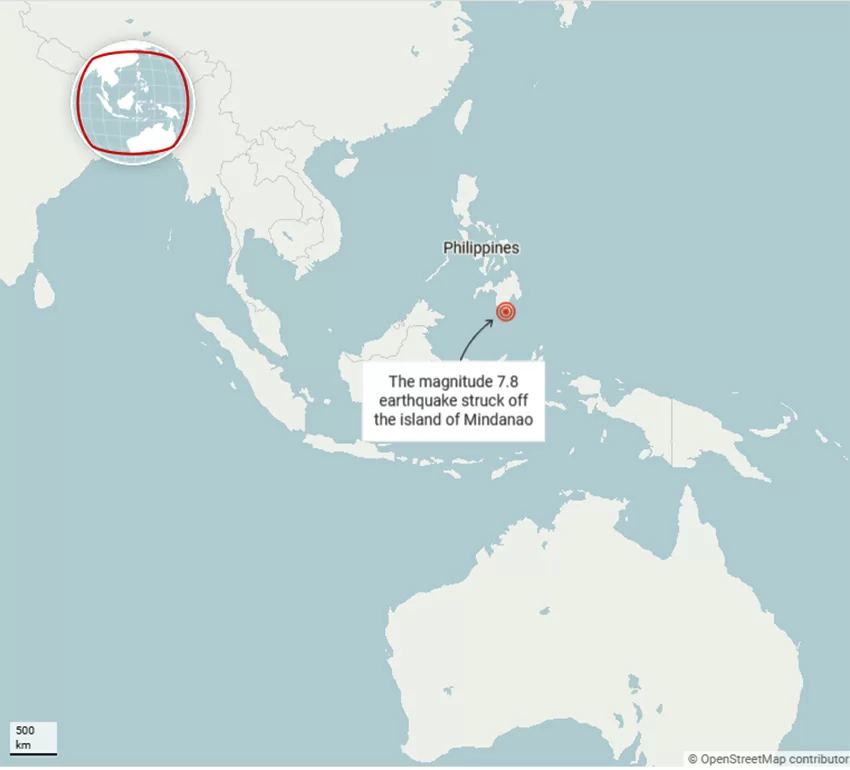
Krachtige aardbeving treft Filipijnen, minstens 15 doden en tsunami-waarschuwingen
A powerful 7.8-magnitude earthquake hit the Philippines early Monday morning, leaving at least 15 people dead, destroying multiple structures, and prompting temporary tsunami warnings across parts of Asia. The U.S. Geological Survey recorded the main tremor hitting just before 7:40 a.m. local time off the coast of Mindanao, the country’s second-largest island. In the hours after the initial shock, the Philippine Institute of Volcanology and Seismology (PHIVOLCS) confirmed that more than an hour of continuous aftershocks followed the main quake.
The hardest-hit area is General Santos, a coastal city in southern Mindanao home to 722,000 residents. PHIVOLCS rated the seismic event as “very powerful” on its internal intensity scale, with on-the-ground footage shared on official social media showing catastrophic structural damage. One viral clip captured the total collapse of a three-story building that housed a popular Jollibee fast-food outlet, sending a massive cloud of dust and debris billowing into surrounding streets. Additional reports confirm shattered windows, collapsed roofs, and partial structural failures across multiple neighborhoods in the city.
Local police confirmed that a large section of St. Elizabeth Hospital in General Santos suffered severe structural damage, forcing emergency workers to evacuate all patients and staff. Medical operations have been temporarily moved outdoors away from the unsafe main building, disrupting care for hundreds of residents in the area.
Eyewitness accounts paint a picture of widespread chaos as the quake struck. Sister Mary Ann Blanco Rhudy, a staff member at Notre Dame of Dadiangas University in General Santos, described the disorienting experience of the tremor: “Cars were shifting uncontrollably back and forth on the road, luckily they did not collide with one another. Trees swayed so violently that many branches broke off, and several buildings on our campus have partially collapsed.”
The earthquake fell on what was scheduled to be the first day of the new school year across the country, impacting an estimated 3.2 million students and 128,000 teachers and education staff in affected regions. Philippine President Ferdinand Marcos Jr. quickly mobilized national emergency response agencies, including the Bureau of Civil Protection and the National Disaster Risk Reduction and Management Council, and issued an immediate order to close all schools in impacted areas.
“Ensuring the safety of our children is our top priority,” Marcos said in a public statement following the disaster.
In the immediate aftermath of the quake, tsunami warnings were issued for the Philippines, Indonesia, and other coastal territories across Southeast Asia. Most of these warnings have since been lifted as threat levels have decreased, but a tsunami advisory remains in effect for Japan’s southern coast and outlying islands. Authorities in Japan are urging residents to stay away from coastlines and river mouths until further updates confirm the threat has passed.
As of Monday midday local time, rescue teams are still working to clear debris, locate missing people, and provide emergency aid to displaced residents in the hardest-hit areas of Mindanao.
-
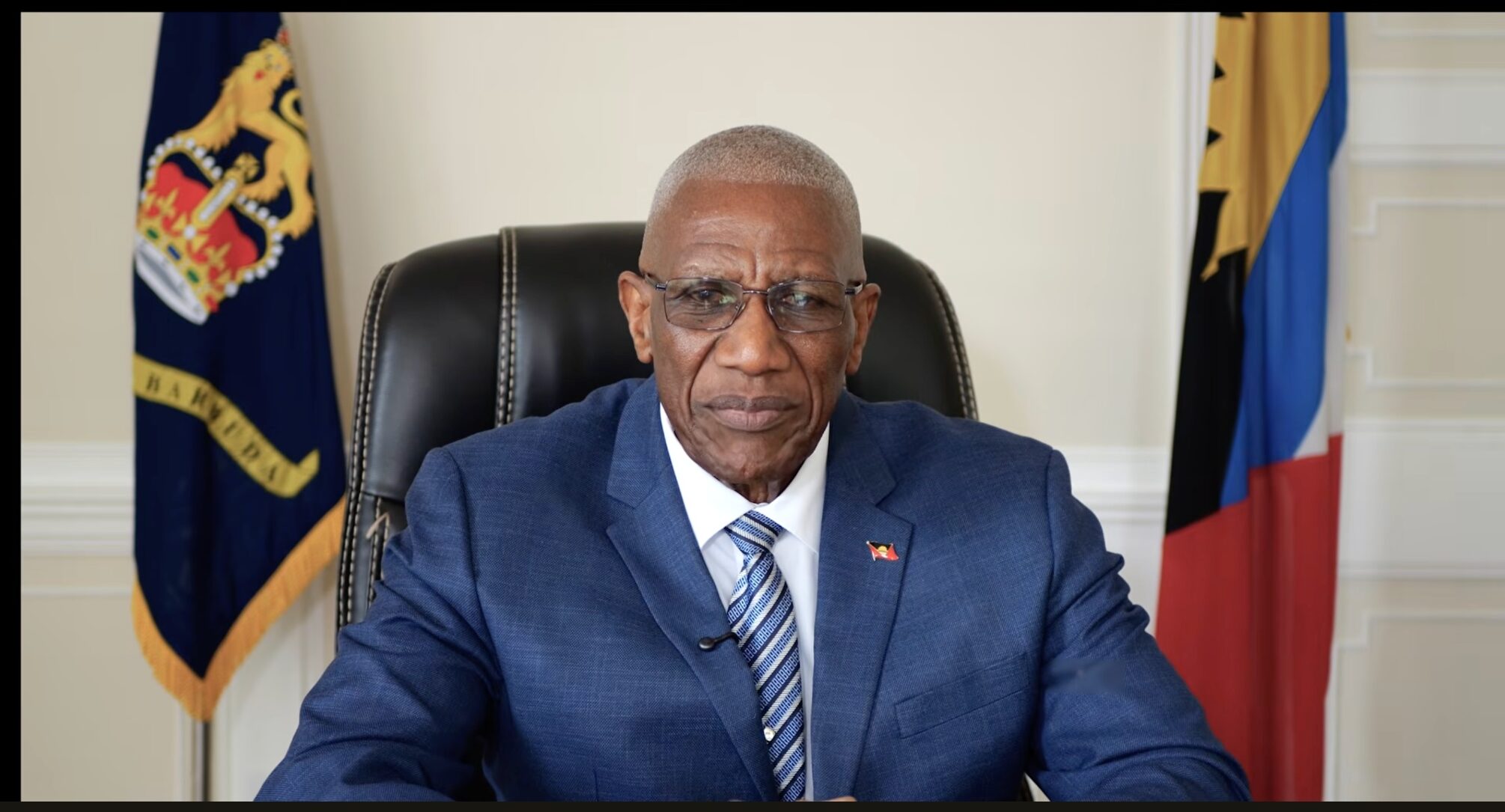
Governor General Welcomes $10,000 Grant for Centenarians
As Antigua and Barbuda prepares to mark its annual Centenarians Week in 2026, the nation’s highest-ranking ceremonial representative has thrown his full support behind a groundbreaking new government program that delivers direct financial recognition to the country’s citizens who have lived for 100 years or more.
Governor General Sir Rodney Williams used a national address opening the celebratory week to praise the administration’s decision to allocate a one-time $10,000 grant to every qualifying centenarian, an unprecedented step in the island nation’s history of honoring its eldest residents. In his remarks, Sir Rodney framed centenarians as irreplaceable national treasures, arguing that their century-long lives hold profound, actionable lessons for younger Antiguans and Barbudans across core values including steadfast perseverance, unshakable faith, selfless sacrifice, and committed community service.
Over their lifetimes, Sir Rodney noted, these long-lived citizens have stood at the center of the country’s most transformative historical chapters. They weathered crippling economic downturns, survived devastating natural disasters that have repeatedly tested the island nation, adapted to rapid, world-altering shifts in technology, and witnessed the country’s slow, meaningful journey from centuries of colonial rule to full sovereign independence. Beyond historical context, he emphasized that the collective wisdom, hard-won experience, and relentless resilience of these elders remain a powerful source of inspiration for younger generations navigating their own social and economic challenges.
The Governor General stressed that he held particular enthusiasm for the new grant program, marking the first time the national government has put forward direct financial support to honor centenarians during the annual observance. He extended public commendation to the Ministry of Social and Urban Transformation, as well as all other government and community stakeholders that helped bring the initiative from proposal to implementation. Sir Rodney described the program as far more than a financial gift: it is a tangible, public demonstration of the entire nation’s gratitude and deep respect for the contributions its eldest citizens have made across their lifetimes.
Beyond the new grant initiative, Sir Rodney also highlighted one of the country’s long-standing traditions of honoring centenarians: the delivery of official congratulatory messages from the British Sovereign to all citizens who reach their 100th birthday, and to those who mark subsequent birthdays beyond that milestone. He shared that he and his wife, Lady Williams, have had the distinct honor of personally delivering these royal greetings to dozens of centenarians across Antigua and Barbuda over his tenure in office, including those celebrating 101st, 102nd, and even more advanced birthdays.
Sir Rodney emphasized that Centenarians Week extends far beyond a simple celebration of long life. Instead, the annual observance serves as a moment to celebrate the enduring legacies that centenarians have built across the country, and to reaffirm the inherent value of the contributions that older generations have made to shape modern Antigua and Barbuda. He closed his address by issuing a call to action to all citizens and institutions across the nation, urging continued commitment to honoring, respecting, and caring for the elders who laid the foundation for the country’s current prosperity.
He concluded his national remarks by extending warm personal congratulations and sincere best wishes to every centenarian celebrating their place in the 2026 observance.
-

Mystery over Aquilah’s death
A death investigation is currently underway following the passing of a 26-year-old female employee assigned to Trinidad’s Police Administration Building, law enforcement officials have confirmed. The victim has been formally identified as Aquilah Rebekah Henry, a resident of Manraj Drive on Oudan Road in El Socorro. Henry held the position of Clerk II at the Port of Spain-based Police Administration Building, according to official police records.
First reports of the incident originated from Henry’s home, where uniformed officers were dispatched to respond just after 6:30 p.m. local time on Friday. Acting Inspector Murray and Acting Corporal Legendre were the lead investigating officers to arrive at the residential property, where they encountered already on-scene first responders including Police Constables Jaggernath and Meade, alongside a team from Emergency Health Services.
Upon entering the home, investigators located Henry unresponsive in an interior bedroom. In a statement to law enforcement, Henry’s 57-year-old father, who works as a professional chauffeur, shared that he last saw his daughter alive at roughly 8 a.m. the same day. When he returned to check on her at approximately 6 p.m., he found her in an unresponsive state and immediately placed a call to emergency authorities to request assistance.
A district medical officer attended the scene shortly after first responders arrived, and officially pronounced Henry dead at the residence. To advance the ongoing investigation, a court-ordered post-mortem examination has been scheduled to determine the exact cause of Henry’s death, a standard step in suspicious or unexplained death cases in the jurisdiction.
-
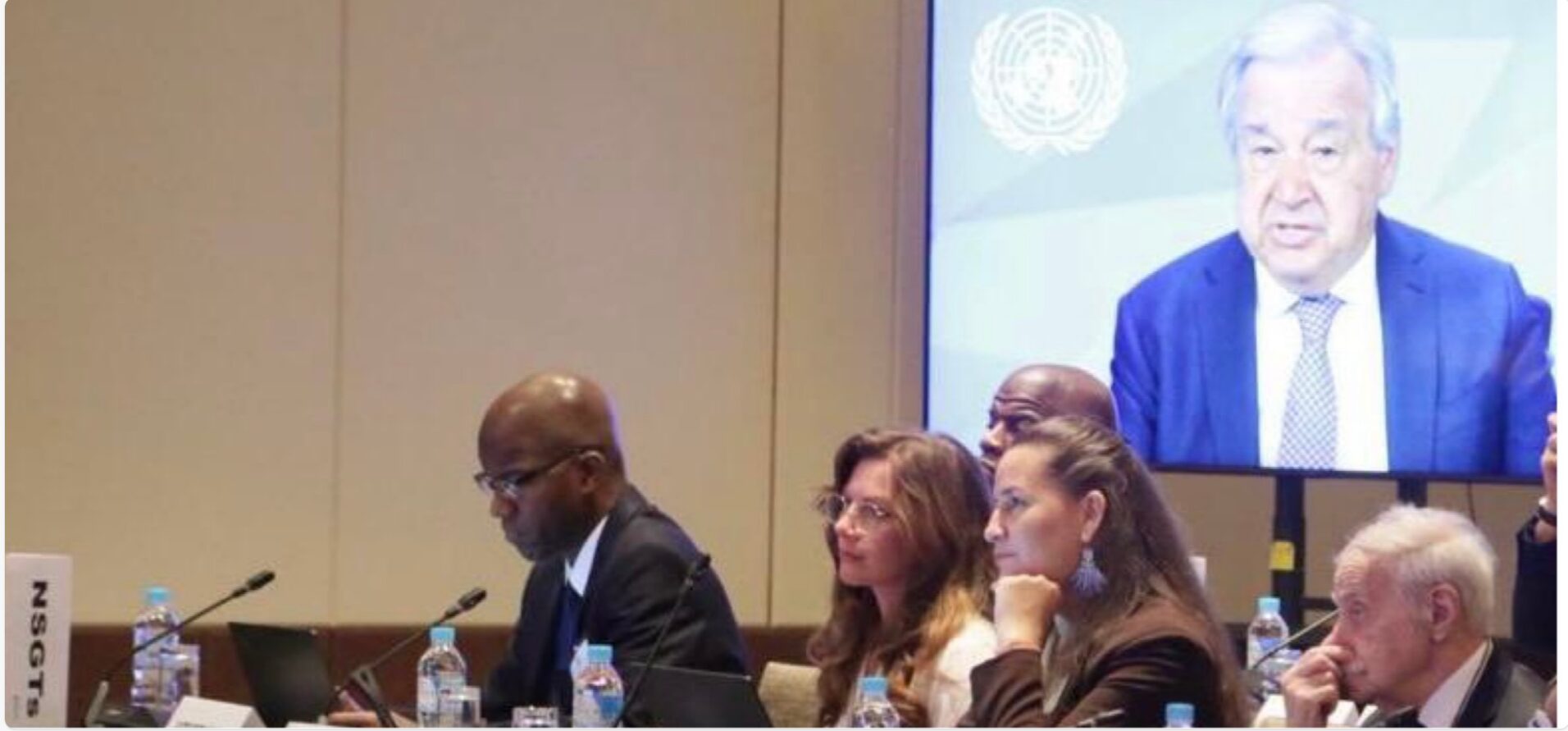
BVI calls on UN decolonization committee to take stronger action on remaining territories
At a recent regional decolonization seminar hosted in Managua, Nicaragua, the British Virgin Islands (BVI) has delivered a clear call to the United Nations Special Committee on Decolonization (C24) to leverage its full authority to accelerate progress toward self-determination for the 17 remaining Non-Self-Governing Territories (NSGTs) across the globe.
The appeal was presented by BVI Special Envoy Benito Wheatley during the UN C24 Caribbean Regional Seminar on Decolonization, a gathering centered on advancing the goals of the Fourth International Decade for the Eradication of Colonialism. In his address, Wheatley laid out two key priorities for the committee to act on immediately.
First, he called on C24 to use its formal good offices mandate to create structured dialogue frameworks between the four current administering powers — France, New Zealand, the United Kingdom, and the United States — and the territories they oversee. This dialogue, he emphasized, should be focused on supporting territories to pursue one of the three decolonization pathways officially recognized by the United Nations: full integration with the administering power, free association, or full sovereign independence.
Second, Wheatley urged the committee to expand its efforts to approve and deploy UN visiting missions to NSGTs that request them. These on-the-ground missions are designed to allow the UN to directly assess political, economic, and social progress toward self-governance, and to document the priorities of territorial populations.
“The Special Committee on Decolonization can make a tangible difference in advancing decolonization by employing the major tools at its disposal, which include good offices and visiting missions,” Wheatley said in his address. “Both provide useful engagement and dialogue for both the Administering Power and the Governments and peoples of those Non-Self-Governing Territories seeking a full measure of self-government.”
Wheatley also shared an update on the BVI’s own decolonization journey. The territory is currently preparing for upcoming constitutional negotiations with the UK, with the goal of securing full internal self-governance. Following those negotiations, a public referendum is scheduled for 2025 to 2031, where BVI residents will select their preferred final decolonization status from the three UN-endorsed sovereignty options.
The special envoy expressed gratitude for the committee’s recent support, including the deployment of a UN visiting mission to the BVI in August 2024 to assess progress toward self-determination, and its ongoing backing for the territory’s democratic institutions. But he also issued a stark warning: if the committee fails to deliver meaningful progress across all remaining NSGTs before the Fourth International Decade concludes in 2030, its ongoing relevance to the decolonization process will be called into question by the communities it is meant to serve.
As of 2025, 17 territories remain on the UN’s official list of Non-Self-Governing Territories: American Samoa, Anguilla, Bermuda, the British Virgin Islands, the Cayman Islands, the Falkland Islands, French Polynesia, Gibraltar, Guam, Montserrat, New Caledonia, Pitcairn, Saint Helena, Tokelau, the Turks and Caicos Islands, the United States Virgin Islands, and Western Sahara. This report is based on an official press release issued by the Government of the Virgin Islands following the Managua seminar.
-
Wife: delayed ambulance cost my husband his life
A 52-year-old Unemployment Relief Programme worker from Tobago has died after collapsing outside his Pleasant Prospect home, with his grieving widow claiming the tragedy could have been avoided if emergency medical services had provided an ambulance when she first called for help.
Patsy King-Roach, the man’s wife, spoke exclusively to the Express on Wednesday, sharing the harrowing details of the incident that unfolded on Tuesday shortly before 7 p.m. According to King-Roach, her husband Densil had just finished helping deliver a water shipment to their property when he suddenly fell to the ground near their water storage tank. When she reached him after rushing down her home’s steps, he had already stopped responding to her calls and questions.
Trapped with an unresponsive husband, King-Roach cried out for assistance from nearby family members. Her uncle and two other relatives quickly arrived on scene to help, but none of the small group were able to lift Densil or revive him. The family immediately began placing urgent calls for an ambulance, only to receive the devastating news that no emergency vehicle was available to dispatch to their location. Their next call to the local Fire Service yielded the same result: no ambulance was on standby to respond. Desperate, the family contacted police, who agreed to coordinate with the island’s Emergency Health Services (EHS) to secure transport.
By the time an ambulance finally arrived at the King-Roach home, more than 30 minutes had passed. When medics arrived, they confirmed Densil had already passed away. A local district medical officer has since listed his cause of death as a suspected heart attack. King-Roach remains convinced that even a small reduction in response time could have saved her husband’s life. “If they had come there on time, the time when we call even self if they had come ten minutes, five minutes, he would have been alive…even though he was not talking he would have been stable, he would have been alive,” she said.
The loss has left the family shattered: the couple’s seven-year-old son continues to repeatedly ask for his father, and King-Roach says the traumatic circumstances of her husband’s death will stay with her forever. In response to the public allegations, the Emergency Health Services has launched a formal internal investigation to determine why no ambulance was available to respond to the family’s urgent request on Tuesday evening.
-

Venezuelan woman dies from crash injuries
A fatal traffic collision in central Trinidad has claimed the life of a 35-year-old Venezuelan migrant, reigniting longstanding debates over road safety regulations for migrant communities and barriers to legal driving privileges in Trinidad and Tobago.
Rusimine Riaz, a resident of Cunupia’s Mon Plaisir Road, was struck by a passenger vehicle while traveling home on an unregistered electric scooter in the early hours of Monday. The incident unfolded just after 2 a.m. near the Jerningham Road junction, as Riaz made her way back to her apartment following a completed overnight shift at a food cart located on Rodney Road in Endeavour.
Riaz sustained catastrophic injuries to her head and spinal column in the crash, and was rushed to the Eric Williams Medical Sciences Complex in Mt Hope for emergency care. Despite medical intervention, she succumbed to her injuries on Tuesday night.
Law enforcement officials confirmed that the driver of the white Nissan Wingroad that hit Riaz remained at the crash site rather than fleeing. When responding officers asked if he had been drinking alcohol prior to driving, the driver openly admitted to having consumed alcohol. A subsequent breathalyser test confirmed his blood alcohol content exceeded the country’s legal limit, and he was taken into custody at the scene immediately.
Police also highlighted a key detail of the incident: Riaz was operating an unlicensed electric scooter, a violation of local road traffic regulations. In the wake of the crash, officials reminded all road users of the requirement to comply with existing motor vehicle laws to avoid similar tragedies.
The tragedy has prompted a leading migrant advocacy organization to reissue a years-long call for policy change, while also urging migrant communities to prioritize legal compliance. Angie Ramnarine, head of the La Romaine Migrant Support (LARMS) — an organization that has supported Trinidad and Tobago’s migrant population since 2018 through migrant children education programming and employment support — spoke out about the crash Tuesday.
Ramnarine extended her deepest condolences to Riaz and her grieving family, noting that the tragedy was a preventable outcome that grew out of overlapping regulatory barriers and unmet need for accessible transportation. She explained that when the ban on unregistered scooter use was first announced, many migrants had already purchased the affordable vehicles, leaving them with few options other than to continue using them illegally or abandon the scooters entirely.
“I think when it was announced that they could not ride these electric scooters, a lot of people had bought and then had to either sell them over or chuck them in. So, just like so many of them drive without licences, I knew the same thing was going to happen with the scooters,” Ramnarine said in a telephone interview.
Ramnarine stressed that regardless of systemic barriers, all people using the country’s roads are required to adhere to local laws. “People have to obey the law as well. As they say, ignorance of the law is no excuse,” she added.
She acknowledged that for many low-income migrants, electric scooters fill a critical gap as the most affordable form of personal transportation, but emphasized that safety and legal compliance must remain top priorities. “It is an unfortunate situation where a migrant was negatively impacted, even as she was illegally using a scooter,” Ramnarine said.
Trinidad and Tobago’s Ministry of Transport and Civil Aviation already laid out the legal framework for electric scooter use in a March 17 public notice. The ministry confirmed that operating unregistered two-wheeled vehicles including electric scooters on public roads without a valid driver’s permit is a criminal offense under the country’s Motor Vehicles and Road Traffic Act. “Persons found in contravention of the relevant provisions of the Motor Vehicles and Road Traffic Act will be subject to enforcement action in accordance with the law,” the release stated.
Against this regulatory backdrop, Ramnarine renewed her organization’s appeal for the Trinidad and Tobago government to revise existing laws that bar most migrants from obtaining official driver’s licenses. LARMS has pushed for this policy change for years, she noted, arguing that expanding access to legal licensing would improve road safety for all users by bringing more migrant road users into compliance with the law.
“We have been advocating for that for some time now. We have made several calls for the Government to soften the laws for migrants to acquire a Trinidad and Tobago driver’s licence,” Ramnarine said.
-

Tristan Armstrong Charged Over Lower All Saints Road Store Break-In
In an official law enforcement update issued on Monday, June 8, 2026, the Royal Police Force of Antigua and Barbuda’s Office of Strategic Communications announced that 34-year-old Tristan Armstrong, a resident of Tyrells, has been taken into custody and formally charged in connection with a commercial break-in that occurred in late May on Lower All Saints Road.
Armstrong faces four separate criminal charges stemming from the incident: breaking and entering with intent to steal, larceny, malicious damage to property, resisting arrest, and escaping from lawful police custody, authorities confirmed.
The case traces back to May 29, when local police received an urgent report of an active break-in in progress at Turki and Son Store, a retail establishment located on Lower All Saints Road. Responding officers launched an immediate investigation into the incident, during which they determined multiple pieces of consumer electronics and hardware had been taken from the premises. According to official accounting of the stolen goods, the items included eleven 43-inch JVC brand televisions, one 32-inch Royal television, two corded power drills, one household vacuum cleaner, and one complete portable tool kit.
In a promising outcome for the store owners, law enforcement confirmed that every single stolen item has since been recovered by investigative teams, eliminating the full financial loss that would have otherwise impacted the local business.
In the statement, senior police administration extended public gratitude to community members in Antigua and Barbuda for their ongoing partnership and support that enables law enforcement to solve cases quickly and maintain public safety. “The cooperation of ordinary citizens continues to be one of our most valuable tools in fighting local crime,” the release implicitly emphasized.
To help prevent similar incidents from occurring at other local businesses, police also issued a public advisory for commercial establishment owners, urging them to upgrade their on-site security infrastructure. Key recommendations included investing in high-quality exterior and interior lighting, professionally installed closed-circuit surveillance systems, and other proven crime prevention measures that can deter potential burglars and assist with investigations if a crime does occur.
Local law enforcement is also continuing to call for public assistance with ongoing investigations, including this case. Any individual with additional information related to Armstrong’s alleged offense, or any other criminal activity across the island nation, is invited to contact the Antigua and Barbuda Criminal Investigations Department directly at 462-3913 or 462-3914. For those who wish to share information without revealing their identity, the anonymous Crimestoppers hotline is available at 800-TIPS (8477).
As of the official media release, Armstrong is scheduled to make his first court appearance on the day of the announcement to respond to all charges against him.
-
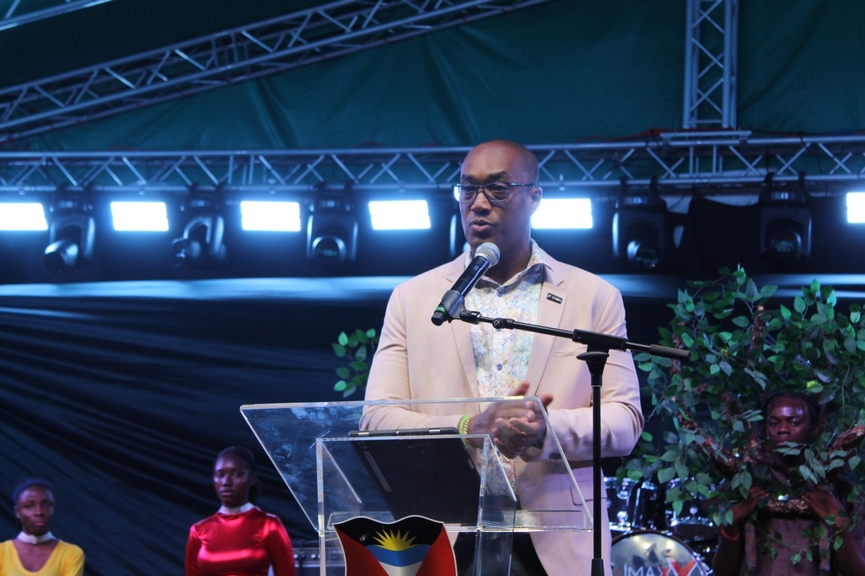
Technology, Advocacy and Partnerships among CHTA’s major gains under Destang
ST. JOHN’S, Antigua – As Caribbean tourism continues to navigate persistent global headwinds, outgoing Caribbean Hotel and Tourism Association (CHTA) President Sanovnik Destang is reflecting on a tenure marked by targeted progress across three core pillars: digital innovation, industry advocacy, and cross-sector collaboration, as the regional body prepares for a leadership transition later this year.
In an interview with SKNVibes conducted on the sidelines of the recent Caribbean Travel Marketplace hosted in Antigua and Barbuda, Destang emphasized that all advances achieved during his two-year term were the product of collective team work, rather than individual achievement. “I don’t think that there’s any one accomplishment that I had. It’s a team effort,” he noted, pointing to digital transformation as one of his proudest achievements.
Long before he assumed the presidency, Destang chaired CHTA’s founding Technology Task Force, a working group that has already published two widely circulated artificial intelligence guidebooks for regional tourism stakeholders. The team is currently finalizing its third edition, which centers on a timely and often debated topic: AI’s impact on tourism sector employment. Unlike many narratives that frame AI as a direct replacement for human workers, Destang explained the upcoming guide will outline actionable frameworks and strategies to leverage AI as a tool that enhances, rather than replaces, existing tourism workforces.
Digital upgrading efforts under Destang’s leadership have also focused on helping local and regional hotels gain greater operational autonomy and financial stability. The association has prioritized initiatives to support hoteliers in integrating technology into day-to-day operations, growing their share of direct customer bookings, and reducing overreliance on high-commission third-party booking platforms. Strong turnout and stakeholder engagement at CHTA’s recent Direct Booking Summit served as a clear signal of widespread industry demand for these support services, Destang added.
Beyond technology, the outgoing president highlighted major progress in policy and industry advocacy, particularly around the fast-growing short-term rental sector – a segment that now accounts for 30 to 40 percent of all visitor accommodation across the Caribbean, according to Destang. CHTA has launched the first phase of a centralized advocacy repository, with an initial focus on short-term rentals that takes a balanced, growth-oriented approach to regulation. Rather than pushing for strict rules that would force small operators out of business, Destang explained the association’s framework promotes responsible, sustainable growth for the sector, alongside efforts to raise professional standards and address tax-related policy challenges.
A third key initiative that defined Destang’s tenure is the expansion of work by CHTA’s Linkages Committee, which partners with the Caribbean Tourism Organization (CTO) to spread the economic benefits of tourism across the entire regional economy, beyond just large hotel properties. The committee works to build stronger, mutually beneficial connections between the tourism sector and local industries including agriculture and manufacturing, ensuring more community-wide gains from regional travel growth.
Destang credited CHTA’s board for its willingness to embrace innovative approaches and new ways of operating throughout his tenure, and expressed confidence that the initiatives launched during his term will be continued by his successor. Later this year, Dominican hotelier Gregor Nassief will take over the presidency of CHTA, stepping into a role that comes with a range of ongoing industry challenges as Caribbean tourism continues its post-pandemic recovery and adapts to shifting global travel trends.