作者: admin

  • NHT incentive targets essential workers

    NHT incentive targets essential workers

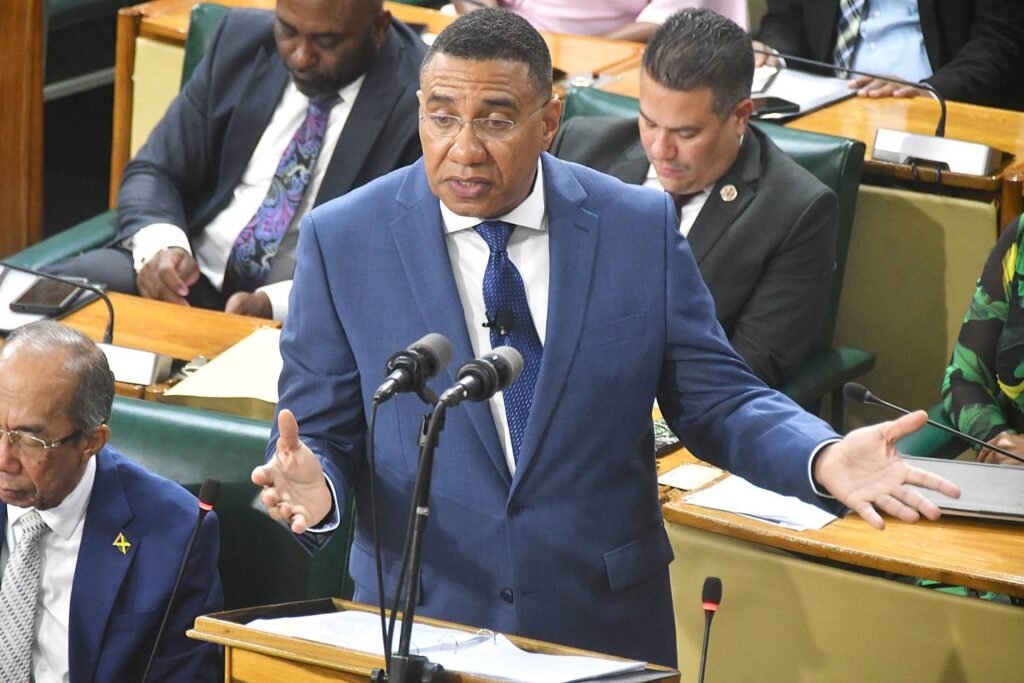
    In a significant move to address housing accessibility, the Jamaican government has introduced a tiered mortgage interest reduction program for essential workers. Announced by Prime Minister Andrew Holness during the 2026/27 Budget Debate, the initiative targets teachers, nurses, firefighters, and security personnel through the National Housing Trust (NHT).

    The groundbreaking policy links financial benefits directly to years of service. Employees with five to ten years of service will receive a one percent interest reduction, while those exceeding ten years qualify for a two percent reduction. This approach rewards long-serving public servants while stimulating housing demand among critical workforce segments.

    Concurrently, the administration is enhancing opportunities for younger demographics. The NHT will now reserve a minimum of twenty percent of scheme units for Jamaicans under thirty-five—doubling the previous allocation. Additionally, prospective homeowners can access advances up to $2 million JMD to facilitate open market purchases.

    Effective July 1, operational changes will further improve accessibility. The Home Improvement Loan waiting period will be reduced from seven to five years, accelerating existing homeowners’ access to funds for maintenance, security upgrades, and green energy installations.

    Prime Minister Holness emphasized that while the NHT already provides zero-interest loans to low-income groups, housing affordability remains constrained by supply limitations rather than financing availability. He cautioned that subsidizing demand without corresponding supply increases historically inflates prices, as witnessed following previous NHT loan limit enhancements.

    The government defended the NHT’s financial stability amid opposition criticism regarding annual $11.4 billion JMD transfers to the national budget. Holness asserted these transfers haven’t impaired the Trust’s lending capacity, highlighting the External Financing Mortgage Program that allows processing through partner institutions while maintaining NHT interest rates.

    Marking its 50th anniversary, the NHT will establish new state parks in Manchester and the Kingston Metropolitan Area, including dedicated senior citizen facilities on King’s House lands. These developments aim to promote community health, wellness, and civic pride, echoing the successful model of Emancipation Park.

  • PM charts rebuild

    PM charts rebuild

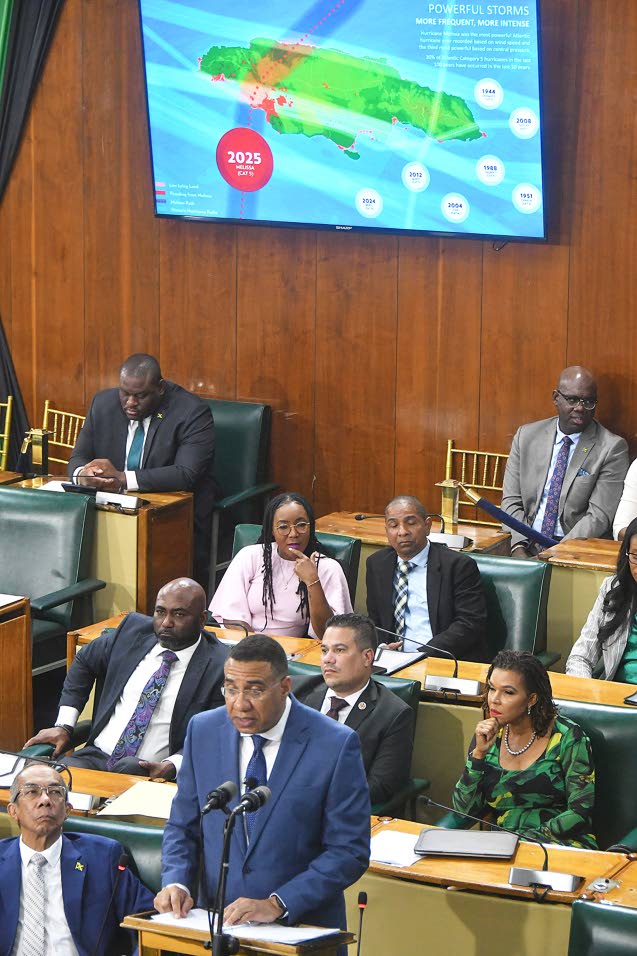
    In a landmark address to Parliament during the 2026/27 Budget Debate, Jamaican Prime Minister Dr. Andrew Holness unveiled a comprehensive national strategy to confront escalating climate vulnerabilities. The policy pivot, catalyzed by the devastation of last October’s Category 5 Hurricane Melissa, signifies a profound reorientation in how the island nation approaches development, infrastructure, and economic security.

    The centerpiece of this new vision is the planned relocation of critical government facilities and services in the historic coastal town of Black River. Citing the area’s extreme exposure to storm surges and rising sea levels, Holness declared intentions to develop a new, resilient urban center further inland, explicitly designed to withstand future climatic extremes. This move away from the coastline represents a significant acknowledgment of the existential threat posed by a changing climate.

    Beyond physical reconstruction, the Prime Minister outlined sweeping institutional reforms. A new oversight committee will be established to guide the National Reconstruction and Resilience Authority, ensuring coordinated and effective execution of the massive post-Melissa rebuilding effort. Furthermore, Holness signaled a radical transformation of Jamaica’s skills-training apparatus, aiming to align the national workforce with the demands of a climate-resilient and technologically advanced economy.

    To accelerate this economic transformation, the government will implement a fast-track approval pathway for strategic investment projects deemed vital to national recovery and long-term growth. This multi-faceted announcement frames climate adaptation not merely as a recovery effort, but as a catalyst for comprehensive modernization of Jamaican infrastructure, governance, and economic planning.

  • Black River reset

    Black River reset

    In a landmark response to climate threats, Jamaican Prime Minister Andrew Holness has unveiled a comprehensive plan to fundamentally redesign the historic town of Black River, moving critical infrastructure inland and relocating vulnerable coastal residents. The initiative, announced during the 2026/27 Budget Debate, comes as a direct consequence of the devastation wrought by Category 5 Hurricane Melissa in October of last year.

    Declaring that ‘We will not rebuild Black River as it was,’ Holness outlined a vision for a new, consolidated urban core—a first in the town’s 300-year history. This strategic shift aims to break the cycle of disaster and reconstruction by creating a settlement engineered to withstand future climate shocks. The Urban Development Corporation (UDC) will lead the redevelopment, which involves transferring essential services—including hospitals, courts, government offices, and transport hubs—to safer inland zones.

    The redesigned urban center will incorporate elevated structures, modern drainage systems, utility corridors, and built-in redundancy to maintain functionality during extreme weather. Public spaces such as a civic square and green areas are integral to the plan, while the damaged historic waterfront will be preserved and fortified with coastal defense systems.

    Acknowledging the profound social implications, Holness confirmed that relocation would be necessary for residents in high-risk coastal and low-lying areas. The government has begun identifying suitable lands for a structured relocation program, pledging to handle the process with sensitivity, transparency, and a focus on preserving livelihoods. Consultations with affected communities and commercial stakeholders are set to begin early next month.

    Holness framed the Black River project as a national pilot, emphasizing four guiding principles for Jamaica’s future development: risk-informed planning, retreat from high-risk coasts, system redundancy, and integration of economic activity with resilient infrastructure. The initiative also aims to stimulate regional economic growth by linking the new urban center to housing developments, agricultural zones, and south coast tourism assets, including eco-tourism investments at Font Hill.

    The Prime Minister asserted that Hurricane Melissa had irrevocably changed the calculus of coastal development, making the case for proactive, large-scale adaptation to protect lives and secure Jamaica’s sustainable future.

  • Diabetes prevalence nearly doubles from one Caricom country to the next

    Diabetes prevalence nearly doubles from one Caricom country to the next

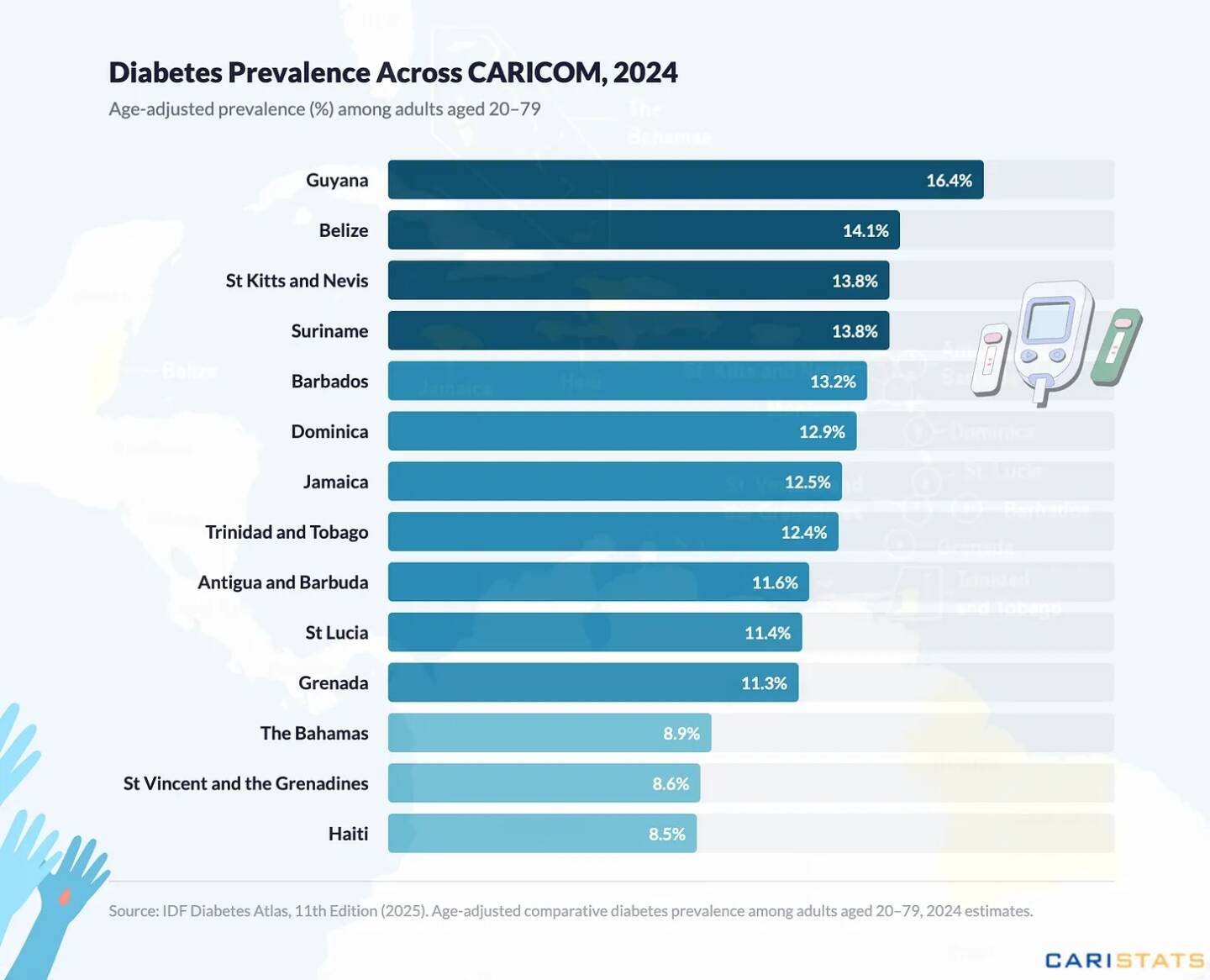
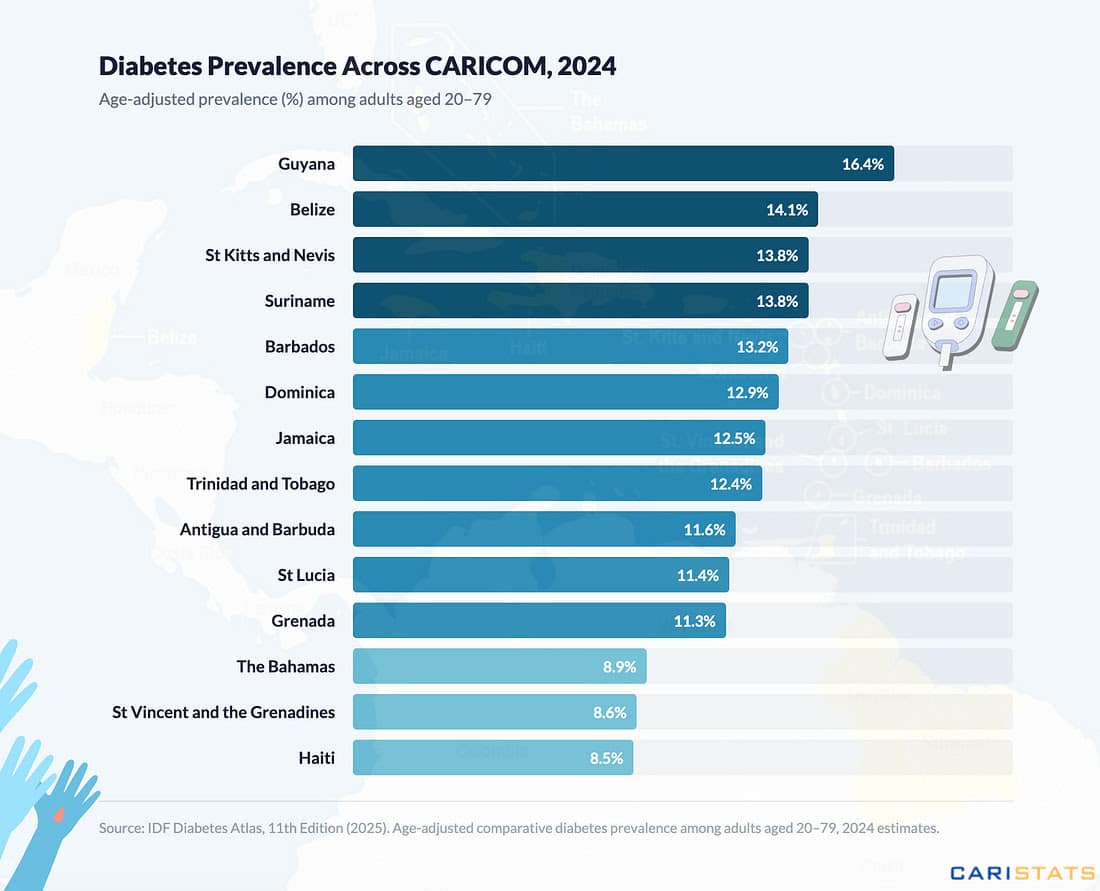
    A stark disparity in diabetes prevalence has emerged across the Caribbean Community (Caricom), with age-adjusted rates varying dramatically from 8.5% in Haiti to 16.4% in Guyana, according to the forthcoming 2025 International Diabetes Federation (IDF) Diabetes Atlas. This near twofold difference highlights significant public health inequities within the single regional bloc.

    The data, which standardizes comparisons by accounting for national age structures, identifies Guyana (16.4%), Belize (14.1%), alongside St. Kitts and Nevis and Suriname (both 13.8%) as the nations with the highest prevalence. A middle cluster of seven countries, spanning from Barbados (13.2%) down to Grenada (11.3%), forms the core of the region. Notably distinct at the lower end of the spectrum are The Bahamas (8.9%), St. Vincent and the Grenadines (8.6%), and Haiti (8.5%).

    This public health challenge is set against a concerning regional backdrop. The broader North America and Caribbean zone already contends with the second-highest diabetes prevalence globally. IDF projections indicate an additional 12 million adults living with diabetes across the region by 2050. For high-prevalence Caricom states, this accelerating trajectory intensifies an already critical health crisis, demanding urgent policy intervention and coordinated public health strategies to mitigate long-term impacts on healthcare systems and population wellness.

  • Development company CEO gives updates on Dominca’s international airport project

    Development company CEO gives updates on Dominca’s international airport project

    Dominica’s transformative International Airport development is making significant strides toward its 2027 completion target, with project leadership reporting substantial progress despite anticipated challenges. Samuel Johnson, CEO of the International Airport Development Company, confirmed in a recent government interview that construction continues to advance satisfactorily across all major components of the ambitious infrastructure endeavor.

    The runway, acknowledged as the project’s most technically demanding aspect, has reached approximately 90% completion. The primary remaining challenge involves finalizing foundation works at the center section where a vehicular tunnel will create continuous connectivity between Woodford Hill and Wesley. While grading and initial concrete work for the tunnel are complete, Johnson noted a temporary ‘holding pattern’ due to supply chain considerations for specific aggregate materials required for completion.

    Concurrent structural developments show promising momentum across the airport complex. The cargo terminal’s superstructure is already erected, while construction progresses on the Air Rescue and Firefighting building. Recent weeks have seen collaborative walkthroughs with fire service professionals to optimize operational layouts and safety configurations.

    The passenger terminal, conceived as a steel-frame structure, is now taking shape with active assembly of columns, beams, and structural framing. Project planners target October/November 2026 for completing exterior work on most buildings, contingent upon avoiding unforeseen natural or human-made disruptions.

    Significant engineering attention is directed toward the apron drainage system, designed to manage water runoff across the extensive three-kilometer flattened surface that replaces the area’s original hilly terrain. The system requires precisely calibrated culverts and drains to handle concentrated rainfall effectively.

    The project maintains alignment with the official completion timeline reaffirmed by the Prime Minister’s office in December 2025, representing a critical infrastructure milestone for Dominica’s transportation capabilities and economic development.

  • Kan olie $200 per vat bereiken?

    Kan olie $200 per vat bereiken?

    The global energy market faces unprecedented turmoil as geopolitical tensions in the Middle East threaten to push crude oil prices toward historic highs. What analysts once considered remote scenarios now appear increasingly plausible, with projections indicating potential spikes to $150-$200 per barrel.

    The core catalyst remains the effective closure of the Strait of Hormuz—a critical maritime passage handling approximately 20% of global oil exports. Since early March, Iran’s blockade has severely constrained shipments, permitting only vessels from select nations including India, China, Turkey, and Pakistan to transit. This strategic chokepoint’s disruption has created a supply deficit estimated at 10 million barrels daily.

    Brent crude, the international benchmark, breached $120 per barrel in early March and has sustained levels above $100. Recent escalations—including attacks on Iran’s South Pars gas field and retaliatory strikes on Qatari, Saudi, and Emirati energy infrastructure—have compounded market pressures.

    Despite coordinated releases of 400 million barrels from strategic reserves by consuming nations, the measures fall short of addressing the structural supply gap. Analytical firms including Wood Mackenzie and Vanda Insights now acknowledge $150 oil as a near-term possibility, with $200 scenarios no longer deemed unrealistic. Adjusted for inflation, the 2008 record of $147.50 equates to approximately $224 today, making a $200 benchmark effectively a historic peak.

    Such price levels would inflict severe economic damage globally. The International Monetary Fund estimates that a sustained 10% oil price increase elevates global inflation by 0.4% and reduces economic growth by 0.15%. Higher fuel costs would trigger broader inflationary pressures, suppress consumer spending, and potentially cause shortages in fertilizer and plastics.

    Countervailing forces may partially mitigate the crisis. Increased production from the United States, Canada, Brazil, and Argentina, alongside alternative routes like Saudi Arabia’s East-West pipeline, offers some relief. Additionally, demand destruction—where consumers and industries reduce consumption as prices become prohibitive—could eventually temper market exuberance.

    The ultimate price trajectory hinges on a delicate balance between buyers willing to pay premium prices and those exiting the market. With volatility expected to persist, the global economy braces for potentially transformative energy-driven economic shifts.

  • Kidney disease prevention drive launched in Barbuda

    Kidney disease prevention drive launched in Barbuda

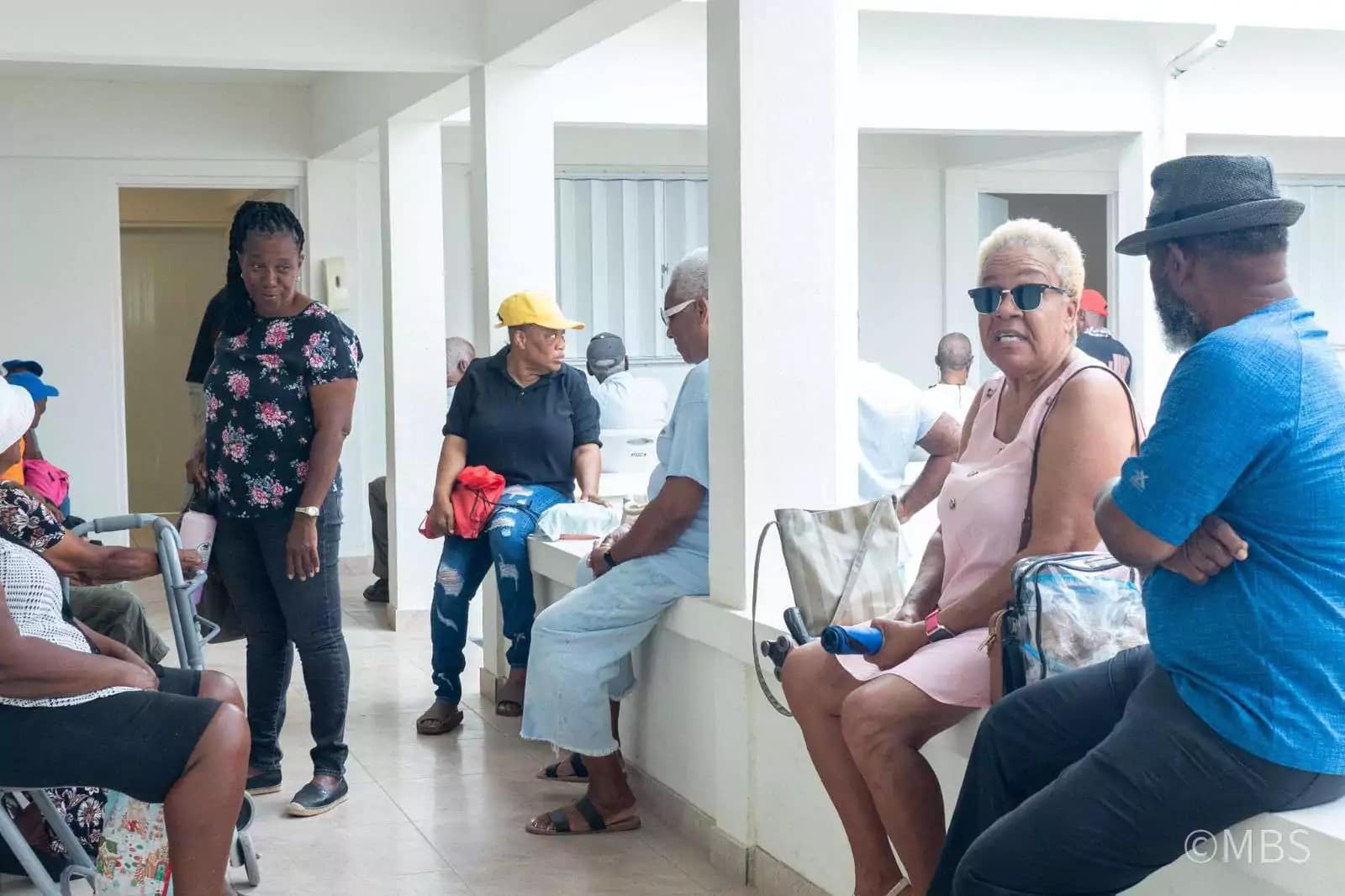
    A groundbreaking public health initiative targeting kidney disease has been formally inaugurated in Barbuda, marking a significant advancement in preventative healthcare for the island community. The comprehensive program, spearheaded by the World Kidney Day Team in collaboration with the Antigua and Barbuda Samaritan Society, emphasizes a three-pronged approach encompassing education, early detection, and preventive measures.

    With institutional support from the Sir Lester Bird Medical Centre and the Medical Benefits Scheme, this pilot project represents a coordinated effort to address the growing concerns around renal health. The initiative’s framework includes extensive community outreach programs, educational workshops, and systematic health screenings designed to empower residents with practical knowledge about kidney health preservation.

    Health authorities specifically identified diabetes and hypertension as the primary contributors to kidney disease prevalence in the region. Consequently, the program strongly advocates for proactive management of blood sugar levels and blood pressure control through lifestyle modifications. Nutritional guidance forms a cornerstone of the prevention strategy, with experts recommending dietary patterns aligned with the six Caribbean food groups for balanced nutrition.

    Additional preventive recommendations emphasize maintaining adequate hydration and incorporating regular physical activity into daily routines. The initiative’s organizers expressed gratitude for the overwhelmingly positive reception from Barbuda residents, characterizing the program as a critical milestone in fortifying the island’s healthcare infrastructure against preventable diseases.

  • Antigua and Barbuda Records 11.6% Diabetes Rate in CARICOM Report

    Antigua and Barbuda Records 11.6% Diabetes Rate in CARICOM Report

    A stark health disparity is unfolding across the Caribbean Community (CARICOM), where diabetes prevalence exhibits a near twofold variance among member states. According to the latest International Diabetes Federation (IDF) Diabetes Atlas (11th Edition, 2025), age-adjusted comparative data reveals a troubling landscape. Guyana leads the region with a staggering 16.4% of its adult population (aged 20-79) living with diabetes, closely followed by Belize at 14.1%, and both St. Kitts and Nevis and Suriname at 13.8%. A significant middle cluster encompasses seven nations, including Barbados (13.2%), Trinidad and Tobago (12.9%), Jamaica (12.6%), Antigua and Barbuda (12.3%), Dominica (11.9%), St. Lucia (11.6%), and Grenada (11.3%). Notably distanced at the lower end of the spectrum are The Bahamas (8.9%), St. Vincent and the Grenadines (8.6%), and Haiti (8.5%). This detailed epidemiological snapshot, which standardizes figures for age structure to ensure equitable comparison, underscores the severe and uneven burden of the disease. Compounding the concern is the broader context: the North America and Caribbean region already bears the world’s second-highest diabetes prevalence. The IDF projects an additional 12 million adults will be living with the condition across the region by 2050. For high-prevalence CARICOM members, this trajectory intensifies an already critical public health emergency, demanding urgent and targeted intervention strategies.

  • Antigua PM Gaston Browne honoured for global peace advocacy

    Antigua PM Gaston Browne honoured for global peace advocacy

    In a significant diplomatic recognition, Prime Minister Gaston Browne of Antigua and Barbuda has been presented with a prestigious international accolade by the International Association of World Peace Advocates. The award specifically acknowledges his persistent advocacy for global peace and diplomatic solutions to international conflicts.

    The honor celebrates Prime Minister Browne’s firm position that the Caribbean region should maintain its status as a “Zone of Peace” and his ongoing appeals for the cessation of hostilities worldwide. During the ceremony, Dr. Martin Kofi Danso, representing the peace organization, commended Browne’s consistent stance against military conflicts, emphasizing that his messaging accurately reflects the profound human toll of warfare.

    Beyond the ceremonial aspects, the visit facilitated substantive discussions regarding enhanced cooperation between Antigua and Barbuda and the international peace organization. Key proposals emerged, including the establishment of direct air connectivity between Caribbean nations and African countries, alongside the expansion of bilateral trade relationships, with particular focus on strengthening economic ties with Ghana.

    In a gesture symbolizing cultural solidarity, Dr. Danso presented Prime Minister Browne with traditional Ghanaian attire, highlighting the shared heritage and ongoing efforts to fortify relations between African nations and Caribbean communities. This diplomatic exchange underscores Antigua and Barbuda’s increasingly influential role in international peace advocacy and regional collaboration initiatives, positioning the small island nation as a significant voice in global diplomatic discourse.

  • Caddle defends budget focus amid criticism

    Caddle defends budget focus amid criticism

    Barbados’ Minister of Economic Affairs and Planning, Marsha Caddle, has firmly rebutted assertions that the nation’s 2026 Budget lacks a coherent growth or transformation agenda. Speaking at a post-Budget forum held at the Hilton Barbados Resort, the Minister addressed critiques head-on, clarifying the budget’s intended role within a larger, multifaceted economic framework.

    Minister Caddle articulated that the annual budget should not be misconstrued as the sole vessel for the government’s entire transformational strategy. Instead, she emphasized its synergistic relationship with established programs like the Barbados Economic Recovery and Transformation (BERT) plan. These overarching frameworks, she contended, collectively articulate the strategic direction and intent of the Government of Barbados in collaboration with its partners.

    Highlighting the evolution to ‘BERT 3.0’ following the conclusion of the International Monetary Fund’s (IMF) Extended Facility, Caddle pinpointed the program’s first pillar—enhancing productivity and competitiveness—as a paramount priority for her ministry and the business community. This pillar is structured around three inclusive workstreams: boosting economy-wide productivity, developing robust export engines, and fortifying institutional capacity to accelerate reforms. In a practical move acknowledging the link between infrastructure and efficiency, the Minister revealed she has initiated discussions with the Transport Minister to address productivity hurdles related to transportation.

    Addressing concerns over the prevalence of short-term measures, Caddle attributed this focus to prevailing global economic uncertainties, notably exacerbated by military conflicts in the Middle East. While some budgetary proposals extend into the subsequent year, the strategy was deliberately crafted to navigate immediate challenges, leading the Minister to characterize the fiscal plan as unequivocally “one for such a time as this.”