作者: admin

  • When solidarity finds a home in Cuba

    When solidarity finds a home in Cuba

    In a powerful demonstration of global solidarity, the humanitarian vessel Granma 2.0 has successfully delivered 14 tons of medical supplies to Havana’s William Soler Pediatric Cardiology Center. The mission, organized by international activists, represents a significant effort to counter the devastating impacts of the U.S. economic blockade on Cuba’s healthcare system.

    Among the organizers was Nicole León Avilés, an Ecuadorian communist activist who previously participated in the blocked Gaza-bound Global Sumud Flotilla. For León, this successful delivery to Cuba transformed previous humanitarian frustration into what she described as “an act of justice and a breath of fresh air.”

    Dr. Eugenio Selman Housein-Sosa, director of the cardiology center, emphasized the critical nature of the donation, explaining how the U.S. blockade creates daily obstacles in obtaining essential medical equipment and supplies for treating children with heart conditions. “When it comes to purchasing any equipment needed to care for critically ill patients,” he stated, “the Cuban healthcare system faces a dilemma, a tragedy.”

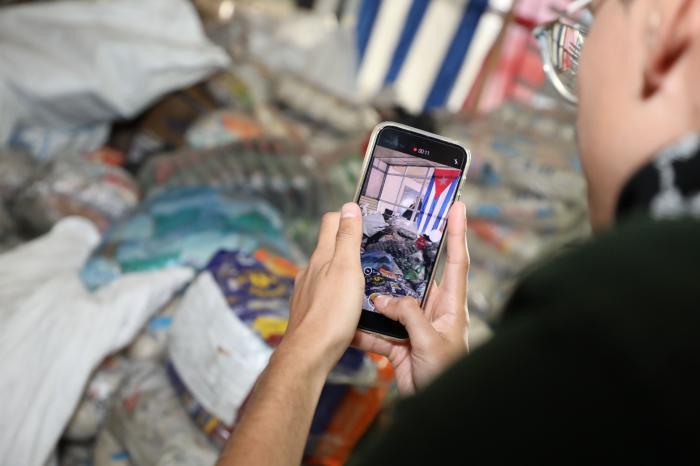
    The international crew, which included activists from Australia and Latin America, personally funded their journey and collected the donations through grassroots efforts. Dr. Selman highlighted the special significance of aid originating from “the sweat, care, and hearts of people who want to help” rather than institutional sources.

    Australian activist Daniel Herbert articulated the mission’s philosophical foundation: “We have always known Cuba as a country that has defended the right to health for all. The rights to health, to medicine, to the basics, to life—these should never be used by politicians.”

    The ship’s name, Granma 2.0, deliberately echoes the historical vessel that carried Fidel Castro’s revolutionary forces in 1956, symbolizing continued resistance against adversity. The delivered supplies, now stored in the hospital’s warehouses, will enable life-saving surgeries and provide crucial medical support for Cuban children, while the mission itself stands as testament to the reciprocity of international solidarity.
  • Díaz-Canel Receives Panama’s Foreign Minister

    Díaz-Canel Receives Panama’s Foreign Minister

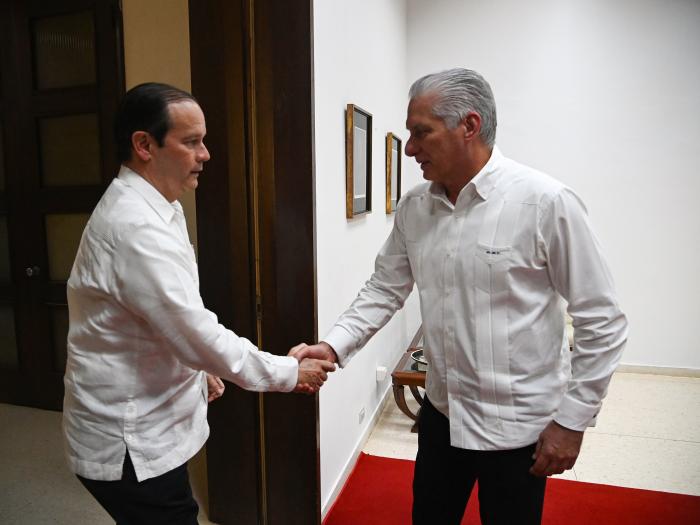
    In a significant diplomatic engagement at Havana’s Palace of the Revolution, Cuban President Miguel Díaz-Canel Bermúdez hosted Panama’s Foreign Minister Javier Eduardo Martínez-Acha Vásquez this Wednesday, marking a pivotal moment in bilateral relations between the two Latin American nations.

    The high-level meeting, attended by Cuban Foreign Minister Bruno Rodríguez Parrilla, centered on strengthening economic cooperation and addressing regional political matters. President Díaz-Canel expressed profound gratitude for Panama’s consistent support of the annual United Nations resolution condemning the U.S. economic, commercial, and financial embargo against Cuba—a longstanding point of contention in international diplomacy.

    During the cordial exchange, the Cuban leader emphasized the untapped potential for enhanced trade relations, acknowledging that while current economic exchanges remain modest, both nations possess substantial opportunities for expanded commercial engagement. The discussions reflected mutual interest in developing more robust economic partnerships across various sectors.

    Foreign Minister Martínez-Acha, currently on an official working visit to Cuba, conveyed appreciation for the warm reception and logistical support extended by Cuban authorities. The Panamanian delegation included Ambassador Edwin Abel Pitty Madrid, presidential advisor Marcos Caisuutti, and foreign ministry advisor Adolfo Ahumada.

    The bilateral talks extended beyond economic matters to address pressing regional and international issues, with both parties characterizing the development of Cuba-Panama relations as progressing positively. Notably, the Panamanian diplomat’s itinerary included meetings with detained Panamanian citizens accused of crimes against Cuba’s constitutional order—a sensitive matter highlighting the complex nature of international legal and diplomatic relations.

    This diplomatic engagement represents continuing efforts by Caribbean and Latin American nations to foster regional solidarity despite external political pressures and economic challenges.

  • Column: Aftellen

    Column: Aftellen

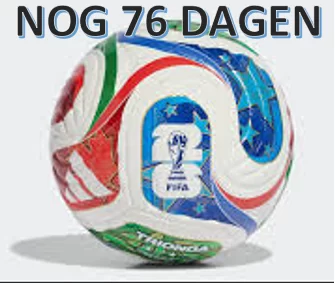
    Football enthusiasts worldwide are marking their calendars for the planet’s most anticipated sporting spectacle—the 2026 FIFA World Cup. With precisely 76 days remaining until the tournament’s June 11th kickoff, anticipation builds for what promises to be the most inclusive and commercially significant edition in football history.

    This edition breaks records with 16 additional teams compared to previous tournaments, dramatically expanding regional representation and creating unprecedented opportunities for smaller footballing nations. While most participants are confirmed, several countries continue battling through intercontinental playoffs for the final coveted spots. Host nations from the Caribbean region received automatic qualification, further diversifying the participant pool.

    Suriname narrowly missed direct qualification and now faces a decisive playoff against Bolivia, with Iraq awaiting the winner for a chance at historic participation. The expanded format has intensified global engagement, particularly among nations celebrating their inaugural World Cup appearance, such as Curaçao.

    The commercial landscape anticipates unprecedented returns, with FIFA securing lucrative sponsorship deals from global corporations eager to capitalize on worldwide viewership. Local entrepreneurs likewise prepare for economic benefits through artisanal souvenir production and hospitality sector growth.

    Beyond commercial implications, the tournament serves as a global showcase for emerging talents seeking professional advancement through international exposure. Players recognize the World Cup’s unique platform for demonstrating their value to elite clubs worldwide.

    The convergence of sporting excellence, commercial opportunity, and cultural celebration establishes the 2026 World Cup as a multifaceted global phenomenon with far-reaching impacts across sports, business, and international relations.

  • Quiz : Did You Know ? #10

    Quiz : Did You Know ? #10

    In a fascinating intersection of mathematics and etymology, the term ‘gogol’—popularized in English as ‘googol’—represents the astronomical numerical value of 10¹⁰⁰, equivalent to a digit 1 followed by one hundred zeros. This conceptual giant emerged not from academic circles but from the imagination of nine-year-old Milton Sirotta in 1938, who coined the term at the request of his uncle, renowned American mathematician Edward Kasner. Kasner sought a tangible way to illustrate the vast distinction between extraordinarily large numbers and the abstract concept of infinity.

    The googol’s magnitude transcends physical scales so dramatically that it exceeds the estimated number of subatomic particles in the observable universe, which scientists calculate to be between 10⁷⁸ and 10⁸². While this numerical behemoth lacks practical application in conventional physics or engineering, it serves as an invaluable pedagogical instrument for demonstrating mathematical scale and numerical theory.

    This nomenclature took on cultural significance when the founders of the revolutionary search engine Google adapted the term (intentionally modifying the spelling) to symbolize their ambitious mission to organize the seemingly infinite information landscape of the internet. The mathematical lexicon further expanded with the ‘googolplex’—an even more mind-boggling number defined as 1 followed by a googol zeros. This value is so incomprehensibly large that physical representation would require more space than exists in the entire universe.

    This revelation originates from the educational quiz platform HaitiLibre Quiz, launched in January 2026, which offers free, registration-free access to knowledge games across three difficulty levels in both French and English. The platform features dozens of regularly updated games covering diverse topics about Haiti and global knowledge, inviting users to expand their understanding through interactive learning experiences.

  • Natio op scherp voor play-off om WK-kwalificatie tegen Bolivia

    Natio op scherp voor play-off om WK-kwalificatie tegen Bolivia

    Suriname’s national football team, under the guidance of head coach Henk ten Cate, is preparing for their crucial World Cup qualifying match against Bolivia with unwavering determination. Since his appointment in December, Ten Cate has instilled a singular focus throughout the entire squad and technical staff: securing Natio’s place in June’s final tournament.

    The coach has made World Cup qualification his personal mantra, emphasizing to players: “The boys need to go to bed with it and wake up with it. It won’t be easy, but we’re going to make it happen. We have the players for it.”

    Players arrived in Monterrey, Mexico, on Sunday and Monday in staggered groups following an exhausting journey from the Netherlands. Lengthy layovers in Houston and Atlanta, combined with the challenging seven-hour time difference, tested the team’s resilience, though the internationals have grown accustomed to such demanding travel conditions.

    Despite Ten Cate’s preference for keeping media at a distance to minimize distractions, journalists including an NOS camera team—set to broadcast the Bolivia match live—were granted a brief press opportunity on Tuesday afternoon.

    Newcomer Joel Piroe, Leeds United striker joining alongside goalkeeper Janilho Wiegel and midfielder Melayro Bogarde for their first national team selection, expressed eagerness about his impending debut: “It’s true I hesitated for a while. The possibility of being called up for the Netherlands played a role, but I’m already thrilled to be here. This is a unique opportunity we intend to capitalize on.”

    Winger Gyrano Kerk, returning to the squad after battling a persistent muscle injury late last year, praised the extensive Zoom preparation sessions with Ten Cate and assistant coaches Winston Bogarde and Jimmy Hasselbaink: “These are legends I look up to. Those conversations have been crucial for group cohesion and atmosphere.”

    Central defender Myenty Abena reflected on the team’s journey: “We’ve worked years for this. Look how far we’ve come—we’ve grown tremendously as a team, and the organization keeps becoming more professional. We’ve long moved past the loss to Guatemala. We’re grateful for this second chance and determined to achieve our goal this time.”

    Abena described the emotional pre-match rituals: “When we’re in the locker room praying together, I always get goosebumps. Recently, I’ve been the one giving the powertalk. That’s when I remember we’re doing this for our country and everyone supporting us—the country where I was born and raised. How incredible to have this opportunity to represent Suriname.”

    The team is accommodated in a comfortable hotel in San Pedro, Monterrey’s most upscale district, with training facilities just fifteen minutes away. At manager Brian Tevreden’s explicit request, a brand-new artificial turf pitch was installed after his inspection last month revealed unsatisfactory conditions: “It was a sandy field full of holes, but FIFA left nothing to chance—they fixed it rapidly for us.”

    Natio faces Bolivia at 7:00 PM Surinamese time tonight. A victory would set up a Tuesday confrontation with Iraq, while Jamaica and New Caledonia meet in the other semifinal. The winners will ultimately compete against Congo for a place in the final tournament.

  • Man who attempted to rape baby among 2 people killed in SVG

    Man who attempted to rape baby among 2 people killed in SVG

    Two separate shooting incidents in St. Vincent on Wednesday resulted in fatalities, including a man recently released from prison for a disturbing attempted rape case. The killings mark the third homicide within 48 hours, elevating the nation’s murder count to 10 for the year—already reaching one-quarter of 2025’s total.

    Sebastian John, a 57-year-old welder from Ottley Hall, was fatally shot in the West Kingstown community shortly after 3 p.m. John had served a seven-year prison sentence imposed in March 2023 for attempting to assault a three-year-old girl in 2018. According to trial records, the child’s grandmother discovered John naked from the waist down, holding his penis, inside the toddler’s bedroom at approximately 12:45 a.m. on August 19, 2018.

    Hours after John’s killing, another shooting occurred in Lowmans Hill, another West Kingstown community, around 8 p.m. Sources identified the victim as Collis Charles, also known as ‘Brain,’ a 33-year-old farmer from the area.

    Law enforcement authorities have not officially commented on either shooting or confirmed the victims’ identities. These incidents follow Monday’s chopping death of Munti ‘Munt-I’ Thomas in Barrouallie, for which 41-year-old Keon Dennie has been charged with murder and appeared before the Serious Offences Court in Kingstown.

  • GCAA probing aircraft accident at Port Kaituma airstrip

    GCAA probing aircraft accident at Port Kaituma airstrip

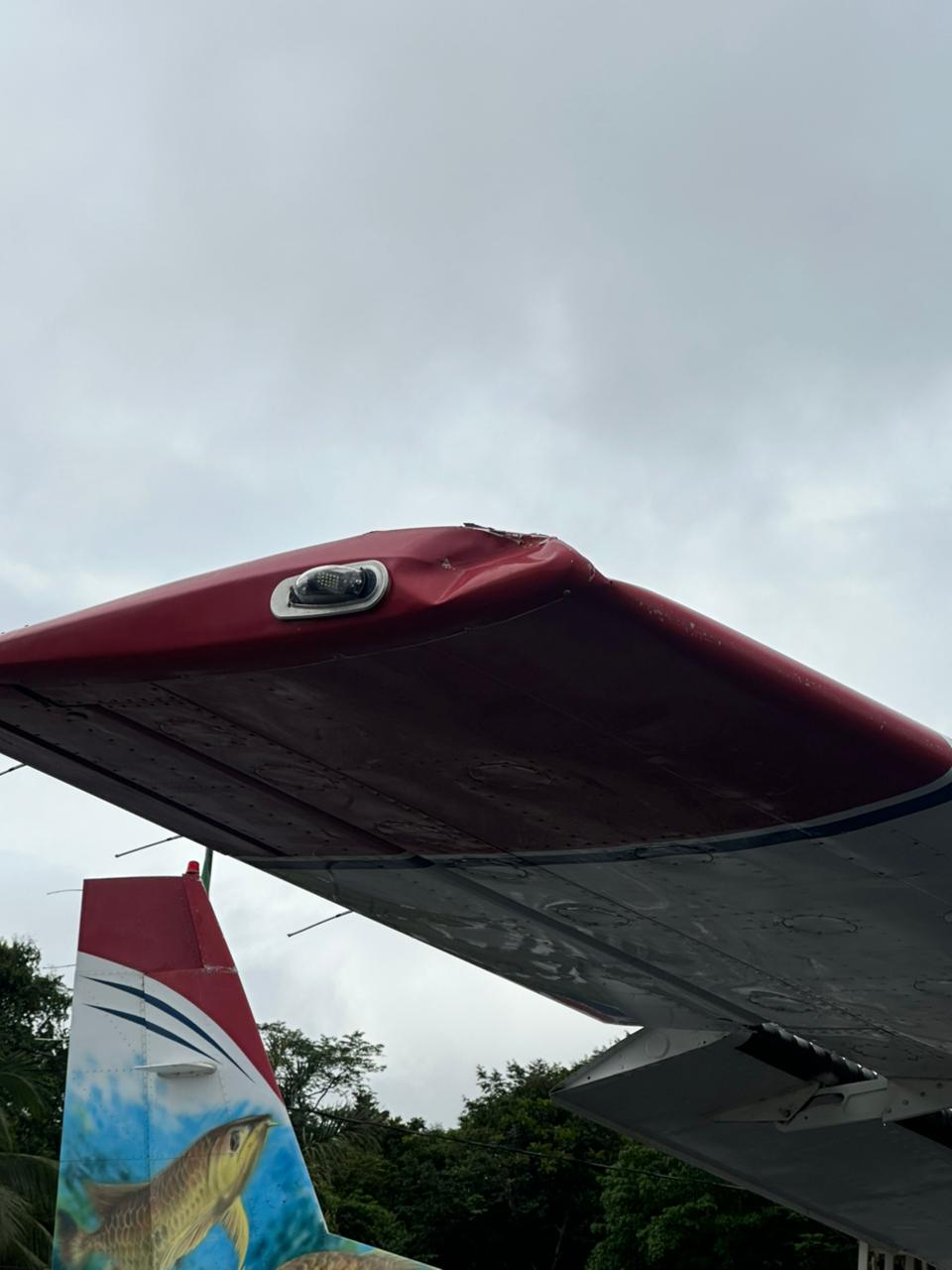
    Aviation authorities in Guyana have initiated a formal investigation following a ground collision incident involving two aircraft belonging to Trans Guyana Airways at Port Kaituma Airstrip. The incident occurred when a departing aircraft’s wing made contact with another plane parked on the tarmac, resulting in visible damage to at least one wing.

    Retired Lt. Col. Egbert Field, Director-General of the Guyana Civil Aviation Authority (GCAA), confirmed the regulatory body’s active investigation into the matter. Preliminary assessments suggest that operational consequences may follow for one or both pilots involved, pending the investigation’s findings.

    Aviation industry sources revealed to Demerara Waves Online News that the underlying issue extends beyond pilot operation to fundamental infrastructure limitations. The Port Kaituma Airstrip’s restricted parking capacity presents significant challenges when accommodating multiple aircraft simultaneously, creating potentially hazardous conditions.

    Industry insiders have identified the airstrip’s constrained dimensions as a critical safety concern, particularly when three aircraft attempt to utilize the facility concurrently. This incident has prompted renewed calls for infrastructure expansion at the regional aerodrome to address capacity constraints and enhance operational safety measures.

    The investigation will likely examine multiple factors including pilot procedures, ground operations protocols, and the adequacy of current infrastructure to handle domestic flight operations safely. The GCAA’s findings are expected to influence both immediate operational adjustments and long-term infrastructure planning for regional airstrips across Guyana.

  • State Department reward for information on the terrorist groups «Viv Ansanm and Gran Grif»

    State Department reward for information on the terrorist groups «Viv Ansanm and Gran Grif»

    In a significant escalation of its counterterrorism efforts, the United States Department of State has announced a substantial financial incentive targeting Haiti’s most notorious criminal syndicates. Through its Rewards for Justice (RFJ) program, the U.S. government is offering up to $3 million, plus potential relocation assistance, for intelligence that leads to the disruption of the financial infrastructures of “Viv Ansanm” and “Gran Grif.” Both organizations were formally designated as Foreign Terrorist Organizations (FTOs) in May 2025, placing them in the same category as global terrorist networks.

    The alliance known as Viv Ansanm emerged in September 2023 from a merger of Haiti’s two dominant gang coalitions, G-9 and G-Pép, which operate primarily in the capital, Port-au-Prince. This group has been implicated in a sustained campaign of extreme violence targeting critical national infrastructure, including government buildings, prisons, police stations, hospitals, and the international airport. Their orchestrated terror tactics were a principal factor in the forced resignation of Prime Minister Ariel Henry in April 2024. The organization sustains its operations through systematic extortion, kidnappings for ransom, and arms trafficking, and has been directly involved in mass atrocities, including the murder and rape of civilians, sometimes targeting American citizens. The group is also known for the forcible recruitment of minors.

    Conversely, Gran Grif represents the paramount criminal force in Haiti’s Artibonite department. Originally formed around 2016 by former legislator Prophane Victor as a private militia to secure his political power, the group evolved into a full-fledged terrorist organization. It has conducted brazen attacks against the Haitian National Police and the United Nations-backed Multinational Security Support (MSS) mission, including a February 2025 assault that resulted in the death of a Kenyan officer. Gran Grif’s reign of terror encompasses kidnapping, murder, sexual violence against women and children, forced child recruitment, mass abductions, and the looting of crops and livestock—actions that prompted formal accusations of human rights abuses from the United Nations in 2023.

    The RFJ program is specifically soliciting information that can uncover the economic lifeblood of these groups. This includes intelligence on their owned or controlled businesses, bank accounts, and investments; financial contributions from donors and facilitators; transactions by financial institutions that benefit the groups; front companies acting on their behalf; details of ransom schemes; and information on the transfer of funds, arms, ammunition, and drones.

    The FTO and Specially Designated Global Terrorist (SDGT) designations under U.S. law have severe legal ramifications. All U.S.-based assets of these groups are frozen, and American persons are prohibited from engaging in any transactions with them. Knowingly providing material support or resources to these entities is a criminal offense, subjecting violators to significant sanctions.

    The Rewards for Justice program, established in 1984, has a proven track record, having disbursed over $250 million to more than 125 individuals worldwide for information that has preempted threats to U.S. national security. Confidential tips regarding Viv Ansanm and Gran Grif can be submitted via encrypted messaging services, including Signal, WhatsApp, and Telegram.

  • PAS Cargo launches new logistics, off-site commercial GRA customs facilities

    PAS Cargo launches new logistics, off-site commercial GRA customs facilities

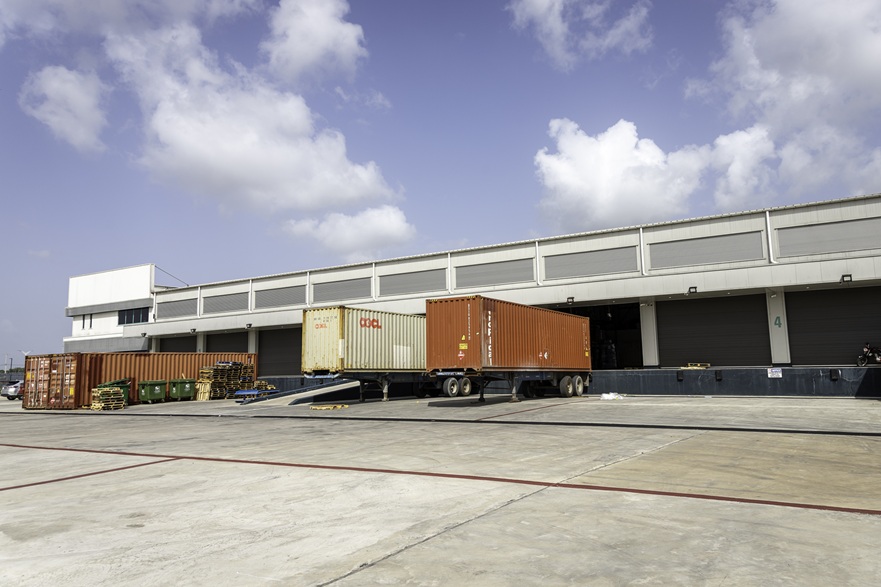
    In a significant development for Guyana’s trade infrastructure, Florida-based PAS Cargo USA has inaugurated groundbreaking logistics and customs facilities at its East Bank Demerara location, promising to transform the nation’s cargo clearance processes. Sector leaders unanimously hailed the March 25, 2026 opening as a solution to longstanding congestion issues that have plagued Guyana’s supply chain operations.

    Colin Moore, President of the Guyana Customs House Brokers and Clerks Association, characterized the new facility as addressing “one of the biggest nightmares” in cargo clearance. “Especially in Guyana, we have a system here where there is a lot of congestion and this because we’re a small country, we are now developing,” Moore stated during the official launch at Georgetown Marriott Hotel. He emphasized that brokers typically achieve satisfaction when processing cargo within 30 minutes—a benchmark PAS Cargo has consistently met.

    The facility represents Guyana’s first approved offsite commercial customs facility by the Guyana Revenue Authority (GRA), featuring state-of-the-art racking systems that enable rapid cargo location and retrieval, contrasting sharply with previous one-week waiting periods. Moore particularly praised the adequate accommodations provided for customs officers, addressing a critical operational concern.

    Komal Singh, Chairman of the Shipping Association of Guyana (SAG), highlighted the facility’s role in addressing storage space shortages on wharves while preparing the nation for future manufacturing expansion. “We cannot wait until the time when we have excess and massive amounts of exports in place and start working then to increase our efficiency,” Singh cautioned, emphasizing the need for proactive infrastructure development to meet international standards.

    Shridat Naraine, Vice President of PAS Cargo USA, described the “first-of-a-kind” secure off-port bond facility as offering spacious vehicle maneuverability and comprehensive parking solutions. The facility addresses environmental concerns and operational inefficiencies previously experienced at Demerara River port locations, positioning the company to serve industrial, commercial, and oil gas sectors with enhanced capability. “This is a statement that Guyana deserves world-class infrastructure; a statement that local talent, innovation and vision can compete at the highest level,” Naraine asserted.

    The technological integration allows customers to seamlessly navigate documentation, customs clearance, and cargo collection within a single location, significantly streamlining supply chain operations.

    Thandi McAllister, Parliamentary Secretary in the Ministry of Public Utilities and Aviation and Guyana’s representative to the International Maritime Organisation, framed the development within broader international trade conventions. She noted that states are bound by international agreements to simplify administrative formalities in international trade, describing the facility as exemplifying “powerful synergies” between public policy and private sector innovation. McAllister hailed the project as a “landmark achievement” in national trade development that would generate increased job opportunities while addressing inconsistent and excessive port clearance processes that have historically frustrated users and hindered efficiency.

  • Public Works of Haiti strengthens its partnership with the IDB

    Public Works of Haiti strengthens its partnership with the IDB

    In a significant move to advance Haiti’s infrastructure development, Public Works Minister Engineer Joseph Almathe Pierre Louis convened a high-level virtual meeting on March 25, 2026 with Inter-American Development Bank (IDB) Representative Ms. Corinne Cathala and her technical team. The strategic session, attended by senior ministry officials including the Chief of Staff and Director General, focused on budget allocation and expediting critical infrastructure projects across the nation.

    The comprehensive agenda prioritized three crucial infrastructure domains requiring immediate financial deployment. Airport infrastructure discussions centered on completing the control tower and securing essential navigation equipment to enhance national sovereignty and air safety. Regarding road networks, progress assessments were conducted on strategic rehabilitation efforts along National Route 7 (Cayes-Jérémie), National Route 4 (Léogâne-Jacmel), and National Route 1 (Ennery-Camp Coq). Additionally, post-disaster repairs necessitated by Cyclone Melissa’s devastation were elevated to top-priority status to restore mobility in affected regions.

    A cornerstone of the meeting was the unveiling of the comprehensive Les Cayes Airport modernization program (HA-J0014), structured around three pivotal components: modernization of airport operations and services, enhancement of road access infrastructure, and institutional capacity building.

    Minister Pierre Louis emphasized the urgency of implementation, stating, ‘The population’s impatience reflects genuine pressing needs. We must synchronize our interventions with national priorities to deliver tangible and rapid outcomes.’ This collaborative session represents a transformative milestone in Haiti’s pursuit of modernization and the effective execution of the National Strategic Road Investment Plan, signaling strengthened international cooperation for infrastructure development.