作者: admin

  • 50,000 Gallons of Diesel, No Paperwork…GOB Will Seize

    50,000 Gallons of Diesel, No Paperwork…GOB Will Seize

    The Government of Belize has initiated a comprehensive investigation following the unexplained arrival of an oil tanker carrying approximately 50,000 gallons of diesel fuel without proper documentation. Prime Minister John Briceño confirmed in an exclusive interview with News 5 that authorities have seized the vessel Humilder Viajero, currently docked at Big Creek Port, after it failed to produce necessary paperwork for its cargo.

    Speaking with measured caution due to anticipated legal proceedings, Briceño revealed the peculiar circumstances surrounding the tanker’s appearance. ‘This tanker just showed up. There was no documentation,’ the Prime Minister stated. ‘I’m told even the captain said he didn’t know what they had there—no invoice, nothing. Then, all of a sudden, some papers appeared.’

    The Panamanian-flagged multi-purpose offshore vessel, measuring 34 meters in length and 8 meters in width according to maritime tracking data, has triggered significant regulatory concerns. Briceño confirmed the government’s intention to potentially confiscate the diesel fuel, noting, ‘We have seized that tanker, and whosoever is responsible will have to answer in a court of law. If necessary, we’re going to seize those 50,000 gallons of diesel to put to use, possibly selling it to Puma to help with some of the challenges we’re facing.’

    The investigation involves coordinated efforts between the Attorney General’s Ministry, the Department of the Environment, and the Customs Department to determine whether any laws were violated. The Prime Minister emphasized the government’s commitment to addressing the situation ‘to the full extent of the law’ should any illegal activities be uncovered.


  • Fernandez Advances Student Success with Annual Laptop Distribution to Cedar Grove Graduates

    Fernandez Advances Student Success with Annual Laptop Distribution to Cedar Grove Graduates

    In a significant demonstration of sustained educational advocacy, Honourable H. Charles “Max” Fernandez, Member of Parliament for St. John’s Rural North, has reached a remarkable milestone in his constituency’s digital inclusion efforts. The completion of this year’s distribution of over 20 fully equipped laptops to Cedar Grove Primary School’s 2025 graduating class marks the tenth consecutive year of this transformative initiative.

    The comprehensive program, designed to bridge the digital divide, provides each Grade 6 student transitioning to secondary education with powerful technological tools essential for academic success. These specially configured laptops come pre-loaded with necessary software and applications, enabling seamless access to online learning platforms, digital assignment completion, and the development of crucial technological competencies required in today’s increasingly digitalized educational landscape.

    Minister Fernandez, reflecting on the program’s decade-long impact, emphasized the broader significance beyond hardware provision. “This initiative represents our fundamental commitment to creating equal opportunities and ensuring our youth are fully prepared to excel in a technology-driven global environment,” he stated. “By investing in educational resources, we’re not just distributing devices—we’re providing pathways to success and empowering the next generation with tools for lifelong learning.”

    The program has garnered substantial community support, with parents like Ashley George expressing profound appreciation for its transformative effect on both educational outcomes and household economics. Over the past ten years, the initiative has alleviated financial pressures for numerous families while simultaneously advancing digital literacy and academic achievement among hundreds of students.

    This laptop distribution program forms a cornerstone of Minister Fernandez’s broader educational advocacy, which includes ongoing commitments to youth development, community enrichment, and educational accessibility. As the initiative enters its second decade, the MP has reaffirmed his dedication to ensuring every child in his constituency receives the necessary resources to thrive academically and beyond.

  • Rogers, Actille hit CARIFTA marks

    Rogers, Actille hit CARIFTA marks

    Despite challenging weather conditions characterized by relentless rain and powerful gusts, Saint Lucia’s premier young athletes demonstrated exceptional resilience during the National Junior Championships and CARIFTA Trials hosted by the Saint Lucia Athletics Association last weekend. The event, serving as the critical qualifying platform for the upcoming regional track and field championships in Grenada during Easter weekend, witnessed numerous athletes achieving remarkable performances.

    Syesha Rogers of Morne Stars Athletics Club emerged as a standout performer in the Under-20 girls’ long jump category. Battling against swirling winds that disrupted many attempts, Rogers fouled what appeared to be a massive jump before registering two exceptional legal jumps of 5.75m and 5.70m. These distances not only represented personal career milestones but also secured her qualification for the CARIFTA Games alongside teammate Destinee Cenac, both meeting the rigorous standards set by the Saint Lucia Athletics Association.

    In the Under-17 boys’ division, Jermario Actille demonstrated his sprinting prowess in the 100m events. The Beanefield Comprehensive student, competing unattached, posted impressive times throughout the competition rounds. He clocked 10.96 seconds in Heat 4 with a 2.7 m/s tailwind, followed by 11.02 seconds in the semifinals with a 1.4 m/s tailwind, and culminated his performance with a blistering 10.69 seconds in the final, though significantly aided by a substantial 5.7 m/s tailwind.

    Additional notable qualifications included Barbara-Marie Maximin of Abilene, who once again met the CARIFTA standard in the Under-17 girls’ long jump with a winning leap of 5.39m, surpassing her closest competitor by nearly a full meter.

    The championships showcased depth across multiple age categories and disciplines. Joshua Matthews of Sprint Tech dominated the Under-17 boys’ track with victories in both the 200m (22.98s) and 400m (53.1s). Distance events saw Chaz Alexander of Soufriere claim top honors in the 800m (2:09.96) and 1500m (4:32.80), while Jemal Cadette maintained Sulphur City’s presence in the 3000m (11:13.68). Field events witnessed Aj Joseph (Sprint Tech) leading the long jump (5.74m) and Carrick Edward (Morne Stars) excelling in triple jump (11.30m).

    Under-20 competition featured Ryan Simeon of Nightriders achieving fast times in the 200m (21.47s) and 100m (10.66s), though both performances were wind-assisted. Joaqwan Alexander (Soufriere) impressed in the 400m with 48.79s, while Darvin Forde (Sprint Tech) demonstrated versatility with wins in both long jump (6.69m) and triple jump (13.97m).

    The women’s categories produced equally impressive results. Destinee Cenac (Morne Stars) secured the Under-17 girls’ 100m title in 12.27s, while Shaimaelle Durand (Pacesetters) took second before claiming victory in the 200m (25.90s). Sierratina Hilaire (Morne Stars) won the Under-20 girls’ 100m in 12.21s, and Nyella Cox (Survivors) dominated the 200m with 25.3s.

    Juvenile athletes also showcased their emerging talents, with Danielle Alphonse (Pacesetters) winning the Under-14 girls’ 50m in 20.54s and Hadassah Jules (Soufriere) claiming the 300m in 46.22s. The mixed relay events concluded the competition, with Sprint Tech winning the 4x100m (55.27s) and Morne Stars capturing the 4x300m (3:14.88s).

  • New lighting installed at Bolans Playing Field to improve safety and community use

    New lighting installed at Bolans Playing Field to improve safety and community use

    The Bolans Playing Field has undergone a significant transformation with the installation of state-of-the-art lighting infrastructure, marking a pivotal advancement for community welfare and youth engagement in the region. Municipal authorities have confirmed the completion of this project, which strategically positions high-performance LED units on numerous poles encircling the recreational area.

    This infrastructural enhancement directly addresses longstanding concerns regarding safety and accessibility. The powerful illumination eliminates the limitations imposed by sunset, effectively extending the operational hours of the field well into the evening. Consequently, the community gains a prolonged and secure environment conducive to a diverse range of nighttime activities, including organized sports, casual recreation, and public gatherings.

    Local official George emphasized the multifaceted value of this development, framing it as a crucial investment in social capital rather than mere physical upgrade. He articulated that providing a well-lit, safe venue is intrinsically linked to fostering youth development and overall communal well-being. The initiative is perceived as a foundational step towards cultivating a more dynamic and cohesive community fabric.

    This project at Bolans Playing Field is not an isolated effort but a component of a broader, ongoing campaign across St. Mary’s South dedicated to revitalizing public spaces. The overarching goal is to build what officials describe as a stronger, brighter, and more vibrant community by systematically upgrading essential infrastructure that serves the public interest.

  • ICJ Admits Guatemala into Sapodilla Cayes Sovereignty Dispute

    ICJ Admits Guatemala into Sapodilla Cayes Sovereignty Dispute

    In a landmark procedural ruling with significant geopolitical implications, the International Court of Justice (ICJ) has unanimously granted Guatemala intervenor status in the ongoing territorial dispute between Belize and Honduras over the strategic Sapodilla Cayes archipelago. The March 19, 2026 decision transforms what was previously a bilateral confrontation into a triangular legal battle concerning sovereignty over these contested Caribbean islands.

    The ruling, delivered at the Peace Palace in The Hague, does not address the fundamental question of territorial ownership but substantially alters the procedural landscape of the case. Guatemala will now participate as a non-party intervener specifically to safeguard its legal interests and formally present the nature and scope of its competing sovereignty claim to the judicial panel.

    The Sapodilla Cayes—a cluster of predominantly uninhabited coral islands situated at the convergence point of Belizean, Guatemalan, and Honduran maritime boundaries in the Gulf of Honduras—possess strategic and legal importance vastly disproportionate to their physical size. While administratively controlled by Belize since its independence, all three nations assert historical claims rooted in colonial succession narratives.

    Belize grounds its sovereignty argument on continuous peaceful administration inherited from British colonial authority, supplemented by allegations of Honduran acquiescence. Honduras, referring to the territory as Cayos Zapotillos, bases its claim on succession from Spanish colonial title and assertions of continuous administrative control. Guatemala’s parallel claim similarly derives from alleged succession to Spanish sovereignty, currently being litigated in a separate ICJ case against Belize encompassing broader territorial and maritime disputes.

    Guatemala’s December 2023 intervention application, filed under Article 62 of the ICJ Statute, sought limited participation to ensure the Belize-Honduras proceedings wouldn’t prejudicially affect its separate legal battle with Belize. While Belize raised no objections, Honduras vehemently opposed Guatemala’s intervention, arguing it failed to demonstrate precise legal interests, constituted procedural redundancy, and represented an abuse of court mechanisms.

    The ICJ comprehensively rejected Honduras’s objections, determining Guatemala satisfied all four requisite conditions under Article 62 of the Statute and Article 81 of the Rules of Court. The court characterized Guatemala’s claim as a “real and concrete” legal interest rather than merely political or strategic, noting that any sovereignty determination would inevitably impact Guatemala’s parallel litigation against Belize.

  • Urgent blood donation appeal issued for hospitalised man in Antigua

    Urgent blood donation appeal issued for hospitalised man in Antigua

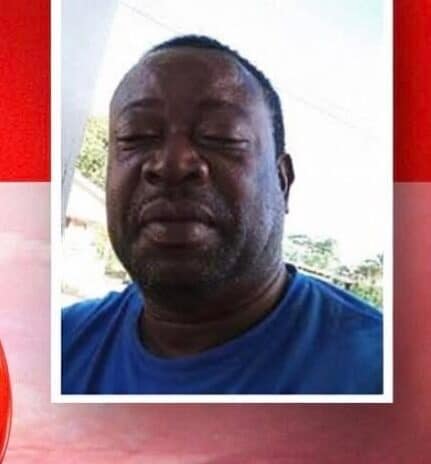
    Health authorities in Antigua have launched an urgent community-wide appeal for blood donations to support critically ill patient Joseph Anthony, who requires immediate medical intervention at Sir Lester Bird Medical Centre. The hospital has announced that all blood types are urgently needed, emphasizing that any compatible donation could prove lifesaving for the hospitalized individual.

    The public appeal, circulated through official channels, specifically requests that potential donors proceed directly to the medical facility to contribute. Health officials have underscored the critical nature of timely response, noting that emergency medical situations often depend on readily available blood supplies for successful treatment outcomes.

    Beyond individual donations, the appeal encourages community-wide participation through information sharing and rapid response. “Let’s come together ASAP and support this family in their time of need,” the public statement emphasized, highlighting the collective responsibility in addressing medical emergencies.

    The incident underscores the ongoing dependency of healthcare systems on voluntary blood donations, particularly in emergency scenarios where immediate transfusions become necessary. Antigua’s health infrastructure, like many Caribbean nations, maintains a constant need for blood reserves to address both scheduled procedures and unexpected medical crises.

    Medical professionals note that blood donation remains one of the most direct forms of community medical support, with each contribution potentially serving multiple patients through separated blood components. The current emergency appeal demonstrates the critical intersection between community participation and functional healthcare delivery systems.

  • Barbados to have flyovers by 2028

    Barbados to have flyovers by 2028

    Barbadian Prime Minister Mia Mottley has declared an aggressive infrastructure modernization initiative, confirming that long-delayed flyover construction will begin within this calendar year with an 18-month completion target. The announcement, delivered during a parliamentary session, positions the transportation network overhaul as a critical national priority directly tied to economic productivity.

    Mottley characterized traffic congestion as a severe economic impediment, stating, “Excessive time spent navigating roadways directly undermines efficient time utilization and national economic performance.” The planned overpasses represent infrastructure the Prime Minister believes should have been constructed two decades ago.

    This transportation strategy expands upon earlier indications from Finance Minister Ryan Straughn, who recently identified flyovers as components of a comprehensive traffic management framework. While economic analysts have questioned the government’s capacity to execute these ambitious projects amid global economic uncertainty, Mottley’s administration appears committed to their implementation.

    The infrastructure initiative extends beyond flyover construction to include significant highway expansions. Mottley specifically referenced plans to address chronic congestion along Highway 2 from Graeme Hall to Newton, with potential solutions including road widening or additional overpasses, particularly targeting the problematic Kooyman junction at Kendal Hill.

    The government is pursuing a multi-faceted transportation approach that includes expanded park-and-ride facilities. A new facility near Waterford will serve high-traffic destinations including the Botanical Gardens, National Stadium, CARIFESTA House, and Geriatric Hospital. Similar transportation hubs are planned for Graeme Hall, Oistins, and western coastal regions.

    Concurrently, the administration continues to explore alternative transportation solutions. Mottley reaffirmed commitment to water taxi systems, encouraging private sector collaboration in developing jetty infrastructure along southern and western coastlines. Looking toward future possibilities, the Prime Minister noted that reduced global tunneling costs might make underground transportation between key corridors like Holetown-Bridgetown and Oistins-Bridgetown feasible within the next decade.

  • AG urges crackdown on farm theft as cane farmers suffer

    AG urges crackdown on farm theft as cane farmers suffer

    Barbados Attorney General Wilfred Abrahams has issued a stark warning that systemic agricultural theft, legally termed praedial larceny, is escalating into a national crisis that jeopardizes food security and undermines law enforcement. During Wednesday’s Budget debate in the House of Assembly, Abrahams demanded immediate and serious action against what he described as organized rural crime rather than minor pilfering.

    Abrahams challenged the perception of praedial larceny as a pretty-sounding, victimless crime, stating bluntly: “Praedial larceny is thieving.” He emphasized that the romanticization of this offense through euphemistic language masks its devastating impact on farmers and agricultural sustainability.

    The Attorney General revealed he recently forwarded a detailed complaint from a sugarcane farmer to Prime Minister Mia Mottley, Agriculture Minister Indar Weir, and Justice Minister Dale Marshall. The complaint documented organized theft operations occurring daily at the Bussa Roundabout, where individuals openly sell “trays piled high with cane neatly packaged” in what appears to be coordinated criminal activity.

    While acknowledging economic disparities, Abrahams presented a compelling moral dilemma: “If one poor Black man robs somebody else systematically, day in, day out… and that person closes down their business so that 100 poor Black people don’t have a job, who has won?”

    Abrahams warned that unchecked agricultural theft creates a dangerous precedent that erodes respect for property laws generally. “You don’t go and rape acres of somebody’s cane field… because it doesn’t stop there,” he stated, noting that such crimes often expand beyond crops to other goods.

    The Attorney General connected the issue directly to national security concerns, arguing that failure to prosecute praedial larceny discourages agricultural investment precisely when Barbados needs greater food self-sufficiency. “When we are trying to get people to grow our crops, become food secure, we cannot be disincentivising farmers by not prosecuting people for praedial larceny,” he concluded.

  • 60 greatest rocksteady personalities (30 – 16)

    60 greatest rocksteady personalities (30 – 16)

    As Jamaica prepares to commemorate the 60th anniversary of rocksteady music in 2026, the Jamaica Observer has embarked on an ambitious project to honor the genre’s most influential figures. While often overshadowed by ska and reggae in mainstream recognition, rocksteady remains arguably the most cherished Jamaican musical form among connoisseurs.

    The publication has assembled a distinguished team including contract writers Howard Campbell and Claude Mills, with guidance from renowned broadcaster and rocksteady authority Michael Barnett, to curate the definitive list of ’60 Greatest Rocksteady Personalities.’ The selection criteria prioritize artistic impact and historical significance, with a forthcoming Top 20 Most Influential ranking to complete this comprehensive tribute.

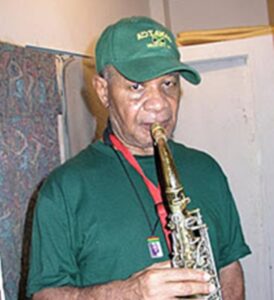
    Among the recently revealed honorees (positions 30-16) emerges a tapestry of vocalists, instrumentalists, producers, and innovators who shaped the genre’s distinctive sound. The list includes saxophonist Headley Bennett (30), whose memorable solos graced classics like Delroy Wilson’s ‘Dancing Mood’ and early Bob Marley recordings. Engineer Sid Bucknor (29) possessed the Midas touch behind the console, producing seminal tracks including Hopeton Lewis’s ‘Take It Easy’—considered by many as the first rocksteady song.

    The theatrical Roy Shirley (28), known as ‘The High Priest’ for his flamboyant stage presence, contributed what some historians identify as the genre’s inaugural track with ‘Hold Them.’ Drumming virtuoso Joe Isaacs (27) played a crucial role in the rhythmic transition from ska to rocksteady, while vocalist Ernest Wilson (26) of The Clarendonians achieved success both as group member and solo artist.

    Groundbreaking producer Sonia Pottinger (25) shattered gender barriers as Jamaica’s first female music producer, releasing hits through her Tip Top label including Marcia Griffiths’ ‘Dreamland.’ Joe Gibbs (24) built his early reputation with rocksteady hits before becoming a reggae powerhouse in the 1970s with artists like Dennis Brown and Culture.

    International success came to Desmond Dekker and The Aces (23) with crossover hits ‘007 (Shantytown)’ and ‘Israelites,’ while guitarist Lynford ‘Hux’ Brown (22) contributed his distinctive playing to countless classics across genres. The emotionally charged vocals of Slim Smith (21), whether with The Techniques or The Uniques, left an indelible mark despite his tragically short career.

    The higher rankings feature cultural architect U-Roy (20), who pioneered deejay artistry over rocksteady rhythms, and Hopeton Lewis (19), widely credited with recording the genre’s foundational track ‘Take It Easy’ in 1966. Derrick Harriott (18) excelled as both performer and producer with his Crystal label, while The Gaylads (17) delivered impeccable harmonies on classics like ‘Joy in The Morning.’ Songwriting genius Bob Andy (16) completed this segment of honorees, having created some of Jamaican music’s most enduring compositions including ‘I’ve Got to Go Back Home.’

    This celebration not only honors individual achievements but contextualizes rocksteady’s vital role in Jamaica’s musical evolution, demonstrating how these artists created a lasting cultural legacy that continues to influence global music.

  • Jury signals tech titans on hook for social media addiction

    Jury signals tech titans on hook for social media addiction

    LOS ANGELES – A pivotal moment unfolded in a groundbreaking social media addiction trial on Friday as jurors signaled potential liability for Meta and YouTube regarding a young woman’s childhood addiction to their platforms. The jury’s inquiry to the presiding judge about damage calculations suggests the panel may be moving toward holding the tech giants financially accountable.

    The case, closely watched as a bellwether for thousands of similar lawsuits across the United States, centers on allegations that YouTube and Meta’s Instagram platform employed negligently designed algorithms that contributed to severe mental health issues in a vulnerable user.

    Plaintiff Kaley G.M., now 20, testified during the trial about developing an obsession with social media beginning at age six, initially through YouTube videos before progressing to Instagram. She detailed how these platforms exacerbated her depression and suicidal ideation during childhood.

    However, defense attorneys highlighted complicating factors during cross-examination, including Kaley’s testimony about experiencing familial neglect and emotional turmoil unrelated to social media use. This has created a central tension in the deliberation process: determining whether platform design or real-world trauma primarily caused the plaintiff’s mental health struggles.

    Jurors received verdict forms asking them to decide whether Meta or YouTube should have recognized their services posed dangers to children, whether their designs were negligent, and if so, whether these platforms served as “substantial factors” in causing Kaley’s psychological distress.

    Legal observers note the case represents a significant challenge to the traditional shield protecting tech companies: Section 230 of the US Communications Decency Act, which typically immunizes platforms from liability regarding user-posted content. The plaintiffs have strategically argued instead that the companies created defective products with business models intentionally designed to maximize engagement through harmful content.

    University of Pittsburgh marketing professor Vanitha Swaminathan told AFP the trial highlights “an important tension” between social media platforms and vulnerable young users, noting that “platforms have to address the concerns of this important segment.”

    The jury will resume deliberations on Monday, with their eventual verdict expected to establish critical precedent for resolving the hundreds of pending lawsuits alleging social media platforms contribute to mental health epidemics among youth.