作者: admin

  • Price Drop at Pumps Follows Overseas Deal

    Price Drop at Pumps Follows Overseas Deal

    After months of unrelenting upward pressure on retail fuel prices that squeezed household budgets and raised transportation costs across Belize, motorists finally saw a much-anticipated reprieve at gas pumps starting Saturday, June 14, 2026. In Belize City, the per-gallon price of regular unleaded fuel dropped by $1.18, landing at a new retail rate of $13.65 per gallon. In a surprise to some industry observers, premium grade gasoline and diesel have held steady at their current price points: premium remains $15.46 per gallon, while diesel stays at $15.19 per gallon in the city, as of the latest adjustment.

    This sudden local price cut follows a major international development that has shaken global energy markets: unconfirmed but widely circulated reports indicate that the United States and Iran have reached a breakthrough agreement to end ongoing conflict and reopen the Strait of Hormuz, one of the world’s most critical chokepoints for global oil trade. The strait has been closed to large-scale commercial oil shipping for an extended period, creating major supply chain disruptions that drove up crude oil prices on global markets for months. The reported deal has already triggered a broad, global downturn in crude oil costs, which is now being passed through to retail consumers in Belize.

    Local energy analysts note that the full impact of this international agreement on Belize’s fuel prices will depend on how the deal is implemented in the coming weeks. This news organization will continue monitoring developments on both the international diplomatic front and local retail fuel prices to bring audiences the latest updates.

  • Major Update Planned for Belize’s Natural Resource Strategy

    Major Update Planned for Belize’s Natural Resource Strategy

    More than two decades after its last full update, Belize is set to revamp its core framework for conserving and managing its globally recognized natural assets, kicking off a comprehensive rewrite of the National Protected Areas Policy and System Plan this month. The initiative, led by Belize’s National Biodiversity Office, draws technical support from the International Organization for Migration and critical financial backing from the European Union to deliver a modernized strategy that addresses 21st-century conservation and governance challenges. The original baseline plan was last revised in 2005, leaving outdated guidelines that have not kept pace with shifting environmental pressures, evolving community needs, and new cross-border security concerns. The upcoming framework will outline a 10-year strategic roadmap for more effective stewardship of Belize’s vast forests, ecologically vital marine reserves, and culturally significant natural heritage sites. These ecosystems form the backbone of Belize’s national well-being: they safeguard clean drinking water sources, underpin the $1.8 billion tourism and commercial fishing industries, and sustain the daily livelihoods of hundreds of thousands of Belizean residents across rural and coastal communities. Beyond conservation gains, the policy update also aligns with broader national efforts to strengthen border governance, addressing overlapping challenges where unregulated cross-border activity threatens both ecological integrity and national security in remote border regions. In a break from past top-down planning processes, authorities have intentionally centered inclusivity, inviting input from a diverse cross-section of stakeholders that includes multiple government agencies, local and international environmental non-governmental organizations, grassroots community representatives, Indigenous governance groups, and private sector partners operating in conservation and tourism. Project timelines call for a complete draft of the revised policy to be released for open national public review by the end of 2026, giving all segments of Belizean society an opportunity to weigh in before the final framework is adopted.

  • Integrity Commission Tracks Officials’ Finances to Root Out Corruption

    Integrity Commission Tracks Officials’ Finances to Root Out Corruption

    June 15, 2026 — A newly sworn-in Integrity Commission has launched a sustained, systematic anti-corruption initiative centered on continuous financial monitoring of public officials, as the body works to embed a culture of accountability across all levels of government. The commission, headed by newly re-appointed Chair Andrea McSweaney-McKoy, welcomed seven new members during an official oath-taking ceremony held today, joining existing member Senior Justice of the Peace Adrian “Danny” Madrid to expand the body’s oversight capacity.

    At the core of the commission’s strategy is mandatory annual financial disclosure for all public officials, a requirement that takes effect the moment an individual accepts public office. Under the framework, officials must document all sources of income, assets, and major acquisitions, giving investigators a clear paper trail to cross-reference declared wealth with any unreported gains that may signal illicit activity. McSweaney-McKoy explained that this routine filing system enables the commission to flag inconsistencies, identify suspicious wealth accumulation, and assess whether official policy decisions are being skewed by private financial gain.

    For the commission’s leadership, the fight against corruption extends far beyond processing disclosure forms. McSweaney-McKoy emphasized that systemic corruption poses an existential threat to the nation’s foundational cultural and governance norms, warning that unregulated self-dealing among public officials can erode institutional trust and eventually spiral into anarchy. “If every public official prioritizes personal gain over procedural rules and public trust, we lose the structure that holds our society together,” she noted.

    The commission’s two primary long-term goals, McSweaney-McKoy outlined, are to enforce consistent compliance with financial disclosure laws and to create a lasting culture of accountability that encourages ethical decision-making. Officials are expected to not only meet their legal obligation to file annual disclosures but also to uphold the public trust by managing personal finances and making official decisions aligned with national anti-corruption legislation.

    The rollout of this expanded monitoring effort comes after a period of internal capacity building for the commission, where the team worked through backlogs of unprocessed disclosures and refined operational processes. McSweaney-McKoy credited the body’s small, dedicated team for advancing the initiative despite the steep learning curve and institutional barriers, noting that the addition of seven new members will further strengthen the commission’s ability to root out corruption across all branches of government. The monitoring covers all elected and appointed officials across both the upper and lower houses of the national legislature, as well as all other persons holding public office.

  • Future of LIU Unclear as Pressure Builds for Measurable Results

    Future of LIU Unclear as Pressure Builds for Measurable Results

    Date: June 15, 2026

    The future of Belize’s Leadership Intervention Unit (LIU) hangs in the balance as the government puts the program on hold, escalating pressure on the initiative to prove it delivers measurable results to justify the public funding it has received to date.

    The momentum for accountability grew stronger after Home Affairs Minister Oscar Mira publicly stated he would not back continued public spending on the program unless clear, quantifiable outcomes are demonstrated. In an exclusive interview following the pause, Acting LIU Director Andrew Dawson pushed back against the minister’s stance, defending the program’s work and addressing widespread misinformation surrounding its core mission.

    Dawson pushed back against claims that the minister’s position represents a fundamental rejection of the LIU’s accountability framework, noting that the program has already taken intentional steps to improve transparency. “I do not believe the minister is opposed to accountability as a principle,” Dawson explained. “We already have established structures that prioritize oversight. One key reform we implemented was shifting from an outdated check payment system, which had inherent loopholes, to a digital Digi Wallet platform that offers far greater transparency and financial accountability.”

    Dawson acknowledged that no public program is without room for growth, adding that ongoing reassessment and improvement are a core part of the LIU’s operations. He emphasized that the current pause has been widely misinterpreted by the public, arguing that the program’s core mission goes far beyond a simple temporary work program.

    “This initiative is rooted in social intervention and transformative change for the livelihoods of vulnerable individuals,” Dawson said. “It is not, as some have incorrectly claimed, just a program that pays people to keep the peace. Our goal is to drive long-term change in both their daily circumstances and their mindsets, while providing a critical financial safety net for those who face severe barriers to entering the traditional workforce.”

    Addressing one of the most persistent rumors about the LIU, Dawson firmly refuted the allegation that the program was created to pay gang members to avoid criminal activity. He also clarified that not all participants in the LIU’s work program have gang affiliations, pushing back against broad stigmatization of the people the program serves.

    With the program currently on pause, Dawson warned that the sudden halt to support has created a significant financial gap for participants, many of whom face steep barriers to stable employment. “Of course it creates a void,” he said. “These individuals are already grappling with sky-high cost of living, and even with the program’s support, that money went toward covering basic household needs. When that income disappears, they are forced to find other ways to make ends meet.”

    Dawson declined to directly link the pause to rising crime rates, noting that there is no concrete evidence connecting the loss of LIU support to an increase in offending. But he acknowledged that the sudden end of support creates measurable tension and uncertainty for participants, many of whom cannot easily re-enter the traditional workforce.

    “These individuals face multiple barriers to employment: low educational attainment, past criminal records, and a host of other obstacles that make it extremely hard to integrate into the regular labor market,” Dawson explained. “Right now, many don’t know where their next meal will come from, and that uncertainty creates real hardship. That is exactly the gap the LIU was designed to fill.”

    Dawson reaffirmed that the LIU’s mission has always been rooted in social protection, not the corrupt pay-for-peace scheme critics have described. Looking ahead, he said the LIU leadership is currently exploring new, alternative income-generating programs that can deliver meaningful, sustainable economic support for participants and their families while meeting the government’s new accountability requirements.

  • Sports Community Unites To Fundraise for Miriam Villamil

    Sports Community Unites To Fundraise for Miriam Villamil

    In the wake of a life-altering car crash that cost veteran Belizean footballer and coach Miriam Villamil one of her legs, the tight-knit Belizean football community has come together in a powerful show of solidarity to support one of their own. Just weeks after the tragic incident, hundreds of supporters, former teammates, current players, and fans packed the community space in Ontario Village over the weekend for “Goals for Hope,” an energetic fundraiser organized to cover Villamil’s ongoing recovery costs. According to event organizers, the overwhelming turnout stands as a clear testament to the deep, lasting impact Villamil has had on Belizean football and the countless lives she has mentored and shaped throughout her decades in the sport.

    In a phone interview discussing the initiative, organizer Iris Centeno, a former national team teammate who first connected with Villamil when both joined the national squad at age 17, opened up about the community’s immediate response to the tragedy. “When we heard what had happened to our teammate and colleague, it hit all of us incredibly hard,” Centeno explained. “So many of us have built close bonds with Miriam since we were teenagers, so the second we got the news, every current and former national team player jumped into action. We created a group chat right away, all of us saying we had to do something to help Miriam. Our old national team coach Mr. Kent also reached out immediately, pushing us to get a plan off the ground. That’s how the fundraiser came together.”

    The “Goals for Hope” event featured a community marathon, and Centeno’s own design studio contributed by creating custom commemorative T-shirts sold to raise additional funds. To streamline donations, organizers asked buyers to send contributions directly to Villamil’s personal bank account, send a confirmation screenshot to receive their shirt, and leave an encouraging note for Villamil in a dedicated comment section. The strategy was designed not just to raise money, but also to lift her spirits as she adjusts to her new reality after the accident. “We really wanted her to know she doesn’t have to go through this life-changing event alone,” Centeno added.

    The event exceeded all expectations, with massive support from past and present players, fans, local community members, and representatives from Belize’s national football federation, leading to hundreds of T-shirts sold. Centeno noted that the support has extended far beyond the football community, with athletes and groups from across Belize’s entire sporting landscape reaching out to offer help. Moving forward, organizers plan to host additional fundraising events across different sports disciplines to continue supporting Villamil through her recovery journey.

  • High-Tech Light Show Honors Michael Ashcroft’s Legacy

    High-Tech Light Show Honors Michael Ashcroft’s Legacy

    On a clear Friday evening in 2026, the dark coastal sky over Belize City was reimagined as a dynamic, glowing canvas, as 1,000 synchronized drones took flight to honor an extraordinary legacy. This cutting-edge aerial spectacle, which capped off with a thunderous, vivid fireworks display, was organized to mark eight decades of deep connection between Lord Michael Ashcroft and the Central American nation of Belize.

    Choreographed to tell a sweeping narrative of Ashcroft’s long-standing involvement with Belize, the drone formation shifted continuously across the horizon, painting the night with intricate patterns that mapped out his far-reaching impact across multiple sectors. From his pioneering contributions to Belize’s business landscape to his transformative investments in education, his influence on the country’s political development, and his far-reaching philanthropic initiatives that have improved lives across the nation, every chapter of his 80-year association was brought to life through bright, moving animations.

    The event gathered hundreds of onlookers across Belize City, who turned out to watch the one-of-a-kind tribute that blended modern entertainment technology with public celebration. This display is not just a celebration of a single individual’s decades of connection to Belize; it also stands as an example of how cutting-edge drone art can be used to preserve and honor personal and national legacy for new generations. This report is adapted from a transcribed evening television news broadcast originally released by the local outlet.

  • Gymnastics Emerging and Last Seconds Victory In NEBL!

    Gymnastics Emerging and Last Seconds Victory In NEBL!

    On this episode of Sports Monday, sports fans across Belize were treated to a weekend packed with competitive thrills, alongside a deeper look at a rapidly rising new sport that is taking root across the country.

    While traditional favorites like basketball, football and volleyball have long dominated the Belizean sports landscape, a new generation of young athletes is building a gymnastics community from scratch, with origins that stretch back to the COVID-19 pandemic. When public health restrictions forced dance studios across the nation to close their doors, local dance instructors pivoted to meet shifting recreational demands, creating an unexpected opening for the sport.

    Susen Bedran, president of the Gymnastics Federation of Belize, explained that the movement grew organically from small, lockdown-era beginnings. When one young student struggled with online ballet classes and expressed interest in gymnastics, local coaches connected her with a Guatemalan-based coach for virtual training. Word spread quickly among local young people, and before long, multiple children were asking to join the emerging program. Seizing the moment, Bedran and her partner Rita Acevedo converted an existing dance studio into a dedicated gymnastics training space, opening the program to the public. In their first week, they attracted 60 young participants, a turnout that far exceeded early expectations.

    Today, the SeSa training gym brings together gymnasts of all age groups and skill levels, united by a shared passion for the sport of flips, tumbles, and balance work. For many of these young athletes, gymnastics offers far more than physical activity: it builds resilience, discipline, and joy. Level 4 gymnast Selene Bedran says her long-term goal is to earn a spot competing on a college gymnastics team, while Level 2 athlete Ze’Naiya Blades values the sport’s unique balance of structure and fun, noting she has learned to laugh off missteps like falls during practice. Fellow Level 2 competitor Aliyah Aguilar says falling during a routine leaves her disappointed, but it also motivates her to improve for her next attempt. For higher-level gymnast Opal Bridgeman, the sport is flexible enough to fit every goal: athletes can compete at high levels if they choose, or simply train for fun without the pressure of competition. As a still-developing sport in Belize, every gymnast gets to help shape its future in the country.

    Beyond the rise of Belizean gymnastics, this past weekend delivered high-stakes action in the National Elite Basketball League (NEBL) semi-final playoffs, with two matchups that went down to the final seconds. The Cayo Western Ballaz evened their series against the Running Rebels on their home court, pulling out a 70-66 win with a decisive push in the final minute. Over at the Civic, game one between the Defenders and their opponent was not decided until the closing seconds, with the Defenders securing a narrow 85-84 win. The stage is now set for a critical close-out game Friday at the Civic, followed by a do-or-die match-up Saturday in Orange Walk.

    In weekend softball action, the Wolfpack men’s and women’s teams turned in dominant performances Friday. The Beacons opened Saturday play with a lopsided 15-0 shutout victory over Willows Bank, while Biscayne’s men’s team notched a historic win for rural squads, beating the city-based Guardian Bombers. On Sunday, the Belize Bank Bulldogs women’s team extended their ongoing winning streak. Fans can look forward to eight more match-ups this coming weekend at the Sandhill Community field.

    Finally, in cycling, the annual Father’s Day Extravaganza Criterium wrapped up Sunday with multiple podium finishes for local riders. Jyven Gonzalez of Legion of Los Angeles took the top spot in the Open Elite division, while his team mate Jaylen Briceno claimed the Under-23 title. Byron Pope won the general Masters category, and Brandon Cattouse took first place in the 40+ Masters division. On the women’s side, Patricia Chavarria earned the Open Women’s championship crown.

    Signing off from this week’s round-up, reporter Shane Williams left fans with a reminder: friendly competition brings communities together, and for sports lovers across Belize, the game is a way of life. So keep playing, Belize.

  • Chile : Complaint filed for child trafficking from Haiti

    Chile : Complaint filed for child trafficking from Haiti

    A shocking alleged child trafficking scheme involving unaccompanied Haitian minors has triggered a formal criminal complaint in Chile, pulling back the curtain on a complex cross-border criminal operation that authorities have spent months probing. On June 15, 2026, Frank Sauerbaum, head of Chile’s National Migration Service (SERMIG), submitted the official complaint to the Central-North Metropolitan Regional Prosecutor’s Office, launching a full criminal probe into suspicious movements of Haitian children on charter flights between January and October 2025.

    The complaint is backed by six dossiers of technical evidence compiled during joint audits conducted by SERMIG, the Comptroller General of the Republic and Chile’s Investigative Police, following months of coordinated investigation into irregular migration patterns involving minor arrivals. Investigations have so far uncovered that at least 12 individuals—both Chilean citizens and foreign nationals—repeatedly entered Chile posing as authorized chaperones for groups of Haitian children and adolescents, with group sizes ranging from just 2 minors up to 18.

    What makes the case particularly alarming is that none of the accused chaperones share any familial or blood ties to the minors they escorted into the country. Further, authorities confirm none of these individuals held the mandatory legal authorization required under Article 28 of Chile’s Immigration and Foreigners Law. This blatant violation of existing regulations directly undermines the fundamental rights and best interests of the children involved, and authorities say the activity meets the legal definition of migrant smuggling under Article 411 bis of Chile’s Penal Code.

    The complaint does not only target the alleged chaperones. It names multiple potential parties that may share criminal responsibility, including the commercial airlines that operated the charter flights, the travel agencies that arranged the trips, and any other third party found to have participated in or facilitated the scheme.

    Complicating the investigation further, between January and April 2025, many of the irregular flights were framed as official family reunification travel. As of the complaint filing, ongoing probes have failed to locate several of the minors who entered Chile under this false pretext, raising urgent questions about how the original travel authorizations for these trips were granted in the first place. Prosecutors are now expected to launch a full, expanded investigation to map the full scope of the alleged trafficking network, identify all co-conspirators, and trace the current whereabouts of the missing children.

  • Grass fires to spread faster as heat, winds intensify, fire chief warns

    Grass fires to spread faster as heat, winds intensify, fire chief warns

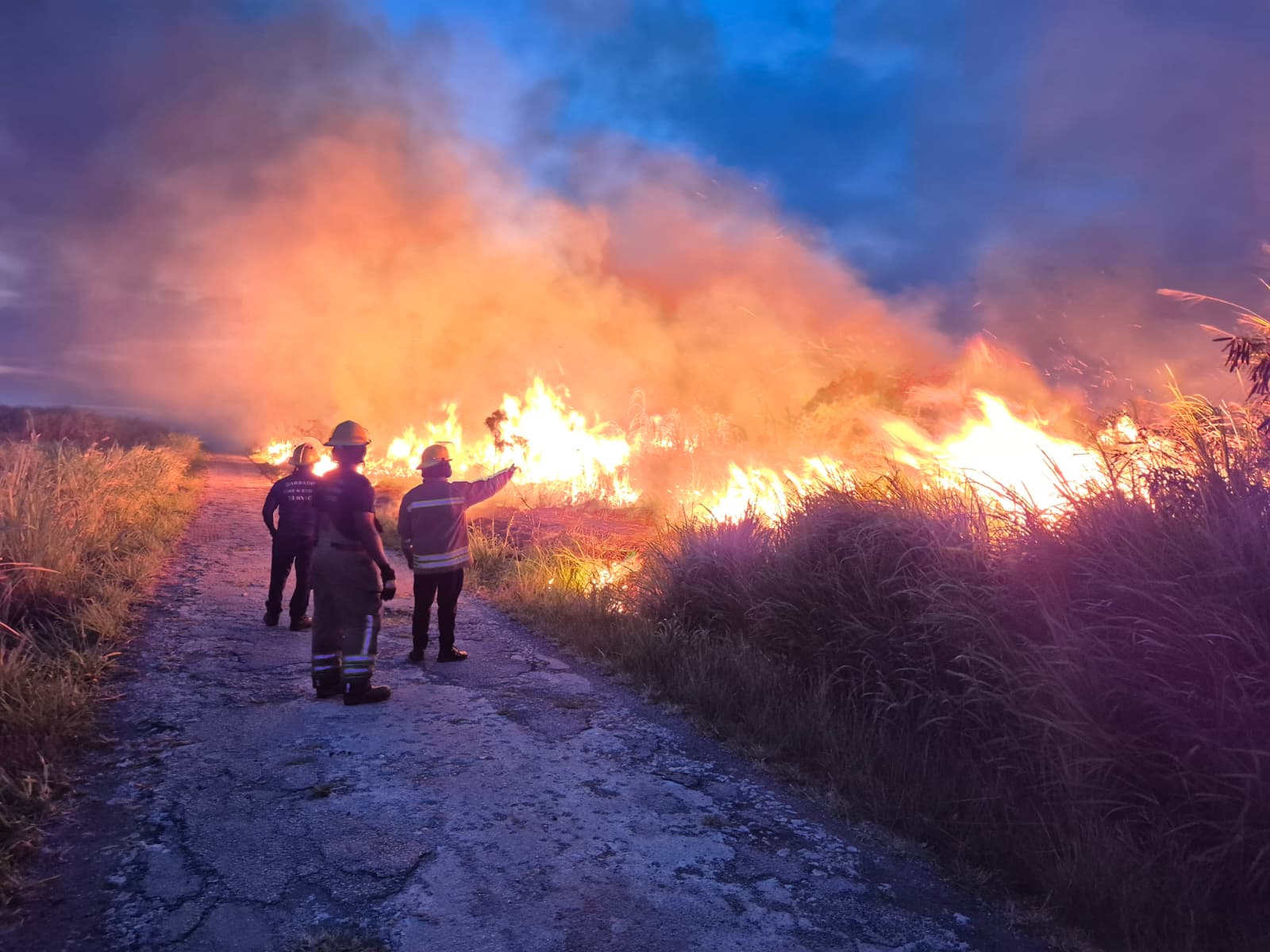
    Barbados’ top fire official has issued an urgent public warning, as a combination of soaring temperatures and sustained strong winds is projected to supercharge the spread and intensity of grass fires across the island, stretching emergency resources to their limit and putting residential property, livestock and community public health at severe risk.

    Chief Fire Officer Errol Maynard delivered the caution on Monday, explaining that rising seasonal heat has already dried out vegetation across the country, creating tinder-like conditions that will make any accidental or intentional blaze far more destructive than normal. He emphasized that most of these fires are not sparked by the heat itself, but by human activity — and the current climate conditions simply turn small, controlled burns into unmanageable disasters in minutes.

    “I am not convinced that the fires are starting because the place is hot. The fires are starting because people light these fires,” Maynard told local outlet Barbados TODAY. “What will happen is that the intensity of the fire, because the place is hotter, it is dry, so you will get a lot more grass fires during this period. It is hot and brown, so the intensity of the fire will increase, and the high winds that you are getting in recent times, the rate of the spread of the fire will also increase.”

    The growing number of wildfires does not just threaten communities — it places extraordinary strain on the fire service’s personnel and equipment, Maynard explained. Even with robust training and specialized gear, firefighters are still vulnerable to heat exhaustion and fatigue when responding to multiple blazes in extreme high temperatures, stretching their ability to recover between calls. The department has already recorded multiple cases of private property being damaged when wind-carried burning embers sparked secondary fires on residential land.

    Maynard highlighted far-reaching consequences for daily community life, with smoke from large blazes creating public health hazards for residents who are forced to inhale toxic fumes. Multiple schools across northern and eastern parishes of Barbados, including in St. Philip, have already been forced to close for multiple days, disrupting students’ learning and causing extended missed instruction. Just recently, a blaze in St. Lucy killed several grazing sheep and destroyed large patches of grass that local farmers relied on as feed for their livestock, threatening small-scale agricultural livelihoods.

    In a stern appeal to local residents, Maynard stressed that ordinary people hold the key to reducing the risk of a catastrophic fire season. Even small open burns intended to clear land for gardening or kill rodents can quickly spiral out of control under current conditions. “When you light fires…because the place is really dry, the embers may blow far away, go into a dry field, burn it, and you might not even know that you spread the fire, or you caused a fire,” he said. “The other thing is, because the wind is high, and you are not skilled to do it, when you light a fire, it can easily get out of control, and that can cause significant problems for other people.”

    Against this growing risk, Maynard confirmed that the Barbados Fire Service has had heat mitigation strategies in place for decades, as officials have observed rising average temperatures year over year dating back to the early 2000s. The department has already adjusted its operations to reduce unnecessary heat exposure for personnel: traditional daytime training activities have been shifted to cooler early morning or evening hours, and recruitment practical assessments now take place when temperatures are lower, with lectures scheduled for the hottest parts of the day.

    All fire stations across the island have been outfitted with ice machines to provide constant access to cool drinking water, and fire trucks now carry ice-cold beverages for crews responding to extended calls. When firefighters work on a blaze for a prolonged period, the department has formal rehabilitation protocols to bring them in for cooling and refreshment before rotating them back to duty. Maynard added that while the service works to minimize heat stress, all crews still follow strict personal protective equipment protocols. When not working in the hottest active fire zones, firefighters are permitted to remove layers of gear to cool down, balancing safety with heat management.

    “We generally look to the best practices in the industry,” Maynard said. “In all that doing, we still have to make sure they are safe. Fire officers understand, based on their training, that they are in the heat.”


  • Derde helft WK 2026: Saudi-Arabië verrast, Uruguay knokt zich terug naar 1-1

    Derde helft WK 2026: Saudi-Arabië verrast, Uruguay knokt zich terug naar 1-1

    Group H’s 2026 World Cup clash between Saudi Arabia and Uruguay delivered a tense, unpredictable battle at Miami Stadium on June 15, ending in a well-matched 1-1 draw that leaves all four teams in the group level on one point after matchday one.

    From the opening whistle, Uruguay asserted their dominance in possession, forcing Saudi Arabia to rely on rapid counterattacks to threaten the opposition goal. Just six minutes in, Maxi Araujo tested Saudi Arabian goalkeeper Mohammed Al Owais with a crisp strike from just outside the penalty area, which Al Owais saved spectacularly. The resulting corner found Matias Viña’s head, but the effort failed to trouble the Saudi goal. On the sidelines, the moment carried extra weight for Uruguayan goalkeeper Fernando Muslera, who was playing in his fifth consecutive World Cup while celebrating his 40th birthday – an extraordinary milestone for any elite athlete, and one that went largely untested in the opening half-hour as play stayed quiet in the final third.

    Chances remained scarce before the hydration break, with only a single shot on target from Uruguay and a very low expected goals score across both sides. The tension began to climb around the 30-minute mark, when Saudi Arabia failed to clear a defensive cross, allowing Federico Viñas to connect with a header that Al Owais was able to push away. Ten minutes before halftime, a Musab Al Juwayr free kick created danger for Uruguay, with Muslera tipping a powerful strike from Abdulelah Al Amri over the crossbar.

    Shortly after, the underdogs made their breakthrough. A quick corner from Hassan Al Tambakti slipped through Muslera’s hands, and Al Amri reacted first to head the ball into the empty net in the 41st minute, putting Saudi Arabia 1-0 up going into halftime. The goal marked a historic first for Saudi Arabia: it was the first time the nation had held a halftime lead at a World Cup since 1994, and the first opening goal the side had ever scored across their previous 16 World Cup matches.

    Uruguay came out of the halftime break with increased intensity, pushing hard for an equalizer. Substitute Agustín Canobbio created immediate danger with a low cross that was cleared just before it crossed the goal line. A 51st-minute corner nearly found the back of the net, with Viñas’ header drifting just wide of the post. The South American side consistently threatened from set pieces, but Saudi Arabia held a tight, organized defensive shape that blocked repeated attempts on goal.

    Uruguay came within inches of leveling the score in the 60th minute, when Manuel Ugarte’s long-range powerful strike hit the goalpost. As Saudi Arabia sat deeper to protect their lead, they gave Uruguay increasing space to control the ball, and mustered no shots on target in the second half, mirroring their first-half output.

    In the 74th minute, Nicolas de la Cruz entered the match for Ugarte, and Uruguay almost scored from a defensive miscommunication that resulted in a near own-goal, though the ball rolled into the side netting. The equalizer finally came in the 80th minute: after Al Owais saved Viñas’ header, the rebound fell to Maxi Araujo, who slotted the ball calmly into the net to level the score at 1-1. Araujo was substituted just minutes later, and new introduction Brian Rodriguez almost snatched a winner with an 84th-minute long-range strike that drifted just wide of the goal.

    Saudi Arabia had one late chance to steal all three points when Saud Abdulhamid had a shot on goal in the 87th minute, but his effort also missed the target. Seven minutes of stoppage time brought one more key save from Al Owais, who turned away a strike from Federico Valverde to keep the score level.

    When the final whistle blew, both sides had to settle for a single point. The draw was a creditable result for Saudi Arabia, who defended stubbornly against sustained Uruguay pressure after claiming a historic first-half lead. For Uruguay, the late equalizer was a fair reward for their long spells of possession and attacking pressure, but the side will likely feel they could have claimed all three points after dominating large stretches of the game. With Spain also drawing to Cape Verde earlier in the day, all four teams in Group H now sit equal on one point after the first round of group stage matches, setting up an intensely competitive race for knockout stage qualification.