作者: admin

  • Hospital honours four retiring nurses for decades of service

    Hospital honours four retiring nurses for decades of service

    After dedicating decades of their lives to advancing patient care and strengthening local healthcare services, four long-serving nursing professionals from Sir Lester Bird Medical Centre have closed out their distinguished careers, drawing heartfelt tributes from the institution they served.

    The four retiring team members include two nursing assistants, Loretta Gage and Corrine Scotland, and two experienced registered nurses, Janice Dunbar and Judy St John Edwards. Each brought unique skills, consistent compassion, and unwavering commitment to their roles over their years of service at the facility.

    In an official public statement, hospital leadership extended sincere gratitude to the four retirees, highlighting their far-reaching contributions to the center’s mission of delivering high-quality care to the community. The institution emphasized that the retirees’ consistent dedication to their craft and unwavering adherence to professional standards have shaped the hospital’s culture of care, leaving a profound, lasting impression on both their fellow colleagues and the thousands of patients who relied on their support through vulnerable moments.

    The tribute reflects the wider healthcare sector’s recognition of the critical role that long-serving nursing staff play in building resilient, trusted healthcare systems, and marks the well-deserved transition of four professionals who have given decades of service to public well-being.

  • Chairman insists Trinidad wasn’t ‘uninvited’ to CARICOM retreat

    Chairman insists Trinidad wasn’t ‘uninvited’ to CARICOM retreat

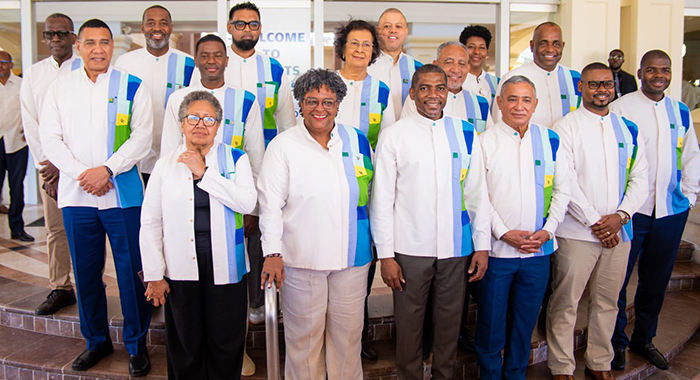
    BRIDGETOWN, BARBADOS – A growing public dispute over the reappointment of CARICOM’s top administrative leader has pushed internal governance tensions within the 15-nation Caribbean integration bloc into the open, with CARICOM Chairman and St. Kitts and Nevis Prime Minister Terrance Drew pushing back directly against claims from Trinidad and Tobago that it was deliberately locked out of the key decision-making meeting.

    In a detailed public statement released late Saturday, Drew clarified the timeline of events surrounding Carla Barnett’s reappointment as CARICOM Secretary-General for a second five-year term, a decision reached during a leadership retreat held on February 26 alongside the bloc’s 50th Regular Conference of Heads of Government in Basseterre. To back his account, Drew also published 11 pages of official correspondence exchanged between the bloc secretariat and all member states in the lead-up to the February 24-27 summit.

    Drew’s account contradicts Trinidad and Tobago Prime Minister Kamla Persad-Bissessar’s assertion that the country was uninvited to the retreat, where the reappointment vote took place. According to Drew, Persad-Bissessar departed the summit on the evening of February 25, a full day before the scheduled retreat. Later that night, at 10:33 p.m., Trinidad and Tobago’s Foreign and CARICOM Affairs Minister Sean Sobers contacted then-Secretary-General Barnett via WhatsApp to ask if he could attend the retreat in his prime minister’s absence. Drew confirmed Sobers was told he was welcome to attend, noting that other departing heads of government had previously been allowed to send their foreign ministers as representatives.

    In response, Sobers told officials he was experiencing severe seasickness and likely could not attend the boat-based retreat. Just under two hours later, at 12:37 a.m. on February 26, Barnett replied, confirming that the CARICOM chairman would fully understand if Sobers opted not to attend due to illness. Drew emphasized that Sobers never followed up to confirm he was able and willing to participate in the retreat after that exchange.

    Trinidad and Tobago’s leadership has publicly decried the reappointment process as “surreptitious and odious”, with Persad-Bissessar repeating calls for full transparency in a recent Facebook post, arguing the flawed process could have long-term negative impacts on Trinidad and Tobago’s interests. Earlier this week, Sobers announced the country would demand a full CARICOM meeting to challenge the reappointment, and even floated the possibility of holding new elections for the secretary-general post. When regional leaders held a virtual follow-up meeting on the dispute this Friday, neither Persad-Bissessar nor Sobers attended.

    Sobers has stressed that Trinidad and Tobago is not seeking to leave the 51-year-old integration bloc, but has deep concerns about CARICOM’s operational inefficiency and lack of transparency. He also confirmed the country would re-evaluate its financial contribution to the grouping in light of the dispute.

    Drew countered that all member states, including Trinidad and Tobago, received full official notification of all summit events, including the retreat’s date, location, and planned agenda items, well in advance of the conference. All member states formally acknowledged receipt of this correspondence, he added.

    During the retreat, Drew explained, leaders took up the reappointment under the agenda item focused on CARICOM governance and financing. The decision to reappoint Barnett followed the procedures laid out in Article 24 of the Revised Treaty of Chaguaramas, CARICOM’s founding governing document. Barnett, who first took office as the bloc’s eighth secretary-general in August 2021 after a unanimous appointment, was not present for the discussion or vote on her reappointment, Drew noted.

    Leaders agreed to delay the public announcement of the decision as a courtesy to allow absent leaders to be informed first, but multiple attempts to contact Persad-Bissessar via email and phone were unsuccessful, Drew said. After failed attempts to reach the prime minister, the chairman was only able to connect with Sobers.

    In addition to the reappointment, Drew confirmed that regional leaders used the retreat to advance other key governance work: they established a new sub-committee of heads from Barbados, Dominica, Guyana, and Jamaica to conduct a full review of governance and financing for all CARICOM institutions, and agreed to issue an official statement on the bloc’s recent meeting with U.S. Secretary of State Marco Rubio.

    As the dispute unfolds, two member states – Guyana and Belize – have already issued public statements confirming their support for the reappointment process. Barnett, who made history as the first woman to hold the CARICOM secretary-general post, will now serve her second five-year term in the role.

    Drew closed his statement by noting that the release of internal correspondence was aligned with agreements reached during Friday’s leaders’ meeting, and expressed hope that the bloc could return to using internal dispute resolution mechanisms to address future tensions. “Lest unfortunate and erroneous statements diminish the progress towards deepening the integration process for the benefit of the people of the Region,” he added.

  • LISTEN: Utility amnesty programme expanded to include internet access

    LISTEN: Utility amnesty programme expanded to include internet access

    The government of Antigua and Barbuda is taking a responsive, people-centered step to address growing household economic strain by expanding its popular utility amnesty initiative to cover internet services. The policy change will give thousands of households that lost connectivity over unpaid bills a path to have their service restored.

    Prime Minister Gaston Browne confirmed that the update to the program came directly after sustained public feedback from citizens across the country. He emphasized that in today’s digitally connected world, reliable internet access has shifted from a discretionary luxury to a core essential service, holding the same importance for daily life as traditional utilities like electricity and running water.

    This targeted expansion is crafted specifically to support low-income and vulnerable families that have fallen behind on monthly service payments amid broader economic pressures. By clearing the path for service restoration, the government aims to help these households regain critical access to tools that support daily life and boost long-term quality of life.

    Browne framed the adjusted amnesty program as a clear example of the administration’s governing philosophy: policy must be shaped through continuous dialogue with the public, and updated regularly to respond to fast-changing community needs. The addition of internet services is not a one-off adjustment, he noted, but a reflection of how essential digital connectivity has become for daily participation in society.

    The broader utility amnesty program is a core component of the government’s suite of social support policies focused on lifting up low-income households. Officials have repeatedly stressed that as a matter of principle, no resident should be locked out of access to basic and increasingly essential services due to temporary financial hardship.

    Stakeholders and government analysts project that the inclusion of internet in the amnesty will deliver outsized benefits to households in underserved communities, where many residents rely on digital connectivity for children’s remote learning, remote work arrangements, and staying connected to family members and essential healthcare services. For these communities, the change is expected to remove a major barrier to social and economic participation.

  • COMMENTARY: Why fiction feels more honest than real life

    COMMENTARY: Why fiction feels more honest than real life

    Across decades of working as both a nonfiction writer of sharp commentary and incisive interviews and a fiction author crafting stories of entirely made-up people, I have long observed a striking, counterintuitive shift: as digital and social mediation reshapes everyday human interaction, real life has grown steadily more artificial, while fictional worlds now often feel far more genuine to audiences and readers alike.

    This gap does not stem from fiction becoming more realistic in its crafting. Instead, it arises because modern real life has pushed ordinary people to adopt unnatural, polished personas tailored to algorithmic approval and risk-free public engagement. Fictional storytelling, by contrast, preserves the raw, unvarnished human qualities that contemporary social norms increasingly sand down: clear emotional honesty, consistent core motivations, and unfiltered self-expression.

    Consider a well-crafted fictional character: a grizzled, plain-spoken “good ol’ boy” with a startlingly sharp intellect that cuts through pretense. This imagined figure feels far more authentic than the carefully curated personalities many of us encounter in daily public life. Even a deliberately drawn brute, strong as an ox and unapologetically simple, carries a coherence that many real public personas lack. In modern real life, far too many people operate under the unspoken rule that any attention is better than none, leading them to perform for attention rather than show their true selves.

    Fictional characters are written to be fully, unapologetically themselves, making them feel like the last truly unmediated humans standing. Authors strip away the meaningless noise, contradictory social posturing, and vague half-truths that clutter modern real-world interaction. Fictional characters say what they actually mean, their life arcs follow clear consequences for their choices, and every decision they make reflects their core values — a coherence real life rarely grants modern people. It is this authenticity that makes fictional characters resonate and endure: they give audiences exactly what they crave: sincerity, courage, vulnerability, clear consequence, and genuine meaning.

    In recognition of this dynamic, I created the invented island-nation of St. Tosia, a whimsical, offbeat Caribbean setting where folklore, civic tradition, and gentle social satire weave together to frame everyday life. St. Tosia is a tapestry of music, gentle mischief, mythic charm, and warm magical realism — a space that feels familiar to readers while remaining entirely its own, a refuge for unfiltered human truth.

    At its core, this shift is not a failure of real life, nor an argument that we should retreat entirely into the worlds we invent. Fiction acts as a mirror, holding up the genuine human qualities we have misplaced in our modern rush to curate and perform. The real solution is to reclaim those lost parts of ourselves that fiction reminds us we still can embody: emotional clarity, courage, radical honesty, uncurbed curiosity, and the willingness to be seen exactly as we are.

    If we fail to do this, the only truly authentic humans left will be the ones we invent. When real people become artificial works of performance, fiction is the only medium that still tells the truth. As the iconic essayist and humorist Mark Twain once put it: “The only difference between reality and fiction is that fiction needs to be more credible.”

  • PM Browne Says ‘Follow the Leader’ Health Walk a Major Success, Urges Continued Focus on Active Living

    PM Browne Says ‘Follow the Leader’ Health Walk a Major Success, Urges Continued Focus on Active Living

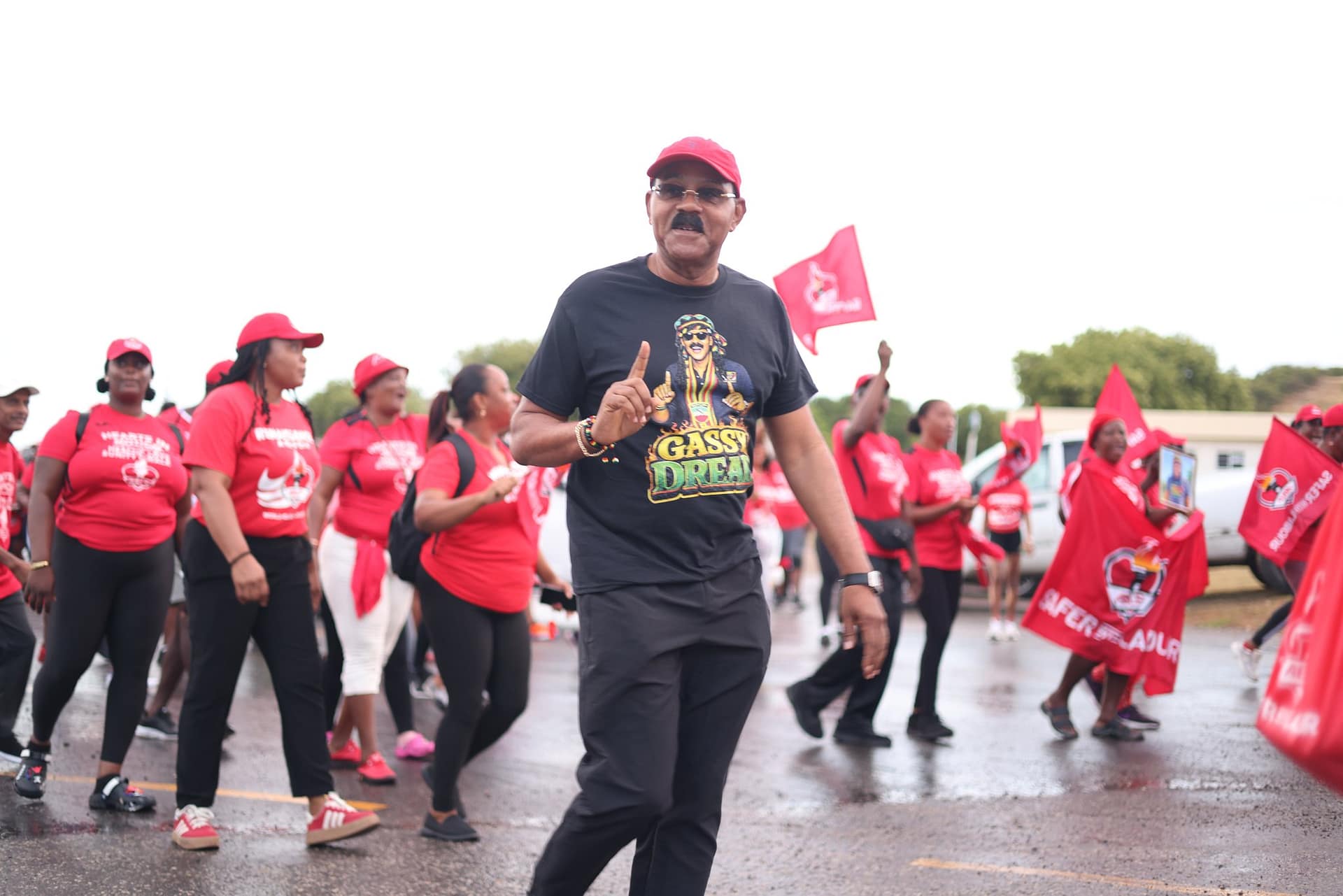
    On a recent Saturday, scores of Antiguans and Barbudans from across the twin-island nation turned out to walk alongside Prime Minister Gaston Browne for the “Follow the Leader” Health Walk, a public initiative designed to push for healthier daily habits and strengthen connections between community members. Unlike isolated fitness events that draw only dedicated exercise enthusiasts, this gathering brought together supporters of all ages and backgrounds, turning a scheduled stroll along a pre-planned route into both a gentle physical activity and a visible display of national unity.

    Opening remarks from Browne celebrated the unexpectedly strong turnout, with the prime minister emphasizing the well-documented link between consistent, routine physical activity and lower rates of preventable, lifestyle-linked chronic illnesses that strain national public health systems. Browne stressed that the benefits of events like the Health Walk extend far beyond the single day of activity, urging attendees to integrate regular movement into their weekly routines rather than only participating in one-off organized wellness gatherings.

    This walk is not an isolated project, Browne noted: it forms one piece of a broader, government-led push to improve population-level health outcomes across Antigua and Barbuda. The prime minister closed by calling on all citizens of the nation to continue “walking together” – both literally, through ongoing physical activity, and collectively, as a community working toward the shared goal of a healthier population. Organizers confirmed that the “Follow the Leader” Health Walk is just the first in a slate of planned programs that will pair public wellness education with opportunities for cross-community engagement across the country in the coming months.

  • LETTER: Impact over noise: Inside Maria Browne’s Relentless Drive to Deliver for St. John’s Rural East

    LETTER: Impact over noise: Inside Maria Browne’s Relentless Drive to Deliver for St. John’s Rural East

    In the modern political landscape of Antigua and Barbuda, where voter distrust in elected officials has grown amid widespread perceptions that politicians only show up for election season, one candidate has emerged as a clear standout: Minister Maria Browne, the Antigua and Barbuda Labour Party nominee for the St. John’s Rural East constituency. Far more than just a politician with untapped potential, Browne has already built a robust, well-documented track record defined by consistent performance, disciplined governance, and an unwavering dedication to advancing national development. Unlike many public figures who rely on grand rhetoric and viral spectacle to build their profiles, Browne’s legacy is rooted in years of quiet, relentless, outcome-focused work that spans critical sectors from infrastructure expansion to community uplift, youth empowerment and social progress.

    Browne’s impact on infrastructure development across the country is unmatched in its scope and ambition. Her work extends far beyond the borders of her St. John’s Rural East constituency, reflecting a coordinated, nation-first approach to improving connectivity and quality of life for all Antiguans and Barbudans. One of her flagship ongoing projects is the full redevelopment of All Saints Road, a transformative initiative backed by extensive planning and major public investment that will reshape one of the country’s most critical transport corridors. Beyond this landmark project, Browne has overseen upgrades to roads and public facilities in communities across the nation, including Cassada Gardens, Potters, Piccadilly, Lightfoot, Seatons, and Newfield. She has also prioritized foundational utilities beyond transport, recognizing that long-term community resilience depends on reliable basic services. Under her leadership, new water lines were installed in the Cedar Valley area, a forward-thinking investment that addresses both current access gaps and future water security for the region.

    At the local level, Browne’s work centers on building stronger, more connected communities through targeted public space investments. In St. Johnson’s Village, she championed the creation of a new outdoor gym and public playground, giving local families and children a safe, welcoming space to gather and stay active. She also led a comprehensive upgrade to the multi-use community facility at Cassada Gardens Triangle, transforming the underused space into a hub for collective activity that strengthens social bonds and fosters neighborhood unity.

    Yet Browne’s most consequential and defining investment is in people, particularly the younger generation that will shape Antigua and Barbuda’s future. To date, she has issued more than 100 scholarships to local youth, removing financial barriers to higher education and opening pathways to meaningful, long-term careers. This initiative is far from a one-off political gesture; it is a strategic investment in human capital, rooted in the core belief that a skilled, empowered population is the true foundation of national progress. Her commitment to supporting children extends across the year, with structured, enriching holiday camps hosted during Christmas, Easter, and summer breaks. These camps do more than provide recreational activities: they offer young people access to guided programming, stable supportive environments, and opportunities many would not otherwise have, creating lasting positive memories and life-changing experiences for attendees from all backgrounds.

    In her role as Minister of Housing and Works, Browne has extended this people-first approach to expanding access to affordable land and homeownership. By breaking down barriers to purchasing property and securing stable housing, she has directly improved quality of life for hundreds of families, equipping them to build long-term, secure futures for themselves and their children.

    What sets Browne apart from many of her political peers is that none of these initiatives were driven by political expediency. Every project, every scholarship, every community program has been delivered quietly, consistently, and with clear intentionality, guided by her core principle: people must always come before politics. In an era where public trust in political representation is at a historic low, Browne stands as a beacon of hope for constituents, who have seen her remain present, accessible, and responsive to community needs from her first day in office, not just in the lead-up to elections. Her deep, genuine connection to the people of St. John’s Rural East is reflected in every decision she makes. For voters, Browne’s track record makes one thing unmistakably clear: effective leadership is not measured by the promises candidates make on the campaign trail, but by the tangible, lasting results they deliver every single day.

  • PM Browne Says ABLP Launch Crowd Signals Stronger Support Than 2023

    PM Browne Says ABLP Launch Crowd Signals Stronger Support Than 2023

    As Antigua and Barbuda gears up for its upcoming general election, Prime Minister Gaston Browne is projecting confident momentum for his governing Antigua and Barbuda Labour Party (ABLP), pointing to dramatically higher turnout at the party’s recent official campaign launch than in the last election cycle.

    Browne shared his assessment during an appearance on the locally broadcast *Browne and Browne Show*, where he broke down his observations of the well-attended event. According to the prime minister, the number of supporters who gathered for this year’s launch was at least double the size of the crowd that turned out for the ABLP’s 2023 pre-election kickoff. He called the 2024 launch “epic”, noting that the energy in the room set it apart from previous campaign events.

    “The atmosphere was electric,” Browne described, emphasizing that the palpable excitement among attendees signals growing grassroots backing for the incumbent party ahead of the upcoming vote. He reiterated that the scale of turnout makes clear the ABLP holds broader support than it did entering the 2023 general election.

    A key part of this year’s campaign reboot, Browne explained, is the introduction of 10 first-time ABLP candidates. The addition of new faces is a deliberate strategic move to refresh the party’s legislative roster and tap into the growing influence of younger generations of voters, by bringing fresh talent into the political fold.

    With the anticipated general election drawing closer, all competing political parties across Antigua and Barbuda have begun ramping up their outreach and campaign activities. The ABLP will continue rolling out its campaign agenda and engaging with constituents over the coming weeks as the country moves toward election day.

  • Prime Minister Gaston Browne says he is seeking a young person in their 20s for possible Senate appointment

    Prime Minister Gaston Browne says he is seeking a young person in their 20s for possible Senate appointment

    Antigua and Barbuda’s Prime Minister Gaston Browne has announced a targeted initiative to inject fresh youth talent into the country’s upper legislative chamber, framing the move as a core pillar of a deliberate long-term succession planning strategy for his administration and ruling party. Speaking during an appearance on the Browne and Browne Show, the leader outlined that he is actively scouting the national political landscape to identify an emerging leader in their 20s to appoint to the Senate, alongside other promising young candidates for roles across statutory government boards.

    In contrast to traditional political appointment practices that often prioritize long-standing party loyalty, Browne emphasized that all potential candidates will be evaluated strictly on merit. Selection will be based on candidates’ current community and professional contributions, rather than their history of party service, he said. In a direct call to the nation’s younger population, Browne urged young people to put themselves forward for consideration, challenging them to demonstrate their capability to govern.

    The initiative forms part of a broader internal renewal underway within the Antigua and Barbuda Labour Party, Browne explained, centered on attracting new, younger talent to guarantee uninterrupted, effective leadership continuity for the country. He noted that the shift toward greater youth inclusion in governance is already progressing: the average age of party candidates has dropped in recent cycles, and the administration has implemented wider reforms to bring more young people into key decision-making roles across government.

    Browne stressed that intentional leadership development for the next generation is a non-negotiable priority to sustain the national progress Antigua and Barbuda has made in recent years. The ultimate goal of the initiative, he added, is to cultivate emerging leaders who have the skills and vision to continue advancing the country’s social development and economic growth agendas. New appointments to the Senate and various statutory boards are scheduled to be made following the upcoming national general election.

  • Rain Delays Racing as Antigua Cup Heads to Final Day

    Rain Delays Racing as Antigua Cup Heads to Final Day

    # Antigua Racing Cup 2026: Penultimate Day Delivers Dramatic Tension Ahead of Final Day

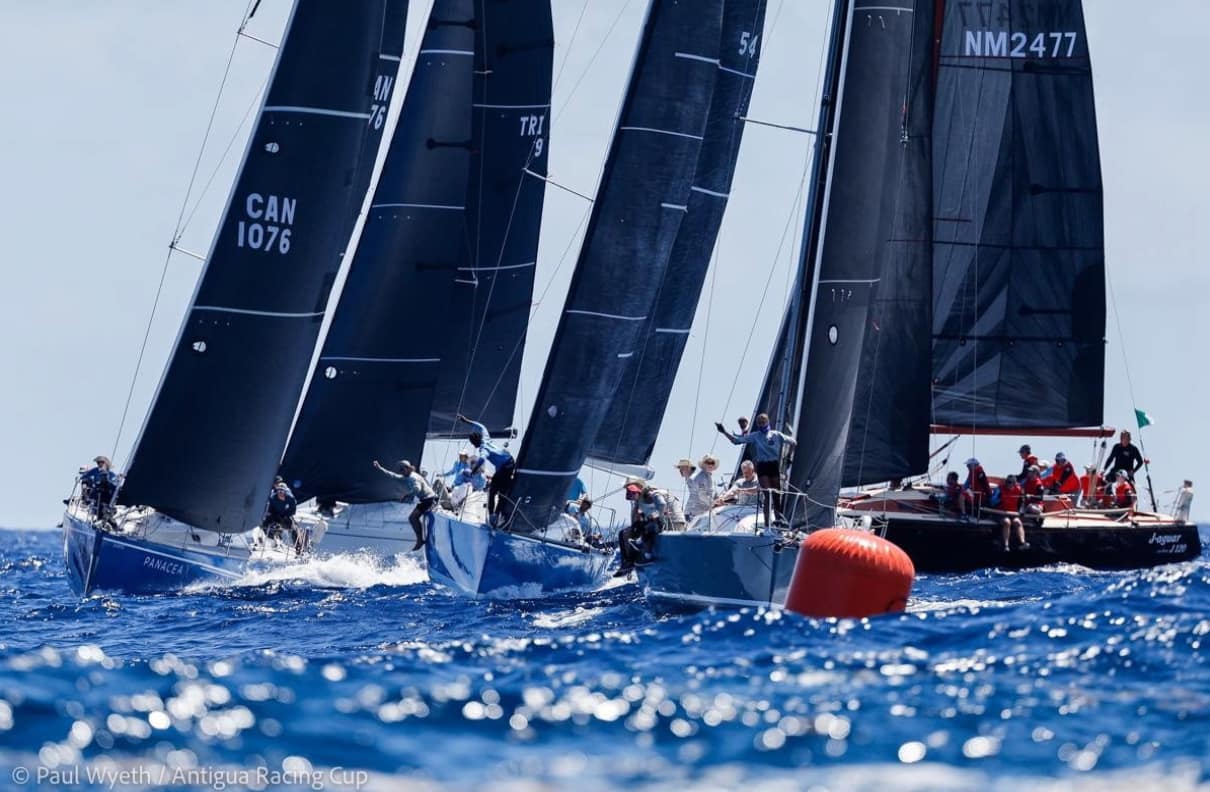
    Held across the turquoise Caribbean waters off Antigua from April 8 to 12, 2026, the Antigua Racing Cup entered its highly anticipated penultimate day on Friday, with unpredictable weather testing even the most seasoned sailing crews. A fast-moving rain squall forced organizers to delay the start of racing, setting the tone for a day defined by shifting wind speeds and directions that kept tactical teams on their toes from the first start to the final finish. Alternating bursts of bright sunshine and scattered cloud cover added an extra layer of complexity to course navigation, turning every leg of the race into a test of both skill and adaptability.

    For handicap divisions CSA 2, 3 and 4, the day brought two full races and the activation of the regatta’s one-race discard rule, shaking up overall standings and setting the stage for a thrilling final day. Most of the racing for these divisions unfolded on windward-leeward courses set between the iconic Shirley Heights landmark and the entrance to Falmouth Harbour, with an offshore reaching leg added to introduce a wider range of wind angles and tactical challenges.

    ## CSA 1 (Big Boat Class): Prevail Claims Fourth Bullet After Dramatic Comeback

    The CSA 1 big boat division tackled a breathtaking 22-nautical-mile course that wound past some of Antigua’s most famous natural landmarks. The route sent competitors upwind to the eastern edge of Willoughby Bay, followed by a fast downwind run to a virtual mark five miles offshore. From there, crews sailed a tight reach toward Boggy Peak, Antigua’s highest point, before a final upwind beat outside Cades Reef to the finish line.

    Dan Gribble’s United States entry *Prevail*, a Tripp 65, crossed the finish line first in just over three hours elapsed time and held on to claim the CSA corrected time victory – its fourth bullet win of the regatta. Behind *Prevail*, Lennart Davidsson’s S&S 79 *Kialoa III* pulled off an impressive comeback to secure second place, just one day after the team suffered a broken bowsprit. John McMonigal’s British Oyster 82 *Zig Zag*, skippered by Carl Raynes, rounded out the top three.

    Speaking after the race, Davidsson noted that his team made the call to stay offshore for most of the race to take advantage of more consistent wind and favorable current. “Much of our crew comes from the Swan 65 *Saida*, also a Sparkman Stephens design, but *Kialoa III* is far larger,” he explained. “Our crew hails from Germany, Switzerland, Norway, and we even have Antiguan sailors from the Y2K youth sailing program on board. We work well as a unit, and we’re expecting more stable weather tomorrow – hopefully not too heavy, which will suit our boat perfectly.”

    ## CSA 2: All Tied Up At the Top After Two Dramatic Races

    With two races completed on the penultimate day, the CSA 2 overall standings could not be closer, setting up a winner-takes-all battle on the final day of racing. In the day’s first race (Race 6), Steve Rigby’s British GS46 *Belladonna* claimed the corrected time win by a margin of 1 minute 20 seconds over Donald Nicholson’s American J/121 *Apollo*, with Jules Mitchell’s Antiguan RP37 *Warthog* just 36 seconds behind *Apollo* in third. *Warthog* struck back in Race 7, taking the win by 1 minute 41 seconds over Bruce Chafee’s American Reichel Pugh 42 *Rikki*, with *Belladonna* just 23 seconds behind *Rikki* in third.

    After seven races, both *Belladonna* and *Warthog* sit tied atop the overall standings with 9 points apiece, while *Rikki* holds third place with 16 points. The division has emerged as the closest contest of the entire regatta, with momentum shifting race to race and almost nothing separating the top two contenders.

    Jeremy Smart of *Belladonna* noted that the tight points race has been consistent throughout the event. “We’ve been tied on points every single day so far, which is absolutely crazy, and tomorrow is guaranteed to be tight,” he said. “For our bigger, heavier boat, 14 to 16 knots of wind on a windward-leeward course would be ideal – we need a bit of breeze to power through the waves. It’s been an absolute pleasure racing against the *Warthog* team.”

    Ozani Lafond of *Warthog* has different ideal conditions, leaning into his boat’s strength on downwind legs. “We’d love to see 18 to 20 knots, because that lets us really capitalize on our downwind speed,” he explained. “On the long runs, we can stretch out and gain time. It’s all going to come down to who sails the cleanest race tomorrow.”

    ## CSA 3: Danish Blue Extends Commanding Lead

    Poul Hoj Jensen’s Antiguan entry *Danish Blue* tightened its grip on the CSA 3 title with two additional race wins on penultimate day, extending its already solid lead over the rest of the field. In Race 6, *Danish Blue* beat Katy Campbell’s Canadian entry *Panacea X* by 2 minutes 41 seconds on corrected time, with Britain’s Team Strada Awaken taking third. *Danish Blue* repeated the performance in Race 7, beating *Panacea X* again by 2 minutes 50 seconds, with Bernie Evan-Wong’s Antiguan *High Tension* taking third just 1 minute 20 seconds behind the runner-up.

    After seven races, *Danish Blue* holds a commanding lead on 6 overall points, with *Panacea X* second on 11 points and Team Strada Awaken third on 21 points. Just one point off the third-place podium is the American entry J-Aguar Powered by Heat Wave on 22 points, keeping the fight for the final podium spot alive.

    Nineteen-year-old Antiguan sailor Shanoy Malone, who sails on *Danish Blue*, represents the next generation of Caribbean talent coming up through the island’s youth sailing pathway. “I started sailing when I was six, worked my way through the local youth system, and now I get to race alongside legends of the sport right here in my home waters,” Malone said. “My job on the bow is to plan ahead, keep operations smooth, and make sure maneuvers are clean so the team can stay focused. Having my dad, Karl James, and Poul Høj-Jensen on board means I learn something new every race, and this event makes me so proud to be a young Antiguan sailor.”

    ## CSA 4: Whiplash Extends Unbeaten Streak

    Ashley Rhodes’ Antiguan Melges 24 *Whiplash* continued its perfect unbeaten run at the 2026 Antigua Racing Cup, picking up two more wins to extend its lead at the top of CSA 4. In Race 6, *Whiplash* beat Lee Oldak’s American entry *The Project* by 12 minutes 29 seconds on corrected time, with Jean-Mallory Rousseau’s French entry *Montebello Pepsi* just 37 seconds behind *The Project* in third. Race 7 was far closer, with *Whiplash* edging out *The Project* by just 15 seconds, while *Montebello Pepsi* held on to third again.

    After seven races, *Whiplash* holds a commanding lead on a perfect 7 overall points, with *The Project* second on 12 points and *Montebello Pepsi* third on 17 points. While the title race appears all but decided, the battle for the second and third podium spots remains wide open heading into the final day.

    Rousseau, whose team sails out of nearby Guadeloupe, said the regatta has offered exactly the kind of high-quality international competition his team was seeking. “We love that this event brings together so many different boat designs, so you’re not just racing on corrected time – you’re pushing hard against the boats around you in real time, which makes everyone sail better,” he explained. “Tomorrow our plan is simple: we’ll give everything we have in the first race, and depending on the standings, we might swap crew positions for the final race to let everyone experience a new role and thank the whole team. Team spirit matters more than anything.”

    ## Off the Water: Camaraderie and Relaxation Ahead of Final Day

    After a long day of intense racing on the water, crews gathered ashore at Nelson’s Dockyard for the daily prize giving and the regatta’s famous after-racing social event. Teams replayed key moments from the day’s races, swapped stories with fellow competitors, and enjoyed complimentary local hospitality, including English Harbour Rum and Amstel Beer. The relaxed atmosphere gives competitors a chance to decompress after the intensity of racing, building camaraderie ahead of the final, title-deciding day of racing tomorrow.