作者: admin

  • COMMENTARY: Geothermal and EVs: Dominica’s fastest route to energy sovereignty

    COMMENTARY: Geothermal and EVs: Dominica’s fastest route to energy sovereignty

    This is the second installment of a three-part series exploring the transformative intersection of geothermal energy development and transport electrification in Dominica, with all opinions belonging solely to the author. At its core, the argument frames geothermal energy as the foundational enabling infrastructure for widespread electric vehicle (EV) adoption, addressing one of the most common criticisms of EV transition: that powering EVs with diesel-generated electricity does little to cut reliance on imported fossil fuels. When transport electrification is paired with domestic, stable renewable geothermal power, it evolves from a simple transport policy to a full-scale economic transformation for small island nations like Dominica.

    Unlike decades-old hypothetical plans for geothermal development in Dominica, the energy source is now moving from promise to tangible delivery. The country has already established a public commissioning timeline for its first geothermal plant, with the 10 megawatt facility on track to be fully integrated into the national grid by June 2026. This milestone is not just a win for clean energy; it clears the path for transport electrification that does not increase the country’s exposure to volatile global fossil fuel markets.

    Critically, this strategy is far more than an energy policy—it is a core foreign exchange (FX) strategy critical to Dominica’s economic stability. As a small open economy, Dominica relies heavily on scarce foreign exchange reserves, and its 2023 mineral fuel import bill reached a substantial $56.3 million U.S. dollars. This foreign currency outflow is inherently unstable: it spikes when global oil prices rise, when freight and insurance costs increase, and when geopolitical conflict disrupts global supply chains. As a small player in global energy markets, Dominica cannot outcompete larger economies for limited oil supplies. The only meaningful, long-term solution is to cut the volume of imported fuel the country must purchase.

    A key lesson drawn from the late-2025 surge in imports of used internal combustion engine (ICE) vehicles is that clear policy deadlines and aligned incentives drive rapid market change. Rather than lamenting this unplanned shift, the author argues that policymakers should structure the next phase of transition to guide market movement toward EV adoption, with four non-negotiable priorities: simplifying and standardizing EV import processes, expanding accessible EV financing, building out reliable public charging infrastructure, and accelerating geothermal energy expansion.

    Full national fleet electrification will not happen overnight. With roughly 40,000 licensed vehicles already on Dominican roads and standard vehicle lifespans spanning more than a decade, the transition requires a phased, results-focused approach that delivers rapid fuel import cuts without forcing premature turnover. The proposed three-phase roadmap prioritizes fast impact over immediate full conversion:
    – Phase 1 (2026–2029): Electrify high-mileage commercial and public fleets first, including taxis, buses, government vehicles, rental fleets and delivery vehicles. These vehicles consume massive amounts of fuel daily, so electrifying them delivers the fastest possible national import savings while providing visible, public proof that EV technology works reliably in Dominica.
    – Phase 2 (2028–2032): Shift the default for new passenger vehicle imports to EVs, with narrow exemptions only for specialized heavy equipment where electrification is not yet practical. This ends the long-standing assumption that imported ICE passenger vehicles will remain the norm indefinitely.
    – Phase 3 (2032 onward): Let market economics accelerate private vehicle turnover, rather than relying on government mandates. As geothermal expansion brings down electricity costs and EV charging becomes routine, the dramatic operating cost advantage of EVs will drive widespread voluntary adoption.

    The author argues that the Dominican government has a critical role to play in making EV incentives tangible and accessible for ordinary citizens, removing unnecessary barriers that are slowing adoption. Drawing from personal experience, the author notes that switching from an ICE to an EV revealed a surprising gap in the market: many local insurance providers refused to cover EVs, with only one out of five contacted providers willing to issue a policy. To fix this, the government should quickly introduce or amend legislation to require all licensed motor vehicle insurers to end discrimination against EVs immediately, noting that policymakers should prioritize insuring the future, not protecting the fossil fuel past.

    Another common barrier cited by prospective EV owners is the lack of local mechanics trained in EV maintenance and repair, a legitimate concern with a straightforward solution. According to recent remarks from China’s Ambassador to Dominica, China is now the world’s largest EV producer. Leveraging Dominica’s existing education and training partnerships with China, the author proposes that a diplomatic request can quickly arrange high-quality, short-term training for local mechanics and automotive instructors. This training can address the perceived skills gap in roughly six months, without requiring four-year university degrees for entry-level technicians.

    While the government has already outlined duty and VAT exemptions for EVs, public clarity and speed of implementation remain major gaps. Every month of policy confusion locks in another round of ICE vehicle imports that will operate on Dominican roads for decades. The author calls for three simple, immediate publishing changes to resolve this: a one-page public guide to all available EV incentives, a standard transparent checklist for EV import approvals, and a clear, accessible financing pathway for fleet operators, particularly those serving the general public.

    For ordinary Dominican drivers, the cost benefits of EV adoption are tangible and easy to measure, even before geothermal power fully reduces electricity generation costs. A head-to-head comparison between a 2012 Toyota RAV4 (one of the most popular compact ICE SUVs on Dominican roads) and a comparable modern EV, the BYD Atto 3, demonstrates the scale of savings. Calculations based on March 2026 petrol prices of EC$4.14 per liter show that the RAV4 costs between EC$65.82 and EC$67.39 per 100 miles to operate. By contrast, the BYD Atto 3 costs roughly EC$30 per 100 miles, even accounting for 10% charging losses and using the 2023 conservative residential electricity tariff of US$0.39 per kilowatt-hour. This works out to annual savings of EC$2,100 to EC$2,200 for a driver covering 6,000 miles per year, not including additional savings from lower EV maintenance requirements. Once geothermal expansion eliminates the fossil fuel component of electricity prices, these savings will grow even larger.

    In the upcoming third and final installment of this series, the author will connect this national strategy to unfolding global energy shocks, including war risks and critical shipping chokepoints, explaining why expanded geothermal development is not just a climate policy—it is a form of critical national insurance for small island economies like Dominica.

  • Ministry Pushes Back: ‘BFLA Is a Clinic, Not an Excluded Stakeholder’

    Ministry Pushes Back: ‘BFLA Is a Clinic, Not an Excluded Stakeholder’

    A public debate over the enforcement of Belize’s new national prescription regulations has intensified in recent days, centered on a growing rift between the Ministry of Health and Wellness and key reproductive health stakeholders over transparency and inclusive decision-making. At the heart of the disagreement is the status of the Belize Family Life Association (BFLA), a leading reproductive health organization that has raised sharp questions about whether it was sidelined during policy drafting.

    Dr. Melissa Diaz Musa, Director of Public Health and Wellness, pushed back against claims of exclusion in an official statement, clarifying that the Ministry recognizes BFLA as a registered clinical entity integrated into the country’s broader public health ecosystem, not an outsider to regulatory discussions. “BFLA operates as a clinical care provider within our existing national health framework, so it is by no means an excluded stakeholder,” Diaz Musa affirmed.

    Despite the Ministry’s reassurance, the lack of clear documentation around pre-policy consultations remains a major point of contention. Speaking on the local current affairs program *Open Your Eyes*, BFLA Executive Director Joan Burke questioned the transparency of the policy development process, pointing out that the list of invited consultation participants has never been made public.

    Burke outlined the range of groups that should have a seat at the table for reproductive health regulation: the Belize Medical and Dental Association, the Nurses Association, the Pharmacy Association, national women’s advocacy organizations, BFLA itself, and representatives from the National Health Insurance scheme. “I really don’t know who was at the table during these consultations… Was this an informed decision that draws on the on-the-ground expertise of groups that work directly with patients every day?” Burke asked.

    The BFLA executive director warned that cutting frontline reproductive health organizations out of decision-making carries serious risks for patient access. Instead of improving care, Burke argued, the current opaque policy process could create unnecessary barriers that limit Belizeans’ ability to get affordable, timely contraceptive care. She emphasized that BFLA respects the Ministry of Health’s mandate as the national regulatory body and is committed to collaborating on public health goals, but cannot back a policy that erects barriers to care.

    “Our shared mission as public health actors is to deliver the highest standard of affordable care and expand access to essential services for all Belizeans,” Burke said. “We have to ask: does this proposed regulation actually advance that mission, or does it work against it?”

    For its part, the Ministry of Health and Wellness acknowledged that it fell short in clearly communicating the details of the new enforcement framework to stakeholders early in the process. Ministry representatives reiterated that the core goal of the new prescription regulation is to strengthen the safety and consistent regulation of contraceptive access within the national public health system, aligning with the government’s commitment to improving public health outcomes.

  • OWOS schort beraad op na constructief overleg met EBS-directie

    OWOS schort beraad op na constructief overleg met EBS-directie

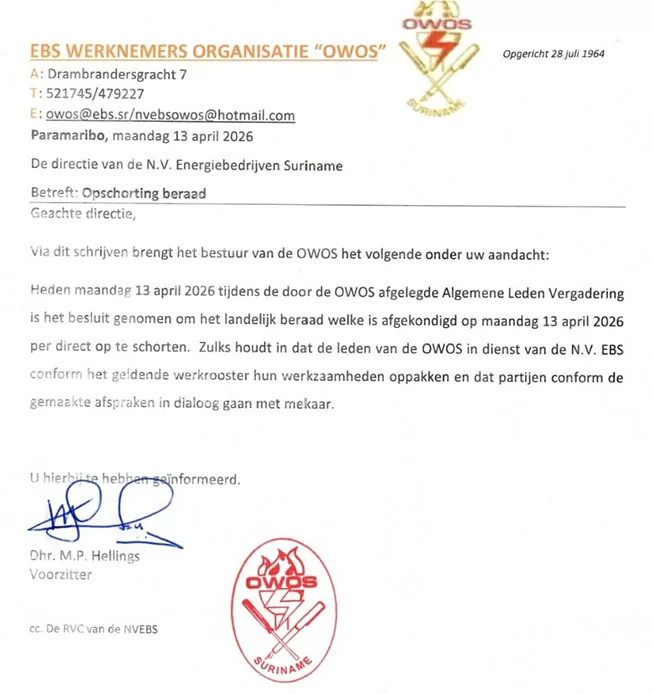
    A major breakthrough has been reached in labor tensions at Suriname’s primary energy provider, De Energie Bedrijven Suriname (EBS), after the company’s recognized employee union, OWOS, announced it would suspend previously announced industrial action. The decision came following a productive round of talks between union leadership and EBS senior management, OWOS chair Marciano Hellings confirmed in an interview with local outlet Starnieuws.

    The negotiation session was led by EBS Chief Operating Officer Robert Pancham, with Technical Director Rishidath Mathoera and Chief Financial Officer Felicia Zerp also in attendance. This meeting marked the first constructive dialogue between the two sides after a lengthy period of deadlock, according to Hellings, who emphasized that the tone of the talks marked a positive shift in labor relations at the firm.

    Both sides signed off on a clear set of binding agreements during the discussion. A key deadline has been set: by the end of this week (Thursday), the parties are expected to finalize negotiations on the 2025 collective labor agreement, and will immediately launch talks on the 2026 agreement once that milestone is completed.

    Another critical commitment reached during the talks requires EBS management to publish an official position on the controversial 40K allowance by April 30, with the principle of pay equity mandated as the core starting point for the stance. The agreement also specifies that all other outstanding personnel issues must either be fully resolved or officially placed on the formal processing track by the same end-of-April deadline.

    Following the negotiation, the full set of outcomes was presented to OWOS’s general membership assembly, which voted to approve a temporary suspension of the planned industrial action. Hellings explained that the membership body chose to grant both the union leadership and EBS management sufficient time and space to implement all agreed-upon measures within the set deadlines.

    A follow-up general assembly has already been scheduled to convene after April 30 to review progress on all commitments. At that meeting, members will vote on whether to end the industrial action threat permanently or resume the planned work stoppage if the agreed terms are not met.

  • Traffic Officer Charged with Aggravated Assault

    Traffic Officer Charged with Aggravated Assault

    In an early morning incident that has shocked local law enforcement circles, a 33-year-old serving traffic officer with Belize’s transport department has been taken into custody and formally charged with aggravated assault following a violent confrontation outside a popular Belize City nightclub. The event unfolded in the pre-dawn hours of Saturday on New Town Barracks, where the encounter between the off-duty officer and a local resident quickly escalated into a firearms threat.

    According to official police reports, the complainant, 33-year-old Rodney Card, had just exited the nightclub and was making his way to his privately owned vehicle parked in an adjacent parking lot when he spotted two women engaged in a physical altercation. Stepping in to prevent the fight from growing more serious, Card attempted to calm the two parties and de-escalate the tension. It was at this point that Ignatius Peyrefitte, the 33-year-old traffic officer, approached Card and ordered him to stay out of the dispute.

    Witnesses and official statements confirm that Peyrefitte then drew a loaded pistol from his waistband and cocked the weapon directly toward Card, a move that put Card in immediate fear for his life. Luckily for all parties involved, uniformed police officers were already patrolling the nearby area and responded to the disturbance within seconds. The responding officers quickly intervened to defuse the situation, disarmed Peyrefitte, and took him into custody without further incident.

    Following standard processing procedures at the local police precinct, Peyrefitte was formally arrested and slapped with a single count of aggravated assault. As of the publication of this report on April 13, 2026, no additional information has been released regarding a potential court date, whether Peyrefitte has retained legal representation, or if he has been suspended from his official position with the Belize transport department pending the outcome of the case. Local community leaders have already called for a full internal review of the incident to determine if any departmental policy violations occurred, underscoring growing concerns about off-duty conduct among public safety officials in Belize City.

  • Free Health Expo Brings Team of 100 American Doctors to Belize City

    Free Health Expo Brings Team of 100 American Doctors to Belize City

    From April 14 through April 16, 2026, Belize City’s Belize Civic Center is playing host to an unprecedented free public health expo, bringing nearly 100 licensed American medical professionals to provide no-cost care to local residents. Organized through a three-way partnership between international Christian evangelistic ministry Amazing Facts, the Belize Union Mission Seventh-Day Adventists, and Belize’s national Ministry of Health, the initiative marks the largest cross-border free health outreach the country has ever hosted, per local government officials.

    The four-day event offers a full spectrum of essential medical services that address key gaps in accessible care for many Belizean communities. Attendees can access general medical consultations, pediatric care for children, comprehensive women’s health and gynecological services, and general dentistry, all completely free of charge with no out-of-pocket costs for participating patients. On the opening day of the expo, hundreds of Belizean residents arrived early and waited patiently to receive the much-needed services, highlighting the strong demand for accessible healthcare in the region.

    Speaking at the expo’s official opening ceremony, Belize’s Minister of Immigration Kareem Musa emphasized that the scale and scope of the collaboration are unmatched in Belize’s recent public health history. “I believe it’s the first of its kind, at least on this very large-scale level,” Musa told attendees. “As you could see, hundreds of Belizeans patiently awaiting this service, a very critical service.”

    Dr. Javier Canul, a representative from Belize’s Ministry of Health, framed the expo as a reflection of a more holistic approach to public health aligned with global standards. Citing the World Health Organization’s official definition of health, he noted that complete well-being extends far beyond simply treating illness. “If we go back to the World Health Organization’s definition of health, it’s not merely the absence of disease, but it goes to well-being, whether it be physical, spiritual, mental, and social,” he explained.

    For its part, lead organizing partner Amazing Facts traces its roots back to 1965, when it launched as a simple radio program that shared educational facts paired with approachable biblical teachings. Over nearly 60 years, the organization has grown into a global evangelistic ministry that runs community outreach programs across the world, combining faith-based engagement with tangible public service initiatives that support underserved populations.

  • Nicaraguan pilot dies in crash in Guyana’s jungle

    Nicaraguan pilot dies in crash in Guyana’s jungle

    On Monday, April 13, 2026, Guyana’s Civil Aviation Authority (GCAA) officially confirmed the death of a Nicaraguan pilot whose small commercial aircraft vanished three days prior in the country’s unforgiving interior landscape. The pilot has been identified as Captain Ryder Castillo, a former serviceman in Nicaragua’s military, who was at the controls of a Cessna 208 owned by local carrier Air Services Limited (ASL).

    The plane, registered under the call sign 8R-YAC, lost all contact with air traffic control during a routine domestic shuttle flight between the towns of Mahdia and Imabaimadai on the morning of Friday, April 10. Search and rescue teams were able to locate the wrecked aircraft from the air within hours of it going missing, but the remote location of the crash — nestled in steep, jungle-covered mountains — made an immediate on-site recovery impossible. Aerial access to the crash zone was deemed too high-risk for rescue crews, prompting command to deploy a team of Guyana Defence Force (GDF) Special Forces, who landed their helicopter at a more accessible clearing miles away and hiked over multiple days to reach the site.

    Upon arriving at the wreckage, the Special Forces team recovered Captain Castillo’s remains, and is now arranging logistics to move the body out of the remote backcountry to a population center for official processing. In the wake of the tragedy, Guyana’s Aviation Minister Deodat Indar has already appointed a dedicated accident investigator to lead a full inquiry into what caused the crash.

    This incident comes amid a period of heightened engagement between GCAA leadership and domestic aviation operators. Just days before the crash, GCAA’s Director-General, Retired Lt. Col., held a meeting with active pilots operating in Guyana, though it remains unclear if representatives from all domestic carriers including ASL were in attendance. ASL, the operator of the crashed Cessna, had only recently received regulatory approval to restart flights to the community of Matthews Ridge, with the approval restricted exclusively to the airline’s most experienced pilots. The company is already cooperating with an ongoing GCAA probe into a separate incident involving another of its aircraft, and has confirmed it will share all relevant data and internal records with investigators working on this latest crash.

  • OPEN LETTER: Gregor Nassief – An open response to my ‘endorsement’ used at a Massacre DLP political meeting (with video))

    OPEN LETTER: Gregor Nassief – An open response to my ‘endorsement’ used at a Massacre DLP political meeting (with video))

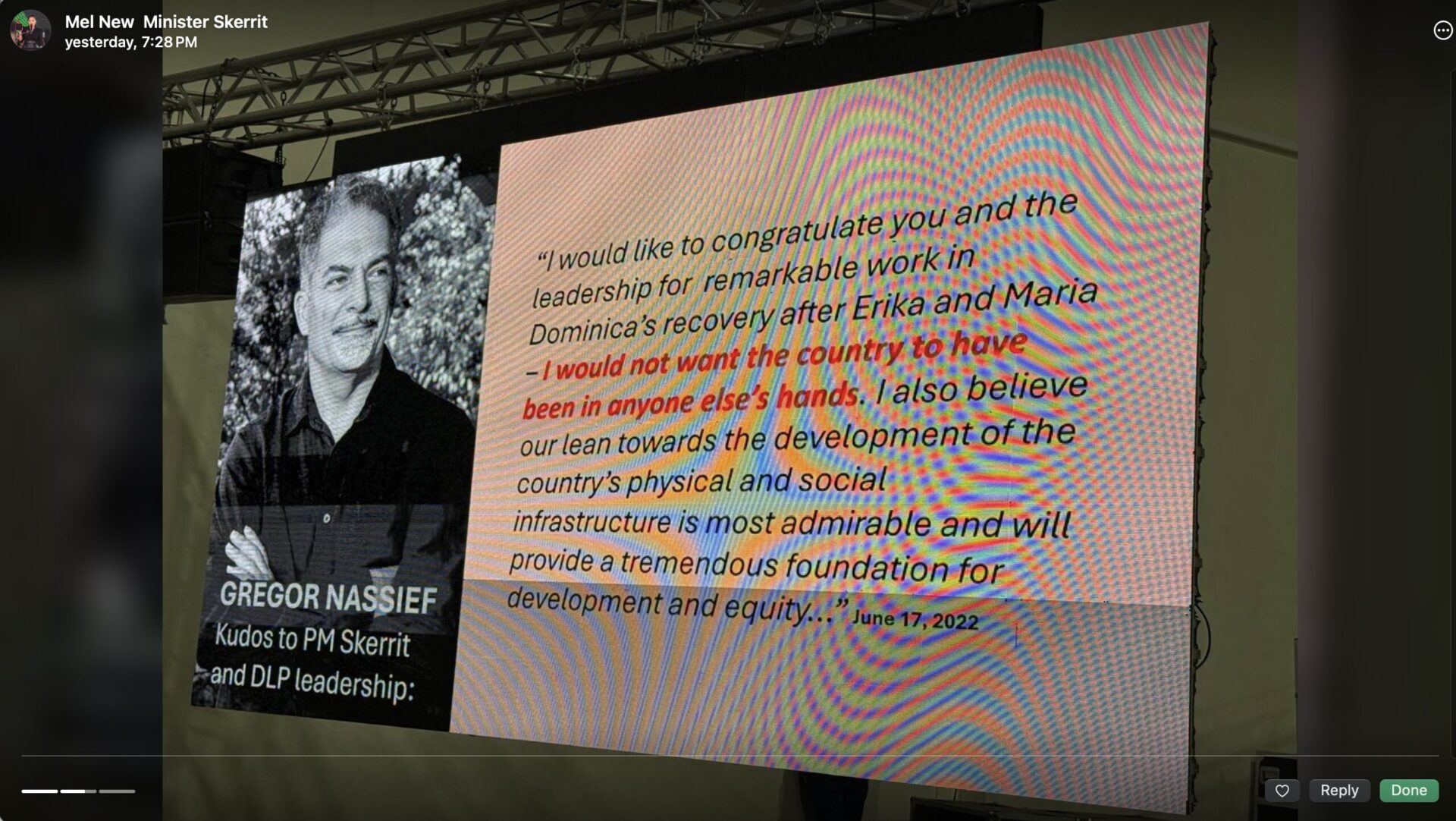
    A public dispute over political campaign tactics has emerged in Dominica after local figure Gregor Nassief published an open letter formally pushing back against the use of what the event organizers framed as his endorsement at a political meeting for the Dominica Labour Party (DLP) held in Massacre.

    The letter opens with a standard mandatory disclaimer that clarifies all perspectives and claims contained within the open letter are exclusive to Nassief himself, and do not reflect the official stances of Duravision Inc., Dominica News Online, any of DNO’s affiliated subsidiary brands, or their respective teams.

    Nassief notes in the letter that he has become aware that event organizers circulated and presented a truncated excerpt of his previous comments, taken out of their original context, to create the false impression that he had publicly endorsed the DLP or specific candidates connected to the party at the Massacre gathering. The letter, paired with accompanying video footage to corroborate his claims, marks a formal public correction of the misrepresentation of his position in the local political arena.

    The incident spotlights the ongoing tensions around campaign messaging and the unauthorized appropriation of private or public comments from non-party-affiliated public figures for political gain ahead of local political activities in Dominica.

  • Football administrators benefit from Concacaf workshop

    Football administrators benefit from Concacaf workshop

    Barbadian football administrators have stepped away from a one-day professional development workshop with new skills, resources and actionable strategies to strengthen their day-to-day operations, after the regional football governing body Concacaf hosted the specialized training session at the Barbados Football Association Technical Centre on April 11.

    The workshop drew a diverse cross-section of football leadership from across the island, bringing together senior leaders from top-flight local clubs alongside national team managers and coaches to collaborate and share insights. In an interview with local outlet Barbados TODAY, Horace Reid, Director of the CONCACAF Caribbean Office, laid out the core mission of the training: to disseminate industry-leading best practices and build capacity among the administrators who drive both national football programs and elite club competition in Barbados.

    Reid explained that the workshop curriculum covered a broad spectrum of critical administrative topics designed to address the most common pain points for regional football leaders. Attendees walked through modules on core operational functions including long-term financial planning, annual budgeting, pre-tournament logistics coordination, match day management and post-tournament evaluation and wrap-up. The agenda also prioritized foundational governance topics that are increasingly central to ethical sports management: institutional ethics, competitive integrity and athlete safeguarding, all of which were framed as non-negotiable elements of sustainable football development.

    Unlike larger, better-resourced national federations in other parts of the world, smaller Caribbean football associations face a unique set of structural challenges that can hinder consistent growth and organizational capacity. Reid acknowledged these gaps, but emphasized that the region has already made significant strides in recent years. “We have seen tremendous improvement across the football family within the region. The member associations are becoming more organised, they are more football focused, which is good news,” he said. Even with this progress, Reid noted that ongoing investment in administrative capacity remains critical. “However, we have to continue to provide them with the tools, as they go about their day to day administration of the sport,” he added.

    Reid pointed out that strong administrative fundamentals have long been an underprioritized area across Caribbean football for decades. “One of the things that for too long, for many decades we have not paid sufficient attention to is how important it is to be well organised. The plan to have strategic objectives and to just follow through on some basic fundamentals in terms of administration, to make sure that we are ticking all the right boxes as we continue to develop the players and grow the sport within the region,” he outlined.

    While the region has already recorded measurable growth at both the youth and senior competitive levels, Reid said Concacaf remains committed to supporting further expansion of the sport across the Caribbean. The workshop, he added, is part of a broader ongoing push to ensure every member association has access to the knowledge and tools needed to succeed. “The objective really is to make sure that all of the information that we can bring to bear on the member associations within the region, that we share those best practices with them,” Reid said.

  • LETTER: It’s Time We Kiss “Town” Goodbye

    LETTER: It’s Time We Kiss “Town” Goodbye

    Decades after serving as the functional capital of Antigua, St. John’s has fallen into a state of such severe disrepair that local observers argue it can no longer meet the basic standards expected of a national capital. What was once a thriving urban center has decayed into a maze of accessibility barriers, outdated infrastructure, and unaddressed maintenance failures that harm both long-term residents and visiting tourists alike.

    For pedestrians, navigating downtown St. John’s has become a grueling, obstacle-filled experience rather than a routine task. Outside the limited, upgraded area of Heritage Quay, continuous, even sidewalks are almost impossible to find. Crumbling pavement, inconsistent step heights, and unmarked hazards force pedestrians to constantly weave and adjust their path to avoid injury. This is far more than an inconvenience: it creates a fundamentally exclusionary environment for people with mobility impairments.

    The scope of this accessibility failure was laid bare in a recent firsthand observation: a visitor attempting to navigate the streets with a loved one in a wheelchair faced constant, insurmountable barriers. Onlookers described the scene as painful to watch, noting that any visitor experiencing these barriers would likely abandon their exploration of the city and return immediately to their cruise ship, cutting off potential revenue for local businesses. The incident makes clear that meaningful accessibility for disabled people is simply non-existent in St. John’s today.

    Mobility issues are not the only pressing problem. Persistent, unpleasant odors permeate multiple neighborhoods throughout the city, traced back to open drainage systems and aging, overcapacity trash receptacles. What were once functional, practical infrastructure solutions for a smaller city have long been outdated by growing population and tourism volumes, leaving them to become public nuisance that requires urgent replacement.

    The broader built environment of St. John’s tells the same story of neglect. Commercial and residential buildings show clear signs of structural deterioration, while many retail storefronts make little to no effort to create welcoming, appealing spaces for customers. Basic merchandising planning that draws in foot traffic is often an afterthought, if it is considered at all, further eroding the city’s ability to support local commerce.

    Parking management adds another layer of frustration for anyone trying to visit or do business in the capital. Informal parking space claiming, enforced by traffic cones from business owners, local organizations, and individual operators including car wash services, has locked out the general public from most convenient spots. This unregulated system sends a clear message: visitor convenience is not a priority for stakeholders in the city. For potential customers considering a trip into the capital to shop or support local businesses, this barrier alone is often enough to discourage them from coming at all.

    Even when municipal repairs are initiated, they often leave the city in worse shape for months. When the Antigua Public Utilities Authority completes road excavation work for utility upgrades, the excavated sections are regularly left unrepaired for extended periods of time, leaving roads partially or fully impassable. Community members argue these delays are entirely unreasonable and avoidable with proper project planning.

    At its core, the crisis facing St. John’s boils down to a simple, unavoidable truth: no city can maintain itself without consistent investment, strategic planning, and regular reinvestment in infrastructure. Just as ongoing care is required to maintain any valuable asset, St. John’s has been starved of the consistent attention it needs to function, and the visible decline across the city makes that neglect impossible to ignore.

    This critique is not an attack on St. John’s rich historic identity. Supporters of change emphasize that acknowledging the capital’s current collapse is not about dismissing the city’s past, but about being honest about its future. The current state of St. John’s is not sustainable, and continuing to pretend otherwise does a profound disservice to residents who rely on capital services, business owners who depend on visitor traffic, and tourists who come to the island expecting a functional, welcoming capital.

    For proponents of dramatic change, the conclusion is unavoidable: St. John’s has deteriorated past the point of cost-effective rehabilitation. To give residents, businesses, and visitors the functional, comfortable urban environment they need, core commercial and government activity must be relocated to a new, properly planned urban center.

  • Antigua and Barbuda High Commission Welcomes Participants of The King’s Foundation Building Craft Programme

    Antigua and Barbuda High Commission Welcomes Participants of The King’s Foundation Building Craft Programme

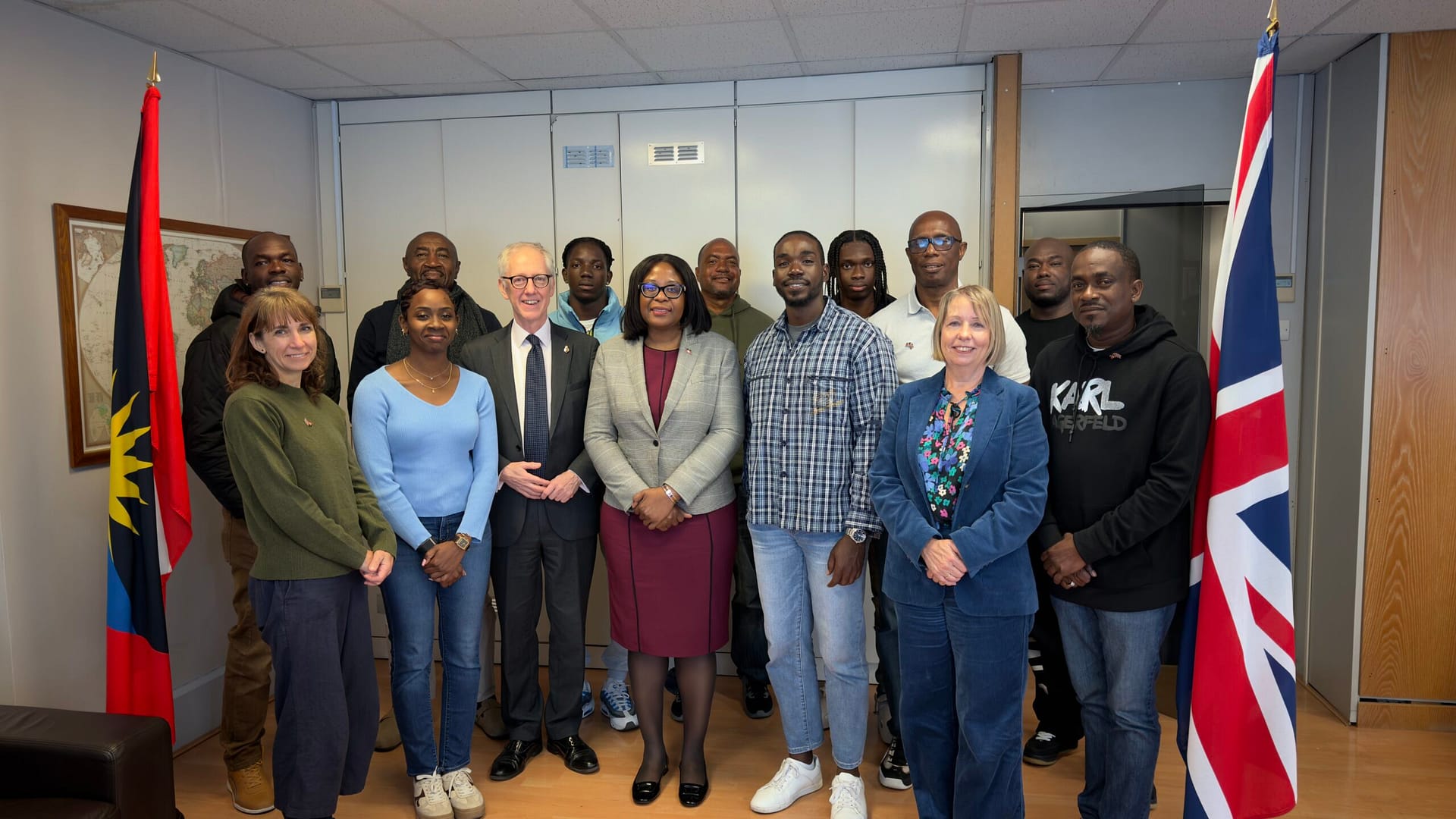
    LONDON, April 13, 2026 – A milestone moment for skills development and heritage preservation in Antigua and Barbuda unfolded this week, as the nation’s High Commission in London opened its doors to welcome the first group of local participants taking part in the transformative King’s Foundation Building Craft Programme.

    The innovative training initiative is the product of years of collaborative planning between three key partners: The King’s Foundation, the Antigua and Barbuda High Commission in London, and the Antigua and Barbuda Centre for Advanced Studies. Over the course of the programme, participating craft professionals will gain immersive, specialized instruction in both time-honored traditional construction methods and modern sustainable building practices, with a particular focus on heritage site restoration and conservation.

    For the small Caribbean nation, the programme carries far-reaching long-term benefits beyond individual professional growth. It is designed to bolster domestic technical expertise, create a framework for protecting Antigua and Barbuda’s unique cultural and architectural heritage, and equip a rising generation of skilled local workers to lead future restoration projects and national development initiatives across the islands.

    Addressing gathered participants and partners at the reception, Antigua and Barbuda High Commissioner Karen-Mae Hill encouraged the cohort to seize the once-in-a-lifetime learning opportunity, joking lightly about the group’s likely adjustment to Britain’s cooler spring temperatures. Hill reflected on her own early involvement in building the programme, recalling a trip to Dumfries House in Scotland to meet with The King’s Foundation team during the conceptual development phase.

    “This is a truly unique opportunity for learning, cross-cultural exchange, and professional advancement,” Hill told the group. “I urge every one of you to embrace this experience with discipline, open minds, and creative thinking. As you build new skills, consider not only how this will advance your own careers – but how you can bring this expertise home to lift up our entire nation.”

    Jeremy Cross, Director of International Engagement for The King’s Foundation, also spoke at the event, expressing his organization’s enthusiasm for the new partnership. “We are delighted to welcome these exceptionally talented individuals to our training sites, as they hone their craft in heritage building and climate-resilient construction,” Cross said. “We are looking forward to working alongside each participant throughout the programme, and to the mutual exchange of knowledge and approaches that this collaboration will bring.”

    In closing, the High Commission recognized the behind-the-scenes work that made the welcome event and participant arrangements possible, singling out Brent Scotland, Second Secretary, and Caleb Gardiner, Third Secretary, for their instrumental coordination efforts that brought the initiative to its official launch.