For decades, football fans on the Caribbean island of Saint Lucia—known locally as the Helen of the West—have only ever experienced the FIFA World Cup as distant spectators. The tiny island nation has never secured a spot in the world football’s most prestigious tournament, leaving local supporters to cheer for foreign squads that capture their attention through exciting playing styles and elite player talent.
Now, a groundbreaking historic achievement by a fellow Caribbean CONCACAF nation has sparked serious discussion about what it would take for Saint Lucia to finally break its qualifying drought and earn a place at football’s top table. The potential blueprint? Curaçao’s 2026 World Cup run, which redefined what small nations can achieve on the global football stage.
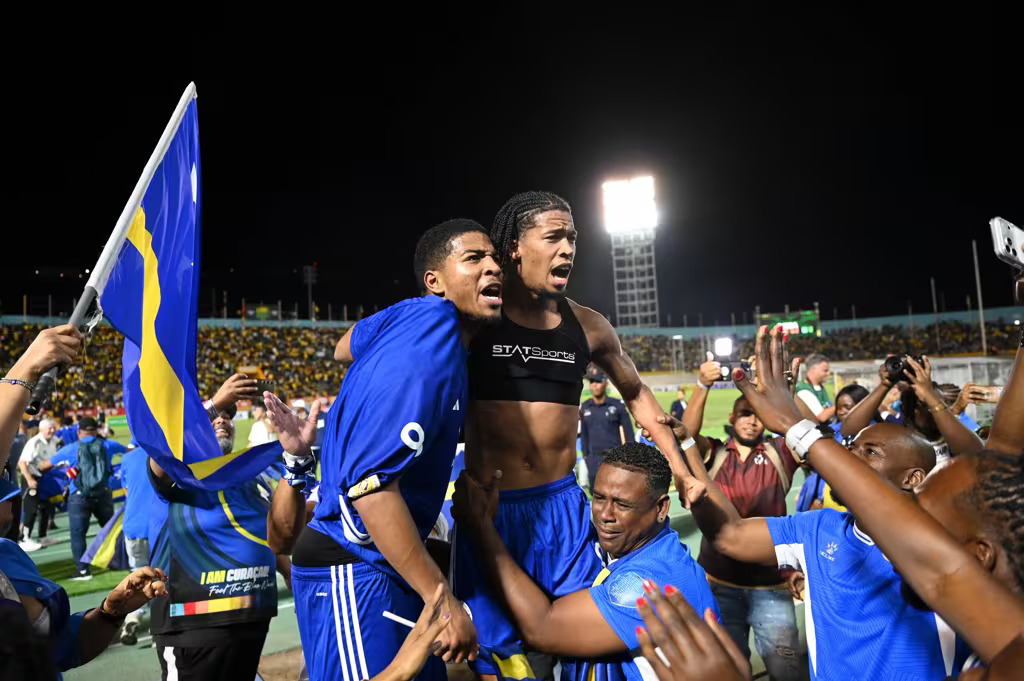
This year, Curaçao made its first-ever appearance at the World Cup finals, earning a spot in the Guinness World Records as the smallest nation by population to ever qualify for the tournament. With just 156,115 residents at the time of qualification, the island outperformed every other small nation in history to secure its historic spot. Though Curaçao suffered a lopsided 7-1 defeat to Germany in its opening match, simply reaching the finals stands as a landmark achievement for the autonomous constituent country of the Kingdom of the Netherlands.
What makes Curaçao’s success particularly notable is its unorthodox team-building strategy: the overwhelming majority of its 26-man World Cup squad did not hail from the island itself. In fact, just one player was born in Curaçao; all other squad members were born in the European mainland, raised and professionally trained in the Netherlands’ elite youth football system. Thanks to Curaçao’s constitutional ties to the Kingdom of the Netherlands and familial heritage, these players were eligible to represent the island at the senior international level, and many chose to embrace their ancestral roots to play for the Blue Wave.
The Curaçao model has drawn the attention of Saint Lucia’s top sports official, who is now exploring whether a similar approach could unlock his own country’s first World Cup berth. Speaking after observing Curaçao’s historic tournament run, Minister for Youth Development and Sports Kenson Casimir laid out his vision for regulatory and systemic changes to tap into Saint Lucia’s own large global diaspora of talented players.
Casimir emphasized that Curaçao’s success was no accident: the island’s football federation invested years of intentional work into connecting with and recruiting second- and third-generation footballers of Curaçaoan heritage from across the Kingdom of the Netherlands, building a cohesive, professionally structured squad that small Caribbean nations have rarely been able to field. While the 7-1 opening match result was far from ideal, Casimir noted that Curaçao’s organized, structured style of play made clear that the strategy had delivered long-term results that few expected.
“As a Minister of Sport, I was extremely jealous, and I pretty much got up the following morning thinking that we definitely need to do more by way of legislation to be able to attract more of our second and third generation footballers who are in England, who are in different parts of Europe, and, of course, South America and North America,” Casimir said.
FIFA’s eligibility rules, laid out in Article 7 of the association’s statutes, already clear the way for this approach. Any player not born in a representative nation can qualify to play if they meet at least one of four criteria: they have at least one parent from the nation, at least one grandparent from the nation, they hold permanent residency or naturalized citizenship, or they lived in the nation from an early age. This framework has already been leveraged by other CONCACAF nations: Jamaica used diaspora recruitment to qualify for past World Cups, and Haiti followed the same strategy for its 2026 qualification.
Curaçao’s path to the World Cup was also boosted by high-profile leadership. Former Barcelona and Netherlands striker Patrick Kluivert, who has Curaçaoan and Surinamese heritage, took over the national team in 2015 (and returned for an interim stint in 2021), using his global name recognition to convince talented diaspora players to commit to the side. This tactic of bringing in high-profile external leadership is not new: Trinidad and Tobago hired legendary Dutch manager Leo Beenhakker, formerly of Real Madrid and the Netherlands men’s national team, in 2005 to turn around their faltering qualifying campaign, ultimately helping them reach their first-ever World Cup.
Casimir says big names—whether on the sidelines or the pitch—could deliver the same boost for Saint Lucia. He pointed to Arsenal youth star Myles Lewis-Skelly, who has Saint Lucian heritage, as an example of the untapped talent the nation could attract. “Can you imagine another nine or ten players on his level playing for Saint Lucia? We probably would have beaten Curaçao, we would have been Saint Lucia playing in that tournament,” he said.