作者: admin

  • Comptroller’s Office issues new rules to strengthen public payment transparency

    Comptroller’s Office issues new rules to strengthen public payment transparency

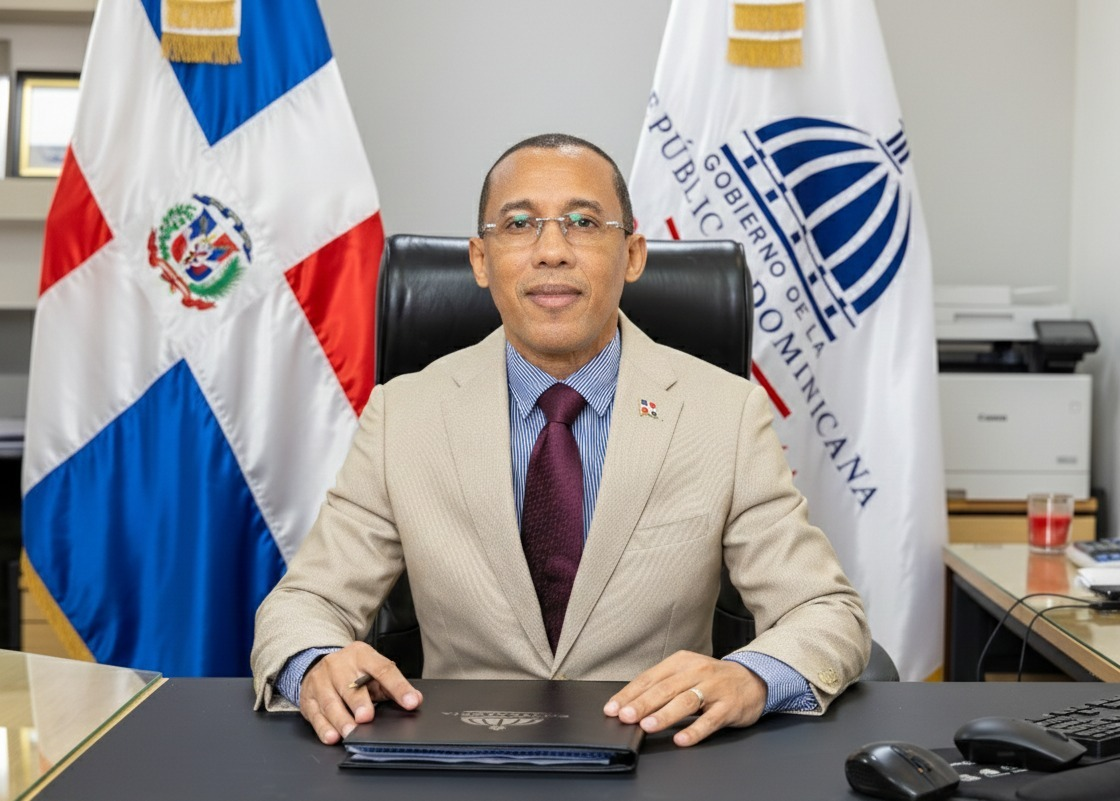
    In Santo Domingo, the Dominican Republic’s top financial oversight body has rolled out a updated regulatory framework aimed at tightening transparency, accountability, and transaction tracking for public institution payments tied to credit assignments and factoring operations.

    The new policy, officially signed off by Comptroller General Geraldo Espinosa, was crafted to address gaps in current financial oversight by requiring clear, verifiable identification of every stakeholder involved in these transactions, while strengthening monitoring of all government-connected financial flows. Unlike previous loose guidelines, the new circular sets non-negotiable strict eligibility requirements for any payment request that involves transferred collection rights — any submission that fails to meet these standards will be automatically rejected.

    A core mandate of the new directive requires the assignee (the party receiving the assigned credit rights) to complete registration as an official beneficiary both with the Dominican National Treasury and the country’s central Financial Management Information System, known locally as Sigef, before any payment can receive final approval. For assignees that have not yet completed this registration process, the relevant public institutions are required to guide them through the mandatory registration procedure aligned with existing national financial regulations.

    The circular also clarifies procedural standards for processing payments and applying required tax withholdings. Under the new rules, financial records will first attribute the transaction to the original supplier before the final funds are transferred to the assignee, creating a clear paper trail for auditors. Municipal governments and public entities that currently operate outside the Sigef system have been formally instructed to adjust their internal financial protocols to align with these new oversight guidelines.

    Officials note that this new circular is not an isolated rule change, but a key component of a government-wide broader strategy to upgrade internal financial controls across all public sector institutions, reduce opportunities for financial mismanagement and corruption, and improve the overall quality of public financial governance in the country.

  • Nerkust draagt leiding FOLS over aan Barron: Het is tijd voor de jonge generatie

    Nerkust draagt leiding FOLS over aan Barron: Het is tijd voor de jonge generatie

    Paramaribo, Suriname – April 16, 2026 – A historic leadership transition has taken place at the Federation of Organizations of Teachers in Suriname (FOLS), where long-serving president Marcellino Nerkust has officially handed over the gavel to newly elected leader Bernice Barron following the organization’s annual board election.

    Nerkust announced his decision not to seek re-election after more than two decades at the helm of the country’s leading teachers’ advocacy group, choosing to make way for a new generation of leadership after guiding FOLS since August 2005. His tenure officially concluded on April 15, 2026, with the election held at the COB training and conference center. Barron defeated a small field of other candidates to win a three-year term as FOLS president, serving through 2029.

    Though Nerkust had already been officially retired for five years, he said his choice to step down now comes as he has reached full pensionable age and completed what he considers a full contribution to Suriname’s teachers and education sector. “It is time now for the young generation to take the lead,” Nerkust said in remarks after the election.

    The leadership election proceeded smoothly, aligned with updated organizational bylaws that came into force earlier this year. Those bylaws, which were formally published in the Official Gazette of the Republic of Suriname on February 7, 2025, outline direct in-office election of the FOLS presidency, a framework that guided this week’s vote.

    Looking back on his 21-year tenure, Nerkust reflected on a period marked by persistent challenges, but also counted a series of landmark wins for Suriname’s teaching community. During his leadership, FOLS secured the introduction of the FISO 1 and 2 salary adjustment schemes under the Venetiaan administration, and won a formal, legally recognized education allowance for teachers in December 2008. Under the Bouterse government, FOLS led successful advocacy for the revaluation of teachers’ professional status and pay.

    More recently, during the Santokhi administration, Nerkust guided FOLS through the formal publication of its updated organizational statutes, secured a new clothing allowance for all teachers, and led bargaining through the Ravaksur-PLUS collective negotiation framework that delivered tangible purchasing power improvements for education workers. Just before his departure, Nerkust also oversaw the delivery of a new priority policy wishlist to current Suriname President Jennifer Simons.

    Nerkust closed his remarks by saying he leaves the organization with his head held high, and expressed full confidence in FOLS’ future under Barron’s new leadership.

  • MSC Cruises to establish permanent base in La Romana

    MSC Cruises to establish permanent base in La Romana

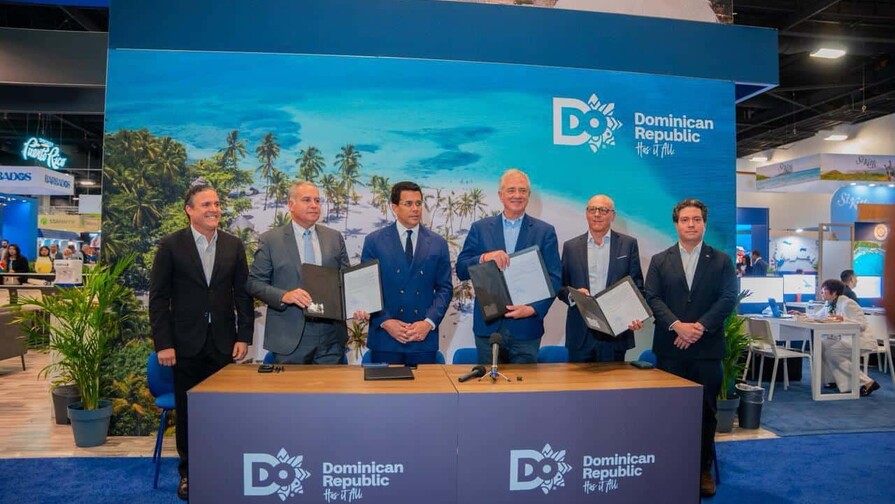
    At the annual Seatrade Cruise Global conference held in Miami, Dominican Republic’s Minister of Tourism David Collado made a landmark announcement for the country’s travel and cruise sector: starting in November 2026, the Caribbean nation will host the first permanent, year-round homeport for a major European cruise line, based out of the eastern coastal city of La Romana.

    This historic initiative grew out of a newly signed partnership between leading European cruise operator MSC Cruises and Costasur Casa de Campo. The agreement covers far more than just the homeport establishment: it also includes plans for the management and sustainable development of Catalina Island, as well as a major expansion of cruise itineraries that will add multiple new Dominican destinations to MSC Cruises’ global routes.

    Regional and industry stakeholders have highlighted that this project is expected to deliver widespread economic benefits across the Dominican Republic, particularly in the country’s eastern region where the port is located. Projections point to significant new foreign direct investment flowing into the local tourism infrastructure, a measurable boost to overall national visitor arrivals and spending, and the creation of hundreds of new permanent and seasonal jobs for local workers.

    Cruise industry leaders have emphasized the strategic value of this milestone. A permanent year-round homeport is far more impactful for a destination than occasional port calls, as it drives consistent visitor traffic and generates ongoing economic activity, rather than the seasonal fluctuations that characterize many Caribbean cruise markets. This move is expected to significantly strengthen the Dominican Republic’s competitive position in the $50 billion global cruise industry, and aligns with the national government’s long-term strategy to establish the country as one of the Caribbean’s leading central cruise hubs.

  • «unsustainable food inflation» says the Governor of the BRH

    «unsustainable food inflation» says the Governor of the BRH

    Against the backdrop of the 2026 IMF and World Bank Spring Meetings held in Washington D.C., Ronald Gabriel, Governor of the Bank of the Republic of Haiti (BRH), has delivered a stark wake-up call to the global community on the cascading crises facing the world’s most vulnerable economies. Joining delegations from Haiti’s central bank and Ministry of Economy and Finance for a slate of high-level talks, including the G24 Ministerial Meeting, Gabriel used his address to highlight the escalating structural challenges pushing marginalized nations like Haiti to the brink.

    Gabriel opened his remarks by commending the G24 Secretariat for its ongoing work, before emphasizing that the overlapping crises facing low-income and fragile states are no longer temporary shocks – they have become a permanent structural reality shaping daily life for millions. The ripple effects of new global conflicts on energy and food markets, he argued, have exacerbated deep pre-existing vulnerabilities that many vulnerable nations have never been able to address. For these countries, global shocks are not abstract economic data points: they translate directly to skyrocketing food costs that households cannot afford, shrinking room for governments to fund critical public services, and rapidly declining quality of life for the populations most exposed to instability.

    Compounding these pressures, Gabriel added, are shifting global trade dynamics, increasingly restrictive migration policies, and a dramatic drop in international development assistance – resources that many fragile nations depend on to keep basic services running, even as their need grows more urgent. Haiti, he noted, stands as a devastating case in point. Already grappling with severe internal structural weaknesses, the Caribbean nation is now bearing the full brunt of these overlapping external shocks, putting at risk the limited economic and social progress the country has managed to make through years of extraordinary hardship.

    Gabriel went on to outline two core institutional reforms that he says are essential to addressing the growing crisis. First, he called for the immediate completion of the 16th General Review of Quotas at the IMF, arguing that adequate, fairly distributed resources are a non-negotiable prerequisite for the institution to effectively meet the actual needs of all its member states. Second, he pushed for truly inclusive multilateral governance, urging accelerated negotiations to expand representation for fragile states in global decision-making bodies. Amplifying the voice of vulnerable nations, he argued, would allow for the creation of targeted, innovative policy tools that are tailored to their unique structural vulnerabilities – a change that conflict-burdened nations cannot afford to delay.

    Closing his address, Gabriel emphasized that the global community must move beyond symbolic declarations of support for vulnerable states and deliver concrete, operational commitments to multilateral action. For nations like Haiti facing cascading crises, the time for talk has passed: the world must act now.

  • Exclusive: Side-hustle boom pushes motor numbers past 181k

    Exclusive: Side-hustle boom pushes motor numbers past 181k

    Against the backdrop of a growing national push for self-employment and alternative income streams, the Caribbean island nation of Barbados is now devoting more of its limited foreign exchange reserves to importing passenger cars than to critical pharmaceuticals and commercial shipping, new data and senior officials have confirmed. As of 2024, imported motor vehicles rank as the third-largest category of goods entering the country by total import spending, according to data from the Observatory of Economic Complexity (OEC), a leading international platform that compiles and visualizes global trade and economic activity data for analysts across public, private and academic spheres.

    OEC figures show that Barbados spent $111 million on car imports in 2024. Only two categories – refined petroleum at $520 million and crude petroleum at $234 million – exceeded that total. By contrast, the nation spent just $42.9 million on imported packaged medications and $42.5 million on passenger and cargo ships, marking car import spending as nearly 2.6 times higher than spending on either of those two critical categories. Total national imports for 2024 reached $2.58 billion, while overall export revenue for the year amounted to just $443 million, highlighting the country’s ongoing trade imbalance that puts additional pressure on foreign exchange reserves.

    Treca McCarthy-Broomes, chief licensing officer for Barbados, shared exclusive new insight with Barbados TODAY on the underrecognized driver of this trend: the booming culture of entrepreneurship and side-hustling that has swept the country in recent years. As of the latest count, the total number of registered vehicles on Barbados’ roads has surpassed 181,500, a figure that has grown steadily alongside the push for alternative income generation. Many Barbadians are turning to second jobs and small business ownership to cover rising living costs, from supporting children and aging parents to paying monthly bills, and that demand for extra income has directly translated to more vehicle purchases.

    “Persons are seeking side-hustles…other forms of revenue, and they are seeking to get permits, or they open up small businesses and they are buying vehicles to use as hirers or taxis or commercial vehicles. You will find that a lot of that is occurring,” McCarthy-Broomes explained in the interview. “The push for entrepreneurship, you are really seeing the results of the push for entrepreneurship.”

    She added that multiple new patterns of vehicle ownership have emerged tied to this economic shift, including groups of family members or siblings pooling resources to purchase a single commercial vehicle together, which they then register for commercial hire to generate shared income. Even as new vehicle purchases for commercial use rise, many vehicles bought for this purpose remain unsold at dealerships and stored on private lots, pastures, and under roadside trees, a visible marker of the gap between growing demand for commercial vehicle permits and market absorption. McCarthy-Broomes noted that while entrepreneurship is not the only factor driving vehicle growth, it is a far more significant contributor than previously acknowledged.

    This surge in registered vehicles has exacerbated a long-running traffic management crisis that the Barbadian government is still working to address. Officials have proposed constructing new highway flyovers as one core infrastructure solution, and the government has already held a series of national public consultations dubbed “The Way Forward” to gather community input on solving gridlock. Ideas collected from the public span a wide range of policy areas, from improved infrastructure and updated urban planning to reformed school transportation systems, investment in alternative transit modes, expanded public transport services, targeted measures to reduce overall vehicle volume on roads, strengthened safety enforcement, and upgraded road quality standards.

    In addition to tackling congestion, the Barbados Licensing Authority has partnered with the Barbados Police Service and local insurance industry to crack down on the parallel problem of uninsured vehicles operating on public roads, a growing issue that has accompanied the rise in overall vehicle numbers.

  • Over $10 million USD invested in Haiti, a new factory is being built at CODEVI

    Over $10 million USD invested in Haiti, a new factory is being built at CODEVI

    In a landmark move for Haiti’s ongoing economic revitalization efforts, government officials formalized a deal on April 15, 2026, to host a new manufacturing facility from global packaging leader ALPLA Group at the CODEVI Industrial Development Company free trade zone in Ouanaminthe, a city in Haiti’s northeastern region.

    The project brings more than $10.2 million in foreign direct investment to the Caribbean nation, marking a major vote of confidence in Haiti’s recent policy overhauls designed to improve its domestic business environment. For policymakers, the investment is not just a capital injection—it is tangible proof that economic reform efforts are starting to pay off with international stakeholders.

    The new local entity, ALPLA HAITI S.A., operates as a subsidiary of Austria-based ALPLA Group, a 30-year industry giant that maintains production and distribution operations across more than 45 countries worldwide. ALPLA specializes in producing high-quality bottles, caps, injection-molded components and cutting-edge sustainable packaging solutions for a wide range of consumer and industrial sectors. This new Haitian facility aligns with the group’s broader global expansion strategy, which prioritizes eco-friendly operations, sustainable supply chain management and increased use of recycled raw materials in production processes.

    Beyond manufacturing output, the project is expected to deliver long-term social and economic benefits to local communities. Industrial facilities of this scale typically create hundreds of direct jobs across production, logistics, facility maintenance and administrative roles, and will facilitate the transfer of advanced technical skills to local workers. This talent development is projected to strengthen Haiti’s overall human capital and boost the nation’s competitiveness in regional industrial and export markets.

    Haiti’s Minister of Commerce and Industry, James Monazard, emphasized the Haitian government’s strategic focus on unlocking growth in the country’s northern corridor, particularly the Northeast region. He reaffirmed the executive branch’s continued commitment to removing barriers for international and domestic investors, outlining ongoing policy efforts including administrative process simplification, updates to strengthen the national investment legal framework, targeted financial incentives and on-the-ground support for incoming businesses operating in the country’s free trade zones.

  • Landowners Call Out Government After Indian Creek Chaos

    Landowners Call Out Government After Indian Creek Chaos

    In the wake of the safe return of Indian Creek Alcalde Marcos Canti, a prominent Belizean landowners’ organization is turning its focus from relief to accountability, placing firm blame on both the national government and several activist groups for the chaos that unfolded during Canti’s disappearance.

    Toledo Private and Lease Landowners Limited (TPLL) laid out its scathing assessment in an official public statement released on April 15, 2026, outlining a cascade of failures that turned a local incident into a volatile regional crisis. The group confirmed that while the community is relieved Canti has returned unharmed, the disorder that spread during his disappearance has exposed deep-rooted problems that cannot be ignored. According to TPLL, unregulated misinformation, widespread fear-mongering, and targeted intimidation campaigns spiraled out of control during the incident, creating unnecessary tension that put multiple community leaders at risk.

    The organization issued a strong condemnation of the threats and harassment directed at Canti, his immediate family, the village’s second alcalde, and other local community representatives. Beyond threats to community leaders, TPLL also sharply criticized the Belizean Police Service’s initial response to the disappearance. The group revealed that local police units based in Punta Gorda were severely under-resourced, lacking both sufficient personnel and operational vehicles to respond to the unfolding emergency. This gap forced regional police commanders to launch a frantic scramble to deploy backup officers from neighboring districts, delaying critical response efforts.

    TPLL did not limit its criticism to state authorities. The group also called out several prominent local organizations—including the Toledo Alcalde Association, Maya Leaders Alliance, and Julian Cho Society—accusing individuals tied to these groups of exploiting the incident to stoke public panic. Through media interviews and posts on social media platforms, TPLL claims these actors inflamed existing community tensions, turning an already volatile situation far worse. Beyond the local harm, the landowners’ group argues that these actions have caused lasting damage to Belize’s reputation on the international stage.

    At the core of TPLL’s statement is a direct rebuke of the Government of Belize’s handling of long-running land disputes in the region. The organization argues that ongoing conflicts between Maya land rights claims and private property interests persist specifically because the state has failed to fully implement the Caribbean Court of Justice (CCJ) Consent Order, a landmark legal agreement meant to resolve these tensions. While TPLL called out activist groups for their role in the recent chaos, it stressed that ultimate responsibility for unresolved land disputes rests with the national government, not non-governmental organizations.

    In closing, TPLL issued an urgent call to Belize’s national leaders: move quickly to restore lasting calm to the southern region, uphold the principles of the rule of law, and take decisive action to address gaps in land policy before simmering tensions erupt into another full-blown crisis.

  • Indian Creek’s Deputy Alcalde Points to Leadership Breakdown

    Indian Creek’s Deputy Alcalde Points to Leadership Breakdown

    Dated April 15, 2026, deep internal divisions within the leadership of Indian Creek Village have come to light, with top local officials pointing to a complete breakdown in collaborative governance as the root of community unrest.

    In an on-the-record interview, Deputy Alcalde Manuel Ack laid bare the power struggle that has paralyzed local decision-making and stoked social friction. Ack emphasized that he remains fully aligned with the village council, which has delivered tangible progress for residents in recent months—including upgrades to critical infrastructure such as drainage culverts, local streets, community burial grounds, school yards, and a public football field. These development projects, he noted, reflect the council’s commitment to improving quality of life across the village.

    But Ack argued that this forward momentum has been undermined by the First Alcalde, who has refused to coordinate with the elected council and his deputy since taking office. From the start of the current term, Ack said, the top local leader made clear he rejected the council’s development agenda and insisted on holding unilateral control over all village affairs.

    This refusal to compromise has created a crippling political stalemate that has split the community along factional lines, even as leaders and residents breathed a collective sigh of relief over the safe recovery of Marcus Canti, a local figure at the center of recent tensions. Ack warned that this temporary relief will not resolve underlying rifts. Without a shift toward open cooperation and a willingness to compromise from all sides, he cautioned, community tensions will only escalate in the coming weeks and months.

    The current unrest comes alongside an ongoing official investigation tied to a submitted audio recording that has become a key piece of evidence in the case. Former village councilor Santiago Pop is calling on law enforcement and regulatory authorities to conduct a full, transparent probe into the recording, including rigorous verification of its authenticity. Pop raised pointed questions about the credibility of the evidence, noting that while Canti has been found unharmed, the recording has already been used to level accusations against local leaders including himself. He argued that a full investigation is critical to clearing up ambiguities and ensuring justice for all parties involved.

    Meanwhile, Domingo Choc, chairman of the Indian Creek Village Council, has issued a public appeal for calm across the community. Choc stressed that as council chair, he has consistently discouraged any acts of violence or retaliation, and has urged all council members to pursue constructive, positive solutions to the current impasse. He flatly denied any involvement by himself or his family in any actions that would undermine community peace or damage the reputations of other residents. Choc reiterated that the council’s core priorities remain advancing inclusive development and restoring unity across Indian Creek, calling on all community factions to set aside their differences and work together toward shared goals.

    Local media outlet News Five has confirmed it will continue providing ongoing coverage of the investigation and evolving political situation in the village as new details emerge.

  • Leaked Documents Raise New Questions Over BEL Severance Payments

    Leaked Documents Raise New Questions Over BEL Severance Payments

    A brewing conflict over unpaid severance at Belize Electricity Limited (BEL) has escalated dramatically after leaked internal documents confirmed what frontline and former workers have alleged for decades: senior executives received generous exit payouts while rank-and-file staff were denied the benefits they were owed. The disclosure, shared with local outlet News Five, has reinvigorated protests from retired and ailing former employees, who have long accused the state-linked utility of institutional favoritism toward top management.

    The documents, which detail exit arrangements for three high-ranking BEL leaders who departed between 2007 and 2015, paint a clear picture of unequal treatment. In June 2011, Joseph Sukhnandan, then Vice President of Engineering and Energy Supply, walked away with a total severance package exceeding $156,000 Belize dollars upon his retirement. Felix Murrin, former Vice President of Customer Care and Operations, secured board approval for an exit deal in November 2007 that included payout for 209 unused vacation days and a 33,000 Canadian dollar gratuity. When Rolando Santos, Senior Manager for System Planning and Engineering, left the firm in September 2015, his package included full severance payouts aligned with the Belize Labour Act, in addition to supplementary benefits under the company’s pension plan.

    These documented payouts come as hundreds of lower-tier and retired former employees have staged public protests, demanding the severance they say BEL has refused to pay them for decades. Organizers with the Belize Energy Workers for Justice (BEWJ), the group that pushed for transparency around the payments, say the leak validates long-held suspicions that the company has applied its own employment rules unevenly.

    Dorla Staine, a BEWJ organizer, told News Five the unfair practice dates back more than a quarter century. When workers demanded their earned severance in 1999 ahead of a company restructuring, Staine said management rejected their request and instead imposed a new pension structure — while quietly approving large severance payouts for top executives behind closed doors. “We knew this was happening. It stank then, and it stinks now,” Staine said of the double standard. Fellow BEWJ organizer Shawn Nicholas added that workers have long suspected leadership prioritized their own benefits over the entitlements of rank-and-file staff, and the leaked documents confirm that bias.

    BEL has thus far declined to respond to repeated requests for comment on the leaked documents. In previous public statements, the company has maintained that its current severance and pension structures comply with a 2025 ruling from the Caribbean Court of Justice on similar employee severance claims against Belize Telemedia Limited (BTL), arguing BEL’s pension framework meets all legal requirements. Legal opinions obtained by BEL from two prominent Belizean law firms, Barrow and Company and Balderamos and Arthurs, back that position.

    Barrow and Company’s legal analysis notes that a variation agreement signed between BEL and its union established that all severance would be processed through the company pension plan, though the firm advised BEL to clarify its contractual wording to eliminate ambiguity around employee entitlements. Balderamos and Arthurs agreed that BEL’s pension structure is legally distinct from BTL’s and satisfies the CCJ’s 2025 judgment, but also recommended that the company add clearer breakdowns of employer pension contributions, severance entitlements and any balance discrepancies in all future exit correspondence.

    Even with legal backing for BEL’s overall policy structure, the unexplained disparity between executive exit packages and denied worker claims has left unresolved questions that continue to fuel worker outrage. For protesting employees, many of whom are elderly or living with chronic illness and have walked picket lines under extreme heat to demand their owed pay, the leak only deepens the injustice of the company’s practices. As of April 15, 2026, BEL has yet to issue a public explanation for the unequal payouts, leaving the dispute at an impasse between workers and utility leadership.

  • Child Care and Protection Agency, police rescue mother, children at Puruni Landing

    Child Care and Protection Agency, police rescue mother, children at Puruni Landing

    On Wednesday, April 16, 2026, Guyana Police Force released new details of an intervention triggered by a viral social media post that has brought a 29-year-old woman and her four young children into the care of regional child welfare authorities.

    The operation unfolded after authorities received widespread public attention via social media content flagging the unaddressed situation of the woman and her children at Puruni Landing, located in Guyana’s Region Seven (Cuyuni-Mazaruni). Acting on the public tip, joint teams composed of police officers and staff from the national Child Care and Protection Agency (CCPA) mobilized to locate the group, making first contact with the family at approximately 8 p.m. local time on Tuesday, April 14.

    Following the initial contact, authorities escorted the entire family to Bartica Regional Hospital to complete mandatory medical screenings, a step mandated to confirm the children’s physical and overall well-being. In an official statement, police confirmed that on the morning of Wednesday, April 15, follow-up checks were conducted at the facility by attending physicians, with the results revealing that all four children are in good health with no reported injuries or acute medical concerns.

    As of the latest update, the mother and all four children remain at Bartica Regional Hospital under routine observation, as authorities arrange transportation to take them to Georgetown, the nation’s capital, for a more comprehensive assessment by CCPA specialists focused on long-term welfare planning. The coordinated response to the social media alert highlights the growing role of public digital outreach in prompting official action on child welfare cases across Guyana, with agencies moving quickly to prioritize the safety and health of the affected children.