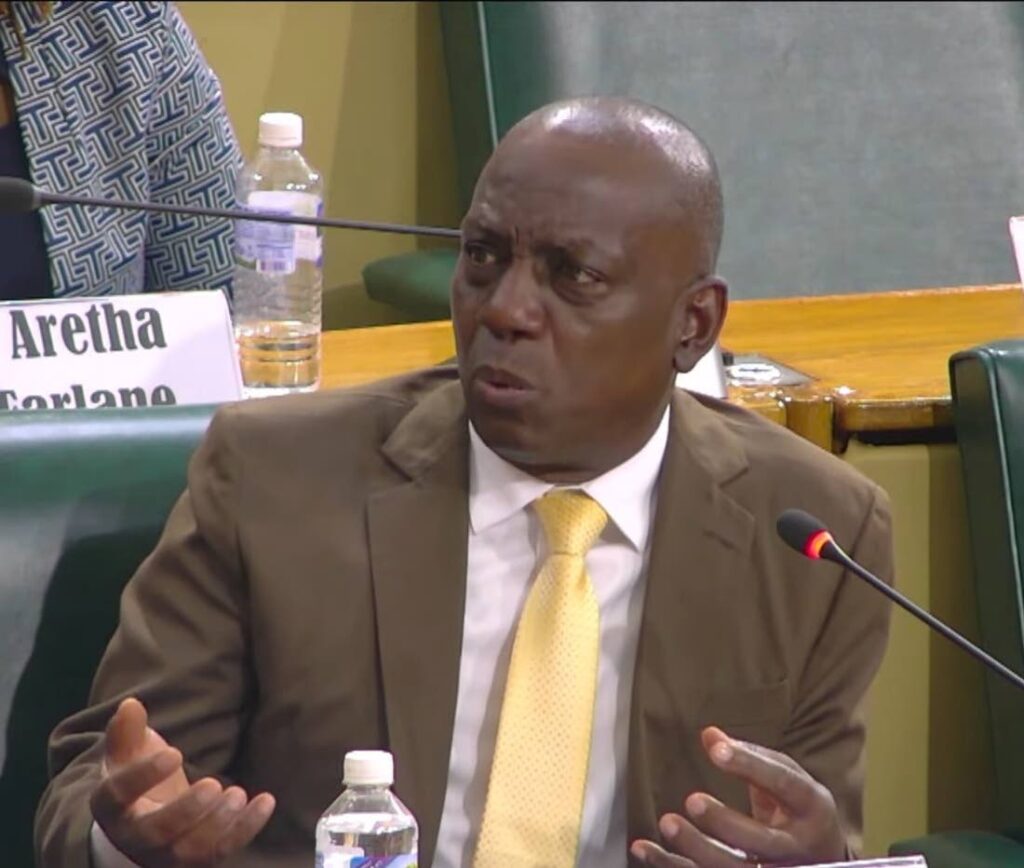
Jamaica is facing a growing waste management crisis that demands an immediate, fundamental shift in how residents dispose of large volume waste, according to the top official of the country’s National Solid Waste Management Authority (NSWMA). Speaking before Parliament’s Infrastructure and Physical Development Committee this Wednesday, Executive Director Audley Gordon issued a stark warning: current public disposal habits are not only draining the national budget but also pose severe long-term risks to the island’s environmental health. For decades, Gordon explained, Jamaican residents have operated under the assumption that the government is fully responsible for removing all bulky waste, a model that has become unworkable as waste volumes rise and public costs balloon. Unlike many other global jurisdictions that place disposal responsibility on the waste generator, Jamaica’s current system relies on property tax revenue to fund full curbside collection of large items — a framework Gordon described as fundamentally unsustainable. The core of the solution, he argues, lies in a targeted public education campaign designed to reshape public understanding of waste responsibility. The campaign will emphasize that individual households are accountable for the large waste they produce, including old household appliances, discarded furniture, and construction debris from renovations or demolitions. Gordon pointed to global best practices where waste generators pay for professional bulky waste disposal based on volume or weight, a model that aligns incentive for reduced waste generation and proper disposal across communities. The urgent call for reform comes as widespread improper disposal has become a pervasive public issue across Jamaican communities. Residents routinely leave large waste items on sidewalks, in gullies, and along public roadways, creating public safety hazards, clogging drainage systems, and damaging natural ecosystems. St Andrew North Western Member of Parliament Duane Smith highlighted that this problem extends beyond bulky waste to a broader cultural disregard for proper waste disposal, citing a firsthand example of a driver throwing food packaging directly onto a major Kingston roadway earlier the same day, an act he called a national disgrace. Committee chair Heroy Clarke added that the crisis is not rooted solely in public behavior, but also in lax enforcement of existing waste management laws. Clarke stressed that current legislation already provides the framework to crack down on improper disposal, but that the NSWMA has failed to consistently apply these rules, allowing bad disposal habits to become normalized. He specifically called out the common practice of residents leaving construction debris from home demolitions and renovations on public sidewalks, expecting the NSWMA to cover the full cost of removing truckloads of waste — a burden the authority cannot sustain. In response to these criticisms, Gordon outlined ongoing steps the NSWMA is taking to strengthen its enforcement capacity. Until recently, the agency only had a single formal enforcement director position, with all other enforcement staff working as non-established, unattached workers. The NSWMA has now secured 150 formal established enforcement positions from the government, and is currently in the process of recruiting higher-caliber staff to scale up enforcement operations, issuing more than 500 fines for improper disposal every month. Even with expanded staffing, Gordon acknowledged that enforcement alone cannot reverse the crisis, noting that current fines are too low to create an effective deterrent for repeat offenders. The appeal for public behavior change comes as the NSWMA continues its ongoing bulky waste cleanup initiatives across the country, including recent removal efforts targeting abandoned appliances and derelict waste in Portmore, St Catherine that have drawn attention to the scale of the problem facing Jamaican communities. (Photo description: NSWMA crews remove an abandoned refrigerator during the authority’s regional derelict vehicle and bulky waste cleanup program in Portmore, St Catherine.)
作者: admin
-
Sleepless in Catherine Hall
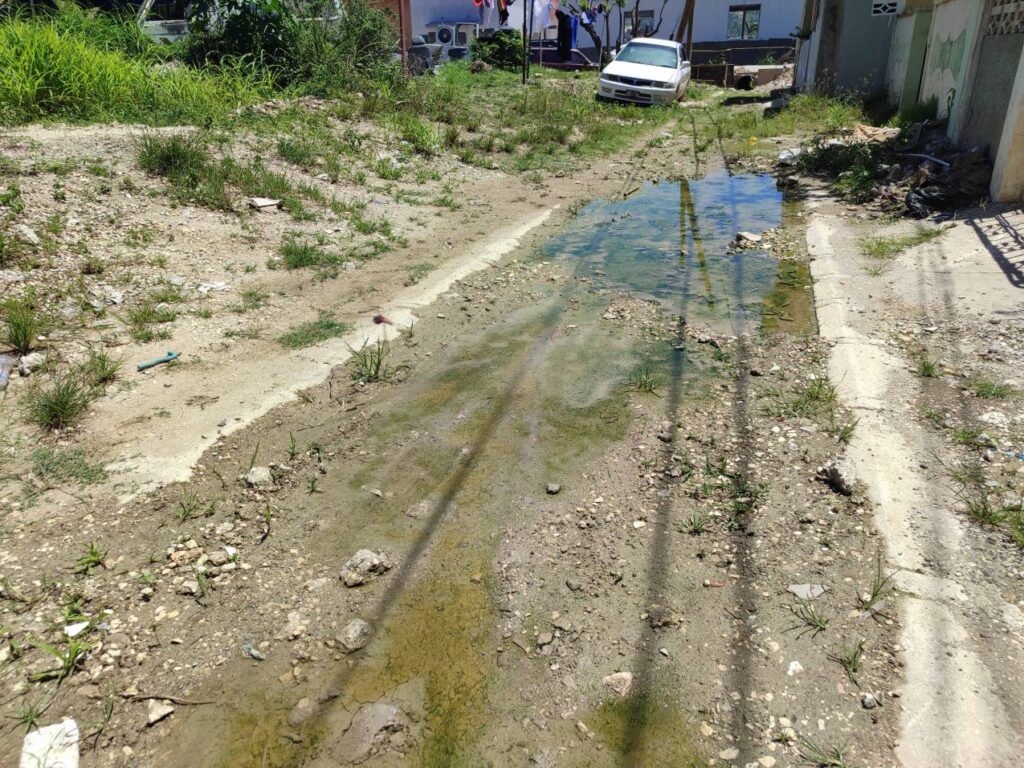
In the coastal western Jamaican city of Montego Bay, residents of the Catherine Hall neighborhood are living in a constant state of anxiety, trapped between the lingering aftermath of last year’s Hurricane Melissa and the impending arrival of a new Atlantic hurricane season. For months, clogged storm drains choked with a mix of residual hurricane sludge and fresh silt from recent rainfall have turned every moderate downpour into a potential disaster, leaving locals afraid to rest when storms hit after dark.
Local residents told reporters that no comprehensive drain cleaning work has been carried out in their community since the Category 5 storm swept through the island last October. Melsha Oates, one long-time resident, emphasized the critical role functional drainage plays in the flood-prone neighborhood. With debris and sediment completely blocking water flow, she noted, even minor rain events create immediate flood risks that threaten homes and personal safety.
While residents have welcomed the limited progress made so far in removing large debris piles from private properties, this small win has done little to ease their core worry. For locals, the arrival of rain – especially overnight rain – immediately triggers panic. Seventy-seven-year-old resident Dawn’s daughter Stacy explained that her whole family stays awake through nightly storms, still reeling from how close they came to catastrophic flooding just months prior. She held her fingers just a fraction of an inch apart to illustrate how narrowly they escaped deadly floodwaters.
Stacy blames the ongoing construction of the West Green segment of the Montego Bay Perimeter Road for exacerbating the drainage crisis. She noted that prior to the start of the project, persistent neighborhood flooding was completely unheard of, having lived in the area since 1995. Construction crews blocked the original drainage path to reroute it for the new road, she said, but have failed to prioritize completing the new system, leaving drains blocked indefinitely. She also criticized local authorities and drain maintenance teams, arguing that every responsible party has failed to deliver on repeated promises of cleaning and repairs, leaving residents to fend for themselves.
For resident Jody, life has been unrelentingly stressful since Hurricane Melissa passed. “Every time it rains, we go through the same trauma,” she explained, recalling a heavy Tuesday night downpour that left her entire family sleepless, bracing for the possibility that their homes would be inundated. On her street, blocked drains leave residents with no good options when rain falls: they are either trapped inside their flooded homes or forced to stand outside in rising water.
With a new hurricane season just around the corner, residents’ anxiety has reached a fever pitch. The sediment and mud left by Melissa is still sitting untreated in drainage systems, and locals have no clear information about when maintenance work will be carried out. Jody explained that while community meetings have produced assurances that help is forthcoming, no timeline or concrete plan has been shared. With many residents still repairing hurricane damage to their homes, they lack the resources to clear the drains themselves, leaving the community stuck in limbo.
Dawn, Jody’s mother, described the daily reality of life in the flood-prone neighborhood. When it rains, she explained, backed-up floodwater from full drains flows straight back into residential areas, trapping people inside their homes and cutting off access to local streets. When the rain stops and floodwaters recede, the neighborhood does not get any respite: dry conditions turn leftover mud into choking clouds of dust that, combined with a surge in mosquito breeding in standing water trapped in clogged drains, force residents to stay locked inside their homes even on fair-weather days.
Photos from the neighborhood confirm the severity of the issue: mud slides from an adjacent unfinished construction slope into already overloaded drains, stagnant floodwater pools around parked cars along residential streets, and drainage lines are visibly choked with months of accumulated sediment and debris. For residents of Catherine Hall, the wait for government action continues, as every new weather forecast brings a fresh wave of uncertainty and fear.
-

Chronic law chills pain with I.C.E EP
Jamaican dancehall artist Chronic Law, born Ackeme Jermaine Campbell, is preparing for a major career comeback after enduring 73 days of detention in a United States immigration facility earlier this year, turning one of the darkest chapters of his life into raw, purpose-driven creative work.
The artist was taken into custody by U.S. Immigration and Customs Enforcement (ICE) in Florida on January 12, 2026, a development that sent immediate shockwaves through both the Caribbean music community and the global dancehall industry. For weeks after his detainment, rampant speculation spread across fan groups and industry circles, with many questioning the undisclosed circumstances that led to his arrest. That uncertainty shifted dramatically on March 26, when Chronic Law was released from custody without any formal charges filed against him.
Instead of being pulled into public controversy or feeding the swirling speculation around his detainment, the artist has channeled the emotional, psychological, and spiritual weight of his experience into a new eight-track extended play (EP) titled I.C.E (Inside Cold & Empty), shaped by core themes of survival, unshakable faith, and deep personal introspection. Emerging from the ordeal with a renewed sense of artistic purpose, Chronic Law has centered the project on documenting his firsthand experience rather than dwelling on what happened.
The project is a collaborative production with Grammy-winning producer NotNice, the head of Notnice Records, who opened up about the unusual, high-stakes creation process that unfolded while Chronic Law was still in detention. According to NotNice, the foundational work for the EP was completed before the artist ever regained his freedom.
“From a production standpoint, the EP was already done before Chronic Law got out. While he was being detained, he and Bashy would connect on the phone every single day. Bashy would play the rhythm tracks over the line, and Chronic Law would write his lyrics right there from the detention center. All the beats were selected, and every song was fully written before he was released,” NotNice explained. “I originally came on to the project just to refine the existing beats and add my signature touch. But I ended up reworking some entire tracks, rebuilding beats from scratch, adding additional production layers to every track, and handling the final mixing and mastering for the full project.”
I.C.E (Inside Cold & Empty) is a joint venture between Notnice Records, Collect Di Bread Entertainment, and 1Law, a strategic alignment between the labels designed to amplify both the sonic quality of the record and the depth of the personal narrative at its core. The full EP is scheduled for global release on April 24, 2026, with the lead single *Like Samson* set to drop a week earlier on April 17 via independent music distribution platform ONErpm. The upcoming release marks a defining turning point in Chronic Law’s career, forcing the artist into a level of vulnerability that has reshaped his creative output.
Known for his deeply thoughtful lyrics and grounded, street-rooted storytelling that has earned him a loyal global fanbase, Chronic Law says the new project is a natural evolution of his signature style, born from a traumatic experience that pushed him to new creative depths. In comments about the work, he opened up about how the 73-day detention tested his faith and changed his perspective permanently.
“Going through that 73-day detention made me even more aware, and at times, more guarded. Everybody had their own opinions and drew their own conclusions about what happened, but for me — someone who truly believes in God and believes fully in myself — it became a real test of my character and my faith,” Chronic Law said. “Through it all, I know God was by my side. I had to lean on Him completely, because without that faith things could’ve gone a completely different direction. Since being released, my relationship with God has grown so much deeper; I find myself having real, personal conversations with Him, venting more, just connecting on a whole different level than I ever did before.”
The artist added that the EP carries a clear, uplifting message for listeners facing their own struggles: “I.C.E (Inside Cold & Empty) was written to show people that no matter the situation, the obstacles, or the fight you’re facing, you have to stay solid. You can’t lose faith. Believe in Christ, stand firm, and fight for your rights.”
-
Cash-strapped FSC wants fee hike
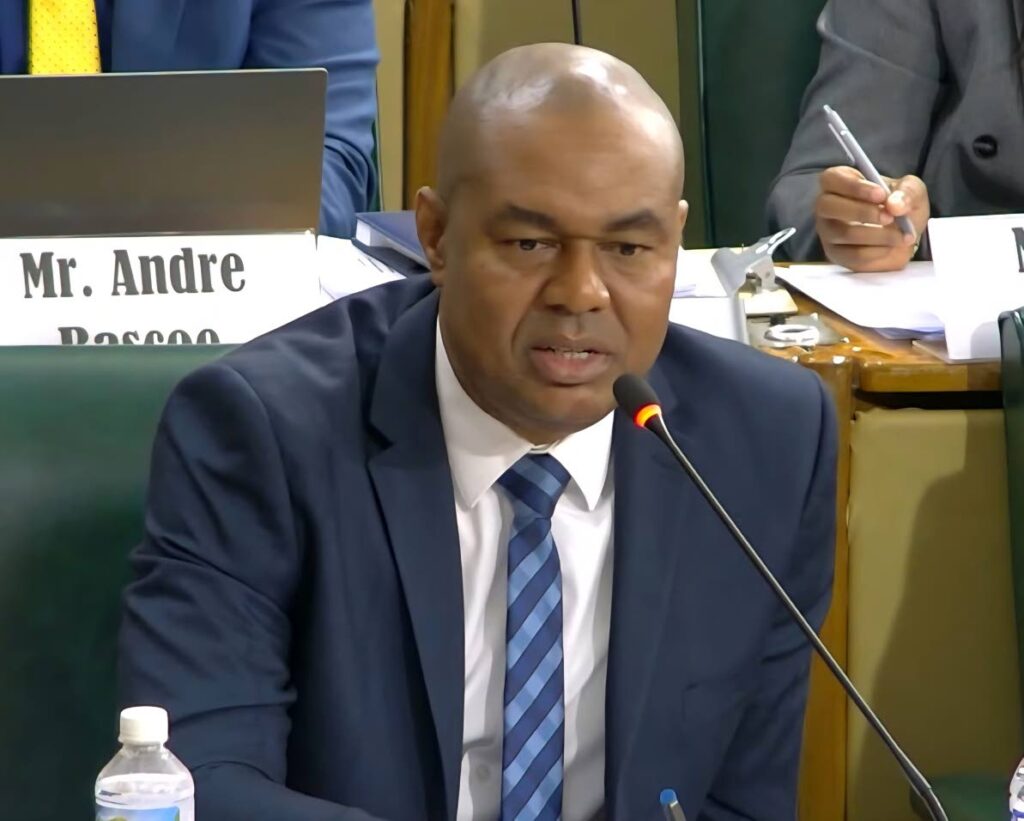
Jamaica’s top financial regulator is sounding the alarm over a crippling funding gap that threatens its ability to oversee the island nation’s fast-growing insurance sector, pushing officials to request parliamentary approval for long-delayed increases to industry fees that have not been adjusted since 2008.
Lieutenant Colonel Keron Burrell, executive director of the Financial Services Commission (FSC), laid out the stark scope of the agency’s financial strain during testimony Thursday before Parliament’s Regulations Committee, where members reviewed the proposed 2026 Insurance (Amendment of Twentieth Schedule) Regulations. Burrell explained that the disconnect between the insurance sector’s exponential growth and the FSC’s stagnant, fee-funded budget has left the regulator severely under-resourced to meet its core mandate.
“When the FSC launched in 2008, we had a workforce of 131 people overseeing a sector with roughly $170 billion in total assets,” Burrell told committee members. “After 18 years, the industry’s total assets have surged to more than $728 billion, yet we have only been able to add a small number of new staff, constrained entirely by the limited revenue we collect from frozen fees.”
Burrell emphasized that the sector’s evolution has not only been quantitative but also qualitative, bringing new levels of complexity that demand upgraded technological infrastructure and specialized regulatory expertise to detect misconduct and manage systemic risk. Unlike many government agencies, the FSC operates on a full cost-recovery model, receiving no public subsidy to cover operational gaps. “We do not get a government subvention, so every investment in better oversight has to come from the fees we charge the industry we regulate,” he added.
Aisha Wright, a divisional director at Jamaica’s Ministry of Finance and the Public Service, further detailed the scale of the revenue shortfall in her testimony. For the 2024-2025 fiscal period, the FSC incurred an estimated $749 million in costs to supervise the insurance industry, but collected just $487.2 million in fees – leaving a $262.5 million gap that the agency has had to cover using its cash reserves. Wright noted that the proposed fee changes serve two key goals: closing the funding gap to protect regulatory capacity and consumer protections, and simplifying the current convoluted fee structure. Under the current system, annual fees follow a tiered model for life and general insurance providers; the new framework will replace this with a single standard rate, making the system both easier for firms to understand and for the FSC to administer.
Burrell confirmed that the FSC has already dipped deep into reserves to cover ongoing operating costs, warning that this stopgap measure is not sustainable in the long term. Across all the sectors the FSC regulates, the agency is currently operating at an annual loss of more than $500 million, with the insurance sector alone accounting for $200 million of that deficit. “We have been burning through reserves just to keep operations running,” Burrell said. “It’s not a sustainable trajectory – any individual or organization would face collapse if they keep spending savings without growing their income.”
The proposal has drawn a measured response from parliamentary committee members. Kingston Central Member of Parliament Donovan Williams acknowledged that the regulator’s situation makes a fee adjustment unavoidable, but raised questions about the timing of the hike, coming as Jamaica continues to recover from the widespread damage caused by Hurricane Melissa in October 2024. “Coming off one of the most devastating weather events to hit our island, public and industry resistance to any price increase is understandable, so timing is a real concern,” Williams said. Still, he concluded that the 18-year freeze on fees and the FSC’s deteriorating financial position make the adjustment justified. “After 18 years of operating on an extremely tight budget, and now dipping deep into reserves to cover daily costs, I believe the increases are warranted at this juncture,” he added.
In response to concerns about industry pushback, Burrell noted that the FSC has repeatedly delayed the fee hike in response to past crises, including the COVID-19 pandemic and earlier hurricanes such as Beryl. “There is never an ideal time to raise fees, but we have waited 18 years already, and we have shown flexibility when the country faced crises,” he said. “We have listened to stakeholders’ concerns through every step of this process, but at this point, the need for adjustment can no longer be put off.”
-

DENIED
A recent ruling from global track and field governing body World Athletics has thrown international athletics into controversy, after regulators blocked 11 elite athletes — four of whom are decorated Jamaican competitors — from changing their sporting nationality to compete for Turkey. The high-profile athletes affected include some of the Caribbean nation’s top Olympic medal-winners: reigning Olympic discus champion Roje Stona, 2024 Olympic shot put bronze medalist Rajindra Campbell, long jump star and Olympic and World Championships silver medalist Wayne Pinnock, and rising triple jump standout Jaydon Hibbert.
In an official public statement released Thursday, World Athletics’ Nationality Review Panel, the body tasked with evaluating nationality transfer requests, determined the 11 applications were part of a coordinated, state-backed recruitment strategy led by the Turkish government. The panel claims the initiative offers large financial contracts to elite athletes specifically to improve Turkey’s medal standing ahead of the 2028 Los Angeles Olympic Games, and that the transfers run counter to existing rules.
This decision marks the most aggressive action World Athletics has taken to date to crack down on what the organization frames as the commercialization of national sporting allegiance. The governing body argues that approving the transfers would erode the integrity of global elite competition, noting rules require athletes to hold a genuine personal connection to the nation they represent internationally.
But the ruling has drawn sharp pushback from athlete agents, legal experts, and athletics insiders, who say the decision raises major red flags over inconsistent rule enforcement, procedural fairness, and basic athlete rights.
Paul Doyle, the agent representing Roje Stona, called the ruling nonsensical, pointing to a long history of similar nationality transfers that have been approved by World Athletics in recent years. “Athletes have transferred allegiances for decades,” Doyle noted. “When you look at the ones approved, even in the past five years, it makes zero sense that these would be denied.”
Doyle’s criticism echoes widespread industry concern that World Athletics is applying rules selectively, specifically because of the coordinated, large-scale nature of Turkey’s recruitment push, and following pushback from the Jamaica Athletics Administrative Association. A core point of contention is the panel’s choice to evaluate all 11 applications as a single group, rather than conducting individual assessments of each athlete’s case.
Sports attorney Emir Crowne has questioned whether this group-based approach undermines the fundamental fairness of the process. “It raises questions as to whether the athletes were unfairly grouped together as opposed to an individualised assessment of each case,” Crowne explained.
Beyond procedural issues, the ruling has sparked debate over whether it amounts to unlawful restraint of trade. Veteran athlete agent Cubie Seegobin did not mince words, arguing that the case could ultimately end up in international sports court. He noted that governing bodies need to adapt to the realities of a modern, globalized sports economy, where athlete mobility is increasingly common.
Seegobin also highlighted major concerns over timing. World Athletics will not implement new, stricter nationality transfer rules until March 27, 2026, after approving the regulatory changes in March of that year. All 11 athletes submitted their transfer requests well before the new rules were proposed. “They should have let this go through and then implement the new ruling moving forward,” Seegobin argued. “This is going to cause confusion and disruption.”
For the athletes involved, the consequences of the ruling are already immediate and life-altering. Many had already cut ties with Jamaica’s national athletics program, turning down opportunities to compete for their home country in anticipation of representing Turkey. The denial leaves them in regulatory limbo: they cannot compete for Turkey at major international events, and have already stepped away from Jamaican programming.
Doyle confirmed that Stona, one of Jamaica’s biggest track stars, has been hit particularly hard by the decision. “He’s not happy, obviously, but he understands that it’s a process, and, hopefully we can get through this and it will work out as favourable as possible for him. You know, honestly, the hope was that he would be eligible right away. That’s obviously not going to be the case now, but he’s pretty devastated,” Doyle said.
While the athletes are still eligible to compete in lower-tier non-championship events such as road races and club competitions, their path to the 2028 Olympics and World Athletics Championships is now completely unclear. Legal teams have already confirmed they are preparing to appeal the ruling at the highest available level, but the appeals process itself has drawn criticism over procedural fairness.
Crowne explains that current rules require athletes to first request reconsideration from the same Nationality Review Panel that rejected their applications, before they can escalate the case to the independent Court of Arbitration for Sport. “To me, that in itself seems procedurally unfair,” he said. “You have to go back to the same panel and ask them to reconsider before accessing another independent body.”
-

Antigua and Barbuda near global average as Caribbean households shoulder high health costs
New regional health expenditure data compiled by the Caribbean Community (CARICOM) statistical agency CARISTATS has revealed that households in Antigua and Barbuda shoulder a lower direct healthcare cost burden than nearly all other Caribbean nations, though their out-of-pocket (OOP) spending still outpaces the global average.
Out-of-pocket spending refers to direct payments by patients for medical services not covered by public health plans or private insurance schemes. Per CARISTATS’ analysis, which draws data from the World Health Organization’s Global Health Expenditure Database and was published through the World Bank, OOP spending makes up 20.8% of Antigua and Barbuda’s total annual national health expenditure. This rank positions the dual-island nation among the Caribbean countries with the smallest household cost burdens for healthcare, while the figure still sits 3.5 percentage points higher than the current global average of 17.3%.
The broader CARICOM region tells a starker story: household OOP burdens are far heavier across most member states, with the majority recording OOP spending that makes up more than 25% of total national health expenditure. This widespread trend highlights systemic gaps in regional insurance coverage and a widespread reliance on private healthcare providers that pass costs directly to patients.
Haiti tops the list of nations with the highest OOP shares, with households covering 52.4% of all national healthcare costs through direct out-of-pocket payments. Barbados ranks second at 49.5%, followed closely by Grenada at 48.5%. Analysts have noted that Barbados’ high figure is particularly notable, given the country’s classification as a high-income economy with a formal universal public health system. The elevated share suggests that even with universal public coverage, many Barbadian patients still opt for or rely on private care and pay for services directly out of pocket.
Antigua and Barbuda’s comparatively low OOP share aligns it with other regional low-burden performers: Jamaica records a 20.2% OOP share, while Suriname sits even closer to the global benchmark at 19.7%.
A key takeaway from the aggregated data challenges common assumptions about healthcare financing: the structure and funding model of a country’s healthcare system plays a far larger role in shaping household out-of-pocket burdens than national income levels alone.
Researchers emphasized that the findings underscore persistent systemic challenges across the entire Caribbean region. Limited health insurance coverage and uneven access to consistent, affordable public health services continue to shift a disproportionate share of healthcare costs onto individual patients — a problem that persists even in countries that outperform their regional peers on this metric.
-

LETTER: The Forgotten Backbone of Every Election: A Call for Respect and Fairness
Across Antigua and Barbuda, every national election cycle unfolds with a familiar, vibrant opening act. City streets and rural townships thrumming with upbeat music, decked in the bright branded colors of competing parties, as throngs of passionate supporters turn out to rally behind their chosen candidates. Of all the political groups active on the campaign trail, the grassroots teams of the Antigua and Barbuda Labour Party (ABLP) have long been recognized for their unmatched grit and relentless commitment to the party’s cause.
These rank-and-file campaigners — ordinary men and women from communities across the twin islands — pour far more than their time into the electoral fight. Many drain their personal energy reserves and dip into their own pockets to keep campaign operations running. Day after day, night after night, they canvass neighborhood by neighborhood, coordinate large public rallies and small community meetings, turn out infrequent voters to the polls, and advocate relentlessly for their party’s candidates. Their work is the invisible engine that delivers electoral victory, without which no campaign could cross the finish line.
Yet once the last ballot is counted and confetti from victory celebrations settles, a long-running, troubling pattern comes into sharp focus. Time and again, the very grassroots workers who carried the campaign on their shoulders are pushed to the margins and forgotten once their work is done.
This repeated neglect has spawned deep frustration, widespread disappointment, and a growing sense of unfairness among rank-and-file campaigners. The situation also forces a critical reckoning with core questions at the heart of local electoral politics: Who reaps the real rewards of a political victory? Is grassroots loyalty and hard work actually valued by party leadership, or does public recognition and opportunity only extend to a small, privileged circle of party insiders?
Campaign workers are not demanding unearned handouts or special favors. What they do seek is basic fairness, public respect, and formal acknowledgement of the contributions they make. They are calling for a political system that rewards on-the-ground effort, recognizes consistent dedication, and does not cast aside the people who do the hard work once an election ends.
Most importantly, the current moment demands reflection from both supporters and party leaders alike. For rank-and-file ABLP supporters, the time has come to recognize their own inherent value to the political process. Political engagement should never require self-neglect or unreciprocated blind loyalty. Instead, it should be built on a foundation of mutual respect, where both the party and its grassroots base lift each other up.
For elected party leaders, the message is equally clear: no political victory is achieved alone. Every electoral win is made possible by hundreds of committed individuals working behind the scenes. Choosing to ignore their contributions does not just erode team morale — it weakens the entire foundation of future campaign efforts and long-term party trust.
Meaningful change must begin with institutional accountability. The era of treating grassroots workers as disposable tools to be used during election season and discarded immediately afterward has to end. The true strength of any political movement lies in its people, and when those people feel undervalued and unappreciated, the entire political system suffers damage.
This conversation extends far beyond the outcome of a single election. It is about building a lasting political culture rooted in respect, fairness, and genuine appreciation for all contributions — no matter how small or behind-the-scenes — where every person who helps a party succeed gets the recognition they deserve.
-

CRICKET WEST INDIES: 2026 West Indies Champiosnhip – Round 1 recap
The 2026 edition of the West Indies First-Class Championship kicked off in spectacular fashion last week, with three opening-round matches across Antigua and Jamaica delivering a deluge of batting milestones, inspired bowling performances, and unexpected results that have set the stage for a highly competitive regional tournament. Across the three fixtures, fans were treated to seven centuries, three five-wicket innings hauls, and one stunning ten-wicket match haul, proving that the region’s top domestic red-ball cricket remains as thrilling as ever.
The most eye-catching individual performance came from Barbados Pride batsman Kevin Wickham, who wrote his name into West Indies domestic cricket history by scoring centuries in both innings of his side’s clash against Jamaica Scorpions at Chedwin Park. The elegant right-hander becomes only the third Barbadian batsman this century to achieve the rare feat of twin hundreds in a regional first-class match, following in the footsteps of veteran captain Kraigg Brathwaite, who hit 102 and 122 against Guyana in 2015, and all-rounder Ryan Hinds, who notched 168 and 150 against the Leeward Islands in 2006.
Wickham’s first innings dominance yielded a brutal 153 off just 190 deliveries, decorated with six boundaries and 12 towering sixes that sent spectators into applause. He followed that up with an unbeaten 108 in the second innings to set Jamaica a challenging 324-run target for victory. Speaking after his innings, Wickham noted that his simple approach at the crease was key to his success: “My mindset was just to play straight. It was about getting in on this wicket and batting for a long period. Once I was there, I knew the runs would come. The pitch was tough, but I backed my game.”
However, Wickham’s historic performance would ultimately not secure a win for Barbados, as the hosts’ opening pair delivered a clinical counterattack to chase down the target. Jamaica Scorpions captain John Campbell and left-handed opening partner Kirk McKenzie put together a commanding 242-run first-wicket stand, the foundation of a convincing seven-wicket victory that earned the Scorpions maximum points. Campbell notched his 11th regional first-class century with a polished 126, featuring 11 fours and six sixes, while McKenzie compiled a calm, well-constructed unbeaten 135 — his third first-class hundred — to steer the Scorpions across the finish line.
At the Sir Vivian Richards Stadium in Antigua, defending champions Guyana Harpy Eagles pulled off a impressive come-from-behind win against the Windward Islands Volcanoes, overcoming a first-innings deficit to claim a four-wicket victory. Left-arm spinner Gudakesh Motie was named Player of the Match for a match-winning performance with the ball, claiming sensational match figures of 10 wickets for just 119 runs. His spin wizardry broke the back of the Windward Islands batting line-up, setting up a comfortable win for the defending champions shortly after the tea break on day three.
The most lopsided result of the opening round came in the second Antigua fixture at Coolidge Cricket Ground, where Trinidad & Tobago Red Force recorded an emphatic innings and 271-run victory over the Leeward Islands Hurricanes. After dismissing the Hurricanes for just 138 on the opening day, Red Force batsman Amir Jangoo stole the show with an unbeaten marathon double century that put the game out of the hosts’ reach. Jangoo spent nearly eight hours at the crease, scoring 203 with 16 fours and five sixes to record his second first-class century — remarkably, his first was also a double hundred.
Reflecting on his knock, Jangoo credited his teammates for taking pressure off early in his innings, saying: “I think it was a pretty difficult time to start, Oshane Thomas and Justin Greaves bowled well, thankfully Josh and Terrance took some pressure off me because they scored freely which got me into my innings so all I had to do was put away the bad balls and rotate as much as possible and ensure I cashed in at the end. The innings was more about kicking on from my start because for my whole career I haven’t made use of my starts, 17 fifties and one hundred before this, so happy to convert from this fifty and looking for many more.”
Jangoo shared an unbroken 253-run sixth-wicket partnership with Terrance Hinds, who scored his own second regional century to help Red Force declare on a mammoth 507 for 5, leaving the Hurricanes with an imposing 369-run first-innings deficit. The hosts collapsed to 46 for 5 in their second innings, and despite a fighting unbeaten 56 from captain Justin Greaves, they were all out for just 98. Off-spinner Khary Pierre led the Red Force bowling attack with figures of 4 for 37.
Red Force captain Joshua Da Silva praised his side for a near-perfect opening to their campaign, as they chase a first domestic first-class title in more than 20 years: “Overall, we had a good three days, we started off well with the ball and that set the momentum for us, which we followed up with the bat with outstanding knocks from Jangoo and Hinds. All in all, we had a great three days and even though we didn’t expect to get the ten wickets so quickly, we were patient enough for long periods and that helped us.”
The second round of the 2026 West Indies Championship is scheduled to get underway on Sunday, April 19, with all three fixtures set to resume hostilities across the two host nations.
-

NDMD to Host Faith-Based Geophysical Hazards Symposium
As Caribbean communities continue to prioritize climate and disaster risk reduction, the Nevis Disaster Management Department (NDMD) is set to wrap up the first phase of its groundbreaking Multi-Hazard Awareness Calendar with a landmark Faith-Based Geophysical Hazards Symposium on April 28, 2026.
The two-and-a-half-hour event will be held from 6:00 p.m. to 8:35 p.m. at Nevis’ Malcolm Guishard Recreational Park, bringing together a cross-sector group of stakeholders to advance a collaborative approach to disaster preparedness. Under the official theme “Faith, Science, and Preparedness: Strengthening Community Resilience to Geophysical Hazards”, the symposium caps four months of targeted community outreach that integrated faith institutions and local schools into NDMD’s national hazard education strategy.
Between January and April 2026, NDMD rolled out a month-by-month hazard awareness campaign focused on the four primary geophysical risks facing Nevis: earthquakes, landslides, tsunamis, and volcanic activity. Each month, the department partnered with a local primary school and a regional faith organization to deliver tailored, community-accessible education. January’s earthquake awareness programming was delivered in partnership with Charlestown Primary School and the Wesleyan Holiness Church, while February’s landslide-focused activities were hosted by St. James Primary School and Ebenezer United Church of Jesus Christ Apostolic. March’s tsunami awareness initiative paired St. Thomas’/Lowlands Primary School with the Seventh-day Adventist Church, and April’s volcano outreach was led by Joycelyn Liburd Primary School alongside the Church of God of Prophecy.
This model was built on the core recognition that schools and faith-based organizations are uniquely positioned as trusted community hubs that can drive sustained education, shape preparedness behaviors, and connect with residents far more effectively than top-down government outreach alone. Unlike traditional disaster awareness campaigns that often end with public awareness events, the NDMD’s strategy is designed to embed disaster preparedness into existing community institutions, creating long-term resilience rather than short-term awareness.
The upcoming April 28 symposium will serve as a convening space for reflection, consolidation, and scaling of this collaborative model. Attendees will include local faith leaders, primary school educators, national disaster management officials, international development partners, and regional scientific experts. The agenda is designed to both deepen public understanding of Nevis’ geophysical hazard profile and equip community stakeholders with actionable preparedness tools.
A central goal of the event is to formalize the role of faith-based organizations as core partners in national disaster communication and community resilience efforts. These organizations are integrated into existing NDMD infrastructure, including the network of District Disaster Chairs and Disaster Communications Ambassadors (DCA), which are designed to strengthen “last-mile” communication — ensuring that preparedness messaging reaches even remote, hard-to-access communities — and coordinate local emergency responses when hazards occur.
The symposium’s varied program will highlight the intersection of faith, science, and public policy. Attendees will hear faith-led presentations that connect scriptural teachings to hazard awareness and proactive preparedness, alongside NDMD-led sessions covering national disaster communication systems and local community preparedness planning. Organizers will also formally introduce the newly expanded community-level disaster leadership structure that embeds faith and education partners into disaster planning. A featured segment will highlight ongoing resilience-building collaboration between NDMD and international development organization Mercy Corps, and the UWI Seismic Research Center will deliver a technical update on regional geophysical monitoring efforts. The event will close with an interactive public question-and-answer session to address local residents’ specific concerns.
In its official press release announcing the symposium, NDMD emphasized that the event is far more than a one-off public education activity. Instead, it represents a deliberate, long-term step toward institutionalizing a community-centered approach to disaster communication that leverages the strengths of faith leadership, scientific expertise, and government governance to build a safer, more disaster-resilient Nevis for all residents.
-

Will it be Ciceron or Gros Islet? Carnival Queen Pageant rivalry heats up
The National Carnival Queen Pageant, one of Saint Lucia’s most anticipated annual cultural events, is gearing up for its 2024 installment, bringing with it all the beloved fanfare that has made it a staple of the island’s summer calendar. From fiery social media debates between supporter groups to tense sponsorship competition and the time-honored inter-regional rivalries that draw audiences year after year, this year’s iteration is on track to deliver all the excitement pageant fans have come to expect.
Following a series of regional auditions, organizers have narrowed the field to nine finalists representing constituencies across the island: Ciceron (Castries South), Desruisseaux (Micoud South), Gros Islet, Mabouya Valley (Dennery North), Dennery South, and La Clery (Castries North). Castries South in fact boasts two finalists this year, Faith Edward and Sydney James, both hailing from the Ciceron community. Gros Islet is sending three delegates to the competition: Adel Montoute, Derrelle DuBois from Grande Riviere, and Simone Sonson from Reduit. The 2023 crown was claimed by Ermele Tisson, a contestant from Choiseul, who will pass on her title at the July 4 event.
The pageant has already garnered playful public attention from two sitting members of parliament, who have opened up about their regional loyalties in lighthearted interviews ahead of the main event. While many local politicians typically avoid picking favorites to keep an air of neutrality, both MPs have been open about where their loyalties lie, much to the amusement of pageant followers.
Dr Ernest Hilaire, Saint Lucia’s Minister for Tourism and Culture and the sitting MP for Castries South, spoke at the official sashing ceremony for contestants, noting that this year’s pageant has him more excited than he has been in any previous year. Joking with the audience, he quipped that his heightened anticipation had nothing to do with Castries South fielding two contestants from the Ciceron community, barely hiding his amusement as he made the tongue-in-cheek comment. Hilaire confirmed he will be in attendance at the July 4 finals to cheer for Edward and James, alongside all other competing delegates who he said he expects to deliver strong performances.
Kenson Casimir, Minister for Education, Youth Development and Sports and MP for Gros Islet, which is sending three contestants to the competition, has a long history of providing financial support to local delegates, and confirmed he will extend that support equally to all three Gros Islet contestants this year, with no preferential treatment for any candidate.
What makes Casimir’s support particularly notable is that one of his constituency’s delegates, Adel Montoute, is the daughter of Spider Montoute, Casimir’s former political opponent. When asked if he would favor Montoute less because of the family’s political history, Casimir was refreshingly honest. He told reporters he is openly rooting for a Gros Islet candidate to take the crown, and specifically said he would be overjoyed to see Montoute win.
Casimir explained his personal connection to Montoute: the candidate hails from Marie Therese Street in Gros Islet, the same neighborhood where Casimir was born and raised. Drawing on longstanding local tradition of inter-neighborhood rivalry within Gros Islet, he noted that he would be proud to see a candidate from his home street take the title, while also adding that DuBois and Sonson both have strong shots at victory as well. Speaking ahead of the pageant, Casimir shared that he is already counting down the days to the July 4 event, confident that his constituency’s delegates will put on a show to remember.