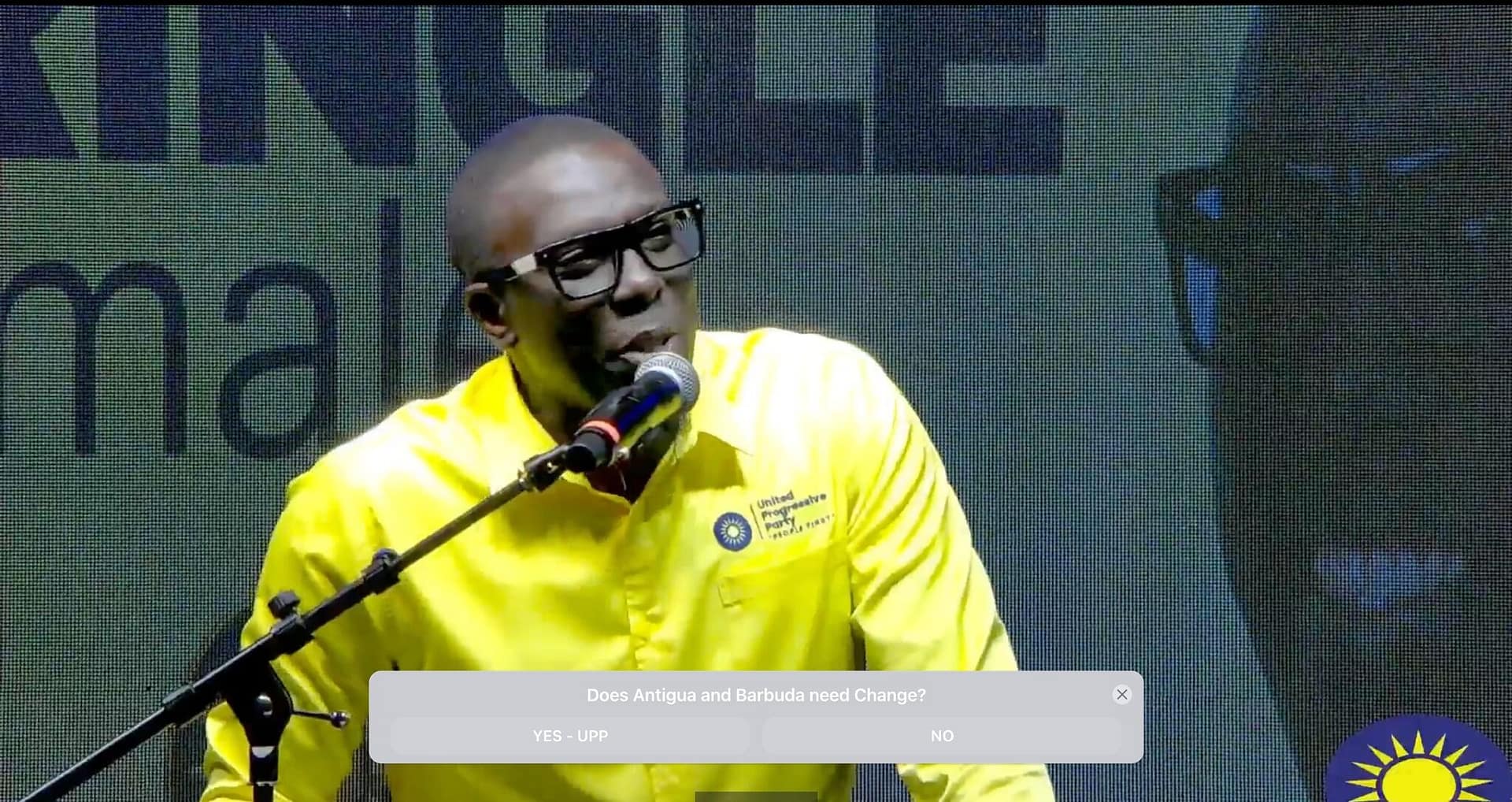
With Antigua and Barbuda’s general election just around the corner, United Progressive Party (UPP) leader Jamale Pringle has made soaring fuel prices a cornerstone of his campaign, promising to kick-start urgent negotiations with key energy and transportation stakeholders within days of taking office if his party secures victory.\n\nSpeaking to a crowd of enthusiastic supporters at a recent UPP campaign rally, Pringle emphasized that the skyrocketing cost of living – driven in large part by steep increases in gasoline and grocery prices – has created a crisis for ordinary citizens that demands immediate, decisive government action. “From working commuters to small business owners, everyone is feeling the squeeze of rising gas and food costs, and this election has turned on this urgent struggle,” Pringle told attendees. He stressed that addressing household and business cost burdens would sit at the top of his administration’s policy agenda should UPP win the April 30 vote.\n\nUnder Pringle’s proposed plan, a UPP government would launch direct talks immediately after inauguration with the West Indies Oil Company (WIOC), the state-owned national petroleum entity, to audit current fuel pricing structures and explore actionable mechanisms to pass relief directly to consumers. Beyond energy sector negotiations, Pringle also committed to holding dedicated consultations with bus operators and other public transportation stakeholders. For months, public transport providers have raised alarm over how persistent high fuel costs have squeezed their profit margins, forcing many to consider raising passenger fares that would further shift burden to working people. These dialogues, Pringle noted, will feed into a broader fuel relief package designed to ease pressure on both transportation operators and daily commuters.\n\nWhile Pringle stopped short of releasing specific details on the size, funding structure, or exact eligibility requirements of the proposed relief package, he made clear that the core goal of the policy would be to reorient the country’s existing energy framework to deliver more tangible, direct benefits to ordinary citizens, rather than solely supporting institutional or corporate interests.\n\nThe pledge comes as fuel and energy costs have emerged as the defining political issue ahead of the general election, with households across the income spectrum and businesses of all sizes consistently naming transportation and energy expenses as the top driver of growing cost-of-living pressures. Pringle framed the planned fuel consultations as one piece of a wider UPP policy agenda focused on rolling back cost-of-living challenges, noting that any fuel-specific relief would be paired with broader economic support policies to lift financial strain across the country. As the island nation prepares to head to the polls on April 30, the promise of immediate action on fuel prices has cemented cost of living as the central battleground for competing parties.
作者: admin
-

Nissan Juke Stolen in Ottos as Owner Appeals for Public Help
A vehicle theft incident in the Ottos neighborhood has sparked a public appeal for information, as the owner of a stolen compact SUV works with local authorities to track down their missing property. The stolen car, identified as a 2012 dark brown Nissan Juke with licence plate A 75508, was taken from an address on Craven Road between the late hours of the previous night and the early hours of the current day, according to initial reports. With no major leads emerging in the immediate aftermath of the theft, the vehicle’s owner has reached out to community members for help, asking anyone who may have spotted the distinctive SUV or noticed suspicious activity around Craven Road overnight to share what they know with law enforcement. Local officials have backed this appeal, issuing guidance for residents who encounter the stolen vehicle: if spotted, community members are advised not to confront any potential thieves, instead take a discreet photo to confirm the vehicle’s identity and immediately notify police of its exact location. As of the latest update, law enforcement has not released additional details about the incident, including whether there are any persons of interest or what may have motivated the theft. Authorities have urged all local residents to remain alert to suspicious activity in the area, and encouraged anyone holding even small pieces of information that could support the recovery of the stolen Nissan Juke to step forward. Vehicle theft remains a common community concern in many residential areas, and officials note that public vigilance and cooperation often play a critical role in helping recover stolen property and holding perpetrators accountable.
-
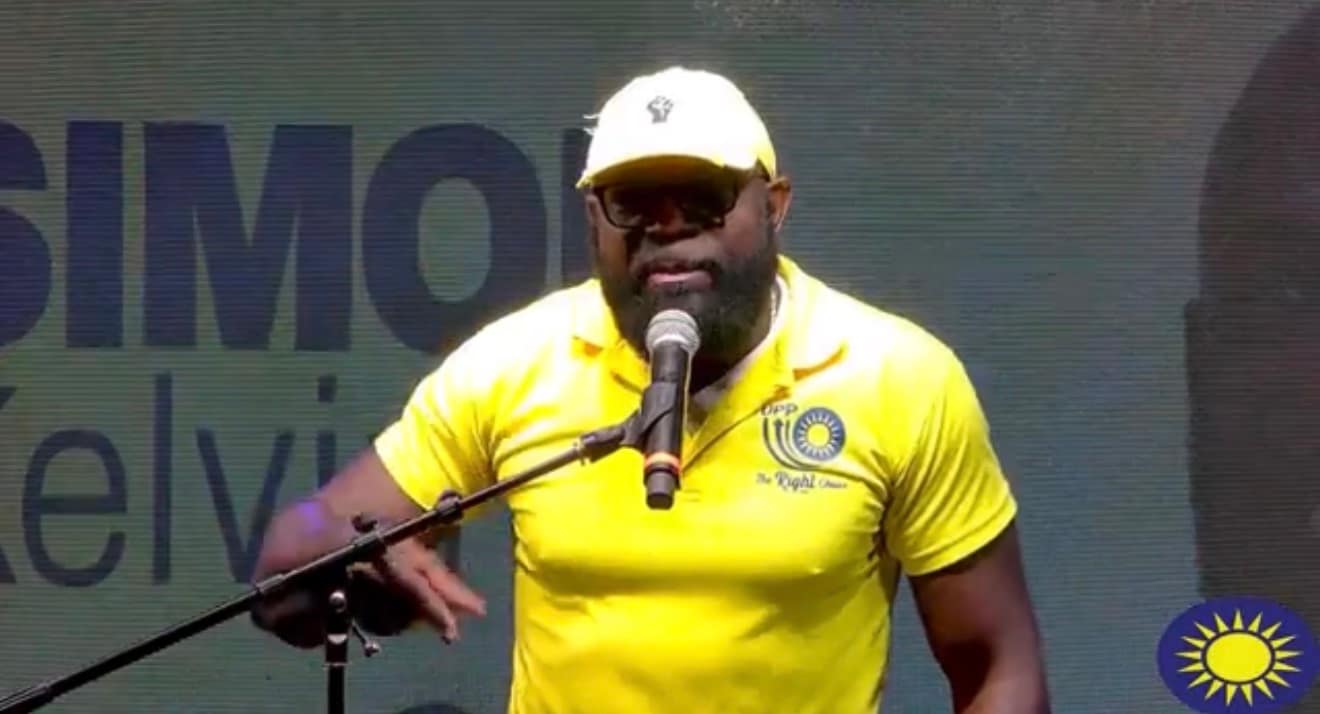
UPP MPs Sought to Replace Pringle With Lewis as Opposition Leader, Letter Apparently Signed By Simon Shows
As the 2026 general election campaign unfolds in Antigua and Barbuda, a newly surfaced internal document has exposed a major rift within the main opposition United Progressive Party (UPP), with a group of sitting UPP MPs formally pushing to replace long-serving opposition leader Jamale Pringle with St John’s Rural West MP Richard Lewis. The leaked letter, addressed directly to Governor General Sir Rodney Williams, bears the signatures of six self-identified UPP-aligned members of parliament – a majority of the party’s lower house caucus – all backing Lewis’s bid to take over the official Leader of the Opposition post. In the document, the signatories argue that Lewis already commands the confidence of the majority of UPP parliamentarians in the Lower House, and call on the Governor General to appoint him to the role with immediate effect. The request draws explicitly on Section 79(5) of Antigua and Barbuda’s Constitution, which grants the Governor General authority to remove an incumbent Leader of the Opposition if that person is found to no longer hold the backing of a majority of non-government legislators. The correspondence is linked to former St Mary’s South MP Kelvin “Shugy” Simon, whose name and constituency information appear at the top of the document, per the original leak obtained by Antigua News Room. Under Antigua and Barbuda’s constitutional framework, the Governor General holds the formal power to appoint the Leader of the Opposition, selecting the candidate who can demonstrate majority support among the country’s non-government parliamentary members. Pringle, who has led the UPP and held the opposition leader post since 2018, has faced repeated internal challenges over the course of his tenure, with periodic open discussions among party ranks about the UPP’s ideological direction and electoral viability ahead of national polls. The leak of the ouster letter, coming in the middle of an active election campaign, has dramatically escalated public concerns over unity within the opposition bloc, just as voters prepare to cast their ballots. Political analysts note that public exposure of deep internal leadership divisions could erode voter confidence in the UPP’s ability to challenge the incumbent government, opening the party up to increased scrutiny from both opponents and undecided voters in the final stretch of the campaign.
-
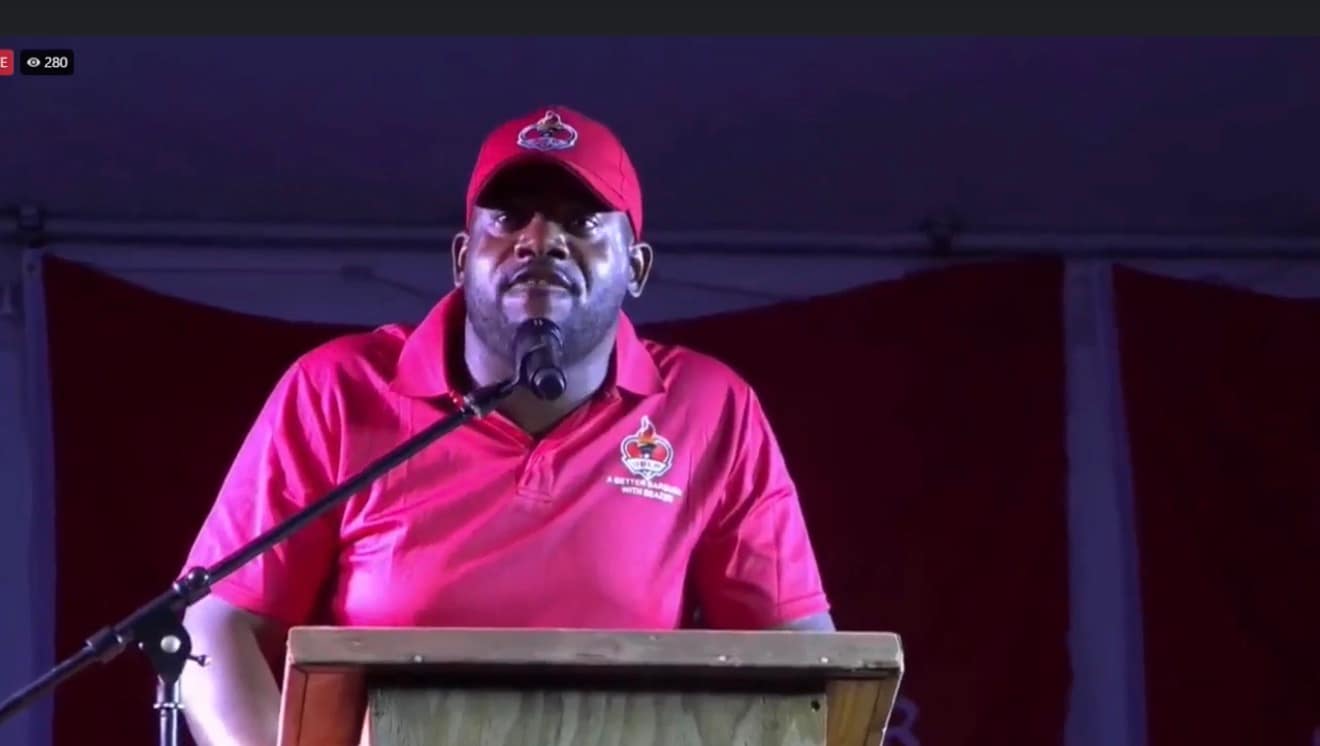
Kendra Beazer Slams BPM Leadership as Stagnant, Says Change Must Deliver Results
At a packed campaign rally on the island of Barbuda, opposition candidate Kendra Beazer delivered a uncompromising, result-focused address to voters ahead of the upcoming April 30 election, framing the contest as a defining crossroads between years of stalled progress and tangible, people-centered change. Rejecting the longstanding political culture of empty promises and unfulfilled pledges, Beazer centered his speech on a straightforward, resonant thesis: meaningful change is not crafted in speeches—it is delivered through action that improves daily life for all Barbudans.
-

PM Browne Says Electing Beazer Will Give Barbuda a Voice in Cabinet as Minister
Ahead of the April 30 by-election on the Caribbean island of Barbuda, Antigua and Barbuda Prime Minister Gaston Browne has made a bold campaign promise that has reshaped the political narrative of the race. Speaking to a packed, energized crowd of local supporters, Browne centered his entire address on one core argument: Barbuda has long been sidelined from national executive decision-making, and only the election of his party’s candidate Kendra Beazer will secure the island a permanent seat at the Cabinet table.\n\nFor decades, Browne argued, Barbuda has existed as an outsider looking in when national policies are drafted and public resources are allocated. Without a direct representative in the country’s top decision-making body, the island’s priorities have been pushed to the bottom of the national agenda, holding back critical progress across key sectors. “Real power lies where policies are shaped and budgets are approved,” Browne emphasized, drawing thunderous applause from the assembled crowd. He made a concrete, binding commitment that if Beazer secures victory at the polls, the candidate will immediately be appointed to a Cabinet post, ending years of marginalization for the island.\n\nGoing far beyond a routine party endorsement, Browne positioned Beazer as a rising leader with the potential to reach the highest echelons of Antigua and Barbuda’s national government. The Prime Minister told the rally that Beazer “can go all the way” in national politics, rejecting the idea that Barbuda should settle for symbolic, token representation that delivers no tangible results. Instead, he argued, voters have the opportunity to elect a leader who can shape the entire nation’s direction while delivering for local constituents.\n\nBrowne wove a direct line between political representation and tangible development outcomes throughout his remarks, arguing that Barbuda’s long-term progress is inextricably tied to closer alignment with the central government. Without a voice at the Cabinet table, he warned, the island will continue to be locked out of critical decisions on infrastructure expansion, major private investment, and national strategic planning. Electing a candidate aligned with the ruling administration, he insisted, will streamline project delivery and cut through red tape to bring tangible benefits to residents faster than ever before.\n\nOutlining a bold, multi-pronged development agenda for the island, Browne highlighted three core pillars of planned growth: transformative infrastructure investment, targeted expansion of Barbuda’s tourism sector, and accelerated development of renewable energy capacity. “We are already bringing investment, we are already locked in on delivering development,” he said, noting that these initiatives will generate new local jobs, boost small business activity, and raise overall living standards across the island. He stressed that moving these high-impact projects forward requires top-level coordination with central government, reinforcing his case for direct Cabinet representation.\n\nTurning to one of the most contentious political issues on the island, land rights, Browne moved to address widespread criticism of his administration’s approach to land development. He pledged that his government would prioritize full, inclusive consultation with Barbuda’s residents before any major decisions on land use are made, stressing that “no major changes will happen without the direct engagement of the people of Barbuda.” At the same time, he pushed back against calls to halt development entirely, arguing that economic progress and community input on land issues can and should move forward in tandem.\n\nBrowne also used the rally as an opportunity to criticize Barbuda’s incumbent opposition leadership, accusing the current administration of failing to attract transformative investment and deliver meaningful, lasting development for local residents. “We cannot continue down this path of stagnation,” he said, arguing that the current leadership’s refusal to cooperate with the central government has held the island back for years. He contrasted that approach with the ruling Labour Party’s model, which he framed as focused on collaborative partnership, intentional long-term planning, and delivering measurable results for residents.\n\nA core focus of Browne’s address was the impact of any new development on Barbuda’s youth, stressing that all progress must translate into tangible opportunity for the next generation of residents. Above all, he repeatedly framed the upcoming April 30 election as a defining turning point for the entire island, urging voters to make a strategic choice that will shape Barbuda’s trajectory for decades to come.\n\nAs the crowd broke into chants of “Beazer!” in response to his remarks, Browne closed by reinforcing his central message. For too long, he argued, Barbuda has remained on the margins of national governance. With Kendra Beazer’s election to a Cabinet post, the island will finally have a direct voice in the room where all critical national decisions are made.
-

IMF resumes dealings with Venezuela
Washington DC, April 17, 2026 – In a significant shift for the international financial body’s engagement with Caracas, International Monetary Fund Managing Director Kristalina Georgieva has formally announced that the institution has resumed formal financial dealings with the Venezuelan government led by acting President Delcy Rodríguez.
The policy reversal comes seven years after the IMF suspended all interactions with the South American nation back in March 2019, when the organization paused engagements amid overlapping international disputes over government recognition.
According to IMF statements, the decision to lift the suspension was not made unilaterally. The move reflects the collective position of IMF member states that hold a majority of the institution’s total voting power, and aligns with the fund’s long-standing procedural practices for member engagement.
Venezuela has held continuous membership in the IMF since joining the global financial body in December 1946, decades before the 2019 recognition dispute disrupted all formal financial ties between Caracas and the institution. The resumption of dealings opens a new chapter in Venezuela’s relationship with the global financial community, after years of diplomatic and economic isolation for the country.
-

Nieuwe vliegroute versterkt band met Dominicaanse Republiek
On Thursday, a landmark new direct air connection entered service between the Dominican Republic’s capital Santo Domingo and Suriname’s capital Paramaribo, marking the first commercial flight of Dominican carrier Sky High Dominicana on the route. The new link is designed to deepen bilateral collaboration between the two Caribbean nations, and the inaugural flight received a celebratory water salute greeting upon its arrival at Suriname’s Johan Adolf Pengel International Airport.
Multiple high-ranking officials traveled on the debut flight, including Suriname’s Minister of Foreign Affairs Melvin Bouva, Minister of Transport, Communication and Tourism Raymond Landveld, and Dominican ambassador to Suriname Ernesto Torres Pereyra.
For Bouva, the new air route represents far more than improved travel access between the two countries. He framed the connection as a critical milestone in strengthening the economic and diplomatic ties that bind the Dominican Republic and Suriname. The route is projected to drive measurable growth across three key sectors: tourism, bilateral trade, and cross-border foreign direct investment.
The minister further noted that bilateral cooperation between the two nations has recently evolved into a formal strategic partnership. Better regional connectivity, he emphasized, addresses a long-standing bottleneck that has held back integration across the Caribbean, where transportation infrastructure and direct links have long been a persistent barrier to growth.
Both nations have high hopes that the new direct connection will stimulate increased mutual exchange of people, goods and services, while creating new opportunities to deepen collaboration across the broader Caribbean region.
-
Police awaiting forensic reports
Weeks after a controversial police-involved shooting left one man dead and another woman permanently injured in Trinidad and Tobago, top law enforcement officials say the investigation is held up by pending forensic testing, prompting a public call for patience from the country’s top police leader. Police Commissioner Allister Guevarro made the disclosure during a public appearance at the Trinidad and Tobago Chamber of Commerce’s Westmoorings headquarters on Tuesday, breaking down the current status of the probe into the January 20 incident that killed 32-year-old Joshua Samaroo and left Kaia Sealy paralyzed.
The shooting, which unfolded after a vehicle chase that ended with suspects’ car crashing into a St. Augustine drain, was captured on widespread mobile footage that sparked significant public outcry and renewed national debate over excessive use of force by Trinidad and Tobago law enforcement. Two independent oversight bodies, the Professional Standards Bureau and the Police Complaints Authority, have already launched parallel probes into the incident alongside the internal police investigation.
Guevarro told attendees that the police-led investigative work on the case is fully complete, and the file has been passed to the Office of the Director of Public Prosecutions for formal review. The only outstanding materials required to move the process forward are official lab reports from the national Forensic Science Centre, which have not yet been finalized. “The investigation, as far as the police aspect is concerned, has reached a point where we approached the Director of Public Prosecutions. What is outstanding are forensic reports. We don’t control that,” Guevarro explained.
Pushing back against public expectations of rapid forensic results fueled by popular crime television, Guevarro noted that real-world forensic analysis follows strict, time-consuming protocols that cannot be rushed to satisfy public pressure. He pointed out that even major international law enforcement agencies like the U.S. Federal Bureau of Investigation routinely deal with delays of months or even years in forensic processing, dismissing the fast turnaround seen in scripted media as nothing more than “Hollywood magic.”
Acknowledging the deep frustration and grief of the victims’ families waiting for answers, Guevarro expressed empathy for their position while emphasizing that accuracy in evidence gathering must take priority over speed. “So, I feel for the family and those who are waiting because I know it takes time…we want to make sure we get it right,” he said. He reaffirmed that the Trinidad and Tobago Police Service (TTPS) remains fully committed to conducting a thorough, transparent investigation that produces an outcome fully supported by solid evidence.
Guevarro also addressed public controversy over his decision to release raw video footage of the shooting to the public early in the probe, a move that his own in-house legal team advised against. He told the audience that TTPS’s top legal official warned that releasing sensitive footage during an active investigation could jeopardize future legal proceedings and open the service up to additional public criticism. But Guevarro said he stood by his choice to give the public unfiltered access to the evidence he had seen, accepting full responsibility for the call. “I wanted to show the public what I am seeing,” he said. “At the end of the day, I am the leader of this organisation and I take the blows for it. I can stand before anybody and say I made a decision to do what I did.”
-
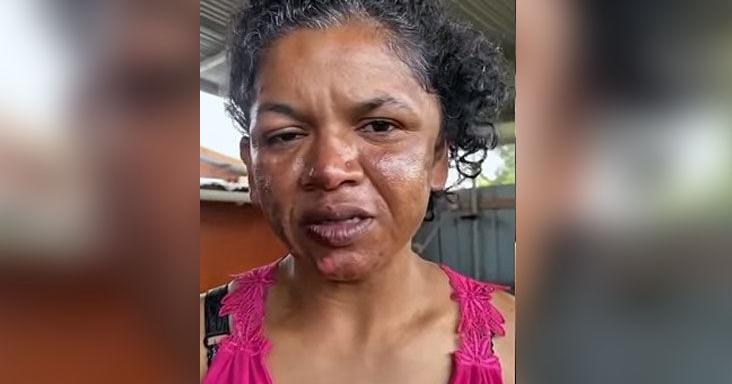
7 YEARS OF STRUGGLE
The shocking rescue of 42-year-old Sabita Basdeo, who authorities allege was held captive and systematically tortured for seven years at a private residence in San Francique, Trinidad, has pulled back the curtain on a devastating saga of survival that has unfolded across one working-poor family for nearly a decade.
When Basdeo vanished from her home in Barrackpore, her two sons were just four and nine years old. For seven years, her husband 55-year-old Krishendeo Basdeo has carried the full weight of raising their boys alone, fighting poverty and relentless uncertainty to keep his family intact. In an interview with local outlet the Express at his cramped one-room shack — tucked at the end of an overgrown dirt track far from paved main roads — Krishendeo recalled the quiet, joyful life his family once shared, described his years of struggle to make ends meet, and opened up about his desperate hope to bring his damaged wife home.
It all began when Sabita left the family home in search of work to supplement their meager income. A tip led her to a domestic cleaning job with a local family, a opportunity the cash-strapped mother could not turn down. “She did not know this would happen and she wouldn’t see her children again,” Krishendeo said, his pain masked by a faint, weary smile as he spoke.
Almost immediately after Sabita failed to return, Krishendeo said he turned to police for help, filing a missing person report and pleading for investigators to intervene. He even traveled to the San Francique property himself, begging the residents there to release his wife. Instead of cooperation, he was met with public humiliation and verbal abuse, he said.
Undeterred, Krishendeo built a daily routine centered on keeping his sons fed and educated. He woke long before sunrise to work small plots of farmland, then returned home in time to walk the boys to the local primary school. During school hours, he took odd jobs to earn enough cash to put food on the table, and he always wrapped up his work by 3 p.m. to pick his children up from class. For most nights, their dinner was simple: bread paired with cheese or spiced chickpeas, the cheapest filling meal the family could afford. When the stress of poverty and loss grew too heavy to bear, Krishendeo said he turned to his Hindu faith, praying before his household murtis for strength. Holidays like Christmas passed with no fanfare: no presents, no festive decorations, no special holiday meal. They were just another day of survival for the small family.
Slowly, even that fragile routine collapsed. Rising school fees pushed the boys out of education, forcing them to take up low-paying odd jobs just like their father to help the family get by. Through it all, Krishendeo never stopped thinking of his wife. “I missed her. I would stay up at night thinking of her and how my sons were suffering without a mother,” he said. He described the Sabita he knew as a warm, loving woman who adored her boys — and the woman he saw after her rescue was almost unrecognizable. “Her face is really bad and her body has burns all over. It wasn’t a nice thing to see. I hope she recovers, but I don’t know. It is bad. I want her to come back home and be with us. But she is not the same,” he said.
After her rescue, Sabita received urgent medical care at a local hospital and is currently staying with relatives as she recovers from her ordeal. Relatives who knew Sabita from her childhood in Penal said she grew up in deep poverty, born in a remote home accessible only through an abandoned sugar cane field, but was always a joyful young woman who found happiness in her small family after marrying Krishendeo in a traditional Hindu ceremony. “She was happy. She loved her children. I hope she recovers from this,” one relative said.
Local neighbors who have watched the Basdeo family struggle for years have now called on Trinidad’s Ministry of the People, Social Development and Family Services to step in to support the family. They note that Krishendeo has been a dedicated, loving father to his sons, but systemic poverty has left him unable to improve their living conditions or access the support the family needs to heal.
In the wake of Sabita’s rescue, law enforcement has already made progress in the case. A 38-year-old woman and her teenage son were arrested last Saturday in connection with Basdeo’s disappearance, and investigators confirmed the pair could face a raft of serious criminal charges, including felony false imprisonment. Just days after the arrests, on Wednesday morning, the $2 million San Francique property linked to the alleged captivity was destroyed by fire in what authorities are treating as a suspected case of arson.
-
$3.4b contracts put on hold
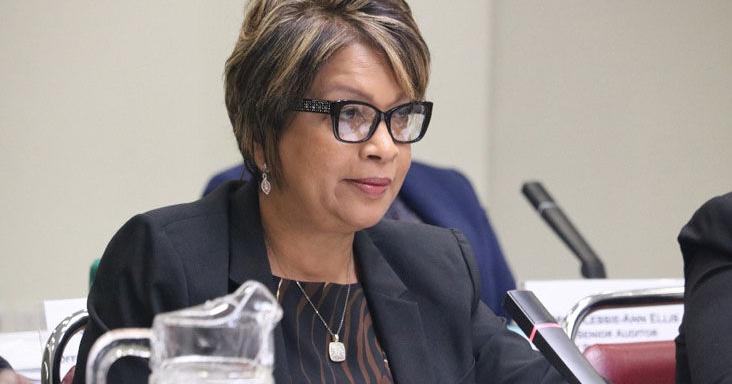
Trinidad and Tobago’s Office of Procurement Regulation (OPR) has issued a formal order suspending the awarding of TT$3.4 billion in public housing construction contracts by the state-owned Housing Development Corporation (HDC), launching a full review of the entire procurement process amid widespread allegations of irregularities. The directive, dated April 14, 2026 and signed by OPR chair and lead regulator Beverly Khan, came just days after opposition figures and a public activist raised formal concerns about the legality and transparency of the multi-billion-dollar award process.
The suspension follows a cascade of calls for investigation led by Stuart Young, opposition Member of Parliament and former prime minister of Trinidad and Tobago, who first sounded the alarm about the contract awards earlier this week. Young went public with a full list of award recipients, leveling serious accusations that most of the firms selected for the large public housing projects lack the relevant experience and financial capacity to deliver the work, suggesting that cartel-like conduct and bid rigging may have tainted the process. Alongside Young, fellow opposition People’s National Movement (PNM) MP Camille Robinson-Regis also publicly pushed for a full review of the transaction.
In addition to opposition pressure, the OPR also received a formal written complaint submitted via attorney Randall Mitchell on behalf of public activist Wendell Eversley. Unlike traditional bid protests from disqualified participants, Eversley’s complaint was filed in his capacity as a concerned citizen, focusing on the legality, ethical propriety and overall integrity of a procurement process that involved hundreds of millions of taxpayer dollars. Mitchell confirmed in the complaint that his client was not a bidding participant in the process, and was only acting to uphold accountability for public spending.
In its official statement announcing the suspension, the OPR confirmed the review is being conducted under its statutory authority granted by the amended Public Procurement and Disposal of Public Property Act 2015. The regulator noted it will not issue further public comment while the enquiry is ongoing to protect the integrity of the review process. The OPR’s mandate for the review includes verifying full compliance with the act, its associated regulations, official handbooks and procedural guidelines.
Young responded to the OPR’s intervention this week saying he was encouraged that the regulator had acted on the opposition’s concerns. He emphasized that any form of bid rigging or collusive behavior would not be acceptable when public funds are at stake, noting that the halt was a necessary first step to root out any misconduct. Robinson-Regis echoed that support, framing the OPR’s directive as proof that the nation’s procurement legislation — originally enacted under the previous PNM administration — is working as intended to enforce transparency. She argued that the need for regulatory intervention points to reckless management by the current United National Congress (UNC) government, which campaigned on promises of improved governance but is now facing a major probe into billions in public housing spending. “You can’t promote transparency and then operate in secrecy,” Robinson-Regis noted in a statement.
Phillip Alexander, a minister within the Ministry of Housing, defended the procurement process earlier this week and pushed back on the opposition’s criticism. Reached for comment after the OPR’s announcement, Alexander maintained that the current government has operated in full accordance with procurement law, and argued the ongoing review is itself proof of the government’s commitment to transparency. “Everything has to be transparent and above board,” he said, contrasting the current process with what he claimed was secretive contracting under the previous PNM administration. Alexander expressed confidence that the review will ultimately confirm all awards were conducted properly, noting that any official response to the OPR falls to the HDC leadership, which he expects to issue a public statement in the coming days.
As of Thursday, HDC chair Feeroz Khan had not responded to multiple requests for comment on the suspension and ongoing review.