作者: admin

  • EU envoy: Caribbean key cocaine corridor into Europe

    EU envoy: Caribbean key cocaine corridor into Europe

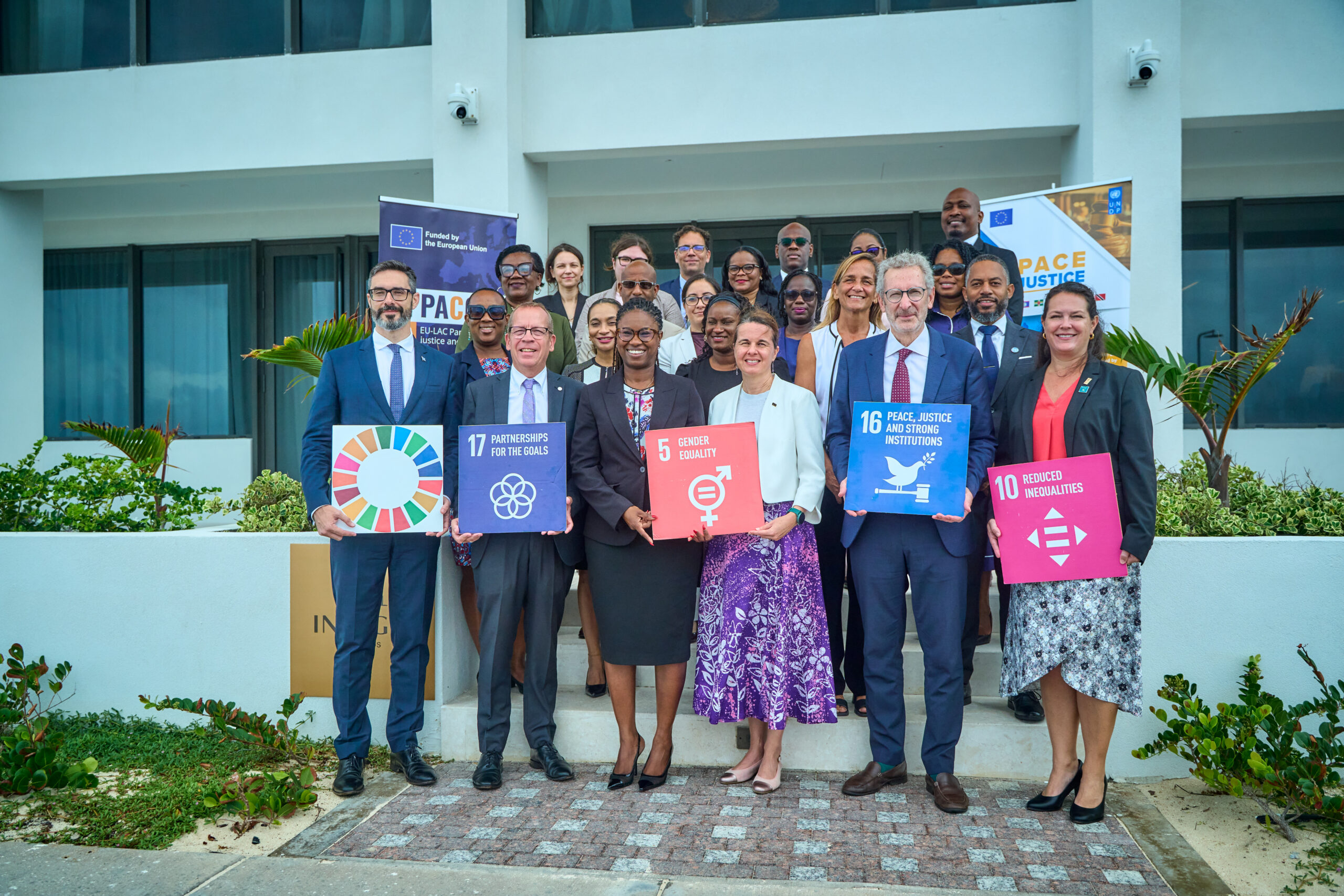
    The Caribbean region has cemented its role as the primary transit route for cocaine and other contraband bound for European markets, pushing the European Union to urgently push for deeper cross-border judicial collaboration to break up transnational criminal networks that are exploiting the area’s unique geographic and logistical advantages. That warning came from Fiona Ramsey, the European Union’s ambassador to Barbados and the Eastern Caribbean States, who spoke Wednesday at the opening of a judicial cooperation workshop co-hosted by the Caribbean region and EU through the EUROJUST Focal Points initiative, held at Barbados’ Hotel Indigo.

    In her address to a gathering of regional and international legal specialists, Ramsey laid out how organised criminal syndicates have turned the Caribbean’s well-developed maritime and aviation infrastructure into a major asset for their expanding trafficking operations and other cross-border illegal activities. While these extensive transport links are a foundational driver of legitimate commerce and economic growth across the Caribbean, Ramsey emphasized that criminal groups have quickly co-opted these same advantages for illicit activity.

    “The Caribbean is now the key corridor for cocaine and other illicit goods entering into the European Union, and the consequences of inaction for both the Caribbean and Europe are severe,” Ramsey said. She detailed the far-reaching harms of unregulated illicit trafficking: it fuels endemic violence across the Caribbean, erodes the foundations of good governance, weakens public confidence in the rule of law, and creates space for a wider web of secondary criminal activity, including money laundering, public sector corruption, and environmental crime. Left unaddressed, the trade preys on marginalized vulnerable communities and locks regions into repeating cycles of insecurity that are hard to break.

    Ramsey stressed that no single nation has the capacity to dismantle these sprawling transnational networks on its own, making targeted judicial cooperation through EUROJUST’s regional contact points an essential tool to counter the threat. Successfully disrupting trafficking requires ongoing, coordinated collaboration between countries, including real-time intelligence sharing and joint, end-to-end investigations that target every layer of criminal operations—from the movement of contraband to the laundering of illegal proceeds.

    She noted that recent law enforcement crackdowns have already proven how adaptable criminal groups are, with traffickers quickly adjusting their routes and operations to evade new enforcement pressure. This flexibility underscores the need for a sustained, long-term, comprehensive response from judicial authorities on both sides of the Atlantic, rather than one-off interventions.

    Beyond counter-trafficking work, Ramsey highlighted that maritime connectivity and security have become increasingly central pillars of the broader EU-Caribbean partnership. While deeper transport links promise to unlock major new economic opportunities for the region, they also create new, unmonitored pathways that criminal groups can exploit. To address this gap, the EU has already allocated dedicated funding to boost port security and expand judicial cooperation as part of its broader regional security strategy, with the goal of ensuring that drug seizures do not end at interception, but lead to successful prosecutions and criminal convictions that take network leaders off the street.

    Ramsey also identified a fast-growing new challenge for cross-border law enforcement: the use of cryptocurrencies to launder criminal proceeds. “Cryptocurrencies have transformed illicit financial flows, creating new challenges for both regions,” she explained. Traffickers increasingly rely on pseudonymous transactions, privacy-enhancing technologies, and decentralized finance platforms to hide illegal profits and move funds across borders without detection, making asset recovery far more difficult for authorities.

    To tackle this emerging threat, Ramsey called for expanded targeted collaboration between Caribbean and European law enforcement and judicial bodies. By combining Caribbean partners’ on-the-ground intelligence about trafficking network operations with European expertise in digital investigations, blockchain analysis, and cross-border asset recovery, the two regions can more effectively disrupt the financial foundations that allow organised crime to operate.


  • Vakonderwijs krijgt impuls door samenwerking regering, Staatsolie en TotalEnergies

    Vakonderwijs krijgt impuls door samenwerking regering, Staatsolie en TotalEnergies

    On the sidelines of the 6th Suriname Energy, Oil & Gas Summit & Exhibition (SEOGS 2026) hosted at Paramaribo’s Roeli’s Event Venue, a landmark public-private partnership was formally launched Wednesday to address a growing skilled labor gap across Suriname’s expanding economic sectors. The Suriname government, state-owned energy firm Staatsolie, and global energy major TotalEnergies have signed a Memorandum of Understanding (MoU) to establish the Suriname Capacity Building Program (SURICAP), a comprehensive initiative designed to strengthen vocational education and technical training across the country.

    The signing ceremony was attended by Suriname President Jennifer Simons, senior leadership from both energy companies, and three cabinet ministers overseeing key portfolios: Patrick Brunings of the Ministry of Oil, Gas and Environment, André Misiekaba of the Ministry of Public Health, Welfare and Labor, and Dirk Currie of the Ministry of Education, Science and Culture.

    In her opening remarks at the Local Content Forum, where the agreement was signed, President Simons emphasized that the initiative extends far beyond Suriname’s fast-growing oil and gas industry. The program is framed as a core pillar of the country’s long-term sustainable development strategy, which aims to elevate the role of vocational training in national education policy. “We need academic researchers and we will continue to invest in their training, but our country has an equally critical need for well-trained skilled tradespeople,” Simons told attendees.

    The president also issued a public call to young people who have dropped out of secondary education to re-enroll in vocational training programs, noting that modern technical trades increasingly offer competitive, livable wages and strong career trajectories. Beyond economic benefits, she framed expanded vocational education as a key tool to expand economic opportunity for youth and reduce community crime rates, according to official statements from the Suriname Communication Service.

    For TotalEnergies, the partnership represents a strategic investment in Suriname’s future workforce, rather than a standard corporate social responsibility project. Artur Nunes da Silva, TotalEnergies’ country director for Suriname, explained that SURICAP was designed to directly align education curricula with the evolving needs of the national labor market. In addition to updating training programs, the initiative will fund continuous professional development for vocational instructors and upgrade outdated training facilities across the country, ensuring graduates leave with the technical skills that employers across all sectors are actively seeking. “This is an investment in the future of Suriname’s young people, who will form the backbone of the country’s energy transition and economic expansion,” Nunes da Silva noted.

    Staatsolie CEO Annand Jagesar echoed this outlook, pointing out that the boom in Suriname’s oil and gas sector already creates ripple effects that drive growth across other parts of the national economy. As a result, SURICAP’s training programs will not focus exclusively on energy sector roles, but will also expand technical training for fast-growing non-energy sectors, including hospitality and tourism, and mechanized commercial agriculture. Jagesar encouraged young Surinamese to embrace curiosity and proactivity in their training, noting: “Don’t be afraid to ask questions. That’s how people grow, and that’s how Suriname can continue to move forward.”

    Cabinet ministers outlined the practical next steps for rolling out the initiative during the forum. Minister Misiekaba announced planned investments in three existing public institutions: the Foundation for Labor Mobilization & Development, the Foundation for Productive Work Units, and the Suriname Hospitality and Tourism Training Centre. These upgrades will strengthen the infrastructure these organizations need to better prepare students for entry into the workforce.

    Minister Brunings framed the partnership as a model for effective collaboration between the public sector and private industry to address national development gaps. Meanwhile, Minister Currie emphasized that expanding the reach and quality of vocational education will require a broader cultural shift among parents, educators, and school administrators, who have often prioritized traditional academic pathways over skilled trades. Currie noted that the reimagined vocational education framework will center character building, craft mastery, and holistic personal development to set students up for long-term success.

  • Search Underway for Missing Swetes Man at Pigeon Point Beach

    Search Underway for Missing Swetes Man at Pigeon Point Beach

    On June 24, 2026, emergency response teams across Antigua and Barbuda launched a large-scale coordinated search operation at Pigeon Point Beach after a local man was reported missing while swimming. According to initial updates from the Royal Police Force of Antigua and Barbuda’s Office of Strategic Communications, the missing person is thought to be a resident of the Swetes community, who entered the ocean for a recreational swim early that same day. Witness accounts confirm that shortly after entering the water, the man began showing clear signs of distress and waved frantically to alert bystanders to his emergency before slipping beneath the water’s surface. He has not been located since that incident.

    To maximize the chances of locating the missing swimmer, multiple specialized teams have been deployed to the search zone. The collaborative effort includes trained divers from the Antigua and Barbuda Defence Force Coast Guard, professional rescue personnel from the Antigua and Barbuda Search and Rescue (ABSAR) unit, and additional diving support from a local private diving company. Search teams have been working continuously to comb through the nearshore waters and surrounding seabed around Pigeon Point Beach, covering every feasible area that the missing man could have drifted to.

    As the active search continues, law enforcement officials are maintaining constant oversight of the operation, with plans to release new public updates promptly as additional details emerge. Police have also issued a public request asking all non-essential visitors and beachgoers to stay clear of the immediate search perimeter. This restriction is designed to help emergency personnel carry out their search duties without unnecessary disruption, and authorities have appealed for local residents and tourists to respect the request as teams work to resolve the incident.

  • Chase targets series victory over Sri Lanka

    Chase targets series victory over Sri Lanka

    As the first Test of a highly anticipated two-nation series between West Indies and Sri Lanka approaches, kicking off Thursday at North Sound in Antigua, West Indies skipper Roston Chase has made no secret of his side’s ambitions: to notch a long-awaited breakthrough victory in the ongoing ICC Test Championship cycle.

    North Sound has long been a fortress for the regional side, with just two losses across 13 previous Test matches hosted at the venue. History is also on West Indies’ home advantage: Sri Lanka has never claimed a Test series win on Caribbean soil, a stat Chase has highlighted as he builds momentum ahead of the opening fixture.

    Chase’s top priority for the squad is clearing a fundamental collective hurdle that has eluded the team in recent outings. “We’ve put together a number of solid individual performances across our recent matches, but we haven’t quite crossed that finish line together as a unified unit to close out wins,” Chase told reporters ahead of the opener. “That’s our first immediate goal: get a win in this first Test, then push to take the full series.”

    Beyond the team’s core goals, the series also offers two of West Indies’ star fast bowlers a chance to etch their names into regional cricket history. Veteran pacer Kemar Roach enters the series sitting just six wickets shy of the 300 Test wicket milestone, a mark that would see him become only the fifth West Indian bowler in history to hit the iconic benchmark. Young speedster Jayden Seales is also on the cusp of a landmark: the 26-Test veteran has already claimed 95 career wickets, putting him just five wickets away from 100, a milestone he is on track to reach at one of the fastest paces of any elite fast bowler in West Indies history.

    Chase attributed much of his side’s confidence to the home field advantage that comes with intimate knowledge of Caribbean pitches. “Understanding our local conditions is our biggest edge, and we’ve proven we know how to leverage it,” he explained, pointing to the side’s recent series against Australia, where the fast bowling unit dominated on spinning, pace-friendly Caribbean decks. “Our bowlers were unplayable that series, and they made the most of exactly what these wickets give us. That’s where our strength lies, and we plan to lean into that as much as we can this week.”

    Both sides have had limited recent experience in the longest format of the game: Sri Lanka has not competed in any international red-ball cricket for a full year, while West Indies last took the Test field back in December 2025. Looking ahead beyond the opening match, Chase identified collective consistency from the batting order as the final piece of the puzzle for the side to become a consistent contender in Test cricket.

    “To our credit, we’ve already notched five centuries across our recent matches, which shows our batters are stepping up individually when called upon,” Chase said. “What we need to improve on is doing it together as a unit, to post big, match-winning totals consistently. If we can keep putting 280 to 300 runs on the board inning after inning, there’s no question we’ll be a formidable opponent that any Test nation has to take seriously.”

  • Dentist Opens First Academy in Belize, Hopes to Train 25 Students

    Dentist Opens First Academy in Belize, Hopes to Train 25 Students

    Small Caribbean nations like Belize have long grappled with gaps in accessible public health care, and oral health has remained one of the most underaddressed segments of the country’s medical system. Now, a local dentist is stepping forward to change that, launching the nation’s first dedicated dental training institution to build a workforce of skilled oral health providers and tackle widespread preventable disease.

    Dr. Husberto Shaw, the founder of the new Magazine Dental Academy, explains that poor oral health is far more than a cosmetic issue for Belize’s population. Many of the chronic systemic diseases that disproportionately impact communities across the country trace their origins back to untreated oral conditions, a connection that has been overlooked due to a severe shortage of trained providers. Shaw’s idea for the academy grew from years of witnessing how unaddressed poor dental hygiene snowballs into larger, life-altering health complications for Belizeans that could have been easily prevented with early intervention and education.

    Unlike any existing training program in the country, Magazine Dental Academy is designed specifically to train new oral health workers who can bring care and education directly to underserved communities. The 12-month intensive program will welcome an incoming cohort of 25 students each year, with the first class set to begin classes on July 13. As of the latest update, 10 aspiring students have already secured their spots, and academy organizers are working to fill the remaining 15 openings before the program kicks off.

    Shaw’s data estimates that Belize currently needs roughly 100 additional trained oral health workers to meet the current public demand for care. While closing this gap will not happen overnight, the launch of the academy marks a foundational milestone in a field that has had no formal localized training infrastructure until now.

    Graduates of the program will earn a nationally recognized certification in oral hygiene and oral health education, qualifying them to take on a range of critical roles across the country’s health system. Credentialed graduates will be able to lead oral health education workshops in schools and community centers, conduct routine screenings for cavities and gum disease, administer preventive fluoride treatments, and manage mild, early-stage gum disease. More complex procedures and advanced cases will be referred to fully licensed dentists, creating a tiered care system that expands overall access rather than overextending new providers.

    To ensure students receive well-rounded, high-quality training, the academy’s faculty includes nine experienced practicing dentists, with additional support from specialized medical professionals including social workers, registered nurses, and a registered dietician. This interdisciplinary approach reflects the academy’s core mission: that oral health is inherently connected to overall physical and social well-being, requiring a holistic approach to education and care.

    For Belize’s public health landscape, the launch of Magazine Dental Academy represents more than just a new training school—it is a long-overdue step toward reducing health disparities and building a more resilient, accessible health system for all Belizeans.

  • Kentish Road Building Damaged by Fire

    Kentish Road Building Damaged by Fire

    A significant blaze has left a multi-story building on Kentish Road heavily damaged, leaving local authorities and property stakeholders assessing the full scope of destruction in the wake of the emergency. Emergency response teams were dispatched to the scene immediately after reports of smoke and flames emerged from the structure earlier this [relevant time frame]. Firefighters worked tirelessly for multiple hours to bring the blaze under control, coordinating closely with local law enforcement to secure the surrounding area and evacuate any individuals who had been in or near the affected building. Preliminary investigations indicate that the fire started in an unoccupied section of the structure, though the exact cause remains under active review by local fire inspection officials. No reports of serious injuries or fatalities have been confirmed by response agencies, a outcome that local fire department leaders have described as a welcome relief. Nearby residents reported seeing plumes of dark smoke rising from the building for several hours before the fire was fully contained, with many saying the incident prompted temporary road closures that disrupted local traffic flow through the neighborhood. Property owners have already begun arranging for structural inspections to determine whether the damaged building can be repaired or will require full demolition. Local community leaders have noted that the incident has raised minor questions about fire safety protocols for older buildings in the area, though they have emphasized that there is no early indication of negligence at this stage of the investigation.

  • Is Iran Turning Hormuz Into a Toll Booth? Trump and Iran Clash Over Fees

    Is Iran Turning Hormuz Into a Toll Booth? Trump and Iran Clash Over Fees

    A fresh and rapidly escalating diplomatic clash between the United States and Iran over control of the strategically critical Strait of Hormuz has emerged as a major threat to the ongoing fragile bilateral peace negotiations, even as both parties have publicly stated that the key waterway remains open to global commercial traffic. The confrontation over Iran’s reported plan to institute a new toll system for vessels passing through the strait has erupted at a particularly sensitive juncture: the two nations are currently in a 60-day negotiation window aimed at forging a final peace agreement, and Iranian negotiators have already confirmed that the disagreement remains far from resolution.

  • Common Entrance results show ‘worrying fall’ in English scores

    Common Entrance results show ‘worrying fall’ in English scores

    Barbados is facing a growing crisis in primary education, after newly released results from the national Secondary Schools’ Entrance Examination revealed a dramatic drop in English performance alongside persistent gaps in literacy and numeracy skills. Leading literacy specialist Shawntelle Morgan, founder of the educational consultancy I-Teach Transformative Knowledge Solutions Ltd, is sounding the alarm that the current state of young learners’ grammar and reading comprehension falls far short of acceptable standards, with long-term consequences for students moving into secondary education.

    Official data shows the national average English score tumbled from 72.5 in 2025 to 64.2 in this year’s examination. While Acting Chief Education Officer Julia Beckles framed overall results as broadly aligned with trends from recent years, she did confirm longstanding concerns around students’ core competencies: mastery of grammar and vocabulary, reading comprehension, and the ability to apply learned mathematical concepts to new problems.

    Morgan pushed back against framing the results as a status quo that can be accepted, telling local outlet Barbados TODAY that the declining scores demand far more aggressive action to close persistent learning gaps. She singled out deficits in expository text comprehension as a particularly pressing threat to secondary school success, noting that this type of informational writing forms the backbone of the secondary curriculum across all subjects. Students who struggle to parse expository text will face steep, avoidable barriers to learning as they advance, she explained.

    The literacy expert emphasized that gaps in foundational literacy identified at the primary level do not disappear when students transition to higher grades — they follow learners into secondary school and undermine their ability to engage with new, more advanced content. Instead of students shifting from “learning to read” to “reading to learn” as expected, many arrive at secondary school still needing to fill gaps in core foundational skills. Even high-performing overall students are not immune, Morgan added: while they may have solid general literacy skills, they often lack the disciplinary literacy specific to individual high school subjects, which demands more complex analytical reading skills.

    Morgan argues that the 2025 exam results should push educators and national policymakers to conduct a root-cause review of existing literacy initiatives. She questioned whether current programs are actually delivering meaningful improvements, or merely covering up deeper systemic flaws in the education system. “If we look at the data and see that we are regressing somewhat, then we have to ask ourselves why, and how do we pivot from where we currently are,” she said.

    While Morgan acknowledged that significant public and private investment has already gone into expanding literacy programs across Barbados, she said a one-size-fits-all approach is not working. Instead, the education system needs a more individualized model that assesses each learner’s unique gaps and adjusts instruction to meet those needs, she argued, noting that “you cannot build on a weak foundation.” She also called for a shift away from social promotion — moving students to the next grade simply based on age, rather than mastery of core skills — to ensure all learners have a solid foundational base before advancing.

    To address the crisis before the next academic year begins, Morgan is calling for a coordinated national response that brings together Ministry of Education officials, primary and secondary school teachers, and school administrators for targeted consultation. She stressed that incremental, short-term fixes such as summer intervention programs followed by a return to traditional outdated teaching methods are not enough to reverse current trends. “It cannot be business as usual,” she said.

    Among the key changes Morgan is pushing for: universal comprehensive diagnostic assessments to map learning gaps early, increased targeted funding for schools serving vulnerable student populations, and expanded learning resources to support students as the education system shifts toward more project-based learning models. Morgan emphasized that all preparations and resourcing must be completed before the new school year opens, saying meaningful change requires intentional pre-term planning to set students up for success.

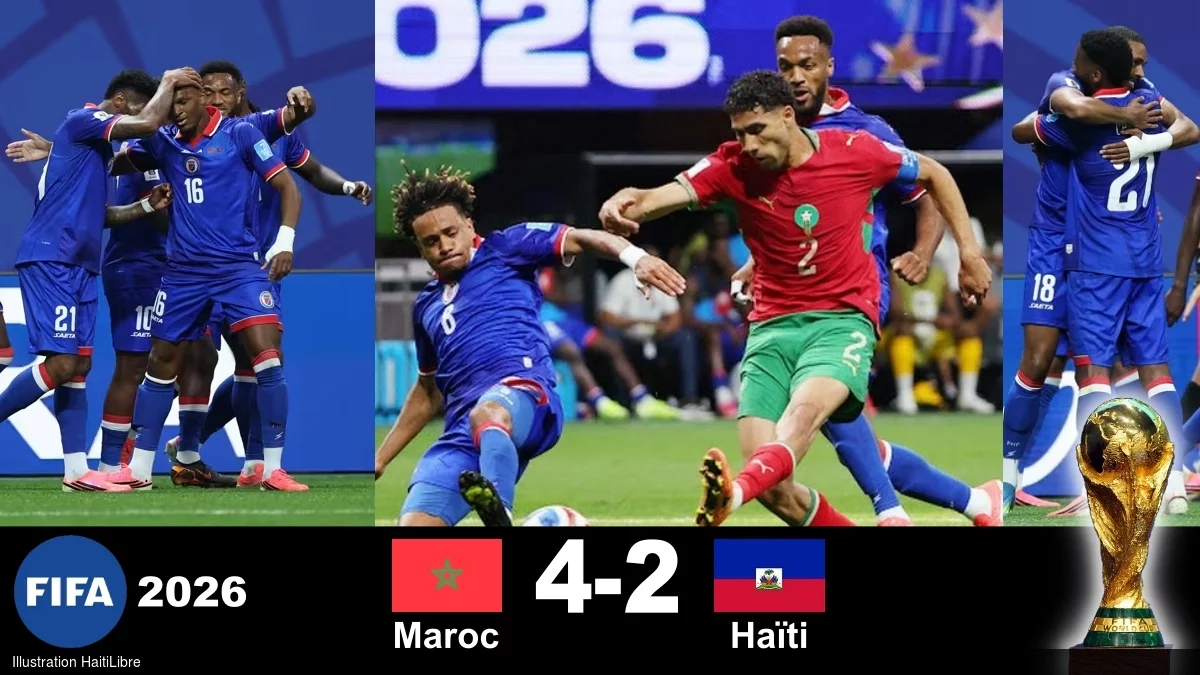
  • 2026 World Cup : Morocco narrowly defeats Haiti (4-2)

    2026 World Cup : Morocco narrowly defeats Haiti (4-2)

    On June 24, 2026, history was made at Atlanta’s Mercedes-Benz Stadium, when Haiti’s men’s national football team – nicknamed the Grenadiers, ranked 83rd globally – faced 7th-ranked Morocco’s Atlas Lions in their final Group C match of the 2026 FIFA World Cup, marking the first ever meeting between the two sides at the tournament, in front of a sold-out official crowd of 68,324 spectators. Though the North African side claimed a hard-fought 4-2 win, the Caribbean underdogs exited the tournament with widespread praise, pushing the tournament favorites to the final whistle in a performance that defied expectations.

    French head coach Sébastien Migné made two adjustments to Haiti’s starting lineup from their previous match against Brazil, bringing in forward Wilson Isidor of England’s Sunderland AFC and winger Lenny Joseph of Hungary’s Ferencváros TC, while regular starters Carlens Arcus and Frantzdy Pierrot started the game on the bench. Haiti set up in a 4-4-2 formation, with Johnny Placide (SC Bastia, France) starting in goal, Ricardo Adé (LDU Quito, Ecuador), Duke Lacroix (Colorado Springs Switchbacks, USA), Martin Experience (AS Nancy-Lorraine, France), and Josué Casimir (AJ Auxerre, France) forming the defensive line, Ruben Providence (Almere City FC, Netherlands), Jean-Jacques Danley (Philadelphia Union, USA), Jeanricner Bellegarde (Wolverhampton Wanderers, United Kingdom), and JK Duverne (KAA Gent, Belgium) completing the midfield, and Isidor and Joseph leading the attacking line.

    Migné made five substitutions throughout the second half to refresh his side: Louicius Deedson replaced Isidor, and Duckens Nazon replaced Providence in the 67th minute; Carlens Arcus replaced Duverne, and Dominique Simon replaced Danley in the 80th minute; and Pierrot came on for Joseph in the 83rd minute.

    The opening 45 minutes delivered end-to-end drama, with four goals split evenly between both sides. Haiti shocked the global football audience in the 10th minute, opening the scoring for their first ever World Cup goal when a low cross from Duverne deflected off Lenny Joseph’s backheel attempt, wrong-footing Moroccan goalkeeper Yassine Bounou and rolling into the back of the net for an own goal, putting the underdogs up 1-0.

    Haitian goalkeeper Johnny Placide put in a string of impressive saves in the 13th, 23rd, and 36th minutes to keep Morocco off the scoresheet, but Atlas Lions captain Achraf Hakimi finally found an equalizer in the 39th minute, slotting home after a cross took a deflection off a Haitian defender.

    Haiti refused to back down, and retook the lead just four minutes later in the 43rd minute. After Brahim Díaz gave away possession in Morocco’s half, Isidor hit a powerful long-range strike into the top corner, leaving Bounou with no chance and putting the Grenadiers up 2-1.

    Morocco leveled the score right before the halftime whistle, when Hakimi cut the ball back into the path of Ismael Saibari, who converted the chance to make the score 2-2 going into the break.

    After halftime, Morocco, the higher-ranked side, began to dominate possession and territory, putting consistent pressure on Haiti’s defense. The breakthrough finally came in the 78th minute, when substitute Soufiane Rahimi converted from a corner to put Morocco ahead 3-2, the first time the North African side had led in the match.

    The match’s final goal came in the 89th minute, when young substitute Gessime Yassine capitalized on a defensive miscommunication from Haitian defender Carlens Arcus, who had assumed the ball had gone out of play. A VAR review confirmed the goal was valid, sealing Morocco’s 4-2 win.

    In the final Group C standings, Brazil and Morocco both advanced to the knockout stage with seven points each: Brazil claimed first place on goal difference, with two wins, one draw, seven goals scored, and one conceded, while Morocco finished second with two wins, one draw, six goals scored, and three conceded. Scotland finished third with three points from one win in three matches, while Haiti ended their historic first World Cup campaign in fourth place with zero points, having scored two goals across three group matches.

  • Derde helft WK 2026: Bosnië wint cruciale duel van Qatar dat veerkracht toonde

    Derde helft WK 2026: Bosnië wint cruciale duel van Qatar dat veerkracht toonde

    The 2026 FIFA World Cup Group B clash in Seattle delivered a dramatic, action-packed encounter between Bosnia-Herzegovina and Qatar on June 24, with Bosnia securing a critical 3-1 victory that puts them on the cusp of a knockout stage spot. The result comes just days after Qatar suffered a heavy 6-0 opening defeat to Canada, leaving the 2022 World Cup hosts already facing elimination heading into their final group fixture. For Bosnia-Herzegovina, the match carried extra significance: it marked veteran striker Edin Dzeko’s 150th senior international cap, a personal milestone the 40-year-old football icon was determined not to celebrate with an early tournament exit. Dzeko, Bosnia’s all-time record appearance holder and leading goalscorer with 72 international goals entering the game, had missed Bosnia’s opening match through injury but returned to the starting lineup to anchor his side’s attack, coming within inches of adding a landmark 74th goal to his legendary career. Both sides headed into the fixture on a five-game winless run, amplifying the pressure to secure three points, and the tension was palpable from kickoff in what was the first meeting between the two nations since 2010. Bosnia started the match on the front foot, dominating possession and carving out early chances, with 18-year-old young talent Kerim Alajbegovic producing one of the tournament’s standout goals to open the scoring. The teen prodigy glided past two Qatari defenders before firing an unstoppable strike into the top corner, leaving the goalkeeper with no chance. Bosnia doubled their lead shortly after, when a dangerous cross from Dzeko deflected off Qatari forward Sultan Al-Brake for an unlucky own goal. Far from folding under pressure, Qatar responded with a stunning fightback, led by captain Hassan Al-Haydos, who pulled a goal back with a powerful strike to reignite the contest. Energized by their breakthrough, Qatar shifted up a gear, stringing together quick combinations and pushing Bosnia onto the back foot. A shot from Pedro Miguel cannoned off the post, ramping up the tension as Qatar finished the first half with the momentum firmly on their side. After the break, Dzeko remained a constant threat in attack for Bosnia, and he too saw a shot bounce off the woodwork, denying him the milestone goal he chased. Near-29 degree temperatures in Seattle slowed the overall pace of the game, but the intensity and fighting spirit from both sides never dropped. Qatar lost Al-Haydos to cramp late in the contest, but his replacement injected fresh energy into the side, and the underdogs remained dangerous on the break. With full-time approaching, substitute Ermin Mahmic sealed the three points for Bosnia, slotting home after a mistake from the Qatari goalkeeper. Mahmic received a yellow card for removing his shirt in celebration of his decisive goal. In the simultaneous Group B fixture, Switzerland beat Canada 3-1 to finish top of the group with seven points, while Canada and Bosnia-Herzegovina both finished on four points. Bosnia edged out Canada on goal difference to secure their knockout stage spot, while Qatar finished bottom of the group without a single point, confirming their elimination. Despite their early exit, Qatar turned in a spirited display that earned praise, showing impressive resilience and fighting spirit after their heavy opening defeat, giving the nation optimism for future international competitions. For Bosnia-Herzegovina, the result capped off an evening of memorable milestones: the performance blended the experience of a generational talent in Dzeko with the exciting potential of young star Alajbegovic, creating a promising foundation for what fans hope will be a deep run in the knockout stage of the 2026 World Cup.