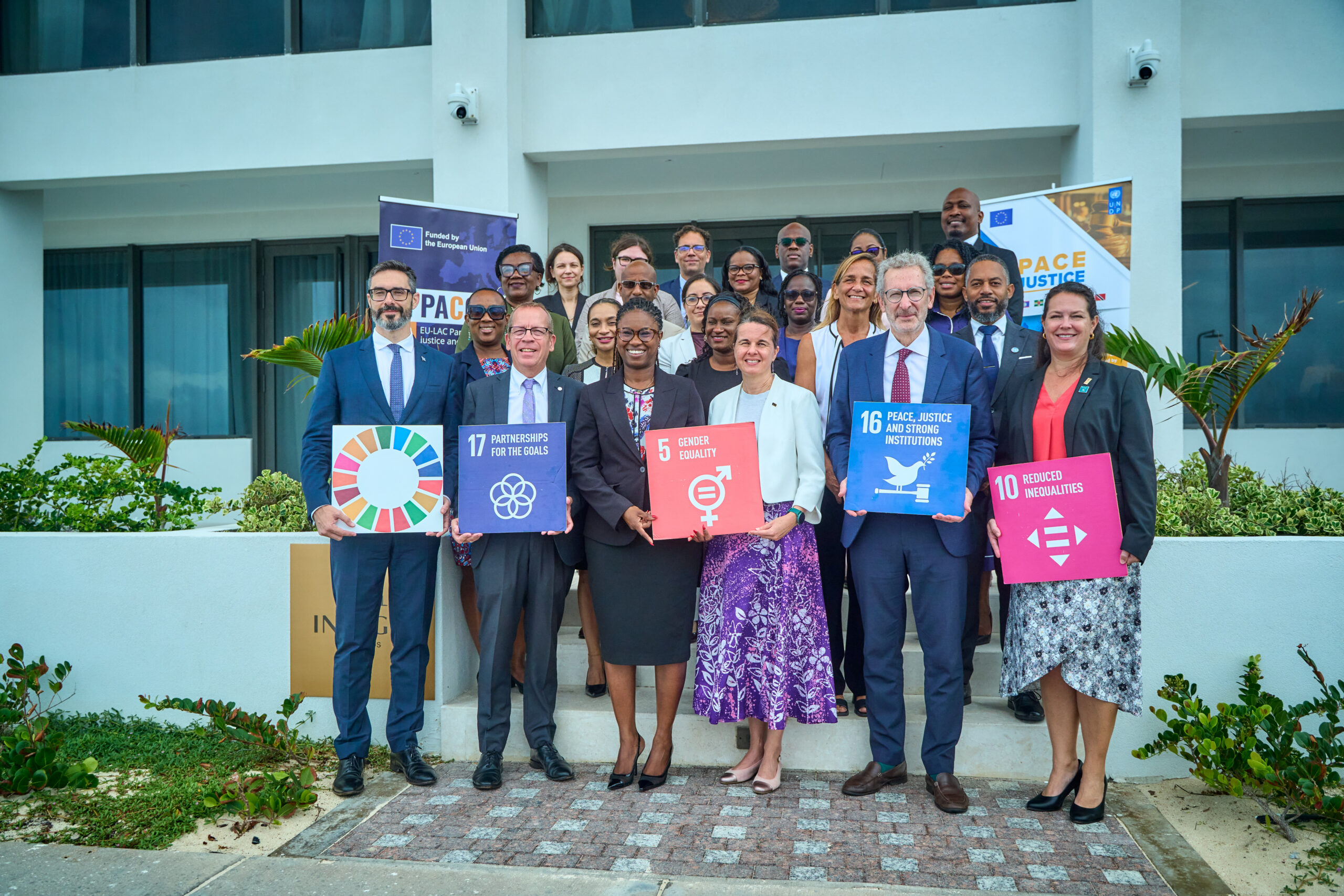
The Caribbean region has cemented its role as the primary transit route for cocaine and other contraband bound for European markets, pushing the European Union to urgently push for deeper cross-border judicial collaboration to break up transnational criminal networks that are exploiting the area’s unique geographic and logistical advantages. That warning came from Fiona Ramsey, the European Union’s ambassador to Barbados and the Eastern Caribbean States, who spoke Wednesday at the opening of a judicial cooperation workshop co-hosted by the Caribbean region and EU through the EUROJUST Focal Points initiative, held at Barbados’ Hotel Indigo.
In her address to a gathering of regional and international legal specialists, Ramsey laid out how organised criminal syndicates have turned the Caribbean’s well-developed maritime and aviation infrastructure into a major asset for their expanding trafficking operations and other cross-border illegal activities. While these extensive transport links are a foundational driver of legitimate commerce and economic growth across the Caribbean, Ramsey emphasized that criminal groups have quickly co-opted these same advantages for illicit activity.
“The Caribbean is now the key corridor for cocaine and other illicit goods entering into the European Union, and the consequences of inaction for both the Caribbean and Europe are severe,” Ramsey said. She detailed the far-reaching harms of unregulated illicit trafficking: it fuels endemic violence across the Caribbean, erodes the foundations of good governance, weakens public confidence in the rule of law, and creates space for a wider web of secondary criminal activity, including money laundering, public sector corruption, and environmental crime. Left unaddressed, the trade preys on marginalized vulnerable communities and locks regions into repeating cycles of insecurity that are hard to break.
Ramsey stressed that no single nation has the capacity to dismantle these sprawling transnational networks on its own, making targeted judicial cooperation through EUROJUST’s regional contact points an essential tool to counter the threat. Successfully disrupting trafficking requires ongoing, coordinated collaboration between countries, including real-time intelligence sharing and joint, end-to-end investigations that target every layer of criminal operations—from the movement of contraband to the laundering of illegal proceeds.
She noted that recent law enforcement crackdowns have already proven how adaptable criminal groups are, with traffickers quickly adjusting their routes and operations to evade new enforcement pressure. This flexibility underscores the need for a sustained, long-term, comprehensive response from judicial authorities on both sides of the Atlantic, rather than one-off interventions.
Beyond counter-trafficking work, Ramsey highlighted that maritime connectivity and security have become increasingly central pillars of the broader EU-Caribbean partnership. While deeper transport links promise to unlock major new economic opportunities for the region, they also create new, unmonitored pathways that criminal groups can exploit. To address this gap, the EU has already allocated dedicated funding to boost port security and expand judicial cooperation as part of its broader regional security strategy, with the goal of ensuring that drug seizures do not end at interception, but lead to successful prosecutions and criminal convictions that take network leaders off the street.
Ramsey also identified a fast-growing new challenge for cross-border law enforcement: the use of cryptocurrencies to launder criminal proceeds. “Cryptocurrencies have transformed illicit financial flows, creating new challenges for both regions,” she explained. Traffickers increasingly rely on pseudonymous transactions, privacy-enhancing technologies, and decentralized finance platforms to hide illegal profits and move funds across borders without detection, making asset recovery far more difficult for authorities.
To tackle this emerging threat, Ramsey called for expanded targeted collaboration between Caribbean and European law enforcement and judicial bodies. By combining Caribbean partners’ on-the-ground intelligence about trafficking network operations with European expertise in digital investigations, blockchain analysis, and cross-border asset recovery, the two regions can more effectively disrupt the financial foundations that allow organised crime to operate.