作者: admin

  • Browne Says UPP ‘Didn’t Originate’ Four-Day Work Week, Questions Feasibility

    Browne Says UPP ‘Didn’t Originate’ Four-Day Work Week, Questions Feasibility

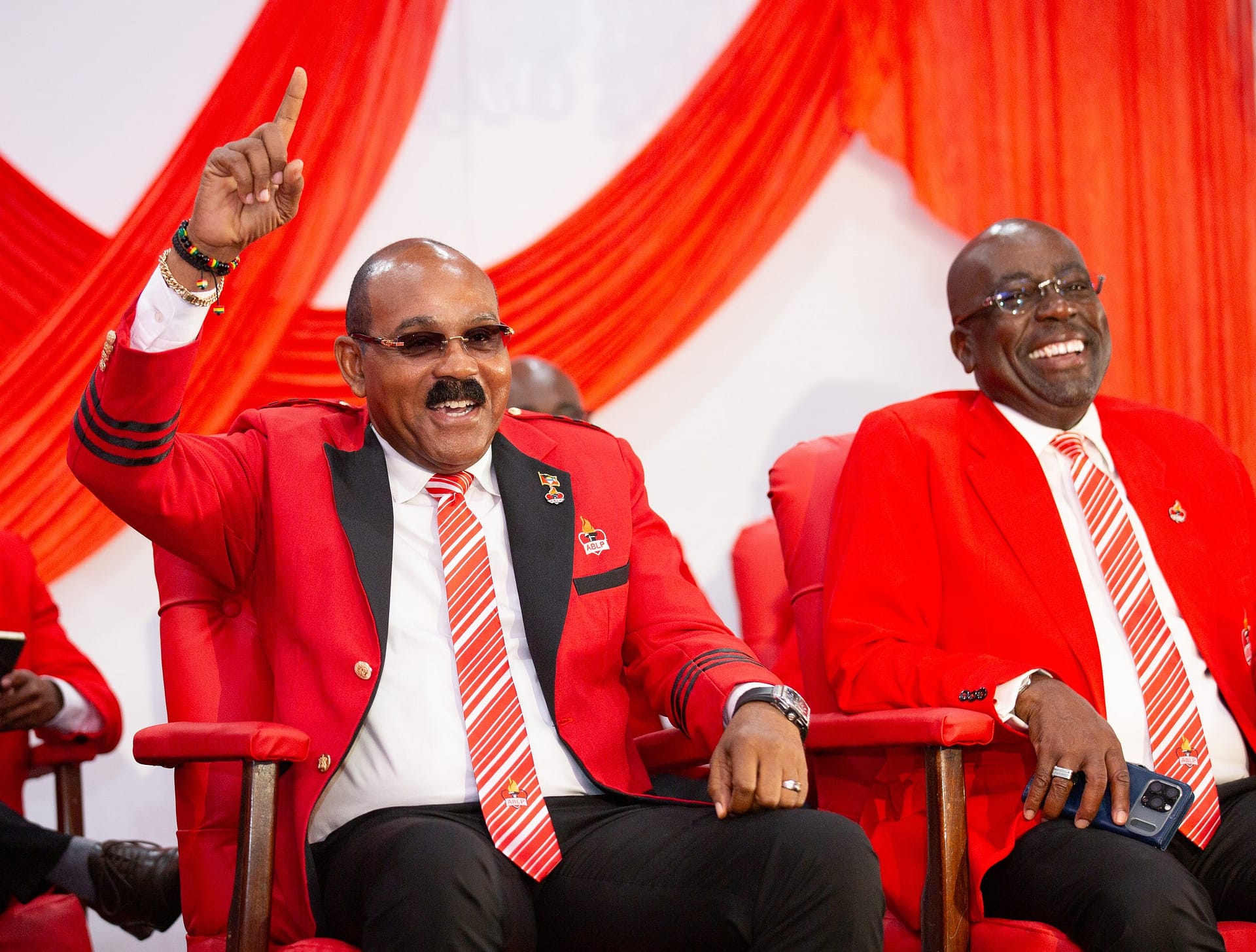
    As Antigua and Barbuda’s April 30 general election campaign enters its final, heated stretch, Prime Minister Gaston Browne has launched a sharp rebuttal of the opposition United Progressive Party (UPP)’s flagship four-day work week policy, pushing back on claims the idea originated with the challenger party and arguing the policy lacks rigorous planning for nationwide rollout.

    Speaking during his regular weekly radio address, Browne emphasized that the concept of a compressed work week has been under active review by his administration long before the UPP included it in their election platform. His government has already held extensive consultations with a wide range of stakeholders to map out how the policy could function across Antigua and Barbuda’s public and private sectors, he added, noting that one framework under discussion combines four days of in-office work with one remote working day per week.

    Browne drew a clear line between his administration’s methodical approach and what he characterized as the UPP’s unfocused, untested proposal. The prime minister warned that implementing a sweeping change to national work schedules cannot be carried out haphazardly, stressing that any rollout requires deep technical planning and cross-sector input before it can be put into practice. He questioned the feasibility of rolling out the policy across both public and private sectors without prior consultation with industry leaders, labor representatives and other key groups.

    The prime minister’s criticism of the four-day work week proposal was part of a broader takedown of the UPP’s campaign pledges during the radio program. Browne argued that many of the opposition’s policy ideas are designed solely to win voter support, rather than to deliver tangible, workable change once in office. “They don’t have a plan,” Browne said, accusing the opposition of attempting to win over voters by floating underdeveloped concepts that have not been vetted for practical implementation.

    The UPP has positioned the four-day work week as a core campaign promise, framing the policy as a pathway to improved work-life balance for workers across the country. But Browne countered that any major shift to the national work model requires rigorous analysis of its potential impacts on three critical areas: workforce productivity, the delivery of public services, and the performance of Antigua and Barbuda’s key economic sectors, which rely heavily on consistent, accessible operations particularly in tourism and trade.

    Browne confirmed that his administration will continue stakeholder consultations before moving forward with any decision, clarifying that the policy itself is not being rejected outright. While the concept of a compressed work week remains under active consideration, any eventual implementation will only move forward once sufficient structured planning is complete and the country is judged to be ready for the shift, he said.

    The public clash over the four-day work week highlights the widening policy divide between the ruling Antigua Labour Party and the opposition UPP as the April 30 election draws closer. Campaign debates are increasingly centered not just on which party puts forward more innovative policy ideas, but on which can demonstrate the capacity to turn those ideas into actionable, effective governance.

  • Trinidad police officer murdered in station, 68 guns taken

    Trinidad police officer murdered in station, 68 guns taken

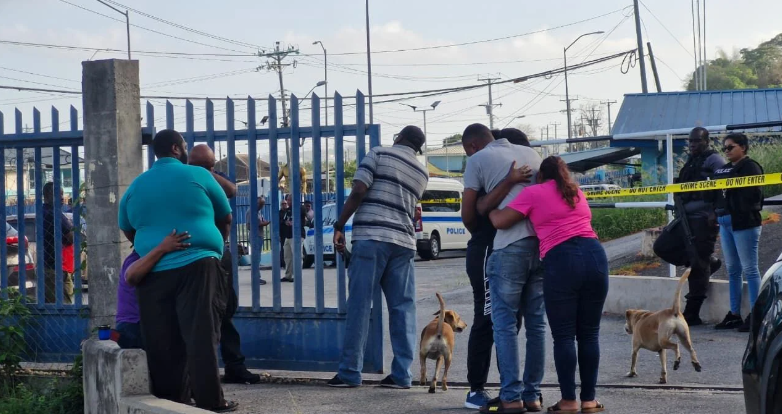
    A shocking security incident that ranks among the worst breaches of a police facility in recent Trinidad history has left a female municipal police officer dead and triggered a massive manhunt after more than 60 firearms and thousands of rounds of ammunition were stolen from a station’s secure strongroom.

    Trinidad and Tobago’s top police official, Commissioner Allister Guevarro, was among the first authorities to arrive at the San Fernando Municipal Police Station, located at King’s Wharf along Lady Hailes Avenue, after the breach was discovered early Sunday morning.

    The victim has been identified as Anusha Eversley, an acting corporal serving with the Trinidad and Tobago Municipal Police Service (TTMPS). Preliminary investigative timelines show Eversley was last spotted on duty in the station’s charge room around 11 p.m. local time on Saturday. Nearly six hours later, at approximately 4:40 a.m. on Sunday, a fellow officer returned to the charge room and found the entire area engulfed in darkness. After flipping on the lights, the officer noticed what appeared to be blood seeping from the entrance of Eversley’s assigned quarters, and also spotted that the heavily secured strongroom had been compromised and forced open.

    When investigators conducted an inventory of the secure storage, they uncovered the full scale of the theft: a huge cache of weapons and ammunition had been removed from the facility. Police sources have confirmed the missing arsenal includes roughly 52 Glock pistols, six shotguns, four MPX-style firearms, and more than 4,000 rounds of 9mm ammunition.

    Responding officers found Eversley unresponsive on a mattress inside her quarters, and she was pronounced dead at the scene. Initial forensic observations note the corporal was partially clothed, and had visible bleeding from the nostrils. Investigators are working from early indications that Eversley may have been assaulted before her death, though this detail has not yet been formally confirmed as autopsies and further testing are pending.

    In the immediate aftermath of the discovery, the entire police station was placed under lockdown, with senior investigative leads including Superintendent Persad and members of the Homicide Region III unit called in to lead the probe. Crime scene investigators have spent hours processing the location, collecting forensic trace evidence and running full fingerprint analyses to identify potential suspects. The San Fernando Municipal Police Station remains under heavy security lockdown as the dual investigation into Eversley’s killing and the weapons theft continues, with authorities working to trace the stolen firearms before they can be used in further criminal activity.

  • PM Browne Warns UPP Promises Will Lead to Higher Taxes

    PM Browne Warns UPP Promises Will Lead to Higher Taxes

    As Antigua and Barbuda enters the final stretch of campaigning ahead of the April 30 general election, sitting Prime Minister Gaston Browne has launched a pointed warning to voters, claiming that sweeping campaign promises from the opposition United Progressive Party (UPP) could ultimately trigger broad tax hikes for residents — including the possible return of the personal income tax abolished by his current administration.

    Speaking during an interview with local outlet Pointe FM, Browne drew attention to what he frames as a critical gap in the UPP’s policy platform: the opposition has failed to outline a clear, viable plan to fund its extensive electoral proposals, and has offered no definitive denial that taxes will rise if the party takes power. “I observe that they have not said that they will not increase taxes. Notice they have remained silent on that issue,” Browne told the station.

    While Browne acknowledged the UPP has issued a surface-level assurance it would not reintroduce personal income tax, he invoked a 20-year-old historical precedent to cast doubt on that promise. Ahead of the 2004 general election, Browne recalled, the UPP made identical commitments to avoid bringing back the tax — only to reverse course immediately after winning office. “We saw that movie before,” he said.

    Browne added that when the UPP reimposed the tax, it was billed as a temporary, one-year measure to shore up public finances. Instead, the levy remained in place for a full decade, until Browne’s current administration won power and repealed it entirely.

    Beyond the tax debate, the prime minister accused the UPP of running a misleading campaign built on uncoordinated, unplanned policy ploys rather than a cohesive governing agenda. He noted that he has yet to see the opposition release a full, comprehensive election manifesto, arguing that the party is only rolling out piecemeal promises to win over voters without any plan to deliver on them. “They’re just putting all these piecemeal promises out there,” Browne said.

    The prime minister also drew a line between his administration’s approach and the opposition’s electoral strategy, rejecting what he called a “giveaway war” of unsustainable spending pledges. Browne argued that opposition parties face no accountability for extravagant promises before an election, as they only face consequences if they win power. “When you’re in opposition… you can promise anything,” he said.

    In contrast, Browne highlighted his own government’s track record of fiscal discipline as a defining achievement, claiming that his administration has delivered a standard of national financial management never before achieved in Antigua and Barbuda. “We believe in fiscal responsibility,” he said.
    Browne’s comments come as all major political parties ramp up their campaigning, with economic policy and measures to address rising cost of living emerging as the central battleground issues for the upcoming vote.

  • WATCH: UPP Chairman expects election loss, plans resignation, PM says

    WATCH: UPP Chairman expects election loss, plans resignation, PM says

    With less than two weeks remaining until Antigua and Barbuda’s general election on April 30, political tensions have spiked after incumbent Prime Minister Gaston Browne made explosive claims about the leadership of the main opposition United Progressive Party (UPP).

    In an interview with local outlet Pointe FM, Browne publicly alleged that UPP Chairperson D Gisele Isaac has privately told close confidants that she expects her party to face a devastating defeat in the upcoming polls, and intends to step down from her leadership role immediately after the results are confirmed.

    According to Browne, Isaac’s internal assessment is that the UPP enters the election deeply unprepared to unseat his governing Labour Party, and the party is far behind the incumbent in both organizational capacity and voter support. He quoted Isaac as stating the UPP would be fortunate to win as many as three legislative seats, with the even grimmer possibility that the party could be completely shut out of parliament entirely.

    “I think they themselves recognize that they can’t win, because they did not prepare themselves to win,” Browne told listeners of the radio program. He added, “She said that… they’ll be lucky if they win no more than three seats,” extending the assessment to include the possibility of the party losing every seat it currently holds.

    Browne’s claims are based on secondhand information he received from an unnamed third party, he confirmed. “He said… immediately after the elections, after the UPP would have lost, that she will resign,” Browne stated, when outlining the alleged plan.

    The prime minister acknowledged that Isaac is likely to reject his account publicly, but he doubled down on the accuracy of his remarks, leaning on his public track record to argue that he is a reliable source of information for voters. “I expect her to come and say what I say is not true… but the people… trust me to talk the truth,” he said.

    Beyond the claims about Isaac’s private views and resignation plan, Browne also painted the opposition as increasingly frantic in the final stretch of the campaign. He argued that growing internal panic has pushed UPP to ramp up a wave of unaffordable, unworkable campaign promises to win over undecided voters. “There’s desperation taking place within that party. They’re going to promise everything,” Browne said, noting that many of the party’s proposed policy changes would be “not doable” if the party took power.

    Browne’s remarks come as campaign activity across the country reaches a fever pitch. The two major political parties are currently vying for voter support by laying out starkly competing policy agendas, focused heavily on key voter priorities including national economic growth, tax reform, and relief from the rising cost of living that has impacted households across the nation in recent months.

  • Browne Accuses UPP of Misleading Voters With Recycled Policies

    Browne Accuses UPP of Misleading Voters With Recycled Policies

    As the countdown to Antigua and Barbuda’s April 30 general election begins, incumbent Prime Minister Gaston Browne has launched a sharp critique of the opposition United Progressive Party (UPP), dismissing its slate of campaign pledges as unrealistic, repackaged proposals designed to court voters through reckless handouts rather than thoughtful, actionable governance.

    During a recent interview on local radio station Pointe FM, Browne broke down his criticism of the opposition’s policy agenda, arguing that UPP’s platform lacks both strategic vision and policy coherence. The prime minister emphasized that many of the party’s high-profile promises have not undergone rigorous financial modeling, crafted solely to grab public attention without accounting for the severe fiscal strain they would impose on the national budget.

    At the center of Browne’s pushback is the UPP’s flagship proposal to eliminate all duties and taxes on motor vehicle purchases. He calculated that this policy alone would strip the government of more than $50 million in critical annual revenue, a loss that would be nearly impossible to offset through alternate funding streams without cutting core public services. Browne noted that after facing public pressure over the proposal’s massive fiscal gap, UPP has since walked back its plan to a more moderate 50% across-the-board reduction in vehicle duties — a change that exposes the original pledge’s lack of preparation.

    Browne further pointed out that the governing Antigua and Barbuda Labour Party administration has already implemented the kind of duty concessions the UPP is now claiming as an original initiative. Currently, the government offers a 50% duty reduction on new vehicles for all buyers, and extends full 100% duty exemptions to specific working groups including taxi operators, public school teachers, nurses, and police officers, putting the UPP’s adjusted proposal in line with existing policy.

    “This is nothing more than repackaging: the opposition is promising something that is already law and practice in our country,” Browne said, accusing UPP of intentionally misleading voters to win support ahead of the vote. He used the colloquial term “mamaguy the people” to characterize the opposition’s tactic of deceptive, empty campaigning.

    The prime minister made clear that his administration will not enter a race to outbid the opposition on unfunded giveaways, rejecting calls to match UPP’s pledges with equally costly promises. “We will not get drawn into their giveaway war. Our approach will be responsive to public needs, but it will also be measured and responsible,” he stated, adding that his government will remain focused on delivering sustainable policies that deliver long-term empowerment to workers and all segments of the national population.

    Browne’s comments come as all political parties ramp up their campaign activities in the lead-up to the end-of-April poll, with public debate dominated by competing plans to address taxation, ease the rising cost of living, and steer the national economy through ongoing global headwinds.

  • Humanoïde robots lopen menselijke atleten voorbij in halve marathon in Beijing

    Humanoïde robots lopen menselijke atleten voorbij in halve marathon in Beijing

    On a race day in Beijing, the second edition of the Beijing E-Town Half Marathon made global headlines, not just for the thousands of human runners competing, but for a groundbreaking companion event that showcased how far humanoid robotics have advanced in just 12 months. When the special humanoid robot half-marathon debuted last year, most of the competing machines failed to even reach the finish line, and the fastest entry logged a time far slower than the average human competitor. This year, that narrative shifted dramatically, with dozens of China-developed humanoid robots delivering staggering improvements in speed, autonomy, and endurance over the 21-kilometer course.

    The event saw explosive growth in participation, with the number of competing robotics teams jumping from just 20 in 2024 to more than 100 in 2025. To eliminate collision risks between human and robotic runners, the two groups competed on separate parallel courses, allowing each group to push their limits without interference. When the checkered flag fell, the top spot went to the Honor Lightning humanoid, developed by Chinese smartphone manufacturer Honor — a spin-off of tech giant Huawei. Honor’s winning machine crossed the finish line in 50 minutes and 26 seconds, a time that beats the current official men’s half-marathon world record set by Jacob Kiplimo just one month prior in Lisbon. In a dominant showing, Honor claimed all three podium positions with three separate teams.

    According to Du Xiaodi, an engineer leading the project at Honor, the competing robot took one full year of targeted development to reach this performance level. Standing out for its design, the machine features 90 to 95 centimeter legs, a proportion matching that of elite human long-distance runners, and leverages advanced liquid cooling technology adapted from Honor’s smartphone designs to prevent overheating during sustained high-speed operation, a common technical challenge for bipedal robots.

    The rapid improvement in robotic performance, from widespread failure to finishing faster than the world’s best human runners, underscores the dramatic progress China has made in the robotics and artificial intelligence sectors. For spectators in attendance, including large numbers of engineering students and young software developers, the event was a clear sign that the widespread AI and robotics era is rapidly approaching. A 23-year-old engineering student at the race summed up the prevailing sentiment among young tech professionals, noting that those who fail to adapt to working with AI now will be left behind as the sector transforms global industries.

    While the successful race demonstrates huge potential for humanoid robotics, experts note that practical widespread commercial application remains in the experimental stage for most use cases. The capabilities demonstrated on the running course do not directly translate to many commercial roles, which require fine motor control, precise manual manipulation, and complex adaptive interaction with unpredictable environments, they cautioned. Even so, the technology opens the door to future use cases including replacing human workers in high-risk occupations and even potential applications in defense operations, the event organizers noted.

    China has prioritized the development of humanoid robotics and AI in recent years, rolling out generous government subsidies and large-scale infrastructure projects to support domestic technology companies advancing the sector. The national ambition for the industry was even highlighted at this year’s CCTV Spring Festival Gala, the country’s most-watched annual television event, which featured a viral martial arts demonstration performed by Unitree humanoid robots that drew hundreds of millions of views.

    With this landmark half-marathon event, China’s leading technology firms have put their progress on full display, making clear that humanoid robots are on track to become a core part of the future of global industry and everyday society.

  • LETTER: Election Vandalism Sparks Call for Respectful Election Conduct

    LETTER: Election Vandalism Sparks Call for Respectful Election Conduct

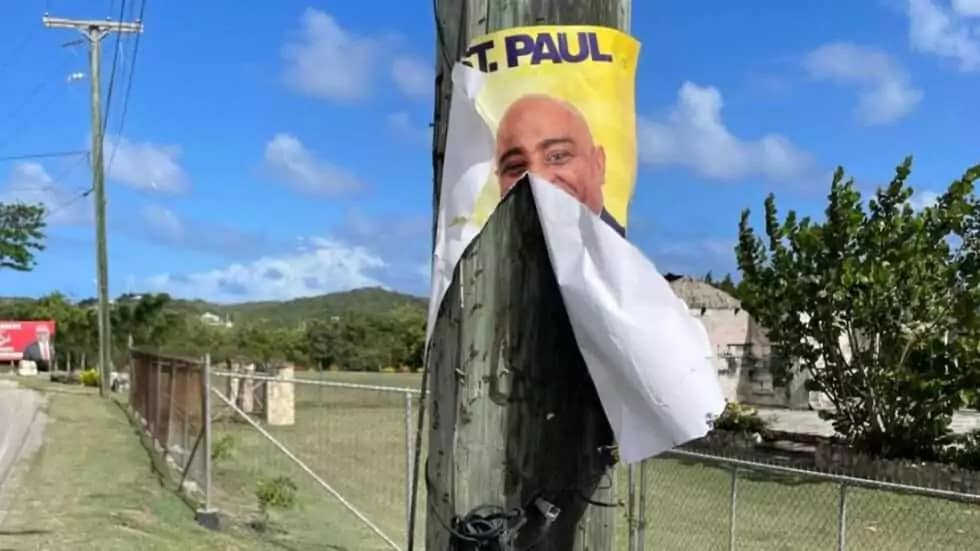
    As pre-election political tensions rise across Antigua and Barbuda, a prominent political figure has sounded the alarm over a recent act of destructive vandalism in Freeman’s Village, calling for immediate, widespread condemnation of the attack on a political billboard. In an open letter addressed to the press, Glenford Peters framed the incident as far more than a minor case of property destruction, arguing that it strikes at the core of the island nation’s long-held democratic values.

    Peters emphasized that acts of vandalism targeting campaign materials, which have become increasingly common during this heated election cycle, pose a direct threat to the fundamental democratic right to free expression. Antigua and Barbuda, he noted, built its national identity on a legacy of resilience, grassroots struggle, and the hard-won right to self-determination. That history, he argued, creates a binding obligation for political opponents to treat one another with basic respect, even when their ideological positions diverge sharply.

    Contrary to the idea that democratic participation demands uniform political alignment, Peters pointed out that the system is built on tolerance, open dialogue between competing camps, and the maturity to accept that other people and groups have every right to hold perspectives that differ from one’s own. What makes the current wave of vandalism so concerning, he added, is that it signals a worrying departure from the tradition of healthy, respectful political competition the nation has worked to build, shifting the political landscape toward open hostility and deep, unnecessary division.

    Destroying opposing parties’ campaign materials, silencing alternative political voices, and intimidating supporters of rival candidates does nothing to strengthen any political cause, Peters stressed. Instead, it erodes the integrity of the democratic process for every citizen, regardless of political affiliation. He called on all political actors and ordinary voters across the country to reject these destructive acts of intimidation, and instead work collectively to build a national political culture rooted in mutual respect.

    Peters argued that it is entirely possible for citizens and politicians to hold firm to their own political beliefs while still upholding the right of others to advocate for their own positions. Disagreement, he noted, is a healthy and inevitable part of democracy, but that does not require personal or destructive conflict between opponents. At this pivotal juncture in Antigua and Barbuda’s national development, Peters urged the entire nation to come together, setting aside conflict in favor of unity, mutual understanding, and a shared commitment to the democratic values that unite all citizens of the country.

  • Pigs Paradise Owner Thanks Public and Authorities After Mosquito Bay Access Restored

    Pigs Paradise Owner Thanks Public and Authorities After Mosquito Bay Access Restored

    After weeks of disrupted access to one of Antigua’s most beloved coastal tourism destinations, the operator of Pigs Paradise Antigua has issued a public statement of gratitude to community members, government agencies, and cross-sector stakeholders following the formal restoration of public entry to Mosquito Bay’s Jolly Harbour North beach area.

    Chantelle Winter, founder and owner of the popular swimming-pig attraction, emphasized that the successful resolution of the access dispute would not have been possible without widespread collective action from Antiguans across the island, who rallied together to highlight how restricted beach access was threatening local livelihoods.

    In her official remarks, Winter shared: “I want to extend my sincere thanks to every single person who contributed to restoring public access to Mosquito Beach. This issue touched far more than just our operation.” Among the groups impacted by the weeks-long access block were local commercial fishermen, regular recreational beach users, and a wide network of tourism-dependent small businesses that rely on visitor traffic to the area.

    Winter specifically credited the grassroots public movement—headlined by a community petition titled “We the People of Antigua and Barbuda”—with creating the momentum needed to resolve the impasse and block further restrictions on public access. The petition, organized by Winter and local supporters, called on developers Albert Hartog and Orange Limited to preserve permanent public access to the coastal area and allow Pigs Paradise to continue operating its popular tourist attraction.

    Winter was clear that the dispute went far beyond the future of her small business, noting the broader ripple effects on the island’s tourism-dependent economy. She explained: “The impact stretched far beyond my team and I. It hurt tour guides, local taxi operators and their industry associations, boat service providers, street vendors, and our cruise line industry partners, all of whom depend on visitor flow to this area.”

    She also extended her gratitude to Antigua’s Ministry of Tourism and other government authorities for their role in mediating the dispute and supporting the relocation of her operation to the restored access point.

    In an effort to clear up widespread public misperception, Winter stressed that the fight for restored access was never rooted in political motivation. Instead, the campaign centered entirely on protecting public right of way to coastal space and safeguarding hundreds of local jobs tied to tourism in the area. “This has never been about politics. This was about protecting access, livelihoods, and ensuring the public space remains available to everybody,” she reaffirmed.

    Winter also addressed separate public criticism that emerged around the attraction, pushing back firmly against unsubstantiated allegations surrounding animal welfare and visitor safety. She confirmed that Pigs Paradise maintains strict operational protocols to uphold both animal care and guest safety standards. “The well-being of our animals and the safety of our guests are of the utmost importance,” Winter said, adding that the attraction retains consistent veterinary oversight and adheres to rigorous national and international operational standards.

    Looking ahead, Winter noted that Pigs Paradise remains fully committed to operating in full compliance with local regulations, continuing to drive inclusive economic growth for Antigua, and maintaining open lines of communication with all stakeholders moving forward. The original petition, which drew thousands of signatures, highlighted that the attraction is a major tourist draw for Antigua that generates critical income for a wide ecosystem of local workers, from taxi drivers and tour guides to small hoteliers and independent small business owners across the island.

  • COMMENTARY: Nation-builder – The life & times of Dominica’s former Chief Cultural Officer Raymond Lawrence

    COMMENTARY: Nation-builder – The life & times of Dominica’s former Chief Cultural Officer Raymond Lawrence

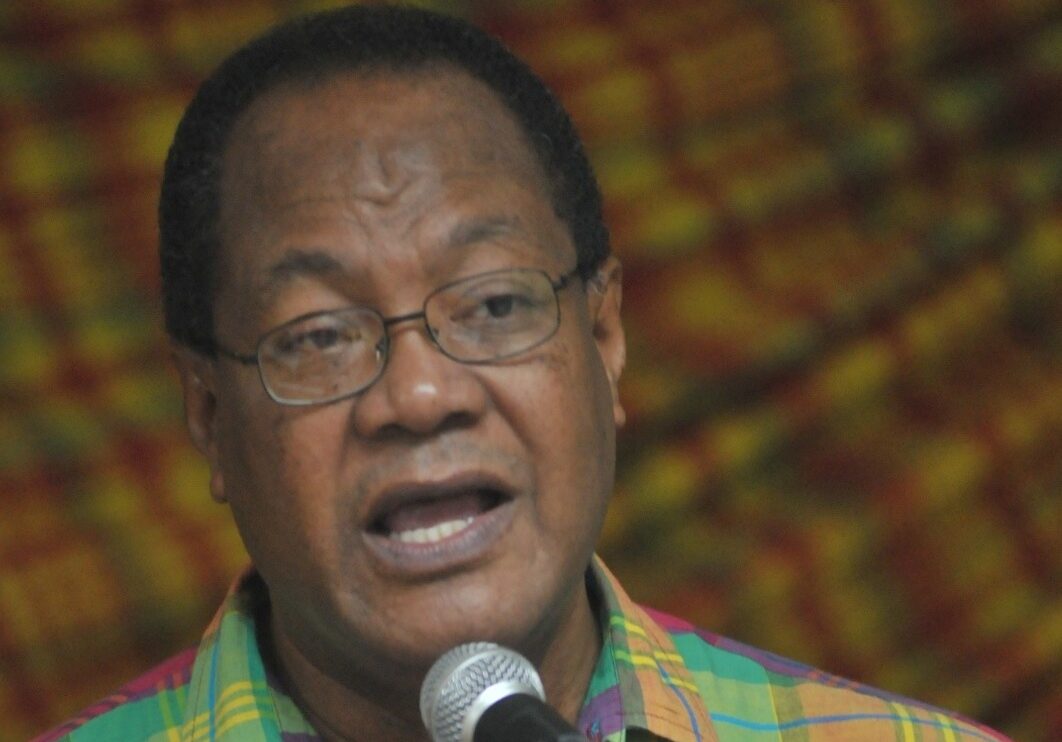
    A new biographical profile of former Dominican Chief Cultural Officer Raymond Lawrence, produced from an in-depth interview held in late March 2026, is being released as part of a critical cultural preservation initiative led by Gabriel J. Christian, a Dominican attorney, author and publisher. This project forms the core mission of Pont Casse Press, the independent publishing house founded in 1992 by Christian and his late collaborator Dr. Irving W. André, a former Canadian Superior Court Judge. Through oral histories, video biographies, and written documentation, the initiative works to capture and preserve the legacies of prominent Dominican figures whose contributions laid the foundation for the modern nation, ensuring these stories remain accessible for future generations as part of the island’s living historical record.

    Born in Roseau, Dominica, in January 1954, Lawrence grew up in a household that prioritized education, entrepreneurial spirit, and artistic achievement. His parents Hugh Lawrence and Doris Durand Lawrence ran a successful local soft drink factory and retail shop at a time when small-scale Dominican entrepreneurship was a core expression of national economic self-determination. The Lawrence home was also steeped in musical tradition: his older sister Jean Lawrence emerged as one of Dominica’s most influential cultural leaders, shaping the island’s choral music scene through her direction of the Siffleur Montagne Chorale, which raised national standards for musical performance and built widespread cultural pride across the country.

    Lawrence’s early academic journey took him through Convent Preparatory School for primary education, followed by the elite Dominica Grammar School, where he honed his academic focus and early sense of civic duty. He completed his sixth-form studies at St. Mary’s Academy between 1970 and 1972, and complemented his classroom learning with service in the Cadet Corps, an experience that instilled lifelong habits of leadership, discipline, and national responsibility. His musical training began early under the tutelage of Lemuel McPherson Christian OBE, the legendary composer who wrote Dominica’s national anthem, grounding Lawrence in the artistic traditions that would define his lifelong career.

    He later expanded his academic training in the United States, earning a bachelor’s degree from the University of Steubenville in Ohio and a master’s degree from the University of North Texas. These international experiences deepened his expertise in communications, performing arts, and cultural administration, equipping him with the skills to lead national cultural policy and development work back home.

    Lawrence’s professional career began in broadcasting, where he worked from 1972 to 1982 at both Radio Dominica and Radio Antilles. The role gave him a national platform to connect with Dominican communities and helped him recognize media’s unique power to strengthen collective national identity. Parallel to his media work, he launched his cultural organizing career in 1971 by co-founding the Waitu Kubuli Dance Troupe alongside fellow cultural practitioners Gwyneth Joseph and Arlington James. Under his early leadership, the group transformed traditional Dominican folk dance into a rigorous, respected national performance art, and brought Dominican culture to regional audiences through tours across Antigua and other Caribbean neighbors.

    Lawrence’s work grew from the foundation laid by an earlier generation of Dominican cultural nation-builders. He joined the ranks of icons like Dr. Alwin Bully, the late playwright, artist, educator and former Chief Cultural Officer who institutionalized theater arts and strengthened Dominica’s national festival traditions; Pearle Christian, the beloved grassroots cultural leader who worked to keep national culture rooted in community life; and Mable Cissy Cauderion, a pioneer who preserved Creole musical traditions that form the backbone of Dominican cultural identity.

    Over his decades of public service, Lawrence would go on to serve with distinction as Dominica’s Chief Cultural Officer, holding the post for 24 years across two tenures: from 1990 to 2014, and again from 2017 to 2021. In this role, he rejected the framing of culture as a narrow category of isolated performance, instead defining it as the complete way of life of the Dominican people. Working alongside fellow cultural administrators Rosalind Paul and Matthew Olivace, he centered his leadership on a clear mission: preserve Dominica’s unique ancestral traditions while nurturing new artistic excellence and innovation.

    One of Lawrence’s most historically significant contributions was his leadership of the revitalization of the Dominica Cultural Centre at the Old Mill, a site with deep, layered historical meaning. The center is built within the surviving stone walls of a 19th-century sugar mill plantation, a relic of the slavery era where enslaved Africans were forced to labor to generate wealth for European colonial powers. Lawrence recognized the critical importance of reclaiming this fraught space as a site of cultural affirmation, rather than leaving it shrouded in historical silence.

    Under his direction, major restoration and preservation work transformed the site. Lawrence organized the transfer and conservation of a historic steam locomotive from the former Bath Estate plantation, implemented specialized conservation techniques to protect the site’s aging historic structures, led the conversion of unused buildings into functional cultural spaces including dance studios, and secured partnership funding for improvements from organizations including UNESCO and the U.S. Embassy. Through this years-long effort, he turned a site born of colonial exploitation into a thriving hub for artistic expression and public historical education.

    Throughout his career, Lawrence consistently argued that culture must serve to strengthen national character. He voiced public concern about eroding social values, and pushed for cultural policy that reinforces dignity, discipline, and mutual respect among younger generations. For Lawrence, culture was never separate from nation-building: it shapes how a people understand their own identity and their collective responsibility to one another.

    Lawrence’s life and career represent far more than a tenure in public administration. It is the story of a cultural patriot who recognized that a nation’s strength depends not only on physical infrastructure and economic growth, but on shared identity, collective memory, and national pride. As a broadcaster, educator, organizer, preservationist, and administrator, he spent decades working to ensure that Dominica’s rich cultural inheritance would remain a living, active force in national life, rather than a forgotten relic of the past.

    In documenting Lawrence’s story, Pont Casse Press advances its core mission to honor the figures who built modern Dominican civilization. Lawrence’s life stands as a testament to the truth that the most enduring nation-builders are those who preserve the spirit of their people. After more than 50 years of relentless service, he has secured his place among the most respected cultural guardians in Dominica’s history. A full biographical video of Lawrence’s story is available for public viewing.

  • COMMENTARY: World Heritage Day Renews Call to Safeguard Heritage Sites Under Threat

    COMMENTARY: World Heritage Day Renews Call to Safeguard Heritage Sites Under Threat

    When the word “heritage” is mentioned, many people picture only ancient stone monuments or dusty museum displays — but the United Nations Educational, Scientific and Cultural Organization (UNESCO) offers a far broader, more meaningful framing. As UNESCO defines it, heritage encompasses all cultural, historical, and social legacies passed between generations, stretching from celebrated historic landmarks and museum collections to living traditional practices and modern artistic expressions. More than just a connection to the past, this collective heritage enriches daily life and lays the foundation for inclusive, innovative, and socially resilient communities around the globe.

    Two core pillars anchor the concept of heritage: passing existing legacies to future generations, and protecting those legacies from harm long enough to be shared. Today, this protection work has become more critical than ever. Safeguarding the world’s cultural and natural heritage, alongside nurturing dynamic creative cultural sectors, is now recognized as a foundational strategy to address the defining challenges of the 21st century, from accelerating climate change and systemic poverty to widening inequality, the global digital divide, and rising interregional conflicts and humanitarian emergencies.

    Each year on April 18, the global community observes World Heritage Day — officially titled the International Day for Monuments and Sites — to honor the cultural legacies passed down through history and reinforce shared responsibility for their preservation for future populations. The annual observance traces its origins back to 1982, when the International Council on Monuments and Sites (ICOMOS) formally established the commemoration on that date.

    The 2024 theme for World Heritage Day, “Emergency Response for Living Heritage in Contexts of Conflicts and Disasters,” shines a spotlight on the growing urgency of protecting and managing cultural and natural sites facing existential threats from climate change, armed conflict, and unplanned rapid urbanization.

    Too often, heritage sites are dismissed as nothing more than revenue-generating tourist attractions. But this narrow perspective must evolve: heritage is a living, evolving force that shapes collective identity and holds shared collective memory for communities across the globe. This year’s theme acts as a timely wake-up call, reminding the world that coordinated global action is urgently needed to protect sites already grappling with damage from war, climate disasters, and other man-made and natural calamities.

    To build a sustainable future for heritage protection, young people must be at the center of efforts, advocates argue. Young generations must be educated on how heritage shapes their own personal and cultural identity, and expanded access to educational visits to heritage sites is a key step forward. As repositories of collective knowledge and centuries of history, heritage sites deserve a permanent place in national education curricula across every region, to ensure the next generation inherits both an awareness and appreciation of these legacy sites.

    The cost of losing unprotected heritage is incalculable. Any destruction or irreversible damage to a heritage site is a loss for all humanity, not just the community or nation that hosts it. For local populations, heritage sites often act as the social glue that fosters collective belonging and intergenerational community bonding. They are also spaces where current generations can connect — or reconnect — with centuries of architectural innovation and master craftsmanship.

    One of the most widely recognized frameworks for global heritage protection is the UNESCO World Heritage Designation. A UNESCO World Heritage Site can be any location — from a single building or entire historic city to a protected natural landscape — deemed to hold Outstanding Universal Value (OUV) for all of humanity. To earn designation, sites must meet at least one of 10 specific cultural or natural criteria, prove their historical authenticity and structural integrity, and present a robust long-term management plan to guarantee sustained protection.

    The Caribbean region is home to a diverse collection of acclaimed UNESCO World Heritage Sites, spanning cultural and natural landmarks across multiple island nations. Key sites include Port Royal and the Blue and John Crow Mountains in Jamaica, Morne Trois Pitons National Park in Dominica, Historic Bridgetown and its Garrison in Barbados, the Pitons Management Area in St. Lucia, Antigua’s historic Naval Dockyard, the Historic Area of Willemstad in Curacao, and Alejandro de Humboldt National Park in Cuba. What makes the World Heritage system unique is its universal mission: all designated sites belong to every person on Earth, regardless of which country or territory they are located in.

    On this World Heritage Day, the global call goes out for nations, communities, and individuals to unite in respect for shared heritage, and to lift up the rich tapestry of global cultural diversity that these sites represent. Preserving monuments, living traditions, and archaeological sites for future generations requires sustained, collective effort from all sectors of society.

    As Nelson Mandela once noted: “Our rich and varied cultural heritage has a profound power to help build our nation.” This commentary was contributed by Wayne Campbell, an educator and social commentator focused on development policies and their impacts on culture and gender equity.