作者: admin

  • Faber Accuses Government of Crime Complacency

    Faber Accuses Government of Crime Complacency

    In Belize City on April 22, 2026, Opposition Leader Patrick Faber launched a scathing attack on the ruling Briceño administration amid a fresh wave of high-profile violent incidents that have dominated local headlines. Speaking at a press briefing hosted by his United Democratic Party (UDP), Faber accused the current government of allowing a national public safety crisis to spiral unchecked, citing a string of recent homicides, unexplained disappearances and kidnappings as evidence of the administration’s failure to maintain control over crime rates.

    Faber pointed to the most recent killing to underscore his critique: the discovery of a young man identified as Cambranes dead along Boom Road earlier the same morning. He went on to note that over the preceding 10 days, the country has been shaken by a pattern of disturbing violence, including missing persons, bodies recovered from remote swamplands, and multiple abduction cases.

    To draw a contrast with the previous UDP government led by former Prime Minister Dean Barrow, Faber recalled that even small clusters of two to three murders over a single weekend would trigger immediate public outcry and swift, coordinated action from the former administration. Under Barrow’s leadership, he claimed, top law enforcement officials from the national police and coast guard would have been summoned immediately for an emergency summit on Queen Street to develop urgent, targeted interventions to curb violence. Today, he argued, no such response is forthcoming.

    Faber did not limit his criticism to the government, also calling out the current Minister of Police as an ineffective leader, saying “I can’t even tell you who is the minister right now, he is a waste of time.” He further argued that the Belizean public has become complacent in the face of weak governance, claiming that citizens have softened their stance toward the ruling People’s United Party (PUP) even as the security situation deteriorates. He alleged that even seemingly positive policy moves from the PUP ultimately hide self-serving political or economic motives for the party. “every single thing that the PUP does, even if appears to be good, there is a hustle,” Faber said.

    Looking ahead, Faber confirmed that if the UDP returns to power, the party would make substantial new investments in national and citizen security a top legislative and budgetary priority to reverse the current trend of rising violence.


  • Opposition Says Bus Fare Increase Hits Commuters Hard

    Opposition Says Bus Fare Increase Hits Commuters Hard

    Scheduled to take effect this Friday, a newly approved increase in public bus fares across Belize has ignited sharp political backlash, with the country’s opposition party warning that the change will disproportionately squeeze working-class households already grappling with broader cost-of-living pressures.

    Godwin Haylock, the Opposition People’s United Democratic Party (UDP) representative for Queen Square, used a Wednesday press conference to publicly condemn the policy, arguing that the fare hike piles additional financial strain on thousands of low- and middle-income Belizeans who rely on public transit for their daily commutes to and from work.

    Haylock criticized the ruling People’s United Party (PUP) Briceño administration for a lack of empathy toward commuters, saying the government has failed to deliver any meaningful solutions to the ongoing fuel price crisis that has driven up operating costs for bus providers. “Brace yourself my fellow Belizeans, because first it was the increase in the price of fuel, but by Friday there will be increase in bus fares, leaving your pockets empty,” Haylock told reporters. “This PUP government, it is obvious, they have no solution to the fuel crisis. More than that, they have no mercy on the working class people who have to get up on that bus every single day and go back and forth to work.”

    According to projections shared by Haylock, the popular intercity route between Belize City and Belmopan will see a $2 increase in fares — a jump that he says creates an unsustainable burden for entry-level workers. As an example, he highlighted entry-level public servants based in Belmopan who earn less than $1,500 per month, translating to roughly $300 in weekly take-home pay. Under the new fare structure, Haylock calculated that these workers would face $100 in weekly round-trip bus costs alone, eating up a full third of their weekly income.

    While Haylock acknowledged that rising global and domestic fuel prices have cut into the profit margins of bus operators, he emphasized that working commuters will ultimately bear the brunt of the fare increase. To address the root of the issue, he is calling on the Briceño administration to immediately cut fuel taxes as a targeted measure to ease the financial burden on both transit providers and daily commuters.

  • Panton Accuses Government of Failing Belizean Families

    Panton Accuses Government of Failing Belizean Families

    Belize is facing a growing cost of living crisis that is squeezing household budgets across the nation, and opposition leader Tracy Panton is holding the sitting Briceño government directly accountable for the lack of relief for struggling families. Speaking at a press briefing hosted by the United Democratic Party (UDP) on April 22, 2026, Panton made it clear that skyrocketing fuel and energy costs are the core driver of the financial pressure pushing ordinary Belizean households into uncertainty.

    Panton drew a striking parallel between the current economic strain and the public uncertainty that gripped the nation during the 2020 peak of the COVID-19 pandemic, framing the current crisis as a form of “COVID 2.0” for household finances. She argued that when the UDP held national power in 2020, the party centered the needs of Belizean people in its policy response – a priority she says the current administration has failed to maintain.

    Across every region of Belize, Panton says, ordinary residents are growing frustrated, overburdened by rising prices and increasingly feel their concerns are falling on deaf ears in government. With the cost of basic necessities growing less affordable by the month, families have yet to see any substantive policy action from the administration to ease their financial strain, she added.

    As an immediate first step to deliver relief, Panton is calling on the Briceño administration to cut the existing taxes levied on fuel prices, a change that would immediately bring down everyday transportation and energy costs for households across the country.

    This report is adapted from a transcript of a televised evening news broadcast.

  • UDP Women Warn Against Contraceptive Rollbacks

    UDP Women Warn Against Contraceptive Rollbacks

    As public debate over prescription drug access expands across Belize, women’s rights advocates from the country’s United Democratic Party (UDP) have emerged as leading voices pushing back against potential cuts to contraceptive access. During a press briefing held April 22, 2026 — which also marks Earth Day — Ann Marie Williams, chair of UDP’s National Organization for Women (UDP NOW), outlined the far-reaching implications of any rollback to existing birth control policies, framing the issue as core to women’s fundamental rights.

    Williams tied the reproductive rights conversation to the day’s environmental theme, noting that women make up half of the global and national population, and their bodily autonomy is inherently linked to natural balance. “To deny us access to contraceptives, to deny us the tools to support sexual and reproductive health and rights is to tell the earth that it must grow without season, choice and rights,” Williams said. “So today we must say plainly that a government that claims to honor life, must first honor the woman who create it.”

    For more than half a century, Belizean women have been able to safely access over-the-counter birth control, a long-standing policy that has granted women full control over their reproductive choices, supported better health outcomes, and advanced gender equity across the country. Williams emphasized that rolling back this hard-won access would not just be a regressive step, but completely disconnected from the daily realities and needs of all Belizean women.

    Beyond the domestic impact, Williams pointed out that Belize already lags behind neighboring Caribbean nations including Barbados and Trinidad and Tobago, which have implemented far more progressive policies expanding women’s access to reproductive health care and contraceptives. Any rollback would push Belize even further out of line with regional progress on gender equity, she argued.

    This report is adapted from a transcript of an evening television newscast focused on the growing political debate over reproductive rights in Belize, a conversation that is becoming increasingly central to national political discourse ahead of upcoming policy debates.

  • PM unveils desalination plant, mains overhaul for northern water supply

    PM unveils desalination plant, mains overhaul for northern water supply

    On Tuesday, Barbadian Prime Minister Mia Mottley announced a sweeping water security initiative tailored to address longstanding supply challenges in the island’s northern region, anchor the country’s climate resilience, and underpin its ambitious ‘Tourism 3.0’ growth strategy. The announcement was made during a formal ceremony attended by developers and senior government officials at the luxury Pendry Hotel Residences in St Peter, where Mottley framed upgraded water infrastructure as a foundational requirement for keeping national development on pace with booming tourism and residential expansion across the northern parishes.

    At the core of the new policy package is a purpose-built desalination facility in St Lucy, designed exclusively to serve the water needs of northern Barbados. As one of the 15 most water-scarce nations on Earth, Barbados faces unique systemic challenges meeting rising demand amid accelerating regional growth, Mottley explained. To tackle this gap, the government has made a formal commitment to constructing the island’s second desalination plant, a project that will guarantee consistent, high-quality water access for both local residents and international visitors. In a break from traditional fully state-led utility development, Mottley confirmed that the new facility will open its shareholding to the general public. While the Barbados Water Authority will retain a major stake in the project, ordinary ratepayers will be given the opportunity to become partial owners and earn returns from the operation, ensuring the benefits of public infrastructure are shared broadly across the island.

    Beyond the long-term desalination project, Mottley also laid out a clear timeline to resolve the immediate, long-running issue of discolored ‘brown water’ that has plagued households across St Lucy and St Peter for years. Over the past 13 months, the government has spearheaded an aggressive program to replace aging, corroded water mains that are the primary cause of frequent service disruptions and supply inefficiency in the region. When the initiative was first launched, many skeptics claimed the full replacement of all mains in St Lucy could never be completed, Mottley recalled. But the project is already nearing completion, with all main replacements on track to be finished by the end of May.

    While global supply chain bottlenecks have pushed back the timeline for final filtration system upgrades slightly, Mottley confirmed that all critical equipment is set to arrive on the island within the next few weeks, with full installation and activation scheduled for August. Joking with the audience that improvements are already noticeable, Mottley noted that the water running to many northern homes is now ‘even lighter than my suit.’

    Mottley emphasized that these infrastructure investments are far more than a quality-of-life upgrade: they are a core survival strategy for Barbados as it confronts the escalating impacts of the global climate crisis. Unlike many other Caribbean nations, the most persistent climate threat for Barbados is prolonged drought rather than hurricanes, making proactive water management a non-negotiable pillar of national security. Every component of the country’s growing new tourism product is being designed with green and digital efficiency standards to align with this water security goals, she added. For Barbados’ rebranded ‘Tourism 3.0’ development agenda to succeed, reliable access to clean water is an non-negotiable prerequisite, and these investments will lock in the stable supply the sector needs to grow.

    Drawing on Barbados’ 60 years of independent statehood paired with the fresh energy of its status as a young republic, Mottley argued that the island is well-positioned to build a sustainable, respected future on the global stage. ‘No one owes us a living,’ she stated, ‘and that is why we are determined to command the respect that will ensure we can sustain our quality of life and use this as an anchor to the linkages which are necessary.’ By the time filtration upgrades are completed in August and the new desalination plant comes online, northern residents can expect a fully stabilized, reliable water supply that meets national quality standards. Ultimately, Mottley framed the initiative as a unifying national project that centers the most basic human need: consistent access to clean, safe water for every community across the island.

  • Indian Creek Unrest Rekindles Deep‑Seated Toledo Land Tensions

    Indian Creek Unrest Rekindles Deep‑Seated Toledo Land Tensions

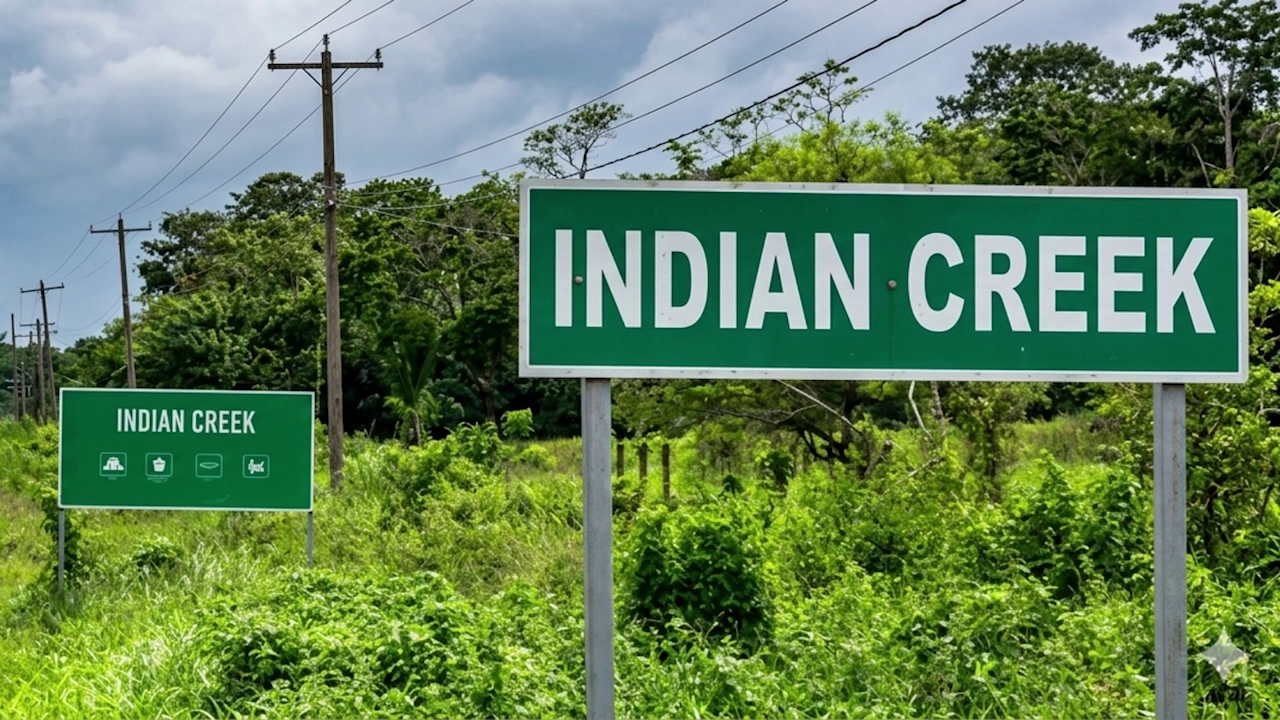
    Nearly a decade of festering, unresolved land tensions in southern Belize’s Toledo District have bubbled into open unrest at Indian Creek Village, forcing a local landowners’ advocacy group to sound the alarm for institutional clarity, public restraint and full accountability as official investigations move forward.

    The recent wave of civil unrest in the small community has dragged long-simmering land conflicts that have plagued the region for years into the center of Belize’s national discourse. Toledo Private and Lease Landowners Ltd., an organization formed to defend the property rights of formal private and lease landholders in the district, says the upheaval in Indian Creek is just the most visible symptom of systemic failures that have allowed uncertainty and competing claims to fester for years.

    In comments on the unfolding situation, Martine King, a representative of the advocacy group, explained that the collective was founded specifically to protect the constitutional property rights of members who hold formal legal claims to their land. “Indian Creek is not an isolated incident — it is just one public example of the tensions that have played out across Toledo for years,” King noted. While she acknowledged that the unrest has finally drawn long-overdue national attention to the crisis, she emphasized that the group rejects all violence, attributing the recent conflict to a persistent lack of clear governing authority and breakdowns in law and order across disputed land areas.

    Fellow organization representative Lisel Alamilla clarified that the immediate situation in Indian Creek has de-escalated, with tensions currently at a standstill as residents and stakeholders wait for official investigation results. She added that the core of the recent unrest stems from internal disharmony within the village governance structure, specifically clashing leadership between the village chairman, the Second Alcalde and other village council members, with the alcalde’s recent actions acting as the immediate trigger for open conflict.

    Alamilla warned against spreading misinformation or unfounded defamation of groups and individuals to advance political or personal agendas, stressing that preserving public safety and upholding the rule of law must be the top priority moving forward. She also shared expectations that once the investigation concludes, officials will hold a public press conference to share full findings with the Belizean public, a step the group says is critical to rebuilding trust and preventing further conflict.

    This report is adapted from a transcribed broadcast news segment originally published online, with comments from speakers originally delivered in Kriol transcribed using a standardized spelling system.

  • San Marcos Land Fight: Title vs. Claims

    San Marcos Land Fight: Title vs. Claims

    A simmering land conflict has emerged in San Marcos, pitting the legal owners of a parcel of property against a small faction pushing traditional ancestral claims to the unused land. The controversy centers on one core, unresolved question: which party holds legitimate right to the territory, and what forces are driving the growing tensions around the dispute.

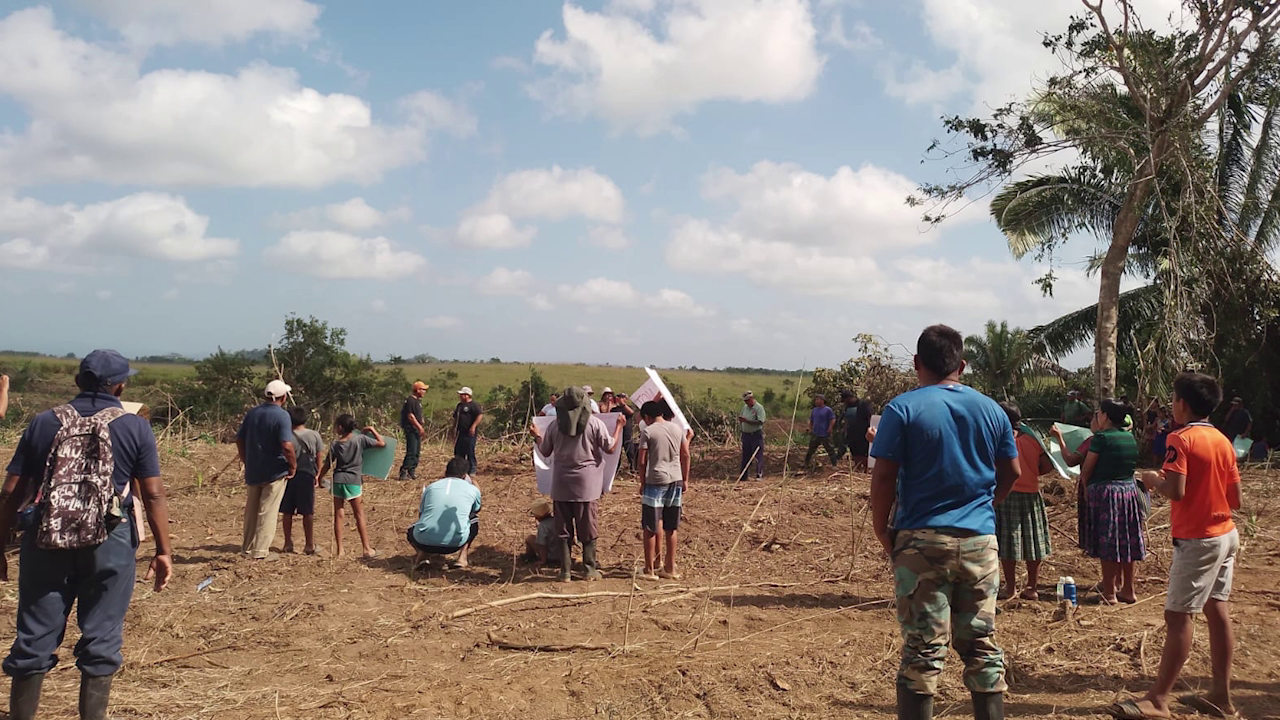
    Per representatives from Toledo Private and Lease Landowners Ltd. (TPLL), the situation is clear-cut: the Tindall family holds full, undisputed legal title to the land in question, and has taken no provocative actions to escalate friction, despite the small group entering the property to assert their claims. Andy Johnson, a spokesperson for TPLL, explained that the claimants’ assertions do not align with the actual facts on the ground.

    Johnson emphasized that the Tindall family, who are of Creole descent, are not clearing undisturbed wilderness for development—they are only restoring previously cleared land for planned agricultural use, including cattle grazing and coconut cultivation. Critically, all of the workers hired for the restoration project are local Maya people, a detail Johnson says undermines narratives that frame the Tindalls as outside aggressors against indigenous interests.

    “The entire community of San Marcos is not party to this claim—only a small disconnected group is pushing this,” Johnson noted in his statement. “They assert this is their traditionally used and occupied customary land, but they have never built any infrastructure, lived on, or developed this property. How can you claim ongoing use and enjoyment of land you have never even occupied?”

    When the claimant group erected unauthorized barbed wire fencing across the Tindall property to mark their claimed territory, the Tindalls responded entirely peacefully. They removed the fencing, rolled it up, transported it back to the claimants via tractor, and returned the materials without any confrontation. “At no point have the Tindalls acted violently, incited tension with the broader community, or engaged in aggressive behavior toward the claimants,” Johnson said. “Their commitment to de-escalation is something we should all recognize and appreciate.”

    TPLL has issued a warning that unsubstantiated land claims and unauthorized incursions carry serious risks: the organization says these actions could unnecessarily escalate a localized disagreement into violent conflict between community groups, putting peace and local stability at risk. The organization has reiterated its call for all parties to resolve the dispute through formal legal channels rather than direct actions that inflame tensions.

    This report is adapted from a transcript of an evening television news broadcast.

  • Transparency Questioned in Caye Caulker Land Deal

    Transparency Questioned in Caye Caulker Land Deal

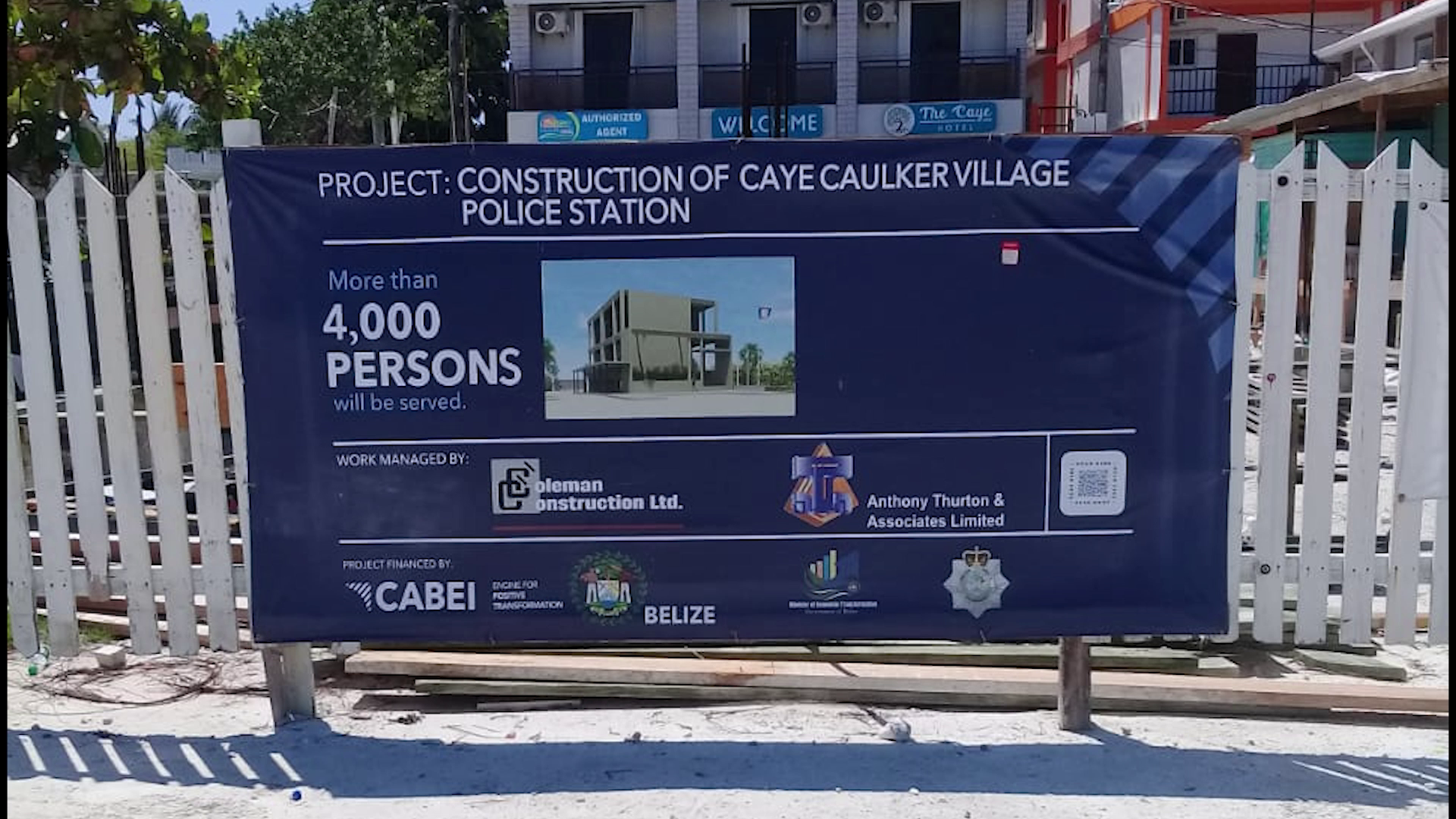
    On April 22, 2026, the ongoing debate over the proposed sale of public land allocated to the Caye Caulker police substation has escalated into a sharp political clash in Belize. During a press conference held by the United Democratic Party (UDP), Senator Gabriel Zetina, the party’s caretaker for the Belize Rural North constituency, launched pointed criticism against Area Representative Andre Perez from the ruling People’s United Party (PUP), calling out what he says is a severe lack of transparency and accountability surrounding the planned transaction.

    According to Zetina, local residents of the popular island community of Caye Caulker were intentionally given misleading information about the proposed land sale. He emphasized that the cancellation of the deal was not the result of proactive government action, but came exclusively from sustained public pressure and mass grassroots protests organized by community members who opposed the transfer.

    In his remarks at the press conference, Zetina referenced Perez’s recent public comments, in which the area representative admitted a formal purchase offer had been submitted and that he had supported opening negotiations over the sale. “What the people of Caye Caulker demanded from the start was transparency and honesty, not transparency that only comes out after you’ve been caught hiding the facts,” Zetina stated. “Now we’re seeing deflection and distraction instead of accountability, and that is completely unacceptable. Residents were explicitly promised a new, upgraded facility for the police substation in exchange for this deal. If the people of Caye Caulker had not stood together, organized, and taken their demands to the streets, there is no question the PUP government would have completed the sale of this public land.”

    Currently, the parcel of land in question is formally registered under the name of the Belize Police Department. Zetina has made a formal demand that the ownership of the land be transferred immediately to the Caye Caulker Village Council, placing the public asset under direct local community control to prevent any future attempts at private sale. This news piece is a direct transcript of an evening television broadcast, with all Creole-language statements transcribed using a standardized spelling system for accessibility.

    The controversy highlights ongoing tensions between political parties in Belize over public land management and community access to government information, with grassroots activism forcing a major policy reversal on the popular tourist island.

  • Kitchen Mishap Sparks Devastating House Fire in San Pedro

    Kitchen Mishap Sparks Devastating House Fire in San Pedro

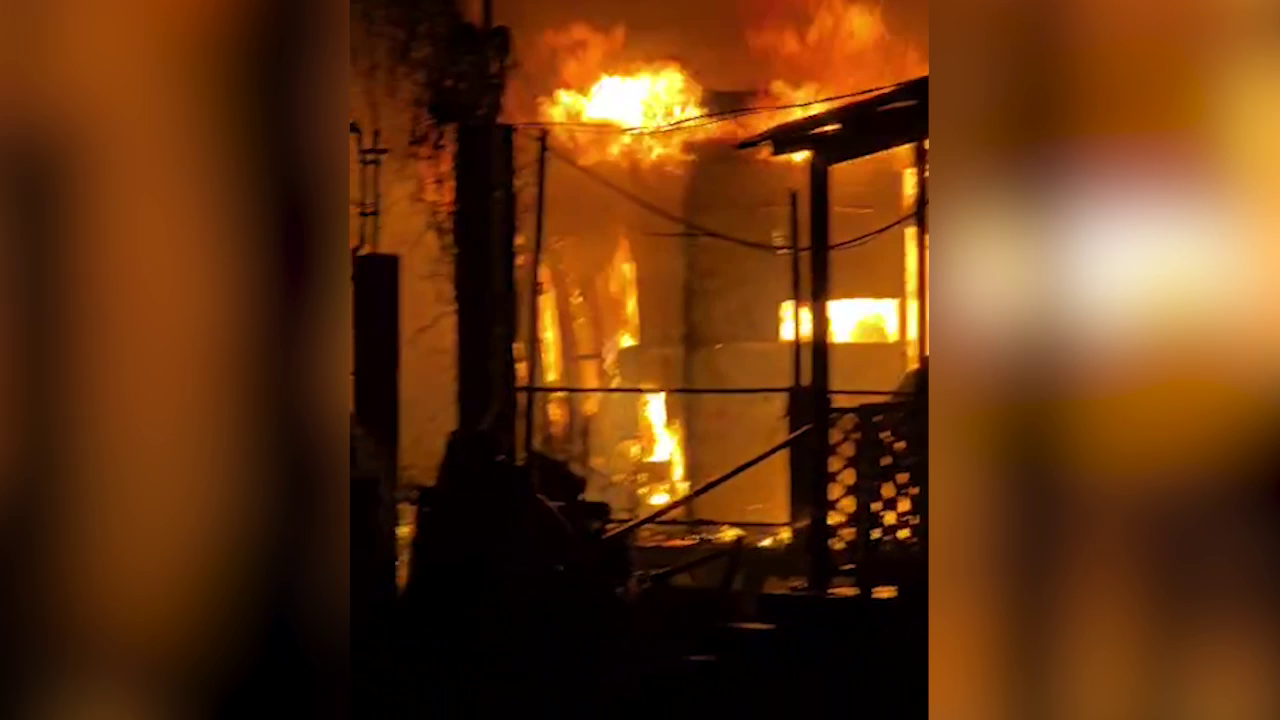
    On a Tuesday evening in late April 2026, a routine cooking stop turned into a catastrophic disaster for a large family residing on Marina Drive in San Pedro. What began as 31-year-old Naisy Chi’s simple task of frying an egg quickly spiraled out of control when the flexible hose connecting to the home’s gas storage tank unexpectedly disconnected from its fitting. Escaping gas immediately ignited on contact with the cooking heat, catching a nearby area rug on fire within seconds. From that small initial spark, flames spread at an alarming rate through the elevated residential structure, racing from room to room faster than residents could contain the blaze.

    Local law enforcement officers were among the first to arrive on scene, arriving mere minutes after the first emergency call was placed. By that point, the entire structure was already fully engulfed in roaring flames that could be seen for blocks around the neighborhood. A team of firefighters, under the direct command of Fire Chief Kenneth Mortis, quickly deployed to the scene and worked aggressively to knock down the blaze and prevent the fire from spreading to adjacent properties. While firefighters successfully extinguished the fire, their efforts could not save the home itself: the structure suffered total, irreversible damage, leaving nothing salvageable from the family’s belongings.

    Miraculously, the outcome could have been far deadlier. Reacting instantly to the outbreak of fire, Chi immediately alerted all other people inside the home to evacuate. In the end, all 19 residents — 10 adults and nine children — were able to flee the burning structure before the fire escalated, and no injuries of any kind were reported among residents or first responders.

    Despite the lucky break of no lost lives or injuries, the long-term outlook for the family remains deeply uncertain. The fire completely destroyed the home and every personal possession inside, and devastatingly, the property was not covered by any homeowners insurance policy to help cover reconstruction or replacement costs. The entire family is now displaced, left without a permanent place to live and facing a long, unclear path to rebuild their lives from scratch.

  • Nurse Baird: “Retention Package Should Be For All Nurses”

    Nurse Baird: “Retention Package Should Be For All Nurses”

    Belize’s government has introduced a new nurse retention initiative aimed at halting the widespread outflow of nursing professionals from the country’s healthcare system, but the policy is already facing sharp criticism for its narrow scope that leaves critical segments of the national nursing workforce excluded from benefits.

    Leading the charge against the plan is Andrew Baird, former executive director of the Nurses Association of Belize, who argues the retention package incorrectly limits incentives exclusively to general public sector nurses, cutting out entire groups that form the backbone of Belize’s healthcare delivery every single day. In Baird’s view, if the government’s stated goal of stabilizing the national healthcare workforce is to be achieved, retention benefits must be extended to three underrepresented groups: nursing staff at Belize’s flagship Karl Heusner Memorial Hospital (KHMH), nurses working at National Health Insurance (NHI) clinics, and all practicing nurses in the private healthcare sector.

    Baird warns that excluding these groups will trigger a damaging cascading effect across the entire healthcare ecosystem. First, underpaid nurses from excluded sectors will leave their current posts to take up public sector roles that offer the new retention benefits, opening up critical gaps in private hospitals, clinics, and the national tertiary hospital. Worse, the unrestricted cross-sector movement will clear a simpler path for experienced, trained nursing professionals to leave Belize entirely for higher wages and better working conditions in other countries, worsening the national nursing shortage.

    “The Nurses Association has a responsibility to negotiate for every nurse across Belize, not just those employed directly by the public service,” Baird explained. “The Minister of Health and the Ministry’s CEO must ensure that any policy brought to Cabinet and any legislation passed includes private sector nurses. Right now, if the bill stays as it is, we will see low-wage private nurses abandon private hospitals to move to the public sector, which will create a whole new set of crises for private healthcare facilities. To create a fair, balanced labor market for all nursing professionals, the package must be fully inclusive.”

    Turning specifically to KHMH, the country’s only national tertiary care facility, Baird noted that nursing staff at the hospital already carry an extraordinary workload: they serve not only as the national referral center for complex care across Belize, but also function as the primary secondary hospital for the entire Belize District, meaning they work far more demanding hours than many other public sector nurses across the country. Even now, the hospital is already seeing nurses leave for other public sector roles, and the exclusion from the retention package will only accelerate this harmful outflow, Baird said.

    Baird’s overall assessment is uncompromising: by targeting retention support to just a subset of the nation’s nurses, the government will end up solving one small problem while creating a far larger crisis across the entire healthcare system, ultimately putting patient care across Belize at risk.