作者: admin

  • Belize Plans Ahead to Secure Village Water

    Belize Plans Ahead to Secure Village Water

    As small rural communities across Belize face steadily rising water demand driven by population growth, shifting economic activity, and a changing climate, the country has wrapped up the foundational planning phase for a major initiative to protect long-term access to clean, reliable drinking water for these populations.

    Led by the Belize Social Investment Fund (BSIF), the cross-partner project has completed all community and technical consultations for a first-of-its-kind targeted water demand study focused exclusively on 21 rural villages that have historically faced gaps in water infrastructure planning. The study moves far beyond basic current supply checks: it combines on-the-ground usage data collected in partnership with local stakeholders with long-term projections to ensure new infrastructure will meet community needs for decades to come.

    Unlike many infrastructure projects that size systems only for current population levels, this initiative built collaboration into every step of the process. BSIF worked hand-in-hand with the University of Belize, the Ministry of Rural Transformation, and local Village Water Boards to collect accurate, community-specific data. Village Water Boards, which manage local water systems on the ground, contributed critical local insight that shaped the scope and design of the plan, ensuring it addresses on-the-ground priorities rather than top-down assumptions.

    Rico Nurse, project coordinator at BSIF, explained that the study’s multi-factor projection model accounts for far more than just population growth. “The consultation allowed the University of Belize to determine current water consumption across these 21 villages, then apply projections that factor in population growth, expanding economic activity, and the impacts of climate change to estimate water demand 5, 7, and 10 years from now,” Nurse said. This data directly informs the sizing of water disinfection equipment that will be installed under the project, eliminating the common pitfall of underbuilding infrastructure that becomes obsolete within a few years of completion.

    “This gives us certainty for the public investment we’re making on the ground,” Nurse added. “We can be confident the equipment capacity will match the needs of these communities long into the future.”

    The finalized plan will roll out in phased implementation starting in the coming months, with full completion of infrastructure deployment targeted for mid-2027. The project represents a proactive approach to rural water security, addressing future challenges today to avoid service disruptions and unsafe drinking water shortages as Belize’s rural populations evolve.

  • Heated Land Dispute Draws Three Ministers to San Marcos

    Heated Land Dispute Draws Three Ministers to San Marcos

    On April 24, 2026, escalating tensions over a contested land parcel in southern Belize’s San Marcos Village prompted three high-ranking government officials to travel to the Toledo District to mediate between conflicting parties. The confrontation has pitted local Maya residents against a private landowner, with the community claiming the territory is held as communal land to which all villagers should retain legal access. According to local residents, the private landowner has recently expanded activities beyond agreed boundaries, encroaching on the land the community has long relied on for collective use.

    As public concern over the standoff grew, Dr. Louis Zabaneh, Minister of Indigenous People’s Affairs, led the government’s on-site intervention, accompanied by Oscar Requena, Area Representative for the district, and Oscar Mira, Minister of Home Affairs. The delegation’s primary priority was to hear unfiltered concerns directly from San Marcos residents and prevent the simmering disagreement from boiling over into open conflict.

    Following a closed-door talks with community representatives, Dr. Zabaneh outlined the government’s approach in an on-the-record interview. “We held a very candid and respectful discussion of the issues,” he explained. “We did both an in-depth look at the situation on the ground in San Marcos where the residents are claiming that a private land owner is impinging on areas that should be communal land or land that residents should have access to. Then we looked at the broader picture of the process ahead with the review panel and how we can move forward towards a resolution.”

    Zabaneh noted that community members spoke openly and passionately about their longstanding connection to the land and their concerns over the encroachment. Following the meeting with villagers, the ministerial delegation planned to hold a separate negotiating session with the private landowner, with the explicit goal of identifying common ground for compromise. The ultimate objective, Zabaneh stressed, is to de-escalate immediate tensions and work toward a permanent, mutually acceptable long-term resolution to the conflict. “We are trying at least, we don’t know how it will transpire. But we are giving it our best shot,” he added.

    The local landowners’ association, Toledo Private and Lease Landowners Limited, has pushed back against the community’s claims. In a statement ahead of the mediation, the group confirmed that the family holding the legal title to the disputed parcel has not taken any action to provoke tensions, asserting that the landowner is only carrying out restoration work on territory that had been cleared previously.

    This report is adapted from a transcript of an evening television newscast, originally published online.

  • Solar Power Brings New Hope for Water Security in Rural Belize

    Solar Power Brings New Hope for Water Security in Rural Belize

    Across the rural landscapes of Belize, access to consistent, clean water has long been a daily gamble for thousands of residents, exacerbated by worsening climate volatility that brings longer droughts and more unpredictable rainfall patterns. Now, a landmark $10 million international climate adaptation initiative is set to transform this reality for four vulnerable communities, bringing solar-powered innovation and holistic water management to the region.

    Approved in October 2025, the five-year Solar Ecosystem Adaptation for Water Security (SEAM) project targets four high-need communities: Boom Creek, Dolores, Otoxha, and Copper Bank. When fully implemented, the initiative will expand improved water access to more than 1,800 rural residents, offering a long-term solution to growing climate-related water insecurity that has threatened livelihoods and public health for years.

    Dr. Juana Garcia Saqui, project coordinator at Belize’s Protected Areas Conservation Trust (PACT), framed SEAM as a transformative milestone for the country’s climate resilience and rural development progress.

    “This isn’t just a one-off infrastructure project,” Dr. Garcia Saqui explained. “We’re tackling the core challenge of reliable safe water access amid climate change by integrating multiple solutions into one cohesive strategy: cutting-edge solar technology, large-scale ecosystem restoration, inclusive community governance, and support for sustainable livelihoods.”

    Half of the project’s $10 million budget comes from the Adaptation Fund, a global climate finance body that supports developing countries in building climate resilience. This marks the third time the Adaptation Fund has backed Belize’s national efforts to strengthen climate preparedness across vulnerable regions. PACT leads implementation of the initiative in partnership with Belize’s Ministry of Rural Transformation, which oversees on-the-ground execution.

    Carlos Pol, CEO of Belize’s Ministry of Economic Transformation, emphasized that the project goes far beyond installing new water infrastructure. The core of the project is the design and construction of hybrid solar-powered water systems that will deliver a consistent, sustainable water supply to all residents across the four target communities.

    In addition to new water infrastructure, SEAM includes targeted ecosystem rehabilitation work designed to protect long-term water resources. These efforts cover watershed restoration, large-scale reforestation, and agroforestry initiatives that not only safeguard water supplies but also support livelihoods, with a particular focus on lifting up women and other marginalized vulnerable groups in the target communities.

    “Through SEAM, these communities are no longer just coping with water scarcity,” Pol noted. “They’re building a future where water access is certain, where systems are resilient rather than fragile, and where all residents can count on this fundamental resource to thrive.”

    This report is a transcript of a televised evening news broadcast, with Kriol-language statements transcribed using a standardized spelling system for accessibility.

  • Ministry of Defense delivers equipment to the Army to strengthen operational capabilities

    Ministry of Defense delivers equipment to the Army to strengthen operational capabilities

    In a formal ceremony held at the Dominican Republic’s “August 16th” Military Camp, the nation’s Ministry of Defense has formally transferred a large shipment of upgraded military gear to the Dominican Republic Army, marking a key milestone in the government’s ongoing campaign to modernize and strengthen the country’s national defense institutions.

    The handover ceremony was led by Defense Minister Lieutenant General Carlos Antonio Fernández Onofre of the Dominican Republic Army, with the shipment officially accepted by Army Commanding General Major General Jorge Iván Camino Pérez. Senior defense officials including Deputy Defense Ministers, the Armed Forces Inspector General, and members of the Armed Forces General Staff and high military command were in attendance, signaling broad institutional backing for the armed forces’ modernization agenda.

    Per an official press statement from the defense ministry, the equipment delivery is executed in full alignment with directives issued by Dominican Republic President Luis Rodolfo Abinader Corona, who serves as the supreme authority over the nation’s Armed Forces and National Police. The shipment forms a core component of the administration’s broader institutional strengthening and modernization drive for the country’s military.

    The new equipment will be distributed to seven key frontline units critical to national defense and internal security: the 1st Battalion “Juan Pablo Duarte”, 2nd Battalion “Francisco del Rosario Sánchez”, 3rd Battalion “Matías Ramón Mella” under the First Infantry Brigade, as well as the Army’s elite Commando Battalion.

    The full shipment includes a range of advanced firearms: IWI ARAD 5.56-caliber assault rifles, Negev 7.62-caliber machine guns designed for integration with patrol vehicles and transport platforms, precision rifles from Barrett and Daniel Defense, alongside more than 11,000 custom work uniforms manufactured domestically by the Dominican Military Industry, plus a range of additional operational supplies.

    This deployment of new equipment is rooted in the administration’s long-term strategic vision to build a more modern, efficient, and rapidly responsive Dominican Armed Forces. The upgrade is designed to boost the operational readiness of frontline troops and optimize their performance across a wide range of operational scenarios.

    Military officials note that the integration of these new weapons and systems represents a substantial leap forward in military technology for the Dominican Army, bringing improvements to operational reliability and adaptability that will directly enhance the effectiveness of military units as they carry out their core national defense and security missions.

  • Doing More: How One Dangriga School Is Setting the Standard

    Doing More: How One Dangriga School Is Setting the Standard

    Since 2023, Belize’s Ministry of Education, Culture, Science and Technology (MOECST) has challenged primary and secondary institutions across the country through its MoRE (Ministry of Education Recognition) Campaign. The initiative pushes schools to extend learning beyond traditional classroom walls across five core pillars: digital learning, student health, inclusive education, community involvement, and creative skill-building. Participating schools document their outreach and extracurricular efforts, accumulate points based on the scope and impact of their work, and earn national recognition for going above and beyond standard academic requirements. Today, one small primary school in the Stann Creek District town of Dangriga has emerged as the campaign’s national leader, outscoring every other participating institution in the country to set a new benchmark for what community-centered education can achieve. That school is Epworth Methodist Primary School.

    Walk through the halls and outdoor spaces of Epworth Methodist, and it is immediately clear that learning here extends far beyond textbooks and standardized tests. The campus buzzes with purpose-driven activity, from cultural preservation groups to skill-building clubs that bring students, parents and local community members together as equal participants.

    One of the school’s most beloved student groups is the GAMAE club, which centers Garifuna cultural heritage through a integrated framework of Arts, Medicine, Agriculture and Education. Nine-year-old Evonay Lopez, who has been part of the group since 2025, says the club has let her develop artistic skills while connecting to her roots. “I’ve learned a lot of songs and a lot of dances,” she explained, echoing the sentiment shared by fellow member Nila Mckoy. “I love being in this group because I love talking Garifuna. I love singing and dancing, and I love the history of Garifuna,” Mckoy shared.

    Beyond cultural programming, Epworth’s roster of student-led clubs builds practical, marketable skills that students can carry into adulthood. The school’s crochet club walks students through turning raw yarn into finished handmade goods, with one young student sharing that she completed a beautiful scarf over just three days of focused work. The braiding club centers Black hair education and styling as a cultural and professional skill, with parents actively participating in workshops alongside their children. “You’ll notice that all of our hair is 4C hair. But these are just beautiful styles that they’re beginning to learn and this is an improvement because by the time they’re in their future, they already have talent and businesses that they can start,” explained parent Phrislee Palacio.

    The school’s chess club hones critical thinking and strategic problem-solving, while the recycling club turns everyday waste into useful products to teach environmental stewardship. Under the leadership of coordinator Charles Diaz, students transform discarded plastic water pouches into reusable tote bags, carrying cases, and even handcrafted hammocks. Parent and volunteer Renelyn Tulcey notes that the project delivers a clear, actionable lesson for students and the broader community: “Our world could definitely be a better place if we learn how to use recycled materials—or reuse them.” The school even maintains its own on-campus garden, where students grow fresh fruits and vegetables to learn agricultural skills and sustainable food practices.

    This expansive, community-integrated model of education is not a sudden shift for Epworth—it is the product of nearly a decade of intentional vision from principal Felecia Zuniga Palacio. Palacio emphasizes that high-quality education cannot be delivered by school staff alone; it requires active buy-in and participation from the entire community. “Why is it important that we do more? It takes more than just teachers and students and the principal to run a school. It takes the community and we want to share with our stakeholders who have that faith in us that we are doing more to ensure that our children have quality and sound education here at Epworth Methodist school,” Palacio said.

    The school’s innovative approach has not gone unnoticed by education leaders. Stann Creek District Education Manager David Cano confirms that Epworth has emerged as a trailblazer for the MoRE Campaign across the country. “Epworth is one of the schools in this district that is leading the adoption of the MoRE Program. I believe they have more submissions than others in the district and perhaps leading the country as well in primary schools,” Cano noted. Last year, Epworth secured the top spot nationally with a total of 285 MoRE Campaign points, becoming the first school in Dangriga to earn the program’s official recognition banner—an honor that included a personal visit from the Minister of Education.

    For Cano, the impact of Epworth’s work extends far beyond the walls of the school itself. The MoRE Campaign’s ultimate goal is to shape a new generation of well-rounded Belizean citizens, and Epworth’s model proves that goal is achievable through community collaboration. “We want to create a citizen of Belize that is involved, that is knowledgeable, that is creative, who can problem solve and works well,” Cano explained.

    Unlike many institutions that wait for external investment to expand student opportunities, Epworth Methodist Primary School has built its transformative model from within, leveraging local community resources and parent engagement to lift up its students. In doing so, it has set a national standard that every primary and secondary school across Belize can aspire to match. Primary and secondary schools across Belize can participate in the MoRE Campaign year-round by submitting their programming through the official MOECST website at moecst.gov.bz/more.

  • Mario Díaz proposes halting motorcycle imports

    Mario Díaz proposes halting motorcycle imports

    In Santo Domingo, Dominican Republic, prominent union leader and legal professional Mario Díaz has doubled down on his demands for urgent nationwide action to address growing public safety threats tied to the country’s vehicle fleet. Speaking on long-unenforced provisions of national traffic legislation, Díaz has stressed that full, immediate implementation of mandatory technical vehicle inspections for all registered vehicles on Dominican roads is non-negotiable as a foundational first step.

    Beyond mandatory inspections, Díaz is pushing for two additional sweeping policy changes to tackle growing risks tied to two-wheeled vehicles: an indefinite ban on all new motorcycle imports into the country, and far stricter, more consistent oversight of the existing national motorcycle fleet. These enhanced controls, he argues, would ensure that every motorcycle on the road meets proper safety standards, holds valid registration, and remains subject to consistent regulatory oversight — gaps that he says have created widespread public risk.

    Díaz has explicitly linked the unregulated proliferation and indiscriminate use of motorcycles across the Dominican Republic to two pressing national crises: a steady rise in criminal activity and a persistently high rate of fatal and injurious traffic accidents. He emphasized that these unaddressed issues have caused irreversible harm to innocent lives and eroded public confidence in citizen safety across the country, calling the ongoing situation an unacceptable public scourge.

    To move toward meaningful reform, Díaz confirmed that the sector he represents stands ready to partner fully with national law enforcement agencies and the Dominican government to design and roll out effective, evidence-based solutions. Even as he offers collaboration, however, he has made clear that no comprehensive fix can succeed without starting with the core priorities he has outlined: full implementation of mandatory technical vehicle inspections and uniform, strict oversight of the entire national motorcycle fleet.

  • More than 54 000 receive first cost of living cash credit payments

    More than 54 000 receive first cost of living cash credit payments

    Barbados’ flagship cost of living support programme has successfully completed its first round of payments, delivering much-needed financial relief to more than 54,000 eligible residents across the island, the National Insurance and Social Security Service (NISSS) confirmed in an official announcement Friday evening. A total of $5.4 million has been disbursed to registered qualifying recipients, with payments processed and issued this Monday, according to NISSS Chief Executive Officer Kim Tudor.

    Designed to counter rising household expenses, the Cost of Living Cash Credit (COLCC) provides $100 in monthly assistance to qualifying low-income and senior residents for a full 12-month period. Funded through the national Consolidated Fund, the initiative is overseen by NISSS on behalf of the Ministry of Finance, with outreach efforts already underway to expand access to every eligible Barbadian, regardless of their location.

    Breaking down the first round distribution, Tudor explained that just under 30,000 beneficiaries received their funds via direct bank transfer, while more than 24,000 were sent physical cheques through the postal service. Eligible groups covered in this initial disbursement include existing NIS and public sector pensioners, individuals receiving special needs grants, and seniors aged 65 and older who do not currently receive any form of pension income. Separate payments for April were issued directly to general welfare recipients through the Social Empowerment Agency (SEA), Tudor added.

    In a statement highlighting the agency’s longstanding commitment to Barbadians, Tudor emphasized: “We said we would deliver and we did. Every eligible registered beneficiary received their $100 by direct bank deposit or cheque. This is NISSS doing what it has done for over fifty-eight years: honouring its commitment to the people of Barbados.”

    As of last Thursday, a further 1,189 people have completed new registrations for the programme, a surge that followed targeted community registration drives held at three accessible locations: the Speightstown Resource Centre on Queen’s Street in St Peter, SEA’s Six Roads office in St Philip, and the Southern Plaza location in Oistins, Christ Church. Tudor stressed that the government is committed to reaching eligible residents outside of the capital’s central corridor, noting: “The COLCC is for every eligible Barbadian — not just those who live near Bridgetown. We are taking registration to where people are, and we will continue to do so until every eligible person has been reached.”

    For added convenience, residents can also verify their eligibility and complete the registration process online through the official programme portal at colcc.nis.gov.bb. To complete registration, applicants must present a valid national government-issued photo ID. Those opting for direct deposit are also required to provide a recent bank statement head to confirm their account details.

    NISSS is currently urging two specific groups to prioritize registration: seniors aged 65 and older who are still waiting for their pension applications to be approved, and individuals who will turn 65 between the programme’s launch date of April 1 this year and March 31, 2027. “These groups are eligible to receive the COLCC from the month of their 65th birthday until March 2027,” Tudor confirmed.

    Per the programme’s scheduling rules, any new applications submitted after April 20 will not be processed until the next monthly payment cycle on May 20, with the first payment including all retroactive funds owed for April. The full programme runs for the entire current fiscal cycle, from April 1 2025 through March 31 2027, and is subject to renewal by government ministers after the initial term.

  • BWU awaits probe into fatal quarry accident that killed worker

    BWU awaits probe into fatal quarry accident that killed worker

    A deadly workplace accident at Barbados’ ReadyMix Lears quarry has left one worker dead and three others injured, prompting a formal joint investigation by national labour authorities and law enforcement that the Barbados Workers Union (BWU) is closely monitoring as it waits for official findings. The incident, which unfolded last week when a piece of heavy work equipment being set up by on-site employees suddenly collapsed, trapped four workers under the structure, killing one at the scene. Since the tragedy occurred, the BWU has moved quickly to engage with workers and company leadership to ensure affected employees receive the mental health and practical support they need.

    During an occupational health and safety conference hosted by the BWU this Friday, senior industrial relations officer Janelle Farley shared a public update on the union’s response to the incident, speaking with local outlet Barbados TODAY to outline the sequence of actions taken over the past week. “Within hours of the incident being reported, our team traveled directly to the quarry site to speak with workers who were present, check on their immediate well-being, and gather first-hand accounts of what occurred,” Farley explained. “The following day, we returned to join a company-wide general meeting between management and staff, where leadership laid out their planned approach to addressing the tragedy and supporting affected teams.”

    At present, full responsibility for the formal probe into the incident’s root causes rests with the Barbados Labour Department and national police force. Farley noted that thorough workplace accident investigations require time to complete, and the BWU will remain on standby to participate in follow-up processes once official recommendations are released. “We expect this investigation will take several weeks to wrap up, after which the competent authority will share formal conclusions and next steps with the company,” she said. “As the representative body for the workers, we expect to be included in all discussions moving forward, but for now we must wait for the official findings.”

    To date, both ReadyMix and the BWU have prioritized mental health support for all workers impacted by the traumatic event. According to Farley, the quarry operator has already stepped up to provide free counselling to any employee who wants support, and has committed to covering all care and costs for injured workers and their families, commitments the BWU confirmed during its post-incident meeting with management. “The company has followed through on its initial promises to treat injured workers and arrange counselling for all staff who were affected by what happened,” Farley said. “Any worker that requested counselling has received it, and management has made clear they will stand by the injured workers and the family of the deceased worker.”

    BWU general secretary Toni Moore opened the health and safety conference by extending formal condolences to all those touched by the tragedy, emphasizing the profound ripple effect that a fatal workplace accident has across an entire work community. “Our hearts go out to the family of the worker who lost their life, to the workers who sustained injuries, and to every single person who was on site that day,” Moore said. “This is an unimaginable shock: you work alongside a colleague one minute, and the next you are doing everything you can to resuscitate them, only to lose them, while others are hurt. The entire worksite feels this loss, and we stand with all of you as you process it.”

  • Tree planting push for climate future

    Tree planting push for climate future

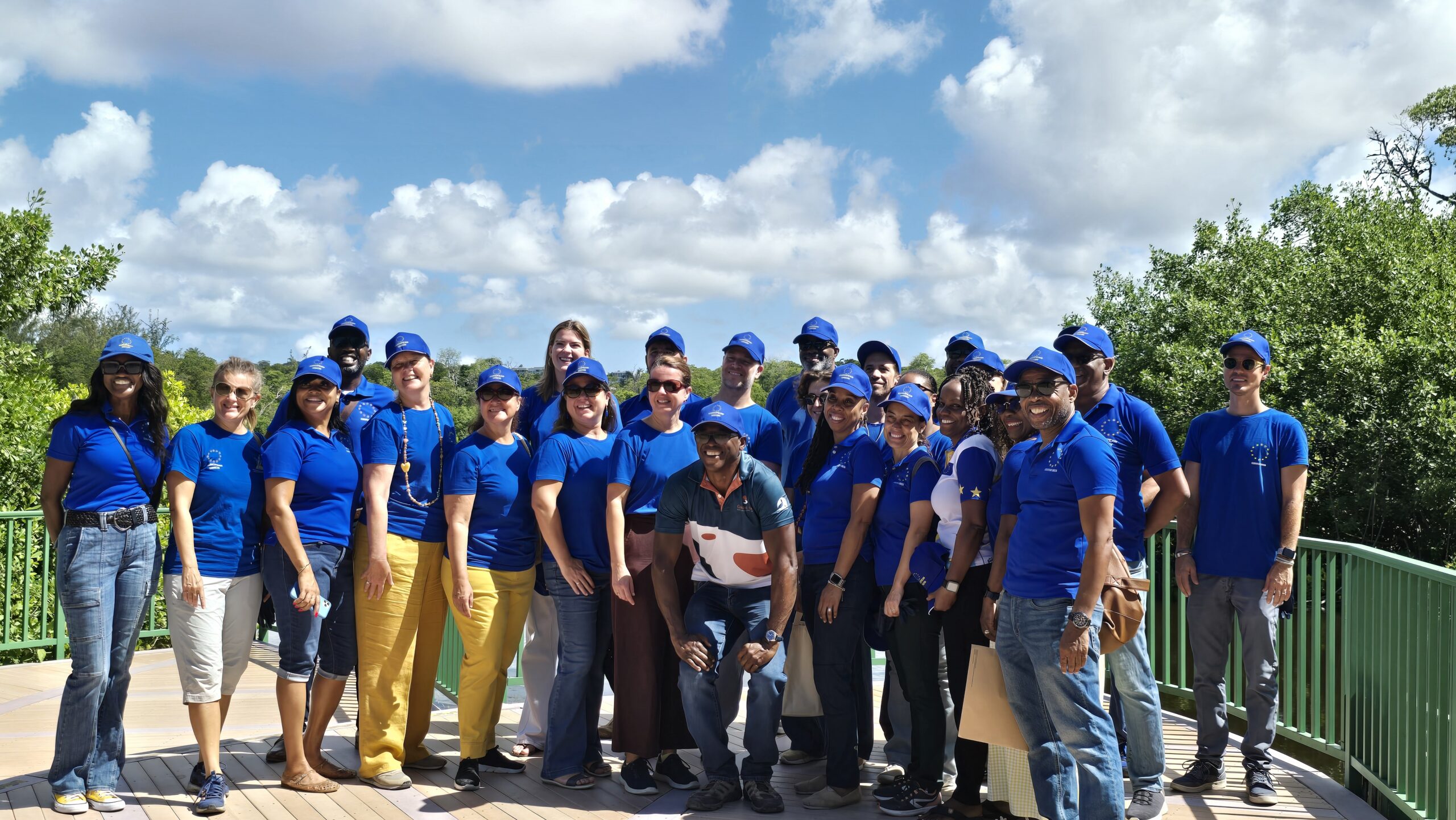
    On the occasion of Barbados’ observance of World Arbour Day and the 50th anniversary of the European Union’s diplomatic presence on the island, the EU’s top representative to Barbados has emphasized that widespread tree planting across the small Caribbean nation is a critical step to cut its carbon footprint and boost environmental resilience.

    Friday’s commemorative activities kicked off with the ceremonial planting of 30 native tree saplings at the Graeme Hall Nature Sanctuary, a sprawling protected wetland and wildlife habitat that serves as one of Barbados’ most important biodiversity hubs. EU Ambassador to Barbados Fiona Ramsey used the event as a platform to reaffirm the bloc’s commitment to placing sustainability at the heart of all its global policy and partnership initiatives, highlighting the EU’s longstanding leadership in international climate action.

    “Across global climate forums, the European Union has led efforts on ambitious climate policy, scaled up green climate financing, and built actionable partnerships that deliver real progress on decarbonizing energy systems and global supply chains, protecting vulnerable biodiversity, and sustainable management of coastal ecosystems,” Ramsey told attendees at the event. She framed the small-scale tree-planting exercise as far more than a symbolic gesture, describing it as a tangible, hands-on contribution to safeguarding Barbados’ unique natural environment.

    “As the EU delegation here in Barbados, we are delighted to make this modest but deeply personal contribution to protecting the island’s natural heritage, preserved for future generations right here at the Graeme Hall Nature Sanctuary,” she added. Ramsey explained that the 30 trees planted Friday are all indigenous species selected to support the local ecosystem, noting that expanded tree cover delivers far-reaching benefits beyond climate action, including improvements to public health and overall community well-being.

    The initiative aligns with a national tree-planting target first announced by Barbadian Prime Minister Mia Mottley in 2019, which set a goal of planting one million new trees across the island by the end of the initiative. Ramsey stressed that this ambitious national goal carries extra weight for small island developing states like Barbados, which are among the nations most vulnerable to the worst impacts of human-caused climate change. Expanded tree coverage directly supports these nations’ climate resilience, long-term economic stability, and sustained prosperity, she added.

    Against a backdrop of accelerating global climate change, Ramsey warned that the climate crisis is not a distant future threat, but an immediate daily reality for Caribbean communities. “Rising global temperatures, more frequent and intense extreme weather events, and growing environmental pressure – these are not abstract concerns for future generations. They are immediate, everyday challenges that demand urgent, consistent action from all stakeholders,” she said.

    The ambassador also voiced growing concern over ongoing deforestation across Barbados driven by expanding commercial development and residential housing construction. She praised Mottley’s one million tree target as a critically important step forward, noting that robust tree cover serves three core functions for small island nations: it protects fragile soil from erosion, acts as natural carbon sinks to absorb greenhouse gas emissions, and expands biodiversity by creating native habitats for local wildlife.

    Ramsey emphasized that consistent, intentional tree replacement efforts are just as critical as new planting initiatives. “It is essential to protect mature, established trees in their natural environments, but we also have a responsibility to continuously renew tree stocks as older trees die off. That is exactly what we are doing here today: planting new saplings that will take decades to reach full maturity, but will deliver decades of environmental, social, and economic benefits for the people of Barbados over their lifetime.”

    Beyond Friday’s planting at Graeme Hall, the EU delegation plans to partner with local community and environmental organizations across Barbados to plant an additional 20 trees, bringing the total number of new trees planted for the anniversary initiative to 50.

    Geoffrey Roach, general manager of the Graeme Hall Nature Sanctuary, echoed Ramsey’s comments on the climate benefits of expanded tree planting, noting that the protected sanctuary already holds significant carbon reserves. “Graeme Hall has always been committed to environmental stewardship, and we are incredibly grateful for this partnership with the European Union to expand our carbon capture capacity through today’s tree and native shrub planting. We want to encourage all Barbadians to recognize the critical role individual and collective action plays in reducing the island’s carbon footprint,” Roach said.

    Roach also echoed the ambassador’s concern over tree loss tied to Barbados’ ongoing residential development boom, noting that as construction expands across the island, natural tree cover is steadily lost. “To preserve our natural environment and expand biodiversity, we all need to adopt a far more intentional, conscious approach to replacing that lost tree cover through consistent planting efforts,” he added. Roach also shared that the Graeme Hall Nature Sanctuary is actively seeking to deepen partnerships with a wide range of public and private organizations to expand its environmental work, which extends well beyond tree planting to include a broad portfolio of conservation initiatives across the island.
  • Berger Shutdown: Workers exit as union flags ‘irregularities’

    Berger Shutdown: Workers exit as union flags ‘irregularities’

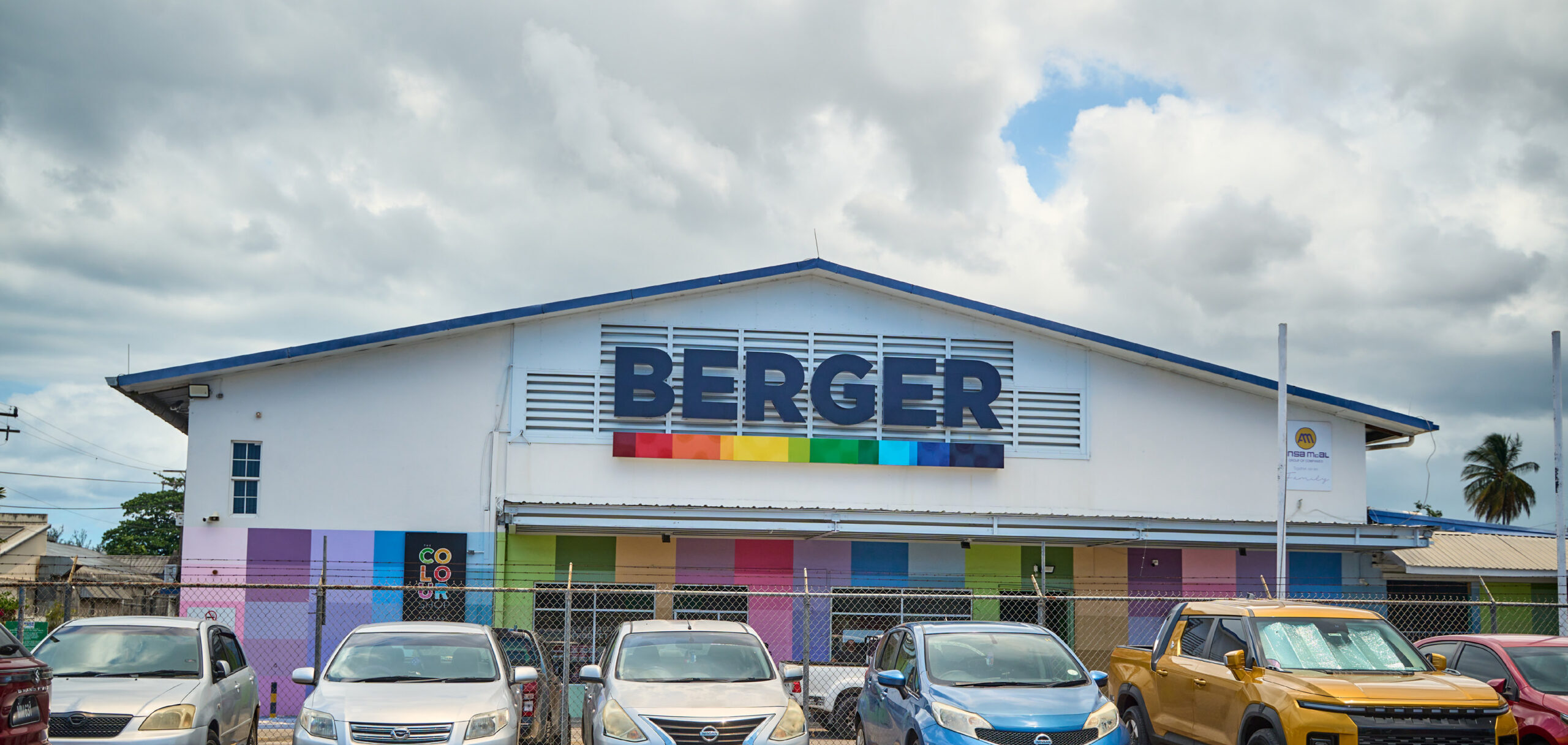
    The permanent shutdown of Berger Paints’ Barbados manufacturing facility on Friday April 24 has pushed 44 longtime employees into sudden unemployment, with the Barbados Workers’ Union (BWU) now escalating demands to block full corporate dissolution of the firm until all outstanding worker entitlements are resolved.

    For workers like Rodney Wilkinson, the closure brings an abrupt end to a decades-long career that shaped much of his adult life. Wilkinson joined the company straight out of high school and spent 33 years on the job, building deep personal bonds with colleagues while relying on his steady income to support his four children — two of whom are still young enough to attend nursery and primary school. He first learned of the permanent closure while out on medical leave, a surprise announcement that many workers received for the first time when the company publicized the shutdown plan back in February.

    Wilkinson recalled that his team of co-workers had grown into a tight-knit extended family over the years, watching each other’s children grow up and build their own lives. Losing that workplace community has left him heartbroken, he said, even with the one-time severance payout he received upon exit. “Many people assume a severance check provides long-term security, but that money disappears almost immediately once you cover utility bills, school costs, and everyday family expenses,” he explained. Despite the upheaval, Wilkinson remains optimistic, framing the job loss as a major life change rather than an endpoint: “Life goes on, and we have to keep moving forward.”

    Beyond the personal disruption of mass unemployment, multiple labor disputes remain unresolved between the company, the union, and the affected workers. BWU General Secretary Toni Moore told reporters on Friday that three key cases are already pending before the national Employment Rights Tribunal, centered on stalled wage negotiations and unequal incentive payments. Moore confirmed that non-union employees at the facility received full incentive payouts, while union-member workers were denied these funds — a disparity that has not been corrected in the final severance payments workers received last week.

    Union representatives also identified widespread calculation irregularities in the final payment documentation provided to exiting workers, leaving many undercompensated for owed entitlements. None of the funds distributed to date address the outstanding wage negotiation claims or the unequal incentive payment dispute, Moore added.

    Following a Friday meeting with Barbados’ Minister of Labour Colin Jordan, the BWU received an official update on the conciliation process outlined in the country’s Employment Act, a structured dispute resolution framework that uses a neutral third-party conciliator to help negotiating parties reach a mutually acceptable agreement. Over the past two weeks, union leaders have held multiple direct talks with company representatives to push for resolution of the outstanding claims, but no agreement has been reached.

    To pressure the company to address worker grievances, the BWU is calling on government agencies to halt the full corporate dissolution of Berger Barbados until all disputes are resolved fairly. The union has formally requested that the Ministry of Labour issue official notices to all relevant government bodies, including the Corporate Affairs and Intellectual Property Office (CAIPO), to block the dissolution process until the workers receive the justice and fair compensation they are owed.