作者: admin

  • Markoesaproject moet impuls geven aan nationale landbouwproductie

    Markoesaproject moet impuls geven aan nationale landbouwproductie

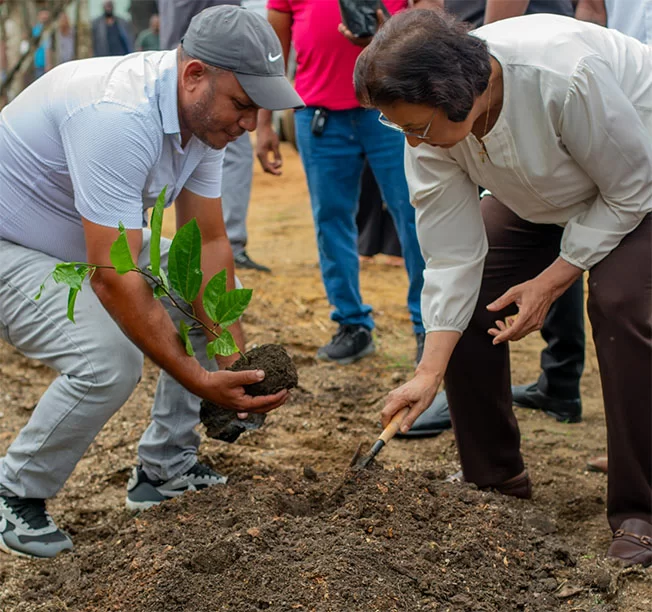
    On April 24, Suriname’s President Jennifer Simons launched the transformative Markoesa (Passion Fruit) Outgrowers Project in Groningen, Saramacca, kicking off a national initiative designed to strengthen domestic agricultural output and drive inclusive economic development across the South American nation.

    At the launch event, President Simons planted the first passion fruit vine to mark the project’s start, emphasizing that expanding local agricultural production remains a core pillar of Suriname’s long-term economic growth strategy. She framed the initiative as a landmark step in the country’s new national development direction, which centers on increasing meaningful participation of local Surinamese residents in domestic production sectors.

    The project, developed through a partnership between the Ministry of Agriculture, Livestock and Fisheries (LVV) and the Suriname Labour Intelligence Platform, is specifically designed to advance two key national priorities: poverty reduction and job creation. President Simons noted that sustainable poverty alleviation can only be achieved when communities are given accessible opportunities to generate their own independent incomes. By creating new formal jobs and encouraging small-scale agribusiness entrepreneurship, the passion fruit project directly advances these goals, she said.

    In her remarks, the president extended particular encouragement to young Surinamese to explore careers and business opportunities in the agricultural sector. “Food security is a permanent national need. The agricultural sector will always remain vital, and it offers real, sustainable opportunities to build a stable income,” Simons stated, according to official remarks from the Suriname Communication Service. She also expressed public appreciation for the farmers who have already joined the project, and called on more Surinamese to consider entering the agribusiness space.

    To expand access to the sector for new entrants, the Surinamese government is currently working with LVV to develop frameworks that will make unused agricultural land available to aspiring farmers who do not yet own their own plots. For current project participants, who already hold land rights, the initiative provides targeted guidance and training to help them maximize productivity on their existing parcels. President Simons also emphasized that strict oversight will be enforced to ensure productive use of all allocated land: “If allocated land is left unplanted, the contract will be terminated so that other aspiring producers can get the opportunity to use it,” she clarified.

    Beyond passion fruit cultivation, the Surinamese government plans to scale this outgrower model to other high-potential agricultural products in the coming months. President Simons linked the push for expanded local production to the country’s rapidly growing oil and gas sector, noting that as domestic demand for food rises alongside broader economic growth, it is critical that Surinamese producers capture the benefits of this increased demand. She warned that failing to scale up local output would lead to greater reliance on food imports and higher consumer prices for domestic households. At the same time, Simons highlighted untapped export opportunities for Surinamese agricultural products, particularly in regional Caribbean markets.

    The passion fruit outgrower project will eventually be expanded to other districts across Suriname, according to government plans. Beyond hands-on agricultural training, the initiative provides participating farmers with a key guarantee: a secured market outlet for their harvest, ensuring they can reliably generate income from their production.

  • Unidentified Decomposed Body Found Behind Port of Belize

    Unidentified Decomposed Body Found Behind Port of Belize

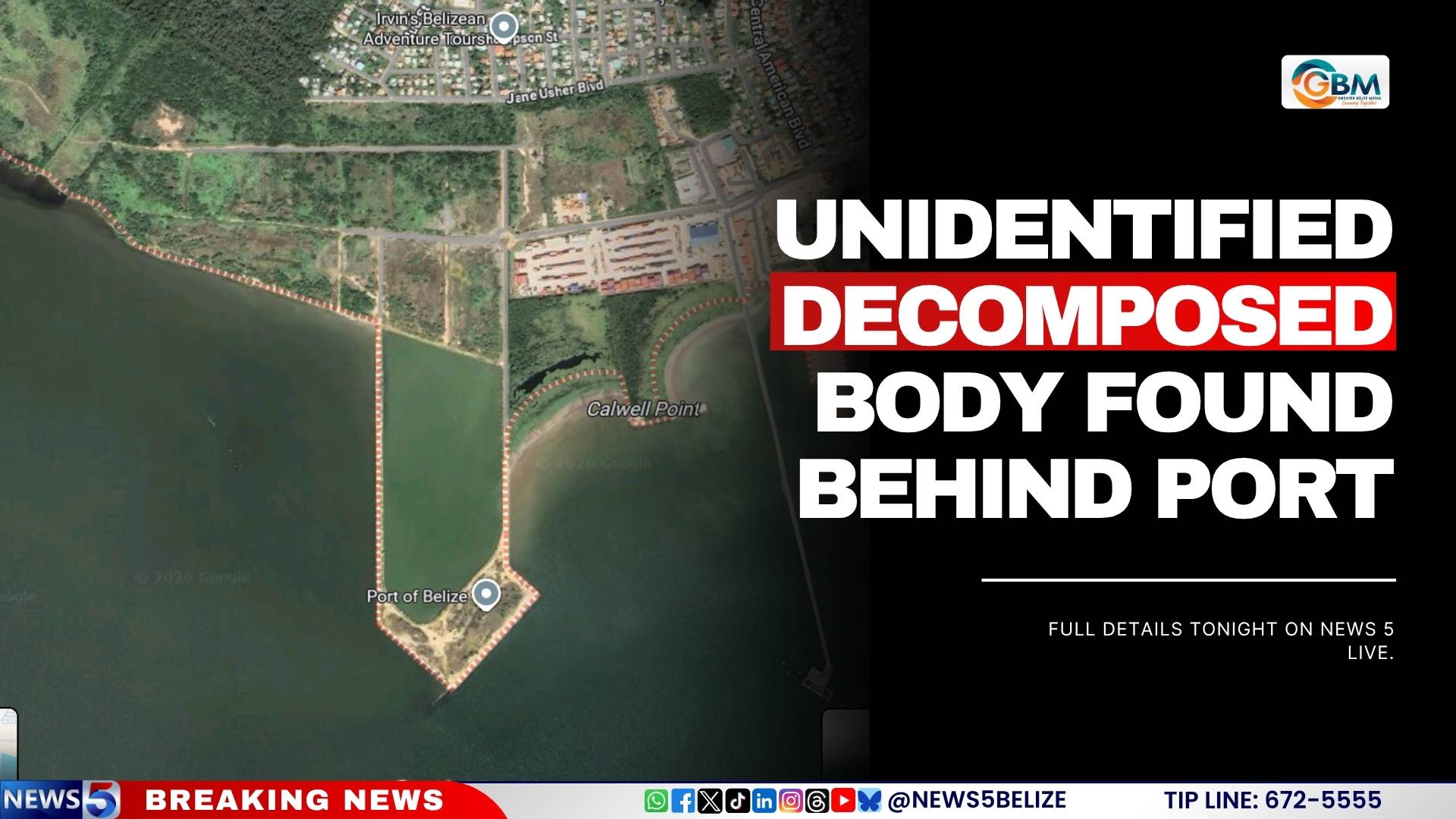
    On April 24, 2026, law enforcement officials in Belize confirmed the recovery of an unidentified decomposed male body found earlier that day in a location behind the Port of Belize, situated in the country’s old capital city.

    When first responders arrived at the scene to process the discovery, they documented that the remains were found wearing casual clothing: a plain black T-shirt, khaki trousers, and a pair of black-and-white Nike athletic sneakers. No forms of identification were located near the body to help confirm the individual’s identity immediately.

    Since the deceased cannot be linked to a known person at this stage of the process, investigators have officially registered the case under the placeholder name John Doe. The remains have already been moved to the morgue operated by the Belize National Forensic Services Laboratory, where a full post-mortem examination is scheduled to take place. Forensic pathologists will conduct a thorough analysis to pinpoint the exact cause and time of death, key details that will guide the ongoing criminal investigation.

    Local law enforcement has confirmed that they are actively working to uncover the full circumstances leading up to the man’s death, and have not released any further updates on potential persons of interest or case leads at this time. As the investigation progresses, additional information will be made public once it is cleared for release by investigative teams.

  • More Aviation Fuel Found in Neuland

    More Aviation Fuel Found in Neuland

    In a developing investigation into international drug trafficking activity in northern Belize, authorities have uncovered a stockpile of suspected contraband aviation fuel that points to a far larger, ongoing smuggling operation than initially thought. Belize Police Commissioner Dr. Richard Rosado publicly confirmed Wednesday that law enforcement teams discovered 15 containers holding what is believed to be illicit aviation fuel during a patrol of the Neuland community in Corozal District on Tuesday. Alongside the fuel cache, investigators also found an unauthorized lighting system set up in the remote area, which they say was intentionally installed to facilitate unregulated nighttime aircraft landings in the region. The discovery comes just weeks after a landmark joint anti-drug operation between Belizean law enforcement and global partner agencies intercepted a drug-carrying narco-plane in the same general area. That operation seized more than 1,000 pounds of high-purity cocaine, with an estimated street value of approximately $11 million, and led to the immediate arrest of the aircraft’s two crew members: Mexican nationals Edgar Aguilar and Paul Valenzuela, identified as the plane’s pilot and co-pilot respectively. The pair remain in custody awaiting trial on charges of drug importation and violations of Belizean immigration law, with court proceedings ongoing. Investigators say the latest find of pre-staged fuel and landing lighting confirms their early hypothesis that the intercepted narco-flight was not an isolated incident. Instead, the cached supplies indicate that trafficking groups had planned multiple drug shipments via air into Belize, with the fuel and infrastructure prepared to support repeated landing operations. Full updates on the expanding investigation will be broadcast during tonight’s primetime broadcast of News 5 Live.

  • Football clubs to receive financial tips

    Football clubs to receive financial tips

    In an innovative, first-of-its-kind initiative led by the Barbados Football Association (BFA), amateur football clubs across the Caribbean island are on the cusp of sweeping improvements to their long-troubled financial and administrative operations. BFA General Secretary Nicholas Branker shared details of the groundbreaking project in an interview with local outlet Barbados TODAY, just days ahead of the association’s much-anticipated Club Development Clinic, scheduled to take place this Saturday at the BFA’s Technical Centre.

    Unlike traditional one-off informational workshops that often leave clubs without actionable follow-through, this clinic is the product of a collaborative partnership between the BFA and key private sector stakeholders, including the business development agency Business Barbados, as well as multiple commercial banks and credit unions across the country. Branker explained that the move directly addresses repeated pleas for help from local clubs, which have long struggled to meet the legal requirements for formal operation and stable financial management.

    The core goal of the initiative is to guide participating clubs through two critical foundational steps: formal registration as non-profit entities, and the successful establishment of dedicated club bank accounts. What sets this program apart from past outreach efforts is its hands-on, on-site completion model. Rather than leaving clubs to navigate complicated bureaucratic processes on their own after a general presentation, organizers are bringing all necessary resources directly to the clinic. Business Barbados will deploy mobile registration servers to the venue, allowing clubs to complete their entire registration process during the event itself, cutting through red tape and eliminating the common problem of unfinished applications that get lost in bureaucratic backlogs.

    Branker noted that local clubs have already responded with overwhelming enthusiasm to the initiative, with many reaching out ahead of the event to ask which representatives they should send to get the most out of the workshop. To clear up common confusion, Branker clarified that rather than sending coaching staff, clubs should dispatch the individuals who will act as official bank signatories and hold the documentation required for non-profit registration. These are the decision-makers that can complete the process on-site and carry forward the new governance framework after the clinic.

    Branker extended public gratitude to all participating partners for their commitment to the project, noting that the representatives from Business Barbados, financial institutions, and the Prime Minister’s Cup are volunteering their time on a weekend, when they would otherwise be focused on their regular operations. This cross-sector collaboration marks a significant turning point for local football governance, with the potential to create a more transparent, sustainable foundation for club growth across Barbados.

  • BEL Heads to Court Over Severance Fight

    BEL Heads to Court Over Severance Fight

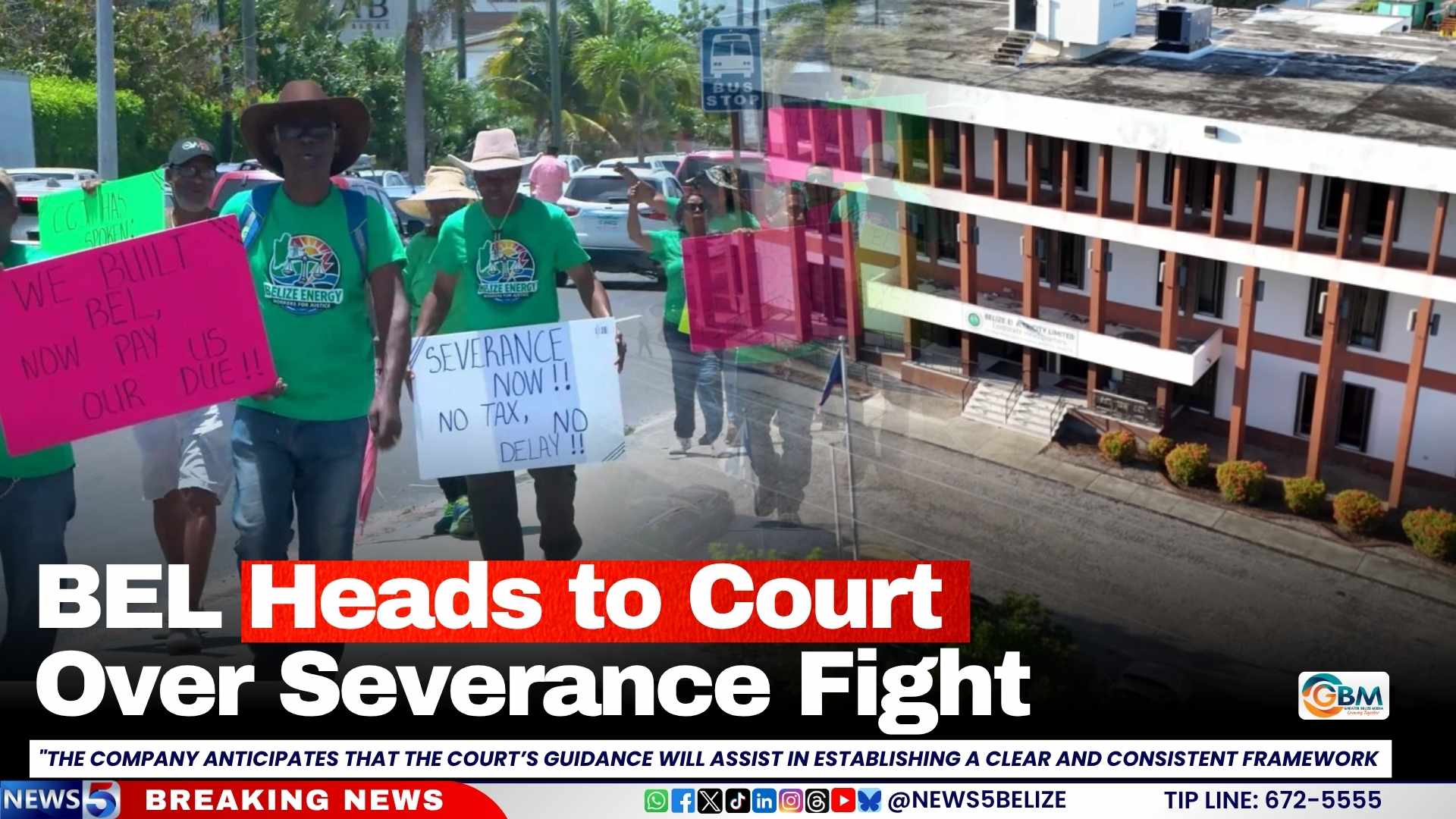
    A contentious conflict over unequal severance payout practices at Belize Electricity Limited (BEL) is set for a judicial resolution, after the state-linked utility confirmed this week it will ask the nation’s High Court to clarify binding legal standards for its severance obligations.

    In an official public statement released April 24, 2026, BEL announced it had initiated legal proceedings to seek declaratory relief from the court, alongside formal guidance on how recent unrelated labor rulings should be interpreted and applied to the company’s ongoing severance disputes. The utility emphasized that its decision to turn to the judiciary is rooted in a commitment to upholding legal compliance, transparent process, and equitable outcomes for all parties involved.

    “By obtaining clear direction from the court, we aim to build a consistent, predictable framework that will resolve current claims and guide how we address all future severance requests,” the statement read.

    The legal action caps weeks of growing tension between BEL and its former workforce, which escalated sharply last week when internal documents were leaked to the public. The released records revealed that senior company executives received substantial exit packages when they left the firm, while rank-and-file former workers were granted far smaller payouts or denied severance entirely in some cases.

    This revelation amplified long-simmering criticism from labor advocates and former employees, who have repeatedly raised alarms about unequal treatment and inconsistent application of severance policies across different employee tiers at BEL. What began as scattered individual claims has now evolved into a high-profile dispute that tests the company’s commitment to workplace fairness, and will ultimately set a legal precedent for severance practices across Belize’s utility sector.

  • UPP Shows Contempt for the People by Failing to Produce a Manifesto, says ABLP

    UPP Shows Contempt for the People by Failing to Produce a Manifesto, says ABLP

    As Antigua and Barbuda prepares to head to the polls for its upcoming general election, the ruling Antigua and Barbuda Labour Party (ABLP) has launched sharp criticism of the opposition United Progressive Party (UPP), accusing the challenger of blatant disrespect for voters by refusing to release an official policy manifesto ahead of the vote.

    With voting days fast approaching, the UPP has failed to put forward any actionable policy proposals, structured governing programs, detailed cost breakdowns for its pledges, or any formal commitment that would allow the electorate to evaluate the party’s agenda or hold its leaders accountable after the election, according to ABLP’s statement. Despite having produced no formal policy platform of its own, the opposition has nonetheless moved to criticize the ABLP’s recently released manifesto – attacks that ABLP describes as baseless, lacking in specific evidence, and completely disconnected from any meaningful alternative vision for the country.

    The ABLP argues that this lack of action and hollow criticism amounts to nothing more than distracting political noise, not the serious, purpose-driven leadership that the country requires. For any political party seeking to govern, a published manifesto serves as the fundamental foundation for earning public trust: it is the document that lays out what a party intends to do if elected, giving voters a clear standard to judge candidates against. The UPP is actively asking Antigua and Barbudans for their electoral support, yet it has refused to share any concrete details about what it would deliver if given power, the ABLP says.

    In contrast to the opposition’s inaction, the ABLP highlights that it has released a comprehensive, detailed manifesto that has been widely distributed across the country and made available in multiple accessible formats for all voters. The document lays out the ABLP’s verifiable track record of responsible governance during its current term, paired with a clear, actionable five-year plan to advance the country moving forward.

    The ABLP emphasizes that the choice before voters is unambiguous: they can select a leadership team with a proven track record of delivery and a detailed plan for the future, or opt for an opposition that offers nothing more than unfounded criticism and no governing agenda. The party adds that the UPP’s failure to release a manifesto is far from a simple administrative oversight. Instead, it is a deliberate choice that reflects a fundamental lack of seriousness about governing, a rejection of the basic accountability that all political parties owe voters, and an intentional act of contempt for the people of Antigua and Barbuda whose support the UPP is currently courting.

  • Taylor promoted to ICC panel

    Taylor promoted to ICC panel

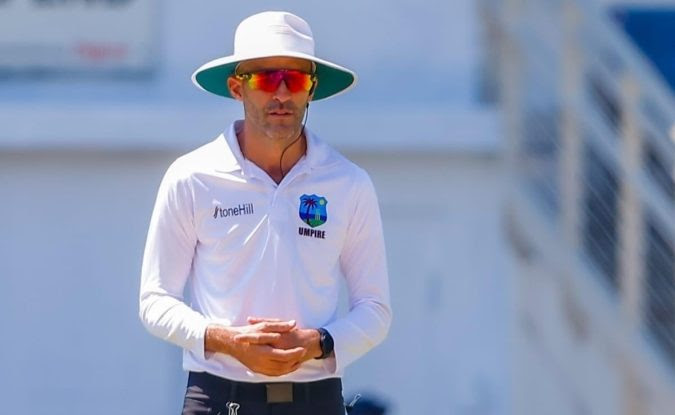
    A new milestone for West Indies cricket officiating has been announced, as Jamaican umpire Christopher Taylor will step onto the global stage with his appointment to the International Cricket Council’s (ICC) International Panel of Umpires. The appointment is set to take effect on April 1, 2026, capping off decades of dedicated service and rigorous training for the 45-year-old official.

    Taylor earned his promotion after becoming the latest Cricket West Indies (CWI) representative to successfully complete the ICC’s stringent umpire accreditation process. His path to the international panel received a major boost earlier this year, when he gained high-stakes international match experience through the ICC Umpire Exchange Programme. During that placement, he officiated matches in Pakistan’s prestigious President’s Trophy Grade 1 competition, where match officials and organizers graded his on-field performance as outstanding.

    In reflecting on his decades-long journey to the international panel, Taylor shared that he feels both humbled and honored by the achievement. His officiating career first began in 2006, when he took his initial local umpiring certification alongside Jacqueline Williams, who has since become one of the most respected international women’s cricket umpires globally. Back when he started, Taylor was still working full-time in the corporate sector, and was introduced to officiating by former first-class umpire Maurice Chung. What started as a side interest quickly grew into a passion.

    “It’s been a long and tough journey,” Taylor noted, pointing out that he has served on the West Indies regional second-tier umpiring panel since 2011. “Those tough times prepare you for what’s to come. So, I’m excited about it and looking forward to experiencing new things and putting all the work into practice.”

    Beyond celebrating his own achievement, Taylor used the moment to shine a light on a career path that is often overlooked by young cricket enthusiasts. Most people who grow up around cricket only consider careers as players, leaving officiating underpromoted as a viable professional option. “Umpiring might not be seen as a glorious position because when persons are exposed to a sport it’s usually in the capacity of a player and not an official. In any sport officiating is always tough… but that builds character,” he explained.

    Taylor emphasized that modern umpiring offers a full, sustainable career path for young people, and he is encouraging aspiring officials across the Caribbean to consider the profession far earlier than he did. “There is opportunity in umpiring. It’s now a full career that you can dedicate yourself to, and I’d love to see younger persons getting into it, not only when they get into their 30s and 40s but even thinking of it as an option when they’re 18 or 20 years old or coming out of university,” he said.

    CWI Chief Executive Officer Chris Dehring also offered his praise for Taylor’s achievement, calling the appointment a point of national and regional pride. “Chris’ appointment reflects not only his personal commitment and professionalism, but also the strength of our officiating pathway,” Dehring said. “His recent international exposure and consistent performances have prepared him well for this step, and we are confident he will represent West Indies cricket with distinction.”

    Taylor will kick off the next chapter of his officiating career during the upcoming West Indies international home season, where he will make his first on-field appearance as an ICC international panel umpire.

  • Saturday showdown in BFA Premier League

    Saturday showdown in BFA Premier League

    The tightest title race in recent memory of the Barbados Football Association Premier League is set to reach a new climax this Saturday, when a pivotal doubleheader at the Wildey Technical Centre could reshape the league standings and install a new table-topper ahead of the season’s final stretch.

    Going into the two back-to-back matches, which get underway at 7 p.m. local time, the current hierarchy has defending champions Weymouth Wales holding a narrow one-point advantage at the top of the table with 28 total points. Just one point adrift in second place sits Paradise, while last season’s league runners-up Brittons Hill has climbed to third place with 26 points. That upward shift came on the back of a convincing 2-0 clean sheet win over Bagatelle earlier this week.

    Fourth place belongs to Kickstart Rush with 24 points, while Ellerton rounds out the top five with 23 points. All standings point to a conclusion that will go down to the wire: league officials do not expect a champion to be confirmed before the final matchday of the campaign, leaving multiple teams still in contention for the top prize.

    The first match of Saturday’s night of action pits second-place Paradise against sixth-ranked Bagatelle, a fixture that could see Paradise immediately overtake Weymouth Wales to retake the top spot if they secure all three points. Coached by Mario Harte, the Dover-based Paradise side has turned in one of its most consistent campaigns in years this season, putting them as the clear favorite heading into the matchup against Bagatelle. The current sixth-place side, which finished as runners-up in Division One last season after earning promotion, enters the clash with 14 points to its name.

    The nightcap, kicking off at 9 p.m., will bring one of the most high-stakes matches of the entire season: table-leading Weymouth Wales will go head-to-head with third-ranked Brittons Hill in a clash that carries massive implications for the title race. For Weymouth Wales, a win guarantees they will hold onto their position atop the standings as the league enters its final few rounds. If Brittons Hill claims victory and Paradise drops points against Bagatelle, the side will jump straight into first place. Even if Paradise wins their opening fixture, a Brittons Hill victory over the current leaders would still lift them into second place, keeping their title hopes very much alive.

  • Caribbean think-tank to brainstorm major regional, global issues

    Caribbean think-tank to brainstorm major regional, global issues

    As the global order continues to shift rapidly, bringing overlapping challenges to small and medium-sized states across the Americas, a leading Guyanese research institution is preparing to bring together cross-border experts to unpack pressing regional and international concerns.

    The Centre for International and Border Studies (CIBS), a Georgetown-headquartered think tank focused on cross-border and global policy issues, will host its flagship two-day conference on May 14 and 15 this year, held at the Herdmanston Lodge in the nation’s capital. Designed to accommodate a wide range of attendees regardless of geographic barriers, the gathering will operate as a hybrid event, welcoming both in-person guests and remote participants joining via digital platforms.

    Organized under the overarching theme “Navigating The Future: Guyana, the Caribbean and Latin America in a Changing Global Environment”, the conference will create space for rigorous critical discussion of four core priority areas: deepening regional integration progress, advancing inclusive sustainable development across the hemisphere, unpacking the evolving geopolitical landscape of the Americas, and addressing other emergent pressing international issues shaping the region’s trajectory.

    The lineup of presenters and panelists draws top expertise from across the Americas and beyond. Attendees will hear from U.S. academic Dr. Scott McDonald, former United Nations official Dr. Bertrand Ramcharan who also serves as Chancellor of the University of Guyana, and multiple lecturers from the University of the West Indies: Dr. Kai-Ann Skeete, Dr. Marlon Anatol, and Dr. Jacqueline LaGuardia Martinez. Two prominent Brazilian scholars, Paulo Correa of the Federal University of Amapa and Ambere Freitas of Brazil’s Roraima Federal Institute, will also contribute analysis, alongside a roster of seasoned regional experts including Carl Greenidge, Dr. Ulric Trotz, Dr. Clement Henry, Neville Bissember, and CIBS’ current director Dr. Mark Kirton.

    Founded as a collaborative transnational network, CIBS counts a diverse global membership of academics, policy professionals, and practitioners hailing from across Latin America and the Caribbean, as well as the United States, Asia, and Africa. The upcoming conference marks a key effort to bridge cross-regional expertise and generate actionable insight for navigating the uncertain global shifts facing the Western Hemisphere in the coming years.

  • Caribbean Fisheries Forum hosts 24th regular session ahead of ministerial meeting

    Caribbean Fisheries Forum hosts 24th regular session ahead of ministerial meeting

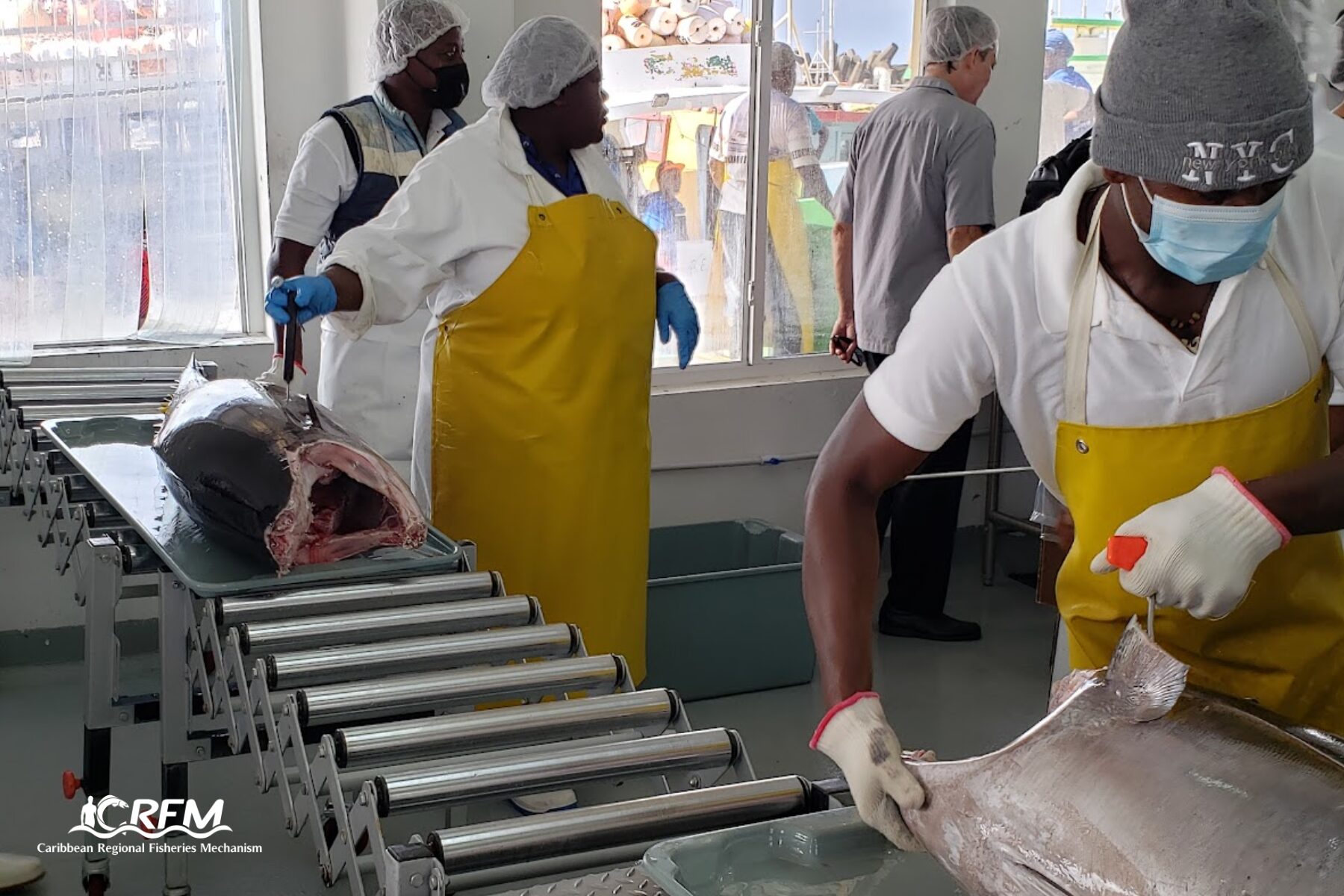
    Leaders of fisheries management agencies from 17 Caribbean Community (CARICOM) member jurisdictions have gathered this week for the 24th Regular Meeting of the Caribbean Fisheries Forum, a key regional body that delivers expert technical guidance to the Caribbean Regional Fisheries Mechanism (CRFM). The two-day gathering kicked off on Thursday, April 23, with opening deliberations centered on the CRFM’s upcoming Seventh Biennial Work Plan, covering the 2026–2027 period. This strategic document lays out a comprehensive framework to drive inclusive, sustainable growth of fisheries and aquaculture sectors across the entire Caribbean region. On the meeting’s second and final day, agenda items are focused on assessing evolving regional and global industry shifts, as well as analyzing current status and emerging trends in Caribbean fisheries and aquaculture.

    In opening remarks, Dr. Marc Williams, Executive Director of the CRFM, underlined that cross-border collaboration is non-negotiable for Caribbean fisheries management, given that most commercial fish stocks span multiple national jurisdictions. Williams explained that the forum fills a critical regional need by creating a centralized platform for member states to share standardized fisheries data, coordinate collective responses to shared threats, and align policy frameworks that balance marine resource protection with the economic stability of fishing-dependent communities. Key challenges being addressed through this cooperative framework include illegal, unreported, and unregulated (IUU) fishing, the accelerating impacts of climate change on marine ecosystems, widespread habitat degradation, and chronic overexploitation of vulnerable fish populations. He added that the forum also works to strengthen cross-stakeholder partnerships between national governments, local fisherfolk associations, academic research institutions, and environmental non-governmental organizations, with goals of harmonizing national management plans, boosting regulatory enforcement capacity, and securing international donor funding for collaborative regional projects.

    On the first day of the meeting, members held leadership elections to select new officers for the forum. Mr. Ian Horsford, Chief Fisheries Officer of Antigua and Barbuda, secured election to the position of Forum Chair. He succeeds outgoing Chair Mr. Remone Johnson of the Turks and Caicos Islands, who completed his term ahead of the 2024 gathering. In his first remarks following the election, Horsford reaffirmed the CRFM’s central role in advancing multilateral cooperation to build a more sustainable Caribbean fisheries sector and grow the region’s blue economy.

    Across the two-day meeting, participating delegates are focusing discussion on a range of priority topics tied to long-term sustainable management of fisheries and aquaculture. Key themes under deliberation include climate change adaptation strategies for fishing communities, the adoption of innovative new technologies to improve management and production, and the integration of renewable energy solutions into regional seafood supply chains. Delegates are also exchanging approaches to strengthening the fight against IUU fishing and transnational fisheries-related crime, as well as advancing gender mainstreaming initiatives to ensure more inclusive participation of women in the fisheries sector.

    A core part of the forum’s mandate at this meeting is delivering technical guidance for two new regulatory protocols being rolled out under the CARICOM Common Fisheries Policy: one focused on establishing standardized regional marine spatial planning, and a second covering full traceability for aquatic food products moving across regional borders. Delegates are also reviewing alignment of regional policies with major global agreements, including the World Trade Organization Fisheries Subsidies Agreement, the Biodiversity Beyond National Jurisdiction (BBNJ) Agreement signed under the United Nations Convention on the Law of the Sea, and the new International Legally Binding Instrument on plastic pollution.

    This week’s Caribbean Fisheries Forum meeting serves as a technical preparatory gathering ahead of the 20th Regular Meeting of the CRFM Ministerial Council, an upcoming high-level summit that will bring together cabinet-level fisheries ministers from all CRFM member states to set strategic political direction for the regional body.