作者: admin

  • Lloyd  Pool herkozen als voorzitter ABPLAZ en wijst op urgente problemen personeel

    Lloyd Pool herkozen als voorzitter ABPLAZ en wijst op urgente problemen personeel

    On April 25, a decisive union election at the Academic Hospital Paramaribo delivered a clear mandate to incumbent leader Lloyd Pool, who won a new term as chair of the General Union of Staff of the State-Owned Academic Hospital Paramaribo (ABPLAZ) by a wide margin. Pool secured 403 votes, outpacing challenger Mireille Tolud, who garnered 121 votes, in balloting and vote counting held at the hospital’s on-site auditorium.

    This re-election will kick off Pool’s tenth consecutive year leading the labor organization, a tenure that reflects sustained trust from union members. In his first remarks after the result was confirmed, Pool extended gratitude to voters for their continued confidence in his leadership. “Today you have once again shown that ABPLAZ retains your full support,” he told attendees. “We have put in hard work over past years, but we will redouble our efforts to deliver for every member moving forward. Progress can only happen when we stand together, and that is the approach we will keep.”

    Despite the clear election victory, Pool did not shy away from outlining the major challenges the union will face in his new term, identifying fair compensation for hospital staff as the most pressing issue the organization must tackle. “The core problem is funding,” he explained. “Hospital employees are not paid in line with their contributions and the cost of living, which has driven a steady outflow of skilled workers to other sectors or countries. Staff should earn enough to be able to build stable lives and own homes, and that is our non-negotiable priority.”

    Beyond higher base wages, Pool also pledged to push for measurable improvements to workplace conditions and expanded secondary benefits for all ABPLAZ members. For years, the union has also been advancing a land subdivision project that will provide affordable housing opportunities for hospital staff, a initiative that has been developed in partnership with external stakeholders. Pool announced that the union will once again formally request government support to unblock the project and move it to official, full-scale development.

    In closing, Pool emphasized that widespread recognition of healthcare workers’ critical contributions remains just as important as policy and wage gains. “Every single healthcare worker plays an irreplaceable role in our community,” he said. “My hope is that we can achieve fair wages and the public recognition our staff deserve, which will stop the outflow of skilled talent that is hurting our hospital and the patients who rely on it.”
  • News 5 Facebook Poll Shows Overwhelming Rejection of New Bus Fares

    News 5 Facebook Poll Shows Overwhelming Rejection of New Bus Fares

    Scheduled to go into effect this coming Monday, a government-approved bus fare increase in Belize has sparked widespread public anger, with a recent informal social media poll showing nearly unanimous opposition from daily commuters who rely on public transit.

    The new pricing structure, approved by Belize’s Cabinet and the Ministry of Transport, grants the Belize Bus Association (BBA) permission to raise rates to 18 cents per mile for regular routes and 20 cents per mile for express services. While the per-mile increase appears modest at first glance, the cumulative cost adds up sharply for passengers making long-distance trips on a daily basis. The southern long-distance route between Punta Gorda and Belize City — a 160-mile one-way trip — will see regular one-way fares capped at $39, jumping to $78 for a round trip. Express service on the same route will cost commuters $87 round trip, a notable jump from previous pricing. For the 89-mile Corozal to Belize City run, regular service will cost $15.25 one-way ($30.50 round trip), while express trips will run $18.50 one-way ($37 round trip), with similar increases rolled out across all regional routes.

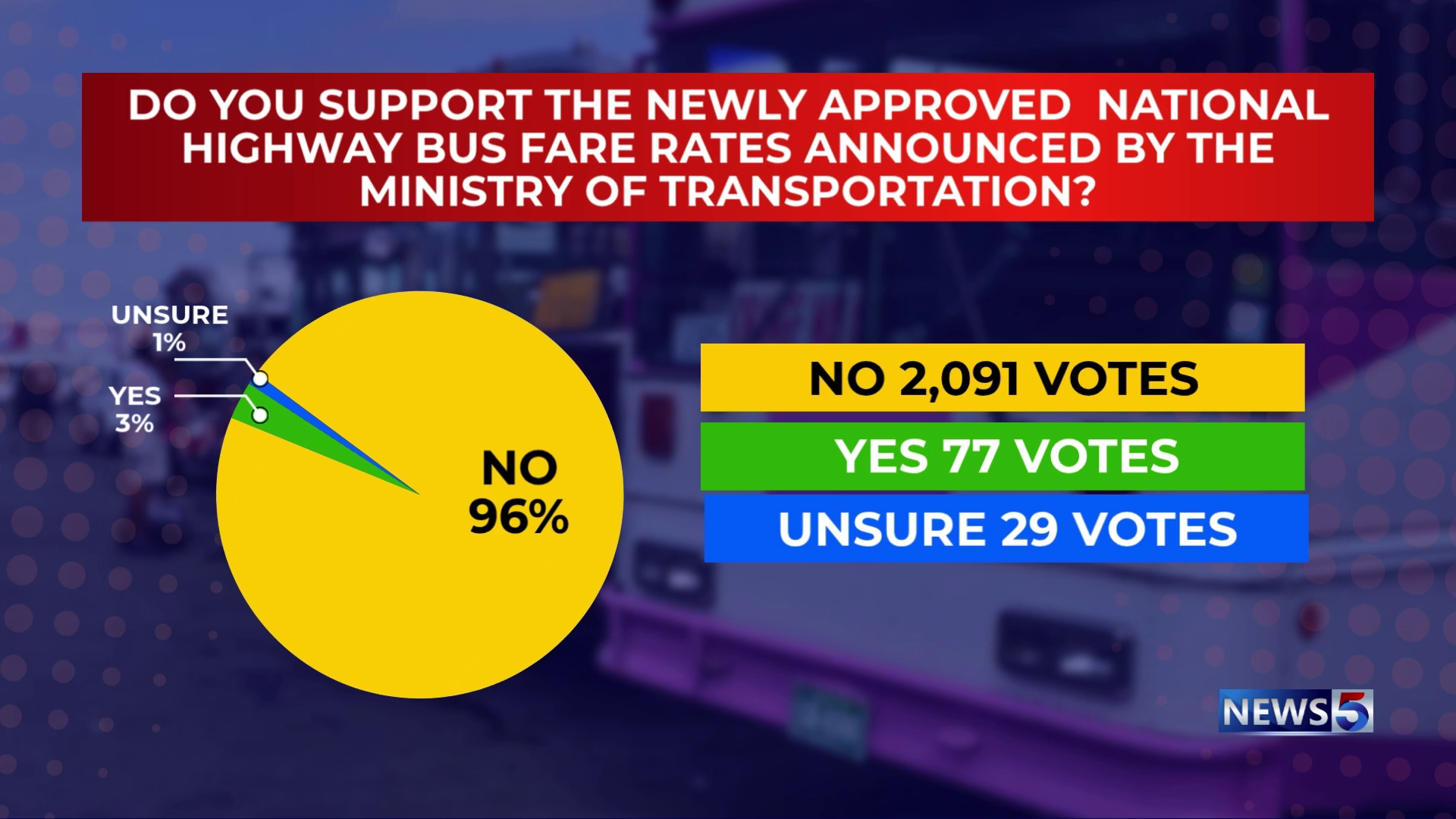
    News Five, a Belizean media outlet, conducted an informal non-scientific public poll on its Facebook page to gauge public sentiment on the new fares. The poll drew more than 2,000 responses, with 96% of participants indicating outright opposition to the price hike. Online criticism quickly went viral, with many commuters highlighting that most people rely on public buses precisely because they cannot afford private vehicle ownership and fuel costs. Many respondents also called out the poor quality of the current bus fleet, noting that decades-old, poorly maintained vehicles offer an uncomfortable ride that does not justify higher pricing.

    On-the-ground interviews with commuters at the Belize City Bus Terminal echoed most of these online complaints. While a small number of short-distance travelers said the small 50-cent increase would be manageable, most daily long-distance commuters expressed frustration. “Not fully prepared but I will have to be whether I like it or not,” one regular commuter from Hattieville who travels to Belmopan for work told reporters, adding that most riders would accept small increases only if the government followed through on long-promised upgrades to bus infrastructure. A retired commuter echoed this concern, noting that many aging buses offer such a poor quality ride that passengers arrive at their destinations sore, and no upgrades have been delivered to match higher costs.

    Belize’s Transport Minister Dr. Louis Zabaneh acknowledged that public criticism of the new fares is entirely legitimate. He explained that Cabinet approved the increase after BBA operators, particularly those operating northern routes, threatened to launch a full strike that would have disrupted transit across the country, a outcome government officials deemed far more damaging to commuters than the moderate fare hike. “Nobody wants to pay more for any of their needs including for transportation, but Cabinet had to make a decision to avoid a total shutdown of service,” Zabaneh noted.

    Not all bus providers will be raising fares, however. The state-owned National Bus Company has confirmed that it will keep its current pricing in place for the foreseeable future, leaving cost-sensitive commuters with limited alternative options for cheaper travel.

  • National Bus Company Keeps Rates Unchanged

    National Bus Company Keeps Rates Unchanged

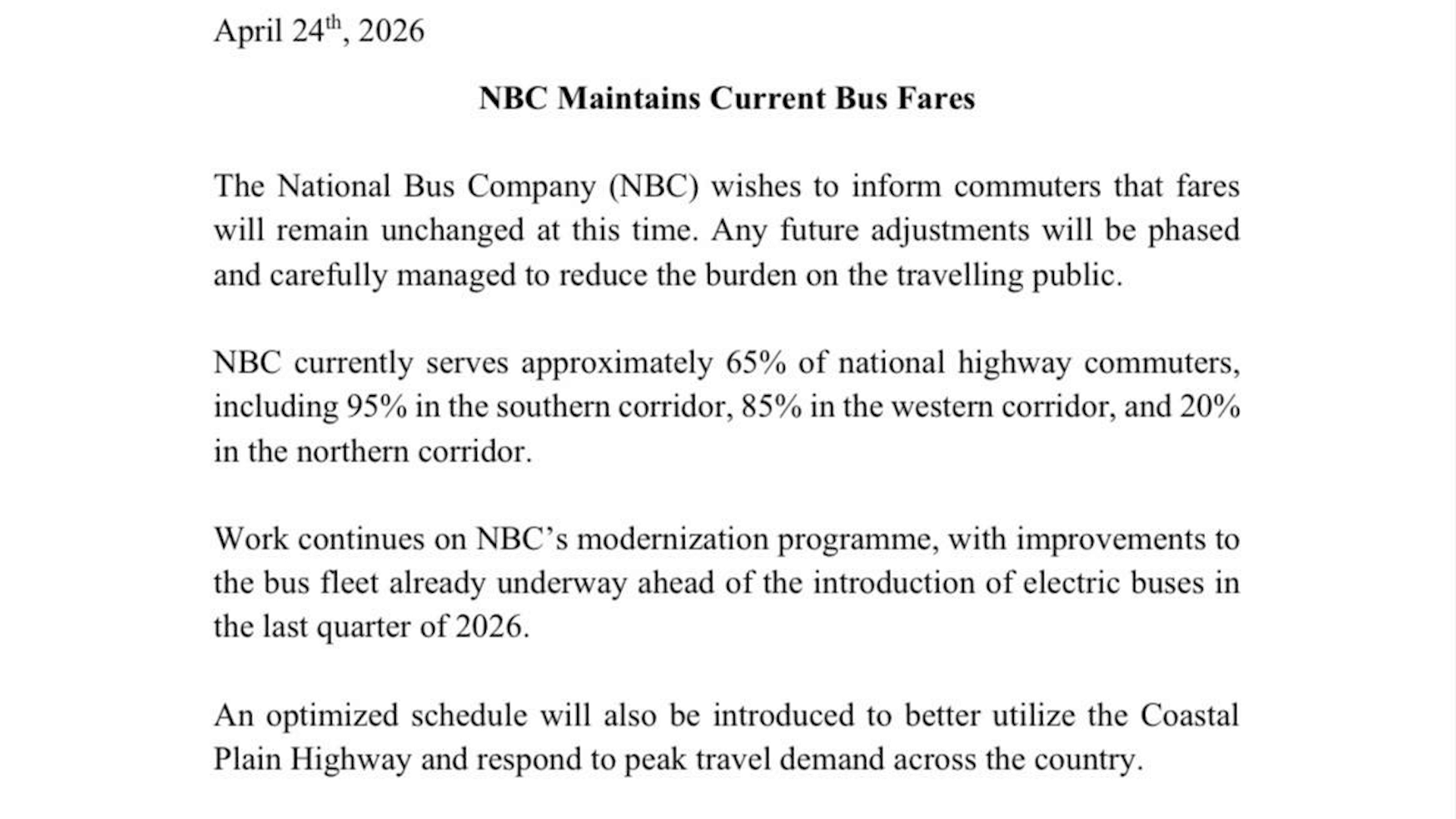
    In a much-anticipated announcement that has brought relief to tens of thousands of daily commuters across Belize, the National Bus Company (NBC) confirmed on April 24, 2026 that it will hold current ticket rates steady for the immediate future, even as other regional operators have moved forward with approved fare increases. This decision comes at a time when widespread speculation about rising bus fares has left daily commuters, particularly those in the country’s busy southern corridor, bracing for added monthly travel costs.

    As the dominant provider of intercity highway bus service across Belize, NBC carries approximately 65% of all national highway commuters, serving between 8,000 and 12,000 passengers daily depending on the day of the week. Its market share is especially pronounced in the critical southern route, which runs from Punta Gorda through Independence, Dangriga, and Belmopan before reaching Belize City, with upcoming routing adjustments along the coastal road expected to cut travel time for passengers. In this corridor, NBC controls 95% of the commuter market, meaning nearly all travelers along the high-traffic route will avoid the recently approved fare hikes that had been set to take effect. The company also holds an 85% market share on the western corridor connecting Belize City to Belmopan, San Ignacio, and the western border at Benque Viejo del Carmen. Its smallest footprint is in the northern corridor leading to Orange Walk, Corozal, and the northern border, where it only serves 20% of commuters, with most northern service provided by private operators affiliated with the Belize Bus Association (BBA).

    Belize’s Transport Minister Dr. Louis Zabaneh confirmed that the formal NBC press release, published this afternoon, explicitly notes that the rate freeze is not a permanent policy. The company has retained the right to revisit pricing if global and domestic fuel prices continue their upward trajectory. Dr. Zabaneh praised NBC’s decision, framing the temporary rate hold as a responsible step to prioritize the needs of commuters who rely on public transit for daily travel to work, school, and essential services.

    When asked whether commuters could expect rate reductions if fuel prices decline in the future, Dr. Zabaneh acknowledged that standard economic dynamics make downward price adjustments far less common than increases, a phenomenon widely referred to as sticky prices. He added that long-term fare stability for NBC will not come from fluctuating fuel markets, but from the company’s planned transition to a brand-new fleet of electric buses. Operating an electric bus costs only 25% of the operating cost of a traditional diesel bus when measuring energy expenses, he explained, meaning the shift to electric technology will create permanent long-term cost savings that can be passed on to commuters. For private operators that have already implemented fare increases to offset rising fuel costs, Dr. Zabaneh noted that operators have little remaining capital to invest in upgrading outdated fleets, but he agreed fully with widespread public expectations that improved service and newer vehicles should accompany any future price increases.

    The decision to freeze fares has sparked immediate pushback from the Belize Bus Association, the industry group representing the country’s 14 private bus operators that mostly serve the northern corridor. In a statement released just before this evening’s news broadcast, the BBA pushed back against public narratives surrounding the recent fare hikes, placing blame for the industry-wide price adjustments squarely on NBC and the government agencies that regulate the sector.

    The BBA argues that NBC operates under direct control of the Ministry of Transport, creating an inherent conflict of interest that skews both fare policy decisions and public messaging around the recent increases. The association claims that NBC has long charged the highest fares in the Belizean bus industry, while private BBA operators maintained lower rates for years, absorbing rising fuel and maintenance costs out of pocket to avoid passing burdens onto commuters. According to the BBA, the recent fare adjustment for its members was not an arbitrary price hike, but a forced alignment with NBC’s existing higher price structure after the government rejected repeated requests for fuel tax relief and operating subsidies.

    The association further alleges that government officials are attempting to deflect public anger over higher fares by positioning NBC as a responsible, commuter-friendly alternative, while allowing private operators to bear the brunt of public criticism—even as commuters across the country face higher travel costs overall. The BBA emphasizes that it remains the largest provider of bus service in the northern corridor, and that the Belizean public deserves full transparency about the policy decisions that led to the current fare landscape.

  • C’bean growth slows amid global uncertainty, climate pressures — CDB Report

    C’bean growth slows amid global uncertainty, climate pressures — CDB Report

    BRIDGETOWN, Barbados – The Caribbean region delivered a muted economic performance in 2025, held back by a confluence of global instability, repeated climate disasters and long-running domestic structural obstacles, the Caribbean Development Bank (CDB) has warned in its flagship annual report, the *Caribbean Economic Review and Outlook 2025-2026*.

    The analysis tracks economic activity across the CDB’s 19 borrowing member countries (BMCs), revealing a clear slowdown across most of the bloc. When Guyana’s rapidly expanding oil sector is excluded, regional growth decelerated to 0.6% in 2025, down from 1.4% recorded in 2024. Even with Guyana’s output included, aggregate regional growth fell to 4.7% from 8.3% in 2024, confirming the South American nation remains the single largest engine of overall regional expansion.

    A range of overlapping headwinds dragged on regional activity over the year. Heightened geopolitical friction, shifting international trade and tariff rules, softening global demand for exports and increasingly severe climate-related disruptions created a challenging operating environment for most economies. Tourism, a traditional core growth driver for many small island states, still contributed to expansion, but its pace of growth slowed noticeably across a number of service-exporting economies. Commodity-producing nations saw divergent results, with some posting modest gains and others struggling to maintain output.

    Suriname stood out among commodity exporters, logging moderate growth driven by fresh investment in its offshore energy sector. By contrast, Trinidad and Tobago posted zero growth, as both its energy and non-energy segments faced persistent weakness. Jamaica and Haiti both suffered severe economic disruption from climate events, most notably Hurricane Melissa, which slashed output and curbed tourist arrivals. Haiti’s economy extended its prolonged downturn, contracting for the seventh straight year as widespread ongoing insecurity continued to choke business activity and investment.

    Against the broader slowdown, several key economic indicators showed limited bright spots. Labour market conditions held broadly steady across most of the region, with unemployment falling in a majority of reporting BMCs. That said, long-standing inequities in employment outcomes for young people and women remain unaddressed, and several sectors are now grappling with acute labour shortages. Inflationary pressures also eased across the bloc in 2025, pulled down by falling global commodity prices, though price growth still remains above pre-pandemic levels in most Caribbean economies.

    Fiscal performance across the region was uneven, the report confirmed. Excluding Guyana, the aggregate regional primary surplus narrowed from 1.6% of GDP in 2024 to 1.3% of GDP in 2025, a shift driven by slower tax revenue growth and mounting spending pressures. Sovereign debt levels also remain worryingly high across much of the region: nine BMCs now report central government debt-to-GDP ratios above the 60% threshold widely seen as a marker of fiscal vulnerability.

    The region’s financial sector, by comparison, remains on solid footing, the report noted. Adequate capital buffers, high levels of liquidity, accelerating credit growth and ongoing regulatory reforms have kept the financial system broadly stable despite broader economic headwinds.

    Looking forward to 2026, the CDB projects the region will see only a mild uptick in growth. Excluding Guyana, regional expansion is forecast to remain subdued at just 1.1%, while aggregate growth including Guyana is expected to climb to 6.2% – a rise almost entirely tied to continued rapid expansion in Guyana’s oil sector.

    Crucially, the outlook remains vulnerable to a wide range of downside risks that could derail even this modest projected growth. These include a deeper slowdown in the global economy, escalating geopolitical tensions, volatile commodity prices, more frequent and severe climate shocks, and persistent fiscal fragility in many small economies.

    “While the Caribbean continues to demonstrate resilience in the face of repeated shocks, the region’s growth prospects remain constrained by external uncertainty, climate-related shocks, and longstanding structural challenges,” said Christine Dawson, CDB’s Acting Director of Economics. “Strengthening institutions, accelerating structural reforms, and improving project execution will be critical to unlocking higher, more inclusive, and more sustainable growth across the region.”

  • Zabaneh Says NBC Considering Coastal Plain Highway Run

    Zabaneh Says NBC Considering Coastal Plain Highway Run

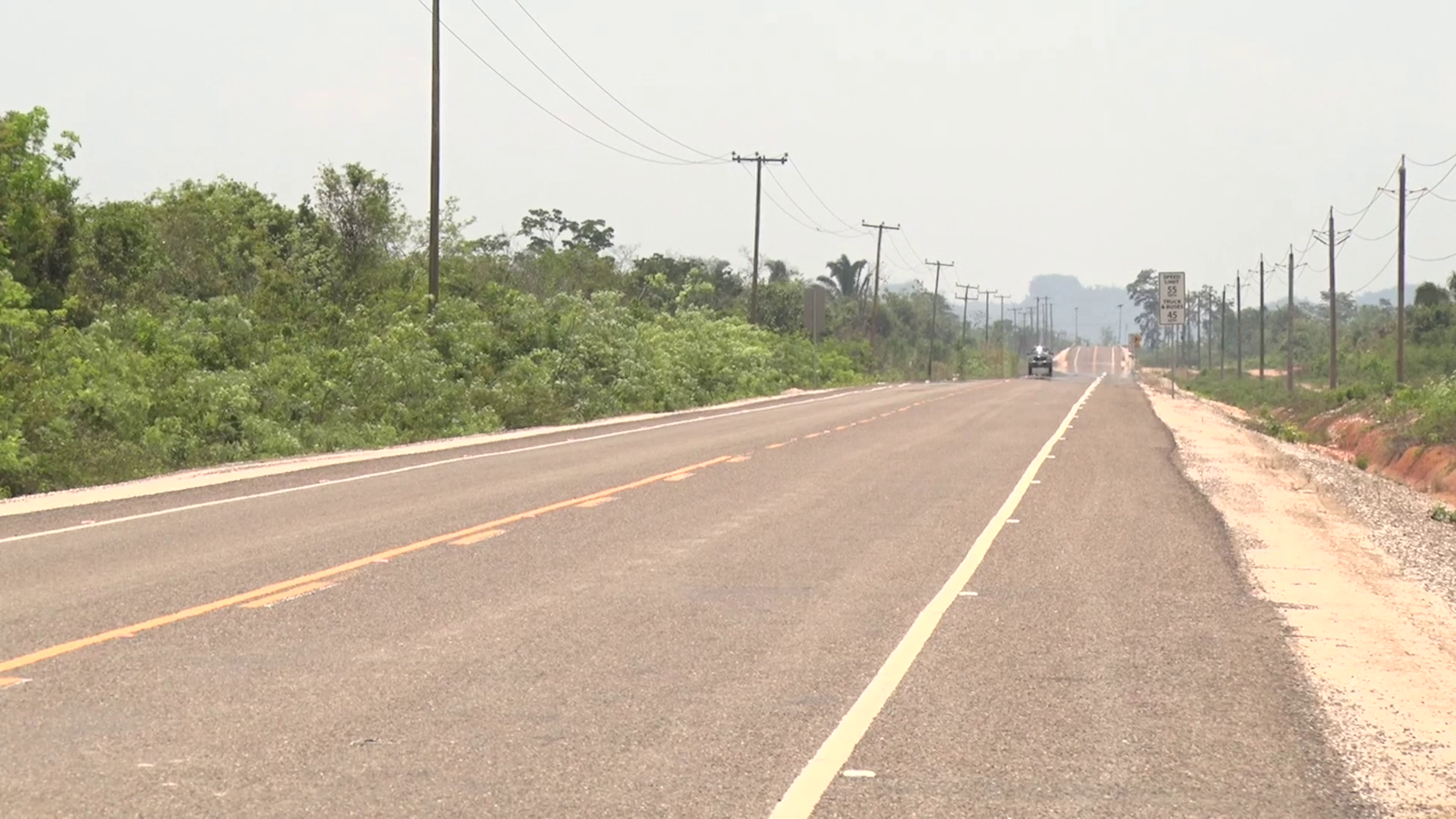
    For thousands of southern Belizean commuters who currently endure longer, more crowded trips to Belize City via the capital Belmopan, a much-anticipated travel upgrade could be just weeks away. Belize’s Transport Minister Dr. Louis Zabaneh has confirmed that the National Bus Company (NBC) is actively evaluating the launch of a new bus route that would traverse the largely underused Coastal Plain Highway, a major infrastructure project completed with a $158 million investment combining grant funding and government expenditure.

    In a recent interview following the announcement, Minister Zabaneh laid out a clear timeline and rationale for the proposed change, noting that the new service could launch as early as mid-May 2026. A key priority for the department is giving current commuters sufficient time to review the proposed changes and submit feedback before implementation. Once the route launches, the policy will remain flexible: officials will adjust schedules or service frequency based on real-world usage if any issues arise.

    According to the minister, the route is targeted at the significant share of southern commuters who currently must travel through Belmopan to reach Belize City. By shifting to the Coastal Plain Highway, these travelers could cut their one-way commute by roughly an hour, a change that would dramatically reduce daily travel time for workers, students, and other frequent visitors to the city.

    Beyond improving commuters’ daily experiences, Zabaneh emphasized that the new route would unlock greater value from the country’s existing infrastructure investment. The upgraded Coastal Plain Highway has been completed for some time, but it has not seen the traffic volumes that planners projected, leaving the multi-million-dollar upgrade significantly underutilized. Launching a dedicated bus route through the corridor is seen as a strategic step to put public infrastructure to work for the communities it was built to serve, while addressing growing demand for more efficient north-south travel options across southern Belize.

  • He Left to Collect Pay… But Ends Up Dead on Roadside

    He Left to Collect Pay… But Ends Up Dead on Roadside

    A tight-knit rural community in southern Belize is reeling from an unexpected and brutal act of violence that has left a local family shattered and searching for justice, after a 45-year-old beloved laborer left his home to collect long-overdue pay and never came back.

    Louis Alberto Martinez, a well-known and dependable construction worker and handyman from Santa Cruz Village, was found dead from gunshot and stab wounds just after sunrise on April 24, 2026, along a quiet stretch of the Thomas Vincent Ramos Highway near Maya King in South Stann Creek. The violent killing has upended the peace of a community unaccustomed to such tragedy.

    Martinez’s niece, Thresia Ritchie, described the devastating moment she learned of her uncle’s death. “I normally get up for work by 2 a.m., and I always keep an eye out for him, since he’s always the first one up too,” Ritchie explained in an interview with News Five. “I got the call just after six, in the middle of my work prep. The officer said, ‘Miss Ritchie, I don’t know how you’ll take this, but we think it’s your uncle here, and we need you to come identify the body.’ When I got there, it was him – we identified him by his clothes. From what we know, he left home yesterday between 4:30 and 5 to collect his pay, and we didn’t hear anything else until they found him this morning.”

    Per family accounts, Martinez had been pressing to receive the owed payment for two full days before his death. For days, the person who owed him had put him off, telling him to come back repeatedly. “He told my mom, ‘I don’t have any money on me. Can you give me five dollars? I don’t want to go out there with an empty pocket,’” Ritchie recalled. “My mom gave him the five dollars, and that was the last time she spoke to him or saw him alive.”

    Investigators confirmed that Martinez’s body was located near the 21-mile mark of the highway, with clear evidence of both stabbing and gunshot trauma. Assistant Superintendent of Police Stacy Smith, the staff officer overseeing the case, confirmed that law enforcement has launched a full investigation into the killing, focused on tracing Martinez’s movements after he left his home. “What we have gathered so far is that Mr. Martinez left his residence around 4:30 PM the day before his body was found, heading to collect outstanding payment from an employer,” Smith stated. “We are currently working to map every step of his journey after that point, to advance the ongoing investigation.”

    For residents of Santa Cruz Village, the killing is a shocking deviation from the community’s normally quiet, peaceful way of life. Village Chairman Vincent Scott, who assisted first responders with securing the crime scene Thursday morning, noted that spent bullet casings were found at the site alongside Martinez’s body. “This is a working village – everyone heads out to work in the morning and comes home in the evening,” Scott explained. “This isn’t a gang-affected area, and Louis wasn’t involved in any gang activity at all. He was just a regular, hardworking man who went out to do what he had to do. An incident like this makes all of us wonder what could have happened. We’re waiting for police to get to the bottom of it.”

    Tonight, Martinez’s family is mourning the loss of a man they described as the steady, reliable heartbeat of their household. Though they are devastated, Ritchie says the family holds out hope that law enforcement will solve the case and deliver the justice they are searching for. “I have faith in the officers working on this case,” Ritchie said. “All we want is for this to go smoothly. There’s nothing else we can do right now.”

    This report comes from Shane Williams, reporting for News Five.

  • Police Seek Identity After Another Body is Found Near Port

    Police Seek Identity After Another Body is Found Near Port

    Months marked by two brutal teen killings in the coastal zone surrounding the Port of Belize have entered another chapter of uncertainty, as law enforcement officials launched a new death investigation following the discovery of a third corpse in the same general area this week.

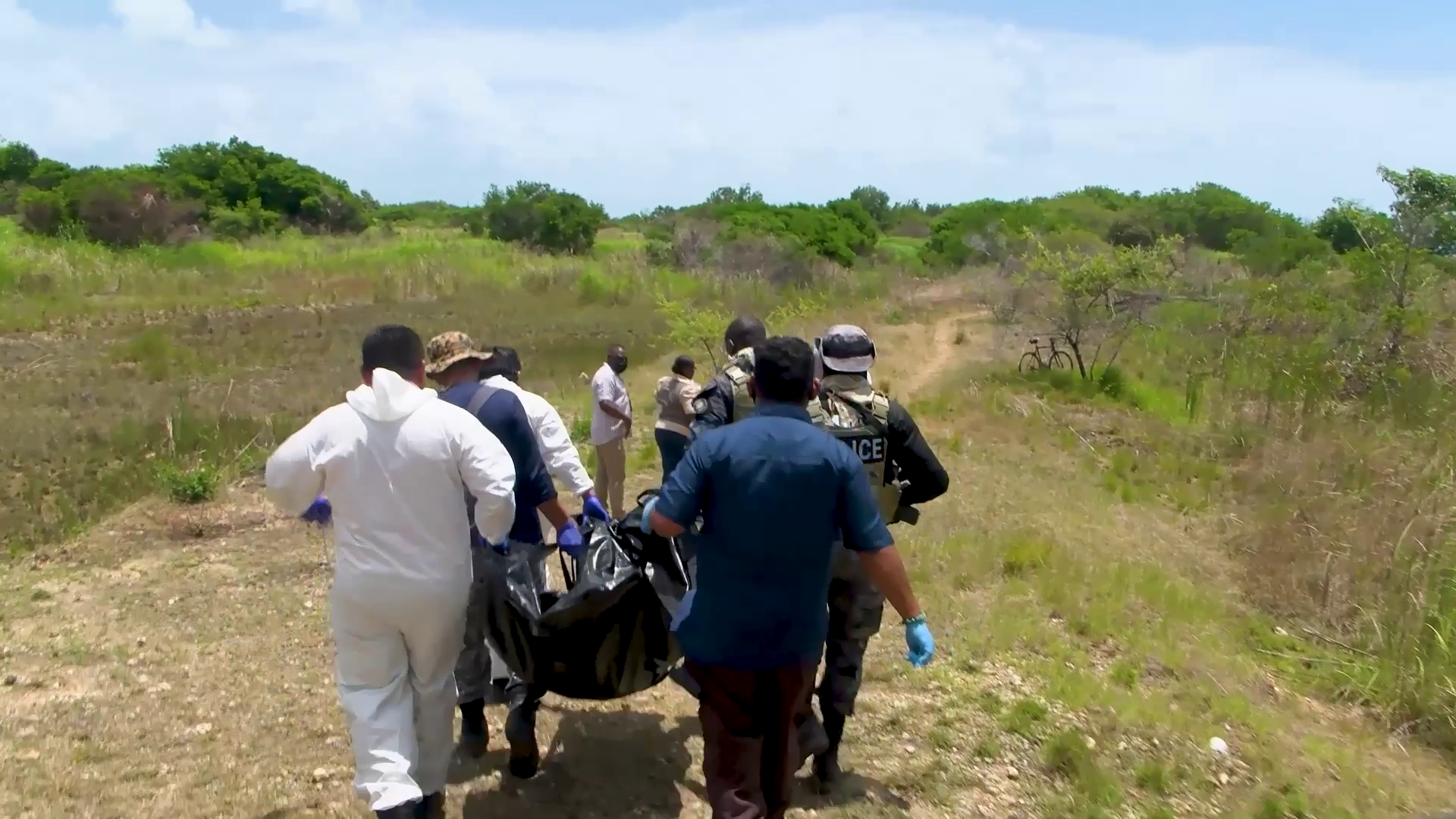
    The grim find was reported to authorities at 12:44 p.m. on April 24, 2026, when a local fisherman plying his trade near the shoreline stumbled across the heavily decomposed remains of an adult male, according to Assistant Superintendent Stacy Smith, a staff officer with the Belize Police Department.

    Unlike the two earlier teen homicide cases that sent waves of concern through Belize City, the latest discovery shows no outward signs of trauma or foul play at this preliminary stage of the probe, Smith confirmed. An official autopsy has been scheduled to confirm the cause of death and resolve lingering questions about how the man died.

    Investigators’ top priority right now is pinpointing the identity of the deceased, a process that they hope will be accelerated by the relatively intact clothing found on the body. The unknown man was wearing a plain black T-shirt, khaki trousers, and a pair of black-and-white Nike athletic sneakers when he was found, details police released to the public in hopes of prompting tips from anyone who recognizes the description.

    The body was recovered along the shoreline behind Port of Belize Limited, an industrial zone that has now seen three bodies recovered from its surrounding dykes and coastal areas within a single calendar month. While the location of the latest find is near the sites of the two earlier teen killings, Smith noted that the recovery locations differ slightly: the latest corpse was found on the shore, while the previous two were discovered on nearby inland areas.

    Smith emphasized that every unexplained death draws full attention from the police department, regardless of the preliminary circumstances. In the wake of the two homicides earlier this month, law enforcement has already stepped up patrols and expanded investigative operations across the high-concern zone around the port, actions that will continue as the probe into this latest death moves forward.

  • Belize is Gripped by Growing Missing Persons Crisis

    Belize is Gripped by Growing Missing Persons Crisis

    A wave of unexplained disappearances of young people has sent shockwaves across the small Central American nation of Belize, leaving grieving families desperate for answers and eroding public confidence in the country’s law enforcement response to the crisis. As of April 2026, at least six high-profile cases of missing young men – Deborah Arthurs, Jamir Cambranes, Jaheil Westby, Alwin Marin, Steve Lewis, and Lidhani Martinez – have dominated local headlines, turning a localized issue into a national conversation about public safety and institutional accountability.

    For many family members, the uncertainty surrounding their loved ones’ fates has turned into prolonged agony. Zenida Lanza, a relative of recent missing person Bree Arthurs, voiced the frustration shared by dozens of affected households, questioning whether active searches are still ongoing for her missing family member after weeks without official updates.

    In response to mounting public pressure, Richard Rosado, Commissioner of the Belize Police Department, has acknowledged the seriousness of the growing crisis. He told local reporters that senior command leadership has held multiple urgent strategy sessions to craft a coordinated approach to the rising number of missing person reports. Rosado emphasized that once a report is filed, it remains an open, active investigation indefinitely, and that law enforcement has committed significant resources to tracking all viable leads. While he confirmed that investigative teams have made incremental progress in some open cases, he stopped short of sharing concrete details that could compromise ongoing work. He added that the department is doing everything within its power to deliver closure to the waiting families.

    Despite official reassurances, the persistent pattern of disappearances has left communities across Belize on edge. Residents and activists are pushing for more transparent updates on investigations, and are calling for systemic changes to speed up police response times for missing person reports. The core questions hanging over the nation remain unanswered: what is driving this spike in missing young men, and will more disappearances occur before authorities get a handle on the crisis?

  • $13 Million in Drugs Go Up in Smoke in Massive Police Operation

    $13 Million in Drugs Go Up in Smoke in Massive Police Operation

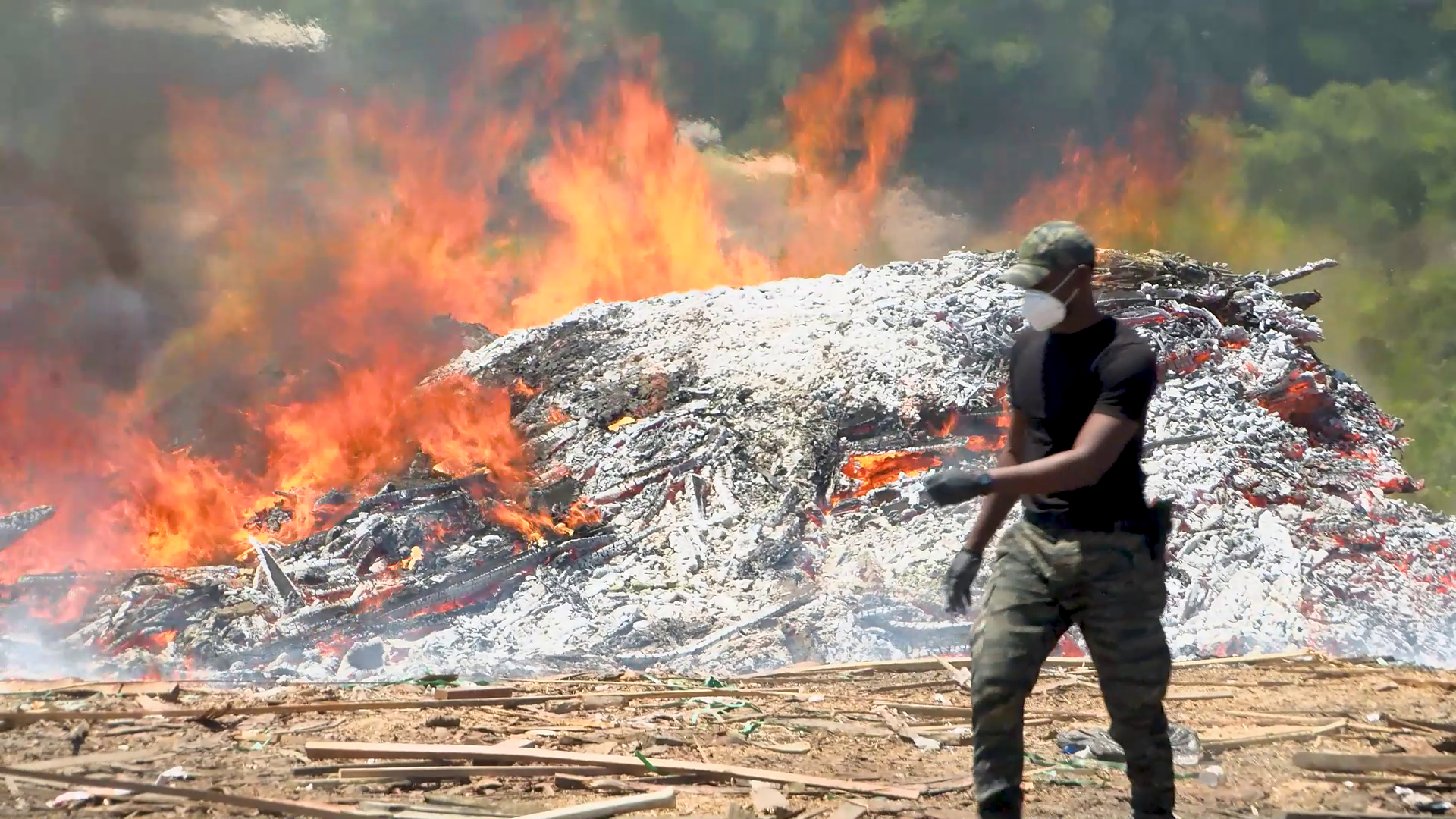
    In a high-stakes display of law enforcement action against transnational drug trafficking, Belizean police have incinerated more than 2,392 pounds of illegally trafficked cocaine and cannabis valued at an estimated $13 million, marking one of the largest controlled drug destruction operations in the country’s recent history. The destruction, carried out on April 24, 2026, followed formal court approval under the nation’s Misuse of Drugs Act regulations, clearing the way for authorities to remove the massive cache of controlled substances from illegal circulation permanently.

    The narcotics destroyed in the operation originated from two separate high-profile busts carried out earlier this year. The first and largest seizure involved 1,215.6 pounds of cocaine intercepted in Neuland, Corozal District, during a coordinated joint operation involving Belizean police, customs enforcement, and Mexican air security officials. Security teams tracked an unregistered drug plane originating from Costa Rica as it entered Belizean airspace, intercepting the aircraft immediately after it landed in Corozal and arresting two Mexican national suspects on site.

    The second cache consisted of 1,176.5 pounds of high-grade cannabis, seized during a targeted raid on an apartment in Lords Bank Village, Belize District, conducted several weeks prior to the destruction operation. Alongside the cannabis, investigators also recovered a 9mm handgun and a stock of ammunition; the entire seizure carried a street value of approximately $1.6 million. No suspects have yet been taken into custody in connection with this cannabis bust, and investigations remain active.

    Speaking on the legal process that authorized the destruction, Police Commissioner Dr. Richard Rosado confirmed that authorities submitted a formal application to the local magistrate court for permission to dispose of the controlled substances. The court approved the request after confirming that destroying the narcotics would not compromise any ongoing criminal proceedings linked to the two seizures. “Pursuant to Regulation 27.1 of the Misuse of Drug Act regulation, application was made to the magistrate for the issuance of an order for the disposal of the cocaine that was seized in Nueland Corozal and the cannabis that was seized in Lord Bank,” Rosado explained. “The Magistrate having been satisfied that the said controlled substance can be destroyed without any prejudice to any pending criminal proceedings, duly granted the order.”

    Assistant Police Commissioner Gualberto Garcia detailed the extensive security protocols put in place to safely transport the two drug caches, which were stored in separate secure locations across the country ahead of the burning. A large contingent of officers was deployed to escort the loads to the destruction site, with a heavily guarded perimeter established to prevent any unauthorized access and protect both personnel and bystanders. “The two loads were secured in two different locations, so we had to ensure that we provide adequate security for those loads to reach where we are,” Garcia noted. “We have a strong perimeter around us currently with security, so it’s not very easy for anybody to get close to us. That is one of the main objectives that we have, is the security and safety of not only our officers, but persons who are here, ensuring that the process goes smoothly.”

    While routine drug destruction operations are carried out annually to clear out seized narcotics from police evidence storage facilities, Wednesday’s operation stands out as one of the largest in recent memory in terms of both volume and street value. Rosado emphasized that the successful interception and destruction of the large drug shipment sends a clear message to transnational criminal networks: Belize will not serve as a passive transit route for drug trafficking. “It does show that the personnel, police officers are highly motivated. It also highlight that Belize is not a transit route for drug trafficking because we have the partnership, we have the intelligence, and we have the capability to intercept and track drug traffickers,” Rosado said. “So it does serve as a motivation for our personnel and I want to thank the security forces and all our police officers who were involved in both seizures.”

    With the destruction complete, authorities have shifted their focus back to ongoing investigations, the prosecution of the two suspects already in custody, and the manhunt for any individuals linked to the Lords Bank cannabis bust. When asked about potential risks of retaliation from drug trafficking organizations following the loss of the high-value shipment, Garcia noted that large-scale destruction operations are standard procedure, but investigations will continue to progress as authorities pursue all leads tied to the two busts.

  • SIP report notes stable climate of press freedom in the country

    SIP report notes stable climate of press freedom in the country

    Santo Domingo, Dominican Republic – A new mid-year assessment from the Inter-American Press Association (IAPA) has confirmed that press freedom conditions across the Dominican Republic have held steady between October 2025 and April 2026, with no documented cases of direct state censorship or coercive regulatory changes targeting independent journalism. The finding aligns with the country’s strong 2025 performance in the IAPA’s Chapultepec Index, a global benchmark for measuring press freedom respect, where the Dominican Republic earned a top score of 82.17. Researchers confirm that none of the core metrics tracked by the index have shifted significantly over the past six months. The assessment centers on the ongoing debate over a planned overhaul of the country’s decades-old Law 6132, the foundational legislation governing freedom of expression and the dissemination of thought in the Dominican Republic. The proposed reform bill is designed to expand legal protections for working journalists, but it has stalled in the National Congress amid unresolved partisan and stakeholder disagreement. The most contentious provision calls for the creation of a new National Institute of Communication, which critics argue could be weaponized as a tool for indirect censorship, derailing broader consensus on the bill that has widespread support for its other guardrails for press freedom. Authored by Miguel Franjul, director of leading Dominican outlet Listin Diario and vice president of IAPA’s Dominican Republic Press Freedom Commission, the report also acknowledges that while the overall climate for independent reporting remains stable, a handful of isolated but alarming incidents have disrupted journalistic work in recent months. In December 2025, two reporters – María Tejeda of CDN News and Natalia Estrella of Teleuniverso – were physically attacked by staff of the Santiago Water and Sewerage Corporation (Coraasan) while on assignment. The journalists were covering a public water distribution operation in a neighborhood that had been without piped service for weeks following a major pipe rupture, a story that drew public frustration over government response delays. More recently, in March 2026, a confrontation between law enforcement and reporters unfolded during an arrest operation in eastern Santo Domingo. The operation targeted a local teacher accused of assaulting a child at a nearby daycare center, and when journalists arrived to cover the incident, a uniformed National Police officer cocked a firearm and pointed it directly at the assembled press corps. Other officers deployed pepper spray to block reporters from documenting the arrest, and relatives of the accused teacher also allegedly joined in attacking the journalists. The IAPA report reaffirms that these isolated incidents do not represent a systemic rollback of press freedom gains in the country, but urges Dominican authorities to address the attacks, hold responsible parties accountable, and resolve the ongoing impasse over media law reform to cement the country’s status as one of the region’s strongest performers for free expression.