作者: admin

  • Venezuela Blocks Six Airlines; Trump Says Land Action Coming Soon

    Venezuela Blocks Six Airlines; Trump Says Land Action Coming Soon

    Venezuela has imposed a comprehensive ban on six major international carriers after they declined to resume operations within a government-mandated 48-hour window. The aviation blockade comes in direct response to the airlines’ decision to halt services following a U.S. Federal Aviation Administration (FAA) security advisory highlighting ‘heightened military activity’ and potential hazards within Venezuelan airspace.

    Caracas officials have condemned the flight suspensions as acts of ‘state terrorism,’ asserting that the FAA possesses no jurisdictional authority over Venezuelan territory. The escalating aviation conflict coincides with heightened geopolitical tensions between the two nations.

    In a parallel development, U.S. President Donald Trump indicated forthcoming expansion of anti-narcotics operations targeting alleged drug trafficking networks originating from Venezuela. During a Thanksgiving conference call with military personnel, Trump revealed plans for imminent land-based interventions, stating: ‘We’ll be starting to stop them by land also. The land is easier, but that’s going to start very soon.’

    The President issued a direct warning to alleged traffickers: ‘We warn them: Stop sending poison to our country.’ These remarks signal a potential escalation in the administration’s pressure campaign against the Maduro government.

    Venezuelan President Nicolás Maduro has consistently denied any governmental involvement in narcotics trafficking and characterizes U.S. allegations as politically motivated attempts to destabilize his administration. The converging aviation and narcotics disputes reflect deteriorating bilateral relations and suggest increasing regional tensions.

  • Dominica State College launches Smart Classroom and Learning Hub

    Dominica State College launches Smart Classroom and Learning Hub

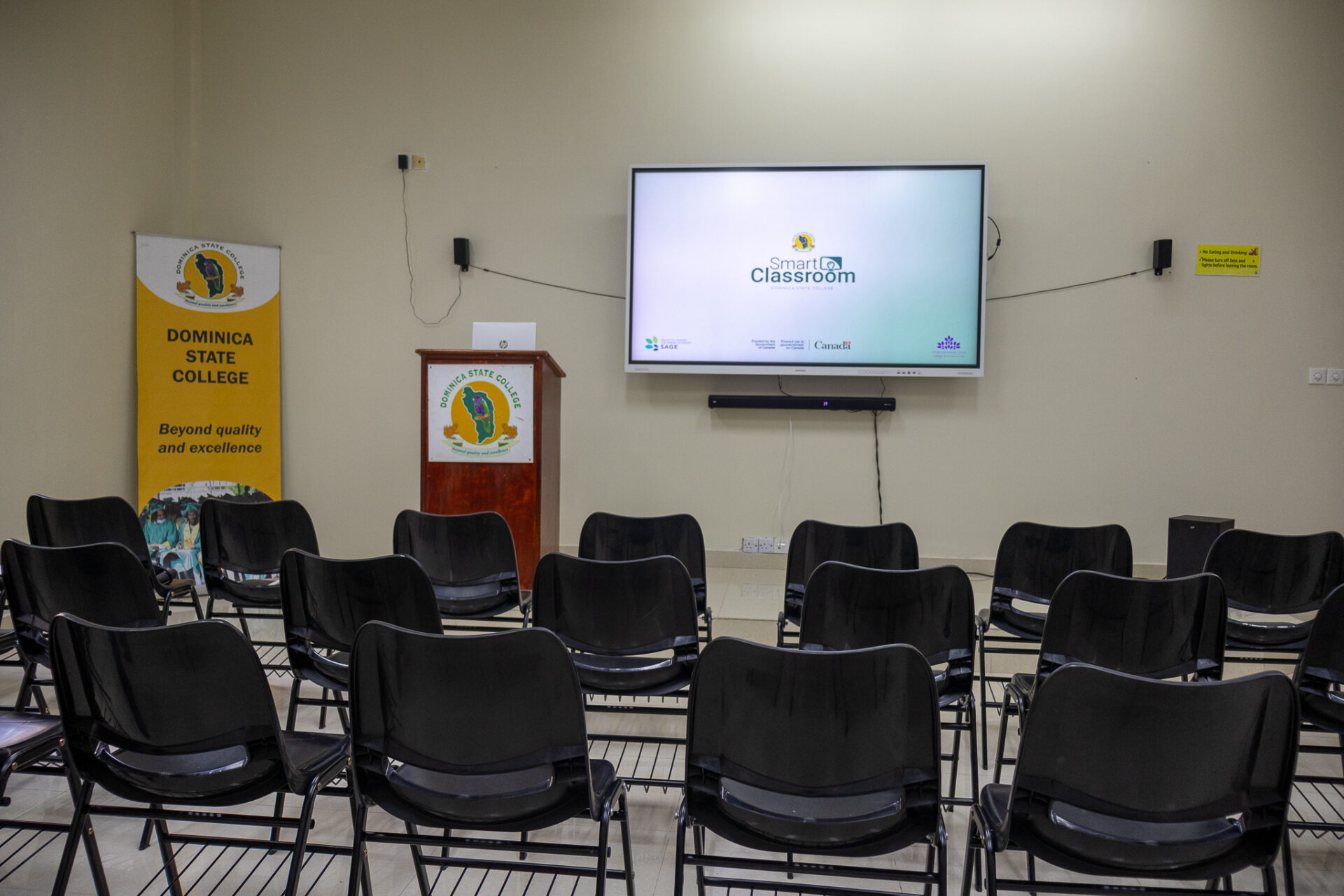
    Dominica State College has inaugurated a state-of-the-art Smart Classroom and Learning Hub, marking a significant advancement in digital education infrastructure for the Caribbean nation. The transformative facility, launched on November 27th, represents a collaborative effort between the college, the Skills to Access the Green Economy (SAGE) initiative, and the Government of Canada.

    The newly unveiled hub features advanced interactive technologies, digital learning tools, and contemporary educational resources designed to revolutionize both teaching methodologies and student learning experiences. The facility aligns with DSC’s strategic mission to enhance educational accessibility, foster innovative pedagogical approaches, and develop academic infrastructure capable of meeting evolving global economic demands.

    The launch ceremony gathered college administrators, faculty members, and representatives from both SAGE and Dominica’s Ministry of Education, demonstrating shared commitment to strengthening digital literacy and workforce preparedness throughout the nation.

    Pat Bidart of SAGE emphasized the project’s significance within broader regional efforts to equip Caribbean institutions with necessary resources for driving sustainable development and environmentally conscious growth. Trudy Christian, Officer in Charge of the Office of the President, characterized the hub as a profound investment in student futures, ensuring learners possess the technological tools and environment required to excel in a modern, green-focused economy.

    This tripartite partnership continues to play a pivotal role in advancing educational innovation, climate resilience, and specialized workforce training throughout Dominica. The Smart Classroom and Learning Hub is anticipated to serve as a catalyst for enhanced collaboration, creativity, and effective technology integration within academic practices.

    DSC has formally acknowledged all contributing stakeholders while reaffirming its institutional commitment to preparing students for dynamic, sustainable professional futures.

  • Smooth start to polling as essential workers vote in Castries

    Smooth start to polling as essential workers vote in Castries

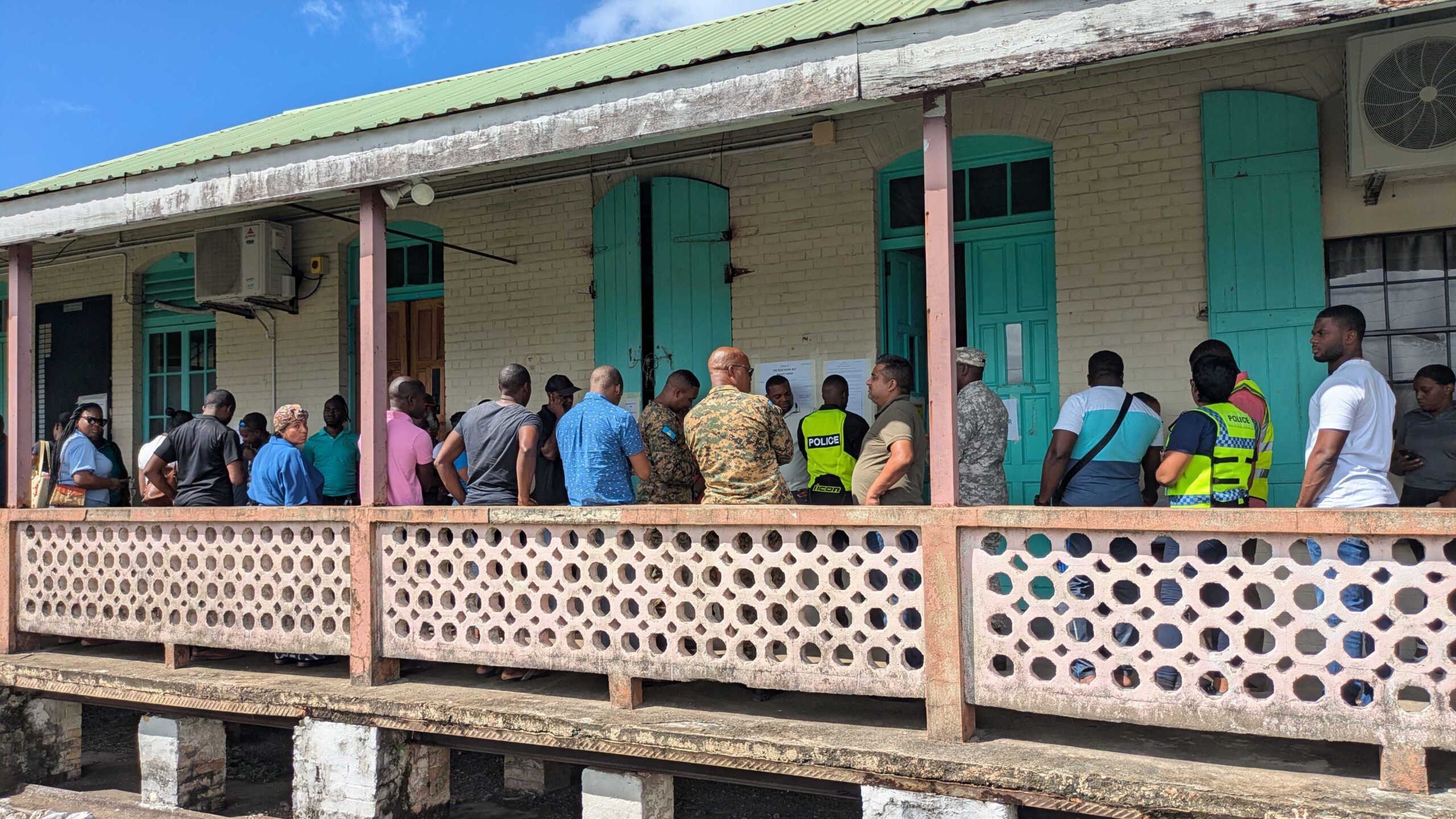
    Critical infrastructure personnel across six electoral districts in Saint Lucia participated in special advance voting proceedings on Friday morning. The designated polling venue at the Police Training School in La Toc, Castries, accommodated essential workers from Castries East, Castries Central, Castries South, Anse La Raye, Dennery North, and Castries South East constituencies.

    Uniformed services formed a significant portion of the early electorate, with substantial representation from the Royal Saint Lucia Police Force and the Saint Lucia Fire Service. Personnel from other government agencies also joined the advanced polling exercise aimed at ensuring continuity of essential services during general elections.

    Assistant Commissioner of Police Dr. Mashama Sealy supervised the proceedings across two operational polling stations at the facility. The electoral process commenced precisely at 6:30 AM according to established schedules. In a mid-morning assessment, Dr. Sealy reported exceptionally smooth operations with efficiently moving queues.

    “The polling stations opened punctually and have maintained seamless operations since commencement,” Dr. Sealy confirmed during an interim review. “Voter throughput has been particularly rapid at one station due to a smaller registered voter allocation per poll.”

    The advanced voting proceedings concluded without significant disruptions, marked by an orderly atmosphere and minimal grievances from both electoral participants and administrative officials. The successful execution demonstrates Saint Lucia’s electoral system capacity to accommodate specialized voting arrangements while maintaining procedural integrity.

  • Winless Saint Lucia out of AmeriCup 3×3 hoops

    Winless Saint Lucia out of AmeriCup 3×3 hoops

    Saint Lucia’s participation in the FIBA AmeriCup 3×3 basketball tournament concluded abruptly on the opening day of competition in León, Mexico, following consecutive losses to regional rivals. The national team’s elimination from qualifying Group A was confirmed after suffering defeats against both Jamaica and Guyana on Thursday, November 27.

    In their initial match against Jamaica, Saint Lucia struggled to find rhythm, falling decisively with a final score of 21-7. Despite Sidney Didier opening the scoring with an early basket, Jamaica responded with a devastating 12-0 scoring run that established dominance. A brief resurgence led by Troy Louison’s one-pointer sparked a 4-0 response from Saint Lucia, but Jamaica closed the game with an 8-3 advantage. Statistical disparities proved significant as Jamaica attempted 11 free throws (converting only five) while Saint Lucia had just two opportunities from the line, missing both attempts. Didier finished as Saint Lucia’s top scorer with three points.

    The second qualifying match against Guyana delivered considerably more drama, extending into overtime before concluding 17-15 in Guyana’s favor. Saint Lucia demonstrated marked improvement, establishing an early 4-3 lead through Sharmoir Baptiste and maintaining a three-point advantage midway through the contest. The game featured multiple ties, including at 7-7 and 12-12, before reaching a dramatic conclusion. Louison’s two-pointer at the buzzer forced overtime at 15-15, but Guyana’s Travis Belgrave secured victory with another two-pointer in the extra period.

    Belgrave emerged as the game’s standout performer with 10 points, while Didier and Louison contributed five points each for Saint Lucia. Baptiste added three points and Clayton William two. Both teams struggled from the free-throw line, with Guyana missing all four attempts and Saint Lucia failing to convert their two opportunities.

    Jamaica ultimately won Group A by defeating Guyana 19-14, advancing to the main draw alongside Trinidad & Tobago, who secured progression with victories over Saint Kitts & Nevis (21-7) and Uruguay (21-18).

  • Traffic changes, road closures for Drag Fest this weekend and Monday

    Traffic changes, road closures for Drag Fest this weekend and Monday

    Barbados authorities have issued a comprehensive traffic advisory ahead of Drag Fest 2025, scheduled for this Saturday and Monday, warning motorists to anticipate significant disruptions along critical transportation corridors. The Barbados Association of Dragsters and Drifters (BADD) will host the automotive event from 8:00 AM to 6:00 PM on both days, necessitating complete closure of the ABC Highway between Norman Niles (Haggatt Hall) Roundabout and Clyde Walcott (The Turning) Roundabout.

    Law enforcement agencies have implemented stringent measures to manage the anticipated congestion, with police warning that violations of temporary traffic regulations could result in substantial penalties—including $500 fines or imprisonment for up to three months. Officers will be strategically deployed throughout the affected region to direct vehicular movement and enforce compliance.

    The closure extends beyond the ABC Highway to include Belle Road (both East and West sections) from Lower Estate to My Lords Hill intersections. Authorities have established detailed diversion routes: Motorists traveling westward from Bussa may redirect via Norman Niles Roundabout to My Lords Hill, proceeding to Bridge Road and Station Hill before reaching Clyde Walcott Roundabout. Alternative routes include detours through Salters and Charles Rowe Bridge to Lower Estate Road.

    For southbound traffic from Warrens, drivers may reroute left at Clyde Walcott Roundabout toward Lower Estate and Belle Road, continuing to Charles Rowe Bridge before advancing to Salters and Norman Niles. The secondary option involves right turns at Clyde Walcott toward Station Hill traffic lights, then left onto Bridge Road through My Lords Hill.

    Strict no-parking zones will be enforced along ABC Highway, Waterford Road, The Turning, Salters, and Belle Road. To mitigate parking challenges, organizers will operate park-and-ride services from Queen’s College, Garfield Sobers Sports Complex, The Botanical Gardens, and Sky Mall (exclusively on Monday). Emergency services including Police, Barbados Defence Force, and Fire Service vehicles remain exempt from all restrictions.

  • Murder charge laid in killing of Bexon resident

    Murder charge laid in killing of Bexon resident

    In a significant development regarding the fatal shooting incident in Marc, Bexon, Saint Lucian authorities have formally pressed charges against a suspect. The Royal Saint Lucia Police Force confirmed that 27-year-old Brent Frederick from Wilton’s Yard, Castries, now faces murder charges for the death of Jabez Edward.

    The victim, 23-year-old Edward, succumbed to multiple gunshot wounds earlier this month despite being rushed to OKEU Hospital for emergency treatment. The violent incident had prompted an intensive investigation by local law enforcement agencies.

    Frederick made his initial court appearance before a magistrate on Wednesday, November 26, where the prosecution successfully argued against bail. The court ordered the accused remanded to the Bordelais Correctional Facility, the island’s maximum-security prison. Judicial proceedings will resume on March 3 when Frederick is scheduled to reappear in court for further hearing of the case.

    The charges mark a crucial step in the justice process for a community affected by gun violence. Law enforcement officials have emphasized their continued commitment to addressing serious crimes across the island nation.

  • ACB Caribbean rolls out new Smart ATMs after months of service issues

    ACB Caribbean rolls out new Smart ATMs after months of service issues

    ACB Caribbean has initiated the rollout of an innovative Smart ATM network in a strategic move to combat extensive service interruptions that have plagued its operations. Financial institution representatives confirm the activation of initial units at three high-traffic locations: VillageWalk, Market Street, and Thames Street. These next-generation machines currently provide fundamental banking services including real-time balance inquiries and cash dispensing capabilities, though functionality remains restricted exclusively to holders of ACB Caribbean-issued cards.

    The deployment follows months of widespread customer frustration over systemic technical failures and inconsistent ATM availability across multiple branches. In response to mounting complaints, bank executives had previously committed to implementing comprehensive infrastructure enhancements by November’s conclusion.

    Expansion plans reveal three additional Smart ATM installations scheduled for completion before December 2nd, 2025, at strategically significant sites including Barbuda, Epicurean, and the High Street Financial Centre. Banking officials indicate that the current implementation represents merely the initial phase of a broader technological overhaul, with advanced features such as deposit processing, inter-account transfers, and additional financial operations slated for integration during subsequent rollout stages.

    ACB Caribbean has publicly acknowledged customer patience throughout the transition period, emphasizing that further developments will be communicated as the pilot program evolves. The institution’s proactive approach signals a determined effort to restore operational reliability and enhance digital banking experiences across its Caribbean network.

  • When independence feels distant: A conversation across generations

    When independence feels distant: A conversation across generations

    As November arrives annually, Barbados immerses itself in the customary blue and yellow hues of Independence celebrations. Schoolchildren diligently rehearse for ceremonial programs, communities engage in neighborhood cleanups, and the island prepares for time-honored events including parades and fairs. Despite these recognizable markers of national observance, a subtle but significant cultural shift is occurring beneath the surface of traditional festivities.

    Across WhatsApp conversations, social media platforms, and workplace discussions, a growing consensus emerges: younger generations increasingly perceive Independence Day differently than their elders. While Barbados’ youth demonstrate national pride through participation in school events, wearing national colors, and sharing celebratory photos, the emotional resonance of independence has substantially diminished for many. The day increasingly functions as a holiday respite rather than a profound moment of national reflection.

    Older generations express palpable frustration, recalling seasons filled with electric anticipation and deep-rooted patriotic connection. This emotional disconnect prompts critical examination of why contemporary youth experience independence celebrations differently. Three fundamental factors contribute to this generational divergence.

    Firstly, modern youth encounter Barbados through a distinctly different historical lens. While independence represented struggle, sacrifice, and self-determination triumph for earlier generations, today’s youth inhabit an already-independent nation. Self-rule constitutes academic curriculum rather than lived experience, diminishing the emotional charge associated with the original independence movement.

    Secondly, Barbados’ youth navigate increasingly globalized identities. Constant exposure to international media, culture, and entertainment creates a worldview extending far beyond the island’s physical boundaries. National celebrations now compete with globally relevant content that frequently resonates more strongly with daily experiences and interests.

    Thirdly, systemic challenges profoundly impact youthful perspectives. Young citizens often bear the brunt of socioeconomic pressures, navigate sometimes outdated educational systems, and observe disparities between national rhetoric and practical reality. When institutional frameworks feel challenging to navigate, symbolic holidays may fail to evoke transformative national pride.

    This phenomenon doesn’t represent youth rejection of independence but rather highlights inadequate points of entry into its significance. Without compelling narratives, engaging traditions, or meaningful seasonal presence, Independence Day risks becoming culturally static while other celebrations like Christmas continue evolving and expanding.

    Addressing this disconnect requires understanding youth emotional economies: commitment to authenticity, investment in relevance, support for creativity, and engagement with energetic initiatives that foster belonging. Educational reform presents particularly promising opportunities through experiential learning—heritage site adoption, oral history collection, and community solution projects that transform youth from national spectators to active contributors.

    Existing traditions maintain cultural importance, but parallel innovation must address why independence resonates differently across generations. As Barbados approaches another Independence Day, the most patriotic action may involve opening empathetic dialogue without judgment—understanding rather than blaming, strengthening meaning rather than defending tradition, and cultivating connection rather than enforcing pride. Through thoughtful adaptation, Barbados can ensure its independence celebrations continue reflecting both national heritage and evolving identity for future generations.

  • CTUSAB: Bus fare hikes may follow govt divestment

    CTUSAB: Bus fare hikes may follow govt divestment

    A major labor organization in Barbados has launched forceful opposition to the government’s initiative to privatize the national public transportation system, cautioning that the move threatens both affordability and reliability for commuters. The Congress of Trade Unions and Staff Associations of Barbados (CTUSAB) articulated its position during a press briefing on Thursday, with General Secretary Dennis DePeiza asserting that accessible public transit constitutes a fundamental state responsibility rather than a commercial enterprise.

    DePeiza highlighted that the proposed transition to a new Barbados Mass Transit Authority, confirmed via an official Ministry of Transport and Works document, would result in the termination of all current Transport Board employees. While these workers would receive priority status to become owner-operators with access to low-interest financing, the union leader expressed deep concerns about the broader implications.

    The restructuring plan, sanctioned by the Cabinet and detailed in a memorandum signed by Permanent Secretary Jehu Wiltshire, signifies a fundamental shift in how transportation services are managed and delivered. DePeiza countered that Barbados already suffers from an over-reliance on private minibuses and route taxis—numbering over 500 compared to fewer than 100 public buses—which primarily operate on profitable routes without reliable schedules.

    He warned that further privatization would prioritize profit motives over public service, potentially leading to unregulated fare increases, particularly damaging for low-income households in an era of rising global fuel and shipping costs. DePeiza emphasized that many Barbadians are already financially strained and could face severe difficulties in commuting to work or school if fares rise from the current $3.50.

    Insisting that public transport should remain subsidized as an essential public service—similar to healthcare and education—DePeiza recalled past inadequacies, including the absence of evening services after 6 p.m. He urged the government to reconsider its position, framing the issue as a matter of social equity and functional infrastructure for a 24-hour economy, rather than an opportunity for privatization.

  • ECAB launches Mastercard suite of credit cards

    ECAB launches Mastercard suite of credit cards

    The Eastern Caribbean Central Bank (ECCB) has officially launched a comprehensive suite of Mastercard credit cards, marking a pivotal development in the financial landscape of the Eastern Caribbean Currency Union (ECCU). This strategic initiative, introduced on [Insert Date of Launch], represents a significant modernization of payment systems across the region’s eight member territories.

    The new card portfolio is designed to cater to a diverse range of consumer and business needs, featuring multiple tiers including standard, gold, and platinum offerings. Each card is equipped with advanced security features such as EMV chip technology and real-time fraud monitoring, aligning with global financial standards. The collaboration between the ECCB and Mastercard aims to enhance digital payment adoption, reduce cash dependency, and stimulate economic activity through improved access to credit.

    ECCB Governor Timothy N. J. Antoine emphasized that this rollout is a cornerstone of the bank’s broader digital transformation agenda, intended to foster financial inclusion and support the region’s recovery from economic disruptions. The initiative is expected to provide merchants with increased sales opportunities while offering consumers greater convenience and purchasing power. Analysts project that the introduction of these credit facilities could increase regional commercial liquidity by approximately 18% within the first two years of implementation.