作者: admin

  • ‘Nothing has changed’

    ‘Nothing has changed’

    One year after the United National Congress (UNC) took power in Trinidad and Tobago, a recent on-the-ground survey of the party’s long-held stronghold of Chin Chin, Cunupia, reveals widespread dissatisfaction among local residents with the new administration’s performance, with many echoing criticism that the government has delivered little meaningful change from its predecessor.

    Tricia Ramsumair, a 52-year-old local shopkeeper, was among the first to share her frustrations with the *Sunday Express* during the outlet’s recent community visit. In her assessment, the UNC’s first year in office has simply extended the stagnation that defined the previous People’s National Movement (PNM) administration. She described both governments as stuck in gridlock, with zero tangible progress for working-class communities.

    From where Ramsumair stands, basic municipal services in the area have completely broken down: clogged drains remain uncleared, overgrown bushes choke local roadways, and widespread unemployment has left many neighbors struggling to afford basic food. “I don’t know if this government is delivering for other groups, but it’s not delivering for people like me,” she said.

    The shutdown of the Community-Based Environmental Protection and Enhancement Programme (CEPEP) has hit Ramsumair directly, wiping out her only steady source of customer income. “CEPEP supported low-income workers, who are the backbone of my small shop. Now that their incomes are gone, small business owners like me are just one step away from poverty too,” she explained.

    Ramsumair also called out local Member of Parliament Dr. Rishad Seecheran for failing to follow through on pre-election promises of accessibility. Ahead of the April 28 general election, Seecheran visited her household, left a contact card, and promised to respond whenever constituents needed help. But after the votes were counted, Ramsumair says she has never been able to reach him. “We called repeatedly, and we were just told he’s not around, not in the office, to call back or make an appointment. We’ve never actually spoken to him directly – the number he gave us goes unanswered,” she said. She added that while the entire ruling party was visible and accessible to voters before the election, the public is now completely shut out of their post-election work.

    She also criticized the location and accessibility of Seecheran’s Madras Road office, noting that it creates unnecessary barriers for elderly residents, people with disabilities, those without personal transportation, and residents who lack experience navigating government support systems. The groups that need help the most, she argued, are often the ones that end up with no assistance at all.

    Last week, Ramsumair received a call from UNC representatives inviting her to the party’s official one-year anniversary celebrations – a fact that reinforced her frustration. “They clearly know how to reach us when they need photo ops for events. They should put that same energy into visiting our communities instead of making us come to them,” she said, urging Seecheran to deploy a team of outreach workers to engage with constituents directly. She added that the community has a critical unmet need for a dedicated local community centre.

    Ramsumair’s assessment is widely shared by her neighbors. Suzette Hospedales, a 40-year-old resident who has lived in the area for a short time, gave the new government a failing grade, calling its overall performance “poor.” For Hospedales, the top priority is addressing the country’s escalating crime crisis. She noted that while the UNC campaigned heavily on criticizing the PNM’s failure to get crime under control, the situation has only gotten worse since the new administration took office. “I have no confidence in their ability to turn this around,” she said, adding that reports of criminal activity across Cunupia are becoming more frequent every day.

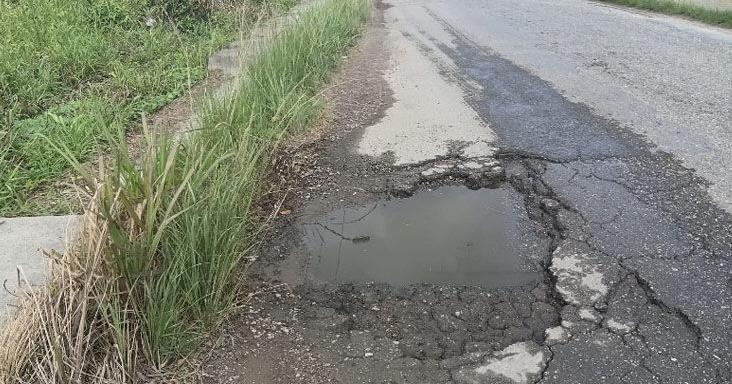
    Hospedales called on the Trinidad and Tobago Police Service (TTPS) and the Ministry of Homeland Security to improve transparency around their anti-crime efforts. “People need to know what steps are being taken to keep us safe. Regular communication would go a long way to easing the fear that people live with every day,” she said. She also joined calls to fix crumbling local infrastructure, pointing to countless dangerous potholes on area roads, and echoed Ramsumair’s call for youth-focused public amenities, such as a community centre or public playground to give local children a safe space to gather.

    Like Ramsumair, Hospedales has never had contact with her local MP: she says she has never met Seecheran, though she acknowledged that he may have campaigned in the area during work hours when she was not home.

    A retired 2023 member of the Trinidad and Tobago Defence Force (TTDF), who spoke to the *Sunday Express* on condition of anonymity, offered a more measured but still critical take, describing the government’s progress as “very slow.” He acknowledged that the administration has only been in office for 12 months, saying voters should give the government roughly two years to deliver on its promises before issuing a final judgment. Still, he admitted, he has not seen any tangible changes in the community a year in.

    Interestingly, the retired veteran, who spent 19 years in the TTDF and abstains from voting due to personal religious beliefs, said he would still choose the UNC over the PNM if he ever cast a ballot. His loyalty stems from a 2013 back payment he received during the UNC’s last term in office – the largest he ever received during his career.

    Like other residents, he pointed to the overgrown, unmaintained Chin Chin Main Road as a visible sign of decline after the CEPEP shutdown. He explained that overgrown grass now completely covers exposed, unprotected manholes, forcing pedestrians to walk in active roadways and putting lives at risk. Echoing widespread community frustration, the veteran argued that the government made the wrong call when it shut down CEPEP entirely. “CEPEP definitely had a corruption problem tied to its contractors, but it was a good program that worked for working people. Prime Minister Kamla Persad-Bissessar should have cracked down on the corrupt contractors, not cut the program that supports everyday workers,” he said.

    On the issue of crime, which impacts the entire country as well as Cunupia, the veteran said that while the problem can be solved, the government needs to stop taking half-measures to address it. He also pushed back on common stereotypes about local youth unemployment, rejecting claims that young people are lazy or uninterested in working. “If you actually spend time in this community, you’ll see most young people are out here hustling every day just to get by. They don’t have permanent, stable work – but they desperately want it,” he said.


  • Better days are ahead, just hold on!

    Better days are ahead, just hold on!

    Standing before thousands of soaking-wet but unwavering supporters at her United National Congress (UNC) party’s annual congress held in Couva on Sunday, Trinidad and Tobago Prime Minister Kamla Persad-Bissessar marked the first anniversary of her administration’s return to power, delivering a keynote address that balanced accountability, promise, and calls for patience from the nation’s citizens.

    Draped in the UNC’s iconic golden yellow attire, Persad-Bissessar greeted thousands of attendees — which she estimated between 17,000 and 20,000 based on local police estimates — as she processed through the packed crowd toward the main stage. Even when heavy rain broke out mid-speech, her supporters refused to leave their positions, a show of loyalty that underscored the strong base of support for the new administration.

    Opening her address, the Prime Minister drew a sharp contrast between her administration and the previous 10-year rule of the People’s National Movement (PNM), claiming that UNC supporters had been systematically excluded, abused, and marginalized during the opposition’s tenure from 2015 to 2025. She asserted that her leadership would break from this pattern of retaliatory exclusion, while also promising to address past harms done to UNC loyalists. “I am not going to advantage anyone, but I will square up the account because the bad treatment of good people cannot go unanswered,” she told the crowd. “I have nothing to lose. Why? Because we lost everything before.”

    Reiterating the UNC’s core 2024 campaign promise that “When the UNC wins, everybody wins,” Persad-Bissessar acknowledged that many citizens have not yet felt tangible improvements from the new government’s actions, even as the country has started to reverse the national decline inherited from the previous administration. She stressed that while meaningful progress has already been made, significant work remains to deliver widespread prosperity.

    One of the central policy priorities of the UNC’s first year has been addressing the nation’s persistent unemployment crisis, a top concern for voters before and after last year’s general election. Persad-Bissessar sharply criticized the PNM’s long-running temporary make-work programs, the Community-Based Environmental Protection and Enhancement Programme (CEPEP) and the Unemployment Relief Programme (URP), arguing that these initiatives trapped low-income citizens in cycles of entrenched poverty instead of delivering sustainable economic opportunity, while also becoming riddled with corruption and mismanagement of public funds.

    Her administration has made the controversial decision to restructure the existing CEPEP and URP frameworks, a short-term painful adjustment that she said has already cleared the way for long-term sustainable job growth. Despite inheriting a nearly empty national treasury from the previous government, Persad-Bissessar reported that her administration has already created more than 15,000 full-time, meaningful jobs across multiple government ministries. If current growth trajectories hold, she projected that the administration could deliver more than 70,000 new jobs over its five-year term ending in 2030.

    Multiple upcoming infrastructure and economic development projects are set to add thousands more positions in the near term, the Prime Minister announced. New housing developments run by the Housing Development Corporation (HDC) are expected to generate more than 3,000 jobs, while the first phase of the government’s national revitalization plan will add approximately 4,000 additional roles. She also unveiled two major industrial and economic expansion projects: a 500-acre expansion of the Plipdeco industrial estate at Point Lisas, and a newly Cabinet-approved 256-acre Special Economic Zone in Picton, adjacent to the University of the West Indies South Campus, that will be purpose-built to host data center operations. Both projects already have companies negotiating memoranda of understanding for space, and are projected to create thousands of long-term private sector jobs. A third partnership with international firms to revitalize the Point Fortin heritage storage tank farms and local marine infrastructure will add further employment opportunities, she added.

    Housing and land distribution have also emerged as core drivers of job creation and public good under the UNC administration, Persad-Bissessar said. The country faces a backlog of more than 228,000 housing applicants, and the government has advanced a $3.4 billion public-private partnership (PPP) housing project that does not draw on taxpayer funds. Ten parcels of public land have already been transferred to the HDC to build 1,543 new housing units, with another 3,700 new homes planned through PPP models this year and next, creating an additional 3,000 construction and related jobs.

    The administration also reintroduced its popular Land for the Landless programme in January, which has already received more than 20,000 applications from citizens seeking land access. All applications are being reviewed under a transparent new framework, and every applicant will receive formal feedback, the Prime Minister confirmed. To date, the Ministry of Land and Legal Affairs has already delivered 553 Caroni land leases, issued 200 Certificates of Comfort, granted 137 State land grants, and resolved long-running land disputes impacting 100 families.

    Closing her address to supporters, Persad-Bissessar acknowledged that many individual citizens have not yet accessed the new jobs or services the government has created, and urged the public to maintain patience through the ongoing transition. “Hold strain, Dorothy, hold on Dorothy…better days are coming, better days are ahead, just hold on!” she implored, repeating her core message that after a period of painful adjustment, widespread economic joy and prosperity will follow under the UNC government.

  • Auditor General flags $36.56b in unverified tax revenue

    Auditor General flags $36.56b in unverified tax revenue

    Trinidad and Tobago’s national public finances for the 2025 fiscal year face significant scrutiny after the country’s Auditor General Jaiwantie Ramdass issued a qualified opinion on the 2025 Public Accounts, highlighting unresolvable gaps in billions of dollars in tax revenue and millions in improperly documented government spending that undermine the reliability of official financial statements. The audit report, officially titled *The Report of the Auditor General of the Republic of Trinidad and Tobago on the Public Accounts of the Republic of Trinidad and Tobago for the financial year ended September 30, 2025*, was formally tabled in the national Senate this Friday, bringing these long-running financial irregularities into public view.

    At the core of the auditor’s concerns is a $36.56 billion pool of total tax revenue that auditors were unable to verify due to persistent unreconciled discrepancies across three critical government accounting systems: official Treasury revenue statements, Inland Revenue Division receipts and disbursements logs, and the division’s GenTax digital reporting system. Ramdass explained that material mismatches between the three datasets for value-added tax and individual income tax were left unresolved by the end of the fiscal year, leaving auditors unable to confirm whether any corrections to the reported tax totals would be required.

    Beyond unconfirmed tax revenues, the audit also uncovered $1.59 billion in total government spending – equal to roughly 2.43% of the 2025 fiscal year’s total reported expenditure of $65.45 billion – that lacked the necessary supporting documentation to verify that payments were legitimate, correctly categorized, and properly recorded. Ramdass confirmed that the entire audit was conducted in full alignment with the International Standards of Supreme Audit Institutions (ISSAI), and that the Auditor General’s office maintained full independence from the central government in line with global ethical auditing requirements. Ramdass noted that the evidence gathered was sufficient and appropriate to justify the qualified opinion the office has issued.

    The audit also laid bare long-standing negative trends in the country’s public finances that have persisted for more than two decades. The Exchequer Account, the core bank account for the national Consolidated Fund, remained overdrawn by $51.94 billion at the close of the 2025 fiscal year, marking an 11.55% increase from the $46.56 billion overdraft recorded the previous year. Ramdass confirmed that this account has been continuously overdrawn since 2003. As of September 30, 2025, total national public debt stood at $117.46 billion, a 6.65% increase of $7.32 billion year-over-year. This brings total public debt to 191% of the country’s annual total revenue, with $81.15 billion of that debt held domestically and $33.6 billion sourced from external lenders. Total annual public debt charges, including principal repayments and interest payments, hit $12.55 billion in 2025, a 4.16% year-over-year increase that accounts for nearly one-fifth (19.17%) of total annual government spending.

    Auditors also recorded that total outstanding arrears of government revenue reached $59.8 billion by the end of the fiscal year, with 89% of those arrears ($53.17 billion) falling under the responsibility of the Board of Inland Revenue for collection, and an additional 10% ($6.03 billion) the responsibility of the Ministry of Energy and Energy Industries. Notably, the office did not receive required arrears reports from multiple government revenue collectors, adding another layer of opacity to public revenue tracking.

    In addition to the broad systemic irregularities, the audit uncovered specific cases of misappropriated public funds and procedural violations. In one high-profile finding, $78 million in earmarked affordable housing infrastructure funds were misused by the state-owned Housing Development Corporation (HDC) for unrelated routine maintenance costs. The funds, allocated through the Infrastructure Development Fund’s Affordable Housing Programme, were released by the Ministry of Housing and Urban Development to the HDC specifically for new housing and infrastructure construction projects. Instead, the HDC redirected the full sum to pay contractors for routine operational services including grass cutting, municipal garbage collection, and drain cleaning – a use of funds that directly contradicts the approved purpose outlined by Parliament and violates national financial regulations.

    Procedural violations were also widespread across government ministries, departments, and agencies, the audit found. In multiple agencies, people collecting government cheque payments were not formally authorized to receive those funds, in direct violation of national Financial Instruction 118(2), which requires paying officers to confirm that claimants are the legally authorized recipients of public funds. Auditors found that no files containing authorized representative names and specimen signatures were kept for audit review, and in multiple cases, agency employees signed for cheques without receiving formal authorization from the intended payee.

  • Alcohol Sales Banned on Polling Day Under Electoral Law

    Alcohol Sales Banned on Polling Day Under Electoral Law

    As Antigua and Barbuda prepares for its upcoming 2026 general elections, the country’s independent Electoral Commission has issued a formal public reminder of a long-standing legal restriction that will be strictly enforced on polling day: a total ban on the sale and distribution of all alcoholic beverages while voting stations are open.

    Citing clear statutory authority from Section 27 of the nation’s Representation of the People Act, which falls under Chapter 379 of the country’s legal code, the commission clarified that the prohibition covers far more than just commercial sales. The regulation extends to any offering of alcohol for purchase, as well as the free distribution of intoxicating liquor, at any licensed drinking or sales establishment located within any electoral constituency across the country for the entire duration that polls are open.

    The timeframe of the ban runs directly from the moment voting stations open in the morning to their official closing in the evening on election day. Commission officials emphasized that the restriction is not a new measure, but a longstanding rule designed to preserve public order, protect the integrity of the voting process, and prevent voter influence or disorder that could arise from alcohol consumption near polling sites.

    Authorities have also issued a clear warning to the public and business owners that violations of this electoral law are considered criminal offences. Any individual found breaching the ban will face prosecution through a summary conviction process, with penalties reaching as high as a Eastern Caribbean $3,000 fine, or up to 12 months of imprisonment, depending on the nature of the violation.

    In closing, the Electoral Commission has called on all license holders, business owners, and members of the general public to adhere fully to this regulation to guarantee that the 2026 general election proceeds smoothly, peacefully, and in full compliance with national electoral laws.

  • Vredesvooruitzichten VS-Iran slinken na afgelasting vredesgesprekken door Trump

    Vredesvooruitzichten VS-Iran slinken na afgelasting vredesgesprekken door Trump

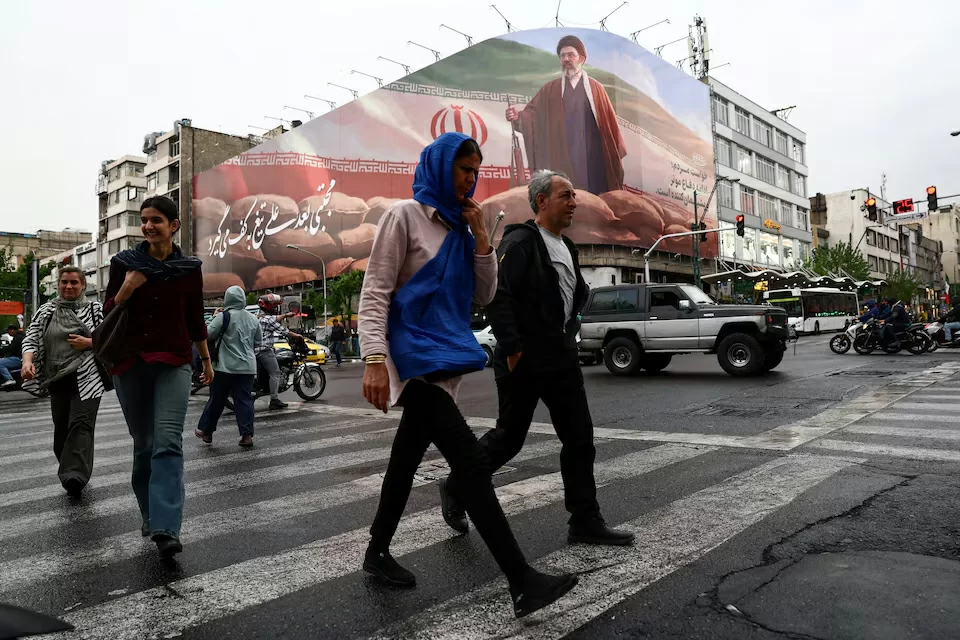
    After two months of open conflict between the United States, Israel and Iran, hopes for a diplomatic breakthrough to end the escalating regional crisis have faded significantly in the early days of this week, as both Tehran and Washington refuse to soften their non-negotiable preconditions, bringing peace talks to a complete standstill.

    The latest breakdown in negotiations came after Iranian Foreign Minister Abbas Araqchi concluded a visit to Pakistan on Saturday without securing any tangible progress, prompting US President Donald Trump to scrap the planned trip of his special envoys Steve Witkoff and Jared Kushner to the Pakistani capital Islamabad, where negotiations were set to take place. This latest development has pushed already dim peace prospects even further into uncertainty.

    The ongoing diplomatic impasse has trapped the world’s largest economy (the United States) and one of the Middle East’s most critical oil producers (Iran) in a protracted confrontation that has already sent global energy prices surging to multi-year highs, fueled broader global inflation, and dragged down projected economic growth across every major region worldwide. Compounding this economic risk, Iran has kept the strategically vital Strait of Hormuz largely closed to commercial shipping; the strait is the primary transit route for roughly 20% of the world’s daily oil and liquefied natural gas supplies, while US sanctions have blocked almost all Iranian oil exports to global markets.

    Iranian President Masoud Pezeshkian, who spoke by phone with Pakistani Prime Minister Shehbaz Sharif amid the collapsed talks, reiterated Tehran’s position that it will not participate in any negotiations that are imposed on the country under threat or economic blockade. Pezeshkian emphasized that the United States must first remove what Tehran calls “operational obstacles” — including the ongoing blockade of Iranian ports — before any productive talks can begin. While Araqchi described his Pakistan visit as “very productive,” an anonymous Iranian diplomatic source based in Islamabad made clear that Iran will reject what it views as the “maximalist demands” put forward by the US side.

    For his part, Trump defended his decision to cancel his envoys’ trip during remarks in Florida, claiming the journey would carry excessive costs and that Iran’s latest proposal did not meet US requirements. On his social media platform Truth Social, Trump also claimed there is “enormous internal strife and confusion” among Iran’s ruling leadership, writing, “Nobody knows who the boss is, not even they. We hold all the cards, they have none. If they want to talk, they just need to call!”

    Regional tensions have been further inflamed by Israel, which violated a three-week-old ceasefire by ordering Israeli forces to launch new strikes on Hezbollah targets in southern Lebanon, according to orders from Israeli Prime Minister Benjamin Netanyahu.

    Weeks prior, White House Press Secretary Karoline Leavitt had indicated that US officials saw some incremental progress from Iran, and said Vice President JD Vance — who led an initial, unsuccessful round of negotiations in Islamabad earlier this month — remained ready to return to the Pakistani capital for further talks. The current round of open conflict between the US, Israel and Iran began with joint US-Israeli airstrikes on February 28. In the months since, Iran has retaliated with strikes targeting Israeli territory, US military bases across the Middle East, and US-allied Gulf states. While a nominal ceasefire is currently in place, the regional situation remains highly tense and extremely fragile.

  • Onderzoek naar fraude met Moni Karta: coördinator tijdelijk ontheven

    Onderzoek naar fraude met Moni Karta: coördinator tijdelijk ontheven

    A fresh case of fraud linked to the Moni Karta social assistance program has been uncovered in Suriname, triggering an official probe that has already led to the temporary suspension of a senior coordinator at the country’s Ministry of Social Affairs and Housing (Sozavo). The investigation was launched after a program beneficiary filed a formal fraud allegation, marking the latest in a string of integrity concerns surrounding the welfare initiative.

    Sherwin Valies, department director at Sozavo, confirmed the development in an interview with local outlet Starnieuws, noting that the case has been handed over to national police for criminal investigation. Due to the active probe, Valies explained that few substantive details can be released publicly at this stage. “A formal report has indeed been filed. Since the investigation is still ongoing, I cannot go into detail about the specifics of the allegation,” Valies stated.

    The temporary removal of the implicated coordinator from her post aligns with the ministry’s strengthened integrity policy implemented in 2025, which requires that all staff under formal investigation be temporarily relieved of their official duties. Valies emphasized that the ministry followed this protocol strictly once the allegation was received from the claimant. “When we got the report from the client, we immediately applied our existing policy. The coordinator in question has been relieved of her duties, and we are now awaiting the outcome of the police investigation,” he explained.

    Despite the ongoing scandal, Valies stressed that core department operations and service delivery to program beneficiaries remain uninterrupted. A replacement has already been appointed to take over the suspended coordinator’s responsibilities, including critical work related to benefit distribution planning, ensuring no disruption to support for vulnerable populations.

    In response to repeated reports of irregularities connected to the Moni Karta program and within the General Social Assistance Benefits department, Valies also announced that the ministry will launch a separate internal administrative investigation to review systemic controls and governance gaps.

    The Moni Karta program was designed to deliver targeted financial support to low-income and socially vulnerable groups across Suriname. This latest discovery of potential fraud has reignited public and policy debate over the adequacy of oversight mechanisms and the effectiveness of the program’s implementation framework.

  • A trough will generate downpours and thunderstorms across much of the country this Sunday.

    A trough will generate downpours and thunderstorms across much of the country this Sunday.

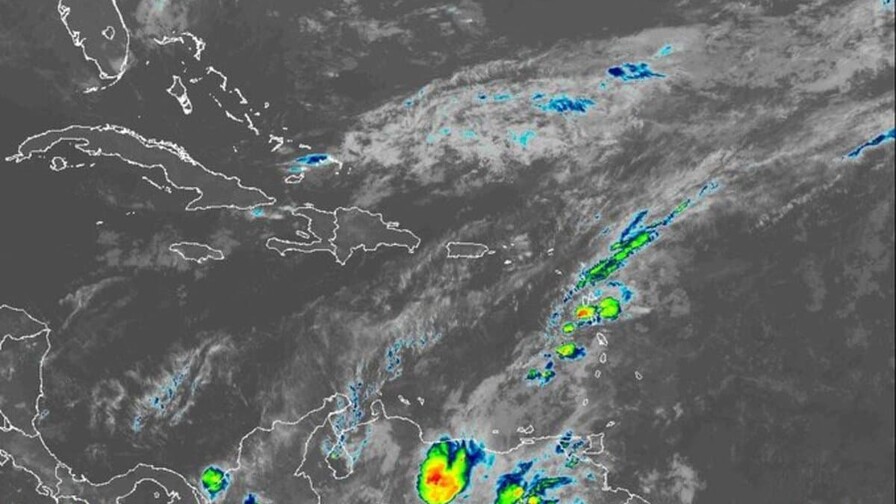
    On Sunday, the Dominican Institute of Meteorology (Indomet) issued an official update warning that a low-pressure trough will shape nationwide weather conditions, bringing a period of widespread rain that will ramp up through the day and stick around for the coming days.

    The wet weather is set to kick off in the early pre-dawn hours, with gradual building cloud cover and scattered light to moderate showers moving across the northwestern portion of the country by morning. Meteorologists specifically flagged Santiago Rodríguez, Montecristi, and Puerto Plata as the first provinces to see measurable rainfall as the system moves into the country.

    By mid-afternoon, conditions will worsen thanks to a combination of the existing trough and daytime atmospheric warming, which will supercharge cloud development and precipitation. Forecast models call for widespread thick cloud cover, followed by moderate to heavy downpours, rolling thunderstorms, and sudden gusty winds that will last into the early evening. A long list of provinces across the north and border regions are in the highest-risk zone, including Hato Mayor, Monte Plata, Sánchez Ramírez, Duarte, Hermanas Mirabal, María Trinidad Sánchez, and Espaillat.

    In response to the projected severe weather, Indomet’s National Forecast Center has issued formal weather advisories and alerts across multiple at-risk provinces. The main hazards highlighted are urban flooding, rapid rises in river and stream water levels, and an elevated risk of landslides in vulnerable terrain.

    For the Greater Santo Domingo area, forecasters predict mostly scattered cloud cover through most of the day, though they note that occasional thicker cloud formation and unexpected passing showers can not be completely ruled out. Across the entire country, temperatures will remain unseasonably hot despite the cloud cover and rain, with overnight lows ranging from 22°C to 23°C and daytime highs reaching between 29°C and 31°C.

    Indomet stressed that the weather pattern driven by the trough will not move on after Sunday, and that similar conditions – most notably afternoon rain and thunderstorms – will persist over the coming days. The agency has urged the general public to remain vigilant, keep updated with the latest official weather bulletins, and follow any safety guidance issued by local emergency management authorities.

  • Jhauw: Luchtverkeersleiding al jaren probleem, maar geen oplossing

    Jhauw: Luchtverkeersleiding al jaren probleem, maar geen oplossing

    Recurring outages of air traffic control services at Suriname’s Johan Adolf Pengel International Airport have triggered fresh, widespread disruptions to regional and international flight operations, forcing multiple commercial carriers to divert incoming and outgoing flights to alternate airports across the Caribbean and South American region. On Saturday, the Dutch flagship carrier KLM was forced to reroute one of its aircraft bound for Suriname to Piarco International Airport in Trinidad and Tobago, where the flight and its crew and passengers were required to overnight in Port of Spain due to the extended flight time incurred by the diversion. Other stranded passengers on diverted flights were forced to lay over indefinitely in neighboring Guyana as the airport remained non-operational for a large portion of the day, with no takeoffs or landings permitted during the service outage.

    Amichand Jhauw, chief executive officer of regional Suriname-based carrier Fly All Ways, has issued harsh public criticism of the ongoing crisis, labeling the air traffic control failures as a deeply rooted, structural problem that has plagued the country’s aviation sector for years. Jhauw noted that critical bottlenecks and staffing gaps in the air traffic control department have been well documented for years, but no meaningful, long-term solutions have been implemented by responsible authorities. “Problems continue to pile up because there is no structured, comprehensive approach to fixing the root causes,” Jhauw explained in an interview with local Surinamese outlet Starnieuws.

    An official Notice to Air Missions (NOTAM) issued by Suriname’s aviation authorities confirms that the temporary suspension of full air traffic control services stemmed from an acute staffing shortage, which forced the airport and surrounding airspace to be downgraded to a lower safety classification that could not support regular commercial operations.

    Jhauw warned that the consequences of inaction stretch far beyond costly flight delays and stranded passengers, stressing that the persistent instability could lead international airlines to permanently re-route flights away from Suriname, a shift that would cause long-term damage to the country’s national revenue. “If carriers decide they no longer want to fly through our airspace, we lose that critical stream of income entirely, and that kind of damage is not easy to repair – it can take years to recover from,” he said.

    Beyond lost revenue, Jhauw added that repeated disruptions are causing lasting reputational harm to Suriname’s aviation sector, and could erode the country’s international safety rating, making it even harder to attract reliable air service in the future. He emphasized that the crisis is particularly alarming because Suriname is almost entirely dependent on air connectivity to link it to the rest of the world, with no overland alternative transportation links such as cross-border rail or major highway connections to neighboring countries. “Aviation is our most important gateway to the world, and we cannot even keep that critical infrastructure operating reliably,” Jhauw said.

    The Fly All Ways CEO also slammed the responsible government agencies for their complete lack of communication and accessibility during the latest outage. He reported that airline operators were unable to reach any responsible officials to coordinate operational adjustments during the crisis, even as the outage triggered immediate operational costs and financial losses for carriers. “Airlines are being forced to absorb unnecessary extra costs with no prospect of compensation from authorities,” Jhauw stressed.

  • 37th Session of the Sectoral and Thematic Table on Social Protection in Haiti

    37th Session of the Sectoral and Thematic Table on Social Protection in Haiti

    Amid ongoing efforts to build a more inclusive and coordinated support system for vulnerable populations across Haiti, the country’s Ministry of Social Affairs and Labor (MAST) has brought together key sector stakeholders for the 37th gathering of its high-level Sectoral and Thematic Table on Social Protection (TSPS). Organized by MAST’s internal Studies and Programming Unit (UEP), the hybrid event, held both in-person at Port-au-Prince’s Montana Hotel and accessible to global participants via live videoconference, opened this week with a clear core mandate: strengthen institutional and multi-partnership coordination to address longstanding gaps in Haiti’s social protection ecosystem.

    In his formal opening address to attendees, Social Affairs Minister Marc-Elie Nelson centered his remarks on the critical role of Haiti’s National Policy on Social Protection and Promotion, framing the framework as a foundational strategic asset for MAST’s work. He explained that the recurring TSPS sessions serve a unique purpose in the sector: creating a structured space for cross-stakeholder dialogue, breaking down silos that have historically fragmented social protection interventions, and unifying diverse actors around aligned, collective action.

    “It is non-negotiable that every intervention, whether led directly by the Haitian state or implemented by our technical and financial partners, aligns fully with this national framework and contributes to its coherent rollout,” Nelson stated. He went on to reaffirm MAST’s unwavering commitment to sustaining collaborative partnerships, upholding alignment with national development priorities, ensuring intervention coherence, and leveraging complementary strengths across all participating organizations.

    Marie Hérolle Michel, Director General of MAST, followed the minister’s remarks by praising the consistent engagement and proactive energy of all stakeholders working to advance social protection across Haiti. She called for deeper cohesion and targeted collaboration to deliver tangible, practical results that directly improve the lives of Haitian citizens. “A cohesive national social protection system starts with cohesion right here within the Ministry of Social Affairs and Labor,” Michel emphasized, underscoring the importance of internal alignment to set an example for external partners.

    The 37th TSPS session featured a structured agenda focused on progress tracking and future planning. Attendees heard a joint presentation on the Social Protection and Employment Accelerator Joint Project from leads Sergot Jacob and Thomas Debrouwer. Barbara Canton and Jonès Pyram delivered a comprehensive overview of key progress and achievements delivered through the TSPS framework over the preceding term. Claudy Louis, the TSPS Focal Point, walked attendees through the newly revised Terms of Reference for the roundtable, updating operational guidelines to reflect evolving sector needs. Finally, Lucny Cadet, Coordinator of MAST’s UEP, presented a formal action plan designed to revitalize the TSPS mechanism and expand its impact moving forward.

  • The MTPTC is tackling the obstacles in the construction sector in Haiti

    The MTPTC is tackling the obstacles in the construction sector in Haiti

    Against a backdrop of widespread infrastructure stagnation and limited economic growth across Haiti, the country’s Ministry of Public Works, Transport and Communications (MTPTC) has launched a targeted effort to diagnose and resolve the systemic barriers holding back the nation’s critical construction industry. On April 26, 2026, MTPTC head Joseph Almathe Pierre Louis, a professional engineer, convened a high-stakes working meeting with leadership from the Haitian Association of Construction Companies (AHEC) to align public and private priorities for the beleaguered sector.

    The core mandate of the gathering was straightforward: map the most pressing challenges that have stalled industry progress, then build a collaborative regulatory roadmap to unlock the sector’s potential as a driver of national development. From the opening of discussions, participants agreed that sweeping restructuring of Haiti’s fragmented construction market is a non-negotiable first step. Minister Pierre Louis stressed that more rigorous, organized governance of the sector is required to deliver long-term, sustainable improvements that benefit both industry operators and Haitian communities at large.

    Two particularly pressing pain points emerged as top priorities for reform. First, attendees addressed longstanding frustrations around access to public procurement opportunities. Existing eligibility criteria for public tenders are widely viewed as overly restrictive and poorly aligned with the capacity of Haiti’s local construction firms, locking many domestic providers out of both national and international contracted projects. Second, the group flagged chronic payment delays for completed work as a major drain on the national economy. The consistent failure to disburse funds to construction companies on schedule has eroded the financial health of local operators, severely limiting their ability to invest in new equipment, expand workforces, and take on additional projects.

    By the close of the meeting, attendees had agreed on a concrete next step: develop a formal project summary that outlines shared strategic objectives and ranks the most urgent constraints to address. The overarching goal of the collaboration is to reshape Haiti’s construction sector into a well-structured, fiercely competitive, and fully transparent engine of national economic growth. This coordinated public-private initiative aligns directly with the Haitian government’s broader commitment to roll out large-scale national modernization projects across the country, while simultaneously creating space for local entrepreneurship to thrive.