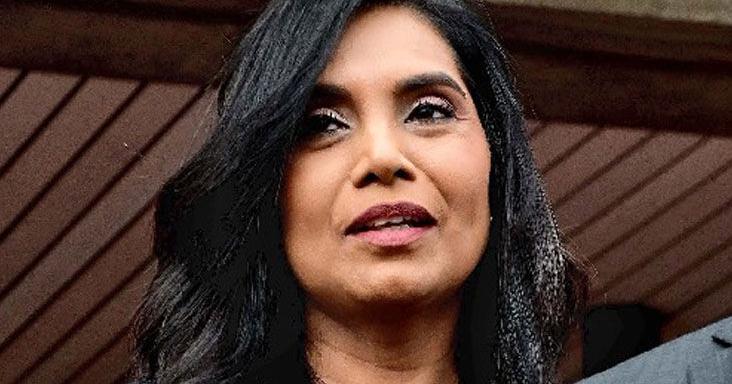
Trinidad and Tobago’s national public finances for the 2025 fiscal year face significant scrutiny after the country’s Auditor General Jaiwantie Ramdass issued a qualified opinion on the 2025 Public Accounts, highlighting unresolvable gaps in billions of dollars in tax revenue and millions in improperly documented government spending that undermine the reliability of official financial statements. The audit report, officially titled *The Report of the Auditor General of the Republic of Trinidad and Tobago on the Public Accounts of the Republic of Trinidad and Tobago for the financial year ended September 30, 2025*, was formally tabled in the national Senate this Friday, bringing these long-running financial irregularities into public view.
At the core of the auditor’s concerns is a $36.56 billion pool of total tax revenue that auditors were unable to verify due to persistent unreconciled discrepancies across three critical government accounting systems: official Treasury revenue statements, Inland Revenue Division receipts and disbursements logs, and the division’s GenTax digital reporting system. Ramdass explained that material mismatches between the three datasets for value-added tax and individual income tax were left unresolved by the end of the fiscal year, leaving auditors unable to confirm whether any corrections to the reported tax totals would be required.
Beyond unconfirmed tax revenues, the audit also uncovered $1.59 billion in total government spending – equal to roughly 2.43% of the 2025 fiscal year’s total reported expenditure of $65.45 billion – that lacked the necessary supporting documentation to verify that payments were legitimate, correctly categorized, and properly recorded. Ramdass confirmed that the entire audit was conducted in full alignment with the International Standards of Supreme Audit Institutions (ISSAI), and that the Auditor General’s office maintained full independence from the central government in line with global ethical auditing requirements. Ramdass noted that the evidence gathered was sufficient and appropriate to justify the qualified opinion the office has issued.
The audit also laid bare long-standing negative trends in the country’s public finances that have persisted for more than two decades. The Exchequer Account, the core bank account for the national Consolidated Fund, remained overdrawn by $51.94 billion at the close of the 2025 fiscal year, marking an 11.55% increase from the $46.56 billion overdraft recorded the previous year. Ramdass confirmed that this account has been continuously overdrawn since 2003. As of September 30, 2025, total national public debt stood at $117.46 billion, a 6.65% increase of $7.32 billion year-over-year. This brings total public debt to 191% of the country’s annual total revenue, with $81.15 billion of that debt held domestically and $33.6 billion sourced from external lenders. Total annual public debt charges, including principal repayments and interest payments, hit $12.55 billion in 2025, a 4.16% year-over-year increase that accounts for nearly one-fifth (19.17%) of total annual government spending.
Auditors also recorded that total outstanding arrears of government revenue reached $59.8 billion by the end of the fiscal year, with 89% of those arrears ($53.17 billion) falling under the responsibility of the Board of Inland Revenue for collection, and an additional 10% ($6.03 billion) the responsibility of the Ministry of Energy and Energy Industries. Notably, the office did not receive required arrears reports from multiple government revenue collectors, adding another layer of opacity to public revenue tracking.
In addition to the broad systemic irregularities, the audit uncovered specific cases of misappropriated public funds and procedural violations. In one high-profile finding, $78 million in earmarked affordable housing infrastructure funds were misused by the state-owned Housing Development Corporation (HDC) for unrelated routine maintenance costs. The funds, allocated through the Infrastructure Development Fund’s Affordable Housing Programme, were released by the Ministry of Housing and Urban Development to the HDC specifically for new housing and infrastructure construction projects. Instead, the HDC redirected the full sum to pay contractors for routine operational services including grass cutting, municipal garbage collection, and drain cleaning – a use of funds that directly contradicts the approved purpose outlined by Parliament and violates national financial regulations.
Procedural violations were also widespread across government ministries, departments, and agencies, the audit found. In multiple agencies, people collecting government cheque payments were not formally authorized to receive those funds, in direct violation of national Financial Instruction 118(2), which requires paying officers to confirm that claimants are the legally authorized recipients of public funds. Auditors found that no files containing authorized representative names and specimen signatures were kept for audit review, and in multiple cases, agency employees signed for cheques without receiving formal authorization from the intended payee.