One year after the United National Congress (UNC) took power in Trinidad and Tobago, a recent on-the-ground survey of the party’s long-held stronghold of Chin Chin, Cunupia, reveals widespread dissatisfaction among local residents with the new administration’s performance, with many echoing criticism that the government has delivered little meaningful change from its predecessor.
Tricia Ramsumair, a 52-year-old local shopkeeper, was among the first to share her frustrations with the *Sunday Express* during the outlet’s recent community visit. In her assessment, the UNC’s first year in office has simply extended the stagnation that defined the previous People’s National Movement (PNM) administration. She described both governments as stuck in gridlock, with zero tangible progress for working-class communities.
From where Ramsumair stands, basic municipal services in the area have completely broken down: clogged drains remain uncleared, overgrown bushes choke local roadways, and widespread unemployment has left many neighbors struggling to afford basic food. “I don’t know if this government is delivering for other groups, but it’s not delivering for people like me,” she said.
The shutdown of the Community-Based Environmental Protection and Enhancement Programme (CEPEP) has hit Ramsumair directly, wiping out her only steady source of customer income. “CEPEP supported low-income workers, who are the backbone of my small shop. Now that their incomes are gone, small business owners like me are just one step away from poverty too,” she explained.
Ramsumair also called out local Member of Parliament Dr. Rishad Seecheran for failing to follow through on pre-election promises of accessibility. Ahead of the April 28 general election, Seecheran visited her household, left a contact card, and promised to respond whenever constituents needed help. But after the votes were counted, Ramsumair says she has never been able to reach him. “We called repeatedly, and we were just told he’s not around, not in the office, to call back or make an appointment. We’ve never actually spoken to him directly – the number he gave us goes unanswered,” she said. She added that while the entire ruling party was visible and accessible to voters before the election, the public is now completely shut out of their post-election work.
She also criticized the location and accessibility of Seecheran’s Madras Road office, noting that it creates unnecessary barriers for elderly residents, people with disabilities, those without personal transportation, and residents who lack experience navigating government support systems. The groups that need help the most, she argued, are often the ones that end up with no assistance at all.
Last week, Ramsumair received a call from UNC representatives inviting her to the party’s official one-year anniversary celebrations – a fact that reinforced her frustration. “They clearly know how to reach us when they need photo ops for events. They should put that same energy into visiting our communities instead of making us come to them,” she said, urging Seecheran to deploy a team of outreach workers to engage with constituents directly. She added that the community has a critical unmet need for a dedicated local community centre.
Ramsumair’s assessment is widely shared by her neighbors. Suzette Hospedales, a 40-year-old resident who has lived in the area for a short time, gave the new government a failing grade, calling its overall performance “poor.” For Hospedales, the top priority is addressing the country’s escalating crime crisis. She noted that while the UNC campaigned heavily on criticizing the PNM’s failure to get crime under control, the situation has only gotten worse since the new administration took office. “I have no confidence in their ability to turn this around,” she said, adding that reports of criminal activity across Cunupia are becoming more frequent every day.
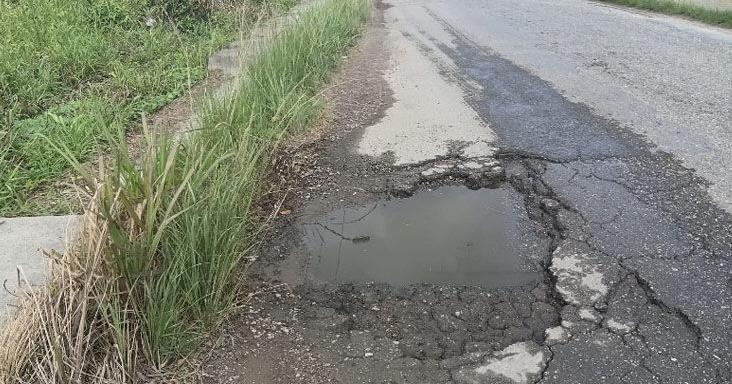
Hospedales called on the Trinidad and Tobago Police Service (TTPS) and the Ministry of Homeland Security to improve transparency around their anti-crime efforts. “People need to know what steps are being taken to keep us safe. Regular communication would go a long way to easing the fear that people live with every day,” she said. She also joined calls to fix crumbling local infrastructure, pointing to countless dangerous potholes on area roads, and echoed Ramsumair’s call for youth-focused public amenities, such as a community centre or public playground to give local children a safe space to gather.
Like Ramsumair, Hospedales has never had contact with her local MP: she says she has never met Seecheran, though she acknowledged that he may have campaigned in the area during work hours when she was not home.
A retired 2023 member of the Trinidad and Tobago Defence Force (TTDF), who spoke to the *Sunday Express* on condition of anonymity, offered a more measured but still critical take, describing the government’s progress as “very slow.” He acknowledged that the administration has only been in office for 12 months, saying voters should give the government roughly two years to deliver on its promises before issuing a final judgment. Still, he admitted, he has not seen any tangible changes in the community a year in.
Interestingly, the retired veteran, who spent 19 years in the TTDF and abstains from voting due to personal religious beliefs, said he would still choose the UNC over the PNM if he ever cast a ballot. His loyalty stems from a 2013 back payment he received during the UNC’s last term in office – the largest he ever received during his career.
Like other residents, he pointed to the overgrown, unmaintained Chin Chin Main Road as a visible sign of decline after the CEPEP shutdown. He explained that overgrown grass now completely covers exposed, unprotected manholes, forcing pedestrians to walk in active roadways and putting lives at risk. Echoing widespread community frustration, the veteran argued that the government made the wrong call when it shut down CEPEP entirely. “CEPEP definitely had a corruption problem tied to its contractors, but it was a good program that worked for working people. Prime Minister Kamla Persad-Bissessar should have cracked down on the corrupt contractors, not cut the program that supports everyday workers,” he said.
On the issue of crime, which impacts the entire country as well as Cunupia, the veteran said that while the problem can be solved, the government needs to stop taking half-measures to address it. He also pushed back on common stereotypes about local youth unemployment, rejecting claims that young people are lazy or uninterested in working. “If you actually spend time in this community, you’ll see most young people are out here hustling every day just to get by. They don’t have permanent, stable work – but they desperately want it,” he said.