作者: admin

  • Leisure : Did you know ? #20

    Leisure : Did you know ? #20

    As part of its ongoing mission to make knowledge accessible and engaging for audiences across the globe, HaitiLibre has rolled out its latest monthly update for the popular QuizHaitiLibre platform, adding 28 brand new interactive games to its growing digital library. The April 8 expansion comes alongside the 20th installment of the outlet’s beloved “Did You Know?” series, which shares little-known educational facts pulled directly from answer explanations featured on the quiz platform.

    This week’s fact spotlight dives into the remarkable biology and evolution of cetaceans, the diverse order of fully aquatic mammals that encompasses all species of whales, dolphins, and porpoises. Unlike cold-blooded fish that rely on gills to extract oxygen from water, cetaceans are air-breathing creatures that must surface regularly to exchange air through a specialized opening called a blowhole. As warm-blooded homeotherms, they maintain a stable core body temperature even in frigid deep ocean waters thanks to a thick, insulating layer of fat called blubber. Cetacean females also nurse their offspring with energy-dense, high-fat milk that supports extremely rapid growth rates for newborns.

    Taxonomically, the cetacean order is split into two distinct subgroups based on feeding adaptations. Odontocetes, or toothed cetaceans, include iconic species such as orcas and bottlenose dolphins, which hunt prey using their sharp teeth. Mysticetes, by contrast, are filter feeders equipped with flexible, hair-like baleen plates that allow them to strain huge volumes of seawater to capture tiny plankton; humpback whales are one of the most recognizable members of this group. Over millions of years of evolution, cetaceans have adapted so completely to a marine lifestyle that they complete their entire life cycle in water, and many species have developed sophisticated echolocation systems to navigate, communicate, and hunt in the total darkness of the deep ocean.

    The QuizHaitiLibre platform caters to knowledge seekers of all skill levels, with a curated selection of dozens of original games covering topics ranging from Haitian current affairs and culture to global natural history and general knowledge. All games on the platform are 100% free to access, require no user registration, and are available in both French and English to serve a broad multilingual audience. Each quiz is offered in three difficulty tiers—normal, intermediate, and advanced—allowing casual learners and seasoned trivia buffs alike to find challenges that match their expertise. The outlet adds new games to the platform every month, with the most recent update dropping 28 new quizzes on April 8.

    Visitors can explore the full library of games, test their general knowledge, and access past installments of the “Did You Know?” series by visiting the official QuizHaitiLibre website at https://quiz.haitilibre.com/en.


  • The CCIO issues an appeal : «Faced with the emergency, inaction is no longer an option»

    The CCIO issues an appeal : «Faced with the emergency, inaction is no longer an option»

    Amid a rapidly worsening security and logistics crisis in one of Haiti’s most critical economic corridors, the Chamber of Commerce and Industry of the West (CCIO) has issued an urgent appeal, warning that continued inaction will carry catastrophic human and economic consequences for the entire country.

    The crisis is unfolding across a strategic area bounded by National Road 1, Route 9, and the perimeter of Toussaint Louverture International Airport – a hub that connects key industrial operations, trade routes, and the country’s primary international gateway. The CCIO’s warning comes after three of Haiti’s largest private companies – Brasserie de la Couronne, Barbancourt Distillery, and Brasserie Séjourné – issued their own joint statement highlighting the growing threat to their operations in the region.

    Beyond the immediate risks to industrial sites, warehouses, and critical transport infrastructure, the CCIO emphasizes that the crisis is first and foremost a humanitarian emergency. Thousands of workers, their families, and entire local communities in the area now live in daily fear, facing constant uncertainty over their safety and livelihoods. Every job placed at risk in this strategic zone pushes another vulnerable household deeper into precarity, the chamber notes. When operations are halted, working parents lose the income they need to feed their children, cover school fees, pay for medical care, and maintain even the most basic stability in a country already grappling with systemic crisis.

    The impact of continued instability in this zone extends far beyond the private sector, affecting every layer of Haitian society. As a core economic artery for the Port-au-Prince metropolitan area, a full collapse of activity here would disrupt national supply chains, cut critical public revenue, eliminate thousands of formal jobs, and fray already fragile social cohesion across the country.

    The CCIO stresses that no credible plan to stabilize the Haitian capital can succeed without prioritizing the security and restoration of this vital corridor. Allowing a permanent lawless zone to take root just steps from the country’s main international airport would not only inflict severe long-term damage on Haiti’s already struggling national economy, but also condemn tens of thousands of local citizens to even harsher living conditions.

    To address the emergency, the CCIO has laid out four clear demands for Haitian authorities. First, it calls for immediate security interventions to protect workers, residents, and the broader local population. Second, it urges authorities to prioritize urgent rehabilitation of damaged critical road infrastructure – a prerequisite for any effective law enforcement deployment in the area. Third, it calls for measures to protect ongoing economic activity, preserve existing jobs, and prevent a further escalation of social vulnerability across the region. Finally, the chamber demands the establishment of a formal public-private consultation framework to enable continuous monitoring of the crisis and the development of long-term sustainable solutions.

    Reaffirming its commitment to collaborative problem-solving, the CCIO says it stands ready to contribute constructively to any technical or institutional initiative focused on protecting this strategic zone, upholding the dignity of affected families, and preventing what it warns could become a major humanitarian and economic catastrophe.

  • Symposium on Migration : The Minister of MAST advocates for the protection of Haitian migrants

    Symposium on Migration : The Minister of MAST advocates for the protection of Haitian migrants

    Against a backdrop of sustained global discourse around human mobility and displacement, Haitian policymakers and stakeholders gathered Wednesday, April 29, Push for coordinated, forward-thinking solutions to the country’s ongoing migration challenges. Hosted at Port-au-Prince’s Montana Hotel and organized by the Jean Price-Mars Diplomatic Academy with official backing from Haiti’s Ministry of Foreign Affairs, the one-day symposium centered on the theme “Haitian Migration and its Contemporary Dynamics: Between Crises, Mobility, and Public Responses”, bringing together leading voices from diplomacy, academia, and national government institutions to examine the current state of Haitian migration and map out actionable policy responses.

    Marc-Elie Nelson, Haiti’s Minister of Social Affairs and Labor (MAST), delivered the symposium’s keynote address, placing the protection of Haitian migrants at the top of the government’s policy agenda. “Migration has grown into one of the most pressing issues shaping international relations and public debate across the globe, and it is a defining challenge for our nation,” Nelson told attendees. He outlined a four-pillar approach to addressing the crisis: strengthening protections for Haitian citizens living abroad, deepening collaborative partnerships with the international community, expanding economic and social opportunities for young Haitians to reduce the pressure to emigrate, and more effectively integrating the Haitian diaspora into national development planning.

    Nelson used his remarks to reaffirm the Haitian government’s commitment to addressing the root drivers of forced migration. He emphasized that the administration would work across all relevant state institutions to advance inclusive social policies designed to reduce the systemic vulnerabilities that push thousands of Haitians to seek opportunities abroad each year.

    Pushing back against narratives that frame Haiti as permanently trapped in a cycle of human capital flight, Nelson struck a hopeful tone about the country’s potential. “Haiti is not condemned to perpetually export its youth and its most dynamic citizens,” he said. “Our country possesses extraordinary human resources, and our people have a well-documented resilience that is recognized across the entire world.” The minister outlined an ambitious vision to reframe migration as a coordinated national project, with the goal of building domestic capacity to retain young Haitian talent, encourage the return of skilled Haitians living abroad, and rebuild a sense of hope across the country.

    Beyond high-level government addresses, the symposium served as a critical collaborative platform for cross-sector experts to share new research and on-the-ground findings related to Haitian migration, laying the groundwork for future multi-stakeholder action on the issue.

  • Creative work at the forefront

    Creative work at the forefront

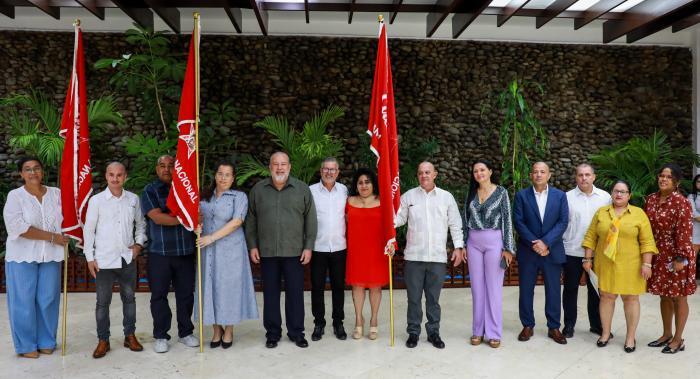
    In a pre-International Workers’ Day ceremony held on April 30, 2026, Cuban Prime Minister Manuel Marrero Cruz, who also serves as a member of the country’s Political Bureau, led an official event honoring 14 exceptional labor collectives under the Palco Business Group with the prestigious National Vanguard flag distinction. The award recognizes the group’s relentless drive to uphold productive output and creative problem-solving, even amid the long-standing, punitive economic blockade imposed by the United States on Cuba. Event organizers framed the group’s consistent commitment to meeting production targets as an act of resilience against external economic pressure, a stance that earned the 14 entities this top national honor.

    Among the recognized collectives, three organizations received the National Vanguard flag for the first time in their history: TRANSPAK, the Palco Customs and Freight Forwarding Company; the Central Office of Conex Company; and Palacio de Convenciones UEB. The remaining 11 collectives re-qualified for the honor, reaffirming their long track record of exceptional performance and alignment with national labor priorities.

    Beyond recognizing consistent domestic productive excellence, the ceremony also paid special tribute to Palco Business Group workers who were deployed to provide critical services in Venezuela during the unrest that unfolded on January 3 of this year. The emotional tribute highlighted the workers’ unwavering commitment to the core principles of the Cuban Revolution, as well as Cuba’s longstanding tradition of cross-border solidarity with other peoples across the Global South. Photographs captured by Estudios Revolución documented the entire ceremony, capturing moments of tribute and celebration among attending workers and government officials.

  • DNA-voorzitter Adhin: Politieke verdeeldheid vertraagt wetgevingsproces in DNA

    DNA-voorzitter Adhin: Politieke verdeeldheid vertraagt wetgevingsproces in DNA

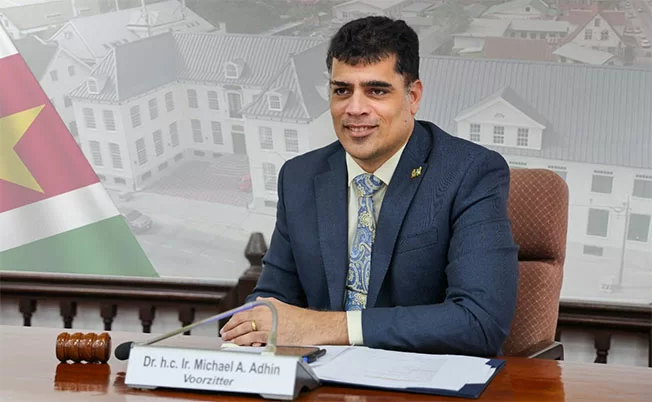
    Suriname’s National Assembly Speaker Ashwin Adhin has outlined the primary factors slowing the country’s legislative process, while pushing back against criticism of the current parliament’s low output of passed laws, arguing that thorough, high-quality lawmaking serves the nation better than rushed, error-ridden legislation. In an exclusive interview with local outlet Starnieuws, Adhin identified deep political division across political factions and extended preparation requirements for bill reviews as the two leading causes of delayed legislative action.

    Adhin explained that differing policy positions between parliamentary factions and frequent absences of elected members regularly force delays to the review of critical draft laws. Even within ruling coalition blocs and opposition groups, competing perspectives on sensitive pieces of legislation are common, requiring extended rounds of additional negotiations and consensus-building before bills can advance to plenary votes. While Adhin stressed that open disagreement is a natural, healthy component of democratic governance, he acknowledged that this political reality directly impacts the speed at which new laws can be enacted.

    Beyond ideological divides, the speaker also highlighted persistent challenges with achieving legislative quorum. When too few assembly members are present to meet the minimum attendance requirement, scheduled sessions cannot proceed and planned votes must be pushed back to a later date. To mitigate this issue, Adhin noted he now proactively coordinates with faction leaders ahead of planned sessions to confirm attendance numbers, and will cancel scheduled meetings if it is clear quorum will not be met. “If I know in advance there will be no quorum, I will not schedule a meeting,” he said.

    Adhin defended the current parliament’s legislative pace, arguing that the body should not be judged solely on the total number of bills passed, but rather on the quality and careful consideration that goes into each new law. Behind the public plenary sessions, he explained, parliamentary committees carry out intensive work to review bill content, propose amendments, and conduct rigorous legal testing to ensure legislation is sound. Rushed lawmaking, he warned, creates far larger problems down the line.

    To illustrate the risks of hasty legislative action, Adhin pointed to past flawed judiciary reform laws. While the Law on the Legal Position of the Judiciary took multiple years to enact, critical provisions related to funding were not fully calculated or detailed during the drafting process. This has required major, costly corrections after the law entered into force, demonstrating the cost of cutting corners. “Better to take a little extra time and get it right, than to fix mistakes after a law has already been adopted,” Adhin said, outlining his core governing principle.

    Currently, anti-money laundering and counter-terrorism financing legislation top the national assembly’s legislative agenda. Adhin emphasized these bills carry urgent priority, as Suriname must meet binding international regulatory obligations to avoid damage to the country’s financial reputation and an increased risk of being placed on an international financial blacklist. A new round of international compliance assessments is scheduled this year, but multiple required bills still need to be finalized to meet the deadline.

    Over the first nine months of the current parliament’s term, 294 meetings have been scheduled, of which 264 have been held. Eighteen draft bills have been introduced for review, but only three have been passed into law to date. Adhin projected that a larger batch of bills will be finalized in the coming months, with priority given to legislation tied to Suriname’s economic, financial, and governance priorities. Over the next nine-month period, he aims to see between 30 and 35 full bills passed and enacted, a major jump from the first term’s output.

    “A parliament should not rush to produce output just to hit numerical targets,” Adhin said. “It should legislate responsibly and sustainably in the interest of the people of Suriname.”

    Adhin is currently out of the country for a private visit to the Netherlands, and will remain away through May 5. While in Europe, he will also meet with Surinamese diaspora community leaders and potential international investors in coordination with the Surinamese embassy in The Hague. Despite his absence, a public plenary session on the new Fire Department Law remains scheduled as planned for the day of the interview.

  • Launch of the PSARA Klere Chimen project in the Southern Department

    Launch of the PSARA Klere Chimen project in the Southern Department

    In a major step forward for social welfare investment in Haiti, government officials formally launched the Adaptive Social Protection for Increased Resilience (PSARA Klere Chimen) initiative on April 29, 2026, in Port-Salut, located in the country’s Southern Department. The launch ceremony was led by Marc-Elie Nelson, Haiti’s Minister of Social Affairs and Labor (MAST), through the ministry’s specialized Project Management Unit (PMU), marking the start of a two-year support program for thousands of at-risk families across the region.

    Minister Nelson outlined the core scope of the new project, explaining that coverage will extend across six communes in the Southern Department, reaching a total of 6,485 vulnerable households that will qualify for direct state support. The program’s primary goal is to help eligible families cover a portion of their ongoing food and nutritional needs, a critical intervention in a region that has long faced economic instability and food insecurity challenges.

    Unlike conditional aid programs that require recipients to meet specific requirements to receive support, PSARA Klere Chimen delivers assistance through monthly unconditional cash transfers disbursed in local Haitian Gourdes. Payment amounts are structured based on household vulnerability levels to meet varying needs: eligible households with a single vulnerability factor receive the equivalent of $40 USD per month, while households that meet two or more vulnerability criteria qualify for up to $80 USD per month. Common high-priority vulnerability factors include having a household member with a disability, a pregnant or breastfeeding woman, or a child under the age of five. All transfers will be distributed over a 24-month period, providing long-term, consistent support for participating families.

    The entire $1,862,400 USD initiative is made possible through financial backing from two global development partners: the World Bank and Swiss Cooperation. The partnership between Haitian government institutions and international funders aligns with the country’s long-term social protection strategy to expand support for its most vulnerable populations.

    During his remarks at the launch, Minister Nelson emphasized that the program is far more than a short-term assistance measure. He argued that strategic social protection acts not only as a lifeline for families in need but also as a transformative driver for broader community stability and public confidence. By addressing immediate economic hardships, the initiative lays the groundwork for more sustainable long-term development across the Southern Department.

    Lucny Cadet, coordinator of MAST’s Studies and Programming Unit (SPU), expanded on the program’s dual design, noting that it is structured to meet both urgent needs and long-term household stability goals. Cadet highlighted the critical role of the ministry’s newly updated digital Social Protection Information System (SIMAST), which improves the accuracy of beneficiary targeting, ensures full traceability of all program interventions, and strengthens coordination between the multiple government and non-government stakeholders involved in the project.

    From an administrative perspective, the SPU will oversee strategic coordination and overall program management, ensuring that all interventions remain consistent with Haiti’s national social protection framework, particularly the National Policy for Social Protection and Promotion. The unit will also lead efforts to strengthen the project’s monitoring and evaluation mechanisms, enabling ongoing adjustments to improve outcomes and ensure full accountability for program funds and impact.

  • Republic Bank CPL announces player acquisition and draft rules for 2026 season

    Republic Bank CPL announces player acquisition and draft rules for 2026 season

    The 2026 edition of the Republic Bank Caribbean Premier League (CPL) has kicked off its pre-tournament preparations with the official release of updated player acquisition and draft regulations, launching a fresh three-year competition cycle that will run from 2026 through 2028.

    Crafted through collaborative discussions between league organizers, existing franchise owners, Cricket West Indies and other key stakeholders, the revamped regulatory framework introduces targeted adjustments designed to achieve three core goals: sharpen competitive balance across all participating sides, nurture young emerging cricket talent from the Caribbean region, and smoothly integrate the league’s first new franchise in recent years – the Jamaica-based Jamaica Kingsmen – into the 2026 tournament. All draft selections will be publicly revealed via the CPL’s official social media platforms on Friday, May 15, 2026.

    Under the new squad composition rules, every competing franchise will build a 17-player roster for the season, split into three defined groups: nine senior players eligible to represent the West Indies national side, five players sourced from outside the Caribbean, and three development-focused Breakout Players.

    As the expansion franchise joining the league for 2026, the Jamaica Kingsmen have been granted a set of unique draft privileges to help them build a competitive inaugural squad. The new side will hold the option to make the first three selections of the entire draft, with all three picks restricted to Jamaican-born or Jamaican-eligible players. The Kingsmen are not required to use all three of these priority picks, and none of these early selections can be countered by other teams using the league’s Right to Match Option (RMO). Additionally, the Kingsmen may only select a maximum of one player from any single existing franchise during this priority phase, and any team that loses a player to the Kingsmen in this opening round will be compensated with an extra RMO to use later in the draft.

    After the Kingsmen complete their priority selections, the rest of the draft will follow a structured order based on 2025 season standings, a system designed to boost competitive parity by giving weaker performing sides from the previous year earlier picks. The RMO system, which allows existing franchises to retain 2025 squad members if another side selects them during the draft, has also been updated for the 2026 cycle.

    Every returning franchise starts the draft with four RMOs: three can be used to retain any 2025 squad player regardless of their salary slot, while the fourth is reserved exclusively for domestic players (nationals of the franchise’s home territory) who occupied salary slots 7 through 17 on the 2025 roster. Any side that loses a player to the Kingsmen during the opening priority phase gains an additional RMO, which can be used in any draft round for any 2025 squad player from any salary bracket. The Jamaica Kingsmen will also receive one RMO of their own, which can only be used for a Jamaican player who held a salary slot between 7 and 17 in the 2025 CPL if they played last season.

    Ahead of the formal draft, each returning franchise is permitted to retain one Breakout Player from their 2025 squad – the only pre-draft player retention allowed under the new 2026 rules. Breakout Players remain a cornerstone of the CPL’s talent development strategy, with a new mandate requiring every team to field at least one player selected in rounds 15 through 17 of the draft in their matchday 11 for every game of the tournament.

    For overseas players, the rules allow franchises to sign up to five international players via direct private negotiation, and these signings will not enter the open draft. A maximum of four overseas players may be named in any matchday 11 during the tournament.

    Michael Hall, Tournament Operations Director for CPL, emphasized that the updated rules strike a careful balance between welcoming expansion and protecting the league’s competitive integrity. “We have worked closely with the seven CPL franchises, Cricket West Indies, and other key stakeholders to develop a framework that allows us to successfully introduce a seventh team while maintaining competitiveness and fairness across the league,” Hall explained. “We are excited to see how the squads take shape and are confident that the expanded tournament will raise the standard of the CPL even further.”

    This report is based on an official press release issued by Republic Bank CPL and distributed to regional sports media on April 30, 2026.

  • GPL threatens legal action against Chinese construction company for GY$30 million blackout losses

    GPL threatens legal action against Chinese construction company for GY$30 million blackout losses

    On Wednesday, April 29, 2026, state-owned Guyana Power and Light Inc. (GPL) announced it would pursue legal recourse against local subsidiary China Railway First Group (Guyana) Incorporated if the contractor fails to compensate GY$30.645 million for losses tied to a widespread four-hour power outage that disrupted tens of thousands of customers across Greater Georgetown earlier that week.

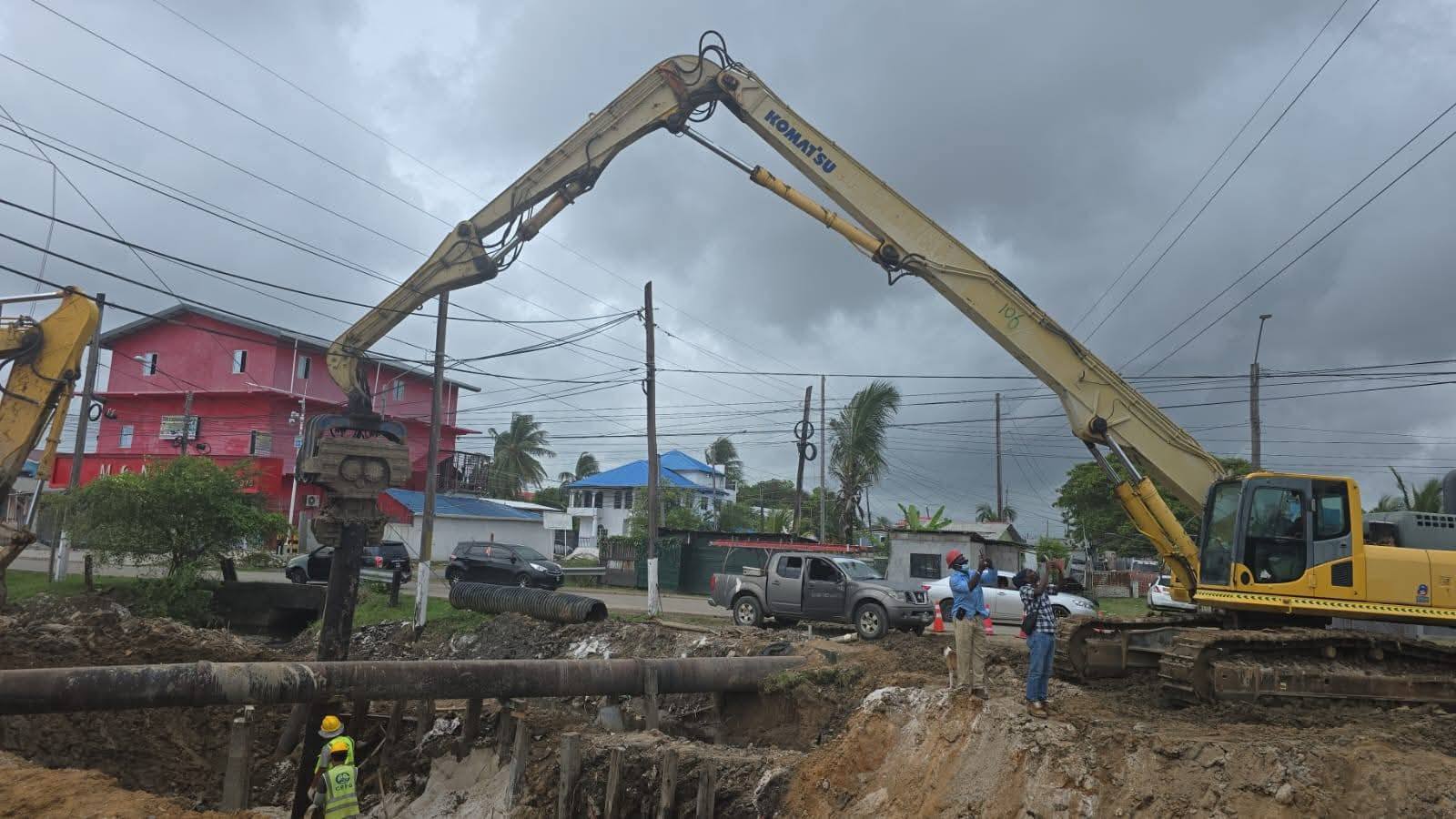
    The outage, which began at 8:50 a.m. on Sunday, April 26, was traced directly to unsafe construction work carried out by the firm on Dennis Street in the Sophia neighborhood of Greater Georgetown. According to GPL’s official investigation, heavy excavating machinery operated by the contractor came into unapproved contact with the L10 high-voltage transmission line that connects the new Georgetown and Sophia electrical substations. The accidental contact triggered a cascading failure that cut power to multiple communities for more than four hours.

    GPL confirmed that it has already delivered a formal demand letter to Ma Qiang, project manager of China Railway First Group (Guyana), giving the firm a 14-day window to remit the full claimed amount for damages and lost revenue. If the payment is not finalized within the deadline, GPL said it will initiate formal civil legal proceedings to recover the funds.

    In addition to the financial demand, the Guyana Police Force has already taken one person into custody in connection with the unsafe work that caused the outage. The incident also resulted in widespread disruption to daily life: local households, commercial operations, and critical public services all lost access to power for hours, leaving widespread inconvenience for residents and business owners across the affected area.

    GPL framed the incident as a serious violation of mandatory electrical infrastructure safety protocols. The utility emphasized that all construction work conducted near high-voltage lines and other critical electrical assets must follow strict clearance distance requirements, adhere to published national safety standards, and include pre-work coordination with GPL’s technical team.

    The company also warned that working too close to active electrical infrastructure poses an immediate lethal risk to workers and bystanders, capable of causing severe injury or death in addition to the widespread service disruption and critical infrastructure damage seen in this case. In a closing statement, GPL reiterated that all contractors and equipment operators operating in Guyana are required to follow all safety protocols when working near power lines, and any future violations will result in immediate, decisive action including financial recovery and legal action.

  • In them, work becomes their Homeland

    In them, work becomes their Homeland

    On the eve of International Workers’ Day 2026, Cuba held a solemn, emotion-filled ceremony to honor the nation’s most dedicated workers, recognizing their extraordinary contributions to national development amid persistent economic and social pressure from the long-standing U.S. blockade. The event, led by Miguel Díaz-Canel Bermúdez — First Secretary of the Central Committee of the Communist Party of Cuba and President of the Republic — celebrated workers who have embodied the resilience and collective commitment that define Cuban society.

    Before the official awards conferral began, Díaz-Canel held a closed-door gathering with approximately 80 workers from the country’s critical essential sectors, held in the El Laguito protocol hall. According to an official post from the Cuban Presidency’s X account, the discussion centered on the daily challenges workers navigate under the crippling effects of the U.S. trade and economic embargo. Workers across key fields including public health, education, culture, energy, and tourism shared firsthand accounts of how they have turned resistance and creative problem-solving into a way of life, sustaining critical services for communities across the island. During the meeting, Díaz-Canel emphasized that work in Cuba is far more than a routine professional obligation: it is an act of profound national commitment and patriotism, and a core pillar of the country’s ongoing resistance to external pressure.

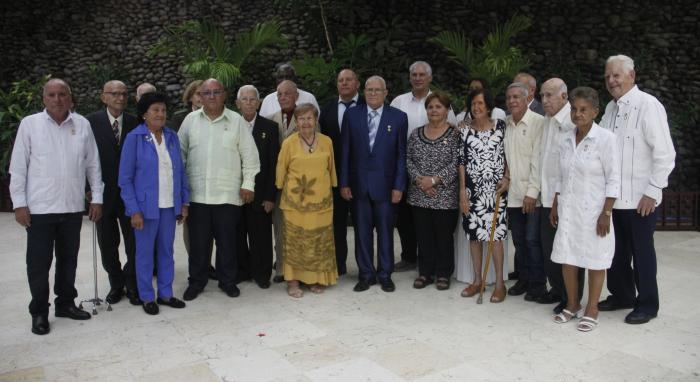
    At the formal awards ceremony, which was attended by senior Cuban political figures including Rebel Army Commander José Ramón Machado Ventura, Esteban Lazo Hernández (President of the National Assembly of People’s Power and the Council of State), Prime Minister Manuel Marrero Cruz, and other top leaders from the Communist Party, government, and mass organizations, Díaz-Canel conferred Cuba’s highest labor honor — the title of Hero of Labor of the Republic of Cuba — on 24 outstanding individuals spanning diverse sectors of the national economy and public life. The honorees include Martha López Guzmán from the José Martí UBPC, Luis Oscar Gálvez Taupier from the Icidca, Graciela María Rodríguez Pérez from the Alejo Carpentier Foundation, Antonio Gómez Delgado from the TVC Information System and Estudios Revolución, and dozens of other workers from education, healthcare, mining, military construction, internal security, and cultural institutions.

    Beyond the Hero of Labor titles, the ceremony also recognized dozens of additional outstanding workers and labor collectives with the Lázaro Peña Order (awarded in first, second, and third classes) and the Jesús Menéndez Medal, honoring sustained, exemplary service across the country’s workplaces.

    Every honoree carries a unique story of quiet devotion, creative resilience, and unwavering loyalty to the core principles of Cuba’s social project, where individual sacrifice consistently aligns with collective progress. The timing of the ceremony, held on the cusp of May 1, carries special symbolic weight: as Cuban workers prepare to march and celebrate International Workers’ Day, the recognition reinforces a core national belief that the homeland is defended not just through political action, but through the daily effort, responsibility, and unity of ordinary working people. In his remarks, Díaz-Canel underscored the deep honor of gathering with workers who prove every day that the Cuban people have the ingenuity and determination to overcome any obstacle placed in their path.

  • Princess Sarah Zeid of Jordan makes a humanitarian visit to Haiti

    Princess Sarah Zeid of Jordan makes a humanitarian visit to Haiti

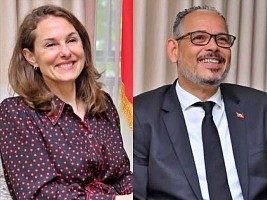
    In a high-stakes visit focused on addressing Haiti’s deepening humanitarian crisis, Princess Sarah Zeid of Jordan — Senior Special Advisor to the United Nations World Food Programme (WFP) — traveled to the Caribbean nation for an official mission in late April 2026, holding a series of strategic meetings with top Haitian government officials and global development stakeholders.

    On April 29, the first full day of her trip, Haitian Prime Minister Alix Didier Fils-Aimé formally welcomed Princess Sarah Zeid, opening talks centered on the country’s pressing humanitarian needs. Fils-Aimé used the meeting to reaffirm his administration’s unwavering dedication to lifting living standards for millions of Haitian residents, even amid the extraordinary security, economic and social instability that has defined the nation’s recent landscape. During their conversation, the prime minister also outlined the emergency and long-term measures his government has rolled out to bolster protections for Haiti’s most marginalized groups, with a specific focus on women and children, who bear the brunt of the ongoing crisis.

    The visit also included a cordial, outcome-focused discussion between Princess Sarah Zeid and Haitian Foreign Minister Raina Forbin. The pair centered their dialogue on expanding and deepening institutional cooperation between the Haitian government and the WFP, with particular attention to improving maternal and child health outcomes in the country’s challenging humanitarian context. Joining the meeting were Nicole Boni Kouassi, United Nations Resident Coordinator in Haiti, and Wanja Kaaria, WFP’s Country Director for the nation. Forbin publicly praised Princess Sarah Zeid’s decades-long dedicated leadership in global humanitarian action, specifically calling out her work advancing maternal and neonatal health equity around the world. She also reaffirmed the Haitian government’s commitment to growing this strategic partnership to deliver tangible support to the country’s most vulnerable communities.

    Beyond government bilateral talks, Princess Sarah Zeid led a high-level strategic gathering at Port-au-Prince’s Karibe Hotel, which convened a cross-section of Haitian national leaders and international representatives united around three core goals: building lasting peace in Haiti, advancing inclusive development, strengthening protections for women and girls, and expanding support for survivors of gender-based violence. Attendees framed discussions around two central priorities: providing targeted resourcing and policy support to grassroots Haitian feminist organizations, and advancing the sustainable restoration of security and peace across the country.

    The Karibe Hotel meeting included a diverse roster of attendees, among them Marie Goretti Nduwayo, UN Women Representative to Haiti; Nicole Kouassi, who serves dual roles as UN Resident and Humanitarian Coordinator with the UN Integrated Office in Haiti (BINUH); Wanja Kaaria, WFP’s Haiti representative; Yuki Takemoto, UNAIDS Country Representative for Haiti; Stéphanie Smith, Haiti’s Minister of Tourism; and Pédrica Saint-Jean, Haiti’s Minister for the Status of Women and Women’s Rights. The gathering also included delegations from roughly 10 grassroots Haitian women’s and feminist organizations, ensuring local voices shaped the strategic conversations around the future of gender equity and peacebuilding in the country.