作者: admin

  • Olieprijzen stijgen naar hoogste niveau in weken

    Olieprijzen stijgen naar hoogste niveau in weken

    Global crude oil markets delivered a historic jump on Wednesday, with prices climbing more than 6% to close at their highest levels in weeks, driven by escalating fears of prolonged Middle Eastern supply disruptions following stalled negotiations between the United States and Iran. A larger-than-expected drawdown in U.S. commercial oil and fuel inventories further amplified upward price momentum, compounding already tight market conditions.

    June Brent crude futures, the global benchmark for oil prices, notched an eighth consecutive day of gains on Wednesday, settling up $6.77, or 6.1%, at $118.03 per barrel — its highest closing level since March 31. In post-market trading, the benchmark extended its rally to hit $120 per barrel, a threshold not crossed since June 2022. U.S. West Texas Intermediate (WTI) crude futures for the same delivery month rose $6.95, or 7%, to settle at $106.88 per barrel, the highest peak since April 7.

    Market anxiety deepened after a White House official confirmed that former U.S. President Donald Trump has asked domestic oil producers to outline mitigation strategies for a potential months-long closure of Iranian ports by U.S. sanctions. Calculations from Reuters show the ongoing geopolitical conflict centered on Iran has already cut off more than $50 billion worth of crude oil from global markets. “An extended port blockage would worsen existing supply disruptions and push prices even higher,” warned Yang An, a senior analyst at Haitong Futures.

    Data from the U.S. Energy Information Administration (EIA) added further fuel to the rally, reporting that U.S. crude inventories fell by more than 6 million barrels last week. That drawdown far outpaced the 200,000 barrel decline analysts had forecast. Both gasoline and distillate fuel stockpiles, a category that includes diesel, also dropped more sharply than predicted. The inventory declines sparked fresh concerns over potential shortages in the world’s largest fuel consumer just as the summer peak driving season, a period of historically high fuel demand, gets underway. Analysts at RBC Capital Markets noted that growing seasonal summer demand paired with ongoing supply restrictions will likely provide additional upward support for oil prices in coming weeks.

    In another development that underscores the severity of current supply chain disruptions, the Abu Dhabi National Oil Company (ADNOC) has notified some customers that it may shift loading of two crude grades to ports outside the Persian Gulf next month, as the Strait of Hormuz, one of the world’s most critical energy chokepoints, remains closed, according to sources and a document reviewed by Reuters. The prolonged closure of the strait, through which roughly 20% of global oil trade passes daily, has already placed severe pressure on global oil and gas supplies.

    Beyond immediate supply disruptions, investors are also assessing the long-term market impact of the United Arab Emirates’ (UAE) decision to withdraw from OPEC. Callum Macpherson, head of commodities at Investec, noted that most analysts expect little near-term market impact, as Middle Eastern producers are projected to maintain maximum output levels to capitalize on high prices.

    However, research firm Wood Mackenzie warned that the UAE’s exit marks the most significant rupture in OPEC’s decades-long history, and increases the risk of global oversupply that could push oil prices lower starting in 2027. Simon Flowers, chief analyst at Wood Mackenzie, explained that the departure will have minimal impact on 2026 market dynamics even if the Strait of Hormuz reopens, but after that point, losing one of OPEC’s most productive members will make it far harder for the cartel to balance global markets, amplifying risks of oversupply and downward price pressure.

    Amid widespread geopolitical and economic uncertainty, gold has also emerged as a standout asset for investors. On April 30, 2026, gold settled at $4,541 per troy ounce, marking a 44% increase from April 2025 and hitting an all-time record high. The sharp rally is widely attributed to growing geopolitical tensions, persistent inflation concerns, and broad global economic uncertainty. Top Wall Street banks are split on how high prices can go: analysts from JPMorgan and Bank of America project gold will climb toward $5,000 per troy ounce by the end of 2026, while strategists at UBS and Deutsche Bank forecast prices could surge above $6,000 per ounce this year.

  • CNTT President warns employment growth is concentrated in informal work

    CNTT President warns employment growth is concentrated in informal work

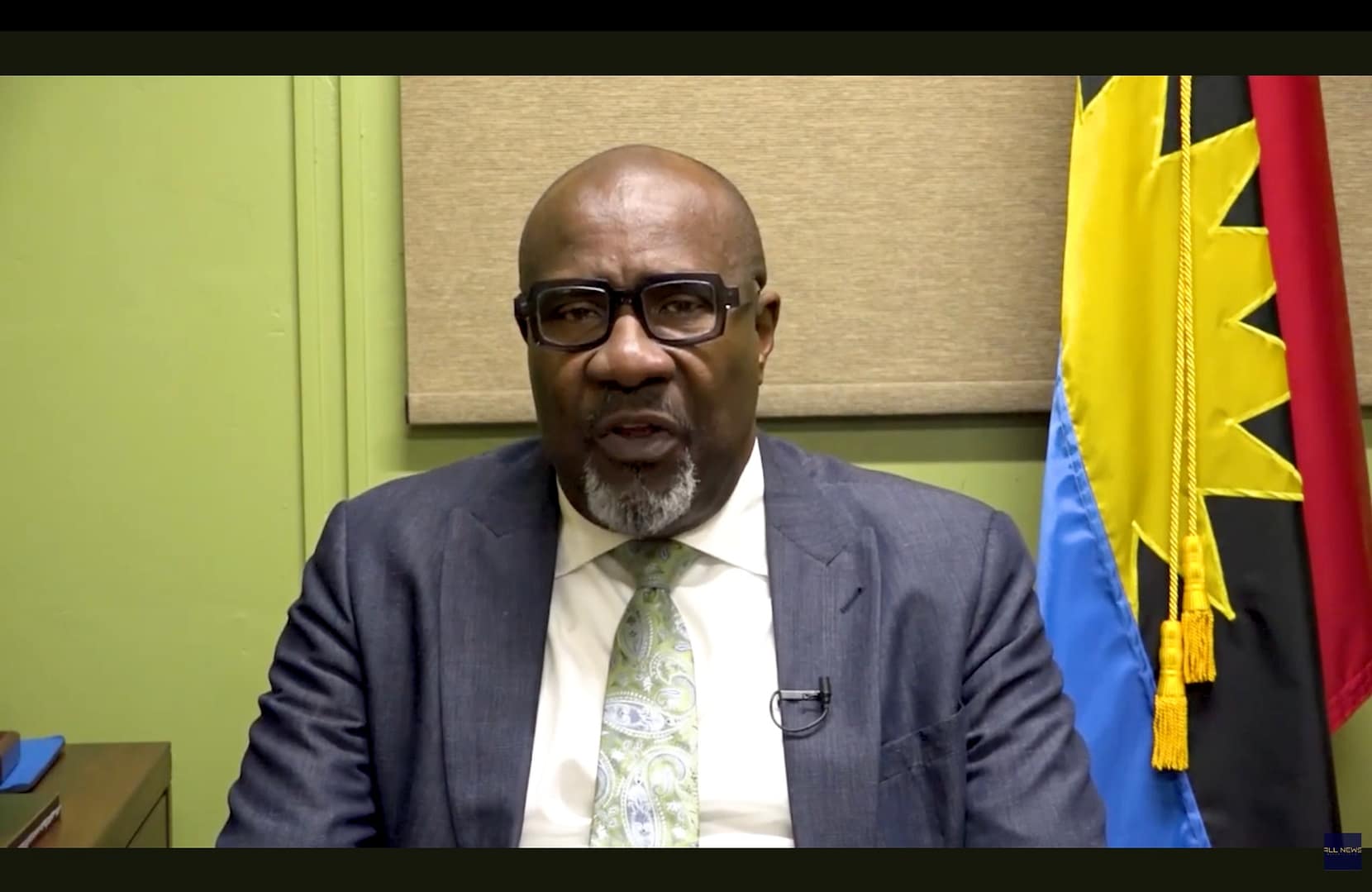
    On the occasion of International Workers’ Day, the top leader of the Dominican Republic’s largest transport workers’ organization has drawn public attention to a worrying discrepancy behind the country’s nominal employment gains over the last two years. Juan Marte, president of the National Confederation of Transport Workers (CNTT), revealed that total employment across the nation has expanded by roughly 5 percent since 2022 – but the overwhelming majority of these new positions have been created in the unregulated informal sector, not in formal, protected work arrangements.

    Marte specifically highlighted unregulated motorcycle taxi services as one of the single biggest drivers of informal job growth in the country. A large portion of the Dominican Republic’s registered and unregistered motorcycles are now deployed for commercial passenger transport, he explained, absorbing tens of thousands of workers who cannot find formal employment opportunities. Beyond motorcycle taxis, Marte outlined that the entire domestic transport sector – including licensed taxis, urban public transit, intercity bus routes, freight logistics, and other passenger services – generates approximately 200,000 total jobs across both formal and informal segments of the economy.

    A key point of concern raised by Marte is the rapidly growing share of immigrant workers filling informal transport roles, especially in the motorcycle taxi segment. He added that this pattern of over-reliance on informal immigrant labor extends beyond the transport sector, noting that core Dominican industries including agriculture, construction, and commercial food production have increasingly turned to non-domestic workers to fill labor gaps left by the absence of formal, attractive working conditions for local citizens.

    In his remarks centered on International Workers’ Day, Marte launched sharp criticism of the Dominican government for failing to implement targeted policy measures to protect formal workers and expand the number of regulated formal employment opportunities. He argued that systemic gaps in state support and labor regulation have pushed thousands of low-income Dominican citizens into unstable, high-risk informal work that offers little to no social protection or labor rights. Marte’s public comments echo widespread concerns shared by labor analysts and advocacy groups across the Dominican Republic, where informal labor has long persisted as one of the most defining structural characteristics of the national workforce.

  • Severe weather keeps four provinces on red alert in Dominican Republic

    Severe weather keeps four provinces on red alert in Dominican Republic

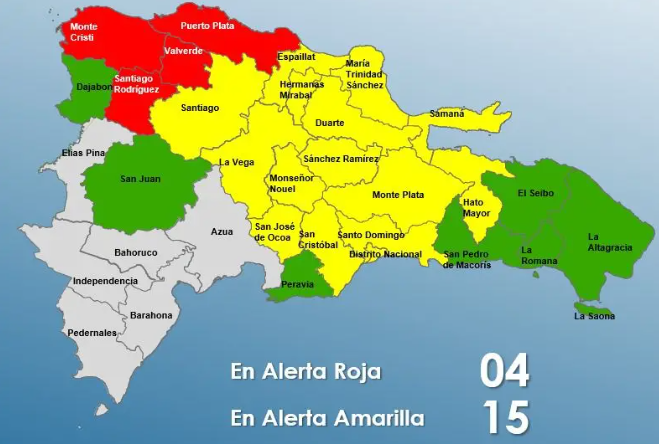
    A slow-moving atmospheric trough continues to dump relentless heavy rainfall across large swathes of the Dominican Republic, triggering a cascade of natural hazards that have left thousands displaced and critical infrastructure damaged, the nation’s Emergency Operations Center (COE) has confirmed. As of the latest official update, a three-tiered alert system remains in place, with four northern provinces – Monte Cristi, Puerto Plata, Valverde and Santiago Rodríguez – placed under the highest-level red alert, 15 additional regions under yellow alert, and a further seven under precautionary green alert.

    The unrelenting downpour has spawned a range of hazards across both urban and rural communities. Flash flooding has inundated low-lying neighborhoods and farmland, multiple rivers and small streams have burst their banks, and saturated hillsides have given way to landslides in scattered settlements across the affected zones. Official damage assessments paint a grim picture of the disaster’s human toll: more than 5,000 local residents have been forced to evacuate their homes to emergency shelters, while over 1,000 residential properties have sustained impacts ranging from minor flood damage to total destruction. Dozens of homes have suffered major structural compromise, and four dwellings have been completely lost to the weather event.

    Transportation networks have been heavily hit, with damaged roads and bridges cutting off access to 42 isolated communities that are yet to regain connection to surrounding areas. The nation’s water distribution network has also taken significant damage: 22 regional aqueducts are currently out of operation, cutting running water service to more than 300,000 registered users across the country. In response to the unfolding crisis, emergency response teams have been deployed across the hardest-hit zones, with 15 residents rescued from floodwaters in Santiago Rodríguez alone as of the latest report.

    Authorities have issued urgent public advisories warning all residents to avoid attempting to cross flooded roadways or swollen rivers, even if crossings appear passable. Drivers have been urged to reduce speeds and exercise extreme caution, as ongoing rainfall continues to cut visibility on roads across the alert zones. Meteorologists with the COE have extended warnings for continued precipitation across much of the nation in the coming days, with officials warning that the risk of further flooding and landslides will remain elevated until the trough system moves out of the region.

  • OPINION: Do Workers Feel Safe at Their Place of Work?

    OPINION: Do Workers Feel Safe at Their Place of Work?

    Workplaces hold dual realities for the global workforce: for too many, they are spaces rife with conflict, discrimination, chronic stress, and preventable hazards, while for others, they become protective environments where fundamental human rights are upheld. With the World Health Organization (WHO) estimating that nearly 60 percent of the global population participates in formal and informal work, the quality of workplace conditions directly shapes public health outcomes worldwide, making safe and healthy working conditions an inalienable human right rather than a discretionary perk.

    To draw global attention to the preventable burden of occupational harm, the international community marks April 28 annually as the World Day for Safety and Health at Work. The annual observance functions as a global awareness campaign, designed to highlight the scale of work-related injury and illness, and advocate for building a proactive culture of safety that cuts preventable deaths and disabilities across all industries.

    Decades of data from two leading global labor and health bodies, the WHO and the International Labour Organization (ILO), underscore the severity of the crisis: in 2016 alone, work-related accidents and diseases claimed an estimated 1.88 million lives, a toll that continues to rise as new threats emerge. Beyond long-recognized physical hazards, climate change has added a new layer of risk: climate-fueled extreme weather events cut working hours and output while exposing outdoor and vulnerable workers to life-threatening health and safety dangers.

    In recent years, the global conversation around occupational health has expanded far beyond physical injury and chemical exposure to prioritize mental health and psychosocial well-being, a shift accelerated dramatically by the COVID-19 pandemic. The crisis laid bare how unaddressed workplace mental health risks undermine both individual workers and economic productivity: the WHO estimates untreated depression and anxiety—conditions highly prevalent in toxic work environments—cost the global economy $1 trillion annually in lost output and reduced performance. A safe working environment that supports mental well-being, in turn, drives higher productivity, creating a mutually beneficial cycle for workers and employers.

    The psychosocial work environment, shaped by how roles are defined, work is organized, management practices are implemented, and workplace culture is cultivated, is a core determinant of worker health. Factors including unmanageable workloads, unclear role expectations, lack of autonomy, discrimination, and inadequate social support act as silent hazards that can trigger burnout, chronic stress, depression, and anxiety, just as surely as physical machinery or toxic chemicals pose tangible risks. Discriminatory scheduling practices, such as the overloading of teachers who lack administrative favor in educational systems, are just one common example of how harmful psychosocial working conditions erode worker well-being over time.

    Addressing these growing threats requires shared responsibility across all stakeholders. Governments bear the core obligation to build robust regulatory frameworks, enforce compliance through regular inspection systems, and establish public health infrastructure that supports sustainable, safe work for all. Employers are accountable for proactively designing safe working environments that address both physical and psychosocial hazards, including providing accessible mental health support, implementing fair scheduling and workload management, and offering regular health screenings and preventive care. Individual workers, meanwhile, have a role to play in following safety protocols, protecting themselves and their colleagues, and exercising their rights to participate in preventive safety measures.

    As the global community marks this annual observance, public health and labor advocates are calling for renewed commitment to prioritizing occupational health as a foundation for equitable, sustainable global development. As safety advocate Jerry Smith famously noted, “Safety isn’t expensive, it’s priceless”—a reminder that investing in worker well-being delivers returns that extend far beyond the workplace, to healthier communities and more inclusive economic growth.

  • Labour Week Message from the General Secretary, David Massiah

    Labour Week Message from the General Secretary, David Massiah

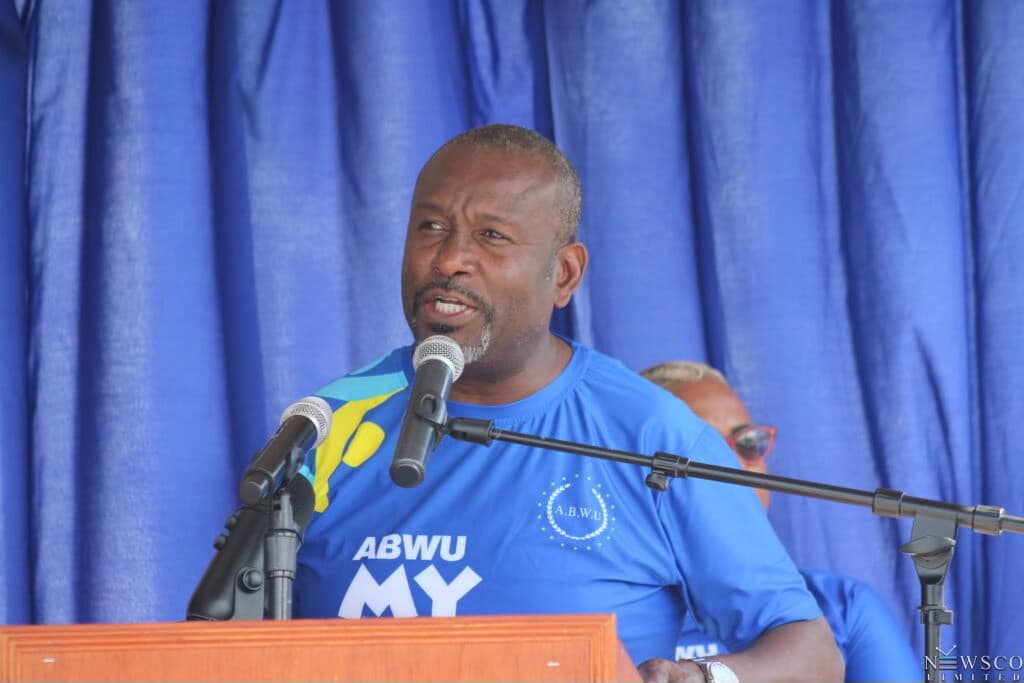
    As Antigua and Barbuda prepares to mark its annual celebration of workers, the Antigua & Barbuda Workers’ Union (ABWU) has launched this year’s Labour Week around the central theme: “Strengthening our Commitment to Social Development and Equity”. As a progressive, worker-first organization, the union emphasizes that decades-old labor protections are no longer sufficient to address the shifting demands of the modern workforce.

    This year’s commemoration carries deep historical roots: 74 years ago, in May 1951, Antigua and Barbuda officially recognized Labour Day as a public holiday for the first time. Working conditions in that era bore little resemblance to today’s landscape, defined by grueling 48-hour workweeks, minimal legal protections, widespread exploitation, and little guarantee of basic dignity on the job.

    The tide began to shift 16 years later, when the ABWU was founded in 1967, ushering in a new era of worker empowerment. Organized collective action through the union accelerated the creation of the Antigua Labour Code, a piece of legislation still widely considered one of the most comprehensive and progressive labor frameworks in the Caribbean region. This legal structure enshrined core protections for working people and set a regional benchmark for fair employment practices. The subsequent establishment of the national Social Security Scheme further strengthened worker stability, delivering critical support for retirement, guaranteed paid sick leave, and maternity protections that serve as a lifeline for working families across the twin island nation.

    Many of the ABWU’s earliest gains are traced to the tireless advocacy of founding leader Bro. Malcolm Daniel, whose landmark negotiations secured the reduction of the standard workweek from 48 hours to 40. That win was far more than a change to scheduling: it was a victory for human dignity, work-life balance, and the fundamental right of workers to spend quality time with their families.

    Today, standing on the foundation built by generations of organizers, activists, and striking workers, the ABWU celebrates the significant progress that has transformed work in Antigua and Barbuda, cementing fundamental labor rights and raising quality of life for workers across both islands. But union leaders warn that the global world of work is changing at an unprecedented pace, bringing new challenges that demand renewed commitment. The rise of artificial intelligence is reshaping entire industries, the informal gig economy is expanding rapidly, and remote work has become a permanent fixture for many sectors. These shifts bring new opportunities for flexibility and growth, but also create widespread uncertainty for working people, leaving gaps in existing protections.

    Against this backdrop, the ABWU says the core question facing workers and policymakers is how to continue advancing social development and equity in this new era. The union’s answer is sustained solidarity: remaining united, adaptive to change, and vigilant in protecting worker interests. Leaders stress that no matter how the workforce evolves, every worker is entitled to dignity, protected rights, and new benefits that boost quality of life. Workplaces, they argue, must never prioritize profit over the well-being of workers, and all people deserve fair living wages, financial stability, and freedom from exploitation and systemic discrimination.

    This Labour Week, the ABWU is issuing two key calls: first, for all workers across Antigua and Barbuda to stand together in collective solidarity, and second, for the national government to begin developing a formal framework for mandatory disability insurance for workers. Currently, the union notes that existing workers’ compensation programs fall far short of supporting workers who sustain permanent disabilities on the job, failing to cover ongoing living costs and leaving working families in vulnerable financial positions. This gap remains a top priority concern for the ABWU.

    As the nation heads toward Labour Day, the union is calling on all workers to renew their collective commitment to building a more equitable future for working people. All residents are invited to join this year’s official Labour Day Rally and March, scheduled for Monday, May 4 at the ABWU Headquarters on Lower Newgate Street. The event will serve as a public demonstration of worker unity, honoring the hard-won gains of the past while reaffirming the movement’s commitment to fighting for a better future for all working people in Antigua and Barbuda.

  • Police make progress in recent homicide, one person charged

    Police make progress in recent homicide, one person charged

    Against a backdrop of growing concerns over spiking gun violence across the Federation of St. Kitts and Nevis, law enforcement authorities have announced a significant investigative breakthrough in one of the territory’s most recent homicide cases.

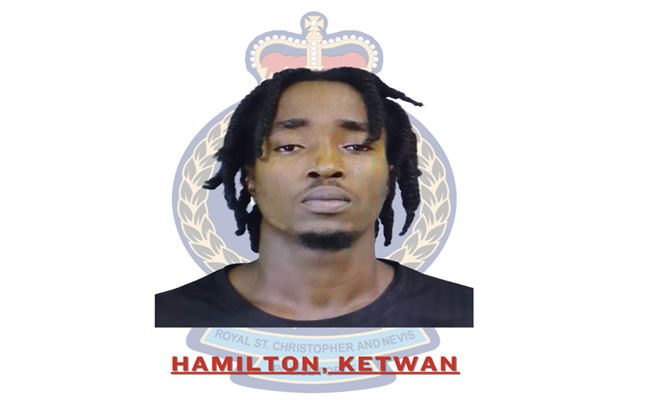
    On April 29, formal charges were filed against Ketwan Hamilton, a resident of the Lime Kiln Project neighborhood, in connection with a fatal public shooting that claimed the life of 22-year-old Shamari Baptiste just 10 days prior. The shooting unfolded at the Royal Kingdom Snackette, a local food establishment in Lime Kiln, between 1:00 a.m. and 2:00 a.m. on April 20, 2026.

    First responders arriving at the scene immediately found Baptiste unresponsive on the snackette’s floor. Investigators later confirmed the victim was a national of St. Vincent and the Grenadines who had been residing at Buckley’s Estate on St. Kitts. Preliminary accounts of the incident indicate Baptiste was simply waiting for his food order when an armed suspect approached him and opened fire, striking him in the neck. Baptiste was pronounced dead on site by responding emergency personnel.

    In an official update released to the public Thursday, April 30, police confirmed the full scope of charges against Hamilton, which extend far beyond the murder count. In addition to murder, Hamilton faces charges for illegal possession of a firearm, illegal possession of ammunition, discharging a loaded weapon in a public space, and possession of a firearm with the explicit intent to endanger human life. All charges were formally processed at the Basseterre Police Station.

    This latest arrest marks a notable milestone in the Royal St. Christopher and Nevis Police Force’s ongoing crackdown on gun-related crime. With Hamilton’s arrest, police have now taken four individuals into custody linked to two separate recent shooting incidents on the island of St. Kitts, as authorities ramp up efforts to reverse the recent upward trend in violent firearm offenses across the federation.

  • ABEC Chairman Calls for Order, Respect and Preparedness as Antigua Votes

    ABEC Chairman Calls for Order, Respect and Preparedness as Antigua Votes

    As Antigua and Barbuda prepares to hold its critical general election on Thursday, April 30, the chair of the country’s independent Electoral Commission (ABEC) has delivered a clear, urgent message to voters, political parties and all stakeholders involved: order, mutual respect and strict preparedness are non-negotiable to deliver a credible, trusted democratic outcome.

    Arthur G.B. Thomas, ABEC’s sitting chairman, framed the upcoming vote as a defining moment for the nation’s democratic trajectory, emphasizing that every citizen’s right to vote comes paired with a binding responsibility to uphold electoral regulations. At the top of the enforcement agenda is the mandate for valid official voter identification, a requirement Thomas confirmed will be applied without exceptions for any elector.

    “Let me be clear. No elector can be permitted to vote without a valid voter identification card,” Thomas stated, underscoring that the commission has already gone to great lengths to help voters resolve any ID issues ahead of polling day. To ensure eligible citizens could access or replace their identification documents, ABEC extended operating hours, added trained staffing to all regional offices, and deployed every available resource over the preceding weeks. Now, Thomas says, the onus shifts entirely to individual voters to confirm their eligibility before arriving at the polls.

    “The opportunity has been provided. The responsibility now rests with you,” he added.

    Beyond identification rules, Thomas issued a strong appeal for widespread discipline and decorum across all polling stations nationwide. He urged every voter to extend respect to electoral officials, on-site security personnel, fellow voters, and political opponents, noting that an orderly process is foundational to public trust in the final result. “Order and compliance and mutual respect are not optional; they are essential to the credibility of the outcome,” he said.

    Thomas also reminded registered political parties of their legal and ethical obligation to remove all campaign materials, signage and promotional paraphernalia from areas surrounding polling divisions. A neutral voting space free from last-minute undue influence, he explained, is a core requirement for a fair election.

    “The polling environment must remain neutral, orderly, and free from undue influence,” Thomas emphasized.

    As polling locations open across the twin-island nation for the general election that will select the country’s next government, Thomas closed his address with a call for all eligible citizens to exercise their democratic right peacefully and within the bounds of electoral law. He stressed that broad adherence to the commission’s rules is the single most critical factor in maintaining public confidence in the process and its final outcome, urging all participants to honor Antigua and Barbuda’s long-standing democratic traditions through responsible participation.

  • Coull Graham named Employee of the Month at ABEMS for March 2026

    Coull Graham named Employee of the Month at ABEMS for March 2026

    In a recent internal recognition ceremony held at ABEMS, one employee has stood out among their peers for exceptional contributions to the company, earning the prestigious title of Employee of the Month for March 2026. That honoree is Coull Graham, whose consistent dedication, innovative problem-solving, and commitment to team success have not gone unnoticed by company leadership.

    The Employee of the Month award at ABEMS is designed to highlight individual employees who go above and beyond their core job responsibilities, demonstrate alignment with the company’s core values, and deliver measurable positive impact on daily operations and long-term team goals. Selection for the award follows a multi-stage review process, where department heads nominate candidates, and a cross-departmental committee evaluates nominees based on work performance, collaboration, and initiative.

    ABEMS leadership confirmed that Graham’s contributions over the month of March 2026 included leading a cross-functional project that streamlined internal reporting workflows, cutting processing time by 18% and reducing administrative burden for multiple teams across the organization. Colleagues also highlighted Graham’s willingness to mentor new team members, stepping in to support onboarding efforts during a period of rapid company growth. As part of the recognition, Graham will receive a cash bonus, additional paid time off, and a dedicated parking spot at the company’s headquarters for the month of April.

    In a brief statement following the announcement, Graham expressed gratitude for the recognition, crediting their team for the collaborative effort that made their achievements possible. “It’s an honor to be recognized by ABEMS and my colleagues,” Graham said. “None of the work I’ve done would have been possible without the support of my team, and I’m proud to contribute to the success of this company.”

    ABEMS leadership noted that Graham sets a strong example for all employees at the organization, and that the company remains committed to celebrating outstanding performance and fostering a culture of recognition and growth.

  • Column: Samenwerking!

    Column: Samenwerking!

    For a small nation with fewer than one million inhabitants, lifting overall athletic performance to a more competitive regional and international level is an open, widely acknowledged goal. Yet for years, national sports federations have failed to deliver the systemic changes needed to turn this ambition into reality. Currently, scattered, siloed initiatives from disconnected sporting bodies have left the country unable to build a cohesive, high-performing sports ecosystem, even as abundant natural athletic talent exists across the population.

    While exceptional individual talents do emerge periodically to dominate local competitions, these bright spots rarely translate to sustained success at higher regional tournaments. When matched against competitors from larger, better-organized sporting programs, these athletes consistently deliver underwhelming results, revealing the deep structural flaws holding the national sports sector back.

    To stop squandering the limited resources already available, a fundamental course correction is urgently required, argues analyst Mireille Hoepel. Though the country’s small population size is a fixed constraint that cannot be changed, targeted strategic policy can align fragmented efforts toward a shared, effective vision. Instead of spreading thin public and private funding across dozens of under-resourced sports, Hoepel proposes a data-driven approach: conduct a thorough national assessment to identify which sport holds the greatest natural potential for broad participation and competitive success among the population, then redirect coordinated investment to that discipline.

    Central to this new strategy is prioritizing high-quality coach training. A rigorous, standardized training pipeline for coaching staff is non-negotiable, Hoepel emphasizes, if the nation aims to develop athletes capable of competing at the regional level. Existing sports federations would still retain authority over their respective disciplines under the proposed framework, but they would be required to secure independent funding, particularly for costs associated with international competition participation.

    Once a priority sport with broad national appeal is selected, the next step is to engage the private business sector to fund a long-term multi-year development plan. This sustained investment would lay a solid, stable foundation that can be built on gradually and responsibly over time. It also requires deliberate oversight to ensure the selected sport can be accessed and practiced across all regions of the country, fostering widespread public engagement and a larger talent pool to draw from.

    Hoepel stresses that the core challenge is not the nation’s small scale, but the chronic lack of cooperation between disjointed sports organizations. Separate, uncoordinated activities from competing groups spread already scarce financial resources and human capital too thin, resources that could otherwise be pooled for a unified national development strategy. To address this, federations should organize national open trial days across the country to gauge genuine public interest in their sports. The sport that generates the highest levels of public participation and interest would then qualify for coordinated private sector funding to maximize its competitive potential.

    Drawing a parallel to Iceland, a small nation that has punched far above its weight in international sport through targeted, cohesive strategy, Hoepel notes that unified collaboration can deliver far better competitive results, even for a country with a small population.

  • Statement from Cricket West Indies on the passing of Norman Gilbert, President of the Grenada Cricket Association and Member of the Windward Islands Cricket Board

    Statement from Cricket West Indies on the passing of Norman Gilbert, President of the Grenada Cricket Association and Member of the Windward Islands Cricket Board

    Regional cricket governing body Cricket West Indies has confirmed the sudden death of well-respected Caribbean cricket administrator Norman Gilbert, who served as President of the Grenada Cricket Association and sat on the Board of the Windward Islands Cricket. The announcement was made public on Thursday, 30 April 2026.

    In an official statement released by Cricket West Indies President Dr. The Hon. Kishore Shallow, the organization extended its deepest sympathies to Gilbert’s family, close friends, and the entire cricketing community across Grenada and the broader Windward Islands region.

    Widely remembered as a dedicated, forward-thinking leader, Gilbert spent decades advancing cricket across Grenada, leaving an unmatched, enduring impact on the local sport ecosystem. His relentless commitment to growing and expanding access to the game, paired with his sincere enthusiasm for lifting up cricket at every level from grassroots youth programs to professional competition, cemented his reputation as one of the region’s most beloved administrators.

    Beyond his formal administrative contributions, Gilbert earned widespread respect across the Caribbean cricket community for his personal integrity, quiet humility, and unique ability to motivate players, fellow administrators, and industry stakeholders alike. He was widely recognized as a true guardian of the sport, who firmly believed in cricket’s unique power to bring diverse communities together and drive social progress across the region.

    At this time of national mourning in Grenada, Cricket West Indies reiterated its full solidarity with the Grenada Cricket Association and the people of Grenada as they grieve the loss of one of their most influential sports figures. While his passing leaves a significant gap in Caribbean cricket leadership, officials note that Gilbert’s legacy will endure through the countless lives he mentored and the robust foundational framework he built to support the future growth of cricket in Grenada.

    Cricket West Indies closed the statement by offering a final tribute: “May his soul rest in eternal peace.”

    This report is based on an official statement released to SKNVibes.com, which published the release in its original received form without editing for spelling or grammatical corrections.