作者: admin

  • Olieprijzen pieken tot hoogste niveau in vier jaar, maar dalen daarna

    Olieprijzen pieken tot hoogste niveau in vier jaar, maar dalen daarna

    On Thursday, global oil prices surged to a four-year peak above $126 per barrel, driven by mounting fears that escalating military conflict between the United States and Iran could trigger prolonged disruptions to critical energy supplies from the Middle East. The sharp intraday rally later gave way to an unexpected retreat, capping a session marked by historic levels of volatility that shook global commodity and financial markets.

    The upward momentum gained traction after Axios reported Wednesday that U.S. President Donald Trump was set to receive a briefing Thursday on potential military strikes targeting Iran, with the stated goal of forcing Tehran back to negotiations over its nuclear program. Attendees expected at the briefing included Defense Secretary Pete Hegseth and Joint Chiefs of Staff Chair General Dan Caine.

    Since the start of joint U.S. and Israeli military strikes against Iran on February 28, Brent crude prices have already doubled, while U.S. West Texas Intermediate (WTI) has climbed nearly 90%. The massive gains stem primarily from the effective closure of the Strait of Hormuz, the strategic maritime chokepoint that handles roughly one-fifth of the world’s daily oil and liquefied natural gas exports.

    Sustained elevated oil prices carry severe risks for the global economy, threatening to ignite a new inflationary spiral and push up fuel prices across the United States. The timing is particularly sensitive for the U.S., as it heads into midterm elections later this year. Oil, natural gas, and their refined products are foundational inputs for global transportation, energy distribution, and manufacturing sectors ranging from plastics to agricultural fertilizers.

    John Evans, an analyst at leading oil trading firm PVM, warned that market participants unprepared for even steeper gains should prepare for further shocks. “Anyone who does not believe Brent can reach $150 per barrel would be wise to look away now,” he said.

    During Thursday’s trading session, June-delivery Brent futures hit an intraday peak of $126.41 per barrel, the highest level recorded since March 9, 2022. By the closing bell, however, the benchmark had erased all intraday gains and more, settling $4.14, or 3.5%, lower at $113.89 per barrel. More actively traded July contracts fell 1.6%. WTI futures also pulled back from an early high of $110.93 per barrel – the strongest since early April – to close 2.1% lower at $104.60.

    Even with Thursday’s retreat, both major crude benchmarks remain on track to post their fourth consecutive monthly gain, reflecting widespread market anxiety that the ongoing conflict around Iran will disrupt global energy supplies for an extended period.

    Market analysts have not identified a clear fundamental trigger for the late-day price pullback from the session’s highs. Instead, they attribute the sharp reversal to the extreme volatility that has gripped energy markets since the conflict began. Two large sell orders executed during morning trading coincided with approaching futures contract expiration dates, a period that typically amplifies price swings.

    Ole Hvalbye, a senior analyst at SEB Research, described the day’s price movements as unprecedented. “We are seeing massive intraday swings that are comparable to what we normally see over entire months,” he said, adding that current market conditions amount to “chaos” that make it extremely difficult to build a coherent fundamental market outlook.

    Beyond commodity markets, the volatility spilled over into foreign exchange: the Japanese yen rose 3% on Thursday, its strongest single-day gain in more than three years, after Japanese officials issued warnings about potential currency intervention to support the yen, even in energy-related markets.

    While President Trump announced a ceasefire in the conflict earlier this month, he simultaneously imposed a full blockade on Iranian ports. Negotiations to resolve the standoff have since stalled: the U.S. demands Iran open its nuclear program for new negotiations, while Iran demands concessions on control of the Strait of Hormuz and war reparations. Tony Sycamore, a market analyst at IG Markets, said there is little reason to expect a quick resolution or a near-term reopening of the strait.

    Shipping data confirms that traffic through the critical waterway remains at a fraction of normal levels. Over a 24-hour period this week, only seven vessels passed through the strait, compared to a typical daily volume of 125 to 140 ships. Of the seven vessels that transited, three were bulk carriers, one was a container ship, and two were bitumen tankers, according to data from Kpler and satellite analysis from SynMax.

    The effective closure of Hormuz has overshadowed another recent development in global oil markets: the United Arab Emirates’ announcement earlier this week that it will leave OPEC after nearly 60 years of membership. Analysts note the departure will allow the UAE to ramp up its own production once global export channels normalize, but they expect little immediate impact on current market conditions.

    High prices have already begun to erode global oil demand, a dynamic that analysts say is the only factor currently easing some of the extreme tightness in supply. Analysts at ING estimate that global demand has fallen by roughly 1.6 million barrels per day, as consumers and end-users cut back on oil product consumption amid elevated costs. Even this demand destruction, however, has not been large enough to offset the massive gap left by disrupted supplies from the Middle East.
  • COMMENTARY: A Pin, a Principle, and the Integrity of the Caribbean

    COMMENTARY: A Pin, a Principle, and the Integrity of the Caribbean

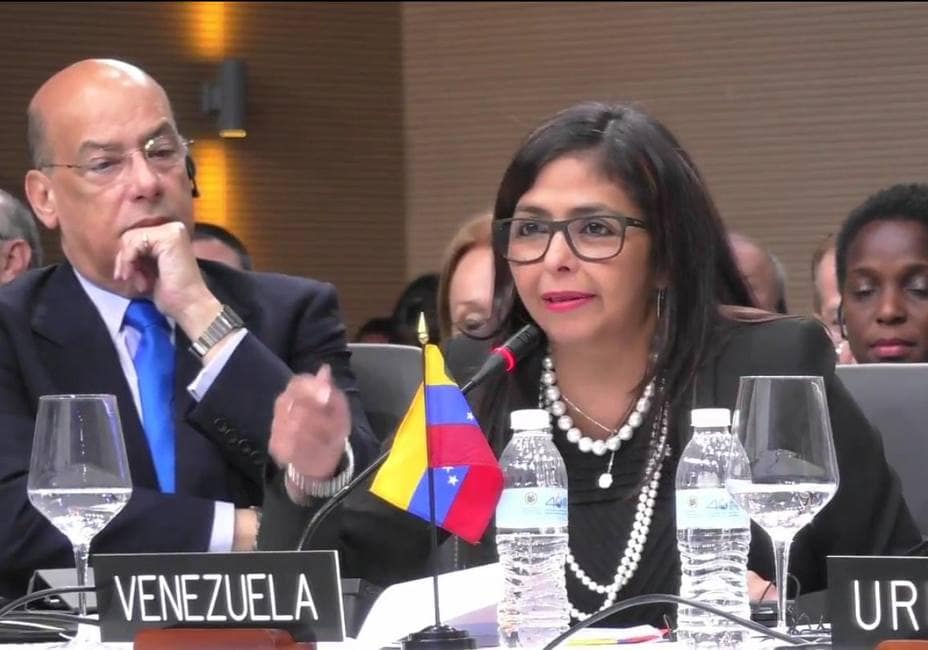
    In the delicate landscape of global diplomacy, even minor symbolic gestures can expose deep divides over core international principles. The recent uproar over an official Caribbean diplomatic engagement, where a Venezuelan official wore a lapel brooch depicting Guyana’s Essequibo region as Venezuelan territory, stands as a perfect example of this dynamic.

    Critics who brush off this incident as an overblown reaction to a trivial piece of personal clothing miss the point entirely. Dismissing the controversy as mere hypersensitivity to personal attire is not just inaccurate—it deliberately misframes what is at stake here. This is not a debate over fashion; it is a debate over official state conduct.

    When a sitting senior government official wears a territorial claim symbol during an official diplomatic meeting with a third party in a dispute over that land, the act stops being personal expression and becomes an explicit tool of state policy. The gesture is deliberately crafted to communicate, entrench, and normalize a disputed territorial position that is currently the subject of formal international legal proceedings.

    This border dispute between Venezuela and Guyana is far from a theoretical disagreement. Guyana has already brought the case to the International Court of Justice (ICJ), seeking a final, legally binding ruling on the validity of the 1899 Arbitral Award that established the current international border between the two nations.

    Venezuela has framed its claim as rooted in international law and the 1966 Geneva Agreement, but this narrative demands closer inspection. The Geneva Agreement never settled the question of sovereignty over Essequibo, nor did it invalidate the 1899 border award. What it did do was create a framework for peaceful negotiation of the dispute, which ultimately led to the case being referred to the ICJ for adjudication. There is no legal basis for Venezuela to claim the agreement justifies unilateral assertions of territorial ownership while the court is actively considering the matter.

    This contradiction is impossible to ignore: Venezuela claims it upholds international law, yet its actions are clearly designed to shape global public opinion on a case that is currently sub judice—meaning under judicial consideration. No state can credibly claim to submit a dispute to binding international adjudication while simultaneously working outside the courtroom through symbols, legislation, and administrative moves to lock in the outcome it favors.

    The lapel brooch incident is far from an isolated misstep. It fits into a broader pattern of Venezuelan actions: national legislation that purports to annex the Essequibo region, the appointment of unofficial administrative officials to the territory, and a sustained public campaign asserting Venezuelan sovereign ownership. Taken together, these moves show no willingness to exercise restraint while the court rules. Instead, they represent a parallel political campaign to consolidate Venezuela’s claim through non-legal means.

    Against this backdrop, the recent statement from the Caribbean Community (CARICOM) carries outsized importance. Released on April 28, 2026, the CARICOM statement was measured in tone but unmistakeable in its message. It reaffirmed that CARICOM member states retain the right to conduct their own bilateral relations with outside nations, but framed that right within the boundaries of collective obligations laid out in the Revised Treaty of Chaguaramas. Most critically, it emphasized that CARICOM regional platforms cannot be used, either directly or indirectly, to advance or legitimize territorial claims that are currently before the ICJ.

    This position is a quiet but firm assertion of regional rules-based discipline, even at a time when critics point to growing disunity within the Caribbean integration movement. The CARICOM statement accomplishes three key goals: it protects the integrity of the international judicial process, preserves the overall unity of the regional bloc, and makes clear that while CARICOM will not interfere in individual member states’ bilateral ties, it will not allow its own forums to be used to advance a territorial claim against one of its own members. That last principle is far more significant than many observers have acknowledged.

    Guyanese President Irfaan Ali’s formal written response to the CARICOM chair was therefore both fully justified and necessary. It was not an overreaction, nor was it empty political rhetoric. It was a principled defense of international law at a moment when ambiguity could have easily damaged that principle.

    For context, this article’s author worked closely with Venezuelan Vice President Delcy Rodríguez between 2015 and 2017, when he opposed efforts by some Organization of American States member states to impose unilateral sanctions on the Venezuelan government that violated the OAS’s own rules. That stance grew out of a core commitment to due process, international law, and fair treatment of all nations, and the author still recognizes Rodríguez as a formidable defender of her government’s interests during a period of intense geopolitical pressure. But this current controversy has nothing to do with personal relationships, political alignments, or pieces of clothing. It is entirely a matter of principle, legal process, and respect for the ICJ’s ongoing adjudication.

    The larger question raised by this incident goes far beyond the Essequibo border: it asks whether all parties will actually back their public commitments to international law with conduct that aligns with those commitments. For this dispute to end in a peaceful, final resolution consistent with international rules, the ICJ’s process must be allowed to move forward without external actions that prejudge or politicize its outcome. That requires deliberate restraint, not provocative symbolism; it demands disciplined adherence to process, not political theater.

    A small lapel brooch cannot redraw an international boundary. But the conduct it represents can either strengthen or undermine the very principles that are supposed to guide the peaceful resolution of this dispute. In this case, the Caribbean community has made its position clear: quietly but unflinchingly, it stands on the side of international law.

  • Volunteers Remove Hundreds of Pounds of Debris from Wreck off Barbuda

    Volunteers Remove Hundreds of Pounds of Debris from Wreck off Barbuda

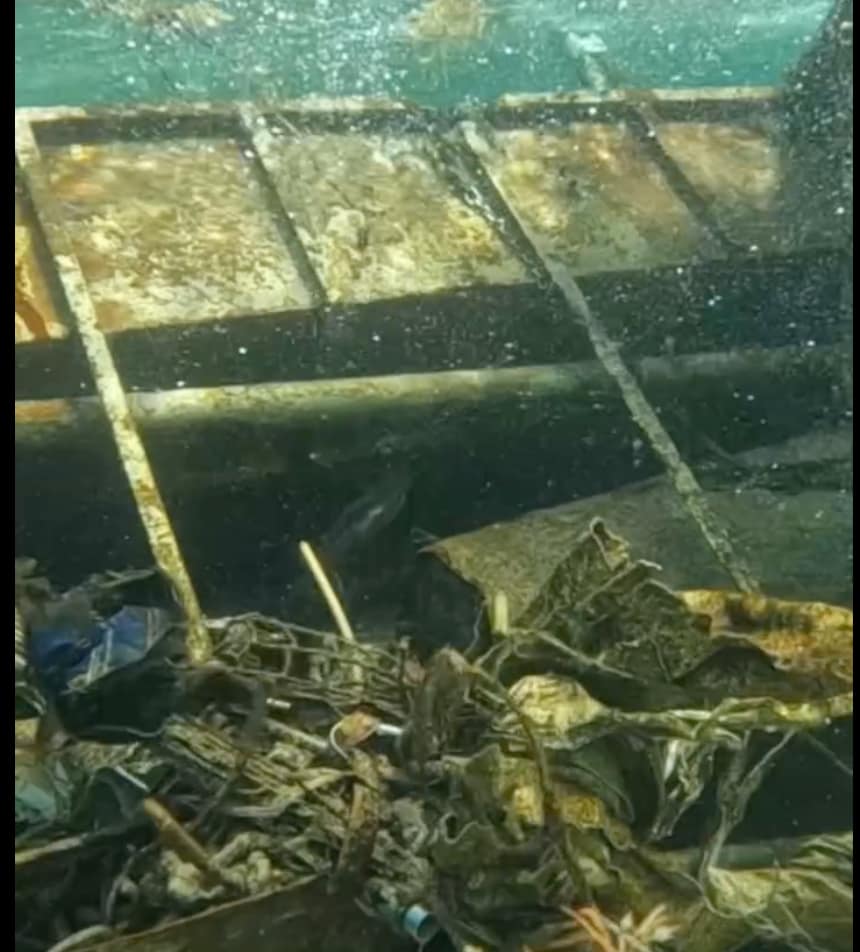
    Off the quiet shoreline of Barbuda, a coalition of volunteer divers has completed a targeted marine cleanup that pulled nearly 300 pounds of discarded debris from the sunken wreck of the yacht *Jonah*, in a critical push to safeguard the fragile coral reef system surrounding the site. For months, the wreck had accumulated all manner of waste, most dangerously abandoned fishing gear known as “ghost nets” – a pervasive marine pollutant that continues to entangle, injure, and kill fish, sea turtles, and other marine organisms long after they are discarded by fishing operations. These tangled nets had already wrapped around large sections of the nearby reef, putting additional stress on a ecosystem already grappling with global threats like rising ocean temperatures and acidification.

    The cleanup effort brought together 16 experienced free divers and snorkelers, who spent multiple hours navigating the wreck site to extract trapped waste. Divers ferried each bag of collected debris from the seabed up to waiting support boats on the surface, working carefully to avoid damaging living coral during the process. What made the initiative particularly notable was the heavy involvement of emerging local conservation leaders: nine young eco-divers from Antigua joined the expedition, alongside professional boat crew, rounding out the total 18-person team. Organizers have publicly highlighted the dedication and hard work of these young participants, noting that their presence signals a growing shift toward youth leadership in global marine conservation.

    The project was a community-led collaboration, with in-kind support from local tourism and marine conservation groups including Adventure Antigua and the Barbuda Ocean Club. Financial backing for the cleanup came from the Global Environment Facility Small Grants Programme (GEF SGP) operating in Antigua and Barbuda, which funds grassroots environmental initiatives across the region.

    Coral reefs, often called the “rainforests of the sea,” support more than 25% of all known marine biodiversity despite covering less than 1% of the ocean floor. Today, these critical ecosystems face unprecedented pressure from a range of threats: plastic and chemical pollution, manmade climate change that drives ocean warming and coral bleaching, and destructive overfishing practices. Local, small-scale cleanup projects like this one do not solve the systemic challenges facing coral reefs, but they do address immediate, localized hazards that prevent reef recovery, while building community momentum for larger, long-term restoration efforts. Video footage of the cleanup was provided by the Antigua Barbuda Ocean Trust.

  • Book Review: Sea Wolves in Warm Waters by Clement Richards

    Book Review: Sea Wolves in Warm Waters by Clement Richards

    World War II remains one of the most extensively studied conflicts in modern history, with volumes of research dedicated to iconic Allied campaigns across Europe, North Africa, and the Eastern Front, as well as the well-documented air combat operations of Hermann Göring’s Luftwaffe. Yet one critical theater of the war has remained largely overlooked by mainstream historical scholarship: the clandestine German military operation targeting Allied transatlantic supply routes through the Caribbean basin.

    While a small handful of prior works have touched on the Caribbean’s overall role during World War II, none have centered exclusively on German submarine operations in the region. That changed with the upcoming release of Clement Richards’ groundbreaking new book, *Sea Wolves in Warm Waters*, the first full-length scholarly analysis of this understudied chapter of the global conflict.

    At 290 pages, the volume is the product of exhaustive research and meticulous documentation of the entire U-boat campaign in Caribbean waters. Richards draws on an extensive range of primary and secondary sources, including declassified British War Cabinet Colonial Office Papers, personal diaries from Germany’s naval high command, and materials from the international Log Book Project, to construct a narrative that is both rigorously factual and deeply engaging.

    The book brings the harsh reality of the U-boat offensive to life, highlighting how the distant war became a terrifying daily presence for local Caribbean communities. Starting in 1942, for example, bodies of fallen sailors from torpedoed vessels regularly washed up on the coasts of Dominica’s Marigot and Portsmouth, turning the global conflict into an immediate, local tragedy.

    Richards also traces the gradual containment of the German submarine threat, detailing how improved Allied detection technology and coordinated cross-naval operations turned the tide of the campaign, inflicting catastrophic losses on German U-boat crews. Statistics included in the book underscore the staggering human cost of the campaign: of the roughly 39,000 German submariners who served during World War II, an estimated 27,490 lost their lives. Civilian and merchant marine casualties from across the Caribbean, including many from Dominica, further highlight the underrecognized sacrifice the region made during the war.

    The book is designed to appeal to a broad audience, from seasoned WWII historians to casual readers with an interest in Caribbean regional history. Its accessible structure—marked by clear formatting, concise sentence structure, and logical thematic organization—creates a smooth, engaging reading experience, while contemporary period photographs are woven throughout the narrative to help readers visualize the events described. For readers familiar with the classic German U-boat film *Das Boot*, which captures the claustrophobic tension of submarine service, Richards’ work offers an equally gripping literary exploration of that dangerous world, set against the unique backdrop of the Caribbean. This combination of depth and accessibility makes the volume essential reading for anyone interested in this forgotten chapter of World War II.

    Scholarly reviewers note that *Sea Wolves in Warm Waters* makes a landmark contribution to the expanding body of research on Caribbean World War II history, earning high praise for both its analytical rigor and approachable narrative style.

    An editor’s note adds that the book will officially launch on May 5, 2026, at 6 p.m. at the UWI Open Campus located on Valley Road, and all members of the general public are invited to attend the launch event.

  • Play sheds light on migrant women’s resilience, shared humanity

    Play sheds light on migrant women’s resilience, shared humanity

    A powerful new theatrical production from Caribbean playwright Dr. Travis Weekes is placing the unheard experiences of migrant women in Trinidad and Tobago center stage, weaving together raw narratives of displacement, unexpected connection, and unbreakable perseverance. Titled *Don’t Call Me Baby Doll*, the production follows the intersecting lives of two migrant women: one originally from Cuba, the other from Venezuela, building new lives far from their native countries.

    In an exclusive interview with St Lucia Times, Weekes broke down the layered narrative structure that sets the play apart. Unlike linear stories that only focus on migrants’ current struggles, the work weaves together dual timelines, juxtaposing the women’s day-to-day realities in Trinidad with intimate memories and stories from their home countries. This dual perspective gives audiences a full, nuanced look at how migration shapes identity, pulling people between the lives they left behind and the futures they are fighting to build.

    While the script does not shy away from confronting the systemic and personal hardships migrant communities face—from border barriers to social exclusion to economic instability—Weekes emphasizes that the production’s core message is one of hope and endurance. “They share their struggles… their hurdles but what we also get, and which is most important, is the determination, the perseverance… to continue to strive for freedom and for a better life,” he explained.

    A central, uplifting theme running through the play is the power of cross-cultural human connection. When the story opens, the two lead characters are complete strangers, separated by different national backgrounds and life experiences. Over the course of the narrative, they build a deep, supportive bond that becomes their anchor in an unfamiliar new country. “We feel the joy when we see two characters who are totally strangers, but who come together and who understand each other and who learn to appreciate each other… and are very supportive of each other,” Weekes said. This on-screen dynamic reflects the production’s broader exploration of how migrant communities build solidarity and collective strength in new, often unwelcoming environments.

    The work is deeply rooted in Weekes’ own lived experiences during his years living and working in Trinidad. The playwright has long connected with migrant communities in the region, drawing inspiration and firsthand insight from their stories to shape the authentic narrative of the play. For Weekes, this production marks a major career milestone, calling it his most fully realized professionally produced work to date. Unlike his earlier projects, which he developed largely independently, *Don’t Call Me Baby Doll* was brought to life through a collaborative effort with a dedicated creative team. He notes that the collective expertise and shared commitment to the project elevated the execution, resulting in a polished, impactful production that stands out in his decades-long body of work.

    Weekes’ career in the creative arts stretches back to his youth in the late 1970s, giving him decades of insight into the craft of theater-making. For emerging creators looking to follow in his footsteps, he shared a simple but powerful message: keep honing your skills, learn from the work of other artists, and never stop trying. For new creatives, he stresses, persistence matters far more than chasing perfection, as growth comes through consistent practice and iteration.

  • Postponement of launch of Grenada Decent Work Country Programme

    Postponement of launch of Grenada Decent Work Country Programme

    Grenada’s Ministry of Legal Affairs, Labour and Consumer Affairs has issued an official public announcement confirming that the much-anticipated launch of the 2026–2031 Grenada Decent Work Country Programme (DWCP) will not proceed as originally planned. The official ceremony, which was scheduled to coincide with national May Day celebrations on Carriacou on 1 May 2026, has been rescheduled to a future date that will be shared with the public once finalized.

    The decision to delay the launch was reached through collective consultations among all core governing stakeholders: the Government of Grenada, the Grenada Trades Union Council (GTUC), the Grenada Employers’ Federation (GEF), and the International Labour Organisation (ILO). The delay stems from unforeseen logistical or operational circumstances that were not accounted for during initial planning. All participating parties have emphasized that their shared commitment to the Decent Work Agenda remains unchanged, and the delay is intended to ensure the official launch properly reflects the programme’s national importance and its foundational tripartite structure that includes government, worker representatives, and employer groups.

    As a flagship national policy initiative for the next five years, the DWCP is designed to guide coordinated, cross-sector action across six key priority areas: expanding access to decent and productive employment, strengthening regulatory and institutional governance of the national labour market, expanding accessible social protection for all workers, improving standards for occupational safety and health across all workplaces, scaling up targeted workforce skills development, and reinforcing productive social dialogue between labour and industry stakeholders. The programme itself was already developed through a year-long, inclusive tripartite consultation process, with specialized technical guidance and support provided by the ILO.

    While the formal launch and tripartite signing ceremony have been deferred, ministry officials confirmed that all substantive pre-implementation work and preparatory activities for the DWCP will continue on schedule. The initiative remains a top policy priority for the ministry and all its social partner stakeholders. A new official date for the launch and signing will be announced to the public after additional internal consultations between all participating parties.

    In closing the announcement, the Ministry of Legal Affairs, Labour and Consumer Affairs reaffirmed its longstanding, collaborative partnership with the GTUC, GEF, and ILO. It also restated its unwavering commitment to advancing fair decent work outcomes and social justice for all workers and employers across Grenada.

  • Statement from Cricket West Indies on the passing of Norman Gilbert

    Statement from Cricket West Indies on the passing of Norman Gilbert

    The Caribbean cricket community is grappling with an outpouring of grief following the unexpected death of Norman Gilbert, who held two key regional leadership roles: President of the Grenada Cricket Association and board member of the Windward Islands Cricket Board. In an official statement released to the public, Dr. The Hon. Kishore Shallow, President of Cricket West Indies, delivered a heartfelt tribute on behalf of the governing body, extending deepest sympathies to Gilbert’s loved ones, colleagues, and every member of the cricketing fraternity across Grenada and the wider Windward Islands region.

    Gilbert leaves behind a decades-long legacy defined by relentless commitment and forward-thinking leadership that transformed cricket’s footprint in Grenada. Described by Shallow as a man who served the sport with exceptional distinction, Gilbert prioritized expanding access to cricket for players of all age groups and skill levels, pouring his energy into nurturing grassroots talent and elevating the profile of the game across the island. His steady work to grow the sport left an irreversible, positive mark on the regional cricketing ecosystem that will benefit generations of players to come.

    Beyond his administrative achievements, Gilbert earned widespread admiration across the cricket world for his personal character. Colleagues and peers held him in high regard for his unshakable integrity, quiet humility, and rare ability to motivate everyone from up-and-coming young players to senior cricket administrators and industry stakeholders. Unlike many leaders who focus solely on governance, Gilbert framed cricket as a force for social good: he firmly believed in the sport’s unique power to bridge divides and lift up entire communities, working tirelessly to turn that vision into action across Grenada.

    As the island processes this profound loss, Cricket West Indies has reaffirmed its full solidarity with the Grenada Cricket Association and the people of Grenada during this period of mourning. Shallow emphasized that while Gilbert’s physical presence will be deeply missed, his legacy will endure through the countless lives he influenced and the robust, inclusive foundation he built for Grenadian cricket that will continue to support growth for years to come. The statement closed with a final note of respect: May his soul rest in eternal peace.

    This tribute was published via NOW Grenada, which notes it does not take responsibility for opinions or content shared by external contributors. Readers can report any abusive content related to the post through official platform channels.

  • Former Minister Cannot Escape Corruption Charge, Court Rules

    Former Minister Cannot Escape Corruption Charge, Court Rules

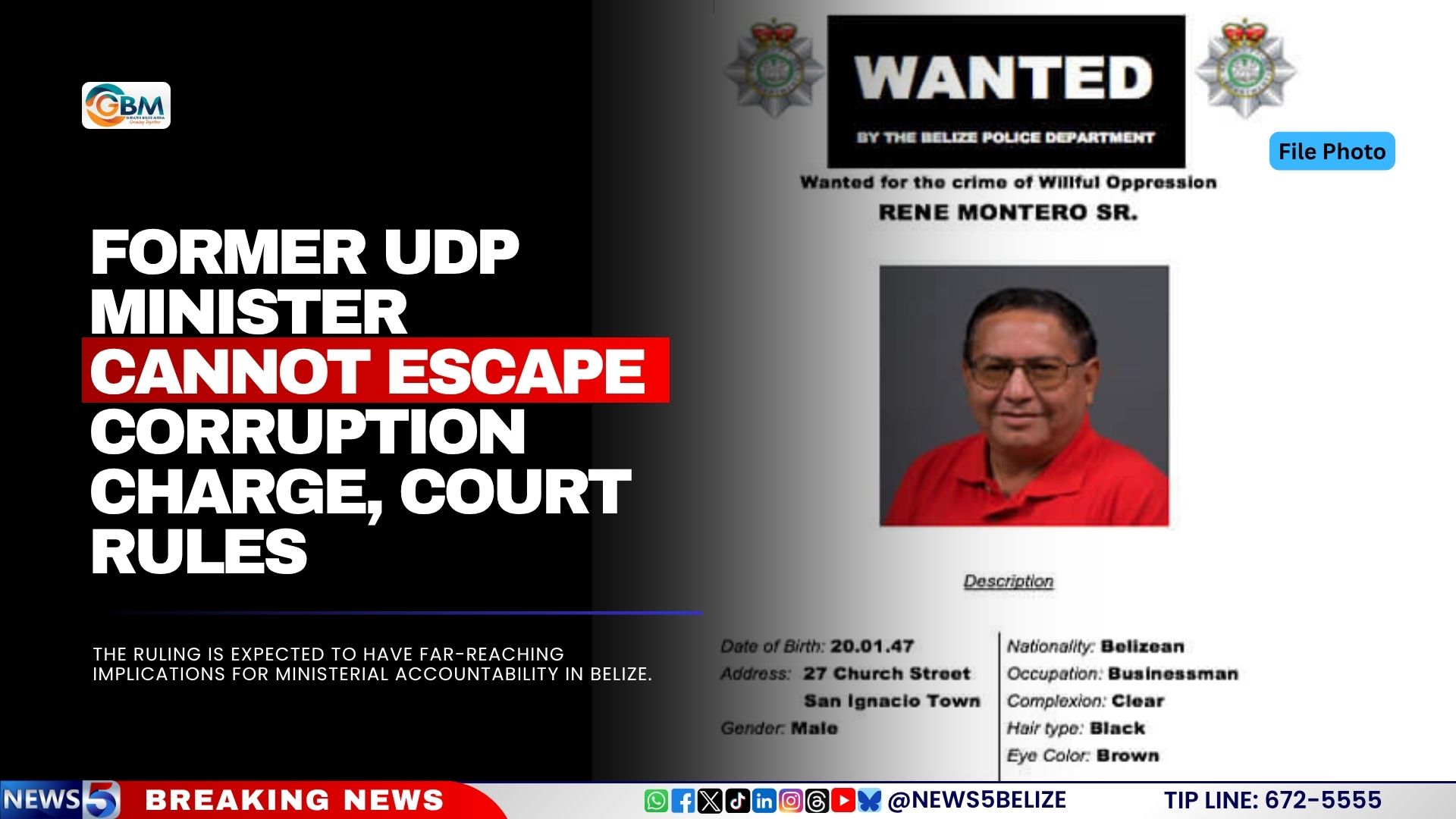
    In a historic decision that reshapes the landscape of executive accountability in Belize, the Supreme Court has rejected a legal bid by former Cabinet Minister Rene Montero to dismiss corruption-related charges against him, confirming that sitting and former government ministers can be held criminally liable for abuses of power under the nation’s Criminal Code.

    The case centers on allegations first brought in April 2024, when Montero—who previously served as the Works Minister under the UDP administration—and George Andrews, a former Assistant District Technical Supervisor at the Ministry of Works, were jointly indicted on charges of wilful oppression under Sections 284(1) and 309 of the Belize Criminal Code. Prosecutors allege that between April 2016 and November 2020, the pair deliberately misused their authority to direct and permit the improper diversion of public government resources, causing direct harm to the Belizean public.

    Montero’s legal team launched a pre-trial challenge to have the entire indictment thrown out, grounding their argument in a technical constitutional interpretation. They pointed to Section 131(4) of the Belize Constitution, which explicitly excludes political Ministers from the formal definition of the “public service.” Counsel argued this exclusion should extend to the Criminal Code, placing elected ministers beyond the reach of Section 284(1) which only applies to “public officers.” They further contended that the Constitution intentionally draws a clear line between the political executive—held accountable primarily through electoral democracy—and the permanent public service, which is subject to administrative law oversight; erasing that distinction, they argued, was constitutionally invalid, especially in criminal law where status-based liability must be clearly defined.

    The Director of Public Prosecutions (DPP) pushed back forcefully against this interpretation, noting that the Section 131(4) exclusion opens with the limiting phrase “In this Constitution,” meaning it was only intended to apply to the internal operational provisions of the constitutional document itself. The DPP argued Parliament never intended this narrow constitutional definition to override how criminal statutes define liability for public officials.

    In her ruling delivered in late March 2026, Justice Natalie Creary-Dixon sided squarely with the prosecution. She emphasized that Section 299 of the Belize Criminal Code contains its own independent definition of “public officer, created explicitly for criminal law purposes and separate from any definitions laid out in the Constitution. Under the Criminal Code’s wording, a public officer is any person holding a civil office whose appointment and removal falls to the Governor-General or other specified official authority. Since all government ministers are formally appointed by the Governor-General under Section 40 of the Constitution, and hold non-military civil positions in the government, they clearly meet the plain language definition of public officer under the code.

    The judge stressed that the Constitution’s exclusion of ministers from the definition of “public service” applies only to matters covered by the constitutional text itself, and does not grant ministers any blanket immunity from prosecution under ordinary criminal law. In a key passage of the judgment, Justice Creary-Dixon wrote: “The Constitution does not confer immunity upon Ministers from the application of criminal law. On one view, interpreting section 299 so as to include Ministers arguably advances the constitutional value of the rule of law by ensuring that holders of significant executive authority remain subject to legal standards governing abuse of public power.”

    With Montero’s application to quash the indictment rejected, his criminal trial will move forward as scheduled. Legal analysts across Belize widely agree that this ruling will carry far-reaching implications for future cases of ministerial misconduct, establishing a clear precedent that no senior elected official is above the reach of criminal law when accused of abusing public office.

  • Your digital world can be safe when you know the signs

    Your digital world can be safe when you know the signs

    A new digital literacy resource targeted at senior citizens across the Caribbean region has been launched, accessible via the dedicated portal cardtpconnect.org/digitalseniors. The initiative is tied to the Caribbean Digital Transformation Project (CARTDP), a regional development effort backed by the World Bank, with support from regional bodies including the Caribbean Community (CARICOM) and the Organization of Eastern Caribbean States (OECS).

    Focused on equipping older adults with critical digital safety skills, the project addresses rising threats that disproportionately impact senior internet users, including cybercrime, fraudulent schemes, unauthorized hacking, and online harassment. Key topics covered through the resource include best practices for secure password management, the importance of enabling multi-factor authentication (MFA), and guidance on how to recognize and avoid common digital scams. Regional cybersecurity bodies such as the Computer Security Incident Response Team (CSIRT) have contributed expertise to develop age-appropriate, accessible content for the platform.

    In a standard content disclaimer, platform administrators from NOW Grenada, the hosting outlet for the announcement, note that they do not assume responsibility for opinions, statements, or third-party contributor content shared through the initiative. The organization has also established a formal reporting channel for users to flag any abusive content encountered on the platform, aligning with regional digital safety standards.

  • JCA, WCLA call for gov’t to provide timeline for body-worn cameras

    JCA, WCLA call for gov’t to provide timeline for body-worn cameras

    KINGSTON, Jamaica — Two major Jamaican church coalitions have ramped up pressure on the Andrew Holness administration to outline a definitive national stance and binding implementation timeline for equipping police officers with body-worn cameras, amid growing public friction over inconsistent official statements and a persistent high rate of fatal police shootings.

    In a joint public statement released Friday, the Jamaica Umbrella Groups of Churches (JUGC) and the Watchman Church Leaders Alliance (WCLA) are not only pushing for policy clarity but also calling for a broad, inclusive national roundtable. The proposed dialogue would bring together key stakeholders spanning civil society organizations, the Independent Commission of Investigation (INDECOM) — Jamaica’s independent police oversight body — religious leadership, the Ministry of National Security, and senior command of the Jamaica Constabulary Force (JCF) to tackle the urgent issue of deadly police use of force.

    The coalition pointed out that the current conflicting public positions from top government officials have created crippling policy ambiguity that erodes public confidence in national security. Specifically, the groups highlighted the open divergence between Prime Minister Andrew Holness and National Security Minister Horace Chang on the value and deployment of body-worn cameras. Holness has repeatedly stated publicly that his government is committed to rolling out the surveillance devices to frontline officers. But Chang has consistently pushed back against the policy, voicing repeated skepticism over more than two years.

    Chang first questioned the utility of body-worn cameras during a post-Cabinet media briefing in November 2024, arguing that the devices offer minimal value in the context of fatal police shootings. He claimed at the time that officers engaged in gunfire would prioritize taking cover, making it unlikely the cameras would capture clear, usable footage. In an April 2026 post-Cabinet update, Chang doubled down on his criticism, questioning the practicality of deploying cameras during confrontations with heavily armed criminal gangs and repeating concerns that the devices could put officers at greater risk. He also argued that persistent public demands for body-worn cameras reinforce widespread public mistrust of the JCF.

    In his most recent public comments on the issue, reported this week, Chang added a new objection: claiming that the design of standard police uniforms creates an inherent physical barrier to mounting and using body cameras effectively. He also noted that other systemic reforms are needed to improve policing beyond the introduction of body-worn devices.

    The church coalitions said they do not disagree that additional reforms are necessary to strengthen Jamaican policing. It is precisely because multiple improvements are needed, they argue, that body-worn cameras should be implemented as a core measure to boost both accountability and officer protection.

    The groups emphasized that they recognize the extraordinary occupational pressure and safety risks that Jamaica’s police officers face amid high rates of violent crime and gang activity. Even so, they maintain that greater transparency through mandatory body camera use does not undermine effective law enforcement — instead, it strengthens it. They pointed to the country’s persistently high number of fatal police shootings as evidence that more, not less, independent oversight is needed to rebuild public confidence.

    “Where operations lack clarity, suspicion replaces trust, and the divide widens,” the groups wrote in their joint statement, warning that continued policy inaction will only deepen the rift between law enforcement and the communities they serve.