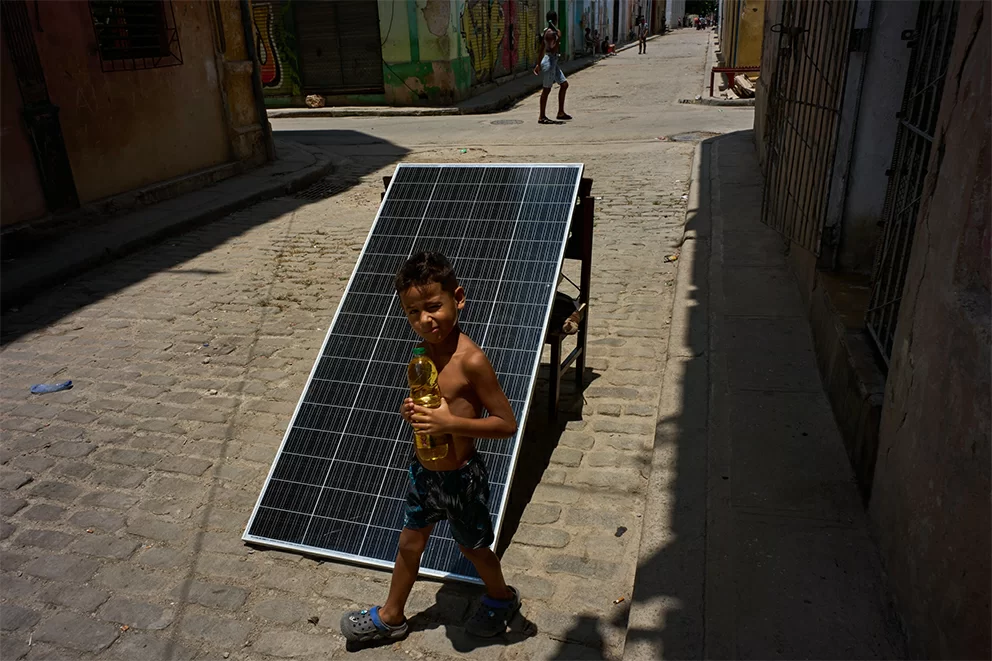
On Monday, the entire Caribbean nation of Cuba, home to nearly 10 million residents, was plunged into a complete national power outage, with authorities blaming chronic fuel scarcity and a crumbling, overstretched national electrical grid for the unprecedented disruption.
The state-run Electric Union confirmed that the twin pressures of shrinking fuel supplies and an aged, fragile distribution network triggered the island-wide blackout, prompting the Ministry of Energy and Mines to immediately activate emergency response protocols to restore service as quickly as possible.
Cuba’s fuel crisis has escalated dramatically since January, when former U.S. President Donald Trump threatened to impose new tariffs on any nation that supplies crude oil to the island. This external pressure has deepened Cuba’s already years-long economic and financial collapse, bringing most public transportation to a standstill and forcing the cancellation of tens of thousands of scheduled medical procedures across the country.
Energy Minister Vicente de la O Levy noted that small-scale backup power systems were brought online to protect critical essential services within hours of the outage starting. “Even in this complex scenario, worsened by the energy blockade we face, we continue to prioritize protection for vital services,” the minister stated.
Cuban President Miguel Díaz-Canel directly blamed the United States for the crisis, accusing Washington of intentionally choking off the island’s fuel access to stoke social unrest. “The work of electricity workers amid this genocidal energy blockade is nothing short of heroic,” Díaz-Canel wrote on the social platform X.
For ordinary residents in Havana, the blackout has created immediate, life-altering hardship. Thirty-six-year-old Lina May told reporters she had no idea when power would return to allow her to cook rice for her family, forcing her to send her father to buy charcoal to avoid going hungry. “If we don’t get charcoal, we have no way to cook and we will go hungry,” she explained. Forty-year-old Richard Valdés called the outage the latest in a long string of devastating blows for the Cuban people. “We’re without power again, and now we also have no water, no gas — nothing works until service comes back,” he said.
Cuba currently produces only 40% of the fuel it needs to meet domestic demand. A major delivery of roughly 730,000 barrels of oil delivered by a Russian tanker at the end of March was completely exhausted by the end of April. Even before this full national outage, the Cuban government had implemented rolling planned blackouts for months, with scheduled outages sometimes stretching more than 24 consecutive hours to conserve limited fuel supplies.