作者: admin

  • Belize Still Buying More Than It Sells, Trade Deficit Rises

    Belize Still Buying More Than It Sells, Trade Deficit Rises

    New economic data reveals Belize’s persistent trade imbalance has intensified through October 2025, with the nation’s import dependency significantly overshadowing its export capabilities. The Statistical Institute of Belize reports the trade deficit expanded by $58 million compared to the previous year, highlighting structural challenges in the country’s economic framework.

    Despite a marginal reduction in import expenditure, which decreased by $17.1 million to $2.4 billion, the figure remains substantially higher than export earnings. The import portfolio continues to be dominated by essential machinery, mineral fuels, and manufactured goods—categories reflecting Belize’s industrial and consumer demands.

    On the export front, revenues experienced a more pronounced contraction, declining by $24 million to approximately $340 million. The agricultural sector maintained its dominant position, with sugar retaining its status as the primary export commodity despite facing market pressures. Banana exports followed closely, while marine products and cattle contributed notably to the overall export composition.

    Regionally, CARICOM member states remained the principal destination for Belizean goods, accounting for the largest share of export distribution. The United States and European Union markets followed respectively, demonstrating Belize’s diversified yet limited international trade partnerships.

    The widening trade gap underscores Belize’s structural economic challenges, particularly its heavy reliance on imported energy resources, industrial equipment, and consumer products. This imbalance persists despite efforts to strengthen export sectors, indicating deeper systemic issues that may require policy interventions to enhance domestic production capabilities and reduce foreign dependency.


  • “Shoulders” pleads guilty to burglary, theft from home affairs ministry, four others

    “Shoulders” pleads guilty to burglary, theft from home affairs ministry, four others

    In a significant court development in Guyana, a 48-year-old unemployed man has confessed to a series of burglaries targeting both government institutions and private citizens. Neil Medas, also known as “Shoulders,” entered guilty pleas on Wednesday for five distinct counts of break-in and theft offenses committed on December 8, 2025.

    The most notable target among the burglaries was the Ministry of Home Affairs, a key government security institution. Additionally, Medas targeted the Ptolemy Reid Rehabilitation Centre on Carmichael Street in Georgetown and three individual victims. According to police statements, the Guyana Human Rights Association/Policy Forum Guyana offices were not among the locations burglarized.

    With no fixed address provided to the court, Medas faced charges encompassing all criminal incidents. Following his comprehensive admission of guilt across all charges, the presiding judge ordered his remand to prison pending sentencing. The judicial proceedings have been formally adjourned until January 7, 2026, when the case will resume for potential sentencing considerations.

    The Guyana Police Force confirmed the details of the case through an official spokeswoman, highlighting the successful investigation that led to these charges. The consecutive burglaries within a single day raised particular concerns about security protocols at government facilities, though authorities have not disclosed the specific items or valuables taken during these incidents.

  • Walker rejects claims that Pit Latrines Are Still In Use in Barbuda

    Walker rejects claims that Pit Latrines Are Still In Use in Barbuda

    Barbuda’s parliamentary representative Trevor Walker has publicly refuted claims made by a development consultant regarding sanitation conditions on the island, suggesting the misinformation may have been utilized to secure funding for a project that ultimately delivered no benefits to Barbudans.

    During a parliamentary address, Walker recounted his direct challenge to a consultant who asserted that pit latrines remained a pressing issue during poverty-assessment consultations. The MP characterized the claims as both inaccurate and disrespectful to the island’s development status. “When the consultant referenced pit latrines as an ongoing problem, I immediately questioned this narrative,” Walker stated. “I instructed her to inform her sources that such characterization was entirely unfresh and forward.”

    The parliamentarian raised serious concerns about whether these purported sanitation issues were leveraged to justify funding allocations for a dual-island solar energy and water system initiative. Walker emphasized the fundamental inequity in using Barbuda’s name to secure project resources without subsequent delivery of promised infrastructure.

    Evidence of the project’s failure manifested in the complete absence of implementation, according to Walker’s account. Despite seven to eight religious institutions qualifying for assistance under the project’s criteria, not a single church received system installations or repairs. This outcome has prompted questions regarding transparency and equitable distribution of development resources between Antigua and Barbuda.

    Walker carefully clarified that his criticisms targeted the consultant’s specific remarks rather than the Department of Environment itself. The MP stressed that perpetuating outdated narratives about Barbuda’s development needs not only misrepresents reality but potentially undermines genuine assistance requirements. He called for greater accountability in how project proposals utilize situational assessments to justify funding requests.

  • CCJ Clears Beth Clifford in High-Profile Land Deal Dispute

    CCJ Clears Beth Clifford in High-Profile Land Deal Dispute

    In a definitive legal ruling on December 11, 2025, the Caribbean Court of Justice (CCJ) delivered a decisive victory for businesswoman Beth Clifford and her investment firm, Beltway Investment Group. The regional court overturned a previous judgment from Belize’s Court of Appeal, reinstating the original High Court decision that had cleared both Clifford and her company of liability in a failed 2017 land and construction agreement.

    The complex legal dispute originated when LCW Investments contracted with Green Development Partners (GDP) – another entity owned by Clifford – to purchase land and construct a residential property. Under the agreement, all financial transactions were to be processed through Beltway Investment Group. When construction delays prompted LCW to initiate legal proceedings, they named GDP, Clifford personally, and Beltway as defendants.

    In its landmark judgment, the CCJ emphatically reaffirmed the fundamental principle of corporate separateness, stating that courts should only disregard the distinct legal identity of a corporation under extraordinary circumstances. The court found no legal justification for the Appeal Court’s decision to ‘pierce the corporate veil’ and hold Clifford and Beltway liable for GDP’s contractual obligations.

    The ruling specifically noted the absence of evidence demonstrating that Clifford had abused GDP’s corporate structure or engaged in dishonest conduct. Additionally, the court found no indication of financial misconduct or improper fund handling by Beltway Investment Group.

    As a result of this decision, the CCJ restored the original High Court ruling and awarded court costs to Clifford and Beltway, who were represented by Senior Counsel Eamon H. Courtney and Priscilla J. Banner. This ruling establishes significant precedent regarding corporate liability and the protection of legal separation between business entities within the Caribbean jurisdiction.

  • Poverty Still Hits Rural Areas Hardest, Even as Overall Rate Drops

    Poverty Still Hits Rural Areas Hardest, Even as Overall Rate Drops

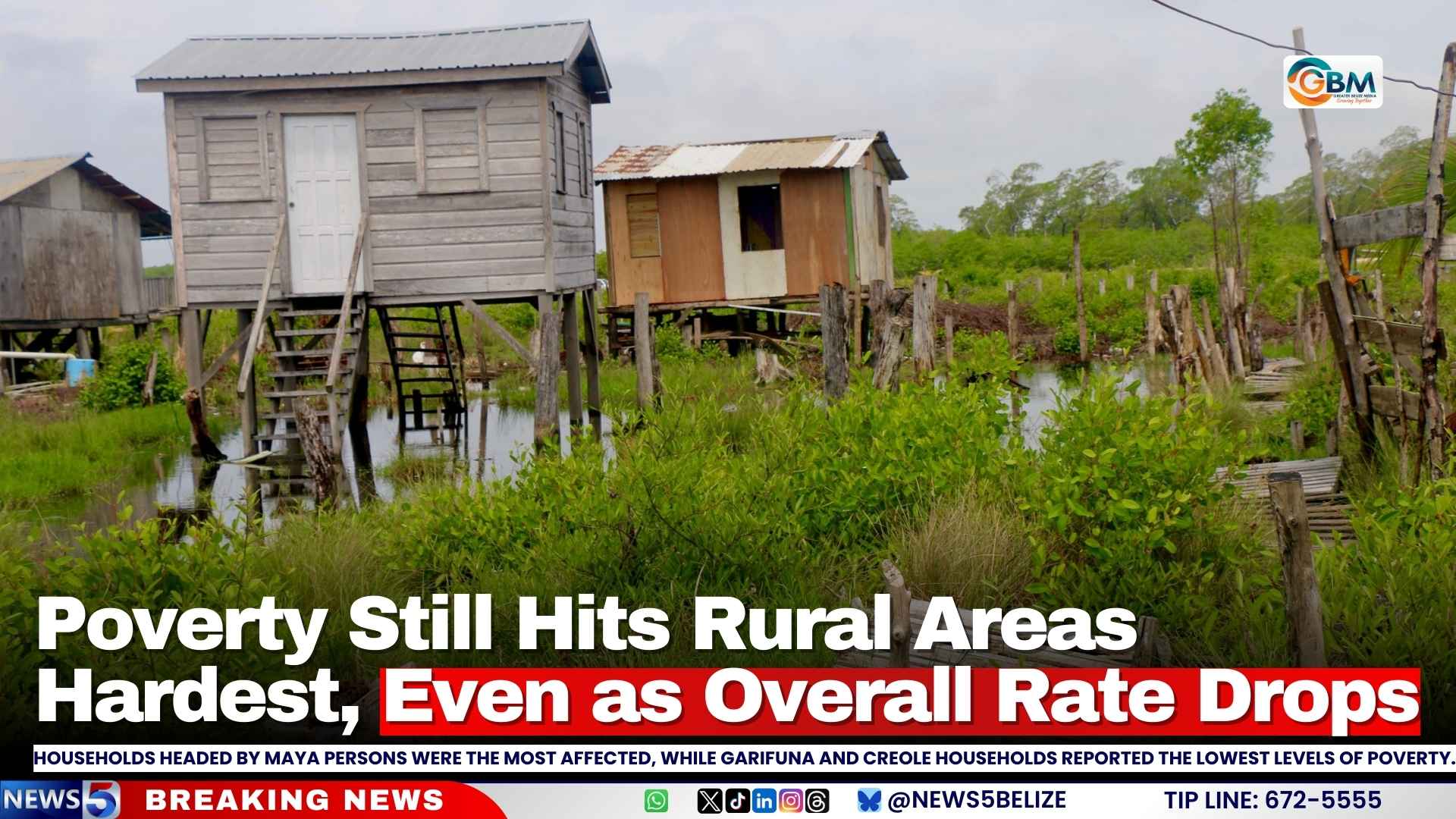
    New data from Belize’s Statistical Institute (SIB) reveals a complex picture of poverty reduction across the Central American nation. While overall multidimensional poverty rates have declined from 22.1% to 19.1% between September 2024 and September 2025, significant geographic and ethnic disparities remain entrenched.

    The multidimensional poverty assessment, which evaluates overlapping deprivations beyond income including housing quality, educational access, employment opportunities, and basic services, indicates approximately 13,095 fewer Belizeans experienced simultaneous hardships compared to the previous year. Notable improvements emerged in digital connectivity, food security, and youth engagement in education or workforce development programs.

    Despite this national progress, the intensity of poverty among those still affected showed minimal improvement. The analysis reveals a pronounced urban-rural divide, with rural communities continuing to bear the heaviest poverty burden. Toledo district maintains the country’s highest poverty levels despite making advances in sanitation infrastructure, internet accessibility, and nutritional security.

    Conversely, Stann Creek district registered deteriorating conditions, with increased reports of household overcrowding and inadequate sanitation facilities. The data further reveals striking ethnic dimensions to poverty distribution: Maya-led households experience the highest poverty incidence, while Garifuna and Creole households report the lowest levels.

    Educational attainment emerged as the most significant determinant of economic mobility. Households led by individuals with secondary or tertiary education demonstrated substantially lower poverty rates, while those with no formal education faced the most severe economic vulnerability.

    The findings highlight both the successes of targeted poverty reduction initiatives and the persistent structural challenges that require more nuanced, geographically-specific policy interventions to address Belize’s continuing inequality gaps.

  • “Let Her Play”: It’s Her Turn Now

    “Let Her Play”: It’s Her Turn Now

    The Football Federation of Belize (FFB) has unveiled a groundbreaking four-year strategic initiative designed to fundamentally transform the landscape of women’s football within the Central American nation. Dubbed “Let Her Play,” the comprehensive 2026-2029 roadmap establishes an ambitious objective: to elevate Belize into a competitive international contender and ultimately secure qualification for a FIFA Women’s World Cup tournament.

    This transformative strategy is structured around five foundational pillars encompassing all developmental aspects—from grassroots participation in educational institutions to substantial infrastructure enhancements. A primary quantitative target involves significantly improving the senior women’s national team’s current FIFA ranking of 171st globally.

    FFB President Sergio Chuc emphasized the alignment with FIFA’s worldwide vision for women’s football expansion: “Our strategic ambition ensures every female across Belize gains access to safe, organized, and competitive football pathways, fundamentally reshaping opportunities for future generations.”

    The federation has committed to implementing concrete measures including establishing dedicated youth academies, launching women’s futsal and beach soccer leagues, plus expanding educational programs for female coaches and match officials. Technical Director Philip Marin notably declared: “Women’s football in Belize has transitioned from future potential to present reality.”

    Crucially, the blueprint addresses systemic challenges through dedicated pillars focusing on media visibility and sustainable financing. Objectives include securing national television coverage for women’s matches and attracting significant corporate sponsorship. The infrastructure development component promises gender-inclusive facilities, high-performance training environments, regional academy networks, quality playing surfaces, and comprehensive medical support systems to overcome existing resource constraints.

    Women’s Executive Jacqueline Pelayo highlighted the cultural transformation at the plan’s core: “Beyond structural policies and strategic pillars, this initiative embodies a deeper purpose—to fundamentally shift societal perceptions surrounding women’s football, open previously closed doors, and create inclusive spaces for female athletes to thrive.”

  • Van Lelydorp naar Recife

    Van Lelydorp naar Recife

    Dimitri ‘Dimi’ Amatjasir, a promising 15-year-old football talent from Suriname, has recently completed an intensive training period with Brazilian professional club Paysandu’s U-15 squad in Belém. The young athlete, who currently plays for Transvaal U-16 and the Surinamese national U-15 team, spent September training with the Brazilian club following a successful CONCACAF tournament in Curaçao.

    The opportunity arose through connections maintained by Dimi’s father, who formally requested the training stint with Paysandu. Under the guidance of experienced former professional players—all certified coaches through the Brazilian Football Confederation (CBF)—Dimi underwent daily sessions that significantly exceeded the intensity of his regular training regimen in Suriname. After an initial adaptation period, he successfully maintained the demanding pace.

    Dimi’s performance so impressed Paysandu’s coaching staff that the club extended an invitation for him to continue training beyond the holiday period and participate as a guest player in Brazil’s premier U-15 tournament, the Aldeia International Cup. Held from December 1-7 in Recife’s state-of-the-art sports complex, the competition featured major Brazilian clubs including Santos, Palmeiras, and Vasco da Gama.

    Critical to this opportunity was the coordination between Paysandu, Dimi’s school (Johannes Vrolijk Muloschool II in Lelydorp), and Suriname’s Ministry of Education. The club provided formal written requests to both institutions, ensuring arrangements were made for Dimi to continue his academic studies remotely while prioritizing his mulodiploma. His local club, Transvaal, also supported his temporary departure.

    Returning to Brazil in late October, Dimi made his first appearance for Paysandu at the COP 30 U-15 tournament in Belém, where he scored his inaugural goal for the club. The entire experience—from training at Brazil’s highest youth level to the tournament’s organization and atmosphere—provided him with profound learning opportunities and unforgettable memories.

    The article highlights how Suriname’s national team has recently galvanized public interest in football, creating unprecedented demand for match tickets. However, maintaining this enthusiasm requires developing youth players through intensive, modern training methods. While many talented players like Dimi exist within Suriname, few receive opportunities for international development.

    Given proximity, cost considerations, cultural factors, and existing bilateral relations, Brazil presents an ideal destination for nurturing Surinamese football talent. Well-trained players could enhance the appeal of domestic leagues and potentially strengthen the national team. The author calls upon the Surinamese Football Association, Ministry of Sports and Youth Affairs, and Ministry of Foreign Affairs to establish structured programs for youth player development abroad, extending opportunities to both players and coaches.

    Following his Brazilian experience, Dimi has been selected for Suriname’s U-17 national team, which will compete in February 2026 qualifiers for the following year’s U-17 World Cup. Expectations are high that his international exposure will significantly enhance his performance at both club and national levels.

  • Belize City Mother Demands Police to ‘Leave Family Alone’

    Belize City Mother Demands Police to ‘Leave Family Alone’

    A Belize City mother has publicly demanded that local law enforcement cease targeting her family in the aftermath of a violent shooting incident. The confrontation occurred on Tuesday evening in the Lake Independence area’s M & J Street, where three individuals sustained injuries from an unidentified gunman’s attack.

    The victims included two seventeen-year-old adolescents and a sixty-year-old woman. Medical authorities have discharged two patients from Karl Heusner Memorial Hospital, while one remains under medical supervision.

    Joyce Martinez, mother of one injured teenager, expressed profound distress regarding police conduct during the crisis. She reported being obstructed by officers from visiting her hospitalized son, alleging threats of physical violence during the encounter. “They prevented me from seeing my son who had just been shot,” Martinez stated, describing how an officer allegedly retrieved a baton while she grew increasingly agitated seeking information about her child’s condition.

    Martinez further contends that police have repeatedly subjected her household to unwarranted searches following shooting incidents throughout the district. While affirming her family’s cooperation with authorities, she emphasizes that investigative efforts should prioritize identifying the actual perpetrator rather than targeting victims’ families.

    The shooting occurred approximately at 7:30 PM near La Croix Boulevard, prompting coordinated security enhancements involving regular police units, Belize Defense Force personnel, and GI3 officers through intensified neighborhood patrols.

  • Private Sector Commission prefers non-legal regulation of campaign financing

    Private Sector Commission prefers non-legal regulation of campaign financing

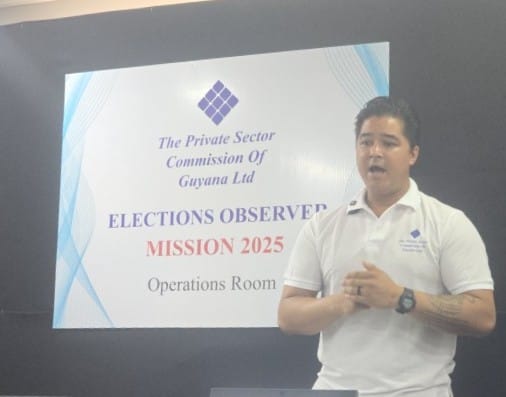
    In a significant development for Guyana’s electoral integrity, the nation’s foremost business consortium has proposed a novel approach to campaign finance regulation that stops short of immediate legislation. The Private Sector Commission (PSC), chaired by Captain Gerry Gouveia Jr., has released its comprehensive election observer report following the September 1 general and regional elections, calling for structured national dialogue rather than statutory mandates.

    The PSC’s position paper emphasizes a methodical examination of international best practices through a specialized working group. This proposed body would scrutinize disclosure requirements, reporting timelines, expenditure ceilings, and oversight mechanisms tailored to Guyana’s unique political environment. Notably, the commission explicitly stated that it “does not advocate a specific legislative design at this stage,” instead favoring the development of “fair, transparent, and enforceable standards” through consensus-building.

    This stance emerges amid decades of international observer missions consistently highlighting the absence of campaign finance legislation. Current regulations under the Representation of the People Act require parties to report expenses to the Chief Elections Officer, yet compliance remains nonexistent without stipulated penalties.

    The commission’s position aligns remarkably with the ruling People’s Progressive Party Civic (PPPC) and opposition A Partnership for National Unity’s parent party, both of which historically resisted donor disclosure mandates. The PSC further contended that government officials’ media appearances during official duties should not constitute political campaigning, asserting that any resultant advantage merely reflects “the benefit of incumbency.”

    However, the report acknowledged concerns regarding state-owned media’s electoral role, noting that using public broadcast platforms for partisan advantage “directly compromises electoral fairness”—a matter the commission recommends addressing in future elections without providing specific remedies.

    The PSC’s recommendations have sparked discussions about the organization’s perceived alignment with the incumbent administration, even as it attempts to navigate the complex terrain of political finance reform through collaborative rather than coercive means.

  • Belize Secures New Climate Funding Opportunities at COP30

    Belize Secures New Climate Funding Opportunities at COP30

    Belize has successfully leveraged its participation in the COP30 climate conference in Belém, Brazil, to secure access to substantial new funding streams and enhance its international diplomatic standing. According to official reports from the Ministry of Sustainable Development, the country now qualifies for over $250 million in climate financing through various grant mechanisms.

    The funding opportunities encompass critical areas including climate-resilient housing infrastructure, protected area management, advanced early warning systems, technological modernization, and comprehensive resilience-building programs. Ministry officials emphasized that these financial arrangements reflect growing international confidence in Belize’s climate governance and implementation capabilities.

    While acknowledging that the funding requires subsequent project development rather than immediate disbursement, Minister of Sustainable Development and Climate Change Orlando Habet characterized the summit as a significant diplomatic achievement. “Our participation yielded substantial practical benefits through strategic bilateral negotiations with potential partner nations and organizations,” Habet stated.

    Beyond financial arrangements, Belize strengthened its position within key international negotiating blocs. The country secured leadership positions and board memberships within the Alliance of Small Island States (AOSIS) and the G77 plus China coalition. Notably, Belize obtained representation on the influential Loss and Damage Fund board, positioning the nation to directly influence global climate compensation policy.

    The delegation also focused on capacity building by incorporating young professionals into negotiation teams, providing valuable experience in international climate diplomacy. Minister Habet concluded that these strategic gains represent substantial progress in Belize’s climate leadership trajectory, combining immediate funding opportunities with long-term diplomatic influence.