作者: admin

  • Constitutional Court upholds 20-year prison sentence for soldier for killing two men

    Constitutional Court upholds 20-year prison sentence for soldier for killing two men

    The Dominican Republic’s Constitutional Court has rejected an appeal filed by Army First Lieutenant Yarin Esteudy Novas Sena, who sought to overturn his 20-year prison sentence for the 2014 fatal shooting of two men. The court’s decision represents the final judicial resolution in a case that has spanned nearly a decade.

    Novas Sena’s conviction stems from a December 2014 incident in Los Guaricanos, Santo Domingo Norte, where he shot and killed Manuel José Crespo Núñez (‘El Mello’) and Yarel Jesús Taveras Ulloa (‘El Guardia’). The lieutenant claimed the victims had assaulted him moments earlier, stealing cash and his cellular phone.

    The constitutional appeal challenged Ruling No. 1305, issued by the Second Chamber of the Supreme Court of Justice on October 30, 2019, which had affirmed the original sentence handed down by the Collegiate Court of the Judicial District of Santo Domingo.

    While the Constitutional Court acknowledged technical validity regarding filing deadlines due to improper notification procedures, it ultimately determined the appeal lacked substantive legal foundation. The court concurred with the Attorney General’s Office that the petition failed to meet requirements established by Law No. 137-11, the Organic Law of the Constitutional Court.

    Judicial authorities noted that Novas Sena’s submission contained only superficial arguments without proper legal analysis. The appellant merely referenced constitutional provisions and criminal code articles—including Article 321 and 329(2) of the Criminal Code and Article 40.13 of the Constitution—without demonstrating their specific relevance to his case.

    The court emphasized that such perfunctory legal references prevented meaningful judicial review, making it impossible to assess whether the challenged ruling contained procedural deficiencies or fundamental rights violations. This absence of substantive argumentation led to the appeal’s inadmissibility declaration, effectively upholding all previous judicial determinations. The court additionally exempted Novas Sena from bearing procedural costs.
  • Nieuwe wet moet Surinaams natuurbeheer moderniseren

    Nieuwe wet moet Surinaams natuurbeheer moderniseren

    Suriname’s parliamentary coalition has introduced groundbreaking legislation aimed at fundamentally transforming the nation’s approach to environmental protection and resource management. The ‘Sustainable Nature Management’ initiative law represents a comprehensive overhaul of the country’s outdated 1954 Nature Protection Act, addressing contemporary ecological challenges while acknowledging economic realities.

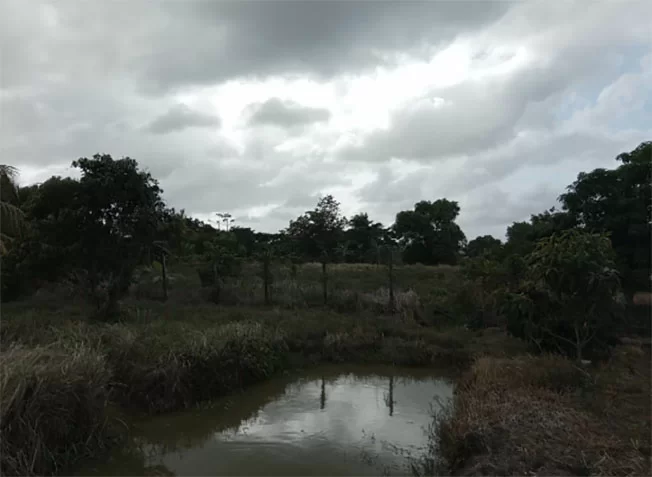
    With approximately 93% forest coverage and ranking among the world’s most biodiverse nations, Suriname faces critical decisions regarding conservation amidst growing economic pressures. While internationally recognized as a High Forest Low Deforestation country, recent data reveals deforestation rates are climbing to approximately 0.06% annually. Mining operations account for the majority (73%) of forest loss, followed by infrastructure development and urbanization—trends that not only cause ecological damage but directly impact indigenous and tribal communities through habitat disruption and land use conflicts.

    The proposed legislation shifts from strict conservation toward sustainable management principles, recognizing nature as both ecological treasure and economic resource under stringent conditions. The core philosophy establishes that those who benefit from nature must contribute to its preservation. Innovative mechanisms include nature tourism concessions, payments for ecosystem services, and provisions for designating private lands as protected areas—all aimed at stimulating green growth while reducing economic dependence on oil and gold.

    A cornerstone of the new framework is the enhanced role of the National Environmental Authority (NMA), which will coordinate nature management, oversee protected areas, supervise concessions, and enforce regulations. The Environmental Fund will be expanded to finance nature management projects accessible to government agencies, local communities, and private managers alike.

    Perhaps the most transformative aspect is the formal incorporation of the Free, Prior and Informed Consent (FPIC) principle, requiring explicit approval from indigenous and tribal communities for protected areas, buffer zones, or concessions within their territories. The law further recognizes traditional knowledge and enables communities to submit proposals for independently managed protected areas, elevating their role from stakeholders to full partners in environmental stewardship.

    Aligned with IUCN guidelines and international biodiversity treaties, the legislation introduces modern enforcement mechanisms including administrative coercion, fines, and criminal sanctions for serious violations. It explicitly grants citizens and organizations access to objection and appeal procedures against NMA decisions, strengthening legal protection and transparency.

    This legislative initiative represents Suriname’s attempt to solidify its international reputation as a forest-rich biodiversity haven while promising greater participation, enhanced protection, and the integration of conservation with economic development. Its ultimate success will depend on implementation factors including adequate capacity, political will, and genuine community engagement—determining whether it becomes a paper reform or a foundational pillar of Suriname’s future environmental policy.

  • Gonaïves : Mission to evaluate the work of the Drinking Water Supply System

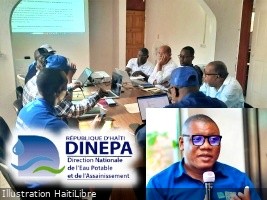
    Gonaïves : Mission to evaluate the work of the Drinking Water Supply System

    In a significant move to address critical infrastructure delays, Haiti’s National Directorate of Drinking Water and Sanitation (DINEPA) has conducted a comprehensive evaluation mission of the Gonaïves Drinking Water Supply System rehabilitation project. Led by Director General Engineer Théophile Ostinvil, the inspection comes as part of the Grand-Nord Program—a major initiative funded by the Inter-American Development Bank (IDB) focusing on drinking water, sanitation, and hygiene improvements.

    The high-level delegation pursued dual objectives: assessing substantial construction delays that have pushed the project’s completion timeline to April 2026, and evaluating the performance of the Results-Based Technical Assistance program responsible for operational strengthening at the Gonaïves Technical Operations Center. The supervising firm TECINA received formal notice regarding these delays during the mission.

    This proactive governance approach aligns with DINEPA’s three strategic priorities: ensuring good sector governance, achieving financial autonomy through operational structures, and maximizing development within the drinking water and sanitation sector. The mission included technical meetings with both the Technical Assistance team and TECINA representatives to discuss project advancements and address field implementation challenges.

    Strategic decisions were made to enforce contractual commitments, particularly concerning the April 2026 amendment expiration. Director Ostinvil and his technical team conducted multiple site visits to evaluate rehabilitation progress, network expansion efforts, and the condition of hydraulic installations undergoing modernization.

    The intensified oversight demonstrates DINEPA’s renewed commitment to modernizing water infrastructure in Haiti’s strategic Grand-Nord region, particularly in densely populated Gonaïves where reliable drinking water access remains a pressing public need.

  • Politic : Intervention by Haitian Ambassador Lesly David at SELA

    Politic : Intervention by Haitian Ambassador Lesly David at SELA

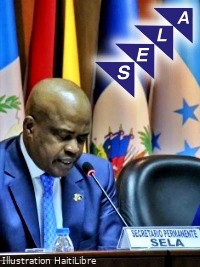
    In a landmark address at the 51st Ordinary Session of the Latin American and Caribbean Economic System (SELA), Haiti’s Ambassador Lesly David charted a bold course for regional cooperation. The session, convened in Caracas, Venezuela on December 11, 2025, marked a historic moment as Ambassador David, who also serves as Haiti’s envoy to Colombia and Ecuador, addressed the ministerial meeting in his new capacity as the elected Permanent Secretary of SELA—the first Haitian national to hold this prestigious position.

    Ambassador David positioned regional integration as ‘the most powerful tool’ available to counter global uncertainties, emphasizing that this approach transcends mere economic considerations. ‘It is not just about the economy, but about building collective unity, even from our differences,’ he declared before the assembly of member state representatives. The diplomat highlighted the paradoxical reality of a resource-rich region of approximately 660 million inhabitants that simultaneously remains ‘the most unequal region on the planet.’

    Drawing attention to persistent structural challenges, David noted that ‘millions of our citizens still live in poverty, and extreme poverty, remaining at alarming levels, particularly affecting women, young people and vulnerable communities.’ In response to these pressing issues, he presented the Permanent Secretariat’s Work Programme as a ‘concrete response to these challenges, a roadmap that transforms good intentions into measurable actions.’

    The comprehensive strategy rests on three foundational pillars: economic recovery, social development, and digitalization with infrastructure modernization. For economic revitalization, SELA committed to aggressively advance trade facilitation measures and organize the ‘Third China-Latin America and Caribbean Investment Cooperation Forum’ to attract essential foreign resources and technologies.

    Regarding social development, the organization will prioritize poverty eradication initiatives, formulate cooperative development policies, and implement virtual workshops focused on educational strategies for integrating migrant women and girls. These efforts specifically aim to transform migration from a potential source of exclusion into a development opportunity incorporating gender perspective frameworks.

    Concerning digital transformation, SELA pledged to promote comprehensive digitalization and develop sustainable, intelligent infrastructure throughout the region. Ambassador David emphasized that ‘modern infrastructure is the essential platform for the digital economy and that the synergy between these two pillars is crucial for development.’

    The session reaffirmed SELA’s continuing role as a principal mechanism for fostering regional integration through intra-regional cooperation, ultimately aiming to stimulate economic recovery and comprehensive development across Latin America and the Caribbean.

    Established in 1975 and headquartered in Caracas, Venezuela, SELA represents 28 member states after five decades of continuous operation. The organization specializes in promoting economic coordination, developing unified strategies for international engagement, and strengthening South-South cooperation through its recognized international legal personality.

  • Environment : Illegal exploitation of the Laboule quarries

    Environment : Illegal exploitation of the Laboule quarries

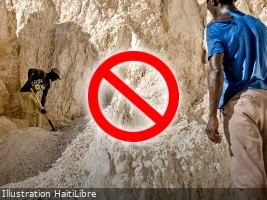
    The Haitian Ministry of Environment has issued a stern warning regarding persistent illegal quarrying activities in the geologically vulnerable Laboule region of Pétion-ville. Environment Minister Moïse Fils Jean Pierre confirmed that despite recent coordinated interventions with judicial and police authorities, unauthorized extraction operations continue to threaten the area’s stability.

    According to environmental assessments, the Laboule zone exhibits significant geological fragility with heightened susceptibility to devastating landslides and rockfalls. These conditions present imminent dangers to both property and human safety, prompting renewed regulatory action.

    The Ministry has clarified the constitutional foundation for its enforcement measures, citing Article 36.5 of Haiti’s amended 1987 Constitution which designates all mines and quarries as property of the state’s public domain, explicitly excluding them from private ownership claims.

    Environmental compliance requirements mandate that all quarry operations must adhere to protection standards outlined in Article 253 of the Constitution and Article 64.8 of the 2006 Framework Decree on Environmental Management and Citizen Conduct. Operators are further required to obtain formal authorization through an Operating Permit from the Bureau of Mines and Energy (BME) and the Ministry of Public Works and Communications (MTPTC), complemented by an Environmental No Objection Certificate issued directly by the Ministry of Environment.

    The prohibition on quarrying in these sensitive areas, initially established in 2010 and reaffirmed in both 2016 and 2021, remains fully enforceable. Minister Jean Pierre emphasized the government’s commitment to rigorous enforcement through judicial channels, warning that violators would face prosecution in collaboration with law enforcement agencies. The Ministry simultaneously appealed to operators’ civic responsibility, urging voluntary compliance in the interest of public safety and environmental preservation.

  • Stephora’s death fuels accusations of discrimination in the Dominican Republic

    Stephora’s death fuels accusations of discrimination in the Dominican Republic

    A tragic incident involving the drowning of an 11-year-old Haitian girl during a school excursion in the Dominican Republic has escalated into a significant diplomatic issue, raising serious questions about discrimination against Haitian migrants. Stephora, a child of Haitian descent, drowned in a swimming pool while her classmates and school monitors allegedly failed to respond to her distress calls, according to attorney Miguel Valdemar Díaz Salazar who represents the victim’s mother.

    The November 14 tragedy saw the girl’s body remain submerged for over thirty minutes before surfacing. The judicial response has drawn criticism, with three of four accused school employees receiving probation while the director was cleared of responsibility. The investigation timeline has raised concerns, as authorities didn’t question the grieving mother until December 5—more than twenty days after the incident.

    Legal representatives point to potential discriminatory treatment, noting the mother had previously reported harassment against her daughter, including ethnic slurs such as ‘damn Haitian.’ The case has attracted attention at the highest levels, with Haiti’s Presidential Transitional Council urging transparency from Santo Domingo and condemning ‘acts of violence’ against Haitian migrants.

    Haitian consul Stephen Junior in Santiago de los Caballeros called for rigorous investigation without hasty conclusions, expressing confidence in the Dominican judicial process while emphasizing the need to treat the case without politicization. The incident has sparked border demonstrations and formal complaints from advocacy groups, including Colectivo HaitianosRD which submitted a brief documenting 54 additional deaths in deportation contexts between 2021-2025.

    The tragedy occurs against a backdrop of intensified deportations since October 2024, when Dominican President Luis Abinader implemented mass deportation policies targeting undocumented migrants. Despite international concerns about returning people to Haiti’s gang violence that claimed over 4,000 lives in early 2025, authorities have deported approximately 370,000 Haitians so far this year—a national record.

    Amnesty International has criticized health service protocols that link medical access to deportation risk, calling such measures unjustified and discriminatory. President Abinader has denied systemic racism in the Dominican Republic while acknowledging Stephora’s death should not have occurred. The historical context between the two nations involves complex cultural and political dynamics dating to Haiti’s 22-year rule over Hispaniola (1822-1844), which created lasting tensions between the French-influenced Haitian and Spanish-influenced Dominican cultures despite shared African heritage.

  • WATCH: Man Snatches Chain From Elderly Woman’s Neck

    WATCH: Man Snatches Chain From Elderly Woman’s Neck

    Law enforcement authorities have launched a criminal investigation into a brazen chain-snatching robbery that occurred at Foodland Mini Mart on DeSouza Road. The incident targeted a female victim who was accosted by unidentified assailants who swiftly seized her jewelry before making their escape.

    According to preliminary reports, the perpetrators managed to flee the scene in a vehicle that was reportedly left bearing license plate R4727. This critical piece of evidence has become the focal point of the ongoing investigation as police work to identify and locate the suspects.

    Local law enforcement officials are actively pursuing multiple investigative leads and have issued a public appeal for information regarding both the vehicle and its occupants. The investigation combines traditional detective work with potential review of surveillance footage from the commercial establishment and surrounding areas.

    This incident highlights continuing concerns about street crime targeting valuable personal items in commercial districts. Police have reminded citizens to maintain situational awareness in public spaces and report any suspicious activities immediately.

    The investigation remains ongoing with authorities confident that the vehicle registration evidence will lead to significant breakthroughs in the case.

  • Henk ten Cate nieuwe bondscoach nationale herenselectie

    Henk ten Cate nieuwe bondscoach nationale herenselectie

    The Surinamese Football Association (SVB) has officially announced the appointment of Dutch manager Henk ten Cate as the new head coach of the men’s national team. This strategic decision positions the experienced international manager to lead Suriname through the critical World Cup qualifying play-offs scheduled for March 2026.

    Ten Cate brings extensive international coaching credentials to the role, having previously worked with top European clubs including Barcelona, Chelsea, and Ajax. His appointment signals SVB’s commitment to leveraging global expertise as Suriname pursues qualification for the 2026 FIFA World Cup.

    According to the football association, Ten Cate’s tactical acumen and leadership qualities align perfectly with the organization’s ambition to elevate the national team’s competitive level. SVB officials expressed confidence that his proven track record in high-pressure environments will optimally prepare the squad for their upcoming challenges.

    General Manager Brian Tevreden will collaborate closely with Ten Cate in the coming weeks to finalize squad selection and develop a comprehensive preparation program ahead of the decisive playoff matches. The technical staff will also be expanded with additional assistant coaches to strengthen the support system around the national team.

    This appointment represents a significant milestone in Surinamese football as the nation seeks to qualify for its first World Cup tournament. The March 2026 playoffs represent the final hurdle in Suriname’s journey to potentially secure a place in global football’s premier competition.

  • Government Offering $50,000 Reward for information leading to conviction of person who destroyed APUA materials

    Government Offering $50,000 Reward for information leading to conviction of person who destroyed APUA materials

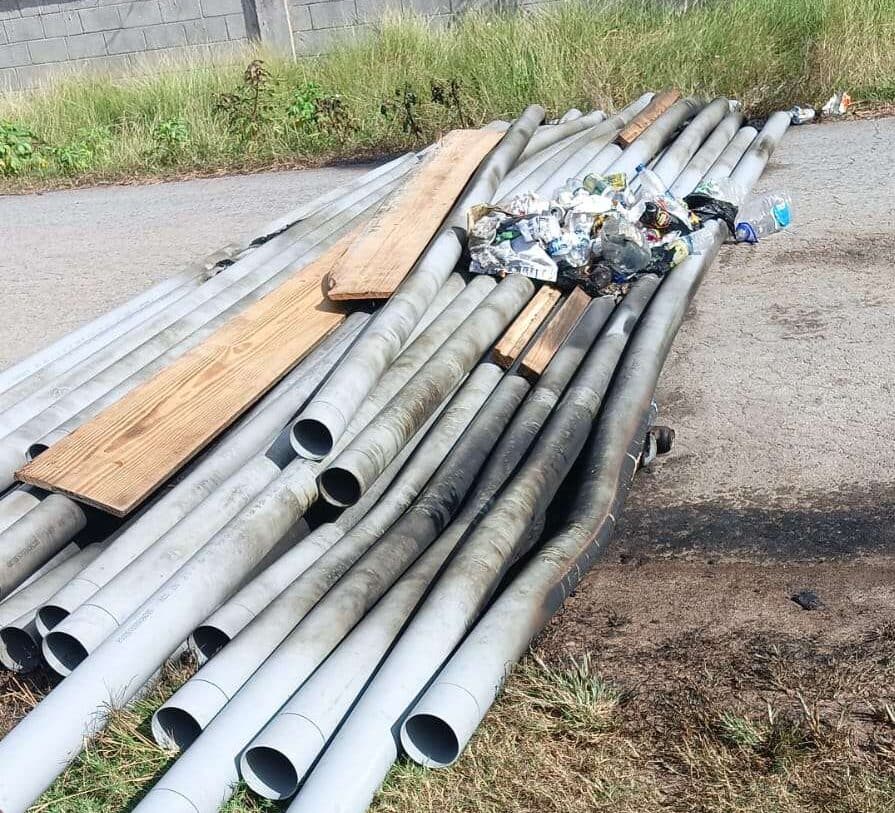
    In a decisive response to acts of infrastructure sabotage, Antigua and Barbuda’s Prime Minister Gaston Browne has declared a $50,000 reward for information resulting in the arrest and conviction of perpetrators responsible for deliberately setting fire to critical fiber-optic materials in Old Road. The announcement came immediately following confirmation of the vandalism targeting the Antigua Public Utilities Authority (APUA) installation site at Morris Bay.

    Prime Minister Browne, speaking via national radio broadcast Pointe FM, emphasized the government’s zero-tolerance stance toward disorder, stating: ‘We’re taking the fight to these people. We cannot allow these people to become lawless and to destroy our country.’ The substantial reward extends to anyone providing credible intelligence leading to successful prosecution, with provisions established for anonymous tip submissions to either Cabinet ministers or law enforcement authorities.

    The incident represents a significant escalation in local tensions surrounding preparatory works for a vital subsea cable project. According to APUA’s detailed account, the destruction occurred on December 12, 2025, following days of escalating community tensions unrelated to the utility’s operations. Preliminary assessments indicate several thousand dollars in damages to conduits and project materials essential for the national infrastructure initiative.

    APUA officials confirmed the vandalism was deliberate, occurring despite previous community engagement efforts including an October town hall meeting that reportedly generated largely supportive feedback. The authority emphasized the project’s critical importance for enhancing the nation’s digital resilience, ecommerce capabilities, educational infrastructure, and overall economic development with full operational launch anticipated by 2027.

    While police investigations continue, both government and utility authorities have appealed for public cooperation and calm, underscoring that all citizens stand to benefit from the completed project. The administration has reiterated its commitment to upholding legal order and preventing further acts of destruction against national infrastructure assets.

  • Climate: Showers today, downpours tomorrow

    Climate: Showers today, downpours tomorrow

    Meteorological authorities forecast a significant shift in weather patterns across the Dominican Republic as the prevailing prefrontal trough begins its eastward movement. The Institute of Meteorology (Indomet) reports that moderate easterly winds will continue transporting moisture, triggering morning showers across eastern provinces including La Altagracia, El Seibo, Hato Mayor, María Trinidad Sánchez, and Samaná.

    Precipitation patterns are expected to expand considerably during afternoon hours, with Indomet predicting rainfall coverage extending to La Romana, San Pedro de Macorís, Santo Domingo, San Cristóbal, Monte Plata, Sánchez Ramírez, Monseñor Nouel, and La Vega. These precipitation events are projected to persist through early evening hours.

    Temperature fluctuations will characterize the 24-hour period, with notably cool conditions anticipated during nighttime and early morning hours. Mountainous regions and valleys will experience the most pronounced cooling, accompanied by periodic fog and mist formation. Conversely, afternoon temperatures will rise significantly due to warming southeastern winds creating hot conditions.

    Weather officials indicate that tomorrow will bring increased precipitation activity as a new weather trough approaches the region, potentially intensifying rainfall distribution across the Caribbean nation.