作者: admin

  • National Bus Association: Travel notice for commuters

    National Bus Association: Travel notice for commuters

    Commuters across Grenada are being advised to adjust their travel plans drastically for Monday, September 28, 2026, as the National Bus Association has announced widespread service reductions starting at 7 p.m. to accommodate an emergency gathering of local bus operators.

    The emergency meeting has been called to address a series of deepening challenges that have threatened both the personal livelihoods of working bus operators and the long-term viability of the country’s wider public transportation network. Industry leaders have not yet specified the full nature of the challenges, but confirm the gathering will provide a space for operators to lay out their pressing concerns and collectively negotiate a clear path forward to stabilize the sector.

    In a public advisory released this week, the association has strongly urged all regular passengers to rearrange their daily schedules to arrive at their destinations early, prioritizing safe travel home before the 7 p.m. service cut-off goes into effect. Very limited bus services will be available after the cut-off time, meaning last-minute travel plans will almost certainly be disrupted. Transport officials are reminding commuters to plan their routes and departure times well in advance, rather than waiting until the day of the meeting to make arrangements.

    The National Bus Association has issued a formal apology for the unavoidable inconvenience this temporary service reduction will cause for residents and visitors alike. It also expressed sincere gratitude to the travelling public for their ongoing patience, understanding, and cooperation as operators work to resolve the systemic issues facing the industry.

    This advisory comes via content contributed to NOW Grenada, which notes that it does not take responsibility for the opinions, statements, and third-party content shared by contributors to its platform. Users who encounter abusive content related to this announcement are invited to use the platform’s built-in reporting tool to flag violations.

  • Annual creole exhibition held to promote Dominica’s locally made creole products and accessories

    Annual creole exhibition held to promote Dominica’s locally made creole products and accessories

    The highly anticipated annual Creole Attire & Accessories Exhibition and Sales, organized by the Ministry of Labour, Public Service Reform, Social Partnership and Small Business Development, kicked off its 2026 season on Friday, September 25, at the Ground Floor of Government Headquarters. This seasonal event, which celebrates the rich cultural heritage of Creole communities through handcrafted fashion and accessories, will run for three consecutive Fridays this year, welcoming visitors again on October 2 and October 9 from 9 a.m. to 5 p.m.

    Thirty pre-registered micro and small businesses, independent designers, and local artisans have gathered at the venue to showcase and sell their one-of-a-kind Creole-themed creations. The diverse range of products on display spans every category of personal adornment, from formal ties, flowing dresses and tailored blouses to delicate handcrafted brooches, embroidered handbags, sleek clutches, artisanal footwear, and bespoke jewelry. Visitors have the opportunity to browse unique pieces that blend traditional Creole design motifs with modern craftsmanship, taking home cultural creations that support local creative economies.

    Beyond the curated exhibition of fashion and accessories, the event has been designed to offer a full immersive cultural experience for all attendees. Local Creole food vendors have set up stalls on-site, serving a variety of traditional savory dishes, refreshing beverages, and homemade sweet confectioneries to keep visitors fueled as they browse. Complementing the retail and culinary offerings is live cultural entertainment, including performances of jing ping, a traditional folk music genre central to Creole cultural identity, alongside other regional folk performances that bring Creole heritage to life.

    Hosted within a government facility, the event reflects official support for small creative enterprises and the preservation of intangible cultural heritage, creating a accessible public space for residents and visitors alike to engage with local Creole culture and directly support the creators that keep these traditions alive.

  • Traffic arrangements: Woodlands, St George

    Traffic arrangements: Woodlands, St George

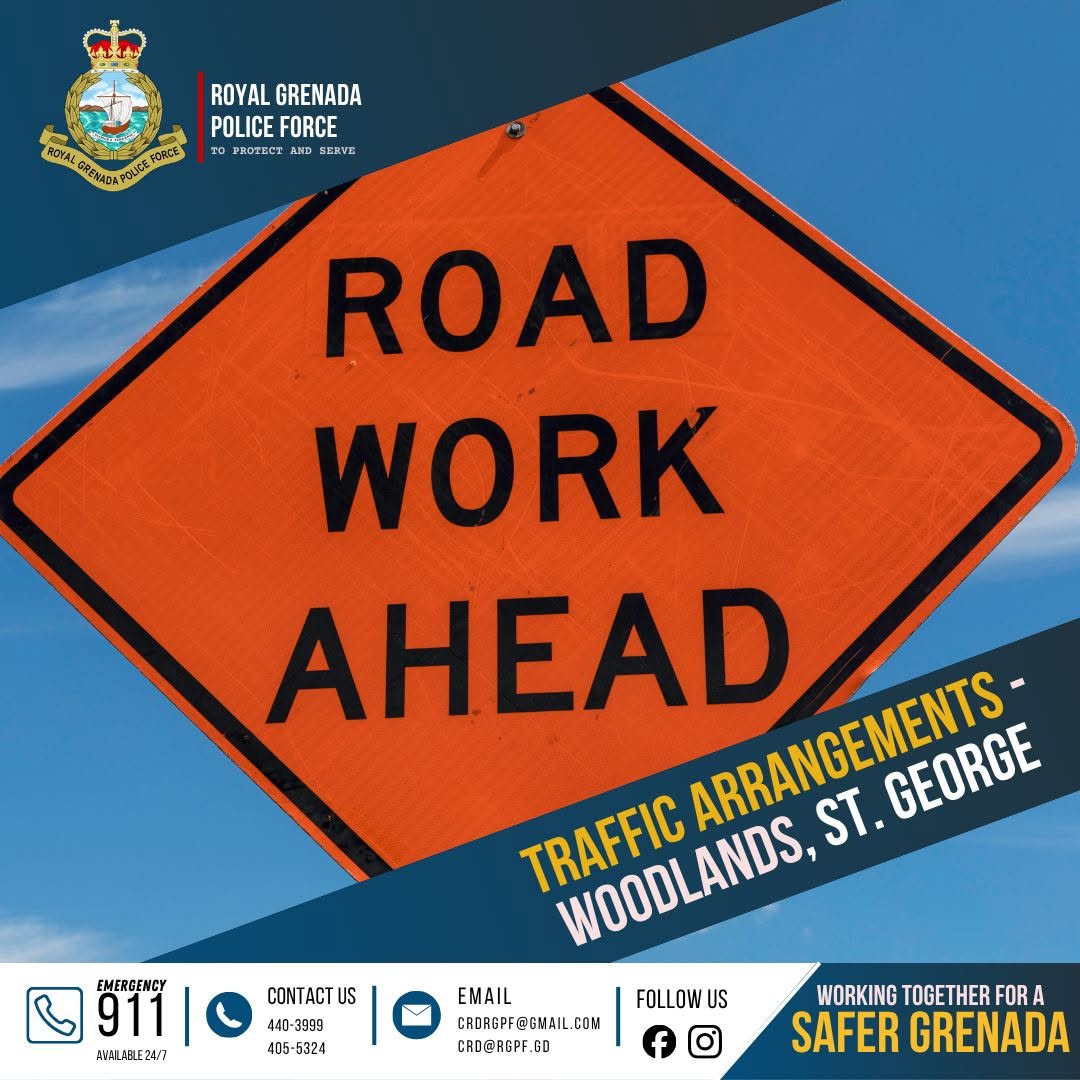
    Drivers across Grenada are adjusting their travel plans after the Royal Grenada Police Force (RGPF) announced major traffic adjustments along a busy stretch of Woodlands Public Road, set to roll out next year to accommodate critical pipeline upgrades by the National Water and Sewerage Authority (NAWASA). The changes, which will go into effect starting Monday, September 28, 2026, will remain in place for an estimated three months as crews work to replace and expand water infrastructure from Woodlands Public Road toward Sugar Mill. Under the new traffic scheme, only one direction of travel will be open through the work zone: all vehicles will be permitted to move only from Grand Anse Valley toward the Woodlands and Springs areas. Motorists heading from Springs toward the work zone will face full access restrictions and will be required to take an alternate designated route to reach their destinations. To prevent illegal entry into the restricted corridor, a permanent “No Entry” sign will be installed at the Woodlands Junction, barring all vehicles from entering the work area from that access point. The daily operating hours of the traffic restrictions vary by day of the week to balance construction progress with community travel needs: from Monday through Thursday, the one-way system will be in effect between 9 a.m. and 9 p.m., while on Fridays restrictions will end earlier at 3 p.m. Weekend restrictions will run from 9 a.m. to 5 p.m. on both Saturdays and Sundays. RGPF officials note that the schedule is not rigid: as construction phases shift, the affected roadway may see temporary full closures or intermittent reopenings to accommodate work milestones. The department is urging all motorists to remain alert when traveling near the project site, follow all posted signage and instructions from on-site traffic officers, and build extra travel time into their routines or plan alternative routes well in advance of any trips through the area. In a statement released via the Office of Community Relations, the RGPF issued an apology to residents, commuters, and businesses for any disruptions or inconvenience the traffic changes may cause over the three-month project period, and added that the force counts on the full cooperation and understanding of the Grenadian public as the critical infrastructure work moves forward. This public advisory was published by NOW Grenada, which notes that it is not liable for the content of statements released by contributing government agencies, and invites users to report any abusive content via the platform’s official reporting channel.

  • Murdered businessman’s son among 4 gunned down in Green Hill

    Murdered businessman’s son among 4 gunned down in Green Hill

    A devastating mass shooting in the Central Kingstown village of Green Hill on the night of September 25 left four people dead and four others wounded, marking the latest in a string of deadly gun violence that has rocked St. Vincent and the Grenadines in recent years.

    Among the four fatalities is 22-year-old Steve King, the son of 76-year-old businessman Stephen King who was fatally shot on the patio of his own Green Hill home in May 2025. The other deceased victims have been identified by multiple independent and reliable sources as 30-year-old local villager Antonio Samuel, 26-year-old Shaqueil Peters, also a Green Hill resident, and 23-year-old Shevon Chandler from Paul’s Avenue. Police have not officially released the identities of the victims as of the initial investigation, and law enforcement has cited limited preliminary details available to share publicly.

    The four injured victims, all currently reported to be in stable condition at local hospitals, include a 20-year-old Green Hill woman with a gunshot wound to her right hand, a 17-year-old male student hit in the right arm, right leg and left hand, a 28-year-old man with a wound to the right arm, and a 16-year-old mechanic who suffered gunshot injuries to the left thigh, right forearm and left hand.

    Brenton Smith, acting Assistant Commissioner of Police in charge of crime-fighting operations, confirmed the deaths and injuries to local outlet SVGTV while at the crime scene just after midnight Friday. He told reporters that law enforcement first received the alert about the shooting at approximately 10:30 p.m., adding that the violence unfolded a short distance from the community’s outdoor hard court. At the time of his statement, members of the national Crime Investigation Unit were already processing the scene to collect forensic evidence, with the full investigation still in its early active stages. Smith added that a woman was among the total victims, and that limited available information was being disclosed at this early phase of the probe. Senior law enforcement official Trevor “Buju” Bailey, the acting Commissioner of Police and predecessor to the current crime-fighting lead, also responded to the scene alongside other officers.

    Scene footage and on-site accounts indicate that Chandler was killed inside a vehicle, while two of the male victims died on a nearby street, and the fourth fatality was found along an adjacent dirt track. This shooting brings the total number of homicides in St. Vincent and the Grenadines for the current year to 36, following 40 killings in 2025, 54 in 2024, and a record high of 55 homicides in 2023.

    This latest incident is the third mass shooting resulting in multiple fatalities in the country in recent months, and the second multiple-death shooting in the Kingstown area this year. The violence has quickly revived public memories of a string of deadly mass shootings that have plagued the island nation over the past three years.

    In April of this year, the first multiple-fatality shooting in Kingstown took the lives of 29-year-old Enrique John aka Shoubu of Layou and 22-year-old Raheem Guy in the Stony Ground neighborhood. John, who had been out on bail for two pending attempted murder charges even after a curfew breach, was killed just two days after a court ruled his bail could remain in place. He was also a co-defendant in a high-profile 2024 credit union robbery case in South Rivers that saw five people hit with multiple charges. Just days after John’s killing, his mother was one of two people charged with the murder of a Layou resident rumored to be linked to John’s death.

    In July 2023, the deadliest documented mass shooting in St. Vincent and the Grenadines’ recent history left five people dead in the Harbour Club area of Upper Kingstown. D’ondre Hillock, Jamall Bobb, Lamont “Dutchy” Hector, Ricky Taylor, and 14-year-old student Kashie Primus were killed when gunshots were fired from a passing vehicle around 8:30 p.m. Despite a EC$50,000 reward offered for information leading to arrests, police have never gathered enough evidence to file charges in the case. Exactly one year after that mass shooting, six people were shot and injured during a social gathering in Kingstown’s Paul Avenue community.

    That same July 2023, three men were gunned down in downtown Kingstown’s Chinatown district, located across the street from the Central Police Station between the Solidarity Carpark and the capital’s fish market. The victims were Claude John of Redemption Sharpes, and 35-year-old Karon Bowens aka Twin and 24-year-old Giovannie Grant, both residents of Ottley Hall. Reports indicate two masked gunmen approached the area from the seaside behind a public washroom before opening fire, killing all three at the scene. Police have not released any official motive for the attack, but local sources with knowledge of organized criminal activity on the island suspect Claude John was not an intended target, pointing to the established criminal history of Bowens and Grant.

    In May 2025, three people, including 68-year-old businesswoman Lesline Davis, and her customers Joel Browne and Demeon Cumberbatch, were killed in a mass shooting at a shop in Belmont. Police have charged two men—one reported to have a history of mental illness—with murder in connection to that attack.

    Less than a month after that 2025 shooting, three more people were killed in a shooting in Paul’s Avenue that has drawn little public attention: 56-year-old pushcart operator Laurence Warren aka Bolo, a lifelong Paul’s Avenue resident; 44-year-old Don Ashton, a labourer from Ottley Hall; and Alston “Red Ants” Henry of Diamond.

  • Suriname en Ghana verdiepen samenwerking: visumvrij reizen, goudsector en handel op agenda

    Suriname en Ghana verdiepen samenwerking: visumvrij reizen, goudsector en handel op agenda

    On the sidelines of the 81st United Nations General Assembly in New York, the presidents of Suriname and Ghana have announced a major push to deepen their long-standing historical and cultural ties into a comprehensive bilateral partnership spanning trade, diplomacy, natural resource development and people-to-people exchange.

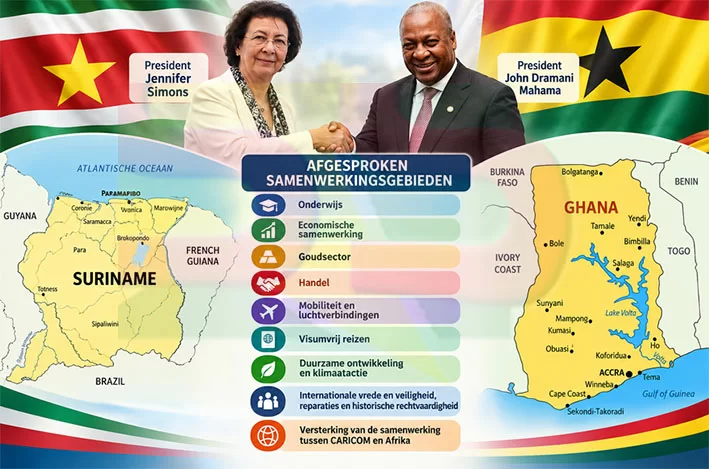
    Suriname’s President Jennifer Geerlings-Simons and Ghana’s President John Dramani Mahama held bilateral talks September 26 on the margins of the annual global summit, laying out a shared agenda that includes exploring visa-free travel, expanding air connectivity, boosting educational exchanges, growing bilateral trade, and advancing joint collaboration in the gold mining sector. Following their discussions, foreign ministry leaders from both nations formalized the new framework of cooperation during a signing ceremony witnessed by the two heads of state, signing a Joint Declaration and updating a bilateral roadmap for cooperation spanning 2026 to 2029.

    According to Suriname’s Communication Service (CDS), the talks centered on translating the deep historical and cultural connections between the two nations into tangible cooperation that delivers shared economic and social benefits for both populations. Specific priority areas were identified, including educational partnership, broad-based economic collaboration, and sustainable development of the gold sector. Both leaders committed to expanding existing cooperative frameworks into targeted initiatives aligned with global sustainable development goals.

    Melvin Bouva, Suriname’s Minister of Foreign Affairs, International Trade and Cooperation, and his Ghanaian counterpart Samuel Okudzeto Ablakwa carried out the official signing of the Joint Declaration and updated roadmap. The revised 2026-2029 Bilateral Roadmap will serve as a practical operational framework to set clear priorities, track the implementation of agreed commitments, and ensure agreed initiatives are delivered on the ground. Beyond bilateral projects, the two nations also agreed to hold more regular high-level political dialogue between their capitals Paramaribo and Accra, and to strengthen coordinated positions within multilateral bodies including the United Nations, African Union (AU) and the Caribbean Community (CARICOM).

    Key areas for enhanced multilateral coordination include sustainable development, climate action, international peace and security, reparations, and historical justice. Both countries have pledged to prioritize amplifying the collective interests of developing nations, small island states, and vulnerable global economies in international forums.

    During the discussions, leaders addressed cross-border people mobility, with President Mahama expressing particular interest in establishing a visa-free travel regime for holders of ordinary passports between the two countries. Such an arrangement would lower barriers to travel, and support growth in business, tourism, and cultural exchanges between Ghana and Suriname. As of the announcement, no final agreement has been reached on the policy. For its part, Suriname highlighted the importance of improving air connectivity, noting that a bilateral aviation agreement has already been signed, and further implementation will strengthen transport links between South America and West Africa.

    On the economic front, collaboration in the gold sector was a key topic of discussion. Ghana is home to one of Africa’s largest gold mining industries, and both governments see significant opportunities to expand joint development and knowledge sharing in this area, though concrete details of the partnership have not yet been released. Additional economic priorities include expanding overall bilateral trade, advancing educational partnerships, and boosting people-to-people mobility to support inclusive sustainable growth.

    The partnership extends beyond bilateral cooperation, with both nations leveraging their regional positions to strengthen ties between the Caribbean and African continents. Ghana is set to assume the rotating presidency of the African Union in 2027, while Suriname will take over the presidency of CARICOM next year. The two countries plan to use their leadership roles to elevate shared priorities including trade, education, mobility, sustainable development, and South-South cooperation on the joint agenda for African and Caribbean regional blocs.

    In line with this regional cooperation goal, President Geerlings-Simons announced that as incoming CARICOM president, she will propose inviting President Mahama as a Special Guest to the 2027 CARICOM Heads of Government Meeting, which will be held in Suriname from February 16 to 19, 2027.

    The talks also dedicated significant attention to the shared historical ties between the two nations. President Mahama thanked Suriname for its support of United Nations General Assembly Resolution A/RES/80/250, which addresses the trans-Atlantic slave trade and racially based chattel slavery. For Ghana, advancing global recognition, justice, and reparations for the harms of slavery is a core international priority, and the Joint Declaration identifies reparations and historical justice as areas where the two nations will strengthen coordinated international advocacy. The joint statement recognizes Ghana as holding special significance in Suriname’s national cultural heritage, rooted in shared historical connections.

    To mark the deepening of ties, President Mahama extended an invitation to President Geerlings-Simons to attend Ghana’s 70th independence anniversary celebrations in 2027. With the signing of the Joint Declaration and updated roadmap, Paramaribo and Accra have moved to anchor their centuries-old cultural and historical relationship in a concrete, modern cooperation framework. Over the coming three years, the 2026-2029 Bilateral Roadmap will guide the rollout of new projects across economic development, education, gold sector collaboration, mobility, and deeper integration between the Caribbean and African regions.


  • BOMB THREATS SHUT SCHOOLS

    BOMB THREATS SHUT SCHOOLS

    False bomb threats targeting schools immediately after long weekends have emerged as a persistent, troubling issue in Trinidad and Tobago, according to the president of the island nation’s largest teachers’ union.

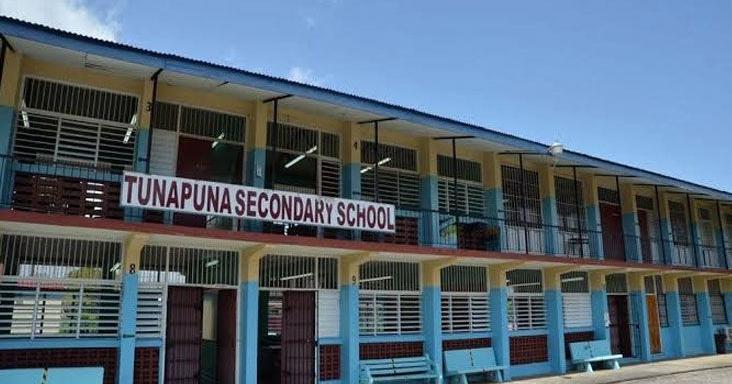
    The latest wave of disruptions unfolded this week, when four secondary schools—Arima North Secondary, El Dorado East Secondary, El Dorado West Secondary, and Tunapuna Secondary—received anonymous bomb threats in a single day, forcing the immediate evacuation of all students and staff on campus.

    In a statement shared with local media outlet *Trinidad Express* via WhatsApp, Crystal Ashe, president of the Trinidad and Tobago Unified Teachers’ Association (TTUTA), emphasized that stronger action is urgently needed to track down and hold accountable the individuals behind these malicious pranks. Ashe noted that bomb threats against schools consistently spike in the days following extended public holidays, a pattern that suggests the threats are often carried out by bad actors seeking an unplanned extra day off from classes.

    “TTUTA, as a key stakeholder in the national education system, always takes any threat against school communities extremely seriously,” Ashe said. He added that while the Ministry of Education already has a formal bomb threat response policy in place for institutions to follow, the recurring nature of these incidents demands more proactive intervention to root out those responsible. “When teachers follow the established protocols, we are confident in the framework, but stopping the threats at their source is the only way to end these disruptions for good.”

    Following the receipt of the threats on the day in question, the Trinidad and Tobago Police Service (TTPS) was immediately dispatched to the four affected campuses. The service’s Explosive Detection and Disposal Unit and Special Branch teams carried out full security sweeps of every building, classroom, and common area on school grounds, searching for any trace of explosive devices or suspicious items. After completing their thorough inspections, law enforcement officials confirmed that no dangerous materials were located, and the schools were officially cleared to resume normal operations.

    In an official media release issued the same day, the Ministry of Education confirmed that it had been notified of the threats immediately and had coordinated closely with law enforcement to respond. The statement noted that all established school safety and emergency protocols were followed throughout the incident, including structured coordination between school administrators and protective services, timely implementation of precautionary measures, and orderly accounting for all students and staff during the evacuation. “The safety and security of every student, teacher, and member of the school community remains our highest priority,” the ministry emphasized.

    The National Parent Teachers Association (NPTA) also issued a statement reacting to the incident, with NPTA president Walter Stewart sharing his perspective with *Trinidad Express* via telephone. Stewart voiced relief that the threats ultimately turned out to be false, but echoed the deep concern shared by TTUTA over the recurring pattern of these incidents. He reaffirmed that schools must remain safe, secure spaces for teaching and learning, and that all educators and students deserve to enter campus every day confident in their personal safety.

    Stewart pointed out that even when bomb threats are proven to be hoaxes, they inflict lasting harm on school communities. Beyond the immediate disruption to instructional time and delays to curriculum delivery, these false threats divert critical law enforcement and emergency response resources away from genuine public safety needs, he noted. They also spread unnecessary fear and anxiety among students, staff, parents, and the wider community, long after the all-clear is given. “These pranks are not harmless—they carry real costs for everyone involved, and it is past time that we crack down on those responsible,” Stewart added.

  • TSTT workers march: Pay 10% hike

    TSTT workers march: Pay 10% hike

    A bitter wage standoff between state-owned Telecommunications Services of Trinidad and Tobago (TSTT) and the Communication Workers’ Union (CWU) has escalated in recent days, with union leaders openly questioning the company’s good faith in reaching a resolution and warning that frontline workers may be caught in the crossfire of the impasse.

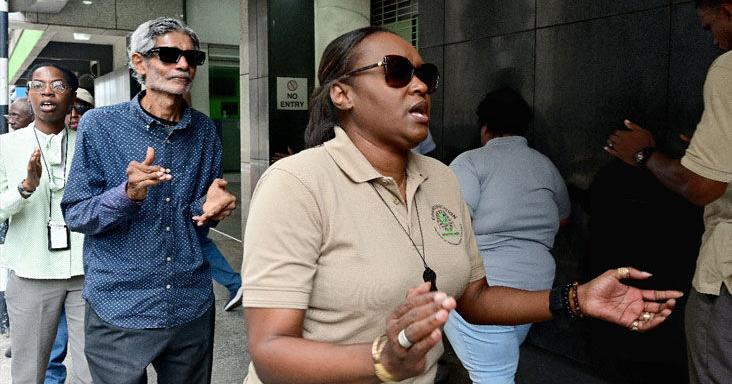
    Following a lunchtime demonstration held by TSTT employees to demand answers over the rejected wage deal, CWU Secretary General Joanne Ogeer reiterated the union’s call for Prime Minister Kamla Persad-Bissessar to step in and break the deadlock that has frozen negotiations. The protest also centered on a demand for TSTT Chairman Kern Dass to publicly explain why a tentative 10% wage increase agreement, reached after months of back-and-forth between negotiating teams, was ultimately struck down by the company’s board of directors.

    Ogeer clarified that the demonstration was not organized in direct response to pre-action protocol letters issued by TSTT leadership and Public Utilities Minister Barry Padarath. Instead, the core grievance centers on the unexplained rejection of a deal that was finalized by executive representatives from both sides. The 10% proposal, which would phase in the pay raise over a two to three-year period, was the only one of five initial offers the union found acceptable, after four other packages were rejected out of hand, Ogeer explained. Once both negotiating teams signed off on the terms, the plan was forwarded to TSTT’s board for final approval — only for the union to be notified weeks later that the deal had been turned down.

    The CWU leader’s questioning of the board’s decision carries extra weight given TSTT’s recent blockbuster financial results: the company reported a $214 million after-tax profit for the financial year ending March 31, 2026, a performance TSTT itself called the strongest it has posted in 17 years, dating back to 2009. Ogeer pushed back on the company’s long-standing claims of cash flow constraints that were previously used to justify wage freezes and low offers.

    “When the company repeatedly claimed before that it had cash flow problems, that it was not turning a profit, so it could not afford to pay workers more — but now you have announced a $214 million profit… what justification can you possibly give for saying no now?” Ogeer said in a press briefing after the protest. She also called for transparency around the sources of the windfall profit, asking whether the gains came from the government’s national laptop programme, a surplus in the company’s pension fund, or other operational gains. “It makes no sense for a company that has not received government subventions in recent years, and is now posting its highest profit ever, to claim it cannot or will not pay workers what they have agreed to,” she added.

    To back up the union’s claim that the 10% deal was properly negotiated and agreed, Ogeer said the union has already provided TSTT with two specific dates of the executive negotiating sessions and called on the company to review internal security footage to confirm that the meetings took place, who attended, and how long the negotiations lasted. “We are not making this claim out of thin air. The 10% agreement did not happen in a vacuum,” she said.

    Most strikingly, Ogeer admitted that the union has little confidence that TSTT will return to the negotiating table with a genuine commitment to reaching a fair deal. “What I can say clearly is that we are not optimistic that the company will come back to the table in good faith, and I want to stress that. We have no hope that the company will honor the agreement it made with the union,” she said. “As a matter of fact, we believe that TSTT workers will be weaponized even more as this dispute drags on.”

    Ogeer also raised questions about the independence of an ongoing internal investigation into TSTT’s former chief executive, noting that while the union does not oppose a proper probe into potential misconduct, it is demanding clarity over who is overseeing the process. “Who is guarding the guards at TSTT?” she asked. “Stakeholders are watching, investors are watching, citizens are watching, employees are watching… right now, TSTT does not look good.”

    In response to the pre-action protocol letters received from TSTT and the public utilities minister, Ogeer confirmed that the union has assembled a team of experienced legal representatives to handle the impending litigation, though she declined to share further details on the legal strategy. She made clear the union is confident in its position. “I am comfortable, and I am very confident with the representation that we have retained on the matter at hand,” she said.

    The protest drew support from other national labor groups, with Trinidad and Tobago Unified Teachers’ Association (TTUTA) President Crystal Ashe and prominent activist Dr. Wayne Kublalsingh in attendance. Ogeer noted that the demonstration marked a key moment for the labor movement, as it was the first major protest the union has been able to hold since the national state of emergency was lifted, giving workers the chance to publicly advocate for their rights once again.

  • Help for homes damaged in storm

    Help for homes damaged in storm

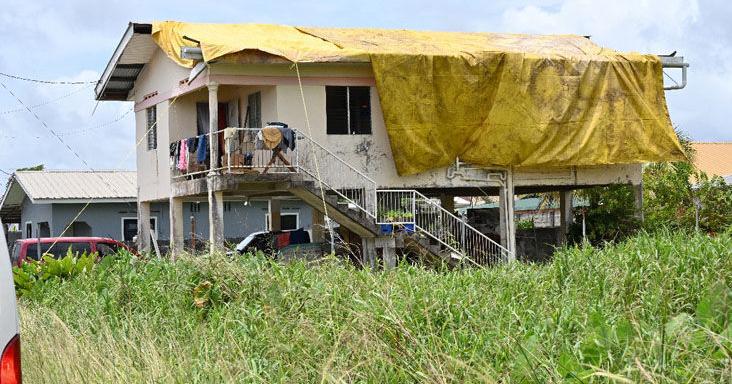
    A powerful overnight storm that struck late Thursday has left more than 100 residential roofs damaged across the Toco/Sangre Grande constituency, prompting rapid response from local disaster management authorities and government housing officials to begin damage assessments and speed up relief for affected families.

    On Saturday, a joint media tour of the hard-hit Azalea Circular neighborhood in Sangre Grande was led by Phillip Alexander, Minister in Trinidad and Tobago’s Ministry of Housing, alongside members of the Toco/Sangre Grande Regional Corporation’s Disaster Management Unit. Also participating in the tour was Kenwyn Phillip, chairman of the regional corporation and local area councillor, who walked the impacted streets with officials to survey destruction and speak directly to residents displaced or harmed by the storm.

    The collaborative assessment team, made up of Disaster Management Unit staff and a contingent from the Housing Development Corporation (HDC) under Alexander’s leadership, launched its work to streamline the grant application process for homeowners seeking funding for roof repairs and home restoration.

    Alexander explained that the inter-agency coordination is designed to ensure no affected resident falls through the gaps. “As we collect information from each homeowner about their specific needs, all teams will align their efforts based on their respective responsibilities, working in lockstep to deliver tangible relief to every household impacted by this disaster,” he stated.

    When questioned about support for homeowners with mortgaged properties, Alexander confirmed that HDC would deploy technical teams to guide residents through the assistance process, and noted that the Ministry of Housing maintains dedicated relief grants separate from resources offered by the regional corporation and local member of parliament.

    Phillip added that multiple agencies offer targeted grant programs to address different needs: the Self-Help program typically provides support for building materials, while the Social Services agency assists with replacing damaged personal appliances and household goods. He clarified that the regional corporation itself does not directly issue relief grants.

    Alexander also outlined the regional corporation’s role in delivering immediate temporary relief to displaced families, noting that local MP Wayne Sturge has already opened his office as temporary shelter for households forced to evacuate their damaged homes, providing immediate comfort to those who have nowhere else to stay.

    Two affected residents shared their harrowing firsthand accounts of the storm’s sudden violence. Joel Spence, whose home suffered partial roof loss, described how the damage unfolded in minutes. “We had planned to go to Paramin on Thursday, but I came back home as rain started pouring and wind began lashing our bedroom,” he recalled. “We watched coconut trees bending in the wind, and by the time we rushed inside to save our bedding from the incoming rain, daylight was suddenly pouring through – the roof was just gone.”

    Spence explained that his entire home was flooded, leaving all three of his household’s mattresses soaked. “Last night I slept on the floor, my wife on a blow-up mattress, my stepson on the couch, and only my son’s room escaped damage so he was able to sleep in his own bed,” he said.

    Mary Parris, another impacted resident, described watching her entire roof tear loose from her home. “When the rain started, we could see the edge of our roof lifting up and down in the wind – it did that three times before it just ripped clean off and landed in a neighbor’s yard down the street,” she said.

    Parris said her grandchildren, who had been upstairs during the storm, ran screaming downstairs in terror. One of her young grandsons was knocked over by the gust of wind as bricks from an upper beam began falling around them. “I grabbed him just as the beam came down – if that beam had hit us, we wouldn’t be here today,” she said. Her grandson was struck by a falling brick on his back, suffering minor scratches to his hand and foot, but was treated and released from the hospital and is now recovering.

    “It was a terrifying experience that left me completely traumatized,” Parris added.

  • Prison officer kills intruder

    Prison officer kills intruder

    A violent home invasion in the quiet Freeport community ended with an armed intruder dead at the hands of a serving prison officer Thursday evening, leaving local law enforcement searching for three fleeing accomplices as of Friday. The targeted family, which has nine members living in a two-apartment home on McLeod Trace, escaped the brazen attack without any injuries, an outcome the household’s elderly matriarch attributes to divine protection.

    Details of the attack paint a terrifying sequence of events that unfolded just before 7 p.m. A 71-year-old family member, who requested anonymity to protect her household, told reporters she was relaxing in the front apartment watching television when she first heard loud banging on the front door. Believing the noise was her daughter’s husband returning from his regular jog and joking around, she got up to investigate — only for the intruders to force their way inside before she could reach the entryway.

    One of the four masked attackers immediately drew a firearm, ordered the grandmother to lie on the floor, and stood guard over her while the other three spread through the home to search the residential property. When the 71-year-old woman’s 16-year-old granddaughter walked in from washing dishes at the back of the house, one of the intruders grabbed her by her jersey, pressed a gun to her head, and forced her to comply with their demands. The gun-wielding suspect then moved deeper into the property toward the back apartment, where the prison officer, a member of the homeowner’s family, was resting in his bedroom.

    Alerted to the break-in by noise from the commotion, the prison officer quickly armed himself with his issued service weapon, a black Smith & Wesson M&P chambered in 9mm. When he stepped out of his bedroom to assess the threat, he encountered the intruder pointing a firearm directly at him. Acting in self-defense, the officer fired three rounds at the suspect, striking him and causing him to fall to the ground immediately.

    Upon hearing the gunshots, the three remaining accomplices fled the property on foot, and had not been apprehended by law enforcement as of Friday evening. The downed intruder was pronounced dead at the scene by responding emergency personnel, and had not been publicly identified as of Friday night.

    When local media outlet the Express visited the Freeport home Friday, family members shared new details that have deepened questions about the motive for the attack. The grandmother told reporters that while the intruder who guarded her demanded her cell phone, the group never demanded cash or other valuables, and fled the scene without stealing any property from the home. She added that investigating officers later told her the weapon the dead intruder carried appeared to be fake. The grandmother also noted that this was the first time the family had been targeted by criminals, and expressed confidence the attack would not be repeated, given the intruders’ failed attempt.

    Local law enforcement has not yet released updated information on the manhunt for the three remaining suspects, or any new details on a possible motive for the invasion. Investigators have asked anyone with information about the incident or the identity of the dead suspect to contact local police authorities to aid in the ongoing investigation. Despite the traumatic experience, the family said they are grateful no one in the household was hurt, and the 71-year-old grandmother emphasized she continues to feel protected amid the aftermath of the attack.

  • AnuBlue Marks Record Year for Coral Restoration in Antigua & Barbuda

    AnuBlue Marks Record Year for Coral Restoration in Antigua & Barbuda

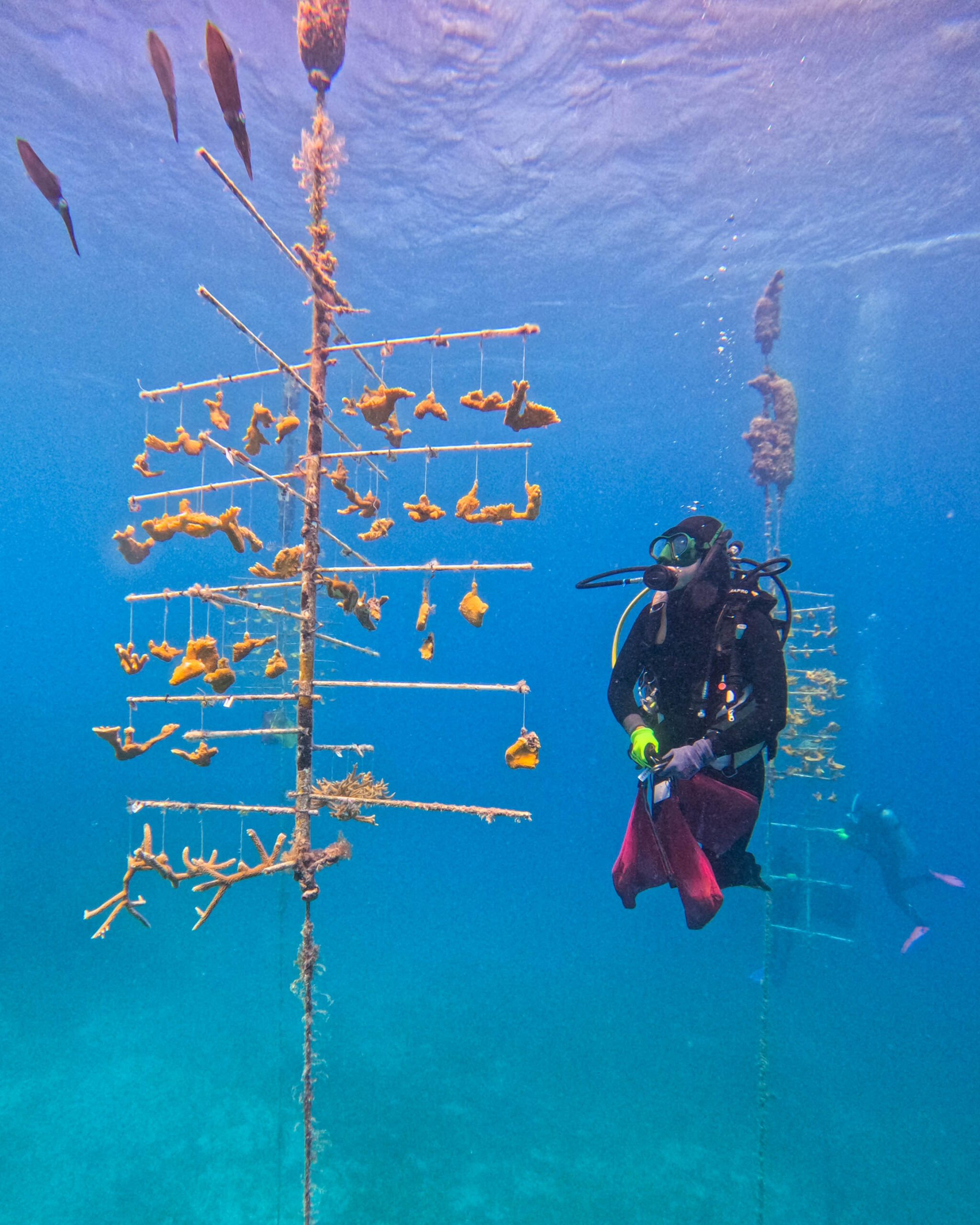
    In a landmark achievement for marine conservation in the Caribbean, non-profit marine conservation organization AnuBlue has delivered its most successful year of coral restoration since launching operations in 2021, outpacing all previous annual work to restore degraded reef ecosystems around the islands of Antigua & Barbuda. Over the past year, the team planted more than 5,800 corals grown in the organization’s onshore and offshore nurseries across restored reef sites, covering roughly 2.3 acres of degraded marine habitat — an area roughly equal in size to two full-size American football fields. Even more notable than the scale of the work is its success: post-planting monitoring has recorded an 84% survival rate for transplanted corals, a figure that confirms both the expanding reach of AnuBlue’s work and the long-term effectiveness of its science-backed restoration approach. As climate change, ocean acidification, and disease have driven sharp declines in wild coral populations across the globe, active, science-driven coral restoration has emerged as a critical strategy to protect remaining healthy reefs and reverse damage in areas that have already degraded. For small island nations like Antigua & Barbuda, healthy reefs are far more than just a natural attraction: they act as natural sea barriers that protect coastal communities from storm surge and erosion, support critical commercial and artisanal fishing industries, and underpin the billion-dollar tourism economy that drives the nation’s livelihoods. By scaling up its restoration work, AnuBlue is laying the groundwork for a more resilient future for Antigua and Barbuda’s coastal and marine ecosystems. Today, AnuBlue runs the largest active coral restoration program in Antigua & Barbuda, with four dedicated coral nurseries and five established restoration sites distributed across two of the nation’s most ecologically important marine areas: Cades Reef and the North East Marine Management Area (NEMMA). Both regions are critical habitats for a wide range of Caribbean marine species and support the livelihoods of local coastal communities, making them high-priority targets for restoration work. From these core hubs, AnuBlue expands restoration efforts to multiple reef systems across Antigua, allowing the organization to work at a meaningful scale that delivers real ecological impact, rather than limited, small-scale projects. What makes this scale of work possible is a cross-sector team of diverse stakeholders united by a shared commitment to restoring Antigua’s coastal ecosystems. The program brings together professional marine scientists, local artisanal fishermen, experienced commercial and recreational divers, and community volunteers, combining local ecological knowledge with cutting-edge scientific practice to drive successful restoration. Unlike many restoration projects that focus solely on the number of corals planted, AnuBlue’s approach prioritizes long-term reef resilience and biodiversity from the very beginning of the process. The organization’s selection strategy focuses on collecting coral fragments from parent colonies that have already demonstrated natural tolerance to the key stressors facing modern reefs: rising ocean temperatures and widespread coral disease. To boost genetic diversity and overall population resilience, the team plants genetically distinct individual corals from the same species in close proximity, creating more robust populations that are better able to adapt to future change. The program also cultivates and transplants 15 different reef-building coral species, five of which are classified as critically endangered by global conservation authorities. Each of these species plays a unique, irreplaceable role in supporting healthy reef structure and function, from providing habitat for small fish to building the reef’s foundational structure. By combining selective breeding for climate resilience with a deliberate focus on boosting species diversity, AnuBlue is working to build reef ecosystems that are healthier, more resilient, and better able to survive the challenges of a changing climate. Looking ahead, the organization plans to continue expanding its restoration work, paired with long-term monitoring and ongoing research to refine its approach and share lessons learned with other restoration programs across the Caribbean and beyond. The ultimate goal is to rebuild robust reef ecosystems that can continue to support marine biodiversity, protect coastal communities, and remain a core part of Antigua and Barbuda’s natural heritage for future generations. Founded as the Elkhorn Marine Conservancy and rebranded as AnuBlue, the organization is an innovative non-profit focused on boosting the resilience of Antigua and Barbuda’s marine ecosystems through targeted restoration, cutting-edge research, and community-led stewardship.