作者: admin

  • Police report man’s death after alleged confrontation with DICRIM agents in Cabral, Barahona

    Police report man’s death after alleged confrontation with DICRIM agents in Cabral, Barahona

    A Dominican national wanted on four separate court warrants for alleged involvement in multiple criminal activities has died following a shootout with law enforcement investigators near a coastal lagoon in the country’s southern region, National Police officials confirmed this Thursday.

    The fallen suspect was formally identified as Carlos Julio Féliz Sena, a resident of La Lista municipal district, which falls under the jurisdiction of Cabral municipality. According to the preliminary official account released by the National Police’s Southern Regional Directorate, members of the elite Central Directorate of Investigation (Dicrim) tracked Féliz Sena to a location near El Rincón, also known as Cabral lagoon, during a targeted surveillance operation.

    When officers moved to apprehend the suspect, police report that Féliz Sena immediately initiated a physical assault on Dicrim agents in an attempt to evade arrest. The situation escalated quickly when the suspect reportedly drew a homemade unlicensed firearm locally referred to as a “chilena” from his waistband and fired a single round toward the responding officers, authorities said.

    In line with standard use-of-force protocols, the Dicrim team returned fire to neutralize the ongoing attack, striking Féliz Sena. First aid was administered on scene before the wounded suspect was rushed to a local medical facility for urgent care. Despite medical intervention, Féliz Sena ultimately succumbed to his injuries at the center.

    Police officials confirmed that Féliz Sena was the subject of four active court warrants — numbered 2026-AJ0030750, 2026-AJ0001107, 2026-AJ0017630, and 2026-AJ0041559 — all tied to alleged criminal acts committed within Cabral municipality. Internal police records also show multiple prior entries linking Féliz Sena to other criminal incidents, which prompted ongoing monitoring by national investigative bodies in the area.

    Per standard operational procedure following officer-involved shootings, the National Police has launched a full formal investigation into the exact circumstances of the confrontation. All findings from the probe will be submitted to the Public Prosecutor’s Office to facilitate the required legal review and next steps. The account provided in this report reflects the preliminary law enforcement narrative, with the ongoing investigation expected to clarify the full sequence of events leading to Féliz Sena’s death.

  • Magnitude 4.2 earthquake strikes near Bayaguana early Sunday

    Magnitude 4.2 earthquake strikes near Bayaguana early Sunday

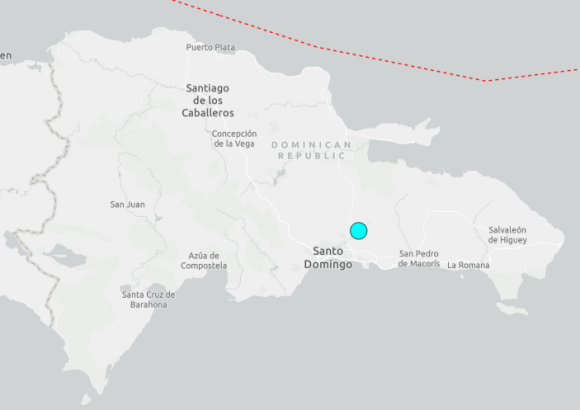
    A moderate 4.2-magnitude earthquake rattled parts of the Dominican Republic in the early hours of Sunday, according to data released by the U.S. Geological Survey (USGS).

    The seismic event hit at roughly 6:06 a.m. local time, with its epicenter positioned around 13 kilometers (8 miles) south-southwest of the town of Bayaguana, the USGS geolocation data shows. Bayaguana falls within the boundaries of Monte Plata province, a central inland region of the Caribbean nation.

    As of initial reports following the tremor, no official statements have been issued regarding casualties, structural damage, or tsunami risks linked to the earthquake. The USGS has not yet announced any plans to revise the preliminary magnitude or epicenter coordinates recorded by its global seismic monitoring network.

  • St. Kitts and Nevis: First Lady Diani Prince-Drew highlights youth development at Concordia Summit – WIC News

    St. Kitts and Nevis: First Lady Diani Prince-Drew highlights youth development at Concordia Summit – WIC News

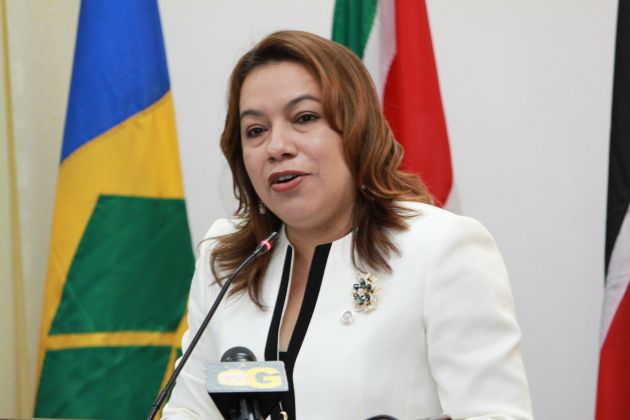
    Against the backdrop of the 81st United Nations General Assembly in New York City, the 2026 Concordia Annual Summit brought global leaders, policymakers, and industry stakeholders together to address pressing shared challenges. Among the featured speakers was Diani Prince-Drew, First Lady of St. Kitts and Nevis, who stepped onto the high-level platform to center a perspective long overlooked in global development conversations: that of young people from Small Island Developing States (SIDS).

    Prince-Drew spoke on September 21 during a summit panel titled *Fostering the Future Together: A Global Commitment to the Next Generation*, part of the event’s Advancing Human Rights & Social Progress program. The panel brought together a cross-sector group of leaders including U.S. Special Envoy for Best Future Generations Charity Wallace, Sarah Kemp of Intel Corporation, and Elizabeth Pishny of Google, to explore how multi-stakeholder partnerships between governments, private companies, and civil society organizations can create more equitable opportunities for children and young people in an increasingly digital-first world. This discussion built on earlier conversations held in Washington, D.C. this past March as part of the broader *Fostering the Future Together* global initiative.

    In her address, Prince-Drew emphasized a critical gap in current global policy shaping: major conversations around technology access, educational advancement, and sustainable development are too often designed and led without meaningful input from the youth they impact most – especially those hailing from small island developing nations. By elevating this observation, she pushed global attendees to recognize that inclusive development cannot exist if marginalized regional youth are excluded from decision-making tables.

    Beyond advocating for youth inclusion at the global summit, Prince-Drew’s participation also laid critical preliminary groundwork for a regional *Fostering the Future Together* gathering to be hosted in the Caribbean. The upcoming event will focus explicitly on mapping the unique challenges and untapped opportunities facing Caribbean children and young people, while strengthening collaborative action between regional and international partners to address their needs.

    For St. Kitts and Nevis, Prince-Drew’s featured role at the high-profile summit has elevated the country’s profile in global conversations centered on building a more inclusive, equitable future for young generations, bringing much-needed attention to the perspectives of small island nations on the world’s biggest development stages.

  • KFC responds to fake image circulating online claiming individuals under 21 were banned from their store

    KFC responds to fake image circulating online claiming individuals under 21 were banned from their store

    A fabricated graphic claiming KFC Dominica has implemented a blanket ban on all customers under the age of 21 has spread rapidly across social media platforms, prompting the fast-food chain’s local franchise to issue an urgent official clarification to dispel the misinformation.

    The false rumor took root after a public altercation between two teenage students outside KFC’s Roseau location on a recent Friday. Video and images of the confrontation circulated locally online, and bad actors quickly created the fake ban announcement to capitalize on public attention to the incident.

    In an official post shared across KFC Dominica’s verified social media channels, the franchise stressed that the doctored graphic was not created, authorized, or released by any member of its team, and no such age restriction policy has ever been considered or approved. “We welcome guests of every age at all our locations across the country, and that policy has not changed,” the statement read.

    The chain acknowledged that the unfounded claim has sparked unnecessary anxiety among local students and their families, and urged social media users to share the official clarification to stop the spread of false information. KFC Dominica also confirmed that it is conducting a full internal review of the Roseau altercation to identify actionable steps that will reinforce the safety of both customers and on-site staff, which the company says remains its number one priority moving forward.

    For accurate, up-to-date information about KFC Dominica’s operations and policies, the company directs the public to its official verified social media page.

  • Saint Lucia beaten by Barbados in CNL opener

    Saint Lucia beaten by Barbados in CNL opener

    The opening matchweek of the Concacaf Nations League delivered a disappointing start for Saint Lucia’s senior men’s national football team, which suffered a 2-0 defeat at the hands of Barbados on Friday night. Played in front of a crowd of fewer than 1,000 spectators at the island nation’s home ground, the Daren Sammy Cricket Ground, the result leaves the Piton Boyz rooted at the bottom of League B’s Group B after the first round of fixtures.

    The match carried extra narrative weight for Saint Lucia, as new head coach Rajesh Latchoo took charge of his first ever game in charge just three days after his official appointment. Latchoo’s starting XI saw Vino Barclett get the starting nod in goal, shielded by a backline made up of captain Terell Thomas, Doneal Lionel, Melvin Doxilly, and Kurt Frederick. In the center of the park, Ajani Louis earned his first full senior cap in the starting midfield unit alongside experienced campaigners Lester Joseph and Gregson President. Up front, young talents Yanic Noel and Shevon Byron supported lead attacker Caniggia Elva to round out the new coach’s first starting selection.

    It was Barbados, nicknamed the Bajan Tridents and guided by former international player Kent Hall at the helm since 2024, that dominated the early exchanges of the contest. The visitors controlled possession through consistent passing sequences, putting consistent pressure on Saint Lucia’s backline from kickoff. That pressure paid off early, when referee ruled that Doneal Lionel had committed a foul inside the 18-yard box in the 8th minute of play, awarding Barbados a penalty. Striker Thierry Gale converted the spot kick to put the Tridents ahead 1-0, a lead they held through halftime.

    Saint Lucia improved its performance after the break, with two second-half substitutes, forward Kegan Caull and attacking midfielder Djal Augustin, injecting new energy into the side and helping the home side settle into its rhythm. However, Barbados put the game out of reach in the 73rd minute, when a well-timed through ball sent Niall Reid-Stephen clear on goal. Despite loud appeals from Saint Lucia’s players and coaching staff for an offside decision, the assistant referee kept his flag down, and Reid-Stephen finished clinically to double Barbados’ lead to 2-0, a scoreline that would hold until the final whistle.

    Looking ahead, Saint Lucia will quickly return to action, hosting Bermuda at the Daren Sammy Cricket Ground this coming Monday at 8 PM. Like Saint Lucia, Bermuda also opened its Group B campaign with a defeat, falling 2-1 to Guadeloupe on Friday afternoon. Coach Latchoo is already planning for upcoming fixtures, confirming that he expects to add two reinforcements to his squad – Arkell Jude-Boyd and Donavan Phillip – ahead of next weekend’s matches against Guadeloupe, which will be hosted in Barbados.

  • Prosthetic Centre gives amputees hope to walk again

    Prosthetic Centre gives amputees hope to walk again

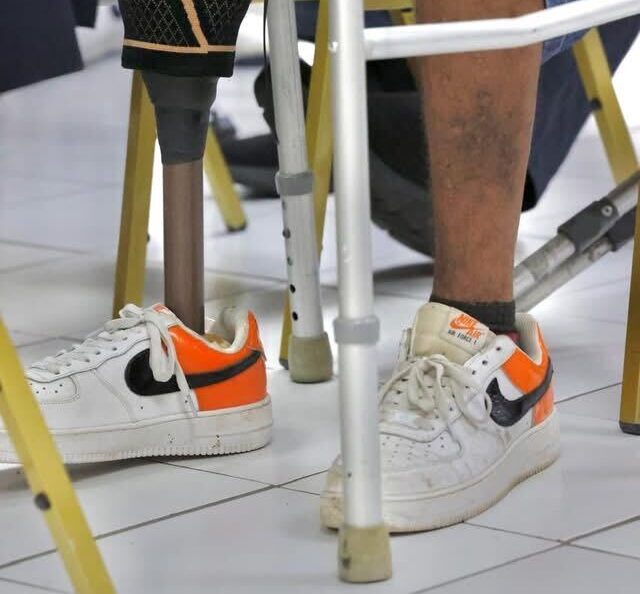
    After nearly three years of collaborative planning and preparation, the Saint Lucia Prosthetic Centre officially opened its doors to patients this Thursday, marking a transformative milestone for amputees across the island nation seeking accessible, personalized mobility solutions.

    This community-focused initiative is the result of a cross-sector partnership led by the Rotary Club Caribbean Plus, working hand-in-hand with the Government of Saint Lucia, local non-profit Hope to Walk, international medical outreach group Montero Medical Missions, and the Tapion Foundation. Unlike many existing services that require patients to travel abroad for custom fittings, the new centre brings full-service prosthetic care directly to Saint Lucian residents, designing and building every device to match each patient’s unique physical needs.

    Rotary Club Caribbean Plus President Tzarmallah Haynes-Joseph, who could not attend the opening ceremony in person, shared a message highlighting the institution’s core mission: “Today is about opening a door to greater mobility, independence and hope.” Remarkably, the centre already delivered life-changing results ahead of its official launch: two local patients, including a retired law enforcement officer and a double amputee, have already received their custom prosthetics and left the facility walking independently.

    Konrad Wagner, past president of the Rotary Club Caribbean Plus, described the early outcomes as nothing short of miraculous. “What we are providing here is a service for people that really need it. We are building prostheses that are functional, that are accessible,” he explained, adding that the centre’s support extends far beyond the initial fitting. Patients can return for ongoing repairs, adjustments, and modifications, even if they received their original prosthetic from another provider, to ensure long-term functionality and comfort. The ultimate vision of the project is to guarantee that every person in Saint Lucia who requires a prosthetic limb can access one without unnecessary barriers.

    For its initial phase of operations, the centre will prioritize below-the-knee prosthetics, with long-term plans to expand service offerings to include above-the-knee devices as capacity and resources grow. The facility is hosted on the campus of Tapion Hospital, which has donated the space free of charge to support the project’s public service mission.

    For Saint Lucia’s Minister for Home Affairs, Crime Prevention and Persons with Disabilities Jeremiah Norbert, the opening carries deeply personal significance. Norbert himself is a prosthetic user, after losing a leg in a devastating motorcycle accident in 2021. Drawing from his own lived experience, he reflected on the profound shift that a well-fitted prosthetic can bring to a person’s quality of life. “I know what a prosthetic can do…. Just imagine you’ve been sitting in a wheelchair all along and you’re being pushed around and within a few hours, you can move and you don’t necessarily have to rely on someone,” he said.

    Norbert emphasized that the opening of the centre is far more than a ceremonial event. For years, exorbitant costs have locked hundreds of local amputees out of life-changing mobility care, leaving many dependent on others not by choice, but because they could not afford the devices they need. With the launch of this new centre, partners aim to dismantle that financial barrier, expanding access to the independence and dignity that custom prosthetics can deliver to the people of Saint Lucia.

  • Uroy Joseph Murder Trial: Jury Shown Bloodstained Pipe Linked to Arthur James Case

    Uroy Joseph Murder Trial: Jury Shown Bloodstained Pipe Linked to Arthur James Case

    As the high-profile murder trial of Uroy Joseph unfolds at the High Court, prosecutors have laid out a series of critical pieces of forensic and circumstantial evidence linking the accused to the 2021 killing of Arthur James, whose charred remains were discovered in Freetown two years ago. The most prominent exhibits presented to the jury this week were a blood-marked metal pipe recovered from a residential property in Liberta, hidden inside a zinc fence perimeter, and a collection of photos documenting the burned-out wreckage of James’s vehicle.

    Taking the witness stand, forensic police Sergeant Chapman told the court that during the early investigation, Joseph himself identified the pipe as the weapon prosecutors claim was used to attack and kill James. Subsequent forensic testing confirmed that the genetic profile of the blood recovered from the pipe’s surface matches DNA extracted from James’s burnt remains. To further cement the identification of the remains, prosecution teams also submitted DNA test results that cross-referenced the remains against a sample provided by James’s biological daughter, which returned a confirmatory match.

    In addition to physical forensic evidence, law enforcement investigators brought forward closed-circuit television footage captured around the time of James’s disappearance. Investigating officer Corporal Amethyst George told the jury that the footage captured Joseph and another unnamed co-accused attempting to relocate James’s vehicle, a move that the prosecution argues was part of a coordinated effort to cover up the killing.

    The case carries an unusual procedural history: Uroy Joseph was originally one of three defendants stood trial for the murder, alongside his two cousins, Zamir Ogarro and Obasic Ogarro. However, both co-defendants have since died before the conclusion of proceedings, leaving Joseph as the only remaining accused facing the murder charge.

    Court proceedings remain ongoing, and the prosecution and defense are expected to call more than 30 witnesses over the course of the trial to give testimony related to the case, with jury deliberations set to begin once all evidence has been presented.

  • LETTER: Enough Is Enough: Zero Tolerance, Zero Excuses – It Is Time to Take Back Our Nation”

    LETTER: Enough Is Enough: Zero Tolerance, Zero Excuses – It Is Time to Take Back Our Nation”

    In a sharply worded open letter shared publicly, an author frustrated with the current trajectory of national governance is calling for sweeping change, arguing that the time for incremental reform has long passed. Titled “Enough Is Enough: Zero Tolerance, Zero Excuses – It Is Time to Take Back Our Nation”, the piece frames widespread public discontent as a response to what the writer describes as systemic failures, unaccountable leadership, and the erosion of long-held national values.

    The letter argues that incremental policy tweaks and half-hearted attempts at reform have not addressed the root causes of the nation’s most pressing challenges, from broken public institutions to widening gaps between political elites and everyday citizens. It rejects any excuses for inaction, calling for the immediate implementation of a zero-tolerance framework that holds all public officials accountable for misconduct, corruption, and failure to deliver on campaign promises.

    Central to the letter’s message is a call to action for ordinary citizens to reassert their authority over the political process. The author argues that the nation has drifted from its founding principles because of widespread apathy and acceptance of substandard governance, and that now is the moment for collective action to “take back” what the writer frames as the public’s right to transparent, effective leadership.

    The piece has already sparked discussion across political circles, with readers on both sides of the ideological spectrum weighing in on its uncompromising stance. While some have praised the letter for giving voice to widespread public frustration, others have pushed back on its hardline approach, arguing that collaborative compromise is necessary to address complex national challenges. For the author, however, there is no middle ground: zero tolerance for failure, zero excuses for inaction, and an urgent push to redirect the nation toward its core values.

  • LETTER: How much is Hormuz really adding to Caribbean fuel prices?

    LETTER: How much is Hormuz really adding to Caribbean fuel prices?

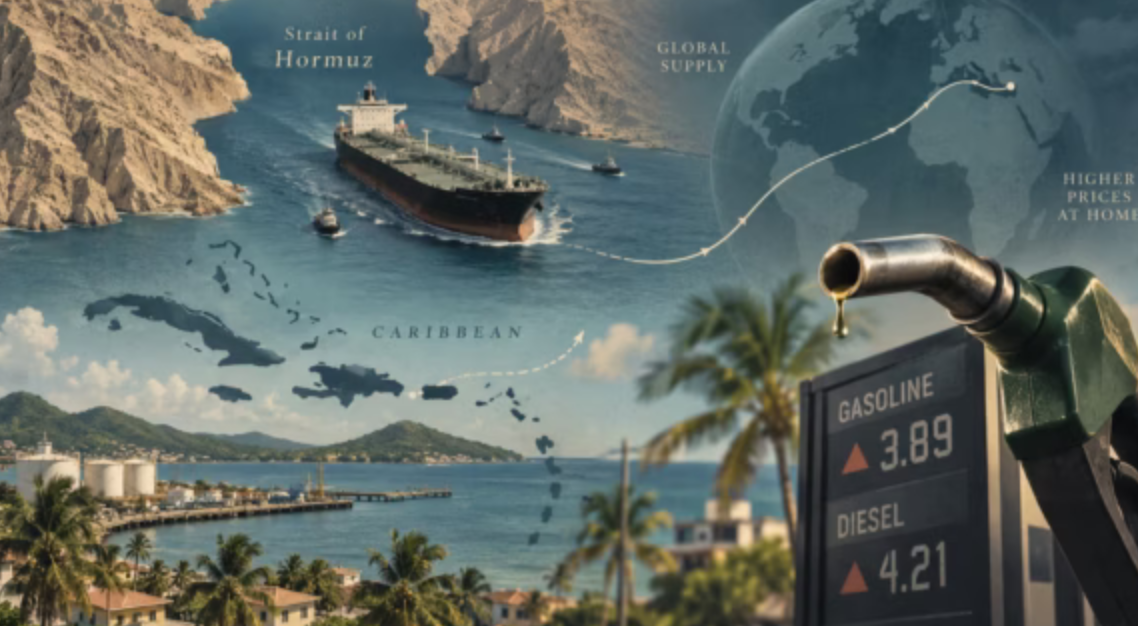
    When motorists across Antigua and Barbuda pulled up to fuel pumps in September, they encountered a sharp price shock: a EC$2 per gallon increase that pushed gasoline from EC$14.50 to EC$16.50 and diesel from EC$14.25 to EC$16.25, a roughly 14% jump across both fuels. But this latest price increase is not solely the outcome of ongoing disruptions at the Strait of Hormuz, a critical global oil chokepoint. It also reflects a deliberate policy choice by the Antiguan government to roll back existing consumer subsidies that previously buffered households from rising global import costs. This dual driver of price hikes puts a sharp spotlight on a question facing nearly every Caribbean household and business: what share of local fuel price increases can actually be traced to geopolitical disruptions thousands of miles away, and how much stems from domestic policy decisions?

    Data from global energy regulators confirms that a substantial international supply shock is indeed pushing up fuel prices worldwide, with diesel facing particular strain. However, there is no one-size-fits-all percentage that can be applied uniformly to pump prices across every Caribbean island to isolate the Hormuz effect. Between a disrupted cargo shipment in the Gulf and a motorist’s receipt at the pump lie a web of independent regional markets, pre-negotiated supply contracts, and domestic fiscal policy choices that shape final retail costs.

    To understand why Hormuz ripples across global fuel markets even for countries that do not import directly from the Gulf, it is critical to contextualize the chokepoint’s outsize role in global energy trade. According to the U.S. Energy Information Administration (EIA), roughly 20 million barrels of petroleum liquids pass through the Strait of Hormuz every day in 2024 — equivalent to one-fifth of total global oil consumption. Alternative pipeline networks can only absorb a fraction of that volume if Hormuz traffic is restricted. While the strait has not been fully closed to all traffic, Reuters reporting from September 22 confirms that total vessel movement remains far below pre-conflict levels, and the International Energy Agency (IEA) estimated that more than 10 million barrels of daily Gulf oil production remained shut in during August.

    The interconnected nature of global fuel markets means even Caribbean importers that source all their fuel from non-Gulf suppliers still feel the impact of the Hormuz disruption. A September EIA analysis of global fuel markets explains that constrained international gasoline supplies have driven up both the cost of U.S. domestic imports and demand for U.S. fuel exports. As buyers around the world scramble to secure replacement supplies from alternative producers, they end up competing for output from Atlantic Basin refineries that would normally serve existing regional customers. This competition pushes up prices for all cargoes — even those that never travel near the Gulf. This dynamic is why simply measuring the share of global oil that passes through Hormuz cannot give an accurate percentage for local fuel price increases: the final impact depends on how much total supply is actually taken off the market, how quickly alternative production can come online, available global inventory levels, and how consumer demand responds to higher prices.

    Diesel has faced far steeper price increases than gasoline through this crisis, a gap that requires explanation beyond just crude oil supply disruptions. The IEA estimates that Gulf net exports of diesel and gasoil averaged just 390,000 barrels per day in August, only slightly more than a quarter of their pre-crisis level. Ongoing disruptions to Russian refinery operations have only compounded this shortage, making clear that the entire price increase cannot be pinned on Hormuz alone. In energy trading, the difference between the wholesale price of finished fuel and the cost of crude oil is called the crack spread. The EIA reports that since May, the New York Harbor gasoline crack spread has averaged roughly US$1 per gallon above its 2025 baseline, while distillate and jet-fuel crack spreads have seen even larger increases, because the disrupted production facilities disproportionately supplied these refined products. This confirms a global shortage of finished fuel products, not an automatic surcharge passed directly to Caribbean consumers, and the spread itself includes refining operating costs, not just pure profit.

    Local industry accounts align with this global trend. In a March 9 interview with antigua.news, West Indies Oil Company chief executive Gregory Georges noted that recent fuel shipments had arrived at dramatically higher costs, with the sharpest increases recorded for diesel and jet fuel, matching the global market dynamic.

    To understand how global price increases translate to local pump prices, it is important to start with the actual product Caribbean importers purchase, rather than assuming retailers buy crude directly. A standard petroleum barrel holds 42 U.S. gallons, or roughly 159 liters. If the landed cost of finished gasoline or diesel rises by US$20 per barrel, that adds approximately 12.6 U.S. cents per liter to the import cost — a total of roughly US$6.29 for a 50-liter tank. For a US$10 or US$30 per barrel increase, that translates to 6.3 or 18.9 U.S. cents per liter respectively. These are illustrative conversions, not official estimates of the Hormuz-specific premium, and they assume full pass-through of costs before percentage-based taxes, with no changes to domestic retailer margins or government support. Percentage-based taxes can amplify retail price increases, while expanded government support can absorb part of the rise.

    Accurate accounting is critical to avoiding double-counting: the landed price of finished fuel already includes the supplier’s product cost and agreed delivery fees, so adding a separate crude price increase on top inflates the final bill. Domestic storage, distribution, retail margins, and net fiscal charges then complete the journey from global supplier to local pump. The same logic applies to shipping costs: an insurance surcharge for vessels traveling through the Gulf cannot be automatically applied to a Caribbean-bound voyage that takes a different route; calculating that surcharge requires access to the actual voyage route, contract terms, and insurance policy details, not just a reference to the Hormuz conflict.

    Antigua’s September price hike perfectly illustrates the difference between the global economic cost of higher fuel and the immediate amount passed through to motorists. Explaining the government’s decision to scale back fuel price support, Prime Minister Gaston Browne stated that the government had forgone roughly EC$24 million in revenue over the previous six months. This figure is an official government attribution, not an independently audited finding, and foregone revenue should also be distinguished from direct cash subsidy payments. When rising import costs are absorbed through lower tax collection or other government support, a stable retail pump price does not mean the global supply shock has disappeared. Rolling back part of that support can raise retail prices even without a new increase in current wholesale prices — it only shifts who pays the cost, and when.

    Saint Lucia offers a clear example of how different policy frameworks and pricing timelines produce different outcomes across the Caribbean. A September 14 pricing notice from the government set both gasoline and diesel at EC$3.79 per liter, up from EC$3.68, for the period ending October 4. The new prices reflect international price movements between August 17 and September 6, and the government continues to maintain subsidies for diesel. This means retail prices set using a lagged reference window cannot be judged against current daily crude price quotes alone, and identical retail prices for gasoline and diesel do not mean identical underlying wholesale costs. Pricing formulas and ongoing subsidy levels play a major role in shaping final prices. This makes cross-island fuel price comparisons far more complex than just comparing photos of forecourt price signs; purchase dates, fuel specifications, tax rates, subsidy levels, and measurement units (including whether a quoted gallon is U.S. or imperial) all must be aligned to make an accurate comparison.

    The impact of higher fuel prices extends far beyond private motorists across the Caribbean. Diesel is a core input for nearly every sector of regional economies: it powers freight transport, agricultural machinery, and construction equipment, meaning higher diesel costs will eventually feed through to higher prices for a wide range of goods and services. Fuel is only one component of final consumer prices, however, so the increase will not be one-to-one.

    Electricity prices face separate pressure, as power generators rely on fuel purchases to operate, with their own tariff structures governing how costs are passed to consumers. In an official August 26 statement, the Antigua Public Utilities Authority reported that its monthly fuel bill had nearly doubled between January and July, attributing the increase to elevated international prices. This is a total spending figure, not a unit price index, so additional data on total volume consumed and the power generation mix would be needed to isolate how much of the increase comes from higher per-unit prices, let alone how much can be traced specifically to Hormuz.

    The region’s critical tourism sector also faces exposure from the supply shock. As antigua.news has previously reported, higher jet fuel costs put upward pressure on airfares for routes bringing visitors to the Caribbean. While the jet fuel market is separate from retail road diesel, both markets face the same broader strain on global refined fuel supplies. An April International Monetary Fund assessment found that net energy imports for tourism-dependent Caribbean economies average roughly 6% of gross domestic product. This is a group-wide estimate, not an Antigua-specific figure, and energy exporting countries in the region such as Guyana and Trinidad and Tobago have very different external exposure, though higher global energy and food costs still impact their domestic households.

    The core outstanding question for Caribbean consumers is not whether the Hormuz disruption creates upward price pressure — it is how to separate that contribution from other global supply pressures and domestic pricing decisions. There is already a local dispute over one key component of retail prices: in an April statement published by antigua.news, Antiguan service station operators pushed for higher retail margins, citing long-running increases in operating costs, and called for the full publication of official fuel price breakdowns. That statement confirms demand for a change in margins, not proof that an increase was approved or that existing margins are excessive.

    A full transparent reconciliation of pump prices would require accounting for the appropriate wholesale benchmark for gasoline or diesel, the pricing date of the supply contract, actual purchase and delivery costs, inventory accounting methods, local retail margins, and existing taxes or government support. Only these detailed records can fully explain the observed pump price. Isolating the specific contribution of Hormuz would require an additional counterfactual estimate of what the same fuel would cost without the disruption, while also accounting for other independent refinery outages and shifts in global demand.

    The duration of the crisis also matters. The IEA recorded a 507 million barrel drawdown in global oil inventories between February and August, as stocks have been used to cushion the loss of supply. But drawing down existing inventories is not a long-term replacement for sustained production flows.

    The public data reviewed for this analysis does not provide a cargo-by-cargo reconciliation for Antigua that would allow for a precise attribution of the September pump price increase to the Hormuz disruption. This lack of detailed public data supports neither the claim that every cent of the increase is an unavoidable result of global events, nor the claim that the disruption is merely a political excuse for higher prices.

    For Caribbean consumers, the most evidence-based conclusion is that the Hormuz disruption is creating real, sustained upward pressure on fuel costs, particularly for diesel. How much of that pressure reaches a specific local pump depends on what type of finished product was purchased, the contractual terms of its delivery, and who chooses to absorb the cost of the increase. The global refined fuel shortage is well-documented. A precise local attribution of costs will require full access to detailed supply chain and pricing accounts that are not currently public.

  • Backing Guyana’s candidate, PM cools talk of own UN bid

    Backing Guyana’s candidate, PM cools talk of own UN bid

    As the United Nations moves forward with its selection process for the next global leadership post, Barbadian Prime Minister Mia Mottley has formally committed her nation’s full backing to Guyanese diplomat Carolyn Rodrigues-Birkett’s bid to become the 10th UN Secretary-General, while dismissing widespread speculation that she would pursue the role herself in the near term.

    Speaking from the floor of the UN General Assembly during the annual high-level debate, Mottley confirmed that Barbados aligns with the wider Caribbean Community (CARICOM) bloc in supporting Rodrigues-Birkett, who currently serves as Guyana’s permanent representative to the UN. “As the United Nations undertakes the important task of selecting its next Secretary-General, Barbados joins its sister member states in the Caribbean Community in pledging its full support for the candidature of Ambassador Carolyn Rodrigues-Birkett of Guyana,” Mottley stated.

    Rodrigues-Birkett’s path to the candidacy began earlier this year: she was formally put forward by her home country Guyana in June, before securing a collective endorsement from CARICOM heads of government at their July regional summit. The race itself is to replace incumbent António Guterres of Portugal, whose second five-year term is set to conclude on December 31 of this year, with the new secretary-general scheduled to take office on January 1.

    The Guyanese former foreign minister has emerged as a leading contender in the informal, closed-door straw polls conducted by the UN Security Council to gauge candidate support. In the most recent round of polling held last week, Rodrigues-Birkett earned eight “encourage” votes, six “discourage” votes, and one abstention, putting her among the top performing candidates. Only Costa Rica’s Rebeca Grynspan secured a higher number of encouraging votes, at nine.

    On the sidelines of the General Assembly gathering, Mottley addressed growing rumors that she would enter the race for the top UN post during a discussion with the New York-based Council on Foreign Relations. When asked why she had declined to throw her hat into the ring this cycle, the Barbadian leader pointed to her existing governing obligations at home and across the Caribbean. “I have a country to run and a region to take care of,” Mottley explained.

    She added that the electoral mandate she received from Barbadian voters and the array of pressing economic, climate and social challenges facing the Caribbean region mean her immediate priorities remain focused on her home jurisdiction. However, Mottley stopped short of permanently ruling out a future run for the position. “Do I say never? I never say never,” she said. “But at the same time, I don’t see it as an immediate prospect.”

    If Rodrigues-Birkett succeeds in her bid, she will make history on two fronts: she will become the first Caribbean national and the first woman to hold the position of UN Secretary-General. Since the organization’s founding in 1945, all nine of its previous secretaries-general have been men, a long-standing gender imbalance that many member states have pushed to correct in this selection cycle.